Powered by Obi Mbieri Independent Media Ltd · eziokwubundu.com
$1 = ₦1,336€1 = ₦1,533£1 = ₦1,786Osimhen Out: What His Injury Means for Nigeria’s 2027 AFCON Qualifiers
Victor Osimhen's name alone carries weight in African football. When the Super Eagles' most prolific striker steps onto the pitch, expectations follow — goals, movement, pressure on opposition defenses, and the kind of attacking intent that changes the outcome of matches. But ahead of Nigeria's open...
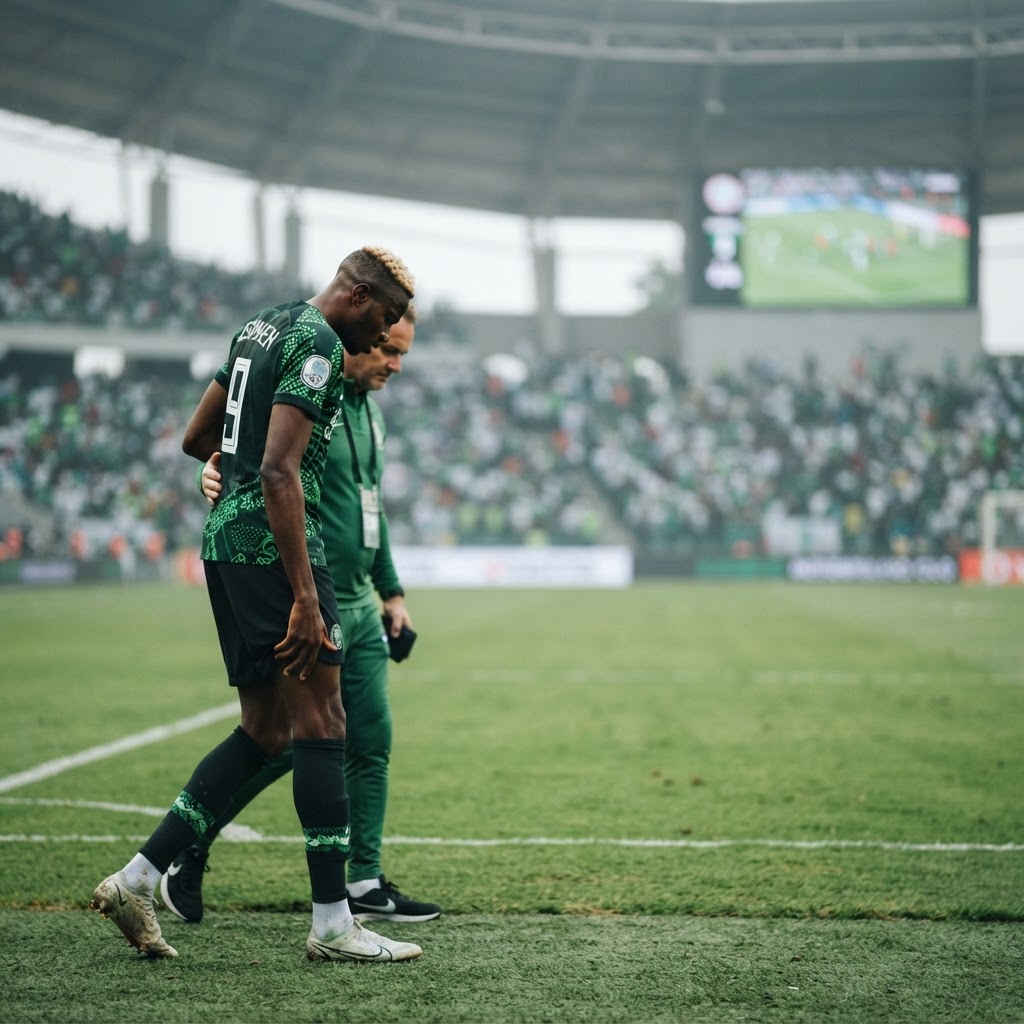
Victor Osimhen's name alone carries weight in African football. When the Super Eagles' most prolific striker steps onto the pitch, expectations follow — goals, movement, pressure on opposition defenses, and the kind of attacking intent that changes the outcome of matches. But ahead of Nigeria's opening 2027 Africa Cup of Nations qualifying fixtures, that name appears on the injury list rather than the team sheet. The news, confirmed by medical reports and widely covered by Nigerian outlets including Punch, has sent a ripple through Nigerian football supporters and analysts alike. This is not a minor knock or a precautionary rest. This is a significant muscular injury at a critical point in the qualification calendar.
For Nigeria — a nation whose football identity is deeply tied to individual brilliance — the absence of its most bankable forward forces a conversation that goes beyond tactics. It raises questions about squad depth, injury prevention, collective resilience, and the mental fortitude required of a nation competing for continental glory without its strongest weapon.
What Is Osimhen's Current Injury Status?
The Medical Reality Behind His Absence
According to reports confirmed ahead of the qualifying window, Victor Osimhen has been diagnosed with an advanced-moderate strain accompanied by bleeding within the right adductor muscle group. This is not a superficial soft-tissue complaint. Adductor strains of this classification — particularly those involving internal bleeding — are graded injuries that require careful, monitored rehabilitation. The adductor muscle group, running along the inner thigh, is essential for the explosive lateral movements, sharp direction changes, and powerful shooting actions that define Osimhen's attacking style.
Medical scans confirmed the diagnosis, and team physicians have projected a recovery timeline of two to three weeks. On paper, this may sound manageable. In practice, given the scheduling of Nigeria's opening 2027 AFCON qualifying fixtures, it effectively rules him out of the early matches in the campaign — precisely the games where establishing early momentum in Group L is most valuable.
The injury occurred during a Turkish Super Lig match with Galatasaray, where Osimhen has been on loan. This context is important. Elite African players competing at the highest levels of European club football operate under enormous physical demands — dense fixture schedules, high-intensity pressing systems, and limited recovery windows. The Turkish Super Lig, while not the Premier League or La Liga in terms of profile, is a physically demanding competition with a fast-paced style that places considerable stress on muscular structures. Osimhen's injury is a sobering reminder of how club commitments can intersect with national service in costly ways.
How Does This Injury Affect Nigeria's Tactics?
The Void Left by Nigeria's Main Striker
Coach Eric Chelle now faces a tactical puzzle that has no perfectly clean solution. Osimhen is not simply a goal scorer — he is a physical reference point for the entire Super Eagles attacking system. His ability to hold up play, make diagonal runs in behind defenses, and convert half-chances from difficult angles gives Nigeria a dimension that no current squad member fully replicates. Without him, Chelle must recalibrate his attacking approach and distribute the goal-scoring responsibility across a wider group.
The most immediate adjustment will likely involve a more fluid attacking setup — potentially shifting from a system built around a dominant central striker to one that relies on movement, interchanges between forwards, and contribution from midfield runners. Players like Cyriel Dessers and Taiwo Awoniyi carry Premier League and European club experience, but neither has consistently delivered the same volume of international goals as Osimhen. The qualifying campaign may become the proving ground that defines the next generation of Nigerian attacking football.
Compounding the challenge is a broader injury crisis affecting the squad. Winger Yira Sor and striker Paul Onuachu have also been reported unavailable, narrowing Chelle's options in the final third considerably. Meanwhile, fitness concerns surrounding experienced defender Semi Ajayi introduce vulnerability at the opposite end of the pitch. A squad simultaneously weakened in attack and uncertain in defence is not the ideal profile for opening a qualification campaign.
The pressure on Nigeria's midfield to contribute decisively increases significantly under these circumstances. If the attacking third is depleted, central midfielders and attacking midfielders must carry a greater creative burden — progressing the ball, creating chances, and occasionally arriving late to convert. This demands a level of tactical discipline and physical output that places enormous demand on players who may not have been prepared for that expanded role.
What this moment ultimately demands is collective attacking accountability — every player understanding that Osimhen's absence is not an excuse but a call to collective elevation.
Can the Super Eagles Win Group L Without Osimhen?
Threat Level from Madagascar, Tanzania, Guinea-Bissau
Nigeria's placement in Group L alongside Madagascar, Tanzania, and Guinea-Bissau might suggest a comfortable path through qualification. On paper, the Super Eagles' pedigree — 3 AFCON titles, decades of continental competition experience, and a squad populated by European-based professionals — dwarfs that of their opponents. But former Nigerian internationals and football analysts have been consistent in their warnings: complacency is the most dangerous opponent in any group stage.
Featured Products
Chukwu Abiama Tee
Bold black-and-gold Igbo-pride T-shirt featuring 'Chukwu Abiama' in premium streetwear typography.
₦15,000
Buy NowReverse Type 2 Diabetes & other associated Metabolic Issues using Dr. Jason Fung's Evidence-Based Approach— FMD program for Type 2 Diabetes
A practical fasting and fasting-mimicking programme built on Dr Jason Fung's insulin-resistance principles and ow-glycemic recipes.
₦19,950
Join NowỤmụ Igbo Tee
Classic black T-shirt with bold white 'Ụmụ Igbo' typography — a proud statement of Igbo heritage.
₦15,000
Buy NowNwanne Tee
Washed khaki vintage tee with a faded rust-orange 'Nwanne' stamp badge and palm leaf motif — a nod to kinship and heritage.
₦18,000
Buy NowObodo Tee
Faded denim-blue washed tee with a cream 'Obodo' stamp badge and sun motif, celebrating community roots.
₦18,000
Buy NowEkwe Heritage Tee
Deep indigo tee featuring a fine line-art illustration of a traditional Igbo ekwe drum, inspired by Igbo-Ukwu bronze artistry.
₦18,000
Buy NowIkenga Figure Tee
Forest green tee with a fine line-art illustration of a stylized Ikenga figure.
₦18,000
Buy NowAfrican football has undergone a measurable transformation over the past decade. Nations like Tanzania and Madagascar are no longer automatic concessions. Tanzania, for instance, has developed a generation of players with exposure to European football structures, improved coaching depth, and a tactical awareness shaped by continental competition. Madagascar famously captured the imagination of the continent at the 2019 AFCON, defeating Nigeria's group-stage opponents and advancing to the quarter-finals in their debut tournament. These are not the same teams Nigeria would have faced fifteen years ago.
Every qualifying point carries weight. A dropped result in the opening matches, while Osimhen is absent and squad morale is under pressure, could have consequences that follow Nigeria through the entire group stage. The mathematics of qualification are unforgiving — the early fixtures set the psychological and points-table tone for everything that follows.
This moment is also, however, an opportunity. Qualification campaigns have historically served as the launchpad for emerging Nigerian talent. Players who might otherwise remain in Osimhen's shadow now have the platform to establish themselves in the national consciousness. A young striker who delivers in these qualifiers does not simply fill a gap — he writes himself into the national team's future. Squad depth is not just a tactical buffer; it is the mechanism through which national football programs sustain themselves across generations.
As Nigerian communities at home and in the diaspora rally behind the Super Eagles, the expectation is not perfection — it is effort, organization, and the collective belief that the team is larger than any individual.
What Lessons Can Nigerian Athletes Learn from This?
Applying Health + Wealth + Community to Sport
Victor Osimhen's injury, viewed through a wider lens, carries lessons that extend beyond football tactics. For Nigerian athletes — and indeed for any Nigerian professional operating at high performance levels — this moment is a reminder that individual health is not a personal matter alone. It is the foundation upon which collective success is built.
At eziokwubundu.com, we consistently champion the principle that health, wealth, and community are not separate pursuits but interlocking pillars. For elite athletes, this framework is especially visible. When Osimhen is healthy, Nigeria's national team is stronger, young players have a mentor to learn from, and millions of Nigerian fans carry the confidence of a competitive team into their daily lives. His injury does not affect only his career — it affects a community. This is the clearest illustration of why preventive healthcare and physical maintenance must be treated as non-negotiable priorities by Nigerian professionals at every level.
Preventive sports medicine — including regular musculoskeletal screening, targeted conditioning programs, load management strategies, and nutritional support — remains underprioritized in many African football development systems. The adductor strain Osimhen has sustained is among the most common injuries in professional football, and research consistently shows that structured prevention protocols, including strength training focused on the adductor and hip muscle groups, can significantly reduce injury incidence. For aspiring Nigerian athletes, investing in this knowledge is not optional — it is the foundation of a sustainable career.
There is also the question of mental resilience. Navigating a significant injury during a critical qualification window tests not just physical recovery but psychological fortitude. Athletes must balance frustration, the fear of lost form, the anxiety of watching teammates compete without them, and the pressure of national expectation. Building mental resilience is a skill — one that can be developed through structured psychological support, community connection, and the grounding force of cultural identity and purpose.
The affordable healthcare options available to Nigerians — including physiotherapy services and sports medicine — are expanding, but awareness and access remain barriers. Nigerian athletes, families, and community leaders must advocate for stronger investment in sports health infrastructure at every level, from grassroots academies to the Super Eagles' medical team.
The "Traditional Values, Modern Progress" lens is relevant here too. Nigerian cultural values have always emphasized community over individual glory — the understanding that one person's strength serves the many. Osimhen's career, built through discipline, sacrifice, and relentless work, reflects those values. His recovery will require the same community of support: coaches, medical staff, teammates, and the millions of Nigerians who see their own aspirations reflected in his excellence. In the same spirit that Igbo communities fund development projects through collective investment and shared purpose, Nigerian football grows strongest when every stakeholder — federation, clubs, medical staff, and fans — treats player health as a communal responsibility.
Conclusion
Victor Osimhen's absence from Nigeria's opening 2027 AFCON qualifiers is a genuine setback — medically significant, tactically disruptive, and emotionally felt by a nation that has watched him carry the attacking hopes of the Super Eagles for years. But it is also a moment of reckoning and opportunity. Coach Eric Chelle must now prove his tactical adaptability. Secondary strikers must rise to the occasion. And Nigeria's football community must demonstrate that its depth, character, and collective ambition are stronger than its dependence on any single player.
More broadly, this episode reinforces a truth that eziokwubundu.com returns to consistently: individual health shapes collective outcomes. Whether in elite sport, professional life, or community development, the wellbeing of each person has consequences that ripple outward. Nigeria's 2027 AFCON qualification journey continues — and with it, the enduring lesson that sustainable success is built on preparation, prevention, and the unbreakable strength of community.
Stay Informed
Get New Articles in Your Inbox
Subscribe to receive the latest community development, health, and wealth insights from Eziokwubundu.
Newsletter
Practical insights on health, wealth, and community — delivered weekly.
Community Discussion(0)
Leave a Comment
More to Read
You May Also Like
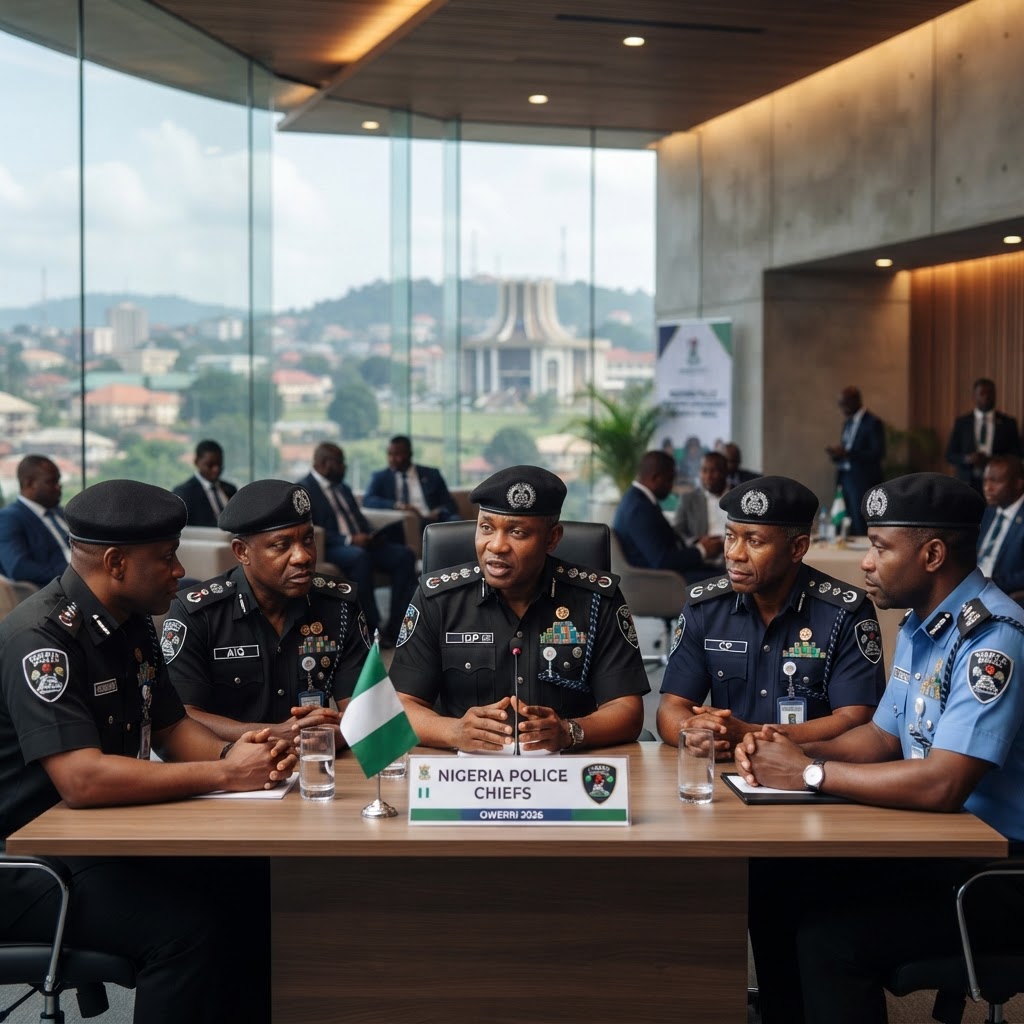
CARSPO 2026: Why Nigeria's Police Chiefs Are Converging on Owerri
Nigeria stands at a defining crossroads. With the 2027 General Elections approaching, the country's senior law enforcement leadership is leaving nothing to chance. From September 21 to 23, 2026, Owerri, the capital of Imo State in Nigeria's South-East, will host one of the most consequential securit...
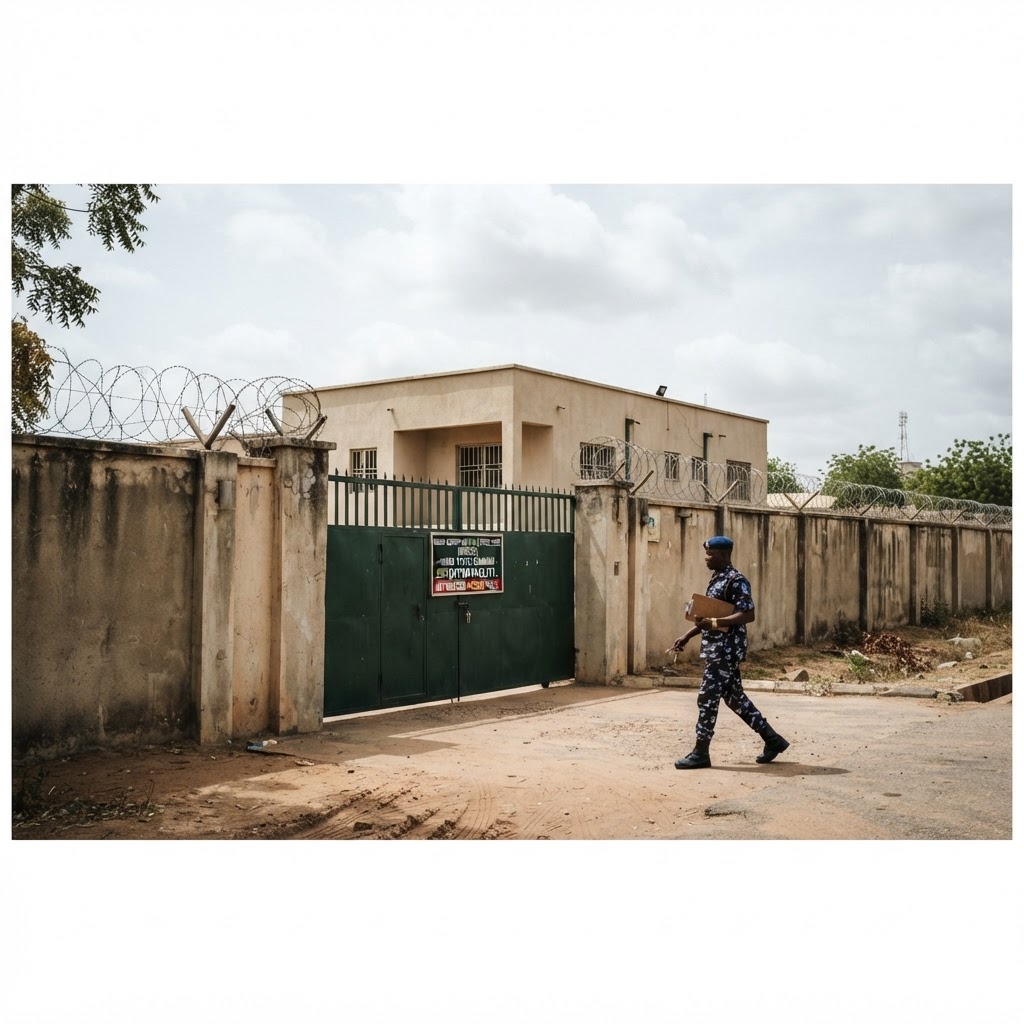
NSCDC Deaths: What Happened Inside the Niger Detention Facility?
On the morning of September 17–18, 2026, news broke from Minna that would shake Nigeria's security establishment to its foundations. Thirty-seven detainees held inside a Nigeria Security and Civil Defence Corps (NSCDC) facility in Niger State were found dead. The tragedy did not unfold on a battlefi...

Wike–Uzodimma Dispute: Imo Lawyers Respond to FCT Minister's Attacks
Political tensions between Nigeria's FCT Minister Nyesom Wike and Imo State Governor Hope Uzodimma have escalated to a point where legal professionals feel compelled to intervene. The Imo Lawyers for the Defence of Democracy has formally called out what it describes as dangerous personal attacks ema...
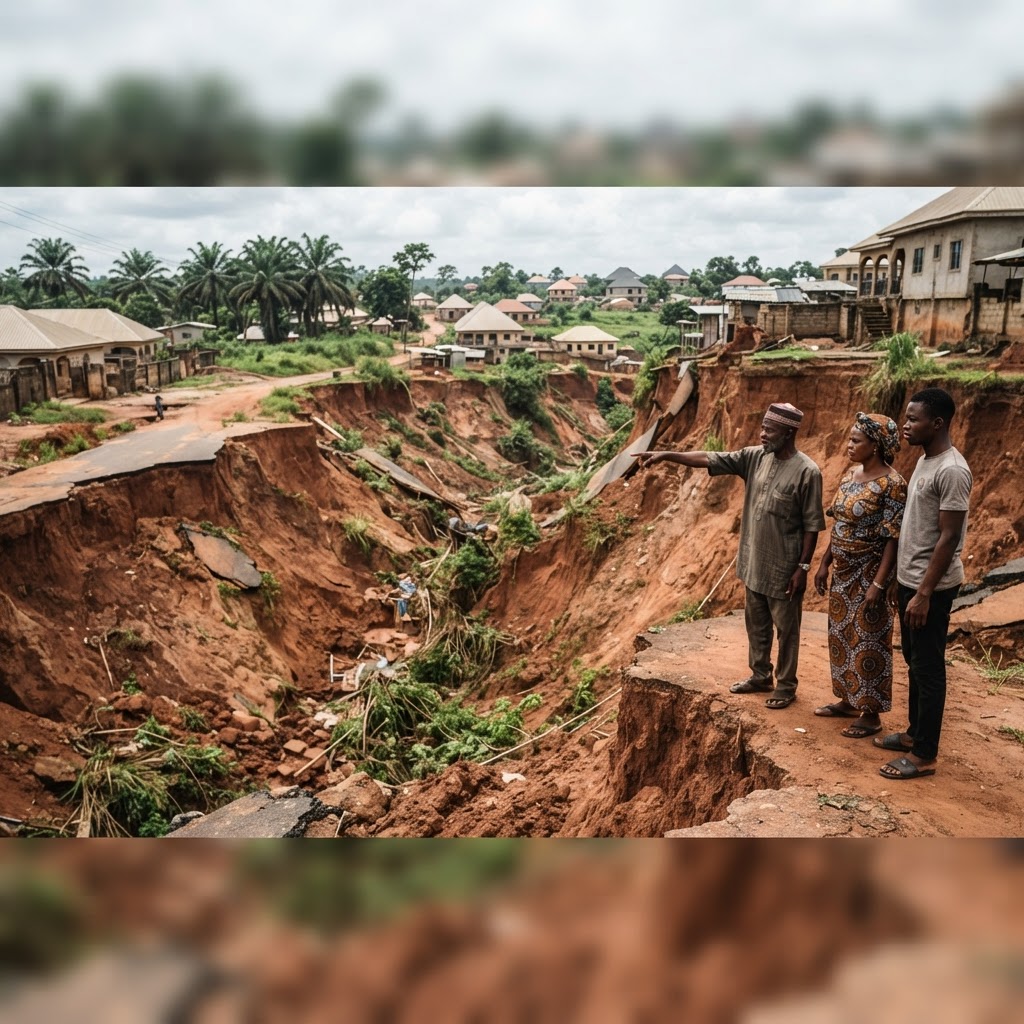
Imo Erosion Crisis: Mbieri Communities Demand Urgent Government Action
The ground beneath Mbieri is literally disappearing. In Mbaitoli Local Government Area of Imo State, advancing gullies are swallowing roads, threatening homes, and pushing one of southeastern Nigeria's most resilient communities toward an environmental breaking point. Residents are no longer waiting...
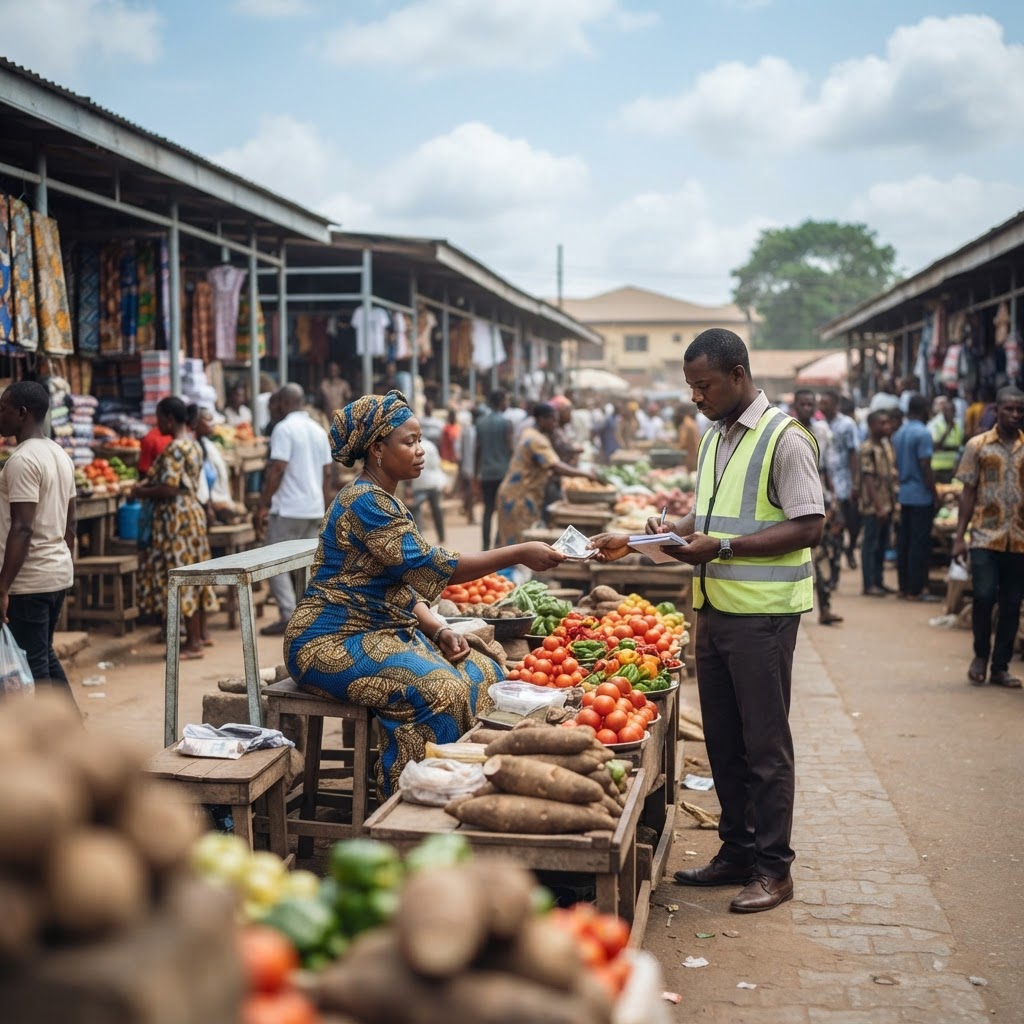
Imo Markets: What Fees Are Traders Paying and Who Collects Them?
For thousands of traders operating daily across Imo State's bustling markets — from Relief Market in Owerri to the Naze Timber and Allied Traders Market — paying levies is an unavoidable cost of doing business. But in 2026, a more urgent question is emerging from beneath the noise of commerce: exact...

Donor Health Funds Under Scrutiny: Why a Civil Society Group Wants FBI, EFCC to Widen Probe
International health aid is only as effective as the integrity of those who manage it. When billions of naira in donor-funded resources meant to combat HIV and tuberculosis go missing or are misappropriated, the consequences are not abstract — they are measured in lives lost, treatments missed, and ...
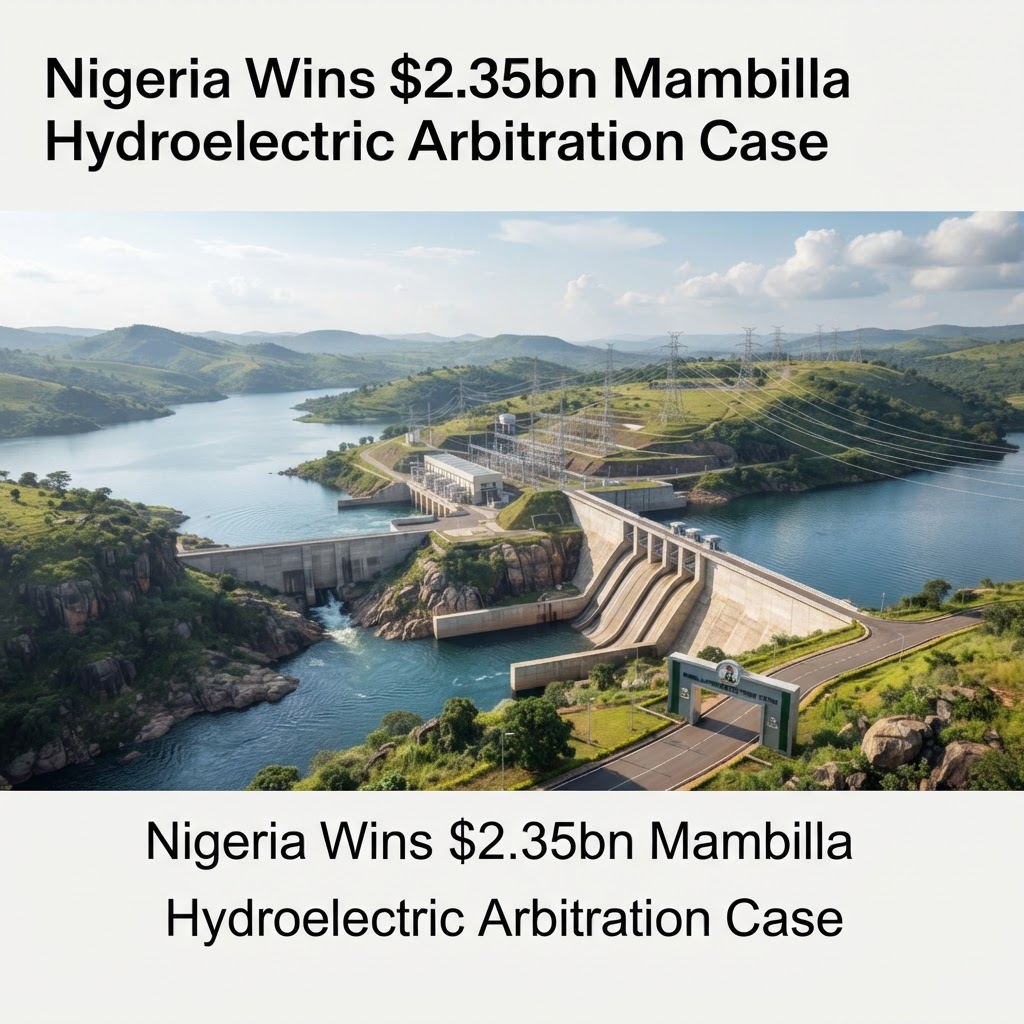
Nigeria Wins $2.35bn Mambilla Hydroelectric Arbitration Case
Nigeria has secured a landmark legal victory that could reshape the country's energy landscape for generations. An International Chamber of Commerce (ICC) arbitration tribunal sitting in Paris has ruled in favour of the Federal Government of Nigeria, rejecting a staggering $2.35 billion claim brough...
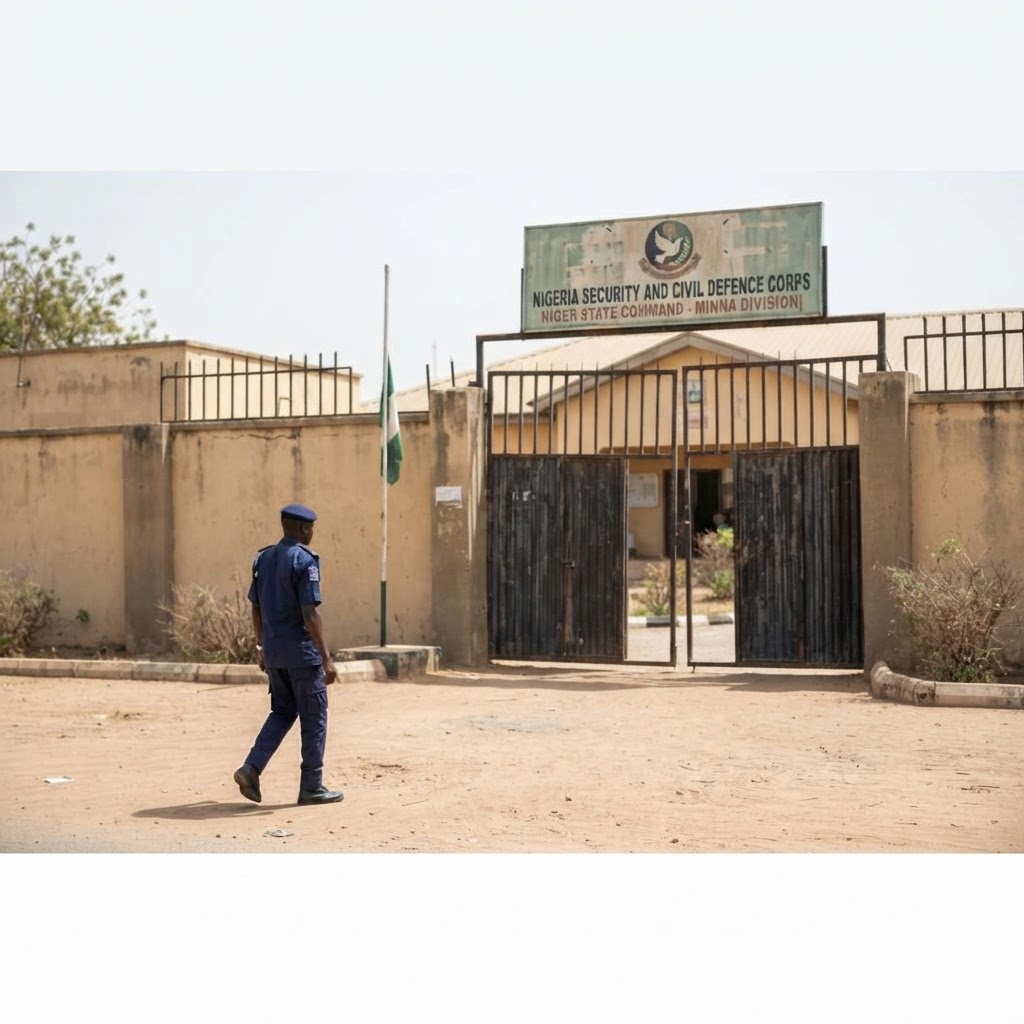
37 Suspected Illegal Miners Die in NSCDC Custody in Niger State
The deaths of 37 human beings in state custody should never be reduced to a statistic. Yet on a deeply troubling day in September 2026, that is precisely what happened in Niger State, Nigeria, when 37 suspected illegal miners died while detained by the Nigeria Security and Civil Defence Corps (NSCDC...

Imo 2028 Succession Debate Intensifies
The political temperature in Imo State has risen sharply as stakeholders, party insiders, and community leaders begin the complex arithmetic of who governs the state after January 2028. What began as quiet backroom conversations has evolved into a full-throated public debate, touching on constitutio...
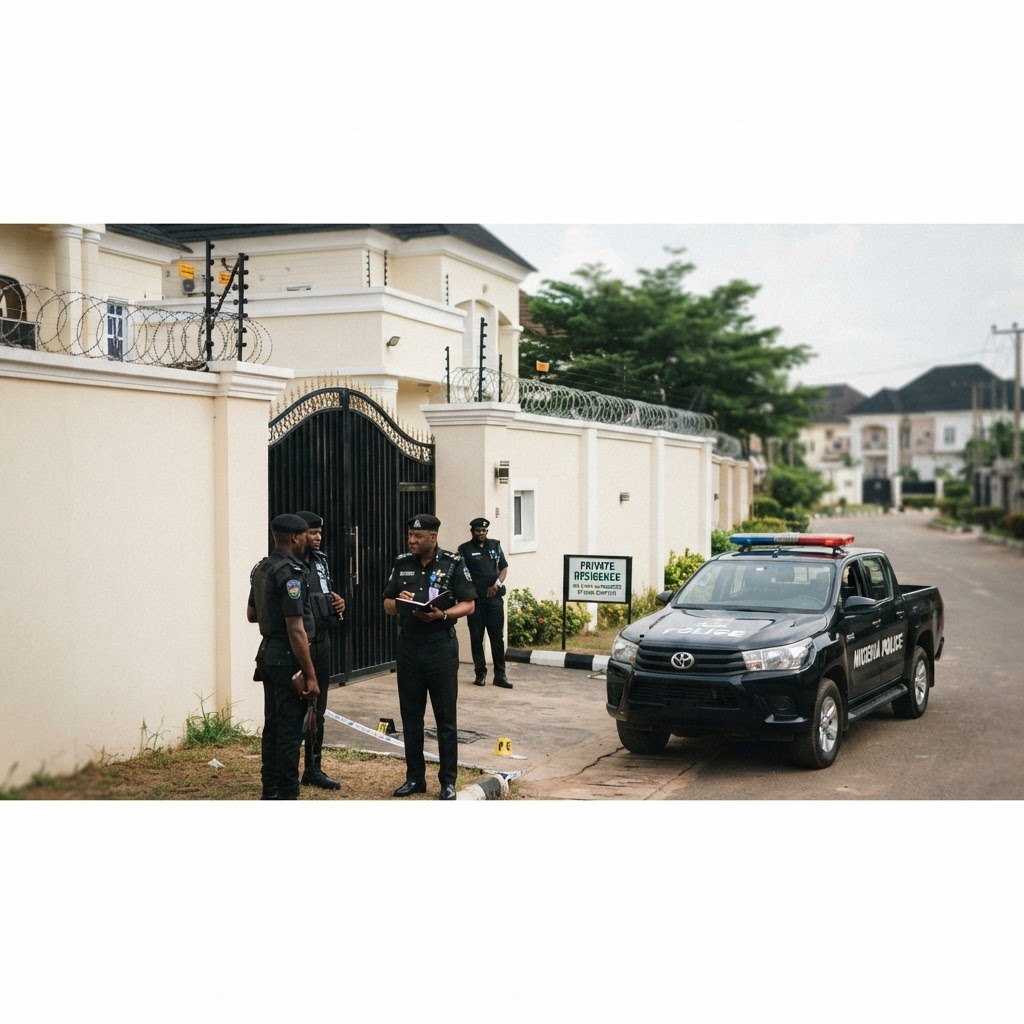
Police Inspector Killed at Imo Commissioner’s Residence
A deadly security breach at the residence of a senior Imo State government official has once again drawn attention to the fragile security situation in southeastern Nigeria. According to a report by TheCable(https://www.thecable.ng/gunmen-kill-police-inspector-at-commissioners-residence-in-imo/), gu...