Powered by Obi Mbieri Independent Media Ltd · eziokwubundu.com
$1 = ₦1,330€1 = ₦1,528£1 = ₦1,778Donor Health Funds Under Scrutiny: Why a Civil Society Group Wants FBI, EFCC to Widen Probe
International health aid is only as effective as the integrity of those who manage it. When billions of naira in donor-funded resources meant to combat HIV and tuberculosis go missing or are misappropriated, the consequences are not abstract — they are measured in lives lost, treatments missed, and ...

International health aid is only as effective as the integrity of those who manage it. When billions of naira in donor-funded resources meant to combat HIV and tuberculosis go missing or are misappropriated, the consequences are not abstract — they are measured in lives lost, treatments missed, and communities abandoned. A developing story in Nigeria's health governance landscape has brought this reality into sharp focus, as a civil society group is now calling on both the United States Federal Bureau of Investigation (FBI) and Nigeria's Economic and Financial Crimes Commission (EFCC) to widen an existing probe into the suspected mismanagement of USAID-supported health funds. The demand raises urgent questions about accountability, institutional trust, and what it truly means to protect public health in Nigeria.
What Triggered the Joint Investigation?
International Aid Meets Financial Oversight
The probe at the centre of this story emerged from a convergence of two significant developments: the 2025 drawdown of specific USAID-funded health programmes in Nigeria, and growing suspicions that implementing organizations failed to properly account for residual funds after those programmes were wound down.
According to reporting by Punch Nigeria, the FBI and the EFCC had already begun collaborative efforts to investigate the alleged diversion of funds tied to HIV and tuberculosis intervention programmes that were previously active under the USAID framework. These programmes were designed to support "one-stop centres" — integrated health facilities providing testing, diagnosis, and antiretroviral treatment for vulnerable Nigerians. When USAID moved to suspend or restructure several of these grants in early 2025, questions emerged about where the unspent funds went and whether implementing partners — local NGOs, health contractors, and programme administrators — rendered accurate accounts.
The United States government, through its relevant agencies, has been pressing for stronger engagement with Nigerian authorities to track these resources. The concern is not merely about financial irregularities in isolation; it is about whether the shutdown of programmes was exploited as an opportunity to divert unspent balances without adequate oversight. Financial transparency in international health aid is a prerequisite for programme continuity, and any breakdown in that transparency sends a damaging signal to donor institutions worldwide.
Nigeria receives substantial donor health support. The PEPFAR programme alone has invested over $7 billion in Nigeria since its inception, making Nigeria one of the largest recipients of US global health funding. The alleged mismanagement of even a fraction of these resources is therefore a matter of both national and international concern.
Why Are Civil Society Groups Demanding a Wider Probe?
Accountability Must Go Beyond the Initial List
The civil society group's call for a broader investigation is grounded in a straightforward concern: the current probe may be too narrowly focused to expose the full scale of potential wrongdoing. By urging the FBI and EFCC to widen their scope, these advocates are arguing that the suspected diversion of donor health funds is not limited to a handful of flagged organizations — it may represent a systemic pattern across multiple implementing partners operating under USAID's Nigeria portfolio.
This demand matters enormously for Nigerian families who depend on these services. HIV treatment in Nigeria is not a luxury — it is a life-sustaining necessity for an estimated 1.9 million Nigerians living with HIV, according to UNAIDS data. Tuberculosis, similarly, remains one of Nigeria's most significant public health burdens, with the country ranked among the top six high TB-burden nations globally by the World Health Organization. When funds earmarked for these diseases are diverted, real patients lose access to medication, diagnostics, and counselling.
The civil society argument also addresses the question of trust. International health partnerships are built on a framework of mutual accountability — donor governments provide resources on the understanding that recipient-country organizations will deploy them effectively and transparently. Every confirmed case of fund diversion chips away at that foundation, making it harder for Nigerian health authorities and NGOs to attract future grants. The civil society groups are therefore not simply demanding punishment; they are demanding structural reform that makes the entire health funding ecosystem more resilient.
There is also a community health equity dimension to consider. The populations most affected by HIV and tuberculosis in Nigeria are disproportionately poor, rural, and marginalized. They have no political leverage to demand accountability on their own. Civil society organizations serve a critical intermediary function, amplifying the voices of those whose health outcomes are most directly shaped by how funds are managed — or mismanaged. This connects directly to the kind of community-first advocacy that meaningful development must prioritize, similar to the accountability demands raised around unapproved orphanages in Nigeria and the safety of children in private care homes.
How Does Fund Mismanagement Affect Nigerian Families?
When Corruption Steals Health Outcomes
The diversion of health funds is not a victimless crime. For Nigerian families navigating the realities of HIV, tuberculosis, or other conditions that USAID-supported programmes were designed to address, the mismanagement of donor resources translates directly into reduced access to care.
The "one-stop centres" that USAID funding was meant to support are not redundant additions to Nigeria's health system — they are often the primary, and sometimes the only, point of access for antiretroviral therapy (ART), viral load monitoring, and TB diagnostic services in underserved communities. When these centres are under-resourced due to fund diversion, patients experience drug stockouts, reduced opening hours, or complete closure. A patient who misses a month of antiretroviral medication due to supply chain failure does not simply resume treatment without consequence — they risk developing drug resistance, which is both medically dangerous and enormously more expensive to treat.
Featured Products
Chukwu Abiama Tee
Bold black-and-gold Igbo-pride T-shirt featuring 'Chukwu Abiama' in premium streetwear typography.
₦15,000
Buy NowReverse Type 2 Diabetes & other associated Metabolic Issues using Dr. Jason Fung's Evidence-Based Approach— FMD program for Type 2 Diabetes
A practical fasting and fasting-mimicking programme built on Dr Jason Fung's insulin-resistance principles and ow-glycemic recipes.
₦19,950
Join NowỤmụ Igbo Tee
Classic black T-shirt with bold white 'Ụmụ Igbo' typography — a proud statement of Igbo heritage.
₦15,000
Buy NowNwanne Tee
Washed khaki vintage tee with a faded rust-orange 'Nwanne' stamp badge and palm leaf motif — a nod to kinship and heritage.
₦18,000
Buy NowObodo Tee
Faded denim-blue washed tee with a cream 'Obodo' stamp badge and sun motif, celebrating community roots.
₦18,000
Buy NowEkwe Heritage Tee
Deep indigo tee featuring a fine line-art illustration of a traditional Igbo ekwe drum, inspired by Igbo-Ukwu bronze artistry.
₦18,000
Buy NowIkenga Figure Tee
Forest green tee with a fine line-art illustration of a stylized Ikenga figure.
₦18,000
Buy NowBeyond HIV and TB, the implications extend to Nigeria's broader public health infrastructure. Donor funding has long filled the gap between what Nigeria's public health budget can provide and what communities actually need. According to World Bank health expenditure data, Nigeria's per capita health expenditure remains critically low compared to regional benchmarks, making external aid not supplementary but structural. When that structural support is compromised by corruption, the entire foundation of community health provision is weakened.
From the Eziokwubundu perspective, this is precisely why the "Health + Wealth + Community" triangle is not rhetorical — it is a framework for understanding how deeply interconnected these domains are. A community whose members cannot access HIV treatment has reduced economic productivity, increased household healthcare costs, and diminished social cohesion. The siphoning of health funds does not just rob patients; it robs communities of their capacity to prosper. Nigerians who are serious about community development — whether entrepreneurs, local leaders, or youth professionals — must understand that health system integrity is a wealth and development issue, not merely a medical one.
What Are the Long-Term Consequences for Nigeria's Health Financing?
Donor Fatigue Is a Real and Present Danger
The long-term consequences of inadequate accountability in health fund management extend well beyond any single investigation. The most immediate risk is donor fatigue — the gradual withdrawal of international health financing as donor governments conclude that accountability mechanisms in recipient countries are too weak to justify continued investment. This is not a theoretical concern. Several donor governments have already begun restructuring or reducing bilateral health aid portfolios in countries where fund diversion has been documented repeatedly.
For Nigeria, the stakes are particularly high. The country's HIV programme is substantially dependent on PEPFAR and the Global Fund, and its tuberculosis response relies heavily on international financing. A significant reduction in donor confidence would leave hundreds of thousands of Nigerians without a sustainable alternative.
The solution, as development finance experts increasingly argue, lies in building locally-driven health financing models that reduce over-reliance on external aid. This means strengthening the National Health Insurance Authority (NHIA), increasing domestic health budget allocations, and implementing rigorous internal audit mechanisms for all health grants — whether foreign or locally sourced. Nigeria's recent legal victories in arbitration, such as the $2.35bn Mambilla Hydroelectric case, demonstrate that the country has the institutional capacity for complex financial governance — that same capacity must be brought to bear on health fund stewardship.
Community stakeholders and local organizations can play an active role by demanding detailed public reporting from health programme implementers, engaging local government health committees, and supporting civil society watchdogs that monitor grant management. Transparency is not the government's responsibility alone — it requires active community participation.
How Can Future Health Investments Reach Those Who Need Them?
Integrity, Citizenship, and the Community-First Imperative
Ensuring that future health investments reach the communities they are designed to serve requires more than investigations after the fact. It demands a culture of active citizenship in which Nigerians at every level — from local health committee members to diaspora advocates — treat health fund monitoring as a civic responsibility.
Practically, this means communities should request and review the financial reports of NGOs and implementing partners operating in their areas, report suspected irregularities to the EFCC or relevant oversight bodies, and support organizations that demonstrate rigorous financial stewardship through independent audits and published accounts. For youth professionals and students entering the development sector, choosing to work with and advocate for organizations that uphold high ethical standards is itself a form of community investment.
The "Health + Wealth + Community" triangle that defines the Eziokwubundu approach is most powerful when it operates as a lived value, not just a framework. When communities are healthy, they are productive. When resources are managed with integrity, wealth is built — collectively and individually. The current scrutiny of donor health funds is not just a governance story; it is a call to every Nigerian who cares about the future of their community to demand better, stay informed, and hold institutions accountable.
Support civil society organizations that are doing this work. Share credible reporting on health fund accountability. And recognize that in Nigeria's development story, informed, engaged communities are the most powerful accountability mechanism of all.
This article reflects Eziokwubundu's commitment to evidence-based reporting and community-centered development journalism. For more on governance, community health, and accountability in Nigeria, explore our coverage across topics that matter to everyday Nigerians.
Stay Informed
Get New Articles in Your Inbox
Subscribe to receive the latest community development, health, and wealth insights from Eziokwubundu.
Newsletter
Practical insights on health, wealth, and community — delivered weekly.
Community Discussion(0)
Leave a Comment
More to Read
You May Also Like
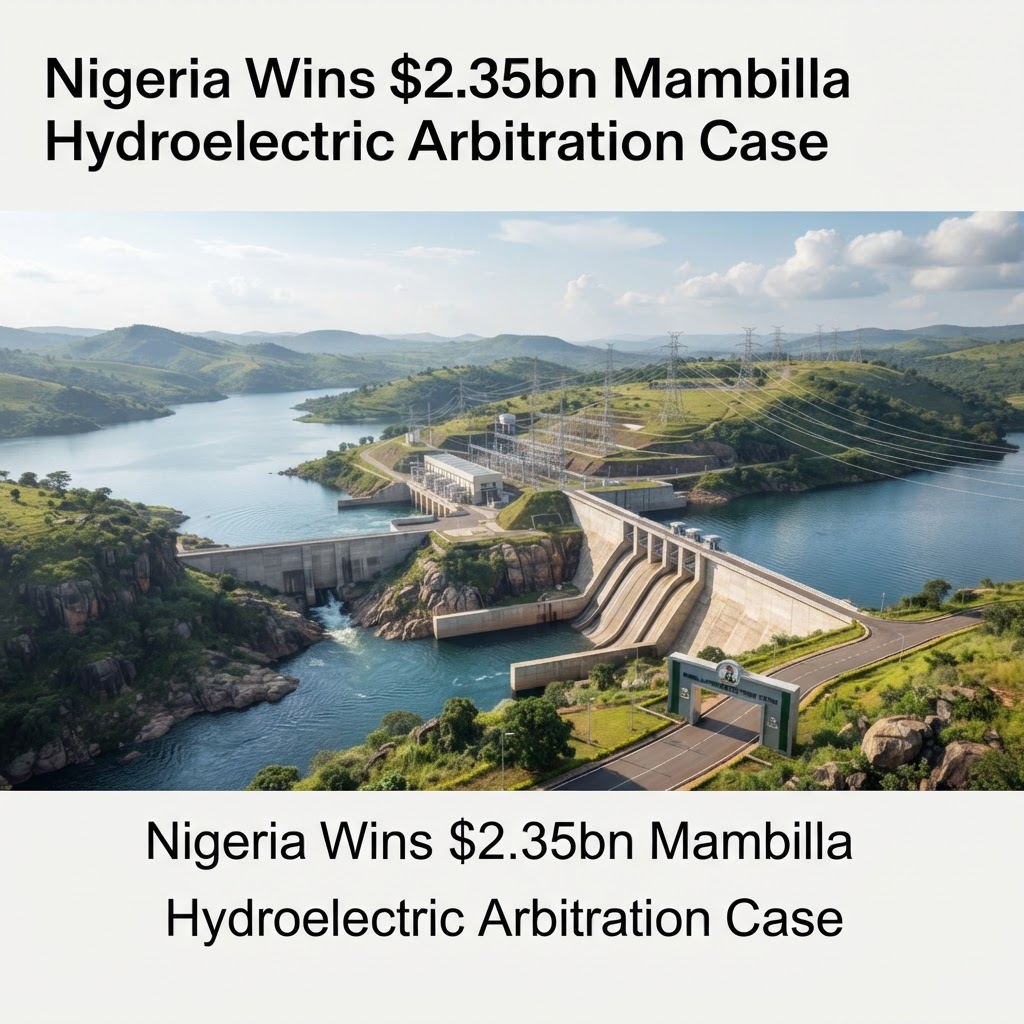
Nigeria Wins $2.35bn Mambilla Hydroelectric Arbitration Case
Nigeria has secured a landmark legal victory that could reshape the country's energy landscape for generations. An International Chamber of Commerce (ICC) arbitration tribunal sitting in Paris has ruled in favour of the Federal Government of Nigeria, rejecting a staggering $2.35 billion claim brough...
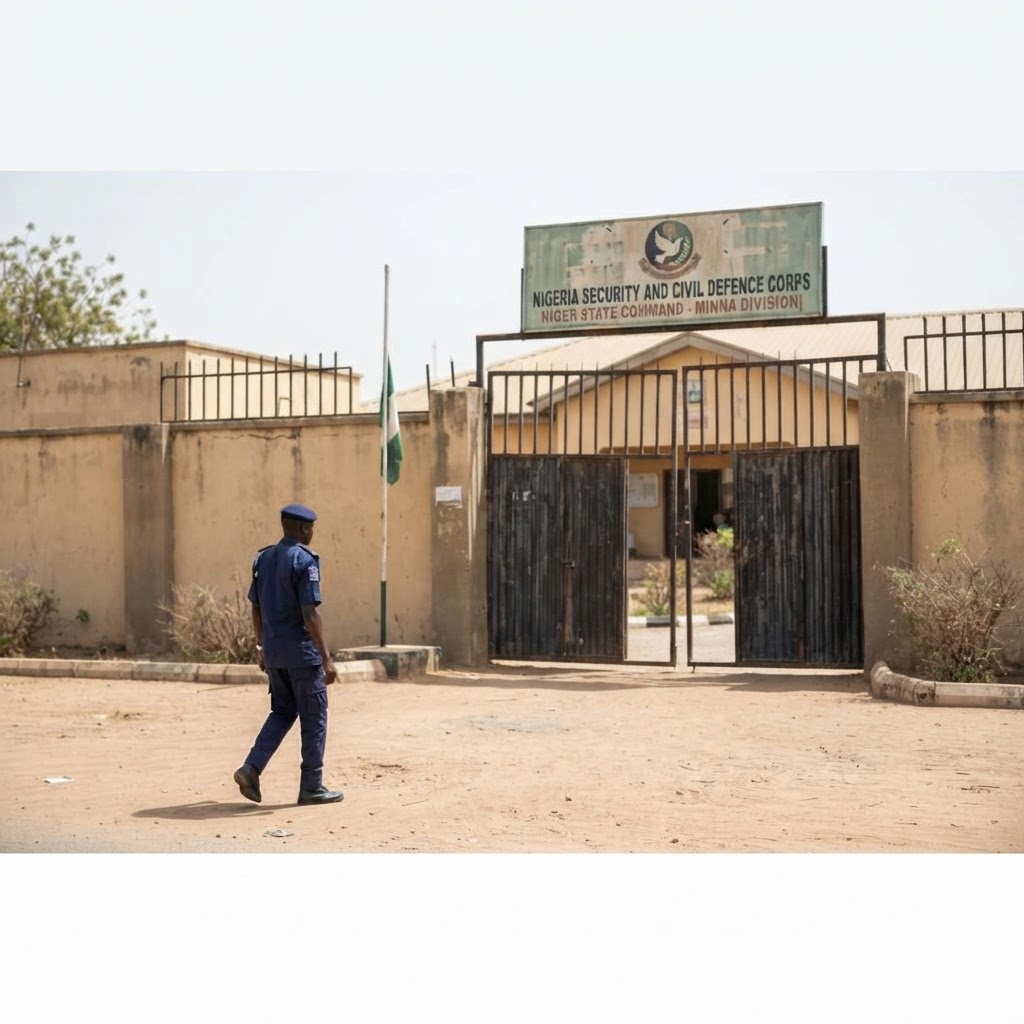
37 Suspected Illegal Miners Die in NSCDC Custody in Niger State
The deaths of 37 human beings in state custody should never be reduced to a statistic. Yet on a deeply troubling day in September 2026, that is precisely what happened in Niger State, Nigeria, when 37 suspected illegal miners died while detained by the Nigeria Security and Civil Defence Corps (NSCDC...

Imo 2028 Succession Debate Intensifies
The political temperature in Imo State has risen sharply as stakeholders, party insiders, and community leaders begin the complex arithmetic of who governs the state after January 2028. What began as quiet backroom conversations has evolved into a full-throated public debate, touching on constitutio...

Police Inspector Killed at Imo Commissioner’s Residence
A deadly security breach at the residence of a senior Imo State government official has once again drawn attention to the fragile security situation in southeastern Nigeria. According to a report by TheCable(https://www.thecable.ng/gunmen-kill-police-inspector-at-commissioners-residence-in-imo/), gu...

Best Hospitals in Imo State Compared
Imo State sits at a crossroads of ambition and infrastructure challenge. For the millions of families, entrepreneurs, and young professionals who call this southeastern Nigerian state home, healthcare access is not merely a welfare concern — it is a direct determinant of economic stability and commu...

Imo State Emergency Contacts Directory
Emergencies do not send advance notice. Whether it is a road traffic accident along the Owerri-Onitsha expressway, a fire outbreak in a densely populated neighbourhood, or a sudden medical crisis in one of Imo State's rural local government areas, the difference between life and death often comes do...
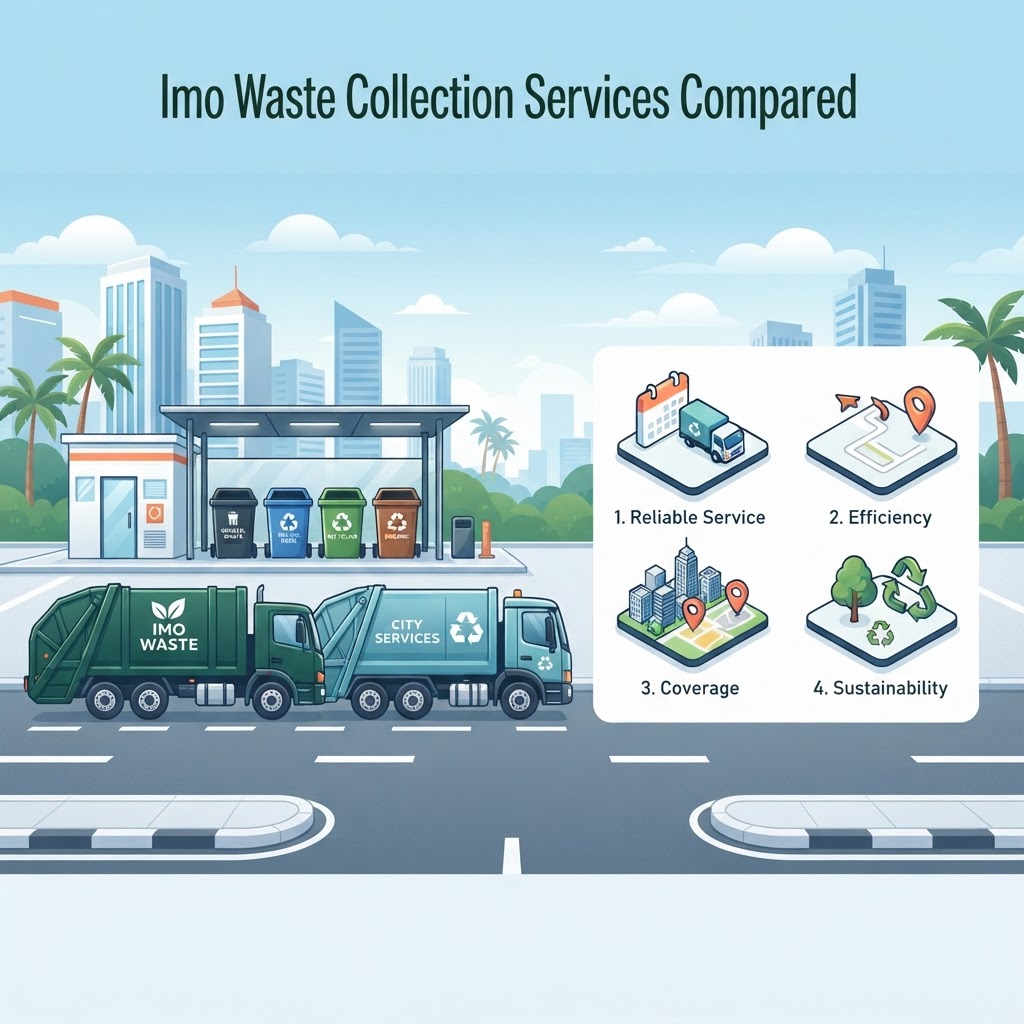
Imo Waste Collection Services Compared
Waste management sits at the intersection of public health, economic productivity, and community dignity. For residents of Imo State, particularly those living in the expanding urban corridors of Owerri, the question of who collects refuse — and how reliably they do it — is not a minor administrativ...
Imo State Government Services Directory
Navigating government services in any Nigerian state can feel like an uphill task — long queues, unclear processes, and fragmented information leave many citizens without the support they need. For residents of Imo State, the situation is actively changing. Through a combination of digital infrastru...
Imo State Tax Guide for Individuals
Taxation is one of the most direct ways that individuals participate in the development of their communities. Yet for many residents of Imo State, the process of understanding, registering, and filing taxes remains confusing, intimidating, or simply unfamiliar. This guide is designed to change that....
How to start vegetable farming with small capital Nigeria
Vegetable farming is one of the most accessible and consistently profitable agricultural ventures available to Nigerians today. Whether you are a young graduate seeking a sustainable livelihood, a household looking to reduce food costs, or an entrepreneur exploring low-risk entry points into agricul...