Powered by Obi Mbieri Independent Media Ltd · eziokwubundu.com
$1 = ₦1,330€1 = ₦1,526£1 = ₦1,778Nigeria Wins $2.35bn Mambilla Hydroelectric Arbitration Case
Nigeria has secured a landmark legal victory that could reshape the country's energy landscape for generations. An International Chamber of Commerce (ICC) arbitration tribunal sitting in Paris has ruled in favour of the Federal Government of Nigeria, rejecting a staggering $2.35 billion claim brough...
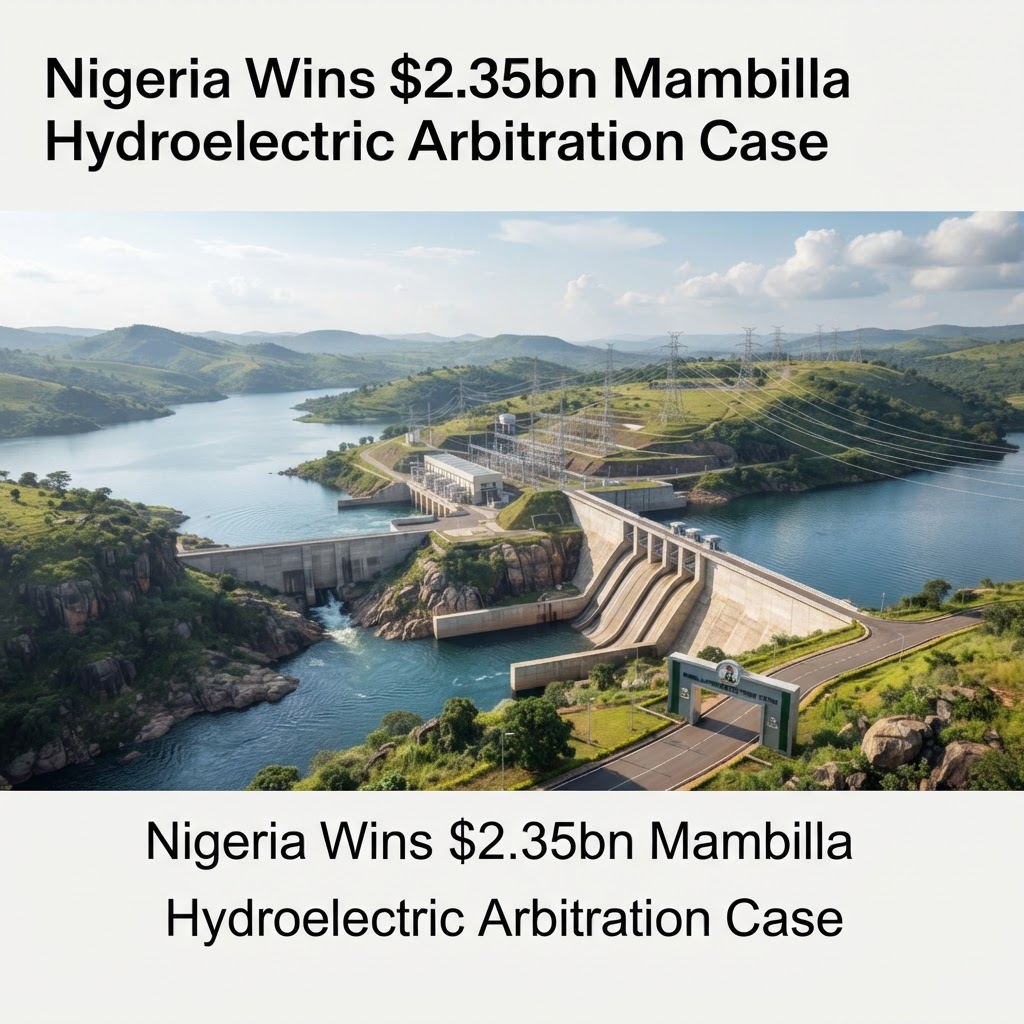
Nigeria has secured a landmark legal victory that could reshape the country's energy landscape for generations. An International Chamber of Commerce (ICC) arbitration tribunal sitting in Paris has ruled in favour of the Federal Government of Nigeria, rejecting a staggering $2.35 billion claim brought by Sunrise Power and Transmission Company Limited over the long-stalled Mambilla Hydroelectric Power Project. This outcome, confirmed by the State House of Nigeria, is more than a courtroom win — it is a turning point for a nation that has struggled for decades to unlock the full potential of one of its most significant infrastructure assets.
For Nigerian families enduring daily power outages, for small business owners running generators at crippling costs, and for communities waiting on the promise of modern infrastructure, the resolution of this arbitration case matters enormously. It clears a path — legally, financially, and politically — toward the eventual construction of the 1,500-megawatt Mambilla project, which sits on the Taraba River in Taraba State and has the potential to transform Nigeria's national grid.
This article examines what the ruling means, how the dispute originated, why Mambilla matters to everyday Nigerians, and what must happen next to turn this legal victory into concrete electricity.
What Does the ICC Ruling Mean for Nigeria's Energy Future?
A $2.35bn Shield for the National Treasury
The ICC tribunal's decision to reject the claims filed by Sunrise Power and Transmission Company Limited against the Federal Government of Nigeria is, by any measure, a significant fiscal and strategic victory. According to the State House of Nigeria, the tribunal dismissed the claims in their entirety, shielding the Nigerian treasury from a liability that could have exceeded $2.35 billion — a sum that, at current exchange rates, would represent a devastating blow to an economy already navigating inflation, currency pressures, and mounting public debt.
Beyond the financial relief, the ruling carries profound symbolic weight. It signals that Nigeria can successfully defend its sovereign interests in international commercial arbitration, a forum where developing nations have historically faced unfavourable outcomes against well-resourced private litigants.
More practically, this victory removes the single biggest legal obstacle that has prevented the Mambilla Hydroelectric Power Project from advancing. With arbitration claims now resolved, the federal government is no longer trapped in a holding pattern, unable to engage new contractors or financiers without the shadow of pending litigation distorting every negotiation. The legal cloud that has hung over this project for nearly a decade has, at last, been lifted.
For a country where an estimated 85 million people lack access to reliable electricity, according to data from the World Bank, the clearing of this legal barrier is not an abstract development — it is a concrete step toward the energy security that Nigerian households and businesses desperately need.
How Did Mambilla Get Trapped in Legal Battle?
From BOT Contract to International Arbitration
The story of the Mambilla Hydroelectric Power Project is, in many ways, a cautionary tale about the fragility of long-term infrastructure commitments in the face of administrative discontinuity and poor contract governance. The project itself is not new. Plans to harness the hydroelectric potential of the Taraba River date back several decades, with the site identified as capable of generating up to 3,050MW at full build-out, though the current project scope targets 1,500MW.
The legal dispute that would eventually reach the ICC in Paris has its roots in a 2003 decision by the Federal Government of Nigeria to award a Build, Operate, and Transfer (BOT) contract to Sunrise Power and Transmission Company Limited. Under a BOT framework, the private contractor finances, constructs, and operates an infrastructure asset for a defined period before transferring ownership to the government. This arrangement was intended to leverage private sector capital and expertise to deliver a project that had languished in the planning stages.
However, the situation became legally complicated in 2007 when the government entered into a separate civil works agreement with a consortium of Chinese firms — specifically involving Chinese state-backed entities — to handle the construction component of the same project. Sunrise Power interpreted this as a fundamental breach of their original BOT contract, arguing that the government had effectively circumvented their agreement by engaging alternative contractors for work that fell within their contractual scope.
This perceived breach triggered years of litigation and eventually escalated to international arbitration under the rules of the International Chamber of Commerce, one of the world's foremost arbitral institutions. The arbitration process is notoriously lengthy and expensive, and the Mambilla case proved no exception. Nigeria was forced to engage international legal counsel, dedicate significant government resources to the defence, and — most damagingly — place the entire project in a state of suspended animation while the proceedings unfolded.
Political transitions compounded the problem. As administrations changed in Abuja, institutional memory around the project's contractual history was inconsistently preserved, and the policy momentum required to resolve the dispute through negotiated settlement never materialised. The result was nearly a decade of stagnation on a project that Nigeria urgently needs.
The ICC ruling represents the end of that chapter. According to the State House statement, all claims against Nigeria and the associated respondent, Mr. Leno Adesanya, were rejected. Nigeria now stands on firmer legal ground than it has at any point in the project's troubled recent history.
Why Does Mambilla Matter to Nigerian Families?
Electricity, Prosperity, and Community Growth
For the average Nigerian family, the Mambilla Hydroelectric Power Project is not an abstract infrastructure statistic — it is the difference between running a refrigerator and watching food spoil, between powering a small business and relying on expensive diesel generators, between children studying under electric light and doing homework by candlelight. Nigeria's electricity deficit is one of the most persistent drags on the nation's quality of life and economic productivity.
Nigeria's installed generation capacity sits at approximately 13,000MW, but available capacity regularly falls below 5,000MW due to transmission constraints, gas supply shortages, and aging infrastructure, according to the Nigerian Electricity Regulatory Commission (NERC). Against a population of over 220 million people and an economy that aspires to industrialisation, this is a crisis that touches every household and every enterprise.
Featured Products
Chukwu Abiama Tee
Bold black-and-gold Igbo-pride T-shirt featuring 'Chukwu Abiama' in premium streetwear typography.
₦15,000
Buy NowReverse Type 2 Diabetes & other associated Metabolic Issues using Dr. Jason Fung's Evidence-Based Approach— FMD program for Type 2 Diabetes
A practical fasting and fasting-mimicking programme built on Dr Jason Fung's insulin-resistance principles and ow-glycemic recipes.
₦19,950
Join NowỤmụ Igbo Tee
Classic black T-shirt with bold white 'Ụmụ Igbo' typography — a proud statement of Igbo heritage.
₦15,000
Buy NowNwanne Tee
Washed khaki vintage tee with a faded rust-orange 'Nwanne' stamp badge and palm leaf motif — a nod to kinship and heritage.
₦18,000
Buy NowObodo Tee
Faded denim-blue washed tee with a cream 'Obodo' stamp badge and sun motif, celebrating community roots.
₦18,000
Buy NowEkwe Heritage Tee
Deep indigo tee featuring a fine line-art illustration of a traditional Igbo ekwe drum, inspired by Igbo-Ukwu bronze artistry.
₦18,000
Buy NowIkenga Figure Tee
Forest green tee with a fine line-art illustration of a stylized Ikenga figure.
₦18,000
Buy NowThe addition of 1,500MW from Mambilla would represent a meaningful increase — roughly a 30 percent boost to current available capacity — and it would come from a renewable, domestic source, insulating Nigeria from the volatility of gas prices and foreign exchange pressures that plague thermal generation. Hydroelectric power, once constructed, delivers electricity at a comparatively low operational cost, making it a sustainable long-term solution.
For small and medium enterprises, which form the backbone of Nigeria's economy, reliable power is not a luxury — it is a prerequisite for competitiveness. Entrepreneurs who currently spend 30 to 40 percent of their operating costs on self-generated power would find their margins significantly improved. If you are exploring how to grow a business in this environment, understanding how to access CBN small business loans through resources like our guide on How to Access CBN Small Business Loans can help bridge the financial gap while infrastructure catches up.
Beyond economics, there is a direct community health dimension to energy access. Clinics and hospitals that currently operate unreliable cold chains for vaccines, medical equipment that depends on stable power, and rural health centres that function in darkness — all stand to benefit from a strengthened national grid. This connects directly to the broader vision of community wellness and prosperity that defines practical development for Nigerian families.
What Lessons Can Nigeria Learn from This Dispute?
Accountability, Due Diligence, and Community-First Governance
The Mambilla arbitration saga offers hard-won lessons that Nigeria cannot afford to ignore as it embarks on the next phase of infrastructure development. The most immediate lesson concerns contract management. The 2003 BOT agreement with Sunrise Power was evidently awarded without the robust legal architecture needed to manage subsequent government decisions that might affect its scope. When the government signed a separate civil works agreement in 2007, it did so without adequately resolving how that decision intersected with Sunrise's existing contractual rights.
Rigorous legal due diligence and clear contract governance frameworks are not bureaucratic inconveniences — they are essential tools for protecting the public interest. Large-scale public-private partnerships involving billions of dollars and decades of commitment require dedicated contract management offices, independent legal oversight, and transparent procurement processes that are resistant to political interference.
The second lesson concerns transparency. The Nigerian public deserves to understand how major infrastructure contracts are awarded and managed. When procurement processes are opaque, they create the conditions for disputes, misaligned expectations, and — ultimately — costly litigation that diverts public funds away from schools, hospitals, and communities. Responsible governance means publishing contract terms, timelines, and accountability mechanisms in accessible formats.
The third lesson is the most fundamental: infrastructure is for people, not paperwork. A community-first approach to governance means that when disputes arise, the imperative to deliver tangible benefits to the populace must remain the animating principle of every decision. The communities of Taraba State and the millions of Nigerians who depend on the national grid were the silent victims of every year that Mambilla sat unbuilt. That must not happen again.
For those interested in understanding how governance decisions affect local communities and businesses, our guide on How to Register a Business in Imo reflects the kind of practical, people-first information that empowers everyday Nigerians to navigate institutional systems effectively.
What Are the Next Steps for Reviving Mambilla?
From Legal Win to Construction Reality
Winning at the ICC is not the same as generating a single megawatt of electricity. The Federal Government of Nigeria must now translate this legal victory into a credible, time-bound construction programme. The path forward requires decisive action on several fronts simultaneously.
First, the government must re-engage financing partners. The Mambilla project has historically been linked to Chinese state financing, including discussions with Sinohydro and the Export-Import Bank of China. With the arbitration resolved, Nigeria is now in a stronger position to approach these and alternative multilateral financiers — including the African Development Bank and the World Bank's International Finance Corporation — without the distraction of pending legal liability.
Second, current leadership must leverage this ruling to signal a new era of investor confidence. The message to potential partners must be clear: Nigeria honours its legal obligations, defends its commitments through due process, and is prepared to move forward with the structure and transparency that major infrastructure investment demands. This is an opportunity to reset Nigeria's reputation in international project finance.
Third, civil society, community organisations, and the Nigerian public must hold the government accountable for maintaining momentum. The Mambilla project has been announced, re-announced, and suspended too many times. A unified national demand for delivery — from youth professionals, diaspora Nigerians, community leaders, and local organisations — is an essential counterweight to the political inertia that has historically derailed this project.
According to reporting from Premium Times Nigeria, the Mambilla project remains one of the most significant infrastructure opportunities in sub-Saharan Africa. The legal barrier is gone. What remains is the will, the funding, and the governance discipline to build it.
Conclusion
The ICC arbitration ruling in favour of Nigeria is a genuine cause for measured optimism. A $2.35 billion financial threat has been neutralised. A decade-long legal stalemate has been resolved. And one of Africa's most promising hydroelectric projects now stands closer to reality than at any point in recent memory.
But optimism must be paired with accountability. Nigerian families — from Lagos to Taraba, from Abuja to the diaspora — deserve to see this legal victory translated into kilowatts, job creation, and community transformation. The Mambilla Hydroelectric Power Project is not a government asset. It is a national inheritance, and it is time for it to be claimed.
At eziokwubundu.com, we believe that practical prosperity begins with informed communities. Understanding how governance decisions — from international arbitration to local procurement — affect everyday lives is the foundation of the health, wealth, and community development that all Nigerians deserve.
Stay Informed
Get New Articles in Your Inbox
Subscribe to receive the latest community development, health, and wealth insights from Eziokwubundu.
Newsletter
Practical insights on health, wealth, and community — delivered weekly.
Community Discussion(0)
Leave a Comment
More to Read
You May Also Like
NSCDC Deaths: What Happened Inside the Niger Detention Facility?
On the morning of September 17–18, 2026, news broke from Minna that would shake Nigeria's security establishment to its foundations. Thirty-seven detainees held inside a Nigeria Security and Civil Defence Corps (NSCDC) facility in Niger State were found dead. The tragedy did not unfold on a battlefi...

Wike–Uzodimma Dispute: Imo Lawyers Respond to FCT Minister's Attacks
Political tensions between Nigeria's FCT Minister Nyesom Wike and Imo State Governor Hope Uzodimma have escalated to a point where legal professionals feel compelled to intervene. The Imo Lawyers for the Defence of Democracy has formally called out what it describes as dangerous personal attacks ema...
Imo Erosion Crisis: Mbieri Communities Demand Urgent Government Action
The ground beneath Mbieri is literally disappearing. In Mbaitoli Local Government Area of Imo State, advancing gullies are swallowing roads, threatening homes, and pushing one of southeastern Nigeria's most resilient communities toward an environmental breaking point. Residents are no longer waiting...
Imo Markets: What Fees Are Traders Paying and Who Collects Them?
For thousands of traders operating daily across Imo State's bustling markets — from Relief Market in Owerri to the Naze Timber and Allied Traders Market — paying levies is an unavoidable cost of doing business. But in 2026, a more urgent question is emerging from beneath the noise of commerce: exact...

Donor Health Funds Under Scrutiny: Why a Civil Society Group Wants FBI, EFCC to Widen Probe
International health aid is only as effective as the integrity of those who manage it. When billions of naira in donor-funded resources meant to combat HIV and tuberculosis go missing or are misappropriated, the consequences are not abstract — they are measured in lives lost, treatments missed, and ...
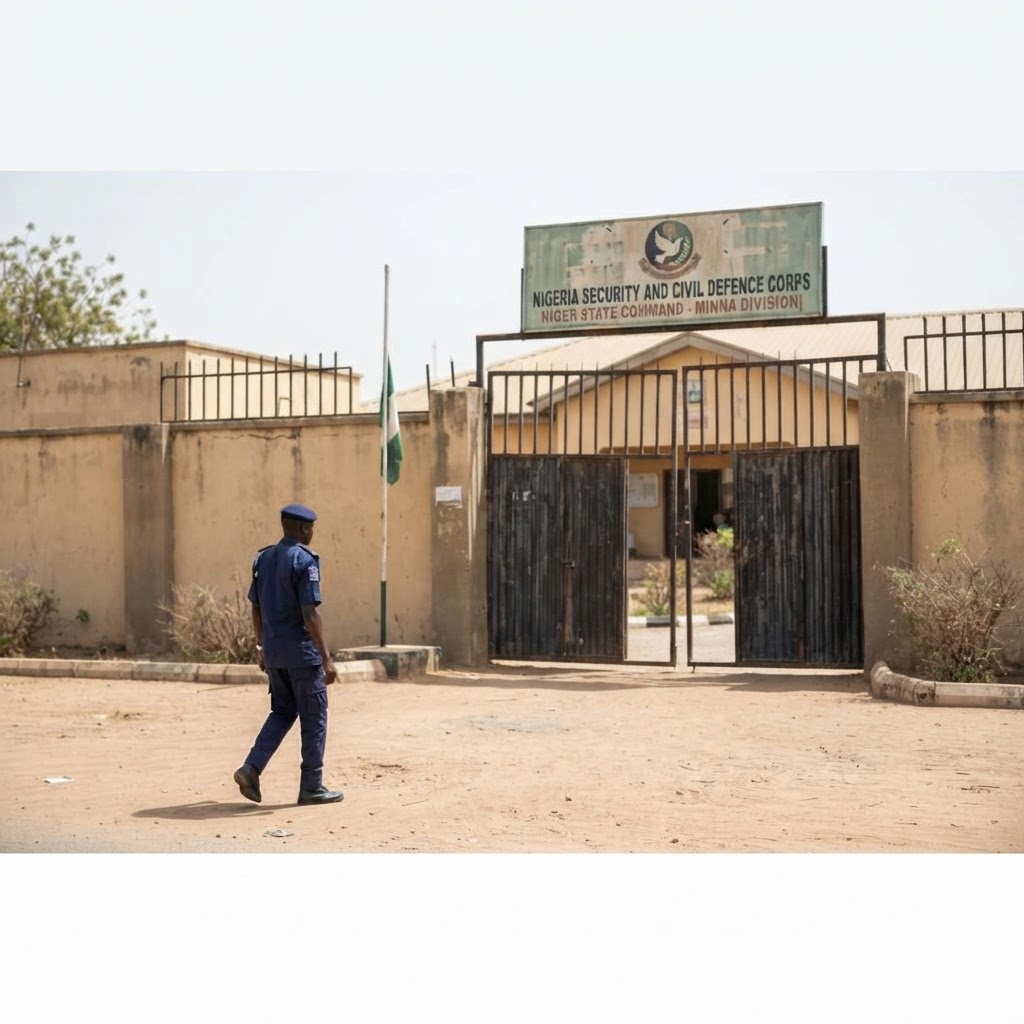
37 Suspected Illegal Miners Die in NSCDC Custody in Niger State
The deaths of 37 human beings in state custody should never be reduced to a statistic. Yet on a deeply troubling day in September 2026, that is precisely what happened in Niger State, Nigeria, when 37 suspected illegal miners died while detained by the Nigeria Security and Civil Defence Corps (NSCDC...

Imo 2028 Succession Debate Intensifies
The political temperature in Imo State has risen sharply as stakeholders, party insiders, and community leaders begin the complex arithmetic of who governs the state after January 2028. What began as quiet backroom conversations has evolved into a full-throated public debate, touching on constitutio...
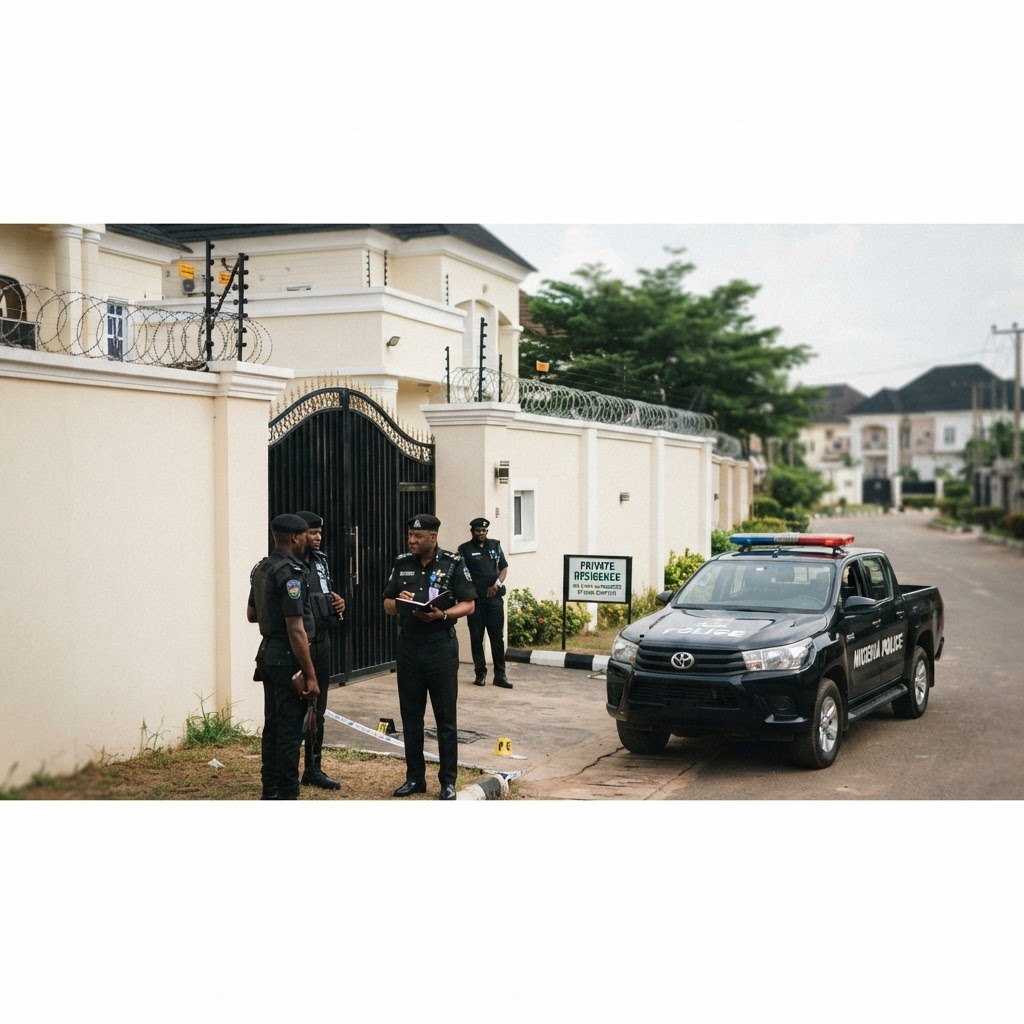
Police Inspector Killed at Imo Commissioner’s Residence
A deadly security breach at the residence of a senior Imo State government official has once again drawn attention to the fragile security situation in southeastern Nigeria. According to a report by TheCable(https://www.thecable.ng/gunmen-kill-police-inspector-at-commissioners-residence-in-imo/), gu...

Best Hospitals in Imo State Compared
Imo State sits at a crossroads of ambition and infrastructure challenge. For the millions of families, entrepreneurs, and young professionals who call this southeastern Nigerian state home, healthcare access is not merely a welfare concern — it is a direct determinant of economic stability and commu...

Imo State Emergency Contacts Directory
Emergencies do not send advance notice. Whether it is a road traffic accident along the Owerri-Onitsha expressway, a fire outbreak in a densely populated neighbourhood, or a sudden medical crisis in one of Imo State's rural local government areas, the difference between life and death often comes do...