Powered by Obi Mbieri Independent Media Ltd · eziokwubundu.com
$1 = ₦1,330€1 = ₦1,526£1 = ₦1,778Imo Erosion Crisis: Mbieri Communities Demand Urgent Government Action
The ground beneath Mbieri is literally disappearing. In Mbaitoli Local Government Area of Imo State, advancing gullies are swallowing roads, threatening homes, and pushing one of southeastern Nigeria's most resilient communities toward an environmental breaking point. Residents are no longer waiting...
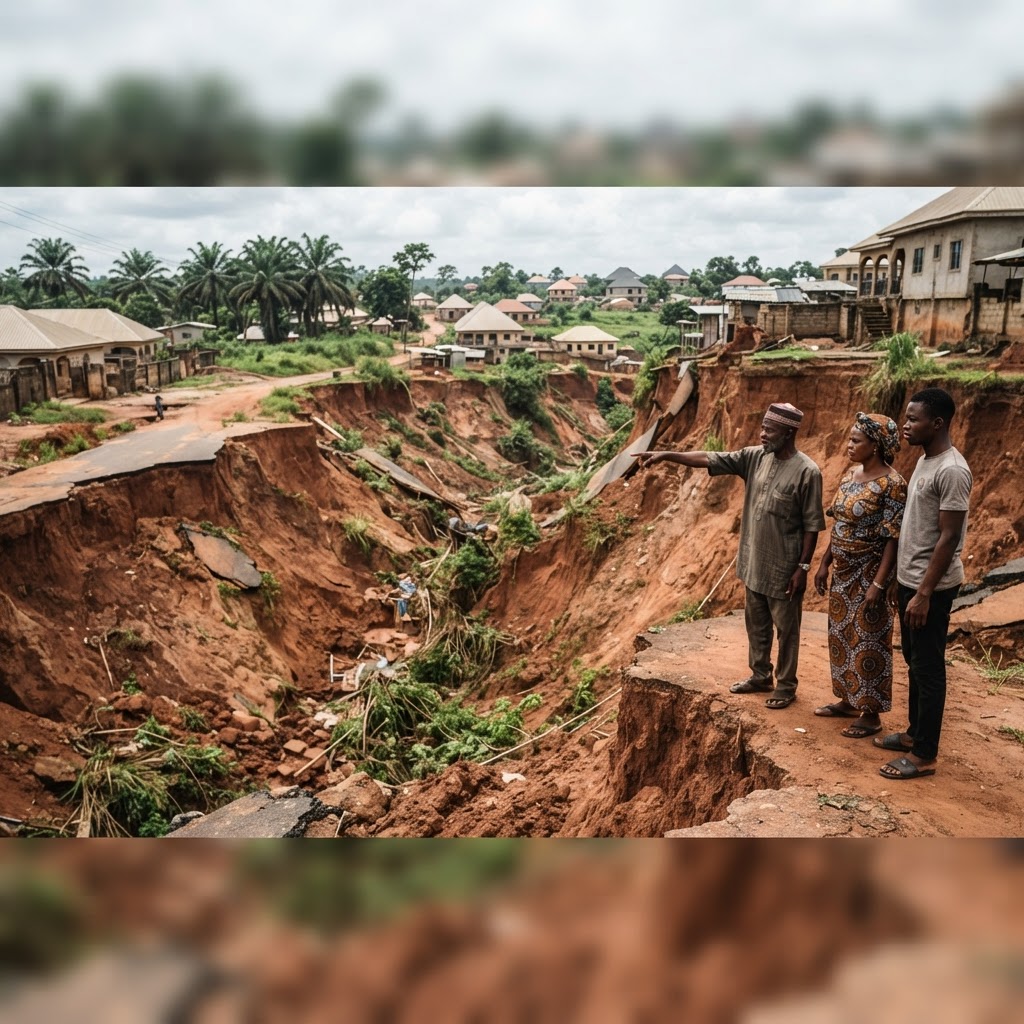
The ground beneath Mbieri is literally disappearing. In Mbaitoli Local Government Area of Imo State, advancing gullies are swallowing roads, threatening homes, and pushing one of southeastern Nigeria's most resilient communities toward an environmental breaking point. Residents are no longer waiting quietly — they are demanding that state and federal authorities act before what remains of their land, livelihoods, and legacy is consumed by unchecked erosion. This article examines the depth of the crisis, its compounding effects on education and economic life, lessons from comparable communities across Imo State, and the practical steps needed to reverse decades of environmental neglect.
Why Is Mbieri's Erosion Crisis at a Breaking Point?
Geography, geology, and the cost of neglect
Mbieri, situated within Mbaitoli LGA in Imo State, occupies a landscape that is geologically predisposed to erosion. The region sits on the highly erodible Benin Formation — a sandy, loosely consolidated sedimentary deposit that dominates much of southeastern Nigeria. When rainfall intensity increases, as it has with shifting weather patterns, water cuts rapidly through this substrate, carving gullies that can expand by several metres in a single rainy season.
What amplifies the natural vulnerability is human behaviour. Unregulated sand mining has accelerated soil destabilisation across the Imo River basin and its surrounding communities. Operators extract sand from riverbanks and hillslopes without environmental impact assessments, leaving behind deeply weakened soil structures. In Mbieri, these extraction sites sit dangerously close to residential zones and access roads, meaning that what began as minor gully formation has evolved into structural threats to homes and community infrastructure.
According to reporting by Premium Times, Imo residents have been demanding remedial measures against worsening erosion, with community voices growing louder as government response remains slow. In Mbieri specifically, families report watching their compounds shrink year after year, with boundary walls, access paths, and in some cases, building foundations, crumbling into expanding gullies.
The socio-economic damage is severe. Property values in erosion-affected zones have collapsed, making it impossible for residents to leverage land assets for loans or investment. Beyond financial loss, there is a measurable psychological toll — the chronic stress of living on land that may not exist tomorrow degrades mental health, disrupts sleep, and erodes community cohesion. For Nigerian families already managing economic pressure, the threat of displacement compounds every other vulnerability.
How Does Erosion Threaten Our Children's Education?
When gullies cut off schools from communities
Environmental degradation and educational access are not separate problems in Mbieri — they are the same problem wearing different faces. Across Imo State, gully erosion has physically severed schools from the communities they serve. Roads that once connected villages to primary and secondary schools have been consumed by advancing gullies, forcing children to take dangerous detours, cross unstable terrain, or simply stop attending altogether.
In Mbieri, the pattern is consistent with the broader Imo trend. When access roads collapse, school attendance rates fall. Parents who cannot guarantee their children's safe passage choose to keep them home. Over time, irregular attendance becomes dropout, and communities lose a generation of formally educated young people precisely when they are most needed.
The problem is compounded by a double burden of neglect. Rural schools in Imo State have long suffered from inadequate maintenance funding, leaking roofs, crumbling classroom blocks, and absent sanitation facilities. When environmental damage is layered onto this existing infrastructure deficit, the result is schools that are both physically inaccessible and structurally unfit. Families in Mbieri are not simply dealing with one failure of governance — they are managing the cascading consequences of several simultaneous failures.
The long-term consequences extend beyond individual households. Communities that lose educational infrastructure lose their pipeline to professional and entrepreneurial talent. Young people who cannot access quality schooling are less equipped to participate in formal economies, less likely to return and invest in their communities, and more vulnerable to poverty cycles that are extraordinarily difficult to break. Protecting land from erosion is therefore inseparable from protecting educational futures. Platforms like eziokwubundu.com's coverage of affordable healthcare options for rural Nigerians illustrate how environmental and social infrastructure failures consistently intersect in rural southeastern communities.
A holistic response to erosion must therefore include the rehabilitation of school access roads, the stabilisation of school compound perimeters, and the integration of environmental education into school curricula so that the next generation understands both the causes and the solutions to the land crisis they are inheriting.
What Can Mbieri Learn from Other Imo Communities?
Umuchima, Ehime Mbano, and Ikeduru's hard lessons
Mbieri is not alone. The erosion crisis is systemic across Imo State, and examining how other communities have responded — with varying degrees of success — provides both cautionary lessons and genuine models for action.
In Umuchima, Ideato South LGA, the scale of gully erosion became so catastrophic that community-level intervention was impossible without federal support. The Nigerian Erosion and Watershed Management Project (NEWMAP), a World Bank-supported initiative implemented through the federal and state governments, was deployed to address some of the most severe gully systems in the southeast. Engineering solutions including concrete-lined drainage channels, check dams, and re-vegetation programmes were applied. While these interventions stabilised active gullies, their long-term effectiveness depends on maintenance — and maintenance requires sustained government commitment that has not always materialised. The Umuchima case demonstrates that large-scale engineering can work, but only when paired with ongoing institutional responsibility.
In Amazi, Ehime Mbano, the story centres on community agency. Residents organised public protests against unregulated sand excavation operations that were visibly accelerating erosion in their locality. Their collective advocacy succeeded in drawing media attention and pressuring local authorities to intervene. This example highlights that community mobilisation, when sustained and organised, can shift government priorities. The Mbieri situation calls for the same coordinated approach — residents, traditional rulers, community development unions, and youth organisations must present a unified, documented case to state authorities.
Featured Products
Chukwu Abiama Tee
Bold black-and-gold Igbo-pride T-shirt featuring 'Chukwu Abiama' in premium streetwear typography.
₦15,000
Buy NowReverse Type 2 Diabetes & other associated Metabolic Issues using Dr. Jason Fung's Evidence-Based Approach— FMD program for Type 2 Diabetes
A practical fasting and fasting-mimicking programme built on Dr Jason Fung's insulin-resistance principles and ow-glycemic recipes.
₦19,950
Join NowỤmụ Igbo Tee
Classic black T-shirt with bold white 'Ụmụ Igbo' typography — a proud statement of Igbo heritage.
₦15,000
Buy NowNwanne Tee
Washed khaki vintage tee with a faded rust-orange 'Nwanne' stamp badge and palm leaf motif — a nod to kinship and heritage.
₦18,000
Buy NowObodo Tee
Faded denim-blue washed tee with a cream 'Obodo' stamp badge and sun motif, celebrating community roots.
₦18,000
Buy NowEkwe Heritage Tee
Deep indigo tee featuring a fine line-art illustration of a traditional Igbo ekwe drum, inspired by Igbo-Ukwu bronze artistry.
₦18,000
Buy NowIkenga Figure Tee
Forest green tee with a fine line-art illustration of a stylized Ikenga figure.
₦18,000
Buy NowAcademic assessments of erosion in Ikeduru LGA provide perhaps the most instructive evidence base. Research published through Nigerian university environmental science departments identifies Ikeduru as a zone of chronic erosion vulnerability, driven by the same Benin Formation geology that affects Mbieri. These studies consistently conclude that sporadic, reactive government responses — emergency repairs after major collapses — are economically and environmentally inefficient. The cost of prevention is consistently lower than the cost of remediation, yet government budgeting in Imo State has historically favoured reactive spending over proactive environmental management.
The pattern across these communities confirms that erosion in Imo is not a series of isolated local problems — it is a systemic regional crisis requiring a coordinated state-wide strategy. Understanding how Igbo communities fund development projects also reveals that local financial mobilisation, when paired with government accountability, can accelerate infrastructure responses that state budgets alone cannot deliver quickly enough.
What Are the Practical Steps for Sustainable Erosion Control?
From crisis management to environmental stewardship
Addressing the Mbieri erosion crisis sustainably requires moving beyond emergency patch-work toward a structured, multi-stakeholder response built on evidence-based principles of erosion control and land management.
The first and most immediate step is rigorous enforcement of the Imo State government's directives banning unregulated mining and dredging. These directives exist on paper, but enforcement on the ground has been inconsistent. Sand mining operations that lack valid environmental permits must be shut down, and community members who report illegal extraction should be protected rather than ignored. Without halting the primary human accelerator of erosion in the region, all other interventions will be undermined.
At the community level, residents and local organisations can implement low-cost, high-impact erosion control measures while awaiting larger government interventions. Re-vegetation using deep-rooted grasses and trees — particularly species like vetiver grass, which has proven highly effective in southeastern Nigeria's erosion-prone soils — can significantly reduce surface runoff and soil detachment. Improved drainage management, including clearing blocked drains before each rainy season and directing water flow away from vulnerable slopes, reduces the volume of concentrated runoff that carves new gullies.
Sustainable land-use practices must also be promoted at the household and farm level. Contour farming on sloped land, the maintenance of vegetative cover year-round, and the avoidance of large-scale vegetation clearance near gully edges are practical measures that communities can adopt without waiting for government funding. Environmental organisations such as the Nigeria Conservation Foundation provide technical guidance and community training that local groups in Mbieri could access.
The broader framework must be a "Community-First" approach — a transparent, participatory roadmap developed jointly by community leaders, Imo State Ministry of Environment, the Imo State Environmental Transformation Commission (ENTRACO), and independent environmental engineers. This roadmap should include mapped gully extents, prioritised intervention sites, clear timelines, and publicly accessible progress reporting. Accountability mechanisms must be embedded from the start. For context on how government accountability failures affect community wellbeing across Imo, the Imo markets fee collection investigation offers a parallel lesson in transparency gaps that ultimately burden ordinary citizens.
International frameworks such as the United Nations Convention to Combat Desertification (UNCCD) and the African Union's Great Green Wall initiative offer policy models and potential funding pathways that Imo State has yet to fully leverage. State environmental officers and community advocates should explore these channels as part of a comprehensive resource mobilisation strategy.
How Do We Build a Resilient Future for Mbieri?
Bridging traditional values with modern development
The Mbieri erosion crisis is ultimately a question of priorities. A community cannot build economic prosperity on land that is disappearing. It cannot raise healthy, educated children in an environment where schools are inaccessible and homes are unstable. Environmental safety is not a luxury consideration — it is the foundation on which every other dimension of community wellbeing rests.
Eziokwubundu's mission of integrating health, wealth, and community development speaks directly to this reality. When the land is protected, families are healthier, property retains its value, businesses can operate, and schools remain accessible. The fight against erosion is a fight for the complete quality of life that every Nigerian family deserves.
Diaspora Nigerians with ties to Mbieri and Mbaitoli LGA have a meaningful role to play — financially supporting community erosion control initiatives, amplifying advocacy through social media and diaspora organisations, and engaging directly with elected representatives at state and federal levels. Local entrepreneurs, traditional rulers, women's groups, and youth professionals must sustain the pressure for government accountability that has already begun to emerge.
Informed, active citizenship — rooted in evidence and organised around shared community interest — is the most powerful tool available to Mbieri's residents. Eziokwubundu remains committed to providing the knowledge, analysis, and community platform that makes that citizenship possible. The ground can be saved. The future can be secured. But only if we act — collectively, urgently, and without compromise.
Sources: Premium Times — Imo Residents Demand Remedial Measures Against Erosion | Nigeria Conservation Foundation | NEWMAP — Nigeria Erosion and Watershed Management Project
Stay Informed
Get New Articles in Your Inbox
Subscribe to receive the latest community development, health, and wealth insights from Eziokwubundu.
Newsletter
Practical insights on health, wealth, and community — delivered weekly.
Community Discussion(0)
Leave a Comment
More to Read
You May Also Like

How Igbo communities fund development projects
Across southeastern Nigeria, roads are tarred, schools are built, and boreholes are sunk — not by government contractors, but by communities pooling resources together. This phenomenon is neither accidental nor recent. It is the product of centuries-old cultural philosophy, refined institutional str...

Wike–Uzodimma Dispute: Imo Lawyers Respond to FCT Minister's Attacks
Political tensions between Nigeria's FCT Minister Nyesom Wike and Imo State Governor Hope Uzodimma have escalated to a point where legal professionals feel compelled to intervene. The Imo Lawyers for the Defence of Democracy has formally called out what it describes as dangerous personal attacks ema...
Imo Markets: What Fees Are Traders Paying and Who Collects Them?
For thousands of traders operating daily across Imo State's bustling markets — from Relief Market in Owerri to the Naze Timber and Allied Traders Market — paying levies is an unavoidable cost of doing business. But in 2026, a more urgent question is emerging from beneath the noise of commerce: exact...

Donor Health Funds Under Scrutiny: Why a Civil Society Group Wants FBI, EFCC to Widen Probe
International health aid is only as effective as the integrity of those who manage it. When billions of naira in donor-funded resources meant to combat HIV and tuberculosis go missing or are misappropriated, the consequences are not abstract — they are measured in lives lost, treatments missed, and ...
Nigeria Wins $2.35bn Mambilla Hydroelectric Arbitration Case
Nigeria has secured a landmark legal victory that could reshape the country's energy landscape for generations. An International Chamber of Commerce (ICC) arbitration tribunal sitting in Paris has ruled in favour of the Federal Government of Nigeria, rejecting a staggering $2.35 billion claim brough...
37 Suspected Illegal Miners Die in NSCDC Custody in Niger State
The deaths of 37 human beings in state custody should never be reduced to a statistic. Yet on a deeply troubling day in September 2026, that is precisely what happened in Niger State, Nigeria, when 37 suspected illegal miners died while detained by the Nigeria Security and Civil Defence Corps (NSCDC...

Imo 2028 Succession Debate Intensifies
The political temperature in Imo State has risen sharply as stakeholders, party insiders, and community leaders begin the complex arithmetic of who governs the state after January 2028. What began as quiet backroom conversations has evolved into a full-throated public debate, touching on constitutio...

Police Inspector Killed at Imo Commissioner’s Residence
A deadly security breach at the residence of a senior Imo State government official has once again drawn attention to the fragile security situation in southeastern Nigeria. According to a report by TheCable(https://www.thecable.ng/gunmen-kill-police-inspector-at-commissioners-residence-in-imo/), gu...
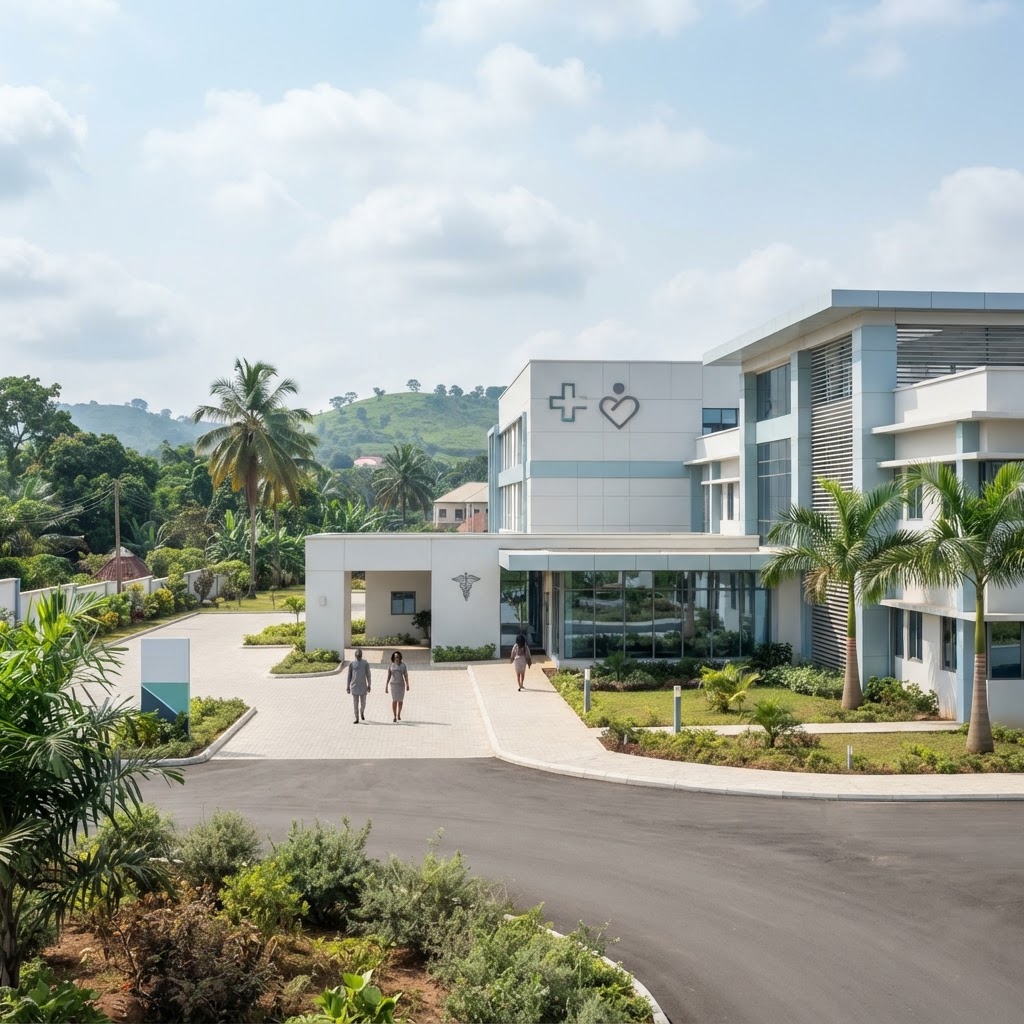
Best Hospitals in Imo State Compared
Imo State sits at a crossroads of ambition and infrastructure challenge. For the millions of families, entrepreneurs, and young professionals who call this southeastern Nigerian state home, healthcare access is not merely a welfare concern — it is a direct determinant of economic stability and commu...

Imo State Emergency Contacts Directory
Emergencies do not send advance notice. Whether it is a road traffic accident along the Owerri-Onitsha expressway, a fire outbreak in a densely populated neighbourhood, or a sudden medical crisis in one of Imo State's rural local government areas, the difference between life and death often comes do...