Powered by Obi Mbieri Independent Media Ltd · eziokwubundu.com
$1 = ₦1,330€1 = ₦1,526£1 = ₦1,778NSCDC Deaths: What Happened Inside the Niger Detention Facility?
On the morning of September 17–18, 2026, news broke from Minna that would shake Nigeria's security establishment to its foundations. Thirty-seven detainees held inside a Nigeria Security and Civil Defence Corps (NSCDC) facility in Niger State were found dead. The tragedy did not unfold on a battlefi...
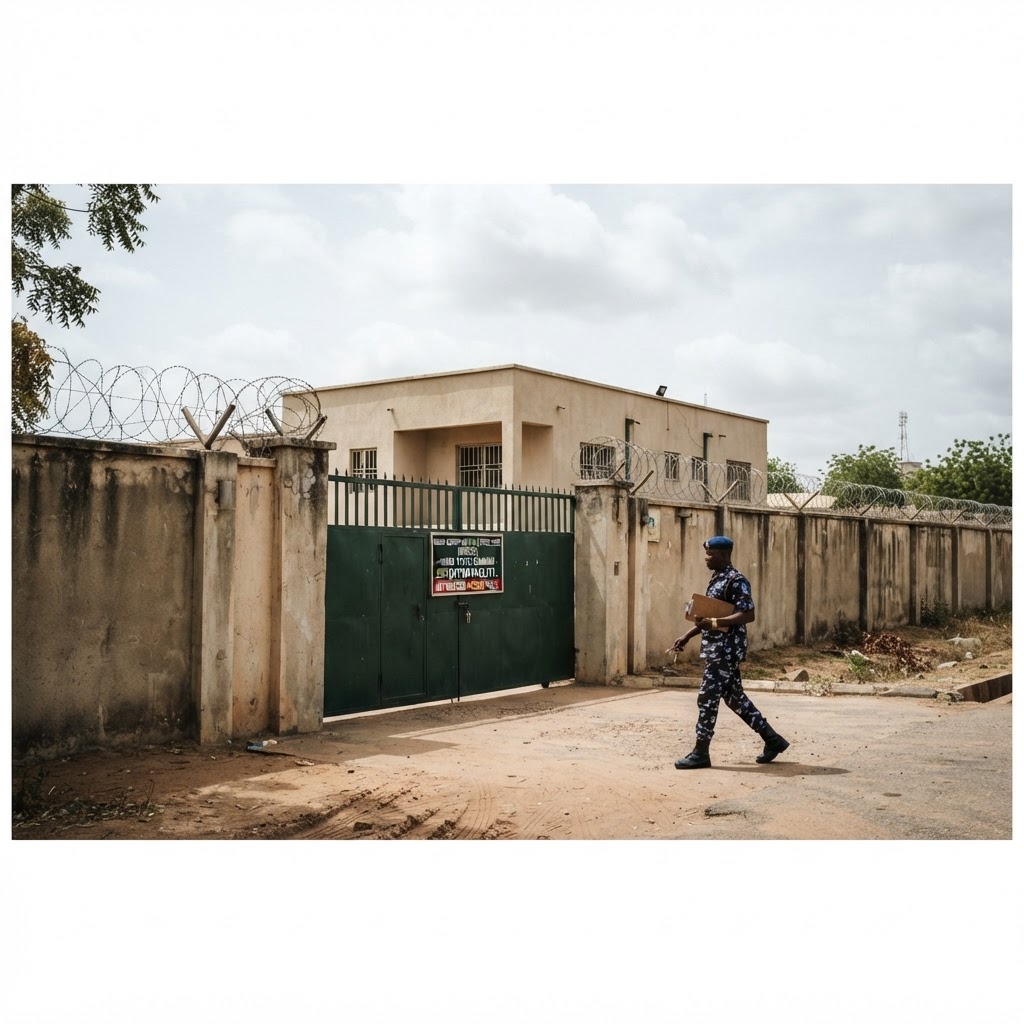
On the morning of September 17–18, 2026, news broke from Minna that would shake Nigeria's security establishment to its foundations. Thirty-seven detainees held inside a Nigeria Security and Civil Defence Corps (NSCDC) facility in Niger State were found dead. The tragedy did not unfold on a battlefield or during a violent confrontation. It unfolded in a holding cell — a space where the state had assumed responsibility for the lives of those within. That responsibility, the evidence suggests, was catastrophically failed.
For Nigerian families, community stakeholders, and every citizen who has ever interacted with a government security agency, this incident raises questions that demand honest answers. What killed those 37 people? Who is accountable? And what must change to ensure this never happens again? This article examines the known facts, the survivor testimonies, the government's response, and what communities can do to protect their own.
What Facts Surround the Niger Detention Tragedy?
A Timeline of 37 Deaths in Minna
The deaths at the NSCDC detention facility in Minna, Niger State, were discovered across the night of September 17 and the early hours of September 18, 2026. The detainees — many of them arrested in connection with illegal mining activities in the region — had been held in a facility that was, by all subsequent accounts, grossly ill-equipped to house the number of people crammed into it.
The Niger State NSCDC Commandant, Suberu Siyaka Aniviye, initially attributed the mass deaths to a "disease outbreak," a claim that would quickly come under scrutiny from intelligence reports, medical assessments, and firsthand survivor accounts. The suggestion of disease was treated with deep skepticism by observers, given the speed and scale of the deaths and the physical conditions of the holding cell.
The federal government's response was swift, at least in its punitive dimension. Commandant Aniviye was suspended almost immediately. The NSCDC Commandant General, Ahmed Abubakar Audi, announced the suspension of 20 additional officers connected to the facility's operations. According to reporting by Punch Nigeria, the suspended officers included the O/C Station Guard and multiple station guards who were on duty during the period the deaths occurred. The full list of suspended officers was made public, a move that signalled at least a surface-level commitment to transparency — though advocacy groups and families of victims have called for much more.
The Minna tragedy joins a long and troubling history of custodial deaths in Nigeria, where official explanations and observable facts frequently diverge.
Why Do Survivors Point to Suffocation?
Overcrowding, No Air, No Way Out
The most compelling and consistent explanation emerging from the Minna facility is not disease — it is suffocation resulting from extreme overcrowding in a poorly ventilated holding cell. Survivor accounts, including testimony from Dauda Shehu, one of the detainees who survived the ordeal, paint a harrowing picture of a space so packed with human bodies that breathing became a competition no one could win.
Shehu and other survivors described a cell designed to hold a fraction of the number of people placed inside it. As the night wore on and temperatures rose, the air inside the cell reportedly became dangerously depleted. Detainees pressed against one another, against walls, against doors — crying out for help that, according to accounts, came far too slowly or not at all. The physical evidence supported this: the capacity of the holding facility versus the documented number of detainees held created conditions that ventilation experts and forensic analysts would describe as a predictable recipe for mass asphyxiation.
This is not a new phenomenon in Nigerian detention settings. Independent human rights monitors have long documented the routine use of understaffed, undersized, and under-ventilated holding cells by security agencies across the country. The families of the deceased have been vocal in rejecting the "disease outbreak" narrative, with several noting that their relatives had shown no signs of illness before their arrest. The discrepancy between what officials initially claimed and what survivors described is not a minor administrative inconsistency — it represents a fundamental gap in accountability.
The broader implication is also deeply relevant to public health. As explored in our coverage of affordable healthcare options for rural Nigerians, the intersection of poor infrastructure and absent healthcare oversight creates compounding dangers for vulnerable populations — dangers that are especially acute inside detention facilities where individuals cannot advocate for themselves.
Independent observers and civil society organizations have called for forensic autopsies to be conducted transparently and for the results to be made public. Until that happens, the suffocation hypothesis — grounded in survivor testimony and physical facility data — remains the most credible explanation available.
How Is the Federal Government Responding?
Investigations, Suspensions, and Accountability
The federal government's institutional response to the Minna deaths has proceeded along two parallel tracks: internal NSCDC accountability measures and an independent police investigation.
NSCDC Commandant General Ahmed Abubakar Audi moved quickly to establish a high-powered investigative committee tasked with determining the root cause of the 37 deaths. The committee was empowered to examine facility conditions, staffing levels, chain of command decisions on the night in question, and whether standing protocols for detainee welfare were followed or ignored. The Commandant General's public statements framed the investigation as a genuine search for truth, though critics have noted the inherent limitations of an agency investigating itself.
The suspension of 20 officers — detailed in the Punch Nigeria report — included personnel at various levels of the station hierarchy. The O/C Station Guard, whose role involves direct oversight of detainee conditions, was among those suspended. This is significant: it places accountability not merely at the administrative top but at the operational level where decisions about cell occupancy and ventilation would have been made in real time.
Featured Products
Chukwu Abiama Tee
Bold black-and-gold Igbo-pride T-shirt featuring 'Chukwu Abiama' in premium streetwear typography.
₦15,000
Buy NowReverse Type 2 Diabetes & other associated Metabolic Issues using Dr. Jason Fung's Evidence-Based Approach— FMD program for Type 2 Diabetes
A practical fasting and fasting-mimicking programme built on Dr Jason Fung's insulin-resistance principles and ow-glycemic recipes.
₦19,950
Join NowỤmụ Igbo Tee
Classic black T-shirt with bold white 'Ụmụ Igbo' typography — a proud statement of Igbo heritage.
₦15,000
Buy NowNwanne Tee
Washed khaki vintage tee with a faded rust-orange 'Nwanne' stamp badge and palm leaf motif — a nod to kinship and heritage.
₦18,000
Buy NowObodo Tee
Faded denim-blue washed tee with a cream 'Obodo' stamp badge and sun motif, celebrating community roots.
₦18,000
Buy NowEkwe Heritage Tee
Deep indigo tee featuring a fine line-art illustration of a traditional Igbo ekwe drum, inspired by Igbo-Ukwu bronze artistry.
₦18,000
Buy NowIkenga Figure Tee
Forest green tee with a fine line-art illustration of a stylized Ikenga figure.
₦18,000
Buy NowThe Niger State Police Command was also directed to conduct its own independent probe. The involvement of an external security body adds a layer of separation that pure internal investigations cannot provide, though human rights groups have argued that truly independent oversight requires civilian and judicial participation.
This pattern of institutional response — investigation committees, suspensions, parallel probes — is not unfamiliar in Nigeria. The critical question, as with similar tragedies involving donor health funds and institutional accountability, is whether the process results in structural change or merely in a temporary reshuffling of personnel. Families of the 37 victims deserve more than administrative procedure. They deserve justice, and justice requires findings that are made public and acted upon.
What Are the Human Rights Implications?
Custodial Standards, Community Trust, and Reform
The deaths in Minna are not an isolated incident. They are a symptom of a systemic failure in how Nigerian security agencies manage detainee welfare — a failure with direct implications for human rights, public health, and the social contract between citizens and the state.
Viewed through the "Health + Wealth + Community" framework that underpins responsible civic development, the Minna tragedy illustrates how poor custodial health standards do not merely harm individual detainees — they erode the trust that communities place in security institutions. When a family member is arrested, the assumption — the minimum expectation — is that they will be returned alive. When that expectation is shattered 37 times in a single night, the damage to community confidence in law enforcement is profound and lasting.
Nigeria's Administration of Criminal Justice Act (ACJA) sets out provisions for the humane treatment of detainees, including limits on detention periods without charge. The United Nations Standard Minimum Rules for the Treatment of Prisoners, known as the Nelson Mandela Rules, establish international benchmarks for cell space, ventilation, and medical access. The Minna facility, as described by survivors, appears to have violated both domestic and international standards simultaneously.
Upgrading detention facilities requires budget allocation, political will, and — critically — independent oversight. The issues are interconnected: just as communities must advocate for transparent governance in local markets and resource allocation, as seen in ongoing debates around Imo community development funding, they must equally demand that state custodial infrastructure meets the minimum standards of human dignity.
Transparency is not optional in this context. It is the mechanism through which accountability becomes real.
How Can Communities Advocate for Better Conditions?
Civic Tools for Oversight and Justice
The Minna tragedy should serve as a galvanizing moment for community leaders, civil society organizations, youth professionals, and everyday Nigerians who believe that the state must be held to account. Advocacy does not require confrontation — it requires organization, documentation, and persistence.
Community leaders can begin by requesting formal facility inspections through local government structures and National Human Rights Commission (NHRC) channels. The NHRC has a mandate to investigate complaints about human rights violations, including custodial abuses, and citizens are entitled to engage it directly. Organizations like the Civil Liberties Organisation (CLO) and Amnesty International Nigeria offer frameworks for reporting and escalating documented cases of detention abuse.
The "Traditional Values, Modern Progress" approach is directly applicable here. African community structures — town unions, professional associations, religious bodies, traditional councils — carry significant moral authority. When these institutions formally demand accountability from security agencies, they do so with a legitimacy that individual voices cannot easily match. Peaceful, legally grounded engagement through these channels is not weakness; it is a form of collective power that Nigerian communities have exercised successfully across generations.
Families of victims should be supported in accessing legal representation and in formally demanding autopsy results, investigation findings, and officer-level accountability through the courts. Evidence-based advocacy — grounded in documented testimony, facility records, and forensic findings — is far more durable than outrage alone.
Just as communities have rallied around issues like the Mbieri erosion crisis, coordinated civic pressure on custodial reform can yield real results. The 37 lives lost in Minna deserve no less.
Conclusion
The deaths of 37 detainees inside an NSCDC facility in Niger State represent one of the most serious custodial tragedies in recent Nigerian history. The initial "disease outbreak" explanation has been challenged by survivor testimony, physical evidence, and the sheer scale and speed of the deaths. Suffocation in an overcrowded, under-ventilated cell is the account that the evidence consistently supports.
Accountability has begun — with suspensions and investigation committees — but accountability must be completed. That means public findings, criminal prosecution where warranted, and structural reform of detention infrastructure nationwide. For Nigerian families and community stakeholders reading this, the lesson is clear: the health and safety of every citizen in state custody is a community concern, a human rights concern, and a governance concern. The time to demand better is now.
Stay Informed
Get New Articles in Your Inbox
Subscribe to receive the latest community development, health, and wealth insights from Eziokwubundu.
Newsletter
Practical insights on health, wealth, and community — delivered weekly.
Community Discussion(0)
Leave a Comment
More to Read
You May Also Like

Wike–Uzodimma Dispute: Imo Lawyers Respond to FCT Minister's Attacks
Political tensions between Nigeria's FCT Minister Nyesom Wike and Imo State Governor Hope Uzodimma have escalated to a point where legal professionals feel compelled to intervene. The Imo Lawyers for the Defence of Democracy has formally called out what it describes as dangerous personal attacks ema...

Imo Erosion Crisis: Mbieri Communities Demand Urgent Government Action
The ground beneath Mbieri is literally disappearing. In Mbaitoli Local Government Area of Imo State, advancing gullies are swallowing roads, threatening homes, and pushing one of southeastern Nigeria's most resilient communities toward an environmental breaking point. Residents are no longer waiting...

Imo Markets: What Fees Are Traders Paying and Who Collects Them?
For thousands of traders operating daily across Imo State's bustling markets — from Relief Market in Owerri to the Naze Timber and Allied Traders Market — paying levies is an unavoidable cost of doing business. But in 2026, a more urgent question is emerging from beneath the noise of commerce: exact...

Donor Health Funds Under Scrutiny: Why a Civil Society Group Wants FBI, EFCC to Widen Probe
International health aid is only as effective as the integrity of those who manage it. When billions of naira in donor-funded resources meant to combat HIV and tuberculosis go missing or are misappropriated, the consequences are not abstract — they are measured in lives lost, treatments missed, and ...

Nigeria Wins $2.35bn Mambilla Hydroelectric Arbitration Case
Nigeria has secured a landmark legal victory that could reshape the country's energy landscape for generations. An International Chamber of Commerce (ICC) arbitration tribunal sitting in Paris has ruled in favour of the Federal Government of Nigeria, rejecting a staggering $2.35 billion claim brough...
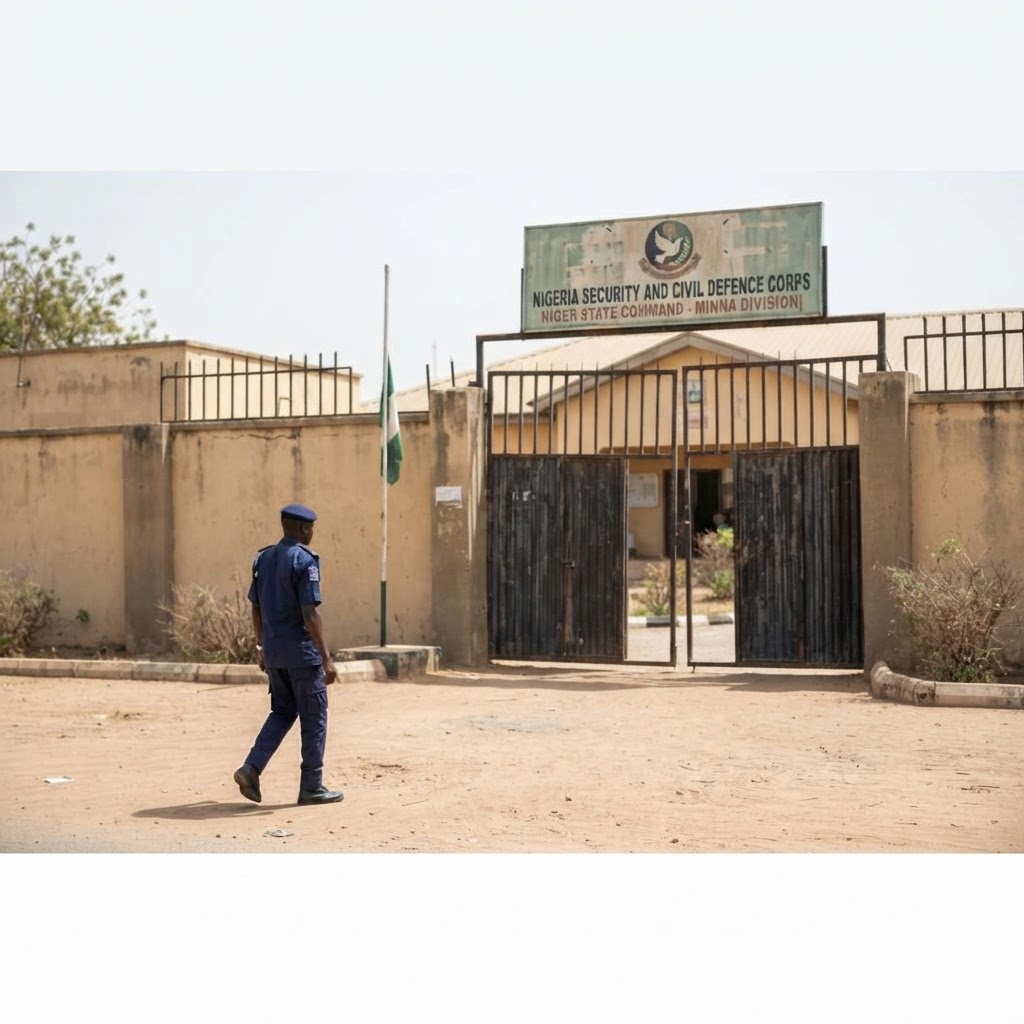
37 Suspected Illegal Miners Die in NSCDC Custody in Niger State
The deaths of 37 human beings in state custody should never be reduced to a statistic. Yet on a deeply troubling day in September 2026, that is precisely what happened in Niger State, Nigeria, when 37 suspected illegal miners died while detained by the Nigeria Security and Civil Defence Corps (NSCDC...

Imo 2028 Succession Debate Intensifies
The political temperature in Imo State has risen sharply as stakeholders, party insiders, and community leaders begin the complex arithmetic of who governs the state after January 2028. What began as quiet backroom conversations has evolved into a full-throated public debate, touching on constitutio...
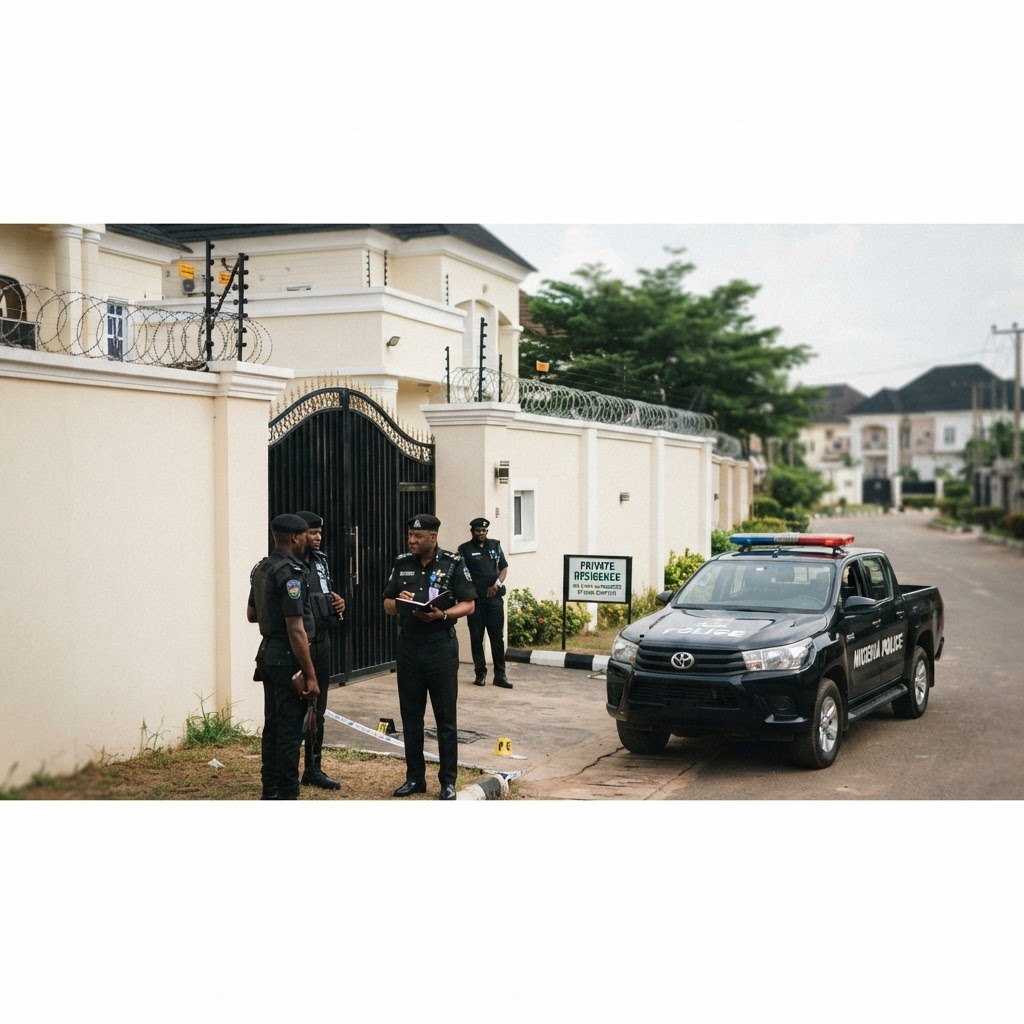
Police Inspector Killed at Imo Commissioner’s Residence
A deadly security breach at the residence of a senior Imo State government official has once again drawn attention to the fragile security situation in southeastern Nigeria. According to a report by TheCable(https://www.thecable.ng/gunmen-kill-police-inspector-at-commissioners-residence-in-imo/), gu...
Best Hospitals in Imo State Compared
Imo State sits at a crossroads of ambition and infrastructure challenge. For the millions of families, entrepreneurs, and young professionals who call this southeastern Nigerian state home, healthcare access is not merely a welfare concern — it is a direct determinant of economic stability and commu...

Imo State Emergency Contacts Directory
Emergencies do not send advance notice. Whether it is a road traffic accident along the Owerri-Onitsha expressway, a fire outbreak in a densely populated neighbourhood, or a sudden medical crisis in one of Imo State's rural local government areas, the difference between life and death often comes do...