Powered by Obi Mbieri Independent Media Ltd.
$1 = ₦1,353€1 = ₦1,486£1 = ₦1,775How Igbo communities fund development projects
Across southeastern Nigeria, roads are tarred, schools are built, and boreholes are sunk — not by government contractors, but by communities pooling resources together. This phenomenon is neither accidental nor recent. It is the product of centuries-old cultural philosophy, refined institutional str...
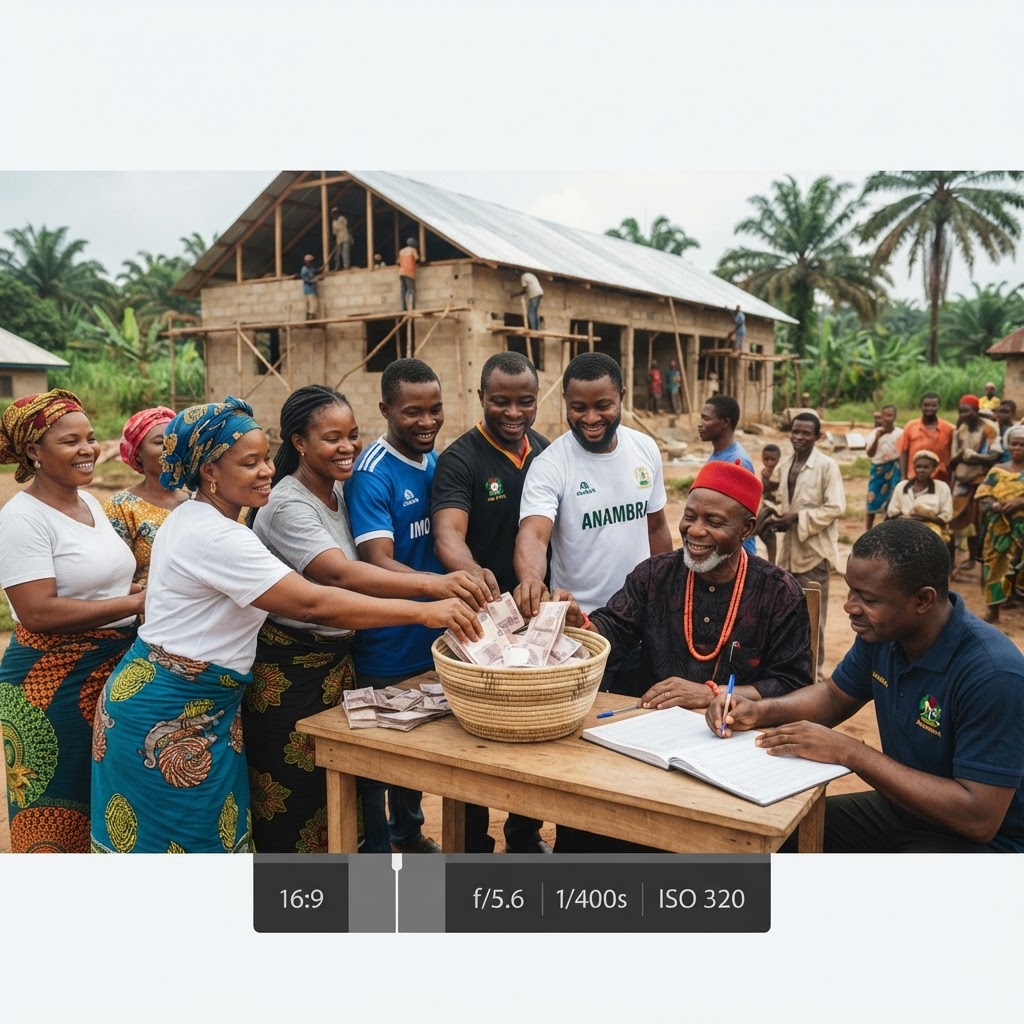
Across southeastern Nigeria, roads are tarred, schools are built, and boreholes are sunk — not by government contractors, but by communities pooling resources together. This phenomenon is neither accidental nor recent. It is the product of centuries-old cultural philosophy, refined institutional structures, and a stubborn communal determination to develop with or without state support. Understanding how Igbo communities fund development projects reveals a sophisticated grassroots financing model that blends tradition, social accountability, and modern philanthropy into one of Africa's most resilient self-help ecosystems.
Why is the town union model the backbone of Igbo development?
From 'Igwebuike' to organized civil society
The philosophical engine driving Igbo community development is Igwebuike — an Igbo concept meaning "there is strength in numbers." More than a proverb, it is an operational worldview. It holds that collective action multiplies individual capacity, and that no meaningful development can occur in isolation. This principle has shaped how Igbo communities organize themselves for everything from farming cooperatives to the construction of civic centers.
Town unions — also called improvement unions or development unions — trace their formal origins to the early twentieth century. Historians note that organizations like the Ibo Union Lagos emerged in the 1920s as migrant Igbo workers sought mutual support in colonial urban centers. Over time, these associations evolved from informal ethnic fraternal groups into sophisticated civil society bodies with constitutions, elected executives, and annual budgets.
A critical factor in this evolution was the chronic failure of colonial and post-independence governments to deliver basic infrastructure to rural communities. Roads connecting Igbo hinterland towns to commercial centers were neglected. Schools lacked furniture. Health facilities were absent. Faced with governmental indifference, Igbo communities adopted an unapologetic self-help posture. The town union became the de facto local development authority — raising funds, awarding contracts, and supervising construction.
Today, virtually every Igbo community, from large cities like Onitsha and Owerri to small villages in Ebonyi, maintains a formal town union with branches in major Nigerian cities and abroad. This organizational density is a direct legacy of Igwebuike — the recognition that collective resolve builds what individual poverty cannot afford.
What are the primary financial mechanisms used by town unions?
Levies, fines, and annual dues
The financial architecture of a typical Igbo town union is more structured than most people outside the community realize. Revenue generation operates through several parallel streams designed to capture contributions across different economic classes.
Mandatory levies and registration fees form the foundational layer. When a new member joins a branch — whether in Lagos, Abuja, or abroad — they pay a registration fee that initiates them into the union's financial obligations. Many unions operate a graded levy system, where members are categorized into tiers based on their assessed economic capacity. A business owner or civil servant may be levied at a higher rate than a student or low-income earner. This tiering ensures that the burden of development is distributed proportionately, reducing drop-out rates caused by financial hardship.
Fines and disciplinary contributions serve a dual purpose that is uniquely Igbo in character. Members who miss meetings without formal apology, fail to attend a fellow member's funeral, or neglect to participate in communal labor days are fined according to the union's constitution. These fines are not punitive in isolation — they are built into the revenue model. A well-attended union with active disciplinary enforcement can generate a meaningful portion of its annual budget through fines alone. More importantly, the fines reinforce social contracts: participation is not optional, and the community's progress is everyone's responsibility.
Annual contributions — sometimes called "development levies" — are the most predictable revenue source. Members commit to a fixed annual sum, collected either at the annual general meeting or through branch treasurers. Unions maintain contribution registers that track who has paid, who is in arrears, and who has made advance payments. This public ledger system creates peer accountability. Being listed as a defaulter in a community where social reputation matters enormously is a powerful collection mechanism.
Together, these mechanisms provide operating capital for ongoing maintenance, meeting costs, and seed funding for small-scale projects. For larger ambitions, communities turn to a different — and more dramatic — instrument.
How do communities leverage wealth for large-scale projects?
Launches, philanthropy, and the Almanac tradition
When an Igbo community wants to build something significant — a new civic center, an electrification project, a secondary school block, or a tarred road — it organizes a launching ceremony. This is not merely a fundraising event. It is a cultural production designed to generate maximum contributions through a potent combination of public honor, social pressure, and competitive generosity.
At a typical launching, a master of ceremonies announces donations publicly as they are pledged. The names of donors and their contribution amounts are read aloud to the assembled community. Wealthy indigenes — businesspeople, politicians, professionals, and contractors — compete to be recognized as the most generous. In many communities, the largest donor is accorded a special title or honorific recognition, a cultural incentive that taps directly into the Igbo appreciation for achievement and status.
This mechanism is remarkably effective. A single well-organized launching in a prosperous community can raise tens of millions of naira in a single afternoon. Research on community development financing in southeastern Nigeria suggests that launching ceremonies can account for 40–60% of total project capital for major infrastructure, with the remainder sourced from levies and external donations. The social theater of the event is not incidental — it is the fundraising technology itself.
The Almanac represents another sophisticated fundraising instrument, particularly targeted at diaspora and professional indigenes who cannot attend physical events. Community almanacs are annual publications containing photographs of members, historical records, and most importantly, advertisement and dedication pages sold to businesses and wealthy individuals. A full-page dedication to a grandparent or a business advertisement from a Lagos entrepreneur sends money home while generating community pride. These publications function as printed sponsorship vehicles, with proceeds directed to development funds.
Elite philanthropy plays a structuring role beyond launches. Prominent Igbo businesspeople — particularly those who have made fortunes in trade, real estate, or oil services — are expected by cultural convention to make landmark donations to their ancestral communities. This expectation is so deeply embedded that failure to contribute generously can damage a wealthy person's social standing irreparably. Communities have built hospitals, donated ambulances, and constructed entire school complexes through the philanthropic commitments of single prominent indigenes motivated as much by cultural obligation as personal generosity.
Featured Products
Reverse Type 2 Diabetes & other associated Metabolic Issues using Dr. Jason Fung's Evidence-Based Approach— FMD program for Type 2 Diabetes
A practical fasting and fasting-mimicking programme built on Dr Jason Fung's insulin-resistance principles and ow-glycemic recipes.
₦19,950
Join NowChukwu Abiama Tee
Bold black-and-gold Igbo-pride T-shirt featuring 'Chukwu Abiama' in premium streetwear typography.
₦15,000
Buy NowỤmụ Igbo Tee
Classic black T-shirt with bold white 'Ụmụ Igbo' typography — a proud statement of Igbo heritage.
₦15,000
Buy NowNwanne Tee
Washed khaki vintage tee with a faded rust-orange 'Nwanne' stamp badge and palm leaf motif — a nod to kinship and heritage.
₦18,000
Buy NowObodo Tee
Faded denim-blue washed tee with a cream 'Obodo' stamp badge and sun motif, celebrating community roots.
₦18,000
Buy NowEkwe Heritage Tee
Deep indigo tee featuring a fine line-art illustration of a traditional Igbo ekwe drum, inspired by Igbo-Ukwu bronze artistry.
₦18,000
Buy NowIkenga Figure Tee
Forest green tee with a fine line-art illustration of a stylized Ikenga figure.
₦18,000
Buy NowFor context on how public funds and donor contributions interact at a broader level, the ongoing scrutiny around donor health funds under investigation by civil society groups underscores why transparency in community-level financing is equally important.
How does the diaspora contribute to local prosperity?
From remittances to collective investment
The Igbo diaspora — spread across the United Kingdom, United States, Canada, and across West Africa — is not a passive audience in the story of community development. It is an active co-investor. Organizations like Umu Igbo Unite, a major North American Igbo association, exemplify how diaspora networks formalize cultural ties into development pipelines.
The shift from individual remittances to collective investment marks a maturation of diaspora engagement. Where a first-generation migrant once sent money home primarily to support immediate family, second-generation Igbo diaspora networks increasingly pool resources to fund community-wide amenities. This transition is significant: individual remittances address household poverty, but collective diaspora investment addresses community infrastructure gaps.
Diaspora-funded projects tend to cluster in three sectors: education, healthcare, and sanitation. School libraries stocked with textbooks and computers, maternity wards built to reduce maternal mortality, and borehole water projects eliminating dependence on contaminated streams — these are the signature projects of diaspora unions. In communities across Anambra, Imo, Enugu, Ebonyi, and Abia states, infrastructure built with diaspora funding is often visibly marked with the name of the sponsoring overseas branch.
Healthcare access is a recurring priority. Given the challenges of affordable healthcare for rural Nigerians, diaspora investment in rural clinics and medical equipment has a direct impact on life outcomes. Some diaspora unions now organize annual medical outreach programs, bringing volunteer doctors and subsidized medicines to their ancestral communities.
The digital revolution has also democratized diaspora participation. WhatsApp groups, online banking transfers, and crowdfunding platforms allow an Igbo professional in Houston to contribute to a village water project in real time, without waiting for the annual general meeting. This frictionless giving is expanding the pool of contributors beyond formal union members to include younger, loosely affiliated diaspora Nigerians.
What are the future challenges and opportunities for community funding?
Modernizing self-help for the next generation
Despite its resilience, the Igbo community funding model faces structural pressures that demand urgent modernization. Poverty and economic hardship remain the most immediate constraints. Nigeria's poverty rate — estimated at over 40% by the National Bureau of Statistics — means that mandatory levies, however carefully tiered, strain household budgets in communities where cash income is irregular. Defaulter rates rise during economic downturns, reducing the predictability of levy-based revenue.
Illiteracy and weak governance capacity in some rural branches create financial management problems. Without proper bookkeeping, funds are vulnerable to misappropriation. Communities have lost trust in their unions following financial scandals, and rebuilding that trust is slow and difficult. For a parallel example of how opaque financial management erodes public confidence, the controversy around Imo market fees and their collection illustrates how lack of accountability damages institutional credibility at the community level.
Partnership with government and international development organizations offers a scaling pathway that individual communities cannot achieve alone. Some state governments in the southeast have begun matching community development contributions with counterpart funding — a model that multiplies local effort without replacing it. NGOs and international donors focused on rural development, such as the World Bank's Community and Social Development Project, have also recognized the town union model as a credible community institution worth engaging.
Digital transparency tools represent perhaps the most transformative opportunity. Mobile banking platforms, community finance apps, and public contribution dashboards can replace handwritten ledgers with auditable digital records. When every member can verify how funds are collected and spent on a smartphone, participation increases and corruption decreases. Forward-thinking unions are already piloting WhatsApp-based contribution tracking and online annual general meetings that include diaspora members in real-time voting.
The Igbo community funding model is not a relic — it is a living system with proven results. But sustaining it into the twenty-first century requires deliberate institutional reform: stronger financial governance, broader government partnership, and the integration of digital tools that make collective development both transparent and accessible to every generation.
Conclusion
The story of how Igbo communities fund development projects is ultimately a story about what communities can achieve when institutional trust replaces dependence on external authority. From the philosophical roots of Igwebuike to the sophisticated machinery of levies, launchings, diaspora unions, and elite philanthropy, Igbo communities have constructed a self-financing development model that delivers real infrastructure in the face of chronic government neglect.
The model is not perfect. Poverty limits participation, governance gaps enable mismanagement, and demographic shifts challenge old structures. But its core insight — that collective resources, managed with accountability and cultural commitment, can transform communities — remains as relevant today as it was a century ago. For Nigerian families, community leaders, diaspora professionals, and development practitioners, understanding and strengthening this model is not nostalgia. It is practical prosperity in action.
Published by eziokwubundu.com — your integrated platform for health, wealth, and community development in Nigeria.
Stay Informed
Get New Articles in Your Inbox
Subscribe to receive the latest community development, health, and wealth insights from Eziokwubundu.
Newsletter
Practical insights on health, wealth, and community — delivered weekly.
Community Discussion(0)
Leave a Comment
More to Read
You May Also Like

Obi-Mbieri Mourns Engr. Vitalis Opara: Questions Emerge Over Community’s Silence
Engr. Vitalis Opara is identified as President General on the signature page of the Obi-Mbieri Autonomous Community Constitution 2020 as amended.

Where Should a Traditional Prime Minister Conduct His Official Duties? Must Every Daily Activity Take Place at the Eze's Palace?
An examination of traditional Igbo governance, the Obi-Mbieri Autonomous Community Constitution 2020, as amended, and the wider implications.

Eziokwubundu’s Approach to Community Impact
Imagine a Nigeria where personal wellness, financial growth, and community development move together instead of staying separate. That is the vision behind Eziokwubundu’s Approach to Community Impact, a model built for everyday Nigerians seeking lasting change. This article unpacks how that model wo...

Seplat and Obi-Mbieri: Five Questions the Community Needs Answers to After the Commissioner's Directive
The question of who legitimately represents Obi-Mbieri Autonomous Community in its dealings with Seplat Energy PLC has once again come into focus following a significant intervention by the Imo State Government.
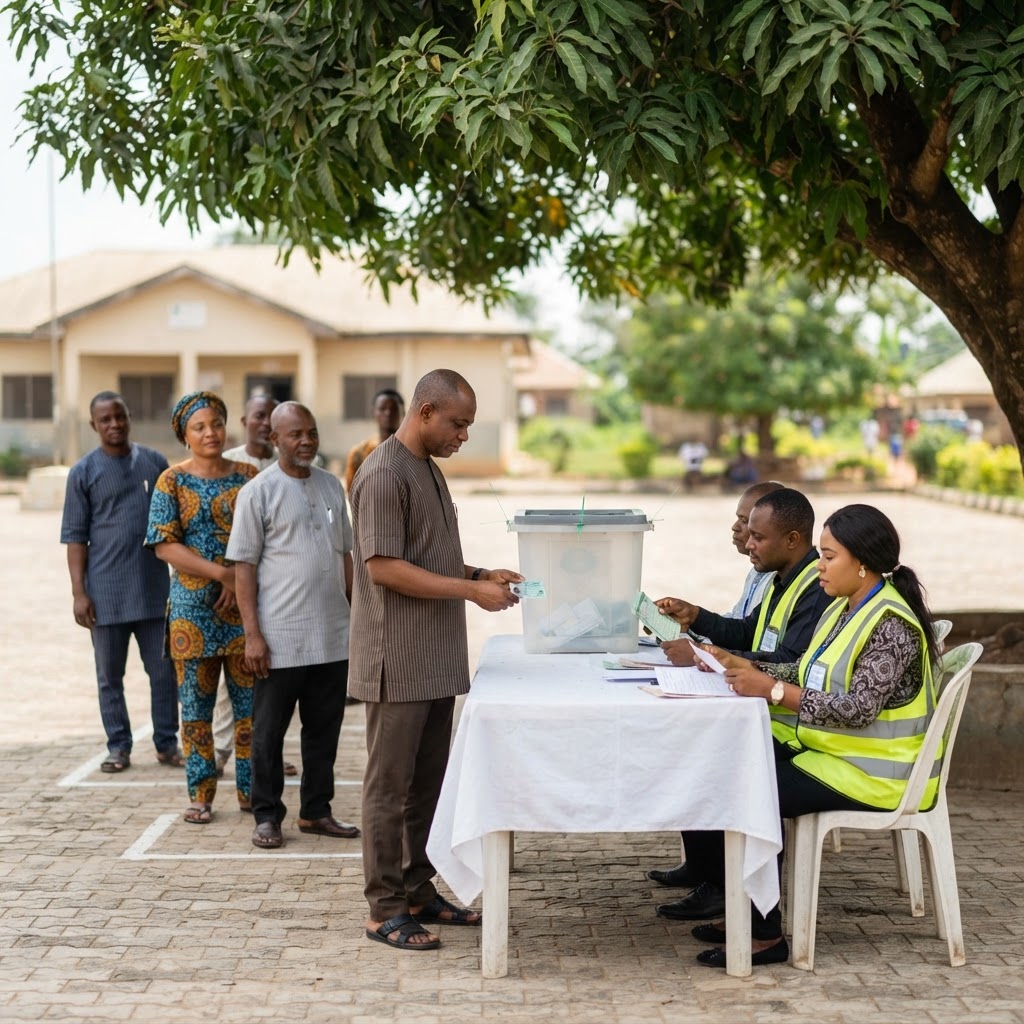
Imo Local Government Elections Set for Today
Imo State stands at a democratic crossroads this week. Residents across the state are heading to polling units with hope and renewed civic energy. The headline reads clearly: Imo Local Government Elections Hold Today: 27 LGAs, 305 Wards in Focus, and the outcome will shape grassroots governance for ...

Seplat's Aku-01 Discovery in Obi-Mbieri: 19 Million Barrels of Oil, 157 Bcf of Gas and What Comes Next?
The discovery at Seplat Energy's Aku-01 exploration well has drawn fresh attention to the oil and gas potential of Imo State and Obi-Mbieri. With preliminary estimates indicating 19 million barrels of oil and 157 billion cubic feet of gas in place, the next phase of exploration could have important implications for the host community. But what does the discovery actually mean, and what should Obi-Mbieri expect?
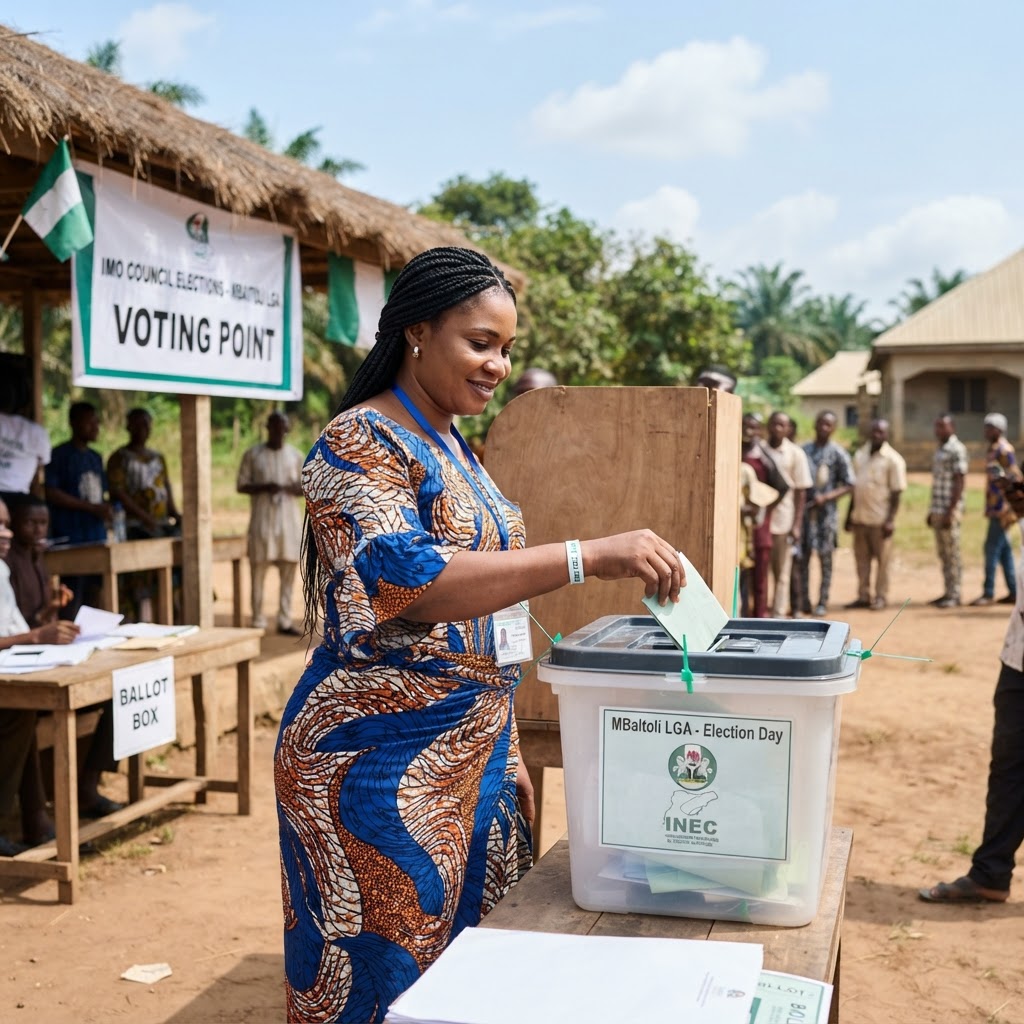
Imo Council Elections: Mbaitoli Voter Guide for Saturday
Saturday is almost here, and Mbaitoli households are asking tough questions about local governance. Many residents want clear answers before casting their votes in the upcoming Imo Council Elections. This article, Imo Council Elections 2026: What Mbaitoli Residents Need to Know Before Saturday's Pol...

Deal With the Traditional Prime Minister and the PG”: Imo Commissioner Tells Seplat How to Engage Obi-Mbieri
The Commissioner's intervention comes amid a prolonged leadership and representation dispute in Obi-Mbieri, raising fresh questions about who should speak for the community in its dealings with Seplat Energy.

Imo Local Government Elections Set for November 14
Imo State is entering a pivotal moment in its democratic journey. Local government elections, long awaited by residents, now have a confirmed date. The headline reads clearly: Imo Local Government Elections: ISIEC Fixes November 14 for Polls, and this decision carries real weight for families, entre...
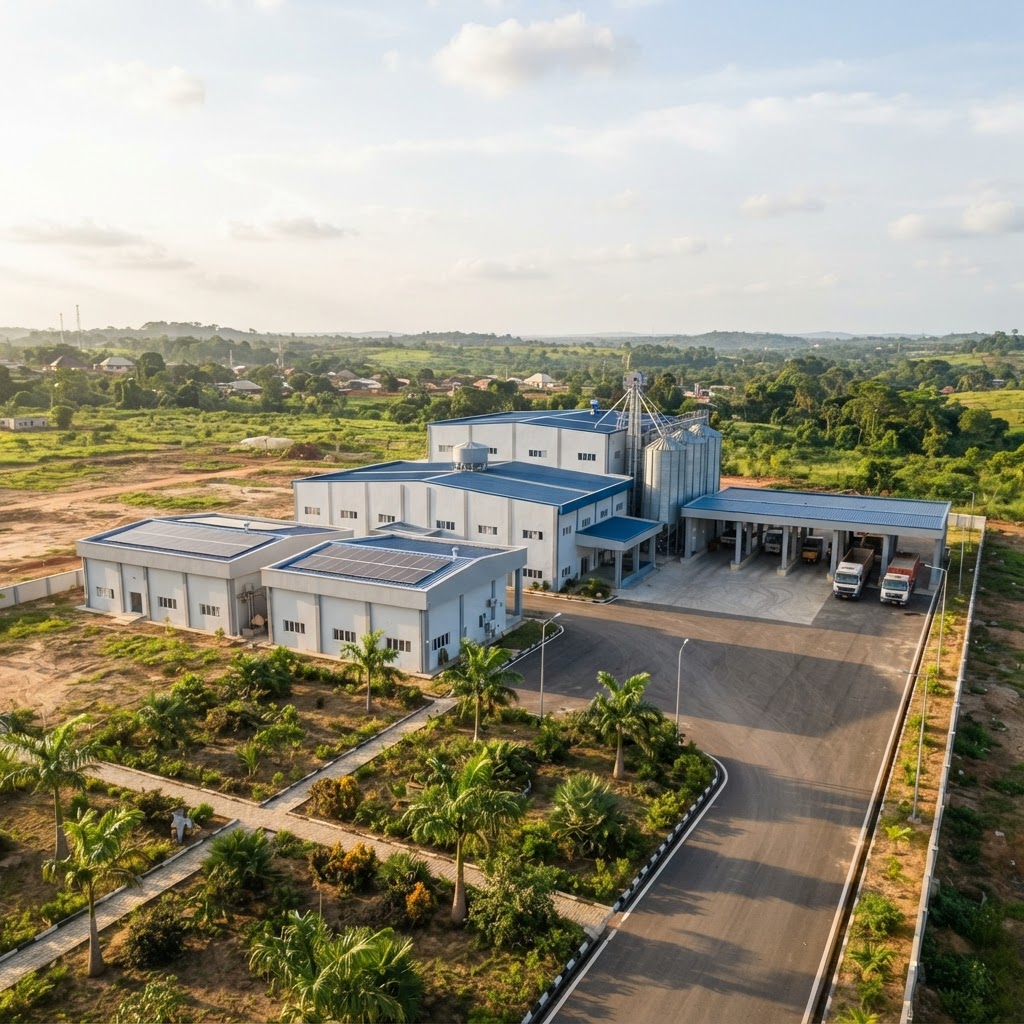
Industrial Investment in Obazu-Mbieri Sparks Economic Growth
Imo State is witnessing a new wave of private-sector confidence that could reshape its economic future. Industrial Investment in Obazu-Mbieri Raises Hopes for Jobs and Local Economic Growth after Marvico Group commissioned a landmark industrial complex in Mbaitoli Local Government Area. For many res...