Powered by Obi Mbieri Independent Media Ltd · eziokwubundu.com
$1 = ₦1,330€1 = ₦1,526£1 = ₦1,778Imo Markets: What Fees Are Traders Paying and Who Collects Them?
For thousands of traders operating daily across Imo State's bustling markets — from Relief Market in Owerri to the Naze Timber and Allied Traders Market — paying levies is an unavoidable cost of doing business. But in 2026, a more urgent question is emerging from beneath the noise of commerce: exact...
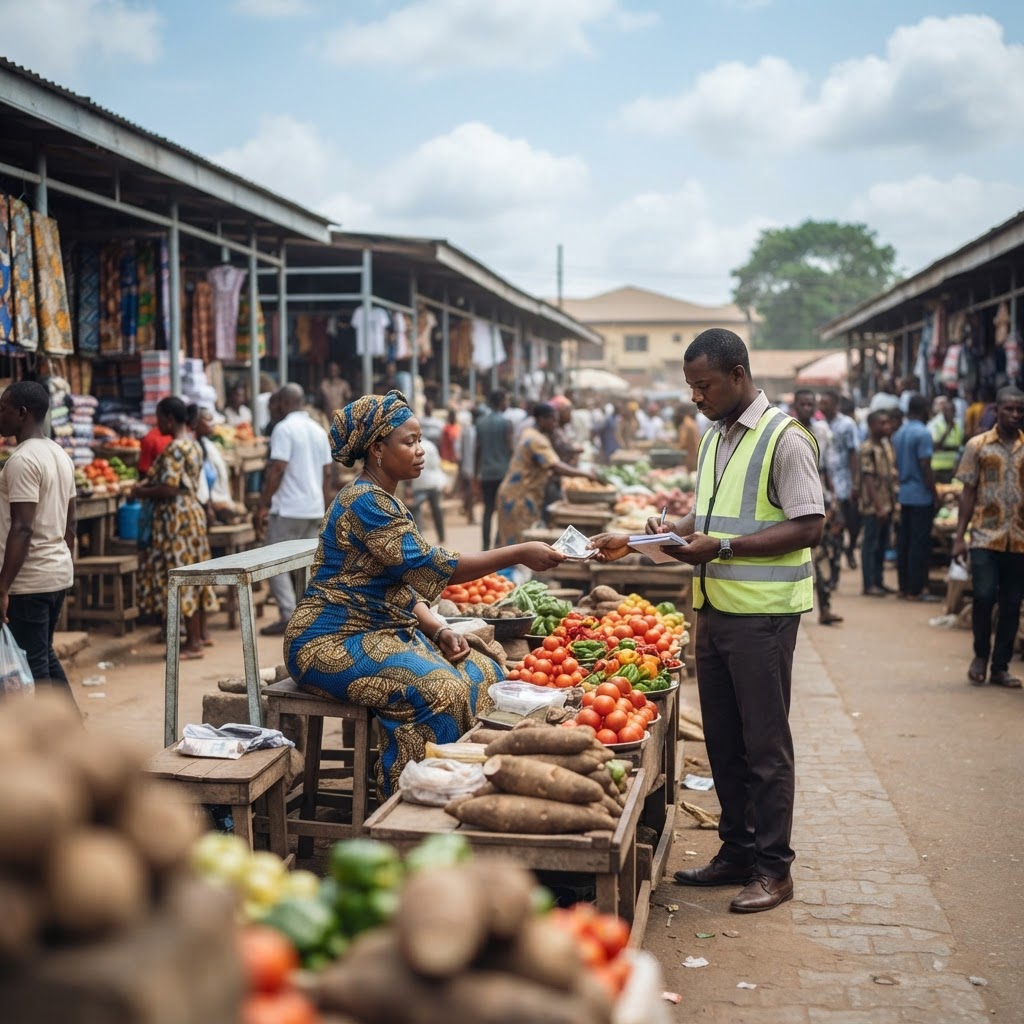
For thousands of traders operating daily across Imo State's bustling markets — from Relief Market in Owerri to the Naze Timber and Allied Traders Market — paying levies is an unavoidable cost of doing business. But in 2026, a more urgent question is emerging from beneath the noise of commerce: exactly how many charges are traders expected to pay, who is legally authorised to collect them, and where does the money ultimately go?
These are not abstract policy questions. They touch directly on the financial survival of market traders who form the backbone of Imo's informal economy. In an environment where government revenue agents, local government officials, market associations, and management committees all operate within the same trading spaces, distinguishing between a legitimate statutory charge and an unauthorised collection has become genuinely difficult — and costly. This article examines the legal framework, accountability mechanisms, and practical realities that define market fee collection in Imo State today.
Why Is Market Revenue a Critical Issue?
The backbone of local commerce faces compounding pressure
Market traders in Imo State are not simply vendors. They are micro-entrepreneurs, household breadwinners, and community economic anchors. A trader at Relief Market in Owerri may employ two or three family members, serve hundreds of customers weekly, and remit levies to multiple collectors within a single market day. Yet despite this economic significance, traders frequently operate with minimal financial protection and limited knowledge of what they are legally required to pay.
The vulnerability is structural. Market traders in Nigeria's informal sector exist at the intersection of government revenue collection, local government administration, and market self-governance. Each of these layers may carry its own financial demands. When those demands arrive without documentation, official identification, or receipts, the trader is left in an impossible position: pay and risk financial loss, or refuse and risk harassment or denial of access to the market.
This dynamic is not unique to Imo, but it is acutely felt here. In August 2026, Vanguard reported that traders at Relief Market complained of low patronage, rising costs, and the compounding weight of market levies. One trader disclosed paying an annual levy of ₦24,000 — a significant sum for someone already struggling with reduced sales. Whether that charge was lawfully imposed and properly remitted remains an open question. What is clear is that the burden is real.
For middle-class Nigerian families and entrepreneurs who depend on market income, the lack of transparency in fee collection is not merely an administrative inconvenience. It is a direct threat to household economic stability and community prosperity. Tackling it begins with understanding the legal framework.
What Are the Legal Revenue Categories for Imo Markets?
IIRS defines the statutory boundary between state and local collection
The Imo State Internal Revenue Service (IIRS) serves as the principal revenue-generating arm of the Imo State Government. Empowered under the Imo State Revenue Administration Law, IIRS is mandated to administer, assess, and collect taxes and levies due to the state. Its published schedule of collectible revenues provides the clearest official starting point for understanding what traders may legitimately be asked to pay.
According to IIRS, market taxes and levies where state finance is involved fall under State Government revenue. In contrast, market taxes and levies in markets where state finance is not involved are categorised under local government revenue. This distinction is foundational. It means that the appropriate authority to collect a market levy depends significantly on the nature of the market and the source of its financing.
Beyond market taxes and levies, the IIRS schedule identifies several other charges potentially applicable to traders. These include business premises registration fees, shops and kiosks rates, tenement rates, and personal income tax on sole traders. Each of these categories carries its own legal basis, applicable rate, and designated recipient authority.
Critically, the existence of multiple legally recognised revenue categories does not mean every trader is liable for every charge. A petty trader operating from a rented kiosk in a local-government-administered market faces a different set of obligations from a registered wholesale dealer occupying a purpose-built stall in a state-financed facility. The specific liability depends on the applicable law, the market classification, the type of business, and the nature of the premises.
This legal complexity is precisely why verbal demands for payment — unaccompanied by documentation identifying the charge, its legal basis, the applicable rate, and the authorised collector — are insufficient. Traders have a legitimate right to written documentation before any payment is made. Understanding this right is the first practical step toward self-protection in a market environment where multiple actors compete for the same revenue streams.
How Is the Electronic Revenue System Changing Things?
The RMS aims to close accountability gaps — but challenges persist
Recognising the opacity that has historically surrounded manual revenue collection, the IIRS has been implementing a Revenue Management System (RMS) across Imo's major markets. Announced in March 2025, the RMS covers e-ticketing, market tolls, and stallage fees, with the stated objective of improving transparency, reducing revenue leakages, and eliminating the cash-based manual ticketing systems that have long been associated with diversion and under-remittance.
The initiative is significant. Electronic ticketing creates an audit trail. Each transaction is recorded, timestamped, and potentially traceable from point of collection through to government revenue accounts. Where manual collection previously allowed for significant discretion — and abuse — an electronic system in principle allows supervisors, auditors, and the public to track volumes and verify remittances.
Alongside the RMS, IIRS introduced the One Community One Revenue Agent (OCORA) initiative, specifically targeting market environments. OCORA is designed to improve taxpayer enumeration within the informal sector, assigning identifiable, accountable agents to specific communities and markets. The initiative acknowledges a fundamental challenge in Imo's market revenue system: many traders have never been formally enumerated as taxpayers, making it difficult to establish a consistent, verifiable record of who owes what.
IIRS has also conducted sensitisation exercises with market leaders at several major markets, including Relief Market, World Bank Market, and markets in Orlu, to explain the transition to electronic collection and reinforce revenue compliance.
Featured Products
Chukwu Abiama Tee
Bold black-and-gold Igbo-pride T-shirt featuring 'Chukwu Abiama' in premium streetwear typography.
₦15,000
Buy NowReverse Type 2 Diabetes & other associated Metabolic Issues using Dr. Jason Fung's Evidence-Based Approach— FMD program for Type 2 Diabetes
A practical fasting and fasting-mimicking programme built on Dr Jason Fung's insulin-resistance principles and ow-glycemic recipes.
₦19,950
Join NowỤmụ Igbo Tee
Classic black T-shirt with bold white 'Ụmụ Igbo' typography — a proud statement of Igbo heritage.
₦15,000
Buy NowNwanne Tee
Washed khaki vintage tee with a faded rust-orange 'Nwanne' stamp badge and palm leaf motif — a nod to kinship and heritage.
₦18,000
Buy NowObodo Tee
Faded denim-blue washed tee with a cream 'Obodo' stamp badge and sun motif, celebrating community roots.
₦18,000
Buy NowEkwe Heritage Tee
Deep indigo tee featuring a fine line-art illustration of a traditional Igbo ekwe drum, inspired by Igbo-Ukwu bronze artistry.
₦18,000
Buy NowIkenga Figure Tee
Forest green tee with a fine line-art illustration of a stylized Ikenga figure.
₦18,000
Buy NowHowever, the transition from policy to practice in traditional market environments carries inherent challenges. Markets are dynamic, often crowded spaces with high trader turnover, varied literacy levels, and deep-rooted informal management structures. Implementing digital systems requires not only technology but sustained education, hardware, and enforcement. Until electronic collection is universal and consistently applied, the risk of parallel informal collection systems operating alongside the official RMS remains real. For traders, the key practical question is straightforward: if you are paying a market toll or stallage fee today, is that payment being captured through the official electronic system?
How Can Traders Verify a Collector's Legitimacy?
Practical steps to protect your market business from unlawful demands
The accountability gap in Imo's market revenue system places an immediate, practical burden on traders. While systemic reform proceeds at the policy level, individual traders must be equipped to distinguish between authorised government revenue agents and those operating outside sanctioned channels. Fortunately, the IIRS has itself provided the framework for this verification — traders simply need to apply it consistently.
Demand identification before payment. Any authorised IIRS revenue agent or local government collector operating under the RMS or OCORA framework should be able to produce official identification. This includes a government-issued identity document confirming their role as an authorised revenue collector and the market or territory they are licensed to cover. If a collector cannot produce this documentation, traders have grounds to refuse payment and report the demand to the nearest IIRS office or local government revenue authority.
Insist on an official receipt or electronic ticket. Under the RMS, legitimate collections are recorded electronically and generate a ticket or receipt. A collector who insists on cash payment without issuing a receipt — electronic or paper — is operating outside the approved system. The absence of a receipt is not a minor administrative gap; it is a red flag indicating that the collected funds may not reach the appropriate government account.
Know your market's approved tariff. The IIRS and Imo State Government publish — or should publish — approved tariff schedules specifying the exact charges applicable in each market. Traders should request a copy of the 2026 approved tariff for their specific market from the market management office, their local government revenue office, or directly from IIRS. Knowing the official rate for stallage, market tolls, and business premises levies makes it immediately apparent when a demand exceeds what is legally authorised.
Understand the difference between government charges and association fees. Market associations play legitimate roles in trader welfare and market organisation. However, association membership dues, cooperative contributions, or internally managed welfare levies are distinct from statutory government revenue. A payment to a market association is not equivalent to paying a government tax, even if it is described using the same language. Traders should maintain separate records for each type of payment and understand the legal basis — or lack thereof — for each demand.
Document and report discrepancies. Traders who encounter demands they cannot verify should record the date, amount, and identity of the collector, and report the incident to IIRS or the appropriate local government authority. Collective reporting through trader associations amplifies the signal and creates documented evidence for regulatory action. Resources on holding institutions accountable — including insights from Donor Health Funds Under Scrutiny: Why a Civil Society Group Wants FBI, EFCC to Widen Probe — underscore how documentation and civic pressure drive transparency.
What Is the Path Toward Greater Transparency?
Building accountability into Imo's market prosperity ecosystem
Transparency in market revenue collection is not simply a governance matter — it is a community prosperity issue. When revenue collected from thousands of Imo traders is not fully remitted or publicly accounted for, the loss cascades through the community. Roads serving markets deteriorate. Market infrastructure remains unimproved. Security and sanitation services are underfunded. The traders who paid the levies see no return on their statutory contribution. This is the accountability gap that systemic reform must close.
The Imo State Government and IIRS have an obligation to make the 2026 approved tariff schedules for all major markets publicly accessible — not buried in administrative offices, but posted at market entrances, published on the IIRS website, and communicated directly to market leaders. Traders who know the approved rates are far better positioned to identify overcharging and resist unauthorised collection. Transparency at the point of information prevents exploitation at the point of payment.
Community stakeholders — market unions, trader associations, civil society organisations, and local media — have an equally important monitoring role. The accountability chain that should connect every trader's payment to a public revenue account and ultimately to a public service requires active verification at multiple points. Community leaders can request quarterly revenue remittance reports from local governments and cross-reference them against market-level collection data from IIRS. The Imo 2028 Succession Debate Intensifies coverage on this platform reflects how governance accountability and community politics are deeply intertwined in Imo — market revenue transparency is another front in the same accountability struggle.
For entrepreneurs seeking to build sustainable businesses in Imo's markets, understanding the regulatory environment is inseparable from financial planning. Resources such as How to Access CBN Small Business Loans can help traders formalise their operations and access credit — but formalisation also requires clarity about lawful tax obligations. Similarly, the broader governance challenges documented in pieces like Imo Waste Collection Services Compared illustrate how public service accountability in Imo is a systemic issue requiring systemic solutions.
Ultimately, the path forward requires treating traders not as passive revenue sources but as partners in community development. Their levies fund public services. They deserve to know how that money is collected, recorded, remitted, and spent. The IIRS Revenue Management System and OCORA initiative represent meaningful steps toward that accountability — but their success depends on consistent implementation, public communication, and genuine willingness to answer the transparency questions that thousands of Imo traders are rightly asking.
Conclusion
The question of what fees Imo market traders are paying — and who is collecting them — does not have a simple answer. It has a legal answer, a practical answer, and an accountability answer, and all three must align for the system to work fairly.
The legal framework under IIRS is relatively clear: state and local government revenues are defined, the shift to electronic collection is underway, and authorised agents should be identifiable. The practical reality on the ground is more contested. Multiple actors operate in the same market spaces, verbal demands are common, and documentation is inconsistent. The accountability gap between collection and public service delivery remains largely unmeasured.
What is certain is that Imo's thousands of market traders deserve answers. They deserve a published tariff. They deserve receipts. They deserve to know that the money they pay reaches a government account and contributes to the public services their markets and communities need. For authoritative context on market trader challenges across the South-East, the Vanguard's August 2026 reporting on economic hardship among traders underscores that these concerns are widely shared and urgently felt.
Eziokwubundu.com will continue to investigate and report on market governance, community economic accountability, and the practical steps Imo traders can take to protect their livelihoods — because practical prosperity begins with knowing exactly what you owe, to whom, and why.
Stay Informed
Get New Articles in Your Inbox
Subscribe to receive the latest community development, health, and wealth insights from Eziokwubundu.
Newsletter
Practical insights on health, wealth, and community — delivered weekly.
Community Discussion(0)
Leave a Comment
More to Read
You May Also Like

Donor Health Funds Under Scrutiny: Why a Civil Society Group Wants FBI, EFCC to Widen Probe
International health aid is only as effective as the integrity of those who manage it. When billions of naira in donor-funded resources meant to combat HIV and tuberculosis go missing or are misappropriated, the consequences are not abstract — they are measured in lives lost, treatments missed, and ...

Unapproved Orphanages in Nigeria: How Safe Are Children in Private Care Homes?
Across Nigeria, thousands of children live in private care homes that operate outside the law. Some are run by well-meaning individuals overwhelmed by the scale of child poverty. Others are driven by profit, exploiting the image of vulnerable children to attract foreign donations while providing sub...
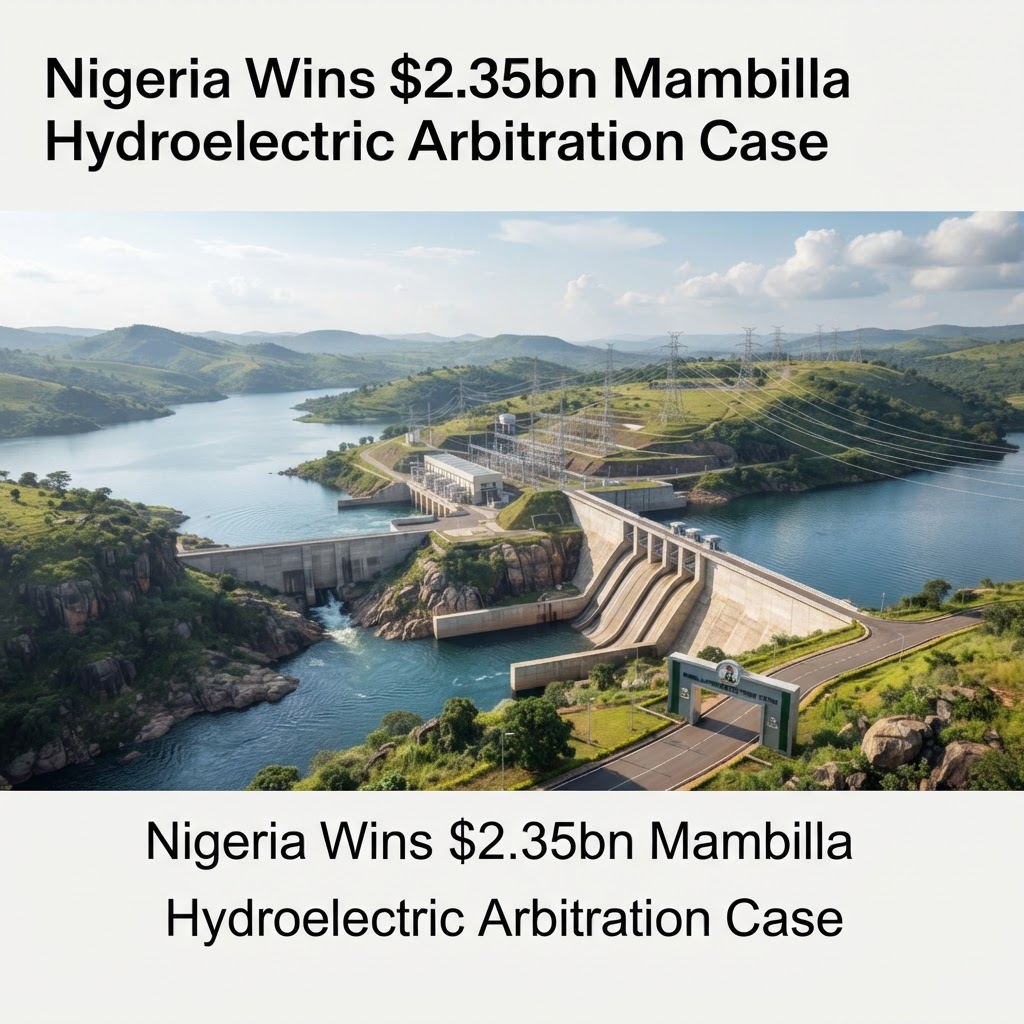
Nigeria Wins $2.35bn Mambilla Hydroelectric Arbitration Case
Nigeria has secured a landmark legal victory that could reshape the country's energy landscape for generations. An International Chamber of Commerce (ICC) arbitration tribunal sitting in Paris has ruled in favour of the Federal Government of Nigeria, rejecting a staggering $2.35 billion claim brough...
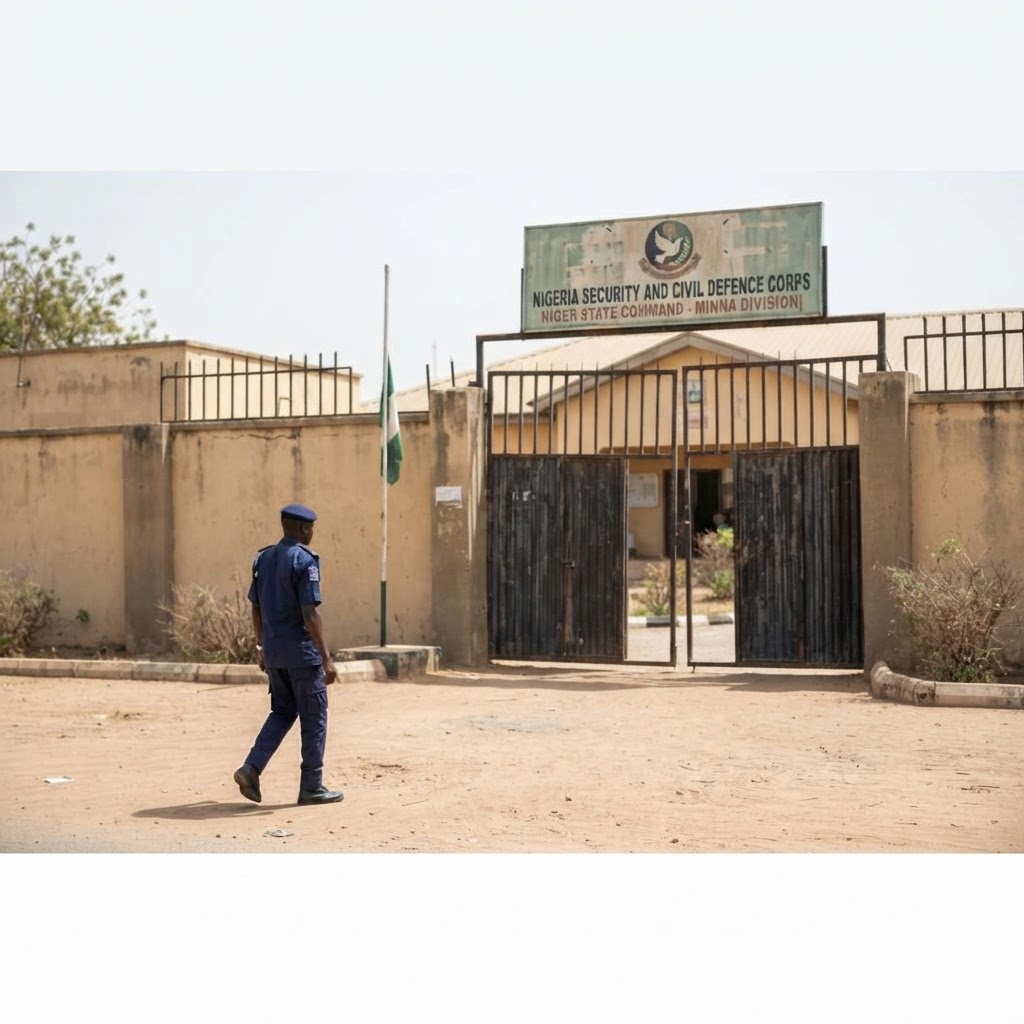
37 Suspected Illegal Miners Die in NSCDC Custody in Niger State
The deaths of 37 human beings in state custody should never be reduced to a statistic. Yet on a deeply troubling day in September 2026, that is precisely what happened in Niger State, Nigeria, when 37 suspected illegal miners died while detained by the Nigeria Security and Civil Defence Corps (NSCDC...

Imo 2028 Succession Debate Intensifies
The political temperature in Imo State has risen sharply as stakeholders, party insiders, and community leaders begin the complex arithmetic of who governs the state after January 2028. What began as quiet backroom conversations has evolved into a full-throated public debate, touching on constitutio...

Police Inspector Killed at Imo Commissioner’s Residence
A deadly security breach at the residence of a senior Imo State government official has once again drawn attention to the fragile security situation in southeastern Nigeria. According to a report by TheCable(https://www.thecable.ng/gunmen-kill-police-inspector-at-commissioners-residence-in-imo/), gu...

Best Hospitals in Imo State Compared
Imo State sits at a crossroads of ambition and infrastructure challenge. For the millions of families, entrepreneurs, and young professionals who call this southeastern Nigerian state home, healthcare access is not merely a welfare concern — it is a direct determinant of economic stability and commu...

Imo State Emergency Contacts Directory
Emergencies do not send advance notice. Whether it is a road traffic accident along the Owerri-Onitsha expressway, a fire outbreak in a densely populated neighbourhood, or a sudden medical crisis in one of Imo State's rural local government areas, the difference between life and death often comes do...

How to Access CBN Small Business Loans
Access to affordable financing remains one of the most persistent barriers to entrepreneurial growth in Nigeria. For millions of small business owners operating in a landscape defined by high commercial lending rates — often ranging between 25% and 30% per annum — the Central Bank of Nigeria's inter...
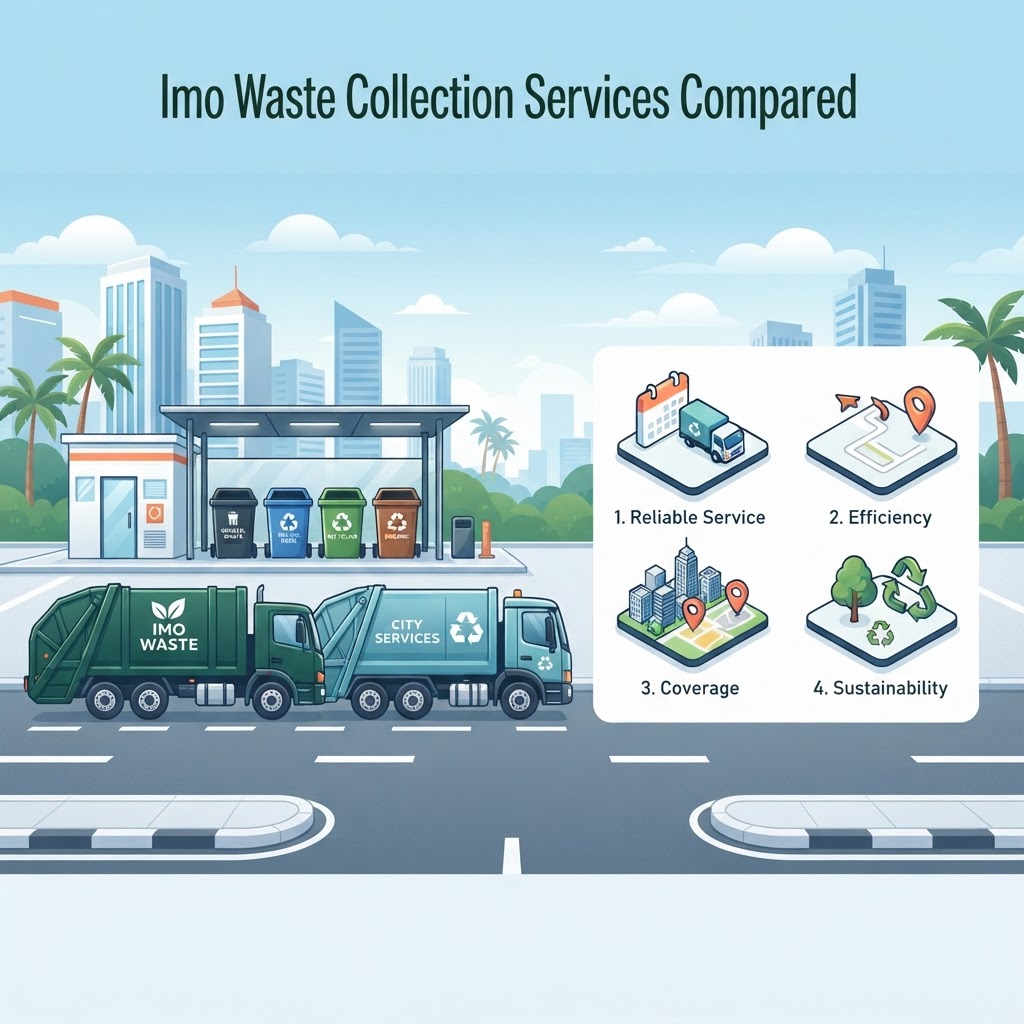
Imo Waste Collection Services Compared
Waste management sits at the intersection of public health, economic productivity, and community dignity. For residents of Imo State, particularly those living in the expanding urban corridors of Owerri, the question of who collects refuse — and how reliably they do it — is not a minor administrativ...