Powered by Obi Mbieri Independent Media Ltd · eziokwubundu.com
$1 = ₦1,328€1 = ₦1,521£1 = ₦1,773Kano Building Collapse: 7 Warning Signs Your Rented Building May Be Unsafe
Building collapse in Kano is no longer a rare tragedy. It has become a predictable, preventable crisis that claims lives, destroys family assets, and erodes community trust across Northern Nigeria. For Nigerian families renting apartments in dense urban neighborhoods, understanding the structural wa...
Kano State is once again grappling with the aftermath of a building collapse. In the early hours of Saturday, 8 August 2026, a residential building at Dan Dishe, Kwanar Yashi in the Fagge Local Government Area came down, trapping and injuring people inside. Sixteen people were rescued alive while three others were found unconscious after the collapse. The Kano State Fire Service said its Emergency Response Unit received the distress call at about 4:32 am and mobilised personnel immediately, and reported that the collapsed structure measured roughly 20 by 30 feet.
This is not an isolated case. Just a month earlier, in July 2026, a two-storey building under construction on Sultan Road in Kano collapsed after workers noticed structural warning signs on the top floor and fled. And that Sultan Road incident followed a three-storey building under construction collapsing in Nasarawa Local Government Area, which killed one person and injured three others.
For tenants, these incidents raise an uncomfortable question: how do you know if the building you live in — or are about to move into — is actually safe?
Why Are Buildings Collapsing in Kano?
Analysing Recent Structural Failures in Northern Nigeria
The July 2026 collapse at Whitefield Rice Mills in Kano and the subsequent Sultan Road incident represent more than isolated accidents. Research identifies these events as part of a recurring pattern of structural failure concentrated in Fagge Local Government Area, where high building density, ageing infrastructure, and minimal regulatory enforcement create compounding risk. The 2024 Noman's Land Quarters collapse, which drew a federal investigation by the Ministry of Housing and Urban Development, revealed identical contributing factors: unlicensed contractors, unapproved floor additions, and complete non-adherence to the National Building Code of Nigeria.
Structural engineers describe a phenomenon increasingly documented in recent engineering journals as "sudden collapse syndrome," where a building fails catastrophically without visible external warning signs. This occurs due to internal material fatigue — the gradual degradation of steel reinforcements, concrete integrity, and mortar bonds beneath surfaces that appear intact. Unlike dramatic visible deterioration, internal fatigue is silent and accelerates under seasonal moisture stress. For Kano's tenants, the implication is direct: surface-level inspections are insufficient. You must know what to look for before internal failure becomes external catastrophe.
How Do Wall Cracks Signal Structural Failure?
Differentiating Cosmetic Issues From Fatal Flaws
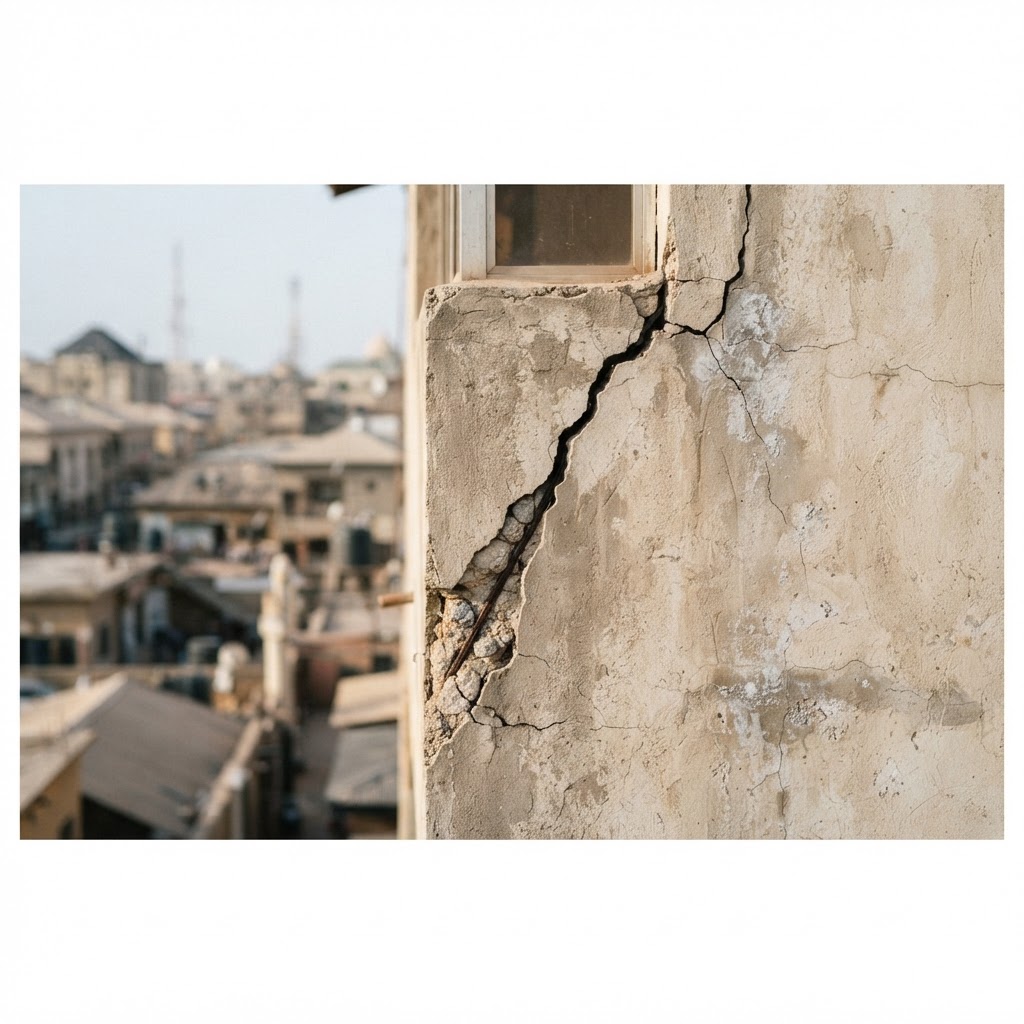
Not every crack in a wall is an emergency, but every crack deserves classification. Structural engineers apply a clear hierarchy of danger that tenants can learn to use practically. Hairline cracks measuring under 1/16 of an inch typically represent superficial plaster shrinkage and pose no immediate structural threat. However, diagonal cracks running at 45-degree angles are classified by research as primary indicators of active foundation movement — a condition requiring immediate professional evaluation.
The "stair-step" crack pattern is among the most critical signs a Kano tenant must recognise. This pattern appears in mortar joints between bricks or blocks, creating a zigzag line that follows the path of least resistance through a wall. According to structural engineering standards, stair-step cracking signals that the building's load-bearing capacity is being redistributed unevenly, often because the foundation beneath one section is settling faster than another. When this pattern appears near corners, door frames, or window openings, the risk of sudden collapse increases significantly.
Horizontal cracks demand the most urgent response. Unlike vertical cracks, which may indicate normal concrete shrinkage, horizontal cracks running along a wall typically signal severe hydrostatic pressure from waterlogged soil or lateral bowing of the wall itself. The Institution of Structural Engineers classifies horizontal wall cracks as a Category 3 defect requiring immediate evaluation. In Kano's flood-prone districts, seasonal rainfall intensifies this risk dramatically. Tenants who observe any horizontal cracking across a wall segment longer than 30 centimetres should contact the Kano State Ministry of Works without delay.
Is Your Building Tilting or Sinking Slowly?
Identifying Foundation Settlement and Soil Instability
Soil testing remains the most critically ignored requirement in Kano's construction sector. Research highlights this gap as the single most preventable cause of uneven settlement and eventual "pancake" collapses, where floor slabs fail sequentially from the bottom up. Without geotechnical assessment, contractors routinely pour foundations over expansive clay soils or poorly compacted fill, both of which shift under load and moisture variation. The result is differential settlement — one section of the building sinks faster than another, creating invisible stress fractures through the entire structural frame.
The visual cues of a tilting structure are often dismissed as minor inconveniences before they are understood as structural warnings. Doors that no longer latch properly, windows that stick without explanation, floor tiles that crack along diagonal lines, and gaps appearing between walls and ceiling are all consistent with a foundation that has shifted laterally or vertically. Individually, each symptom may seem manageable. Together, they constitute a structural profile that requires engineering assessment.
In high-density neighbourhoods like Sabon Gari, the risk extends beyond the individual building. Structural engineers describe a "domino collapse" mechanism, where the foundation failure of one property imposes additional lateral load on its neighbours, triggering a chain of failures across attached or closely spaced structures. This community-level risk makes individual building safety a collective responsibility — a principle central to the community-first development model outlined in the Blueprint for Autonomous Nigerian Community Success.
Can You Identify Substandard Building Materials?
The Role of MANCAP Standards in Tenant Safety
The Mandatory Conformity Assessment Programme (MANCAP), administered by the Standards Organisation of Nigeria, exists to certify that construction materials meet Nigerian Industrial Standards before they enter the market. In practice, enforcement is inconsistent, and Perplexity can be used to cross-reference whether specific cement brands, reinforcement bar suppliers, or block manufacturers carry current MANCAP certification before trusting a building's material history. Tenants in older Kano properties can request documentation from landlords or apply directly to SON's Lagos office for product verification.
The construction industry in Kano suffers from what engineers bluntly call "quackery" — the widespread use of unqualified contractors who systematically substitute inferior materials to maximise profit margins. Common compromises include the use of 10mm reinforcement bars where 16mm bars are structurally required, cement diluted beyond its design ratio, and hollow blocks that do not meet the minimum compressive strength of 3.5 N/mm² required by Nigerian standards.
Featured Products
Chukwu Abiama Tee
Bold black-and-gold Igbo-pride T-shirt featuring 'Chukwu Abiama' in premium streetwear typography.
₦15,000
Buy NowReverse Type 2 Diabetes & other associated Metabolic Issues using Dr. Jason Fung's Evidence-Based Approach— FMD program for Type 2 Diabetes
A practical fasting and fasting-mimicking programme built on Dr Jason Fung's insulin-resistance principles and ow-glycemic recipes.
₦19,950
Join NowỤmụ Igbo Tee
Classic black T-shirt with bold white 'Ụmụ Igbo' typography — a proud statement of Igbo heritage.
₦15,000
Buy NowNwanne Tee
Washed khaki vintage tee with a faded rust-orange 'Nwanne' stamp badge and palm leaf motif — a nod to kinship and heritage.
₦18,000
Buy NowObodo Tee
Faded denim-blue washed tee with a cream 'Obodo' stamp badge and sun motif, celebrating community roots.
₦18,000
Buy NowEkwe Heritage Tee
Deep indigo tee featuring a fine line-art illustration of a traditional Igbo ekwe drum, inspired by Igbo-Ukwu bronze artistry.
₦18,000
Buy NowIkenga Figure Tee
Forest green tee with a fine line-art illustration of a stylized Ikenga figure.
₦18,000
Buy NowTenants can perform a basic visual inspection of exposed concrete surfaces for "honeycombing" — a porous, irregular surface texture caused by a poor water-to-cement ratio during casting, which leaves voids inside the concrete. Honeycombing dramatically reduces compressive strength and allows moisture to penetrate directly to steel reinforcements. Additional indicators include concrete that crumbles under finger pressure, visible aggregate separation, and rust staining on external surfaces, which signals that internal rebar corrosion has already begun. The American Concrete Institute classifies surface honeycombing exceeding 30% of a structural member's surface area as a mandatory repair condition.
Does Standing Water Affect Building Stability?
Moisture Infiltration and Load-Bearing Integrity
Water is the most underestimated threat to structural integrity in Kano's built environment. Engineers and building experts directly link standing water near building foundations to multiple residential collapses in Kano, noting that saturated soil loses bearing capacity in proportion to its clay content and drainage characteristics. When water pools consistently at the base of a wall or near a foundation plinth, the soil beneath begins to behave plastically — flowing under load rather than supporting it. This is the physical mechanism behind foundation heave and lateral wall displacement observed in post-collapse engineering assessments.
"Spalling" is a specific moisture-driven failure mode that tenants can learn to identify. It occurs when moisture penetrates concrete and reaches the embedded steel reinforcement bars. As steel rusts, it expands volumetrically by up to four times its original size, generating internal pressure that fractures the surrounding concrete from the inside out. The resulting concrete fragments detach from the surface in irregular sheets, exposing rusted rebar and accelerating further corrosion. Spalling on columns, beams, or exposed structural slabs is a direct indicator of compromised load-bearing integrity.
The 2006 National Building Code mandates specific drainage setbacks and waterproofing requirements for all residential construction. Buildings that were approved without functioning drainage channels, or where drainage systems have been blocked by unplanned extensions, are in violation of these provisions. Just as community water hygiene prevents disease — as detailed in the Nigeria Cholera Season Community Water Safety Checklist — proper drainage prevents structural disease in buildings.
What Does the National Building Code Require?
Legal Protections for Nigerian Renters
The 2006 National Building Code of Nigeria establishes the legal framework for construction standards, professional oversight, and post-construction accountability across all 36 states. Among its provisions, the Code mandates that structural audits of multi-unit residential buildings be conducted by registered engineers listed with the Council for the Regulation of Engineering in Nigeria (COREN). Landlords who commission structural modifications without engaging a COREN-registered professional are in direct violation of the Code and bear legal liability for resulting collapses. Tenants can verify a professional's registration at the COREN official portal.
The Federal Ministry of Housing and Urban Development has the authority to order mandatory structural investigations following collapse incidents — authority exercised in the Noman's Land Quarters case. However, tenants do not need to wait for a collapse to trigger this mechanism. Formal complaints submitted to the Ministry can initiate a Notice of Survey, compelling independent evaluation of a flagged structure.
Emerging proposals from Nigerian urban planning experts recommend adopting Building Information Modelling (BIM) to digitise building approvals in Kano. BIM creates a traceable digital record of every approved construction drawing, material specification, and inspection report, making it significantly harder for unauthorised floor additions or material substitutions to occur without detection. Digitising Kano's approval process would reduce both corruption and the structural opacity that currently endangers thousands of tenants.
What Should Tenants Do If Signs Appear?
Emergency Protocols and Whistleblower Protections
When a tenant identifies two or more of the warning signs detailed in this article, the response must be structured and documented. Begin by photographing every visible defect with timestamped images. Submit a formal written complaint to both the Kano State Fire Service and the Kano State Ministry of Works, referencing the specific defects observed and requesting a formal "Notice of Survey." Keep a copy of every submission with proof of delivery. The Ministry has a statutory obligation to respond to formal structural safety complaints.
The Community-First approach to safety means tenants should not act in isolation. Organising co-tenants or neighbours to collectively demand a structural integrity audit from a landlord carries significantly more legal and social weight than individual complaints. Collective documentation of structural defects constitutes grounds for rent withholding under Nigerian landlord-tenant law when health and safety are demonstrably at risk.
Site workers and tenants who report unauthorised construction modifications — including illegal floor additions, removal of load-bearing walls, or use of substandard materials — deserve whistleblower protection. Nigeria's Freedom of Information Act provides a legal basis for anonymous reporting to government agencies, and local civil society organisations increasingly support tenants navigating these processes. Protecting community members who speak up is how neighbourhoods prevent the next collapse before it happens.
How Does Building Safety Impact Nigerian Wealth?
Health, Wealth, and Community Intersect Here
At eziokwubundu.com, the integrated Health, Wealth, and Community framework means structural safety is never treated as a purely technical issue. A building collapse destroys physical health through injury and death, economic health through property loss and displacement, and community health through eroded trust and generational trauma. For Nigerian families who have invested savings into furnishing a rented home or operating a business from a commercial property, a preventable collapse is a wealth-destruction event with consequences that persist for years.
The economic cost of Kano's building collapses extends far beyond immediate casualties. Structural failures suppress local property values, discourage investment in affected neighbourhoods, and impose healthcare costs on families and state governments alike. These are the same compounding losses addressed when entrepreneurs protect their income streams — as discussed in resources like Liquid Soap Profits for Nigerian Entrepreneurs — through proactive risk management.
Digital tools are increasingly being explored by community leaders as tools for monitoring local construction trends, flagging permit anomalies, and synthesising engineering inspection data into accessible community safety reports. When applied thoughtfully, AI-assisted community monitoring supports the Nigerian prosperity ecosystem by making safety intelligence accessible to those who need it most: families living and working in Kano's rapidly changing urban landscape.
The seven warning signs — wall cracks, material defects, poor drainage, foundation tilt, moisture infiltration, code violations, and absence of professional oversight — are not abstract engineering concepts. They are daily realities for millions of Nigerian tenants. Recognising them, reporting them, and demanding accountability from landlords and regulators is both a legal right and a community responsibility. Your home should build your future, not endanger it. Share this guide with every family in your network before the next rainy season arrives.
Stay Informed
Get New Articles in Your Inbox
Subscribe to receive the latest community development, health, and wealth insights from Eziokwubundu.
Newsletter
Practical insights on health, wealth, and community — delivered weekly.
Community Discussion(0)
Leave a Comment
More to Read
You May Also Like
How Rising Petrol Prices Impact Nigerian Households and SMEs
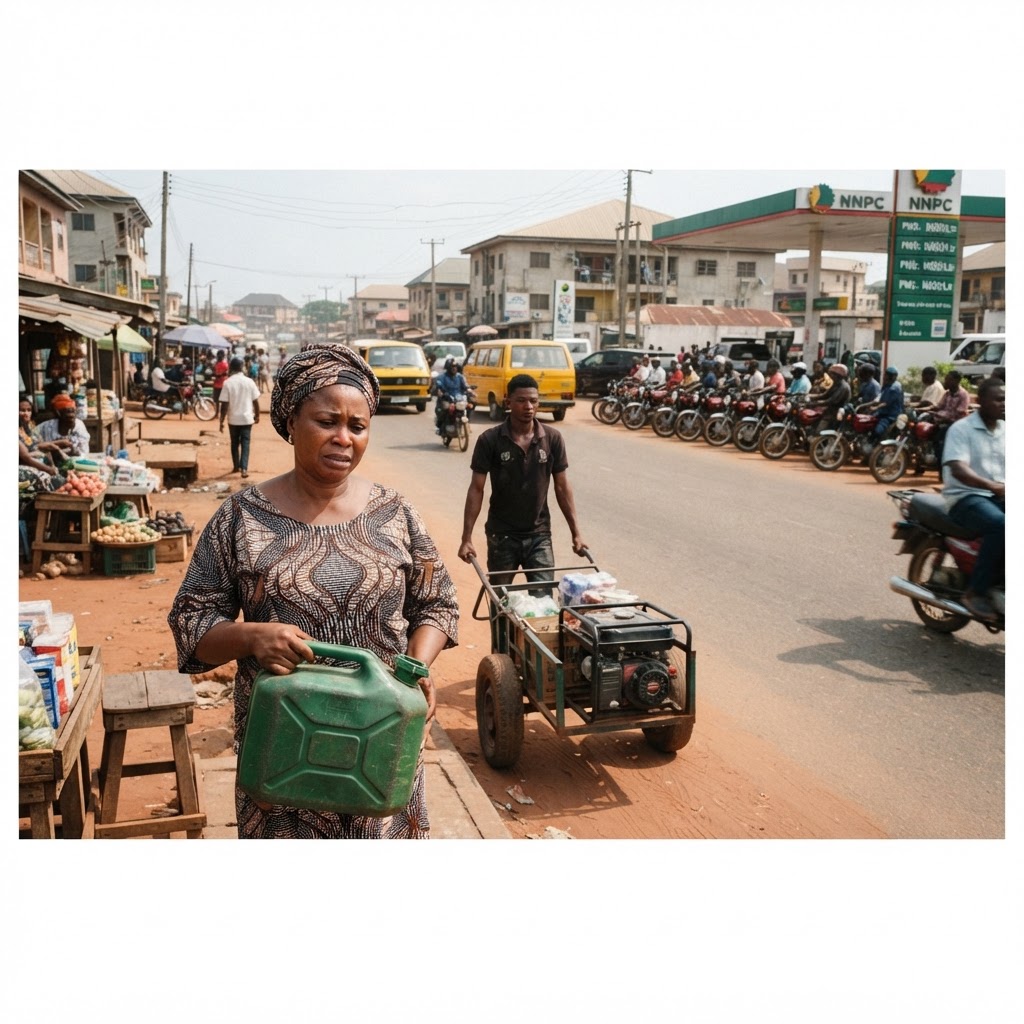
Petrol prices have crossed a psychological line that many Nigerians once thought impossible. At ₦1,400 per litre in several states, rising petrol prices are reshaping how households spend, how businesses operate, and how communities survive. What was once an occasional headline about fuel scarcity h...

48 Months Without Full Pension Payments: Imo Pensioners
Retirement should bring peace, not financial anxiety. Yet across Imo State, thousands of elderly civil servants say their golden years have turned into a struggle for survival. The situation described in "48 Months Without Full Pension Payments: Imo Pensioners Demand Answers" reflects a deepening cr...

How Igbo communities fund development projects
Across southeastern Nigeria, roads are tarred, schools are built, and boreholes are sunk — not by government contractors, but by communities pooling resources together. This phenomenon is neither accidental nor recent. It is the product of centuries-old cultural philosophy, refined institutional str...
Imo Erosion Crisis: Mbieri Communities Demand Urgent Government Action
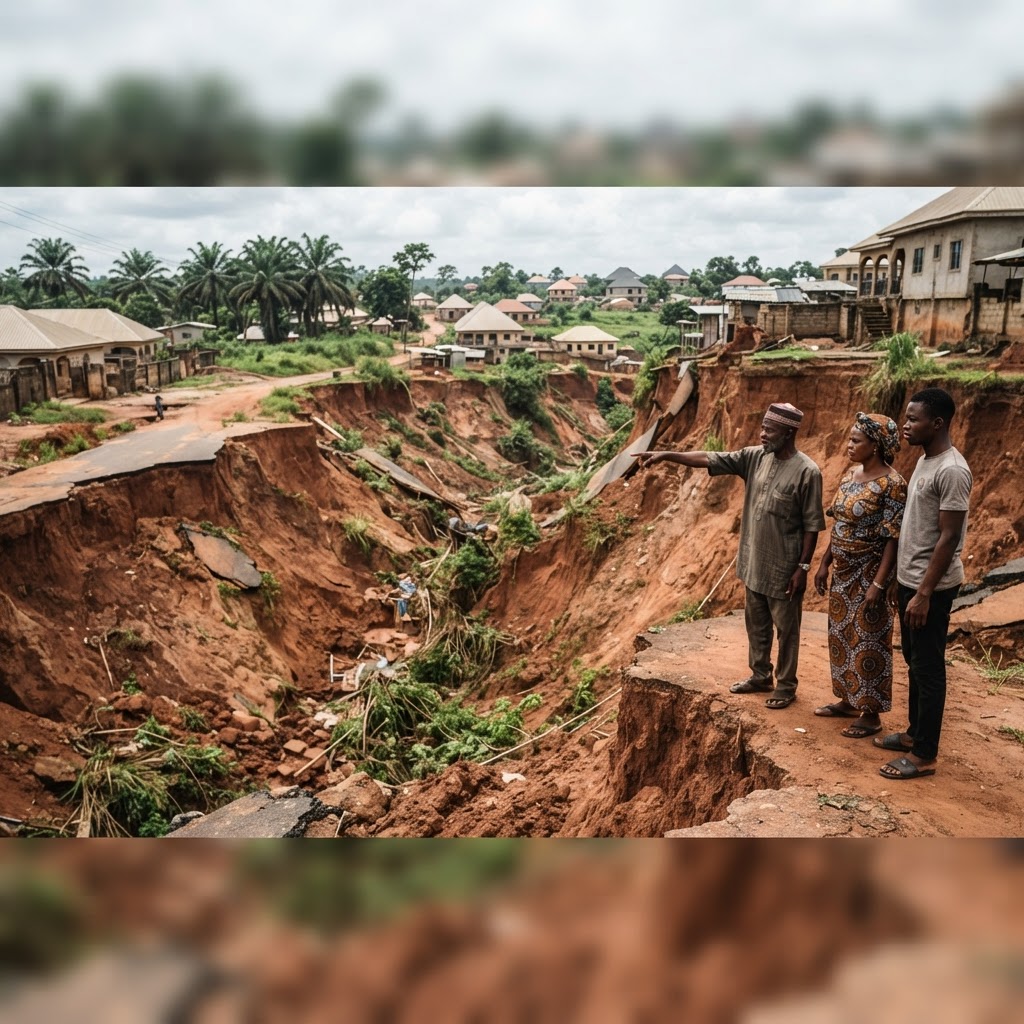
The ground beneath Mbieri is literally disappearing. In Mbaitoli Local Government Area of Imo State, advancing gullies are swallowing roads, threatening homes, and pushing one of southeastern Nigeria's most resilient communities toward an environmental breaking point. Residents are no longer waiting...

Imo State Emergency Contacts Directory
Emergencies do not send advance notice. Whether it is a road traffic accident along the Owerri-Onitsha expressway, a fire outbreak in a densely populated neighbourhood, or a sudden medical crisis in one of Imo State's rural local government areas, the difference between life and death often comes do...

Imo Waste Collection Services Compared
Waste management sits at the intersection of public health, economic productivity, and community dignity. For residents of Imo State, particularly those living in the expanding urban corridors of Owerri, the question of who collects refuse — and how reliably they do it — is not a minor administrativ...

KoboTutor: How a Nigerian EdTech Platform Is Bringing Personalised Learning to Students
Nigeria's education sector stands at a crossroads. With over 13 million out-of-school children and chronic underfunding in public education, the pressure on students who do attend school is immense. For the millions sitting JAMB, WAEC, and NECO examinations each year, the stakes could not be higher....