Powered by Obi Mbieri Independent Media Ltd · eziokwubundu.com
$1 = ₦1,328€1 = ₦1,511£1 = ₦1,755NLNG shortlists Eze, Ifowodo and Oburumu for its $100,000 literature prize
Africa's richest literary prize has found its three finalists. The Advisory Board of the Nigeria Prize for Literature announced this week that James Ngwu Eze, Ogaga Ifowodo, and Tares Oburumu have been shortlisted for the 2026 edition of the award, sponsored by Nigeria LNG Limited (NLNG). The three ...
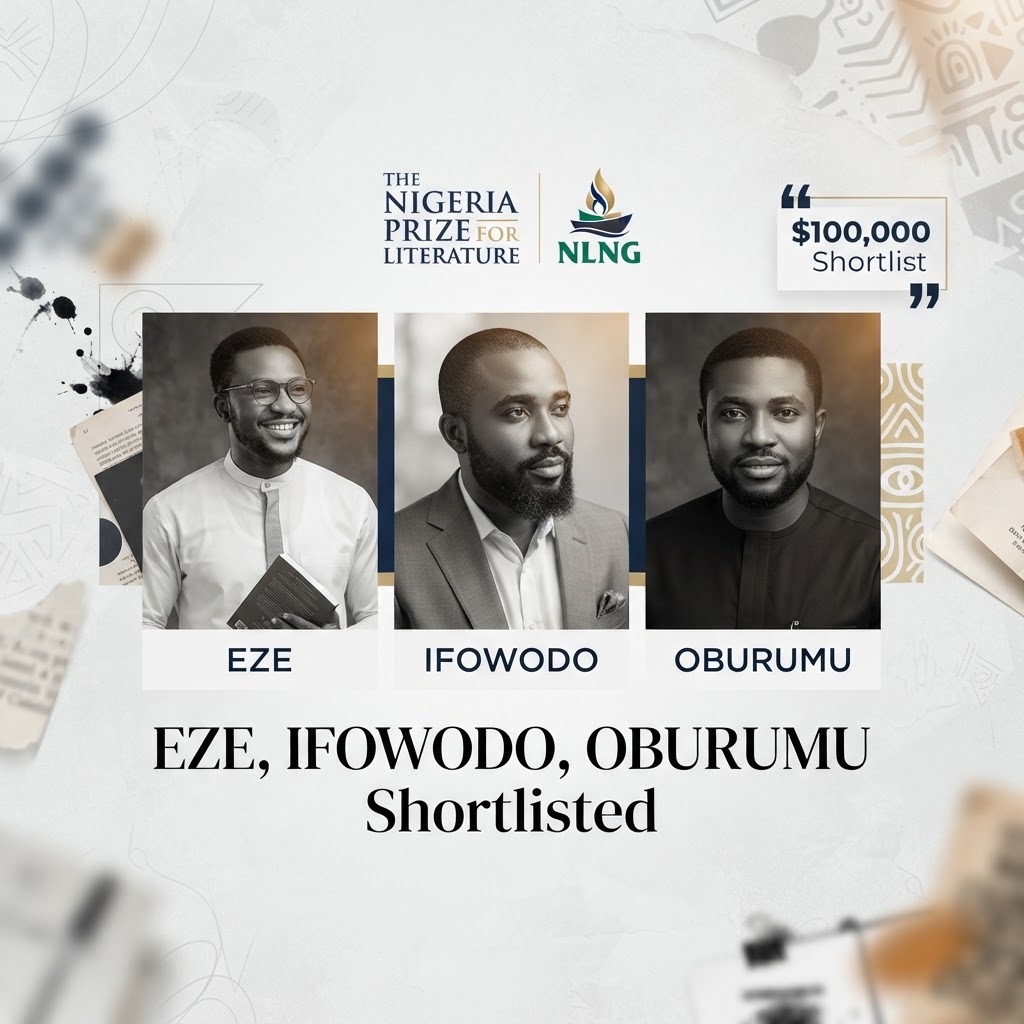
Africa's richest literary prize has found its three finalists. The Advisory Board of the Nigeria Prize for Literature announced this week that James Ngwu Eze, Ogaga Ifowodo, and Tares Oburumu have been shortlisted for the 2026 edition of the award, sponsored by Nigeria LNG Limited (NLNG). The three poets, who emerged from a remarkable initial pool of 223 entries and an 11-title longlist announced in July, will compete for a $100,000 cash prize, with the winner expected to be unveiled in October. For Nigerian families, youth professionals, and community leaders who believe that cultural investment is inseparable from collective prosperity, this announcement carries significance that extends well beyond the literary world.
Why is the Nigeria Prize Africa's most prestigious award?
The Nigeria Prize for Literature was established in 2004 by Nigeria LNG Limited as a strategic cultural investment to promote excellence in Nigerian writing. Now in its 22nd year of administration, the prize has grown into the single largest literary award on the African continent and consistently ranks among the top 10 richest literary prizes globally, according to The Nigeria LNG Prizes official website. The $100,000 cash award dwarfs most other African literary prizes by a significant margin, creating an unambiguous statement about the value NLNG places on intellectual and artistic output.
The prize operates on a four-year genre rotation cycle, moving through prose fiction, poetry, drama, and children's literature. The 2026 edition is dedicated exclusively to poetry, a genre that speaks with particular directness to community experience, cultural memory, and social justice. This rotational structure ensures that all major literary forms receive recognition and financial support across the full range of Nigerian creative expression.
For a platform like Eziokwubundu, which is built on the principle of "Better Living Through Information," the Nigeria Prize represents a powerful example of how intellectual wealth — the cultivation of ideas, language, and storytelling — becomes a foundation for community development and national self-understanding. Literary excellence is not separate from healthier living; it is one of its most enduring expressions.
Who are the three 2026 poetry finalists?
The three finalists represent a compelling cross-section of Nigerian poetic tradition — a new voice, a seasoned veteran, and a historically grounded stylist — each bringing a distinct perspective to the $100,000 competition.
James Ngwu Eze arrives with his collection Unbind Me Now, a work the Advisory Board describes as using fluid, aesthetically captivating language to decry the sociopolitical dysfunction of Nigeria and the broader world. The collection interrogates the human condition with urgency while charting a path toward redemption. Eze is widely regarded as representing the emerging generation of Nigerian poets in this year's contest, a voice carrying fresh energy into a long-established institution.
Ogaga Ifowodo, one of Nigeria's most established poetic voices, returns to the final stage with Why Does God Need a Gun? — a structurally ambitious work built around the tripartite framework of body, mind, and spirit. Through rich allegory, the collection confronts religious and political violence, interrogating the moral forces shaping today's world. This is Ifowodo's second appearance at the final stage of the prize. He was previously a finalist in 2017 with A Good Mourning, the year the late Ikeogu Oke claimed the prize for The Heresiad.
Tares Oburumu completes the shortlist with Flora's Love Colony, described by the judges as densely poetic, richly imagistic, and evocative. The collection challenges Nigeria's colonial and historical narratives through sustained, scholarly engagement. Oburumu's work has attracted growing critical attention for its intellectual rigour and its willingness to confront uncomfortable historical truths. All three poets were whittled down from a starting field of 223 submitted entries — a selection process chaired by Prof. Akachi Adimora-Ezeigbo that underscores the extraordinary competition surrounding Africa's richest literary prize.
How does Eze's Unbind Me Now address Nigeria's health?
James Ngwu Eze's creative trajectory tells a story of artistic and moral evolution. His previous collection, Dispossessed, explored a condition of helplessness — a state of being acted upon by forces beyond individual control. Unbind Me Now represents a decisive shift: from passivity to agency, from victimhood to the active pursuit of freedom and justice for the voiceless.
The collection engages urgently with what critics have described as themes of political violence, pandemic silence, and ecological collapse. These are not abstract literary concerns; they are living realities that shape community health, family security, and the mental well-being of ordinary Nigerians. In this respect, Eze's work aligns closely with Eziokwubundu's focus on preventive awareness — the idea that naming a danger clearly is the first step toward protecting communities from it.
Featured Products
Chukwu Abiama Tee
Bold black-and-gold Igbo-pride T-shirt featuring 'Chukwu Abiama' in premium streetwear typography.
₦15,000
Buy NowReverse Type 2 Diabetes & other associated Metabolic Issues using Dr. Jason Fung's Evidence-Based Approach— FMD program for Type 2 Diabetes
A practical fasting and fasting-mimicking programme built on Dr Jason Fung's insulin-resistance principles and ow-glycemic recipes.
₦19,950
Join NowỤmụ Igbo Tee
Classic black T-shirt with bold white 'Ụmụ Igbo' typography — a proud statement of Igbo heritage.
₦15,000
Buy NowNwanne Tee
Washed khaki vintage tee with a faded rust-orange 'Nwanne' stamp badge and palm leaf motif — a nod to kinship and heritage.
₦18,000
Buy NowObodo Tee
Faded denim-blue washed tee with a cream 'Obodo' stamp badge and sun motif, celebrating community roots.
₦18,000
Buy NowEkwe Heritage Tee
Deep indigo tee featuring a fine line-art illustration of a traditional Igbo ekwe drum, inspired by Igbo-Ukwu bronze artistry.
₦18,000
Buy NowIkenga Figure Tee
Forest green tee with a fine line-art illustration of a stylized Ikenga figure.
₦18,000
Buy NowThe Advisory Board's praise for Eze's "aesthetically captivating" language points to a poet who understands that beauty and urgency are not opposites. His verse uses linguistic precision as a tool for national redemption, making Unbind Me Now one of the most discussed collections in this year's competition.
What makes Ifowodo and Oburumu vital for community reflection?
Ogaga Ifowodo's structural choice to organize Why Does God Need a Gun? around the framework of body, mind, and spirit is far more than a formal literary device. It mirrors the holistic approach to human well-being that anchors the Eziokwubundu "Health + Wealth + Community" philosophy. By interrogating religious violence through these three lenses simultaneously, Ifowodo refuses to separate physical suffering from psychological trauma or spiritual disorientation — a position that resonates deeply with communities navigating Nigeria's complex socio-religious landscape.
Tares Oburumu's Flora's Love Colony approaches the community reflection question through the lens of historical memory. By challenging Nigeria's colonial narratives and the troubled history that continues to shape modern social relations, Oburumu offers Nigerian families a critical tool for understanding the forces behind present-day inequalities and collective identities.
Both poets exemplify what Eziokwubundu defines as "African-Centered Perspectives" — content and creative work produced from and for African communities, addressing the specific cultural contexts that mainstream global media consistently overlooks. Just as the Obi-Mbieri Women Wing Annual Meeting demonstrates how local gatherings carry lessons for entire communities, literature at this level performs a similar function at national scale.
How does literature investment create 'Practical Prosperity'?
NLNG's commitment to the Nigeria Prize is part of a broader sustainability philosophy that links economic empowerment, infrastructure development, and cultural investment as mutually reinforcing pillars of national growth. According to the NLNG sustainability page, these initiatives are designed to deliver long-term value to Nigerian society, not just short-term corporate goodwill.
The practical impact of a $100,000 prize on Nigeria's literary ecosystem is substantial. It stimulates the entire publishing supply chain — encouraging investment in quality editing, professional proofreading, and higher production standards for Nigerian books. As Brittle Paper has noted, the prize motivates writers to invest more seriously in their craft, knowing that serious financial recognition is possible.
This is "Practical Prosperity" in its most direct form: a prize that converts artistic excellence into measurable economic opportunity, improving livelihoods for writers, editors, publishers, and booksellers. It reinforces the African philosophy that individual success — in this case, a poet winning $100,000 — strengthens the collective by raising the benchmark for an entire industry. The same principle applies whether one is building financial health or personal wellness, a connection explored further in our guide to 10 Nigerian foods that quietly fight diabetes — small, consistent investments in quality that compound into long-term prosperity.
When will the $100,000 winner be announced?
The winner of the 2026 Nigeria Prize for Literature will be announced in October, following the completion of the Advisory Board's final adjudication process led by Prof. Akachi Adimora-Ezeigbo, one of Nigeria's most distinguished literary scholars and novelists. The October announcement has become a significant moment on the Nigerian cultural calendar, drawing attention from readers, academics, journalists, and the broader arts community.
The continuity of excellence surrounding this prize is worth noting. Last year, Oyin Olugbile won the prose fiction cycle for her debut novel Sanya, demonstrating that the prize has a consistent track record of elevating both established and emerging voices. Each winner becomes part of a growing legacy that documents the intellectual and artistic life of the nation.
For Nigerian families, students, youth professionals, and diaspora Nigerians following this year's competition, the October announcement is more than a prize ceremony. It is an invitation to engage with the three shortlisted collections — Unbind Me Now, Why Does God Need a Gun?, and Flora's Love Colony — as tools for cultural self-improvement and community grounding. Just as community security planning across Owerri's autonomous communities reflects collective investment in shared futures, supporting Nigerian literature is one of the most practical ways any community can invest in the stories that define who they are.
The 2026 Nigeria Prize for Literature shortlist — James Ngwu Eze, Ogaga Ifowodo, and Tares Oburumu — represents more than competition for a $100,000 prize. It is a testament to the enduring vitality of Nigerian poetry and the institutional vision of NLNG in making literary excellence financially viable. As October draws closer, the question of which poet will prevail is only the beginning. The deeper question — how these works will shape the conversations Nigerian communities have about identity, justice, history, and healing — is already being answered, one reader at a time.
Stay Informed
Get New Articles in Your Inbox
Subscribe to receive the latest community development, health, and wealth insights from Eziokwubundu.
Newsletter
Practical insights on health, wealth, and community — delivered weekly.
Community Discussion(0)
Leave a Comment
More to Read
You May Also Like
CCB Investigates Assets of 50 Top Nigerian Officials
A quiet compliance exercise inside a government agency rarely makes headlines, yet this one does. Nigerians are watching closely as the Code of Conduct Bureau digs into the Assets of the country's most powerful public servants, and the scrutiny is reshaping conversations about integrity in public of...
Owerri Hosts Interswitch TechConnect 6.0 Today
Nigeria's fintech landscape is entering a bold new phase of regional expansion. Owerri Hosts Interswitch TechConnect 6.0 Today, marking a historic milestone for South-East Nigeria's digital economy. This landmark gathering brings together innovators, policymakers, and entrepreneurs to reshape the na...

EFCC Declares Ex-Pension Boss Maina Wanted Again
The name Abdulrasheed Maina has resurfaced in Nigeria's anti-corruption headlines once again. In a fresh development that has caught public attention, EFCC Declares Ex-Pension Boss Maina Wanted Again, reigniting a saga that has spanned over a decade. For Nigerian families who depend on pension syste...

Imo Government to Support 100 More Communities
OKOBI is reshaping how everyday Imo residents build wealth from their own villages. The latest expansion, tagged OKOBI: 100 More Imo Communities Set to Receive Government Support, signals a new chapter in Governor Hope Uzodimma's push for grassroots prosperity. For Nigerian families and community le...
Osun Assembly Approves State Police Bill
The security conversation in Nigeria has taken a decisive turn. Lawmakers across the country are now voting on a reform that could reshape how communities are protected, starting from the grassroots. The Osun Assembly Approves State Police Bill, joining a growing list of states pushing for decentral...

Imo Approves Recruitment of 6,030 Teachers Across 27 LGAs
Imo State has taken a bold step toward transforming its public education system. Governor Hope Uzodimma has approved the recruitment of 6,030 teachers across the state's 27 Local Government Areas, a move many residents have awaited for years. This decision, widely reported by Vanguard(https://www.va...

CBN Cuts Interest Rate to 23%: Impact on Nigerians
Nigerians woke up to significant financial news this week. The Central Bank of Nigeria has made a bold move that could reshape household budgets and business plans alike. This shift, widely covered as CBN Cuts Interest Rate to 23% — What It Means for Nigerians and Businesses, deserves a closer look ...
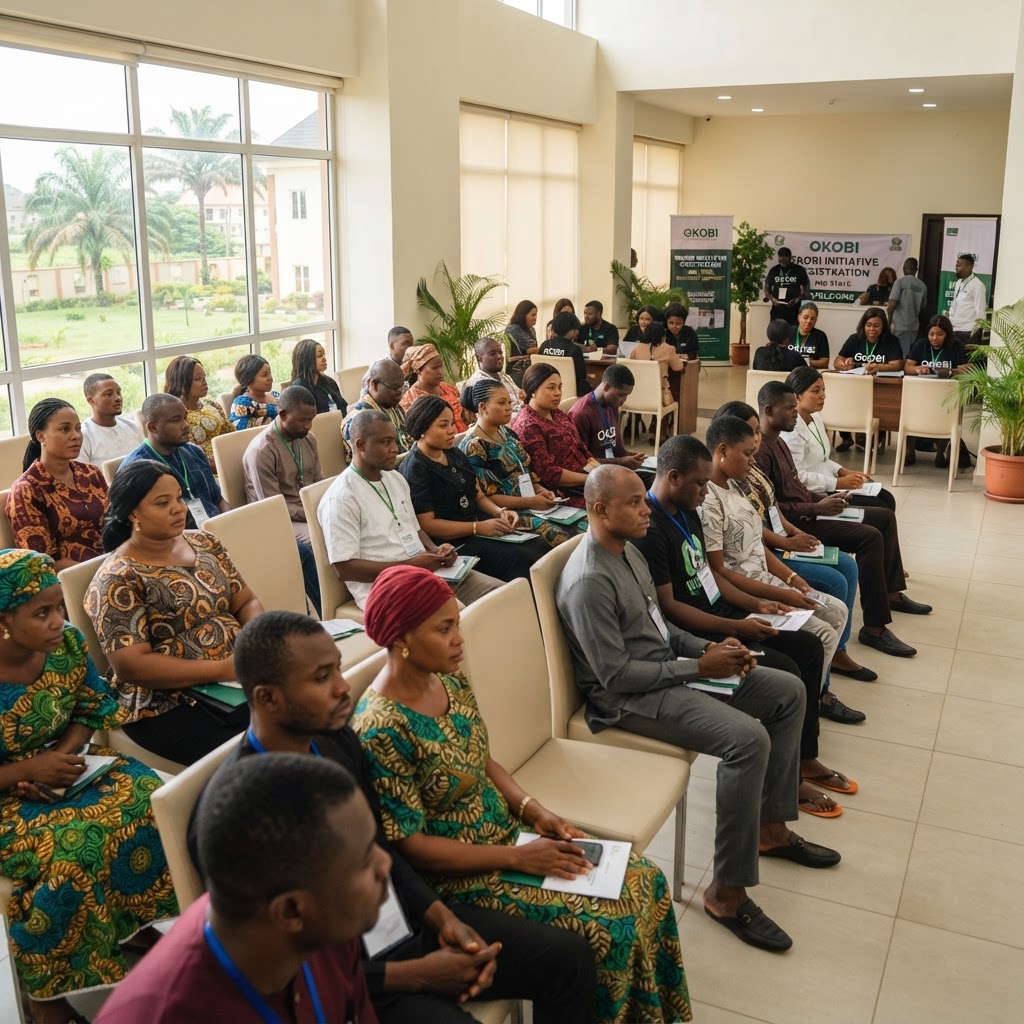
65 Imo Businesses Await OKOBI Initiative Registration
Imagine 65 kindred-owned businesses across Imo State, each waiting for one final document to unlock full legal status. That single step—Corporate Affairs Commission registration—now defines the next chapter in Imo's OKOBI Initiative: 65 Community Businesses Await CAC Registration. For families, entr...
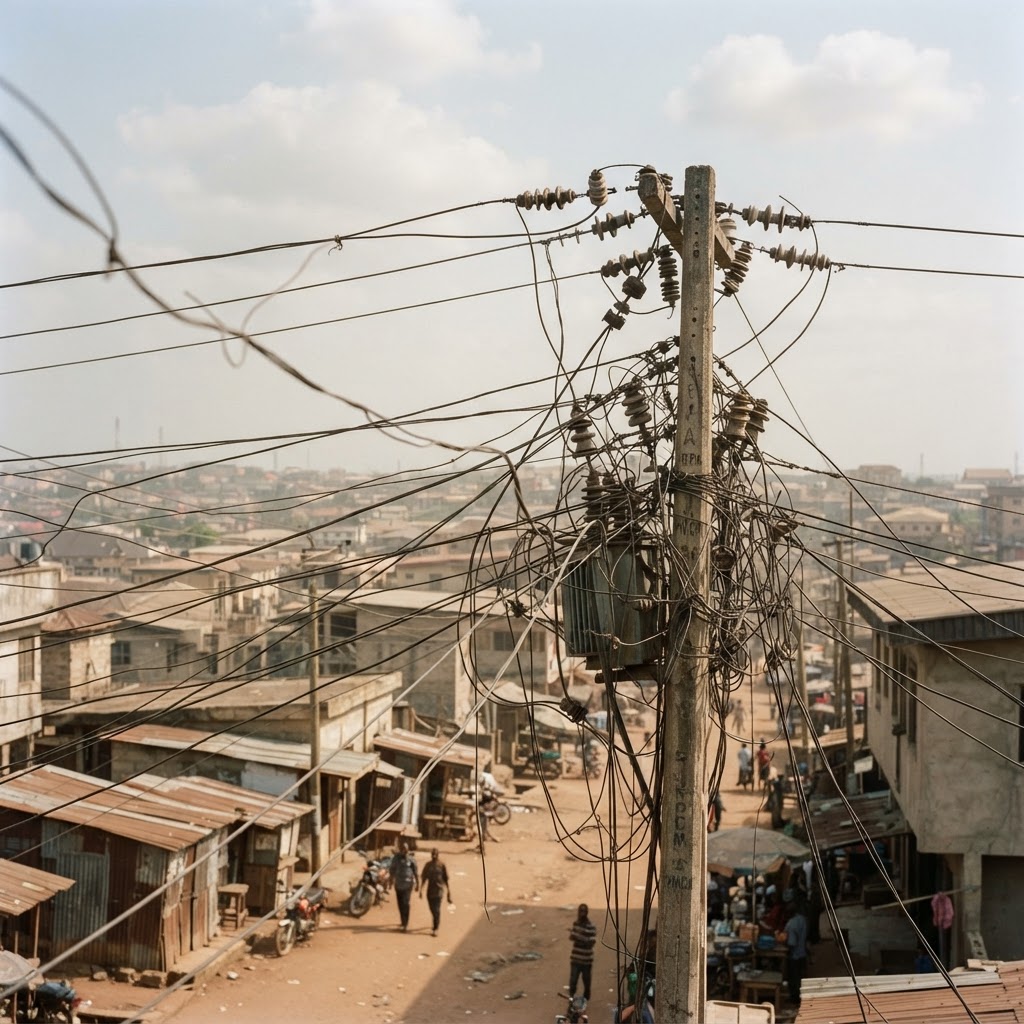
Why Nigeria Faces an Ongoing Power Supply Crisis
Nigerian households lose power multiple times a day, and the frustration never seems to fade. Behind every flickering bulb and silent refrigerator lies a deeper story about Nigeria's fragile power supply system — one that touches nearly every aspect of daily life across the country. Businesses stall...

61 Nigerian Officials Tied to $271M US Properties
Nigeria's corridors of power just faced a fresh spotlight. A newly released investigation, titled 61 Nigerian Officials Linked to $271m US Property Holdings — Report, has reignited public debate over wealth, accountability, and trust in leadership. For families budgeting daily expenses, the numbers ...