Powered by Obi Mbieri Independent Media Ltd · eziokwubundu.com
$1 = ₦1,329€1 = ₦1,512£1 = ₦1,762Mbieri Infrastructure Gap: Roads, Water and Public Projects Under Scrutiny as Residents Renew Call for Government Action
Mbieri, a community in Mbaitoli Local Government Area of Imo State, sits at the centre of a development contradiction that many Nigerian communities know too well. Roads are being built in some corridors while adjacent routes crumble. Water projects enter government procurement records yet their com...
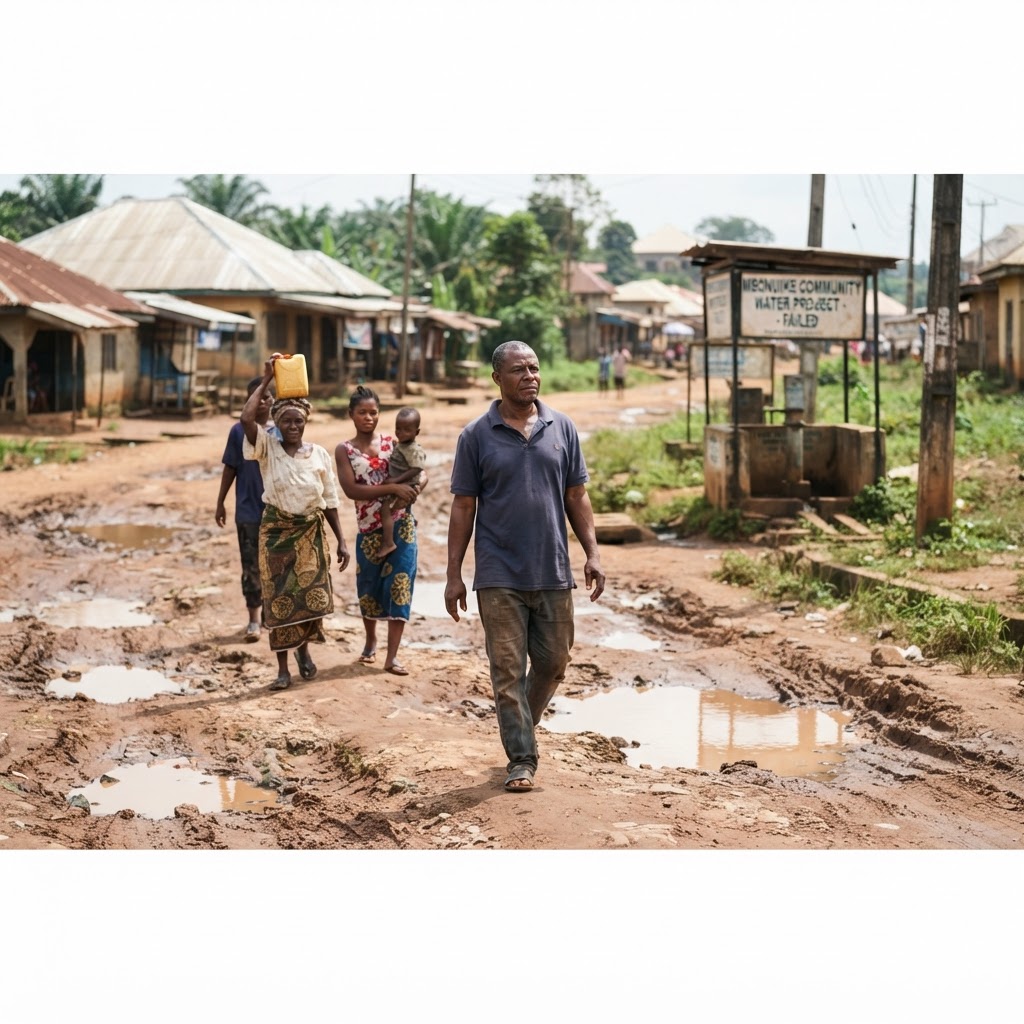
Mbieri, a community in Mbaitoli Local Government Area of Imo State, sits at the centre of a development contradiction that many Nigerian communities know too well. Roads are being built in some corridors while adjacent routes crumble. Water projects enter government procurement records yet their completion status remains unverified. Electricity interventions are commissioned with fanfare, but whether the lights still work months later is a question nobody officially answers.
This investigation draws on procurement documents, community reports, parliamentary records, and infrastructure announcements to map the current state of public infrastructure across Mbieri. The goal is not to argue that government has done nothing, nor to pretend that everything is fine. The goal is to establish what is known, what is missing, and what both government and community must do next.
What Is the True Extent of the Mbieri Infrastructure Paradox?
The most honest way to describe Mbieri's development situation is to call it a patchwork infrastructure landscape — one where visible milestones coexist with systemic deficits that affect daily life for the majority of residents.
On one hand, the 4.5-kilometre Umuahii–Obi-Mbieri road entered its asphalt phase in March 2026, representing a genuine and commendable infrastructure milestone. On the other, community reports from 2026 continue to describe roads in other Mbieri corridors as being in deplorable condition. The Imo State House of Assembly commended a joint government and Niger Delta Development Commission (NDDC) intervention on the Ukwu Orji–Nwaorieubi route. Water projects appeared in formal government procurement filings. Solar street lights were commissioned by the NDDC in August 2025.
Yet none of these interventions, taken individually or collectively, resolves the broader infrastructure challenge.
The paradox is structural. When a single corridor receives investment while surrounding arterial routes remain impassable, the improved road does not function as an economic artery — it functions as an island. A household near a newly asphalted road still cannot efficiently reach the market, health centre, or school if the connector roads remain broken. This fragmentation has direct consequences for health outcomes, agricultural productivity, and economic mobility.
For Nigerian families living in semi-rural communities like Mbieri, infrastructure is not a political abstraction. Poor roads extend travel time, raise transport costs, increase food prices, and delay emergency medical response. When mental health support for Nigerians in rural areas is already difficult to access, physical connectivity barriers compound the problem significantly. Addressing Mbieri's infrastructure paradox is therefore a matter of public health, not merely public works.
How Has Private Philanthropy Stepped in Where Public Roads Stalled?
The story of the Umuahii–Obi-Mbieri road is simultaneously inspiring and troubling.
The project was initiated in late 2025 by diaspora contributors. Before the asphalt phase commenced, Obi-Mbieri indigenes in the diaspora mobilised resources to carry out earthworks and drainage interventions along the corridor. The broader project was then taken over by the family of Eze Dr. Josiah Nzeremibe Osuji, Eze-Ukwu I of Obi-Mbieri Autonomous Community, who committed private funding to complete the 4.5-kilometre asphalting. Physical work on the asphalt surface began on 16 March 2026.
This is the kind of community project execution that deserves genuine recognition. The Osuji family and the diaspora contributors demonstrated that organised private and community investment can deliver hard infrastructure at significant scale. That lesson should not be dismissed.
But the policy question must be asked plainly: a 4.5-kilometre road serving a Nigerian community is, under any reasonable statutory framework, a government responsibility — not a private obligation. The Imo State Government and Mbaitoli Local Government Authority have statutory mandates for local road construction and maintenance. When those mandates go unfulfilled and private families are compelled to build trunk roads, it signals a structural accountability gap, not a community success story.
The deeper risk is normalisation. If government comes to expect that communities, town unions, and diaspora groups will finance roads that belong in the public budget, the political pressure to actually fund those roads diminishes. Community self-help should supplement public investment — it must never permanently substitute for it.
This is especially relevant in a context where, as our coverage of Mbaitoli LGA's FAAC allocations has documented, the local government has received substantial federation account transfers. The question is not whether money exists. The question is where that money has gone.
What Is the Real Status of the Ukwu Orji–Nwaorieubi Road?
In March 2026, the Imo State House of Assembly commended the joint collaboration between the Imo State Government and the NDDC for the rehabilitation of the Ukwu Orji–Nwaorieubi Road in Mbaitoli Local Government Area. The road is a strategically important corridor, connecting communities across Mbaitoli and serving as a critical transit route for trade and daily movement.
Legislative commendation, however, is not an engineering completion certificate. The distinction matters enormously for residents who depend on this road every day.
Several project monitoring questions remain publicly unanswered. What is the total length of the road and what percentage has been physically completed? Who is the contractor? What is the total contract value, and what is the funding split between Imo State and the NDDC? What was the original completion date, and has that date been met? If work remains outstanding, what is the revised delivery timeline?
These are not complicated questions. They are the basic accountability metrics that any transparent infrastructure programme should publish as standard practice. The controversy over ₦350 million in Imo State government expenditure demonstrates that public scrutiny of government spending in Imo is not only warranted but necessary.
Until the Imo State Government and NDDC publish verifiable project completion data — not press releases, but contractor-confirmed, physically inspected documentation — the Ukwu Orji–Nwaorieubi road remains an open accountability question. Residents of Mbaitoli deserve a clear, public answer.
Which Critical Mbieri Roads Need Urgent Reconstruction?
Beyond the corridors where interventions have been announced, several Mbieri road routes continue to attract urgent community concern — and have done so for multiple years.
The Umuonyeali–Mbieri road was the subject of a 2026 community video report describing it as being in poor condition and calling for immediate government intervention. While Eziokwubundu.com has not independently verified every claim in the social media footage, the report is consistent with a pattern of community distress that has persisted across Mbieri. Physical verification through on-site inspection and structured interviews with traders, commercial transporters, and residents along the corridor remains the essential next step.
The Nkworji–Obazu–Mbieri road presents a different but equally serious challenge. Community references indicate that some remedial works have been undertaken on sections of this route. The critical distinction here is between cosmetic grading or pothole patching — which provides temporary relief but does not address underlying structural deterioration — and full-depth reconstruction capable of supporting heavy agricultural and commercial transport. Temporary repairs on a road that requires comprehensive rehabilitation are not a solution; they are a deferral of a larger cost.
Featured Products
Chukwu Abiama Tee
Bold black-and-gold Igbo-pride T-shirt featuring 'Chukwu Abiama' in premium streetwear typography.
₦15,000
Buy NowReverse Type 2 Diabetes & other associated Metabolic Issues using Dr. Jason Fung's Evidence-Based Approach— FMD program for Type 2 Diabetes
A practical fasting and fasting-mimicking programme built on Dr Jason Fung's insulin-resistance principles and ow-glycemic recipes.
₦19,950
Join NowỤmụ Igbo Tee
Classic black T-shirt with bold white 'Ụmụ Igbo' typography — a proud statement of Igbo heritage.
₦15,000
Buy NowNwanne Tee
Washed khaki vintage tee with a faded rust-orange 'Nwanne' stamp badge and palm leaf motif — a nod to kinship and heritage.
₦18,000
Buy NowObodo Tee
Faded denim-blue washed tee with a cream 'Obodo' stamp badge and sun motif, celebrating community roots.
₦18,000
Buy NowEkwe Heritage Tee
Deep indigo tee featuring a fine line-art illustration of a traditional Igbo ekwe drum, inspired by Igbo-Ukwu bronze artistry.
₦18,000
Buy NowIkenga Figure Tee
Forest green tee with a fine line-art illustration of a stylized Ikenga figure.
₦18,000
Buy NowPerhaps the most historically persistent case is the Orie Mbieri–Ubakuru–Eke Iho Road. In September 2023, residents of Ubakuru Mbieri formally warned that the road's deteriorating condition threatened to economically isolate their agrarian community. They appealed to both the Imo State Government and the NDDC for reconstruction. The road serves as a key connector for communities whose livelihoods depend on agricultural supply chains. Poor road access raises the cost of transporting farm produce, reduces farmgate prices, contributes to post-harvest losses, and weakens local food security. Three years on from that warning, residents and journalists need a direct answer: has this corridor been permanently rehabilitated, or does the problem remain unresolved?
Where Does Mbieri Stand on Clean Water Access?
Water infrastructure tells a similarly incomplete story — one where government procurement records demonstrate intent but fall short of confirming delivery.
Under the World Bank-backed Sustainable Urban and Rural Water Supply, Sanitation and Hygiene (SURWASH) programme implemented through the Imo State Rural Water Supply and Sanitation Agency, two Mbieri projects appeared in formal procurement filings in early 2026. The first concerned the Umuagwuruchi Achi Mbieri Water Scheme, involving rehabilitation of a borehole, conversion to solar-powered pumping, installation of a water storage tank, and a distribution reticulation network. The tender closing date was 27 January 2026. The second project concerned Umuodu Community School in Mbieri, covering construction of an eight-compartment toilet block and a 2,000-gallon solar-powered borehole. This tender closed on 19 January 2026.
These procurement filings are meaningful. They establish that specific projects were budgeted, scoped, and formally tendered — which is materially different from a political promise. For communities that have lived without reliable clean water for years, even a procurement record represents a form of institutional acknowledgement.
But a tender is not a functioning tap. The public record available to Eziokwubundu.com does not confirm that either project has been completed, commissioned, and verified as operational. The questions that must be answered are: who won each contract, what was the awarded contract value, when did construction begin, was the project completed, and is clean water currently flowing to residents and pupils?
This matters beyond convenience. Access to clean water is a foundational preventive healthcare intervention. According to the World Health Organization, contaminated drinking water causes an estimated 485,000 diarrhoeal deaths globally each year. In Nigerian rural communities, waterborne disease burden remains disproportionately high. A functioning solar borehole at Umuodu Community School is not merely an infrastructure asset — it is a public health intervention that protects children daily.
How Effective Are Public Energy Interventions Like the Ihitte Solar Project?
In August 2025, the NDDC announced the installation of solar-powered street lights across eight communities in Imo State, with Ihitte Community in Mbieri, Mbaitoli LGA among the beneficiaries. At the time of commissioning, the NDDC's state representative specifically warned contractors to comply with the project's Bill of Engineering Measurement and Evaluation (BEME), signalling awareness of quality-compliance risks on similar past projects.
The BEME warning is telling. It reflects a documented pattern in Nigerian public infrastructure delivery where projects are commissioned without full compliance with technical specifications, only for components to fail prematurely. For solar street-light installations specifically, the most common post-installation failure points are battery degradation, inadequate panel mounting, and substandard charge controllers — problems that typically become visible six to eighteen months after commissioning.
The accountability question for Ihitte Mbieri is therefore not whether the lights were installed. The relevant question — the one that determines whether public money produced lasting value — is whether the lights are still functioning today. Night-time lighting along rural corridors directly enables evening market activity, supports local small business operations, and reduces security risks for families. As research on rural electrification in sub-Saharan Africa consistently shows, reliable public lighting extends productive economic hours and supports income generation for market traders and micro-entrepreneurs who depend on evening commerce. If the Ihitte solar lights are already failing, the NDDC and its contractors owe the community both repair and explanation.
Why Does Mbieri Need an Open Infrastructure Inventory Now?
One of the most significant structural problems exposed by this investigation is the absence of a single, publicly accessible infrastructure register for Mbieri. Residents currently must piece together information from scattered newspaper reports, Facebook videos, government press releases, and parliamentary proceedings to understand what is being built, by whom, and whether it is finished.
This information gap enables two failures simultaneously: it allows incomplete projects to escape sustained public pressure, and it prevents community organisations from building a coherent, evidence-based case for further investment.
Eziokwubundu.com proposes that Mbieri's town unions, youth leadership, diaspora associations, and traditional institutions collaborate to create and maintain a standardised Mbieri Infrastructure Register. This register should document, for every public project: the exact scope and location, the funding source (state, federal, NDDC, LGA, or private/community), the contractor's identity, the approved contract value, start and expected completion dates, current physical status, photographic evidence, and the designated maintenance authority post-completion.
The technology required to build such a register is modest — a shared spreadsheet combined with geotagged photographs uploaded to a cloud platform is sufficient to begin. What is required is organised community will to move from social media complaints to structured, verifiable documentation.
The core resident demands that emerge from this investigation are clear. Government must publish full project details — contractor names, contract sums, timelines, and verified completion status — for every public infrastructure intervention in Mbaitoli. The Achi Mbieri Water Scheme and the Umuodu Community School projects must be physically inspected and their operational status publicly confirmed. Road rehabilitation programmes must integrate erosion control and drainage infrastructure, not just asphalt surfacing. And every completed asset — road, borehole, street light — must have a named maintenance authority and a funded maintenance budget.
These demands are not radical. They are the minimum standards of transparent public governance. As our tracking of Mbaitoli Chairman Ifunanya Nwanegwo's development projects demonstrates, the resources allocated to this LGA are substantial. The accountability question is whether those resources are being converted into durable, community-serving infrastructure.
For communities exploring complementary private-sector tools to support local development — from estate management technology to community finance — resources like NokVision's estate management platform and guidance on accessing microfinance in southeast Nigeria represent practical pathways to building local economic capacity alongside public infrastructure advocacy.
Conclusion
Mbieri is not without development. Roads are being constructed. Water projects have entered formal government procurement. Electricity interventions have been commissioned. Private families and diaspora communities have stepped in to fill gaps that government has not covered.
But these interventions do not amount to a coherent infrastructure strategy. They are individual acts — some public, some private, some partially completed, some of unverified status — in a community that deserves integrated, sustainable, and publicly accountable infrastructure delivery.
The real issue is never simply whether government has done anything. The real issue is whether the scale, distribution, quality, and long-term maintenance of public infrastructure investment matches the legitimate needs of Mbieri's residents, farmers, traders, students, and families.
Government at every level — the Imo State Government, Mbaitoli Local Government Authority, the NDDC, and relevant federal agencies — should welcome infrastructure scrutiny, not resist it. When a road holds, when a borehole pumps clean water, when a street light remains lit and a school toilet is functional, residents do not need to be told that development has arrived. They experience it every day.
That is the standard Mbieri's communities are entitled to demand — and the standard that every tier of government should be publicly accountable for meeting.
This article is published by eziokwubundu.com as part of its commitment to community-centred journalism, accountability reporting, and evidence-based development coverage for Nigerian families and communities.
Stay Informed
Get New Articles in Your Inbox
Subscribe to receive the latest community development, health, and wealth insights from Eziokwubundu.
Newsletter
Practical insights on health, wealth, and community — delivered weekly.
Community Discussion(0)
Leave a Comment
More to Read
You May Also Like

Imo Government to Support 100 More Communities
OKOBI is reshaping how everyday Imo residents build wealth from their own villages. The latest expansion, tagged OKOBI: 100 More Imo Communities Set to Receive Government Support, signals a new chapter in Governor Hope Uzodimma's push for grassroots prosperity. For Nigerian families and community le...
How Rising Petrol Prices Impact Nigerian Households and SMEs
Petrol prices have crossed a psychological line that many Nigerians once thought impossible. At ₦1,400 per litre in several states, rising petrol prices are reshaping how households spend, how businesses operate, and how communities survive. What was once an occasional headline about fuel scarcity h...
48 Months Without Full Pension Payments: Imo Pensioners
Retirement should bring peace, not financial anxiety. Yet across Imo State, thousands of elderly civil servants say their golden years have turned into a struggle for survival. The situation described in "48 Months Without Full Pension Payments: Imo Pensioners Demand Answers" reflects a deepening cr...
How Igbo communities fund development projects
Across southeastern Nigeria, roads are tarred, schools are built, and boreholes are sunk — not by government contractors, but by communities pooling resources together. This phenomenon is neither accidental nor recent. It is the product of centuries-old cultural philosophy, refined institutional str...
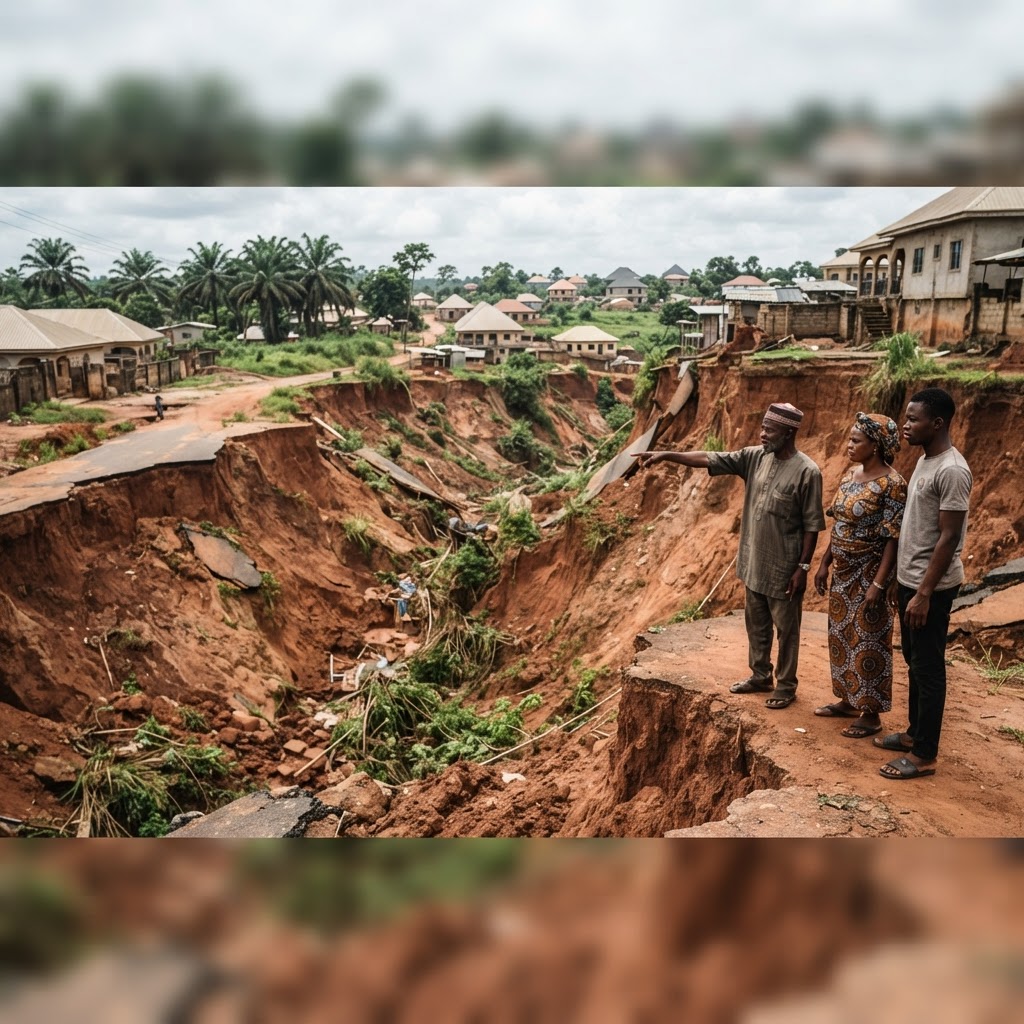
Imo Erosion Crisis: Mbieri Communities Demand Urgent Government Action
The ground beneath Mbieri is literally disappearing. In Mbaitoli Local Government Area of Imo State, advancing gullies are swallowing roads, threatening homes, and pushing one of southeastern Nigeria's most resilient communities toward an environmental breaking point. Residents are no longer waiting...

Imo State Emergency Contacts Directory
Emergencies do not send advance notice. Whether it is a road traffic accident along the Owerri-Onitsha expressway, a fire outbreak in a densely populated neighbourhood, or a sudden medical crisis in one of Imo State's rural local government areas, the difference between life and death often comes do...
Imo Waste Collection Services Compared
Waste management sits at the intersection of public health, economic productivity, and community dignity. For residents of Imo State, particularly those living in the expanding urban corridors of Owerri, the question of who collects refuse — and how reliably they do it — is not a minor administrativ...