Powered by Obi Mbieri Independent Media Ltd · eziokwubundu.com
Mental health support for Nigerians in rural areas
Mental health support for Nigerians in rural areas remains one of the most underfunded, underreported, and structurally neglected dimensions of public health across the country. While Nigeria's urban centers gradually build awareness around psychological wellbeing, millions of rural Nigerians contin...
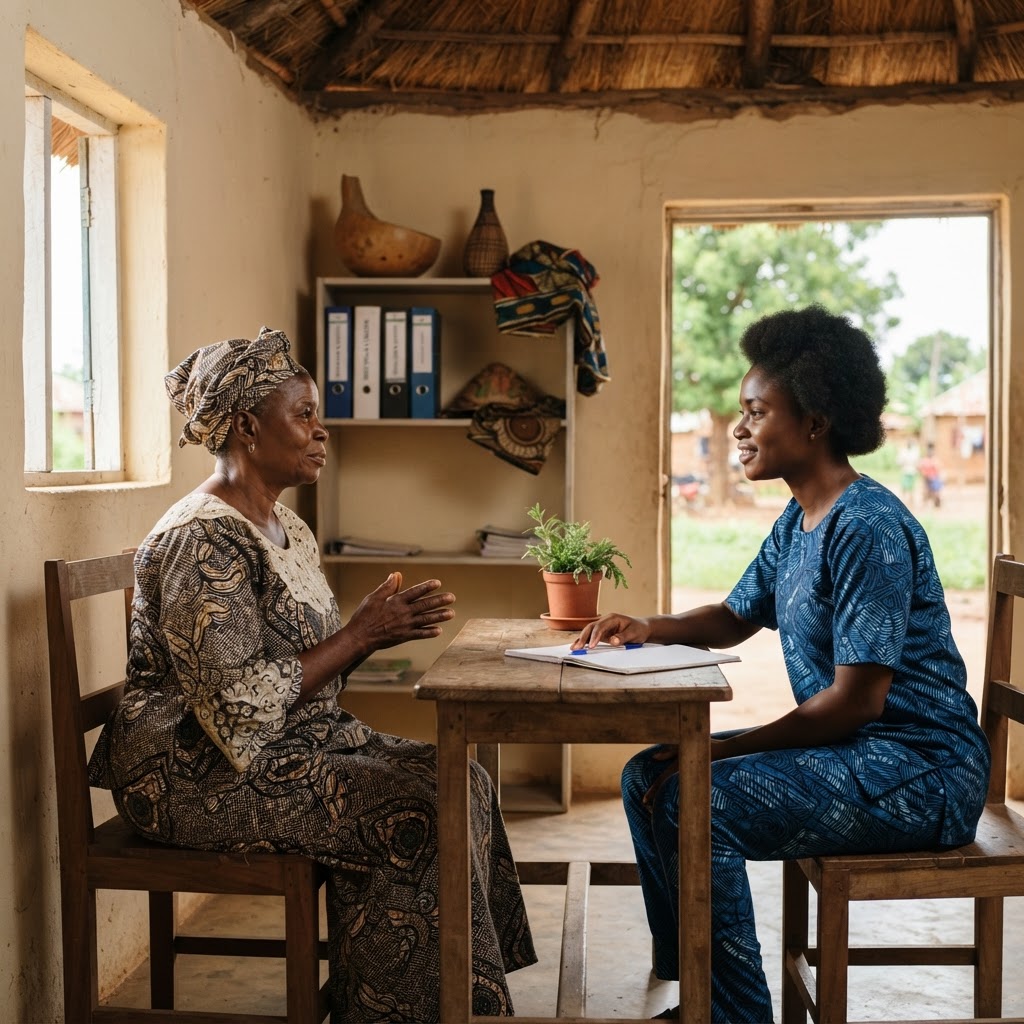
Mental health support for Nigerians in rural areas remains one of the most underfunded, underreported, and structurally neglected dimensions of public health across the country. While Nigeria's urban centers gradually build awareness around psychological wellbeing, millions of rural Nigerians continue to suffer in silence — facing untreated depression, psychosis, anxiety disorders, and trauma with virtually no access to qualified professional care. The consequences extend far beyond individual suffering. They ripple outward into household poverty, collapsed agricultural productivity, fractured family units, and communities unable to reach their full developmental potential.
This article examines the systemic roots of rural mental health neglect in Nigeria, the cultural frameworks shaping local responses, the economic cost of inaction, and — critically — the practical, community-led strategies that can begin to close the treatment gap today.
Why is rural mental health at a breaking point?
Nigeria's psychiatric workforce crisis
The numbers are staggering. Nigeria has approximately 250 practicing psychiatrists serving a population of over 200 million citizens — a ratio that ranks among the most deficient in the world. What makes this crisis even more acute is the geographic distribution of those specialists. More than 80% of Nigeria's psychiatric services are concentrated in urban centers such as Lagos, Ibadan, and Abuja, leaving the country's vast rural interior functionally abandoned when it comes to formal mental healthcare.
The result is a treatment gap that WHO estimates at between 80% and 90% in low-income rural contexts. In practice, this means that over 20 million Nigerians living with diagnosable mental health disorders — ranging from clinical depression to acute psychosis — receive no formal diagnostic, therapeutic, or emergency psychological intervention whatsoever.
Compounding this structural deficit is Nigeria's intensifying brain drain, widely captured under the colloquial term "Japa." Each year, hundreds of trained Nigerian doctors, nurses, and health workers emigrate to the United Kingdom, Canada, and the United States in pursuit of better wages and working conditions. District health posts that once had a marginally functional capacity for basic psychological triage are now stripped bare. Many rural ward-level clinics cannot identify baseline clinical depression, let alone manage a psychotic episode. The gap between need and available care continues to widen with each passing year, and without deliberate structural intervention, the breaking point is not approaching — it has already arrived.
How do cultural beliefs shape rural mental healthcare?
Spirituality, stigma, and the burden of misattribution
Understanding the challenge of mental health support for Nigerians in rural areas requires an honest engagement with the cultural frameworks through which rural communities interpret psychological distress. Field research conducted in western and southeastern Nigeria reveals that only 35% of rural caregivers demonstrate accurate mental health literacy. Nearly 45% prioritize traditional or spiritual remedies as their primary — and often only — intervention.
These findings are not simply a matter of ignorance. They reflect deeply embedded cultural cosmologies in which psychiatric disorders are attributed to spiritual retribution, ancestral curses, witchcraft, or the consequences of moral transgression. A young man experiencing a first psychotic break in a rural Imo or Kogi community is far more likely to be taken to a spiritualist or prayer house than to a primary health center. This delay — sometimes lasting months or years — means that by the time individuals reach formal clinical settings, their conditions have deteriorated into chronic, treatment-resistant states.
Among the most troubling manifestations of this cultural response is the practice of chained confinement, in which relatives physically restrain mentally ill individuals in homes or religious centers, sometimes for extended periods. The human rights implications of this practice have been extensively documented, yet enforcement mechanisms to end it remain weak across rural jurisdictions.
Equally important is the disproportionate burden placed on rural women and mothers. These women serve as unassisted primary caregivers for mentally ill family members while managing households, farm labor, and income generation under acute economic pressure. The community stigma they endure — often branded as having "brought illness into the family" — deepens their own psychological vulnerability. Addressing rural mental health in Nigeria means addressing gendered caregiving inequity as an inseparable component of the broader solution.
How does poor mental health hurt rural economic output?
The hidden cost of untreated psychological distress
The relationship between mental health and economic productivity is not abstract — it is measured in lost harvests, shuttered market stalls, and depleted household savings accounts. For rural Nigerian communities whose livelihoods depend on consistent agricultural labor, artisan trade, and micro-entrepreneurial activity, untreated depression and anxiety carry a direct and devastating economic cost.
A farmer managing a smallholding in rural Anambra or Benue who develops untreated clinical depression will experience measurable declines in concentration, physical energy, and decision-making capacity. Crop cycles are missed. Livestock go unattended. Seasonal income collapses. At the household level, the family is forced into a cycle of distress borrowing and asset liquidation that can take years — or generations — to recover from.
The economic toll deepens when families channel scarce financial resources into repeated consultations with spiritualists, herbal practitioners, and prayer centers — none of whom provide evidence-based treatment. These out-of-pocket expenditures represent catastrophic health spending for households already living near subsistence thresholds. As explored in our coverage of how public funds flow through local government health allocations, the absence of targeted mental health spending at the LGA level leaves communities without the institutional support systems they need.
Framing rural mental wellness as a luxury is a category error. It is, in fact, a prerequisite for sustainable food security, poverty reduction, and community-wide wealth creation. A community that cannot care for its psychologically distressed members is a community that cannot fully activate its productive human capital.
Featured Products
Chukwu Abiama Tee
Bold black-and-gold Igbo-pride T-shirt featuring 'Chukwu Abiama' in premium streetwear typography.
₦15,000
Buy NowReverse Type 2 Diabetes & other associated Metabolic Issues using Dr. Jason Fung's Evidence-Based Approach— FMD program for Type 2 Diabetes
A practical fasting and fasting-mimicking programme built on Dr Jason Fung's insulin-resistance principles and ow-glycemic recipes.
₦19,950
Join NowỤmụ Igbo Tee
Classic black T-shirt with bold white 'Ụmụ Igbo' typography — a proud statement of Igbo heritage.
₦15,000
Buy NowNwanne Tee
Washed khaki vintage tee with a faded rust-orange 'Nwanne' stamp badge and palm leaf motif — a nod to kinship and heritage.
₦18,000
Buy NowObodo Tee
Faded denim-blue washed tee with a cream 'Obodo' stamp badge and sun motif, celebrating community roots.
₦18,000
Buy NowEkwe Heritage Tee
Deep indigo tee featuring a fine line-art illustration of a traditional Igbo ekwe drum, inspired by Igbo-Ukwu bronze artistry.
₦18,000
Buy NowIkenga Figure Tee
Forest green tee with a fine line-art illustration of a stylized Ikenga figure.
₦18,000
Buy NowCan primary care integration close the access gap?
Task-sharing and the mhGAP framework in action
One of the most evidence-supported and operationally feasible solutions to the rural mental health access deficit is the integration of mental health screening and basic management into existing Primary Health Care (PHC) infrastructure through task-sharing. The WHO's Mental Health Gap Action Programme (mhGAP) provides a structured, evidence-based framework for training non-specialist health workers — including Community Health Extension Workers (CHEWs) — to screen, identify, and initiate first-line management of priority mental health conditions such as depression, psychosis, epilepsy, and substance use disorders.
Nigerian district pilots that have implemented mhGAP-aligned training protocols have reported measurable improvements in primary care staff diagnostic accuracy and significant reductions in unnecessary referrals to overburdened regional psychiatric hospitals. CHEWs who receive targeted psychosocial training demonstrate improved capacity to conduct structured mental state assessments and apply basic behavioral activation and psychoeducation techniques during routine clinic encounters.
Making this model work at scale requires more than training, however. Local Government Areas (LGAs) must secure consistent supplies of essential psychotropic medications — including antidepressants, antipsychotics, and mood stabilizers — at ward-level dispensaries. The frequent stockouts that plague rural PHC centers represent a critical failure point. When a CHEW correctly identifies a patient with severe depression but has no access to even first-line medication, the diagnostic capacity becomes practically useless. Advocacy for uninterrupted essential medicine supply chains must be treated as non-negotiable infrastructure for any functional rural mental health program.
What role can traditional rulers and faith leaders play?
Community governance as a vehicle for mental health advocacy
No intervention strategy for rural Nigeria can succeed without actively engaging the community governance structures that hold genuine moral authority — traditional rulers, faith institutions, and village development committees. Ezes, Obas, Emirs, and ward heads command trust and compliance that no external NGO or government agency can replicate. When these leaders publicly champion anti-stigma campaigns and visibly protect the rights of vulnerable community members, their influence accelerates behavioral change far more effectively than clinical messaging alone.
Structured referral partnerships between orthodox healthcare providers, rural churches, and Islamic centers offer a practical mechanism for redirecting individuals away from harmful confinement practices and toward early medical intervention. A pastor or imam who understands the clinical presentation of psychosis and maintains a working relationship with the nearest CHEW or PHC officer becomes a first-line detection node in an otherwise disconnected system.
This approach draws on the African communal philosophy — expressed across Igbo, Yoruba, Hausa, and other Nigerian cultural traditions — that the wellbeing of the individual is inseparable from the health of the collective. Peer-support circles organized through town hall associations, women's cooperative groups, and market associations can provide family caregiver relief and reduce the isolation that makes mental illness so devastating in rural contexts. Our earlier reporting on vulnerable children in Imo State institutions illustrates the human cost of community governance failures in protecting those with special needs — a warning that applies equally to rural mental health.
How can families and leaders act right now?
Practical steps toward rural mental resilience
Families, community leaders, and local organizations do not need to wait for federal policy reform to begin building mental health resilience at the grassroots level. Concrete action is possible today.
At the household level, families should learn to recognize the early warning signs of psychological distress: prolonged withdrawal, sleep disturbances, unexplained physical complaints, sudden changes in behavior, or talk of hopelessness. Nigeria's Mentally Aware Initiative operates toll-free crisis support, and several NGOs offer basic SMS and USSD-based mental health outreach in low-bandwidth environments. Families must also resist the deeply entrenched habit of harmful self-medication — including the inappropriate use of sedatives and alcohol to manage distress.
Community leaders can engage local civil society organizations and diaspora medical associations, many of which operate mobile outreach teams providing psychological first aid during community health days. Mobilizing ward and LGA representatives to demand equitable mental health funding allocations under state health insurance schemes is a legitimate and necessary advocacy priority, particularly as the National Mental Health Act of 2021 creates a legal framework that communities can invoke to demand accountability.
Building community wealth and building community health are not separate missions. As we have discussed in our guide to building savings structures for low-income Nigerians and in our framework for organizing youth cooperatives, collective economic structures and collective wellness structures reinforce each other. A mentally resilient community is a more productive, more cohesive, and ultimately more prosperous community.
Conclusion
Mental health support for Nigerians in rural areas is not a peripheral policy conversation. It is a foundational development priority that sits at the intersection of public health, human rights, economic productivity, and community dignity. The structural neglect of rural psychological wellbeing — driven by specialist shortages, cultural stigma, inadequate funding, and systemic brain drain — creates a compounding cycle of suffering that costs Nigeria far more than any investment in solutions would.
The path forward requires simultaneous action on multiple fronts: integrating mental health into primary care through task-sharing models, engaging traditional and faith leaders as anti-stigma advocates, empowering families with practical early-intervention knowledge, and demanding that LGAs and state governments fulfill their obligations under existing law. None of these steps require waiting for perfect conditions. They require will, coordination, and the recognition — deeply African in its roots — that the health of each person is the responsibility of the entire community.
At eziokwubundu.com, we remain committed to delivering the evidence-based, community-grounded information that Nigerian families, leaders, and advocates need to build healthier, wealthier, and more resilient lives — in the city and in the village alike.
Stay Informed
Get New Articles in Your Inbox
Subscribe to receive the latest community development, health, and wealth insights from Eziokwubundu.
Newsletter
Practical insights on health, wealth, and community — delivered weekly.