Powered by Obi Mbieri Independent Media Ltd · eziokwubundu.com
$1 = ₦1,333€1 = ₦1,530£1 = ₦1,783Imo’s ₦61bn Question: Tracking Agricultural Funding
Nigeria's farmers just received a fresh reason to hope—and to ask hard questions about agricultural funding. A new Germany-funded agricultural project has disbursed ₦61bn nationwide, and it reignites Imo's ₦61bn Question: How Much of Nigeria's Agricultural Financing Is Reaching Imo. For families in ...
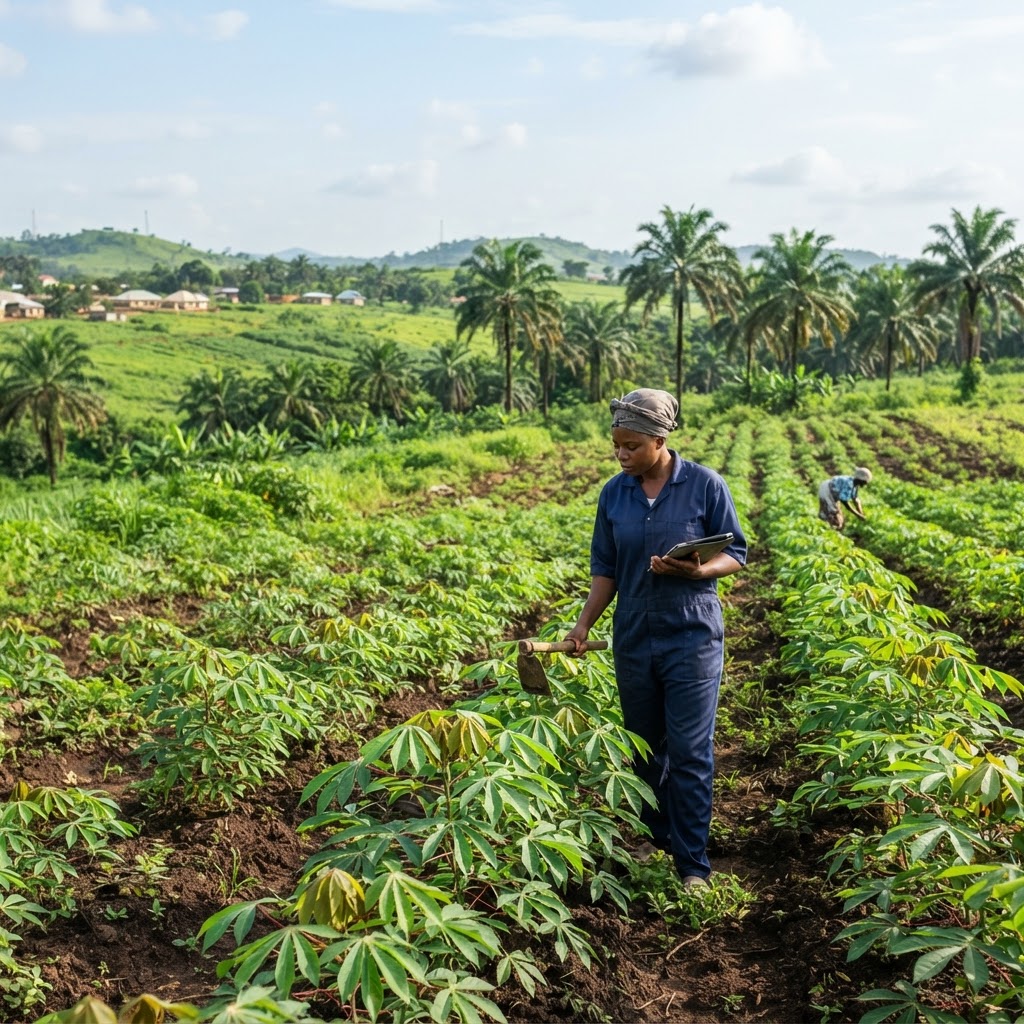
Nigeria's farmers just received a fresh reason to hope—and to ask hard questions about agricultural funding. A new Germany-funded agricultural project has disbursed ₦61bn nationwide, and it reignites Imo's ₦61bn Question: How Much of Nigeria's Agricultural Financing Is Reaching Imo. For families in Owerri, Okigwe, and Orlu, the answer matters more than the headline. When national agricultural funding announcements make the news, the real test is always local: does the money translate into seedlings, tools, storage facilities, and income for the farmers who need it most?
What Is the ₦61bn Funding Reality?
The Germany-funded agricultural project recently disbursed ₦61bn to farmers across Nigeria. It targets smallholder productivity, value chains, and rural income growth. On paper, this is a massive intervention and a welcome boost to agricultural funding nationwide.
But national figures often hide state-level gaps. A ₦61bn disbursement sounds transformative until you ask how it was distributed across 36 states plus the FCT. If spread evenly, each state would receive roughly ₦1.6bn. In practice, distribution is rarely even, and agricultural funding of this scale tends to concentrate wherever infrastructure, political attention, and administrative capacity already exist.
Imo State has strong agricultural potential, from cassava and rice to poultry and aquaculture. Yet there is little public data showing which Imo cooperatives, farmer groups, or agribusinesses actually received funds from this specific project. This gap in reporting is precisely why questions about agricultural funding distribution matter so much right now.
This is where transparency becomes critical. International donor funds like Germany's agricultural investment often flow through federal ministries, state coordinating offices, and implementing partners. Each layer adds distance between the announcement and the farmer's pocket, and each layer also represents another point where agricultural funding can be delayed, diverted, or simply lost in bureaucratic translation.
For Imo households depending on farming for survival, this distance is not abstract. It determines whether a farmer buys improved seedlings this planting season or continues using old, low-yield stock. Tracking exactly how much of the ₦61bn reached Imo-based farmers is not just a data exercise. It is an accountability test for how Nigeria manages agricultural funding at the grassroots level, and a test that Imo cannot afford to fail if it wants long-term rural development.
How Does Imo Agriculture Fare Now?
Imo State's agricultural sector remains dominated by smallholder, subsistence-style farming. Most farmers cultivate less than two hectares. They rely on rain-fed cycles, manual labor, and inherited farming techniques passed down through generations. This structure makes the state especially dependent on external agricultural funding to modernize, yet especially vulnerable to being overlooked when that funding is allocated.
Land tenure is a persistent obstacle. Many Imo farming families work land without formal titles or registered deeds. Without titles, banks and microfinance institutions hesitate to extend credit. This locks farmers out of the very financial system meant to support them, and it also locks many communities out of formal agricultural funding programs that require documented land ownership as a condition for participation.
Nigeria has an estimated 40.2 million agricultural households, according to data referenced by the National Bureau of Statistics. Imo contributes a meaningful share of this number, yet most of these households operate far below their productive capacity. The mismatch between potential output and available financing is stark, and it underscores why targeted agricultural funding, rather than broad national averages, should be the metric that matters to Imo residents.
Several structural issues compound the problem for Imo farmers.
- Limited access to certified seedlings and modern inputs
- Poor rural road networks that raise transport costs
- Weak storage infrastructure, leading to post-harvest losses
- Minimal formal land documentation, blocking loan applications
- Inconsistent extension services that leave farmers without updated agronomic guidance
Until these barriers are addressed, Imo's agricultural sector will continue underperforming relative to its natural resource endowment. The state has fertile land and a large farming population. What it lacks is a financing bridge connecting ambition to actual output—and that bridge is built, in large part, through sustained, well-tracked agricultural funding that reaches the community level rather than stalling at state or federal offices.
Where Is the Money Actually Going?
Nationally, agricultural credit from Nigerian banks is projected to rise sharply, reaching an estimated ₦3.81 trillion by 2026, according to sector analyses cited by the Central Bank of Nigeria. This suggests growing confidence in agriculture as an investable sector, and it signals that agricultural funding at the national level is expanding even as questions remain about its regional distribution.
Yet this national growth trend does not automatically translate to Imo. Bank credit expansion often concentrates in states with stronger agribusiness infrastructure, larger commercial farms, and established loan repayment histories. Imo's predominantly smallholder farming structure makes it less attractive to conventional lenders chasing scale, which means the state must work harder to prove itself worthy of increased agricultural funding allocations in future cycles.
The Imo State Project Facilitation Fund (PFF) was introduced to bridge some of these gaps at the state level. In principle, it should align with federal and international disbursements, channeling support directly to farmers and agribusinesses. In practice, coordination between state-level funds and national agricultural funding programs remains inconsistent, leaving farmers uncertain about which office to approach or which application window applies to them.
Farmers in zones like Okigwe face additional barriers. Distance from Owerri, the state's administrative center, limits their access to information about ongoing funding windows. Many agribusinesses in Okigwe learn about disbursement opportunities too late, or not at all, effectively excluding them from agricultural funding cycles that better-connected farmers in Owerri capitalize on quickly.
Featured Products
Chukwu Abiama Tee
Bold black-and-gold Igbo-pride T-shirt featuring 'Chukwu Abiama' in premium streetwear typography.
₦15,000
Buy NowReverse Type 2 Diabetes & other associated Metabolic Issues using Dr. Jason Fung's Evidence-Based Approach— FMD program for Type 2 Diabetes
A practical fasting and fasting-mimicking programme built on Dr Jason Fung's insulin-resistance principles and ow-glycemic recipes.
₦19,950
Join NowỤmụ Igbo Tee
Classic black T-shirt with bold white 'Ụmụ Igbo' typography — a proud statement of Igbo heritage.
₦15,000
Buy NowNwanne Tee
Washed khaki vintage tee with a faded rust-orange 'Nwanne' stamp badge and palm leaf motif — a nod to kinship and heritage.
₦18,000
Buy NowObodo Tee
Faded denim-blue washed tee with a cream 'Obodo' stamp badge and sun motif, celebrating community roots.
₦18,000
Buy NowEkwe Heritage Tee
Deep indigo tee featuring a fine line-art illustration of a traditional Igbo ekwe drum, inspired by Igbo-Ukwu bronze artistry.
₦18,000
Buy NowIkenga Figure Tee
Forest green tee with a fine line-art illustration of a stylized Ikenga figure.
₦18,000
Buy NowThis disconnect mirrors patterns seen elsewhere in Nigeria's public finance system. Communities read about national pension commitments, yet see little movement locally—a pattern explored in 48 Months Without Full Pension Payments: Imo Pensioners. Agricultural funding risks following the same script unless deliberate tracking mechanisms are put in place. Just as Nigeria seeks new partnerships to revive dormant infrastructure, as detailed in NNPC Seeks Partnerships to Restart PH and Warri Refineries, Imo's agricultural sector needs renewed partnerships and clearer accountability structures to make agricultural funding work at the local level.
Without a clear, published breakdown of how much of the ₦61bn reached Imo specifically, farmers and community leaders are left guessing. That guesswork undermines trust in both state and federal agricultural institutions, and it weakens public confidence in future agricultural funding announcements, no matter how large the headline figures appear.
Why Do Imo Farmers Struggle?
The core issue is what economists call the credit gap. Smallholder farmers across Nigeria, including in Imo, are historically underserved by conventional banks. Lenders view small farms as high-risk, low-return borrowers, which pushes many farmers to seek alternative sources of agricultural funding through informal channels, cooperatives, or family networks instead of formal institutions.
High interest rates worsen this gap. Commercial agricultural loans in Nigeria often carry double-digit interest rates, sometimes exceeding 20% annually. For a farmer earning modest seasonal income, such rates make borrowing financially dangerous rather than empowering, and they discourage farmers from pursuing agricultural funding opportunities that come with heavy repayment burdens.
Existing agricultural credit guarantee schemes, including federal-level interventions, were designed to reduce this risk. However, many Imo families report limited awareness of how to apply, or find the paperwork requirements too complex without land titles. This awareness gap means that even when agricultural funding programs exist on paper, they remain functionally inaccessible to the farmers who need them most.
There is also a knowledge gap in public expenditure tracking. Few applied research studies specifically examine how Imo State's agricultural budget lines correspond to actual disbursements. This absence of localized research makes it difficult for policymakers, journalists, and community leaders to hold anyone accountable for how agricultural funding is spent, tracked, or reported at the state level.
Economic pressure is pushing many rural households toward alternative income strategies, a trend also visible in urban labor markets, as discussed in Economic Pressure Drives Employers Toward Commission-Based Pay. When farming income is unreliable, families diversify—but diversification without financing support often means survival, not growth. This reality reinforces why consistent, transparent agricultural funding is not a luxury for Imo households; it is a necessity for stabilizing rural livelihoods.
How Can Imo Secure Its Share?
Solving this problem requires action from farmers, cooperatives, and local institutions, not just government promises. Imo's farming communities need practical strategies to become more "bankable" in the eyes of formal lenders and more visible to agencies distributing agricultural funding.
Cooperative formation is one proven path. When farmers pool resources through registered cooperatives, they present lower risk profiles to banks and development partners. Group lending models have worked successfully in other Nigerian states and can be replicated across Imo's agricultural zones, giving smallholder farmers a stronger collective voice when negotiating for agricultural funding.
Community-led monitoring is equally important. Local organizations, town unions, and youth professional groups can track disbursements publicly, comparing announced agricultural funding against what actually reaches farmers on the ground. This kind of grassroots oversight has proven effective in other sectors where public accountability was initially weak.
Several concrete steps can strengthen Imo's position for future funding cycles.
- Register farmer cooperatives formally with the Corporate Affairs Commission
- Digitize farm records to demonstrate consistent productivity
- Partner with agricultural extension officers for documented training
- Advocate collectively through community leaders for PFF transparency
- Build relationships with development partners early, before agricultural funding windows open
This is where Eziokwubundu's Health + Wealth + Community model becomes practical. A healthy, well-organized farming community is better positioned to negotiate, monitor, and manage development funds responsibly. Diaspora Imo professionals can also support by funding pilot cooperative projects, similar in spirit to opportunities highlighted in Apply Now: $10,000 African AI Drug Discovery Fellowships, which show how targeted funding models can reach underserved innovators when structured correctly. The same discipline applied to research funding can and should be applied to agricultural funding at the community level.
What Is the Path to Prosperity?
Bridging the gap between national funding announcements and grassroots implementation is Imo's real agricultural challenge. The ₦61bn disbursement is meaningful only if traceable amounts reach real farmers in real communities, and that traceability is the single most important measure of whether agricultural funding is working as intended.
Eziokwubundu's mission centers on using accurate, practical information to empower Nigerian communities toward economic self-reliance. Agricultural funding transparency fits squarely within that mission. Knowledge, not assumption, should guide how communities respond to funding announcements, and communities that ask sharper questions tend to receive sharper accountability from the institutions managing agricultural funding.
Community leaders, youth professionals, and local organizations must now demand clear accountability. This includes requesting public disclosure of Imo-specific disbursement figures from state agricultural offices. It also means engaging with events where policy conversations happen, much like the security and governance discussions expected at CARSPO 2026: Why Nigeria's Police Chiefs Are Converging on Owerri, or the broader media and policy dialogue anticipated at Shettima to Open Editors' Conference in Enugu Thursday, where questions about resource distribution, including agricultural funding, often surface among policymakers and journalists alike.
Imo's farmers deserve more than headlines. They deserve verified access to the financing meant to transform their livelihoods. The question is not whether ₦61bn exists—it clearly does. The question is whether Imo gets its fair, documented share of agricultural funding, and whether the state builds the institutional habits needed to secure larger shares in every funding cycle that follows. Until that accountability becomes routine, every new agricultural funding announcement will remain, for Imo, a promise still waiting to be proven.
Stay Informed
Get New Articles in Your Inbox
Subscribe to receive the latest community development, health, and wealth insights from Eziokwubundu.
Newsletter
Practical insights on health, wealth, and community — delivered weekly.
Community Discussion(0)
Leave a Comment
More to Read
You May Also Like

Economic Pressure Drives Employers Toward Commission-Based Pay
Nigeria's labor market is undergoing a quiet but profound transformation. Across Lagos boardrooms, Abuja offices, and Aba trading floors, a growing number of employers are restructuring compensation packages — moving away from the predictability of fixed monthly salaries toward commission-based pay ...
48 Months Without Full Pension Payments: Imo Pensioners
Retirement should bring peace, not financial anxiety. Yet across Imo State, thousands of elderly civil servants say their golden years have turned into a struggle for survival. The situation described in "48 Months Without Full Pension Payments: Imo Pensioners Demand Answers" reflects a deepening cr...
Imo Markets: What Fees Are Traders Paying and Who Collects Them?
For thousands of traders operating daily across Imo State's bustling markets — from Relief Market in Owerri to the Naze Timber and Allied Traders Market — paying levies is an unavoidable cost of doing business. But in 2026, a more urgent question is emerging from beneath the noise of commerce: exact...
Unapproved Orphanages in Nigeria: How Safe Are Children in Private Care Homes?
Across Nigeria, thousands of children live in private care homes that operate outside the law. Some are run by well-meaning individuals overwhelmed by the scale of child poverty. Others are driven by profit, exploiting the image of vulnerable children to attract foreign donations while providing sub...

How to Access CBN Small Business Loans
Access to affordable financing remains one of the most persistent barriers to entrepreneurial growth in Nigeria. For millions of small business owners operating in a landscape defined by high commercial lending rates — often ranging between 25% and 30% per annum — the Central Bank of Nigeria's inter...
Imo State Tax Guide for Individuals
Taxation is one of the most direct ways that individuals participate in the development of their communities. Yet for many residents of Imo State, the process of understanding, registering, and filing taxes remains confusing, intimidating, or simply unfamiliar. This guide is designed to change that....
How to start vegetable farming with small capital Nigeria
Vegetable farming is one of the most accessible and consistently profitable agricultural ventures available to Nigerians today. Whether you are a young graduate seeking a sustainable livelihood, a household looking to reduce food costs, or an entrepreneur exploring low-risk entry points into agricul...

Building Wealth with Ajo and Esusu
The journey to financial independence in Nigeria does not always require a bank loan or a complex stock portfolio. For centuries, our ancestors utilized communal structures to fund life’s greatest milestones. From the bustling markets of Lagos to the quiet villages of the southeast, Ajo and Esusu ha...

KoboTutor: How a Nigerian EdTech Platform Is Bringing Personalised Learning to Students
Nigeria's education sector stands at a crossroads. With over 13 million out-of-school children and chronic underfunding in public education, the pressure on students who do attend school is immense. For the millions sitting JAMB, WAEC, and NECO examinations each year, the stakes could not be higher....
112 Federal Unity Colleges Face Possible Shutdown
Nigeria's federal secondary school system stands at a critical crossroads. As the first term of the 2024/2025 academic year was set to commence, a dramatic standoff between the Federal Government and education workers erupted into a crisis threatening the academic futures of hundreds of thousands of...