Powered by Obi Mbieri Independent Media Ltd.
$1 = ₦1,353€1 = ₦1,486£1 = ₦1,775How to start vegetable farming with small capital Nigeria
Vegetable farming is one of the most accessible and consistently profitable agricultural ventures available to Nigerians today. Whether you are a young graduate seeking a sustainable livelihood, a household looking to reduce food costs, or an entrepreneur exploring low-risk entry points into agricul...
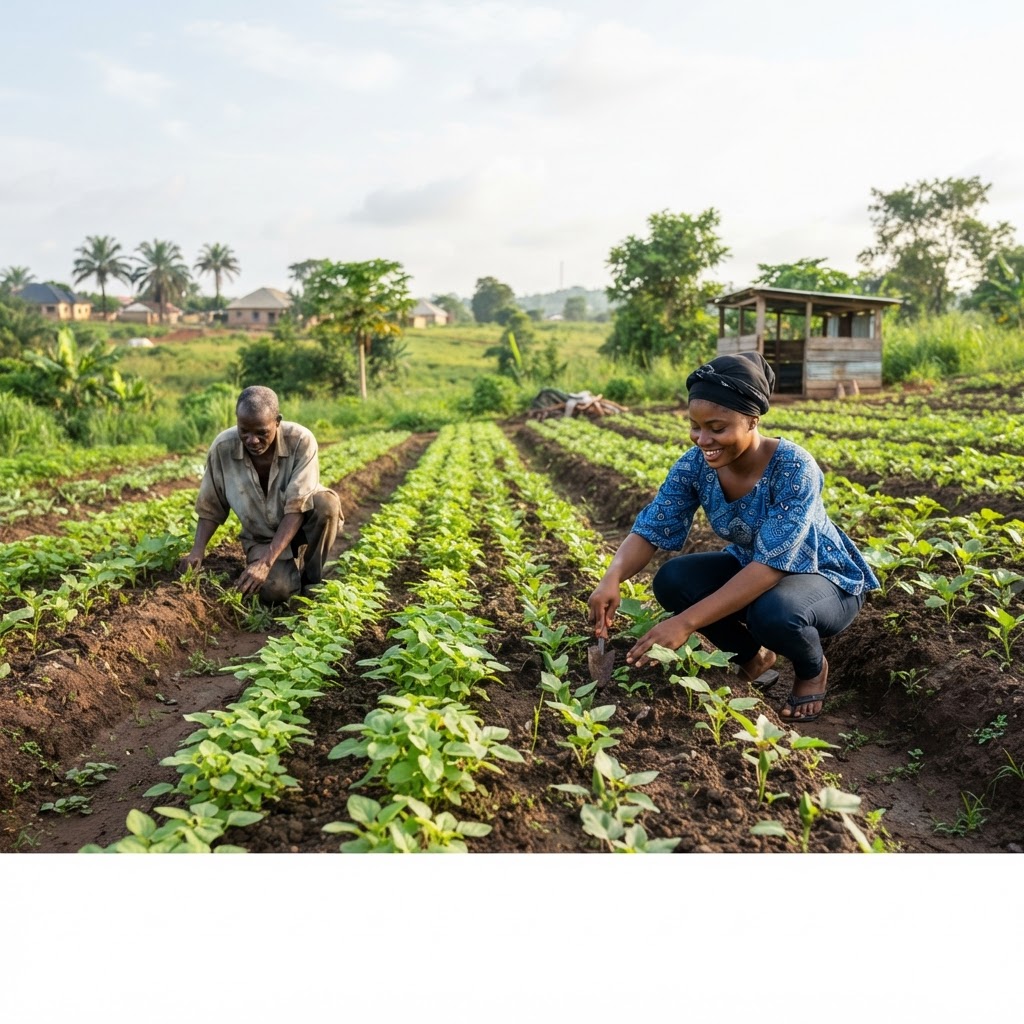
Vegetable farming is one of the most accessible and consistently profitable agricultural ventures available to Nigerians today. Whether you are a young graduate seeking a sustainable livelihood, a household looking to reduce food costs, or an entrepreneur exploring low-risk entry points into agriculture, small-scale vegetable farming offers a genuine pathway to financial independence. This guide provides a practical, step-by-step framework for launching a productive vegetable farm in Nigeria — even with limited startup capital.
Why Is Small-Scale Vegetable Farming Viable?
Nigeria's population surpassed 220 million in 2023, with urban centers like Lagos, Onitsha, Aba, and Abuja experiencing unprecedented food demand. According to the Food and Agriculture Organization (FAO), Nigeria remains one of Africa's largest vegetable producers, yet domestic supply consistently falls short of urban demand — creating a permanent market gap that small-scale farmers can profitably fill.
Rapid urbanization has also heightened health consciousness among Nigerian families. Middle-class consumers increasingly seek fresh, locally grown vegetables rich in essential minerals and vitamins such as iron, folate, and vitamins A and C — nutrients commonly found in leafy greens like ugu (fluted pumpkin) and waterleaf. This nutritional awareness translates directly into consistent retail demand.
Unlike large-scale industrial agriculture, which requires substantial capital investment in heavy machinery, industrial irrigation, and extensive land acquisition, small-scale vegetable farming can begin on as little as a quarter plot of land with an initial investment between ₦30,000 and ₦150,000 depending on location and crop selection. The barrier to entry is remarkably low.
Crucially, vegetable farming serves a dual purpose for Nigerian families. It simultaneously reduces household food expenditure by providing fresh produce at no retail cost while generating consistent weekly or monthly cash flow from market sales. This makes it one of the few agricultural ventures that improves both nutrition and income simultaneously — a core principle of the health-wealth integration that defines true community prosperity.
What Steps Build a Low-Capital Farm Plan?
Sound planning separates profitable vegetable farms from failed experiments. Before purchasing a single seed, every aspiring farmer must invest time in structured market research. Visit your nearest open market — whether Eke Awka, Mile 12 Lagos, or Ogbete Enugu — and speak directly with vegetable traders. Identify which crops sell fastest, what price ranges the market sustains, and which items are frequently unavailable. Demand-side intelligence protects you from planting crops that cannot find buyers.
Land optimization is the second critical planning pillar. Many Nigerians assume that viable farming requires large hectares of rural land. This is a misconception. Urban and peri-urban farming is expanding significantly across Nigeria, with backyard plots, rooftop containers, and shared community land all serving as productive growing spaces. Container gardening using recycled paint buckets, crates, or grow bags allows households in dense urban neighborhoods to produce meaningful quantities of herbs and leafy greens with virtually no land cost.
For those with access to even a 50 by 100 feet plot, strategic bed arrangement using the raised bed farming method — as recommended by the International Institute of Tropical Agriculture (IITA) — can multiply yield per square meter significantly compared to conventional flat-bed planting.
Every small-scale farmer should develop a basic business plan before planting. This document need not be complex, but it must account for four core variables: seed costs, soil preparation and amendments, labor requirements, and seasonal planting cycles. Understanding that vegetables like spinach and waterleaf have a harvest cycle of 21 to 45 days, while crops like tomatoes require 60 to 90 days, allows you to stagger planting for continuous cash flow rather than seasonal income spikes. A rolling harvest calendar is one of the most powerful low-cost tools available to small-scale farmers.
Which Crops Give the Best ROI on Small Budgets?
Crop selection is arguably the single most important financial decision a small-scale vegetable farmer makes. In the Nigerian context, four crops consistently deliver superior returns on limited land and capital: fluted pumpkin (ugu), waterleaf (Talinum triangulare), African spinach (Amaranthus hybridus), and scent leaf (Ocimum gratissimum).
Fluted pumpkin is particularly compelling. Its leaves, seeds, and vines all carry market value. A small 100 square meter ugu plot can yield harvestable leaves within 3 to 4 weeks of planting and continue producing for up to 12 months with proper management. Wholesale prices in southeastern Nigerian markets typically range from ₦500 to ₦1,500 per bundle, while retail pricing through direct consumer sales can reach ₦2,000 to ₦3,500 per bundle — a margin differential of 40 to 60 percent that rewards farmers who invest minimally in direct-to-consumer channels.
Waterleaf grows with exceptional speed in Nigeria's humid tropical climate, reaching harvestable size within 21 days under adequate moisture. Its high water content and nutritional profile — rich in vitamins A, C, and calcium — make it a household staple, particularly in southeastern and south-southern Nigeria. A 50 square meter plot can generate between ₦15,000 and ₦40,000 monthly depending on location and sales channel.
The 'space-to-profit' ratio is a practical framework every small-scale farmer should apply. Compact, fast-cycling leafy greens generate far more naira per square meter per month than bulky crops like yam or cassava, which require significantly more land, longer growing periods, and higher labor investment. Scent leaves and herbs, while lower in individual unit price, have near-zero input costs, minimal water requirements, and consistent demand from restaurants, pepper soup joints, and urban households — making them high-margin micro-crops ideal for container or backyard production.
Featured Products
Reverse Type 2 Diabetes & other associated Metabolic Issues using Dr. Jason Fung's Evidence-Based Approach— FMD program for Type 2 Diabetes
A practical fasting and fasting-mimicking programme built on Dr Jason Fung's insulin-resistance principles and ow-glycemic recipes.
₦19,950
Join NowChukwu Abiama Tee
Bold black-and-gold Igbo-pride T-shirt featuring 'Chukwu Abiama' in premium streetwear typography.
₦15,000
Buy NowỤmụ Igbo Tee
Classic black T-shirt with bold white 'Ụmụ Igbo' typography — a proud statement of Igbo heritage.
₦15,000
Buy NowNwanne Tee
Washed khaki vintage tee with a faded rust-orange 'Nwanne' stamp badge and palm leaf motif — a nod to kinship and heritage.
₦18,000
Buy NowObodo Tee
Faded denim-blue washed tee with a cream 'Obodo' stamp badge and sun motif, celebrating community roots.
₦18,000
Buy NowEkwe Heritage Tee
Deep indigo tee featuring a fine line-art illustration of a traditional Igbo ekwe drum, inspired by Igbo-Ukwu bronze artistry.
₦18,000
Buy NowIkenga Figure Tee
Forest green tee with a fine line-art illustration of a stylized Ikenga figure.
₦18,000
Buy NowRegarding pricing strategy, small-scale farmers who rely exclusively on selling to market middlemen typically capture only 30 to 50 percent of the final retail price. Where possible, establishing direct relationships with local restaurants, school canteens, and households — or participating in farmers' markets — significantly improves revenue. According to Nigeria's Federal Ministry of Agriculture and Rural Development, value chain shortening is one of the government's stated priorities for smallholder income improvement.
How Do You Keep Farm Startup Costs Low?
Efficient resource management determines whether a small-capital vegetable farm sustains profitability beyond its first harvest cycle. Organic farming techniques offer the most immediate cost reduction opportunity. Composting kitchen waste, animal manure, and crop residues eliminates or significantly reduces expenditure on synthetic NPK fertilizers, which have become increasingly expensive following Nigeria's fuel subsidy removal and naira depreciation. A well-maintained compost system costs nothing beyond time and reduces soil amendment costs by 60 to 80 percent annually.
Water management is equally critical. Erratic rainfall and unreliable municipal water supply are operational realities for most Nigerian farmers. Simple drip irrigation systems — assembled locally using perforated hoses, buckets, and basic fittings — can be constructed for under ₦20,000 and reduce water consumption by up to 50 percent compared to flood irrigation while delivering moisture directly to root zones for faster growth. During dry seasons, scheduling irrigation at dawn minimizes evaporation loss.
Community cooperation represents one of Nigeria's most underutilized agricultural assets. The traditional communal labor model — known variously as ọbụ in Igbo communities or àríà in Yoruba contexts — allows groups of farmers to share labor across farms on a rotational basis, dramatically reducing the cost of weeding, planting, and harvesting. Formalizing these arrangements through local farming groups or cooperative societies creates a structured support system that reduces individual financial exposure.
Just as community investment in healthcare infrastructure strengthens collective wellbeing — as explored in our coverage of Mbaitoli's Primary Healthcare Centres and their staffing challenges — community investment in shared agricultural resources strengthens collective food security and economic resilience.
What Challenges Will You Face and How to Overcome Them?
Nigeria's agricultural landscape presents real operational challenges that every small-scale vegetable farmer must anticipate and plan for strategically. Post-harvest loss is the most financially damaging. Studies by the Nigerian Stored Products Research Institute (NSPRI) estimate that Nigeria loses between 20 and 50 percent of vegetable produce post-harvest due to poor handling, lack of cold storage, and transportation delays. The practical solution for small-scale farmers is not cold chain infrastructure — which requires capital — but rather demand-side alignment: plant quantities proportional to confirmed buyer capacity, and establish pre-sale agreements with market traders or direct consumers before each planting cycle.
Formalizing your farming operation through local agricultural cooperatives provides access to information, collective bargaining power, and in some cases, state or federal support programs. The Nigerian Agricultural Insurance Corporation (NAIC) offers crop insurance products specifically designed for smallholder farmers — a risk management tool that remains dramatically underutilized. Cooperative membership also provides collective access to quality seeds, organic inputs, and shared equipment at reduced individual cost.
Maintaining consistent production quality is the foundation of long-term business viability. Customers — whether market traders, restaurants, or direct consumers — return to suppliers they trust. Consistency in bundle size, freshness, and delivery timing builds the kind of commercial reputation that generates referrals and repeat business without marketing expenditure. Keeping a simple farm log recording planting dates, input quantities, yields, and sales figures transforms intuitive farming into a data-informed enterprise.
For entrepreneurs considering diversifying their wealth-building portfolio, understanding both agricultural opportunities and financial market dynamics is valuable — as our analysis of the Dangote Refinery share offer and its meaning for ordinary Nigerian investors illustrates, informed decision-making across multiple sectors is central to sustainable prosperity.
Conclusion
Learning how to start vegetable farming with small capital Nigeria is not a theoretical exercise — it is a practical, actionable pathway to food security and financial independence that thousands of Nigerian families are already walking. The combination of perpetual urban demand, fast-cycling high-yield crops, organic cost-reduction techniques, and community cooperation models creates a business environment where disciplined small-scale farmers can generate meaningful income from surprisingly modest initial investment.
The key principles are clear: research your market before you plant, select crops with proven space-to-profit performance, manage water and soil organically, build community labor networks, and align production volume with actual buyer demand. Begin small, document everything, reinvest consistently, and scale methodically.
Nigeria's agricultural future is not built exclusively by large commercial interests — it is built one productive backyard, one cooperative, and one informed farmer at a time. Eziokwubundu.com is committed to providing the practical, culturally grounded knowledge that empowers Nigerian families and entrepreneurs to build that future together.
Stay Informed
Get New Articles in Your Inbox
Subscribe to receive the latest community development, health, and wealth insights from Eziokwubundu.
Newsletter
Practical insights on health, wealth, and community — delivered weekly.
Community Discussion(0)
Leave a Comment
More to Read
You May Also Like
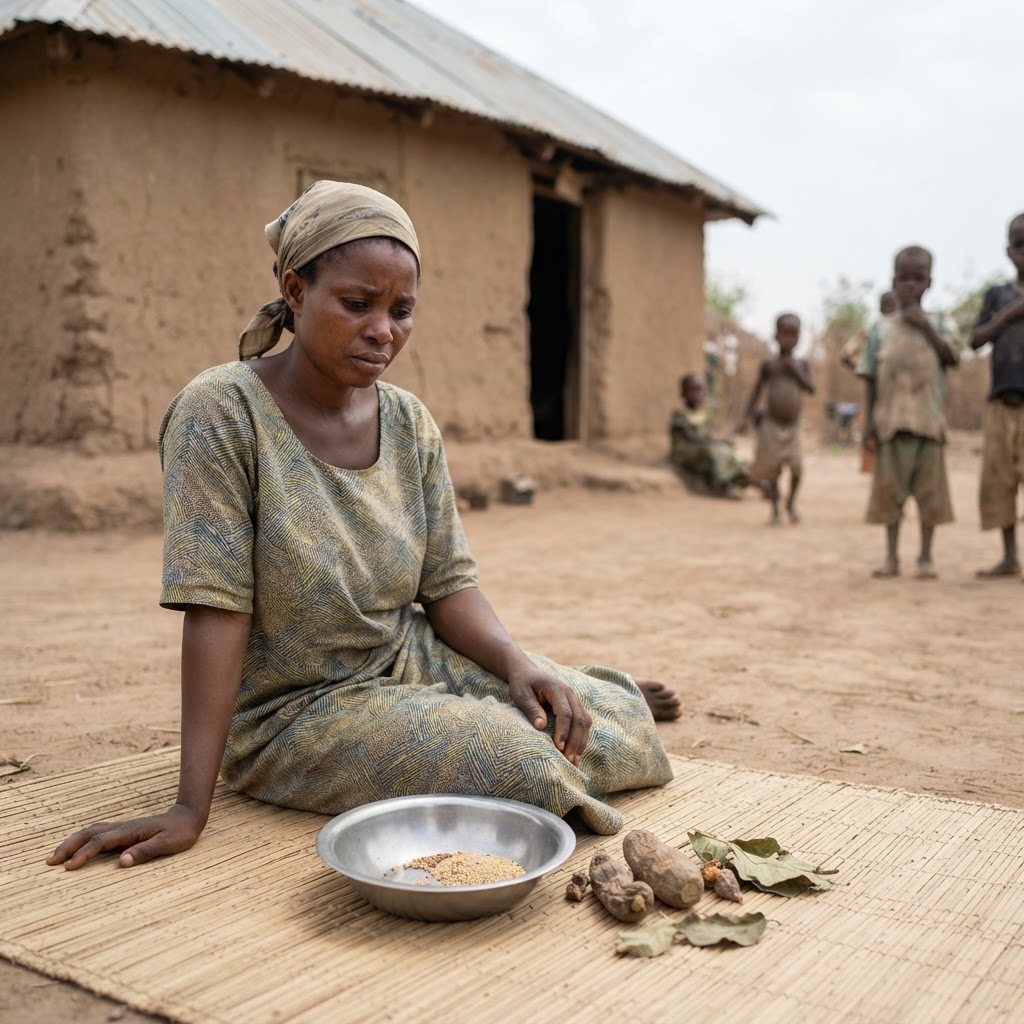
36.3 Million Nigerians Face Acute Food Crisis
Hunger is spreading faster than many expected across Nigeria this year. New humanitarian data reveals that 36.3 Million Nigerians Face Acute Food Crisis conditions, a number that should alarm every family, policymaker, and community leader. This is not a distant statistic. It is a lived reality shap...

Obi-Mbieri Mourns Engr. Vitalis Opara: Questions Emerge Over Community’s Silence
Engr. Vitalis Opara is identified as President General on the signature page of the Obi-Mbieri Autonomous Community Constitution 2020 as amended.

Seplat Aku-01 Discovery: Benefits for Obi-Mbieri
Imagine a small Imo State community suddenly linked to a 157-billion-cubic-feet gas discovery. That is the reality facing Obi-Mbieri today. This piece on Seplat's Aku-01 Discovery: What Concrete Benefits Should Obi-Mbieri Expect? breaks down what this find could mean for everyday residents, local bu...

IMSU Lecturers Protest in Owerri, Appeal to Uzodimma to End
The streets of Owerri turned into a sea of white lab coats and placards this week. Hundreds of university lecturers walked out of their offices, choosing protest over silence. The IMSU Lecturers Protest in Owerri, Appeal to Uzodimma to End Months-Long Strike has become a defining moment for Imo Stat...

JAMB Candidates Can Now Change Course and Institution Online
Admission season often brings long queues and costly transport for Nigerian families. That burden has just eased. JAMB candidates can now change their institutions and courses from home, as the board announces a new digital correction service, giving students and parents fresh control over their aca...

House Summons NAFDAC and DSS Over Fake Drug Deaths
Four people are dead, eleven more are fighting for their lives, and a federal lawmaker wants answers now. Fake Drug deaths linked to a suspicious herbal concoction have pushed the House of Representatives to move decisively, summoning NAFDAC and the DSS in a case that is no longer a distant headline...

Prevent Kidney Disease With Regular Health Checks
Kidney health rarely makes headlines until a crisis hits a family. Yet understanding Kidney Disease: Why Regular Health Checks Can Help Prevent Serious Complications can save lives, protect household income, and strengthen community wellbeing across Nigeria. Kidney Disease often develops quietly ove...

Budget-Friendly Healthy Meal Prepping for Nigerians
Modern Nigerian families face the dual pressure of rising food prices and the need for better health outcomes. Learning how Nigerian families can(/article/nigerian-family-guide-to-reversing-type-2-diabetes) use meal prepping with local ingredients to eat healthy on a tight budget is a vital skill fo...

Beyond Degrees: Bridging Nigeria's Digital Skills Gap
Nigeria's graduates are flooding the job market faster than employers can absorb them. Yet many arrive with certificates but no practical digital competence. This is the heart of Digital Skills and Youth Employment: Why Nigerian Graduates Need More Than University Certificates.—a gap that is reshapi...

Senate Sends State Police Bill to Tinubu for Approval
Nigeria's security architecture is entering a new chapter. The headline development, State Police Bill: Senate Transmits Constitutional Amendment to Tinubu for Presidential Assent, signals a historic shift toward decentralized policing. For Nigerian families, entrepreneurs, and community leaders, th...