Powered by Obi Mbieri Independent Media Ltd · eziokwubundu.com
$1 = ₦1,327€1 = ₦1,539£1 = ₦1,795112 Federal Unity Colleges Face Possible Shutdown
Nigeria's federal secondary school system stands at a critical crossroads. As the first term of the 2024/2025 academic year was set to commence, a dramatic standoff between the Federal Government and education workers erupted into a crisis threatening the academic futures of hundreds of thousands of...
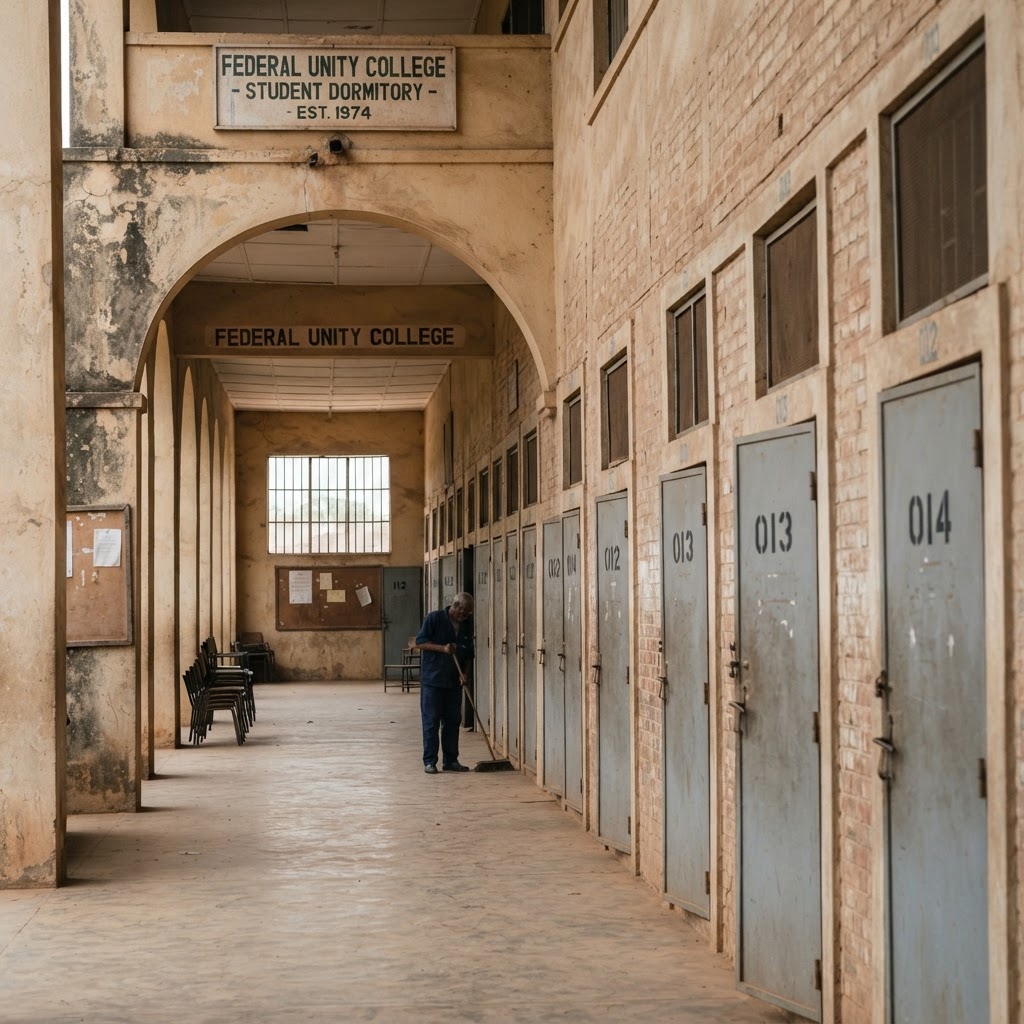
Nigeria's federal secondary school system stands at a critical crossroads. As the first term of the 2024/2025 academic year was set to commence, a dramatic standoff between the Federal Government and education workers erupted into a crisis threatening the academic futures of hundreds of thousands of Nigerian students. The headline says it all: 112 Federal Unity Colleges face possible shutdown, and the consequences extend far beyond classroom walls — reaching into family finances, community economies, student mental health, and the long-term wealth trajectory of ordinary Nigerian families.
This is not merely a labor dispute. It is a warning signal about the fragility of public education in Nigeria, the rising cost of instability on middle-class households, and the urgent need for community-driven resilience in the face of institutional failure.
Why Are 112 Unity Colleges Facing Shutdown?
The FG-Union Standoff Explained
According to a report by The Guardian Nigeria, 112 out of Nigeria's 115 Federal Unity Colleges face imminent closure as first-term resumption was effectively halted by coordinated worker resistance. The scale of this threat is staggering — nearly the entire network of federal secondary schools, which serves students from all 36 states and the FCT, is at risk of grinding to a halt.
At the center of the storm is Education Minister Dr. Tunji Alausa, who insisted on immediate resumption and reportedly authorized security deployment to enforce compliance. On the opposing side, the Joint Workers Committee of Unions (JWC) and the Association of Senior Civil Servants of Nigeria (ASCSN) issued directives to their members to stay away from schools, effectively making reopening impossible without their cooperation.
The immediate trigger was the controversial concession and management transfer of King's College, Lagos — one of Nigeria's most prestigious federal secondary institutions — to a private management entity. Unions characterized this move as backdoor privatization: a quiet, incremental dismantling of public educational assets built over generations of Nigerian taxpayers' contributions. Workers fear that King's College is not an isolated case but a pilot for a nationwide concession program that would fundamentally alter the character of federal education. The government's insistence on proceeding without broad stakeholder consultation transformed a policy disagreement into a full-blown industrial action.
What Are the Primary Grievances Fueling the Strike?
Concession, Privatization, and Civil Service Security
The ASCSN and Joint Congress have been unambiguous in their demands: full transparency on all concession arrangements, mandatory stakeholder consultation before any public-private partnership agreements are finalized, and an immediate reversal of the King's College management transfer. These are not abstract bureaucratic demands. They reflect deep, legitimate anxieties about the future of public service employment and the accessibility of federal schools.
The government's position frames public-private partnerships as efficiency tools — mechanisms to improve school infrastructure maintenance, upgrade facilities, and enhance educational delivery without overburdening the national budget. There is logic to this argument in principle. Nigeria's Unity Schools have historically suffered from underfunding, dilapidated hostels, and inadequate teaching materials. Private management, the government contends, can fill these gaps.
However, unions argue that the practical consequences of concession arrangements are predictably damaging: job cuts for existing civil servants, fee increases that price out working-class students, and the gradual erosion of the federal character principle that makes Unity Schools socially significant. Unity Schools are not just educational institutions — they are nation-building tools, deliberately designed to mix students from diverse ethnic and economic backgrounds. Privatization, unions warn, will convert them into elite institutions accessible only to the privileged.
Education unions have also called on broader labor bodies — including the Nigeria Labour Congress (NLC), the Trade Union Congress (TUC), and the Academic Staff Union of Universities (ASUU) — to build a united front. The concern is systemic: if federal secondary schools are concessioned without resistance, universities and polytechnics may follow.
How Does This Threaten Family Finances?
The Hidden Costs of Educational Disruption
For the average Nigerian family with a child in a Unity School, this shutdown is not a distant policy dispute — it is an immediate financial emergency. Consider the expenditure timeline: school fees and levies paid weeks in advance, transport costs to bring a child from Enugu or Kano to Lagos or Abuja, provisions purchased at inflated market prices driven by Nigeria's persistent food inflation (which exceeded 40% at its peak in 2024), new uniforms, bedding, and stationery. Many of these costs are non-refundable. When a school fails to open as scheduled, that money is simply lost.
Middle-class Nigerian families — the demographic that most heavily relies on federal Unity Schools as an affordable alternative to expensive private schools — absorb these shocks with diminishing financial reserves. A single disruption episode can cost a family between ₦50,000 and ₦200,000 in wasted logistics, depending on distance and provisions. Multiply this across hundreds of thousands of affected households, and the aggregate economic damage runs into billions of naira.
The financial spillover extends to grassroots micro-economies surrounding Unity Schools. Local transporters who shuttle students and parents, food vendors who supply provisions markets near school gates, artisans who produce school furniture and repair equipment, and stationery shops that depend on back-to-school seasons — all suffer immediate revenue losses when schools fail to resume. These are not formal-sector businesses with financial buffers. They are informal operators living hand-to-mouth.
The long-term wealth erosion is perhaps most damaging of all. Parents desperate to maintain their children's educational continuity are forced into the arms of private school operators, some of whom exploit crisis conditions to charge premium fees for mediocre services. This is a wealth transfer from struggling middle-class families to private education interests — precisely the outcome unions warn the concession policy will accelerate. For insights into how institutional underfunding creates cascading economic damage at the community level, see our analysis of the Dangote Refinery Share Offer: What Does It Mean for Ordinary Nigerian Investors? — a reminder that structural economic decisions always have grassroots consequences.
Featured Products
Chukwu Abiama Tee
Bold black-and-gold Igbo-pride T-shirt featuring 'Chukwu Abiama' in premium streetwear typography.
₦15,000
Buy NowReverse Type 2 Diabetes & other associated Metabolic Issues using Dr. Jason Fung's Evidence-Based Approach— FMD program for Type 2 Diabetes
A practical fasting and fasting-mimicking programme built on Dr Jason Fung's insulin-resistance principles and ow-glycemic recipes.
₦19,950
Join NowỤmụ Igbo Tee
Classic black T-shirt with bold white 'Ụmụ Igbo' typography — a proud statement of Igbo heritage.
₦15,000
Buy NowNwanne Tee
Washed khaki vintage tee with a faded rust-orange 'Nwanne' stamp badge and palm leaf motif — a nod to kinship and heritage.
₦18,000
Buy NowObodo Tee
Faded denim-blue washed tee with a cream 'Obodo' stamp badge and sun motif, celebrating community roots.
₦18,000
Buy NowEkwe Heritage Tee
Deep indigo tee featuring a fine line-art illustration of a traditional Igbo ekwe drum, inspired by Igbo-Ukwu bronze artistry.
₦18,000
Buy NowIkenga Figure Tee
Forest green tee with a fine line-art illustration of a stylized Ikenga figure.
₦18,000
Buy NowWhat Are the Health and Mental Well-being Impacts?
Student Stress, Parental Burnout, and Family Health
The psychological dimension of this crisis deserves serious attention. Boarding school students — many of them adolescents navigating the already-turbulent terrain of secondary school life — experienced a particular form of distress during this episode. Many arrived at school gates after long journeys, only to be turned away or met with confusion about whether resumption would proceed. This transit limbo is not a minor inconvenience. For adolescents, disrupted routines and institutional uncertainty generate measurable anxiety, sleep disturbances, and loss of academic motivation.
Research in adolescent psychology consistently shows that educational instability correlates with increased mental health challenges, including generalized anxiety disorder, depression, and behavioral difficulties. Students who have been anticipating reuniting with friends and resuming structured learning are particularly vulnerable when those expectations are suddenly denied.
Parents face their own mental health burden. Conflicting official circulars — the Federal Government insisting on resumption while unions direct workers to stay away — created a chaotic information environment in which parents could not make safe, informed decisions about whether to send children to school. Parental burnout is a real and underreported phenomenon in Nigerian family health discourse, and crisis episodes like this one intensify it significantly.
From a practical wellness standpoint, families navigating unexpected school delays should prioritize maintaining structure at home. Students should retain consistent sleep and wake schedules mirroring school hours. Nutritional routines — three balanced meals daily, adequate hydration, and reduced dependence on processed snack foods — must be preserved even outside the school boarding environment. Physical activity, even informal exercise within compound spaces, supports both mental and physical health during periods of uncertainty. Nigeria's healthcare system is already under significant strain, as documented in our investigation into Only 3% of PHCs Meet Staffing Standards: What Is the Situation in Imo? — families cannot afford to add preventable health deterioration to their existing burdens.
How Can Families and Communities Take Resilient Action?
Community Solutions and Alternative Learning Frameworks
The 112 Federal Unity Colleges facing possible shutdown crisis reveals a painful truth: Nigerian families cannot afford to be passive recipients of government decisions that disrupt their children's education. Community-level resilience is not optional — it is essential.
Parent-Teacher Associations (PTAs) and School-Based Management Committees (SBMCs) must move beyond their traditional reactive roles. During school disruptions, these bodies should convene emergency meetings to establish peer learning clusters — small, community-organized study groups led by volunteer teachers, retired educators, or university students. These clusters can operate in community halls, churches, mosques, or private compounds, maintaining academic momentum without replicating the cost structure of private schools.
Digital learning frameworks offer powerful supplementary tools for students with smartphone or tablet access. Platforms such as Khan Academy, Coursera, and local resources like Edves provide structured, curriculum-aligned content that can substitute for classroom instruction during disruptions. Families should not wait for crises to identify these resources — building digital learning literacy during stable periods ensures readiness when disruptions occur.
Alumni networks of Unity Schools represent an underutilized community asset. Thousands of successful Nigerians — including business leaders, doctors, lawyers, and public officials — passed through these institutions and have a deep stake in their continued accessibility. Organized alumni advocacy, including direct engagement with the National Assembly's Education Committees and media campaigns highlighting the public value of Unity Schools, can build political pressure that neither the government nor unions can easily ignore.
At the grassroots advocacy level, community leaders and local government councilors should formally document the economic and social cost of each school disruption and present this data to state and federal representatives. Evidence-based advocacy, grounded in real family expenditure data and community economic impact assessments, is far more persuasive than generalized protest.
The legacy of Federal Unity Schools as equalizers — institutions where a child from a poor family in Benue could study alongside a senator's child from Lagos — is worth protecting with organized, sustained community action.
Conclusion
The threat of 112 Federal Unity Colleges facing possible shutdown is a crisis that reaches into every dimension of Nigerian family life — financial security, educational continuity, mental health, and community economic stability. The standoff between the Federal Government and education workers over concession arrangements is, at its core, a battle over who controls the future of public education in Nigeria and who will have access to it.
For Nigerian families, the lesson is clear: build resilience before the next disruption arrives. Establish home learning frameworks, engage your PTA, connect with alumni networks, and protect your family's financial planning against the volatility that institutional instability creates. Nigeria's children deserve better than being caught in the crossfire of policy disputes — and communities that organize proactively are best positioned to protect them.
Stay informed, stay organized, and remember: in Nigeria, collective community action has always been the most reliable safety net.
Stay Informed
Get New Articles in Your Inbox
Subscribe to receive the latest community development, health, and wealth insights from Eziokwubundu.
Newsletter
Practical insights on health, wealth, and community — delivered weekly.