Powered by Obi Mbieri Independent Media Ltd · eziokwubundu.com
$1 = ₦1,328€1 = ₦1,511£1 = ₦1,755Imo land recovery
The phrase "Imo land recovery" has entered the everyday vocabulary of property owners, diaspora investors, and community stakeholders across Imo State. As the state government intensifies its efforts to reclaim illegally occupied public land, the implications are felt from the corridors of the Minis...
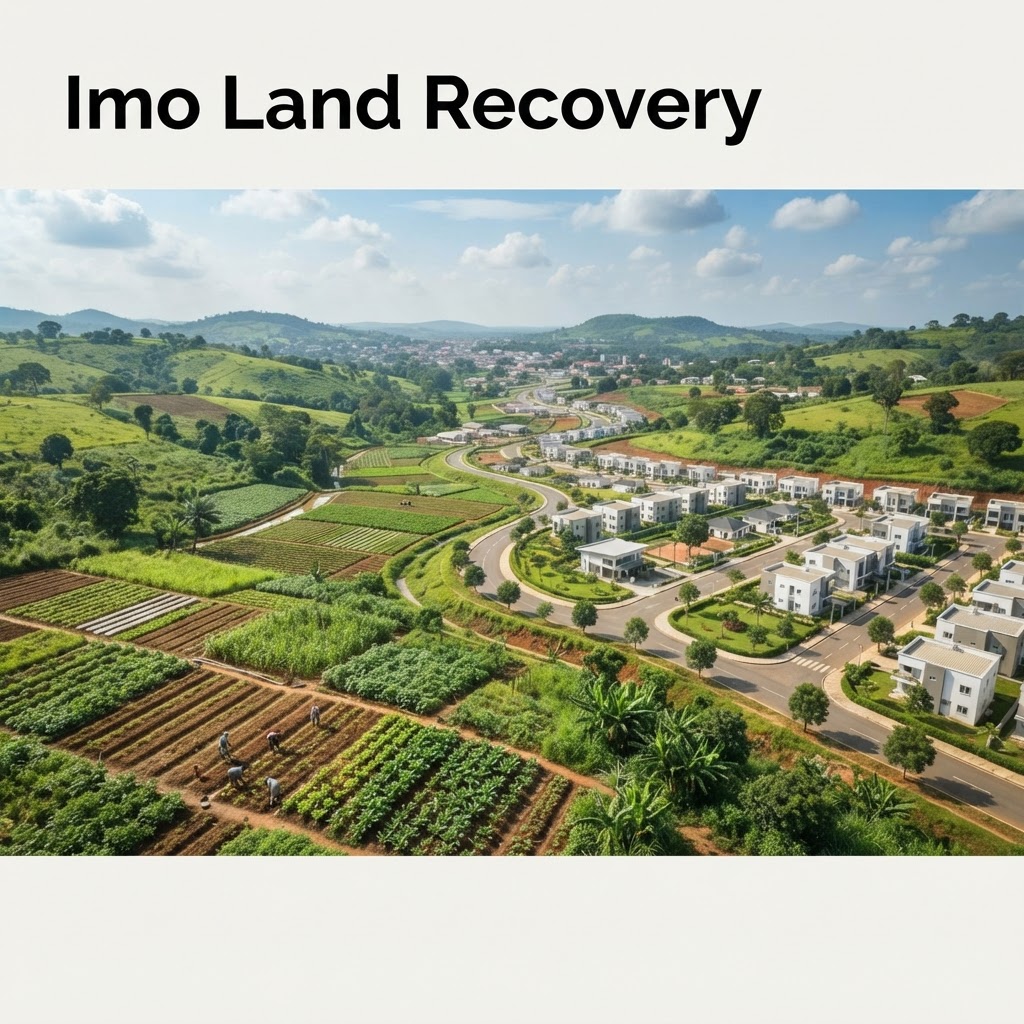
The phrase "Imo land recovery" has entered the everyday vocabulary of property owners, diaspora investors, and community stakeholders across Imo State. As the state government intensifies its efforts to reclaim illegally occupied public land, the implications are felt from the corridors of the Ministry of Lands in Owerri to the living rooms of Nigerians in London, Houston, and Toronto who have invested in property back home. Understanding what this exercise involves, why it is happening, and how to protect your investment is no longer optional — it is essential. This article walks you through everything you need to know, from the legal framework and enforcement priorities to the practical steps that safeguard your family's wealth.
What Is the Current Status of Imo Land Recovery?
The 3R Initiative and Recent Enforcement
As of mid-2026, the Imo State Government has formally commenced a structured land recovery process, targeting properties illegally acquired across various local government areas and urban corridors in the state. The legal and administrative foundation for this exercise is the 3R Policy Framework — Recovery, Rehabilitation, and Reconstruction — championed by Governor Hope Uzodimma as a defining pillar of his administration's development agenda.
Among the most significant targets of this recovery drive are 43 oil wells whose ownership and revenue streams were indicted by state investigative panels, alongside assets belonging to public institutions such as the Alvan Ikoku Federal College of Education, which reportedly lost land parcels to private encroachment over several decades. According to reporting by The Guardian Nigeria, the Imo State Government has made it clear that no illegally acquired public asset — regardless of how long it has been held — will be left outside the scope of recovery. This exercise signals a fundamental shift in how the state intends to manage its public estate going forward.
Why Is Imo Reclaiming These Specific Properties?
Restoring the Owerri Master Plan
The Imo State Government's justification for the land recovery exercise is grounded in both law and urban planning necessity. Decades of unchecked development have seen illegal structures encroach upon railway corridors, green verges, road setbacks, and drainage channels across Owerri and its satellite communities. The consequences have been severe: blocked drainage systems have accelerated flooding, road setbacks have been converted into commercial stalls, and public open spaces have disappeared beneath private constructions.
The legal mandate here is unambiguous. The state holds a constitutional obligation to protect public utilities and government reserves from private conversion. Where these protections have been ignored, the result is urban decay, environmental degradation, and reduced quality of life for residents.
The Ministry of Lands and Housing plays the central coordinating role in this exercise, empowered to enforce building codes, resolve land disputes, and facilitate conditions that attract sustainable investment. For the Imo Government, this is not merely a legal exercise — it is an economic one. Restoring the Owerri Master Plan creates a more predictable, investable urban environment. Entrepreneurs and middle-class families need regulatory order to build generational wealth, and that order begins with enforcing the original layout of the city. For more on how governance decisions affect development outcomes, see our analysis of Imo 2027: Why the Race to Succeed Uzodimma Is Already Heating Up.
How Does the Land Use Act Affect Your Property Rights?
Navigating Land Ownership Law in Imo
To understand the Imo land recovery exercise fully, you must first understand the foundational legal reality: under the Land Use Act of 1978, all land in Nigeria is vested in the State Government, which holds it in trust for the Nigerian people. No individual, family, or corporation owns land outright in the European freehold sense. What is owned is a right of occupancy — either a Statutory Right of Occupancy (SRO), granted by the Governor for urban land, or a Customary Right of Occupancy (CRO), granted by a Local Government for rural land.
This distinction is critical during enforcement exercises. A CRO, while legally recognized, provides weaker protection than a registered Statutory Right in urban areas. If your title was not issued through the appropriate government channel and properly registered, it may not withstand scrutiny during a recovery exercise.
Adding complexity to property ownership is the Imo State Land Use Charge Law 2020, which consolidated multiple property-related levies into a single annual charge. Landholders who have not kept their obligations current under this law may find their compliance standing compromised, weakening their position in any dispute with the state.
What Are the Risks for Families and Diaspora Investors?
Protecting Wealth During Enforcement
The Imo land recovery exercise has exposed a category of investment risk that many buyers — particularly diaspora Nigerians — were not adequately warned about: hidden government acquisitions. These are parcels of land that have been designated for public use, entered into government records, yet continue to be sold on the open market by private individuals, sometimes in good faith, often not. When demolition or recovery notices arrive, the buyer loses their entire investment with limited legal recourse.
For the Nigerian diaspora, this risk is compounded by physical absence from the site. Unscrupulous developers and Omo-Onile (land grabbers) frequently target overseas Nigerians, exploiting the trust gap created by distance and the urgency that comes with limited return visits. A diaspora investor who cuts corners on due diligence to close a deal quickly during a brief holiday can lose decades of savings in a single enforcement exercise.
Featured Products
Chukwu Abiama Tee
Bold black-and-gold Igbo-pride T-shirt featuring 'Chukwu Abiama' in premium streetwear typography.
₦15,000
Buy NowReverse Type 2 Diabetes & other associated Metabolic Issues using Dr. Jason Fung's Evidence-Based Approach— FMD program for Type 2 Diabetes
A practical fasting and fasting-mimicking programme built on Dr Jason Fung's insulin-resistance principles and ow-glycemic recipes.
₦19,950
Join NowỤmụ Igbo Tee
Classic black T-shirt with bold white 'Ụmụ Igbo' typography — a proud statement of Igbo heritage.
₦15,000
Buy NowNwanne Tee
Washed khaki vintage tee with a faded rust-orange 'Nwanne' stamp badge and palm leaf motif — a nod to kinship and heritage.
₦18,000
Buy NowObodo Tee
Faded denim-blue washed tee with a cream 'Obodo' stamp badge and sun motif, celebrating community roots.
₦18,000
Buy NowEkwe Heritage Tee
Deep indigo tee featuring a fine line-art illustration of a traditional Igbo ekwe drum, inspired by Igbo-Ukwu bronze artistry.
₦18,000
Buy NowIkenga Figure Tee
Forest green tee with a fine line-art illustration of a stylized Ikenga figure.
₦18,000
Buy NowThe cost-benefit mathematics are stark. A comprehensive title verification exercise — engaging a licensed surveyor, a registered legal practitioner, and the Ministry of Lands — may cost between ₦150,000 and ₦500,000 depending on the complexity of the transaction. Compare this to the total loss of a property investment that could run into tens of millions of naira. Due diligence is not a luxury; it is the cheapest insurance available. Those interested in understanding broader investment risks in the region may also find value in reading about the OPay IPO: What a Possible $4 Billion Listing Could Mean for Nigerian Investors.
How Can You Verify Land Titles in Imo State?
Practical Steps for Secure Property Acquisition
Verifying the authenticity of land titles in Imo State requires a structured, multi-layered approach. The process begins at the Imo State Ministry of Lands and Housing in Owerri, where prospective buyers can conduct a formal search on any parcel to confirm whether it is subject to government acquisition, existing encumbrances, or unresolved disputes. This search should specifically include a check against building plan approvals and registered survey records.
The most critical document in any land transaction is the Certificate of Occupancy (C of O). A genuine C of O must bear a unique identification number, be duly registered in the Ministry's land register, and carry the authentic stamp of the state government. Buyers should cross-verify the C of O number directly at the Ministry rather than relying solely on documents presented by a vendor.
Beyond document checks, it is essential to engage a licensed surveyor to conduct a physical survey of the property boundaries and confirm that the parcel does not fall within a government-designated open space, retention basin, road setback, or drainage corridor. Many of the properties currently subject to enforcement actions were sold with documents that appeared legitimate but sat squarely within the Owerri Master Plan's reserved zones. Engaging a legal expert who specialises in property law to review the full chain of title — from the original allocation to every subsequent transfer — provides the final layer of security before any payment is committed.
What Role Does the Owerri Master Plan Play?
Planning, Health, Wealth, and Community Progress
The restoration of the Owerri Master Plan is far more than an administrative exercise — it is the infrastructure of community wellbeing. At eziokwubundu.com, we subscribe to the principle that community organisation and personal prosperity are inseparable. Nowhere is this connection more visible than in urban land planning.
Properly zoned cities with enforced building codes maintain functional drainage systems that prevent flooding, reducing waterborne diseases that disproportionately affect low-income families. Green verges and open spaces reduce urban heat, improve air quality, and provide communal recreation areas — all measurable determinants of public health outcomes.
Economically, the restoration of planning order increases long-term property values in compliant areas, creating a stable foundation upon which entrepreneurs and middle-class families can build generational wealth. An investor who secures a clean title within a properly planned zone is not just protected from demolition — they are positioned on the right side of an appreciating asset curve.
Culturally, the Owerri Master Plan reflects the historical layout and the governance philosophies of autonomous communities across Imo. Reclaiming these structures affirms the idea that modern progress must be rooted in the collective logic of community — a philosophy explored in depth in our coverage of the Obi-Mbieri Constitution: Who Is Higher, the Village Head or the Village Union Chairman?. For those tracking how broader governance decisions intersect with community land use, our piece on Should Traditional Rulers Have Constitutional Roles? Governors Renew the Push is equally relevant.
Conclusion
The Imo land recovery exercise is one of the most consequential governance actions currently unfolding in South-East Nigeria. It affects property owners, community families, entrepreneurs, and diaspora investors in equal measure. Whether you already own land in Imo or are planning to acquire property there, the lesson is consistent: legal compliance, thorough due diligence, and an understanding of the Land Use Act framework are your strongest protections.
At eziokwubundu.com, our commitment is to give Nigerian families and community stakeholders the actionable knowledge they need to make informed decisions — in health, in wealth, and in community development. The Imo land recovery exercise is a powerful reminder that in Nigeria, information is not just power; it is protection.
For the latest updates on land governance, community development, and wealth-building strategies tailored to Nigerian realities, continue following eziokwubundu.com — your integrated platform for practical prosperity.
Stay Informed
Get New Articles in Your Inbox
Subscribe to receive the latest community development, health, and wealth insights from Eziokwubundu.
Newsletter
Practical insights on health, wealth, and community — delivered weekly.
Community Discussion(0)
Leave a Comment
More to Read
You May Also Like
CCB Investigates Assets of 50 Top Nigerian Officials
A quiet compliance exercise inside a government agency rarely makes headlines, yet this one does. Nigerians are watching closely as the Code of Conduct Bureau digs into the Assets of the country's most powerful public servants, and the scrutiny is reshaping conversations about integrity in public of...

Owerri Hosts Interswitch TechConnect 6.0 Today
Nigeria's fintech landscape is entering a bold new phase of regional expansion. Owerri Hosts Interswitch TechConnect 6.0 Today, marking a historic milestone for South-East Nigeria's digital economy. This landmark gathering brings together innovators, policymakers, and entrepreneurs to reshape the na...

EFCC Declares Ex-Pension Boss Maina Wanted Again
The name Abdulrasheed Maina has resurfaced in Nigeria's anti-corruption headlines once again. In a fresh development that has caught public attention, EFCC Declares Ex-Pension Boss Maina Wanted Again, reigniting a saga that has spanned over a decade. For Nigerian families who depend on pension syste...

Imo Government to Support 100 More Communities
OKOBI is reshaping how everyday Imo residents build wealth from their own villages. The latest expansion, tagged OKOBI: 100 More Imo Communities Set to Receive Government Support, signals a new chapter in Governor Hope Uzodimma's push for grassroots prosperity. For Nigerian families and community le...
Osun Assembly Approves State Police Bill
The security conversation in Nigeria has taken a decisive turn. Lawmakers across the country are now voting on a reform that could reshape how communities are protected, starting from the grassroots. The Osun Assembly Approves State Police Bill, joining a growing list of states pushing for decentral...

Imo Approves Recruitment of 6,030 Teachers Across 27 LGAs
Imo State has taken a bold step toward transforming its public education system. Governor Hope Uzodimma has approved the recruitment of 6,030 teachers across the state's 27 Local Government Areas, a move many residents have awaited for years. This decision, widely reported by Vanguard(https://www.va...

CBN Cuts Interest Rate to 23%: Impact on Nigerians
Nigerians woke up to significant financial news this week. The Central Bank of Nigeria has made a bold move that could reshape household budgets and business plans alike. This shift, widely covered as CBN Cuts Interest Rate to 23% — What It Means for Nigerians and Businesses, deserves a closer look ...
65 Imo Businesses Await OKOBI Initiative Registration
Imagine 65 kindred-owned businesses across Imo State, each waiting for one final document to unlock full legal status. That single step—Corporate Affairs Commission registration—now defines the next chapter in Imo's OKOBI Initiative: 65 Community Businesses Await CAC Registration. For families, entr...
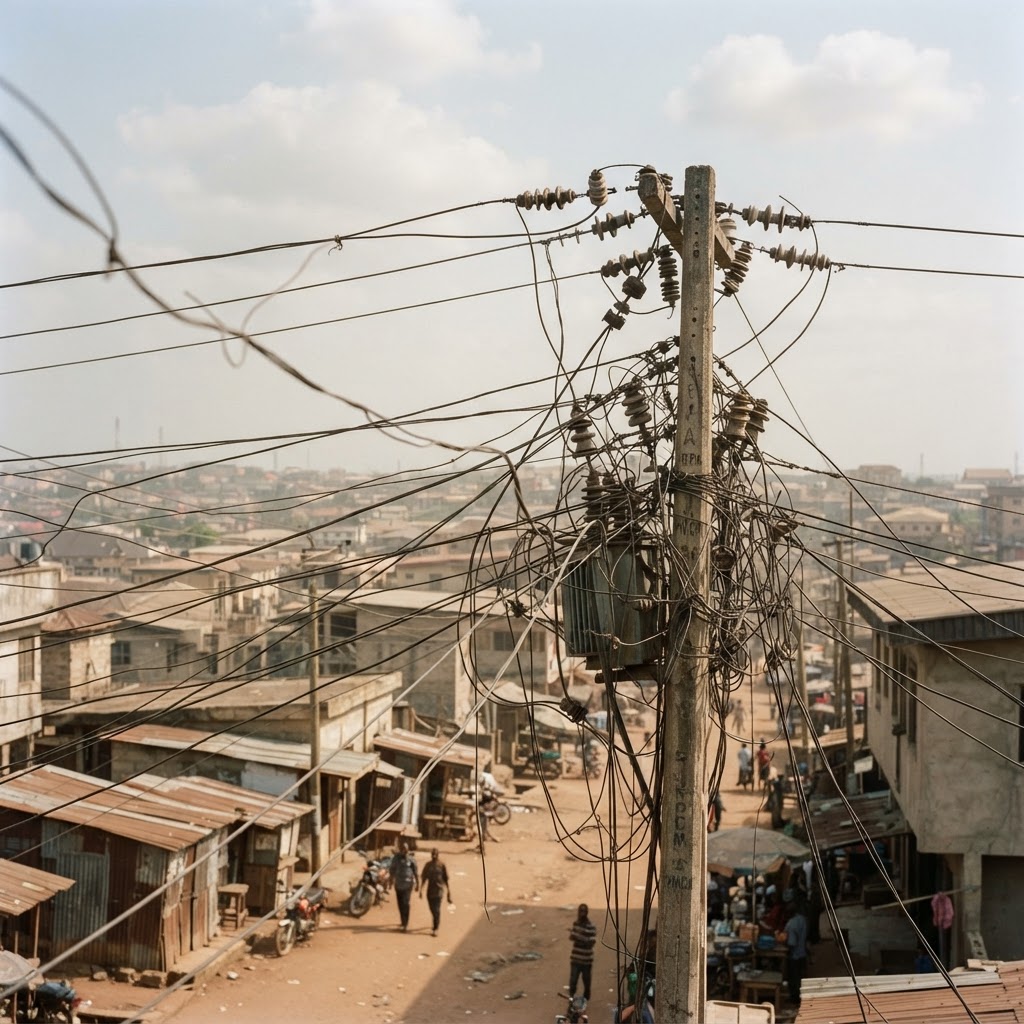
Why Nigeria Faces an Ongoing Power Supply Crisis
Nigerian households lose power multiple times a day, and the frustration never seems to fade. Behind every flickering bulb and silent refrigerator lies a deeper story about Nigeria's fragile power supply system — one that touches nearly every aspect of daily life across the country. Businesses stall...

61 Nigerian Officials Tied to $271M US Properties
Nigeria's corridors of power just faced a fresh spotlight. A newly released investigation, titled 61 Nigerian Officials Linked to $271m US Property Holdings — Report, has reignited public debate over wealth, accountability, and trust in leadership. For families budgeting daily expenses, the numbers ...