Powered by Obi Mbieri Independent Media Ltd.
$1 = ₦1,377€1 = ₦1,511£1 = ₦1,803Court Orders INEC to Replace Uzodimma with Okorocha
The battle for Imo West's senatorial seat has taken a dramatic legal turn, shaking the foundations of Nigeria's ruling party ahead of 2027. In a landmark judgment, the Imo West Senatorial Crisis: Court Orders INEC to Replace Uzodimma with Okorocha has become the defining political story out of the S...

The battle for Imo West's senatorial seat has taken a dramatic legal turn, shaking the foundations of Nigeria's ruling party ahead of 2027. In a landmark judgment, the Imo West Senatorial Crisis: Court Orders INEC to Replace Uzodimma with Okorocha has become the defining political story out of the South East this year. For families, entrepreneurs, and community leaders across Imo State, the ruling raises urgent questions about fairness, representation, and the future of local governance. The order to replace a sitting governor's candidacy with that of a former governor has few precedents in recent Nigerian political history, and its reverberations are already being felt far beyond Imo State's borders.
What Happened in Imo West?
On October 29, 2026, Justice Obiora Egwuatu of the Federal High Court in Abuja delivered a judgment that stunned political observers across Nigeria. The court nullified Governor Hope Uzodimma's recognition as the All Progressives Congress (APC) candidate for the Imo West Senatorial District. This decision effectively dismantled months of political positioning by the sitting governor.
Justice Egwuatu declared former Governor Rochas Okorocha the lawful winner of the party's May 18, 2026, primary election. The court cited compelling evidence showing that Okorocha secured the majority of votes cast during that contest. According to the judgment, documentary proof clearly supported Okorocha's claim over Uzodimma's.
The ruling did not stop at declaring a winner. It directly ordered the Independent National Electoral Commission (INEC) to remove Uzodimma's name from its candidate register. INEC was instructed to replace it with Okorocha's name ahead of the 2027 general elections. The court also restrained Governor Uzodimma from parading himself as the APC's official candidate for the senatorial seat. The court's decision to replace Uzodimma's name was unprecedented, given his status as a sitting governor seeking a Senate seat, and legal analysts note that orders to replace sitting officials are rare but not unprecedented in Nigeria's electoral history.
This judgment has sent shockwaves through Imo State's political establishment. It represents one of the most significant intra-party disputes in the South East in recent memory. For many residents, it also raises fresh concerns about how political parties manage internal competition among powerful figures.
Why Did the Court Rule This?
The court's reasoning rested on specific legal grounds tied to Nigeria's electoral framework. Justice Egwuatu found that Uzodimma's nomination breached Sections 29 and 32 of the Electoral Act 2026. These provisions govern how political parties must submit candidate names and resolve nomination disputes.
The judge emphasized that INEC remains bound by its own official records. Those records, according to the court, confirmed that Okorocha won the APC primary held in May 2026. This finding stood despite conflicting accounts presented by the party during proceedings. This reliance on official records reinforced the court's resolve to replace any candidate whose nomination lacked documentary support, signaling to political parties nationwide that paperwork and primary results carry decisive legal weight.
Justice Egwuatu went further in his judgment, describing the submission of Uzodimma's name to INEC as both unlawful and fraudulent. He noted that the documentary evidence tendered during trial did not support Uzodimma's claim to the senatorial ticket. This strong language underscored the seriousness with which the court viewed the matter.
Electoral law experts note that Nigerian courts have increasingly relied on INEC's own documented submissions to resolve nomination disputes. This approach aims to reduce ambiguity in cases where parties present conflicting internal results. The Imo West case now stands as a reference point for how courts interpret Sections 29 and 32 of the Electoral Act. Readers interested in broader Nigerian electoral and governance issues can also explore how socioeconomic pressures intersect with political stability, as seen in reports on 36.3 Million Nigerians Face Acute Food Crisis.
How Is the APC Responding?
The APC has not accepted the Federal High Court's ruling quietly. The party has formally filed an appeal at the Court of Appeal in Abuja. This appeal challenges the trial court's findings on three main fronts: jurisdiction, alleged document forgery, and the overall evaluation of evidence.
Alongside the appeal, the APC filed a stay of execution application at the Federal High Court. This legal maneuver seeks to prevent INEC from implementing the replacement order while the appeal remains pending. The appeal explicitly seeks to prevent INEC from being compelled to replace Uzodimma before the appellate court rules on jurisdictional questions. Such applications are common in high-stakes Nigerian political litigation, as parties attempt to preserve the status quo during appellate review. Should the appellate court uphold the lower court's decision, INEC would have no choice but to replace Uzodimma's name permanently from its candidate register, cementing Okorocha's position as the party's flagbearer for Imo West.
Governor Uzodimma has taken an equally firm stance outside the courtroom. He has publicly vowed not to surrender the senatorial ticket, as reported by Vanguard. The governor dismissed reports suggesting he had withdrawn from the race, insisting he remains the party's rightful candidate.
This defiant posture signals that the legal battle is far from over. Both camps appear prepared to pursue every available legal avenue. For Imo West constituents, this means continued uncertainty about who will ultimately represent them in the Senate.
What Are the Political Implications?
This rivalry between two of Imo State's most influential political figures carries consequences well beyond the courtroom. The dispute threatens the APC's internal cohesion at a critical moment. With the 2027 general elections approaching, unity within the ruling party matters more than ever. Any move to replace a sitting governor's senatorial ambition inevitably reshapes internal power dynamics within the APC, forcing party leaders to recalibrate alliances across the South East.
Across the three senatorial districts in Imo State, a total of 45 candidates are currently seeking various legislative positions. An unresolved internal crisis of this magnitude creates openings for opposition parties to exploit. Political analysts warn that prolonged litigation could weaken APC's standing among undecided voters.
Featured Products
Reverse Type 2 Diabetes & other associated Metabolic Issues using Dr. Jason Fung's Evidence-Based Approach— FMD program for Type 2 Diabetes
A practical fasting and fasting-mimicking programme built on Dr Jason Fung's insulin-resistance principles and ow-glycemic recipes.
₦19,950
Join NowChukwu Abiama Tee
Bold black-and-gold Igbo-pride T-shirt featuring 'Chukwu Abiama' in premium streetwear typography.
₦15,000
Buy NowỤmụ Igbo Tee
Classic black T-shirt with bold white 'Ụmụ Igbo' typography — a proud statement of Igbo heritage.
₦15,000
Buy NowNwanne Tee
Washed khaki vintage tee with a faded rust-orange 'Nwanne' stamp badge and palm leaf motif — a nod to kinship and heritage.
₦18,000
Buy NowObodo Tee
Faded denim-blue washed tee with a cream 'Obodo' stamp badge and sun motif, celebrating community roots.
₦18,000
Buy NowEkwe Heritage Tee
Deep indigo tee featuring a fine line-art illustration of a traditional Igbo ekwe drum, inspired by Igbo-Ukwu bronze artistry.
₦18,000
Buy NowIkenga Figure Tee
Forest green tee with a fine line-art illustration of a stylized Ikenga figure.
₦18,000
Buy NowThe situation also highlights a recurring challenge in Nigerian party politics: balancing the ambitions of sitting governors against the interests of established party stakeholders. Governor Uzodimma's position as a sitting governor gives him considerable influence. Yet Okorocha's political base and historical standing within the party remain formidable.
Consider the following key dynamics shaping this unfolding contest:
- A sitting governor facing a court-ordered removal from a senatorial race.
- A former governor legally declared the rightful primary winner.
- An APC leadership caught between loyalty and legal compliance.
- A 2027 electoral landscape already complicated by internal party friction.
These overlapping tensions illustrate why this case has drawn national attention. The outcome could shape how other states handle similar internal disputes going forward.
Why Does This Matter Locally?
For ordinary residents of Imo West, this legal battle is about far more than two political heavyweights. It underscores a deeper need for transparent primary processes that genuinely reflect the will of voters. When nomination disputes drag into prolonged litigation, local development priorities often take a back seat. The push to replace an establishment figure with another equally influential politician does not, on its own, guarantee better representation for everyday Imo residents, which is why many community leaders are urging both camps to resolve the dispute swiftly and transparently.
Effective representation in the Senate depends on stable political leadership. Imo West's communities need a senator who can advocate for infrastructure, healthcare, education, and economic opportunities. The ongoing litigation currently tests that stability, leaving many community projects and policy priorities in limbo.
At Eziokwubundu, we consistently emphasize that individual political ambitions should never overshadow collective community progress. Imo West's farmers, traders, students, and families deserve clarity and consistent representation. This principle aligns with our broader mission of connecting personal and political developments to community-wide impact.
The economic stakes are significant too. Imo State has seen notable investment activity, including developments covered in our report on the Seplat Aku-01 Discovery: Benefits for Obi-Mbieri. Political instability at the senatorial level could affect investor confidence and slow down critical development projects that communities depend on.
Education and public sector stability are also affected by ongoing political tensions. Related concerns were raised in our coverage of the IMSU Lecturers Protest in Owerri, Appeal to Uzodimma to End industrial action. Both cases reveal how governance disputes can ripple into everyday institutional functioning.
How Political Uncertainty Affects Broader Governance
Beyond the courtroom drama, Imo West's leadership vacuum has ripple effects across sectors that depend on stable federal and state representation. When senators are preoccupied with efforts to replace political rivals rather than legislate, critical national issues risk receiving less attention from the National Assembly. For instance, ongoing educational reforms—such as the recent approval covered in NUC Approves New Medical University in Anambra: Institution—require consistent advocacy from lawmakers representing South East interests. Similarly, health policy debates, including the pressing concerns highlighted in Antimicrobial Resistance: Why Nigeria Must Act Now and High Blood Pressure: The Silent Health Threat in Nigeria, depend on senators who can champion funding and legislative action without distraction from internal party battles.
Security and justice reforms also suffer when political attention is diverted toward intra-party litigation. The call to action in IGP: Treat Gunshot Victims Before Requesting Police Reports illustrates how practical governance reforms require sustained legislative push—something difficult to achieve when a senatorial seat's rightful occupant remains contested in court. Likewise, regulatory oversight, as seen in the House Summons NAFDAC and DSS Over Fake Drug Deaths case, depends on functioning National Assembly committees staffed by senators focused on their constituents rather than ongoing disputes over who should replace whom in a contested primary.
Education access reforms, such as those detailed in JAMB Candidates Can Now Change Course and Institution Online, similarly benefit from stable representation that can monitor implementation and advocate for Imo's students. The broader lesson is clear: efforts to replace one candidate with another must ultimately serve the goal of effective governance, not merely political victory for either camp.
What Is the Path Forward?
The judicial process remains the primary mechanism for resolving this dispute. The Court of Appeal is now positioned to determine the final outcome of the Imo West senatorial ticket. This appellate review will likely take several weeks, given the complexity of the issues raised. Until the Court of Appeal rules, questions about whether INEC will be required to replace Uzodimma's name remain unresolved, leaving both candidates and their supporters in a prolonged state of anticipation.
Citizens are encouraged to follow evidence-based reporting as the judiciary works through these complex electoral matters. Organizations such as the National Judicial Council and INEC provide official updates on electoral disputes and compliance requirements. Staying informed through credible sources helps residents avoid misinformation during politically sensitive periods.
Regardless of the final ruling, Imo residents should keep their focus on broader priorities. Economic prosperity, healthcare access, and community welfare must remain central to any elected leader's agenda. These priorities matter more than personal political rivalries.
Nigeria's broader economic environment adds urgency to this conversation. With reports showing the naira approaching ₦1,400 to the dollar, Imo residents need stable, focused representation in the National Assembly now more than ever. Strong, undistracted leadership can help communities navigate these economic headwinds.
As this case progresses, Eziokwubundu will continue monitoring developments and their implications for Imo State's development trajectory. Our commitment remains rooted in connecting political accountability to tangible community outcomes. For residents, students, entrepreneurs, and diaspora Nigerians invested in Imo's future, this case offers an important lesson: sustainable progress depends on institutions that work fairly for everyone, not just political elites. Whether the courts ultimately uphold the order to replace Uzodimma with Okorocha or reverse it on appeal, the people of Imo West deserve a resolution that prioritizes transparent governance over prolonged political brinkmanship.
Stay Informed
Get New Articles in Your Inbox
Subscribe to receive the latest community development, health, and wealth insights from Eziokwubundu.
Newsletter
Practical insights on health, wealth, and community — delivered weekly.
Community Discussion(0)
Leave a Comment
More to Read
You May Also Like

Uzodimma Addresses Hardship from Fuel Subsidy Removal
Nigeria's economic reforms rarely come without pain. Petrol subsidy removal has reshaped household budgets, business costs, and government revenue almost overnight. In a recent interview, Uzodimma Speaks Frankly on Hardship Caused by Subsidy Removal, offering Nigerians a rare moment of candid leader...

The naira is approaching ₦1,400 to the dollar
Nigerian households are feeling the pinch as currency markets shift ahead of the holidays. The naira is approaching ₦1,400 to the dollar, a milestone that has traders, families, and businesses watching closely. Understanding why this matters can help you plan smarter for the months ahead, whether yo...

Obi-Mbieri Mourns Engr. Vitalis Opara: Questions Emerge Over Community’s Silence
Engr. Vitalis Opara is identified as President General on the signature page of the Obi-Mbieri Autonomous Community Constitution 2020 as amended.
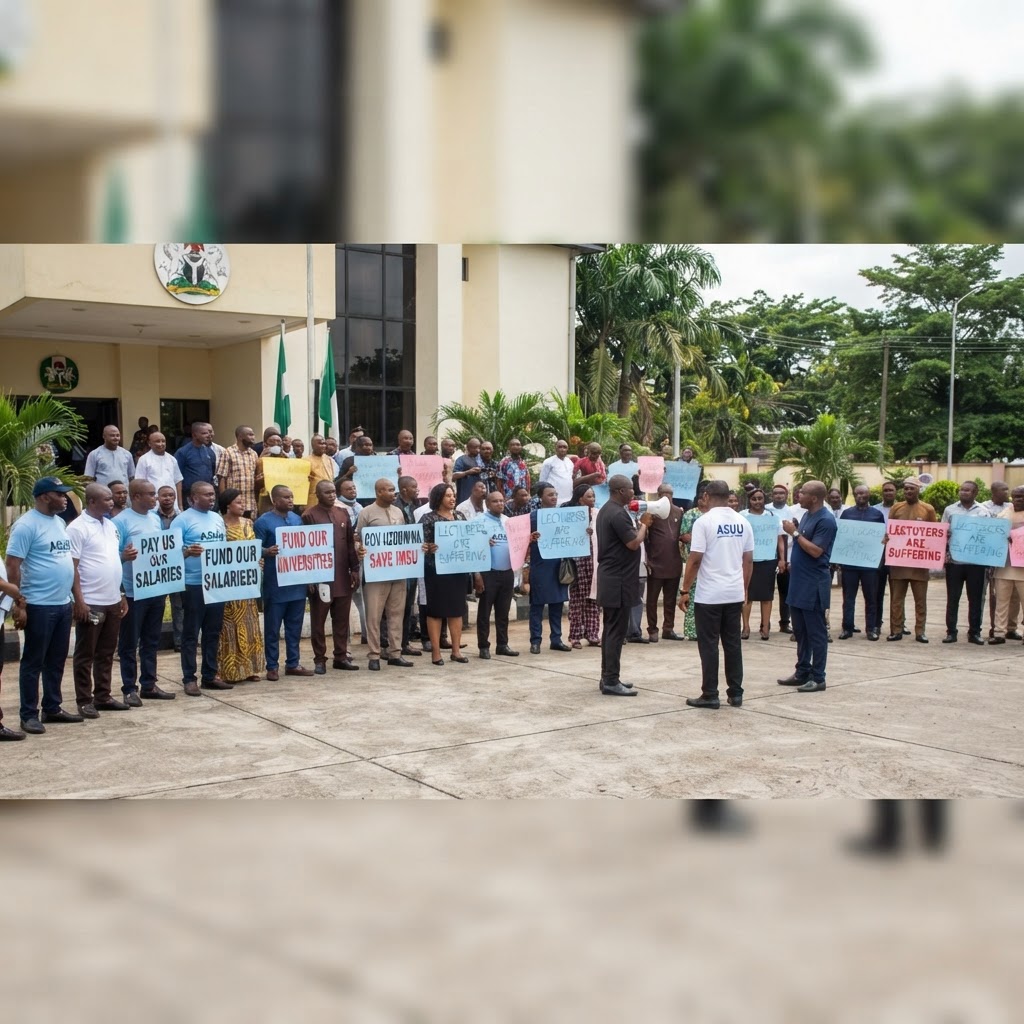
IMSU Lecturers Protest in Owerri, Appeal to Uzodimma to End
The streets of Owerri turned into a sea of white lab coats and placards this week. Hundreds of university lecturers walked out of their offices, choosing protest over silence. The IMSU Lecturers Protest in Owerri, Appeal to Uzodimma to End Months-Long Strike has become a defining moment for Imo Stat...

JAMB Candidates Can Now Change Course and Institution Online
Admission season often brings long queues and costly transport for Nigerian families. That burden has just eased. JAMB candidates can now change their institutions and courses from home, as the board announces a new digital correction service, giving students and parents fresh control over their aca...
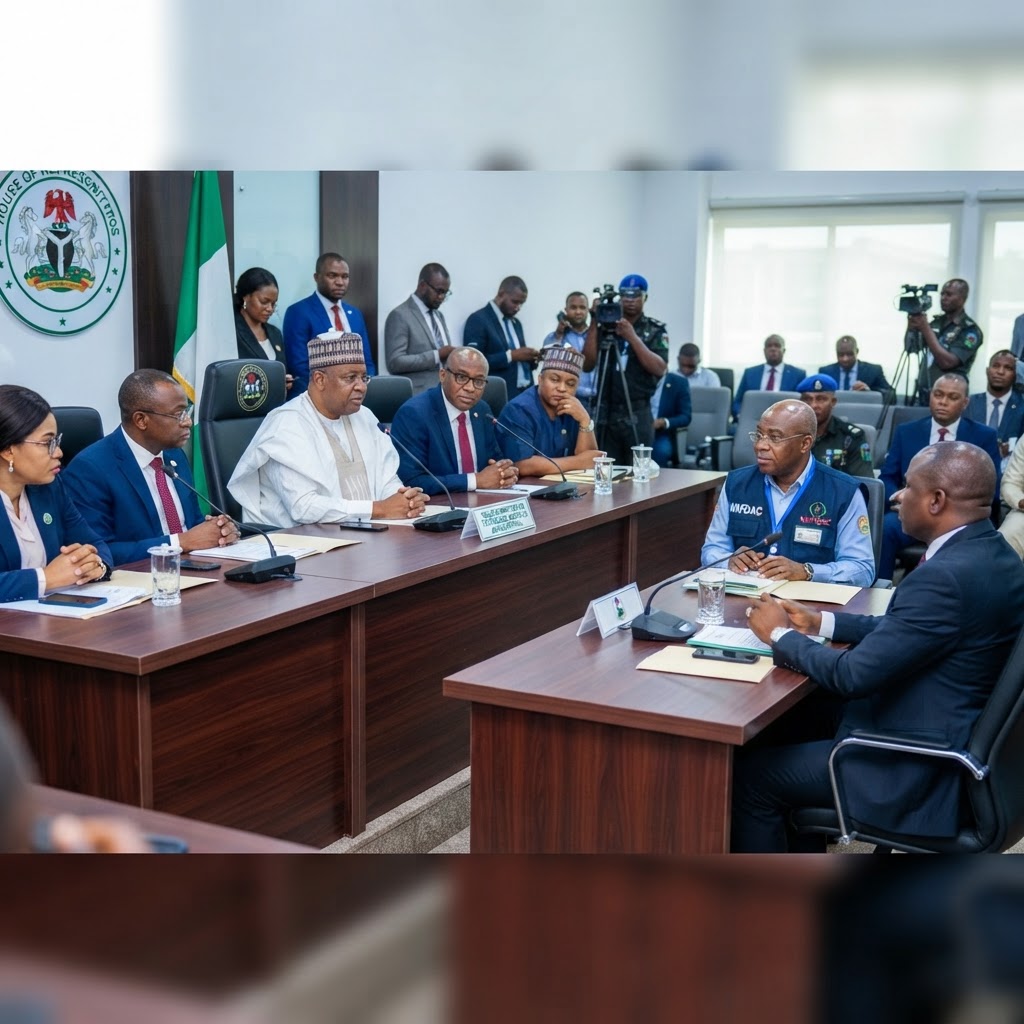
House Summons NAFDAC and DSS Over Fake Drug Deaths
Four people are dead, eleven more are fighting for their lives, and a federal lawmaker wants answers now. Fake Drug deaths linked to a suspicious herbal concoction have pushed the House of Representatives to move decisively, summoning NAFDAC and the DSS in a case that is no longer a distant headline...

Prevent Kidney Disease With Regular Health Checks
Kidney health rarely makes headlines until a crisis hits a family. Yet understanding Kidney Disease: Why Regular Health Checks Can Help Prevent Serious Complications can save lives, protect household income, and strengthen community wellbeing across Nigeria. Kidney Disease often develops quietly ove...

Budget-Friendly Healthy Meal Prepping for Nigerians
Modern Nigerian families face the dual pressure of rising food prices and the need for better health outcomes. Learning how Nigerian families can(/article/nigerian-family-guide-to-reversing-type-2-diabetes) use meal prepping with local ingredients to eat healthy on a tight budget is a vital skill fo...

Beyond Degrees: Bridging Nigeria's Digital Skills Gap
Nigeria's graduates are flooding the job market faster than employers can absorb them. Yet many arrive with certificates but no practical digital competence. This is the heart of Digital Skills and Youth Employment: Why Nigerian Graduates Need More Than University Certificates.—a gap that is reshapi...
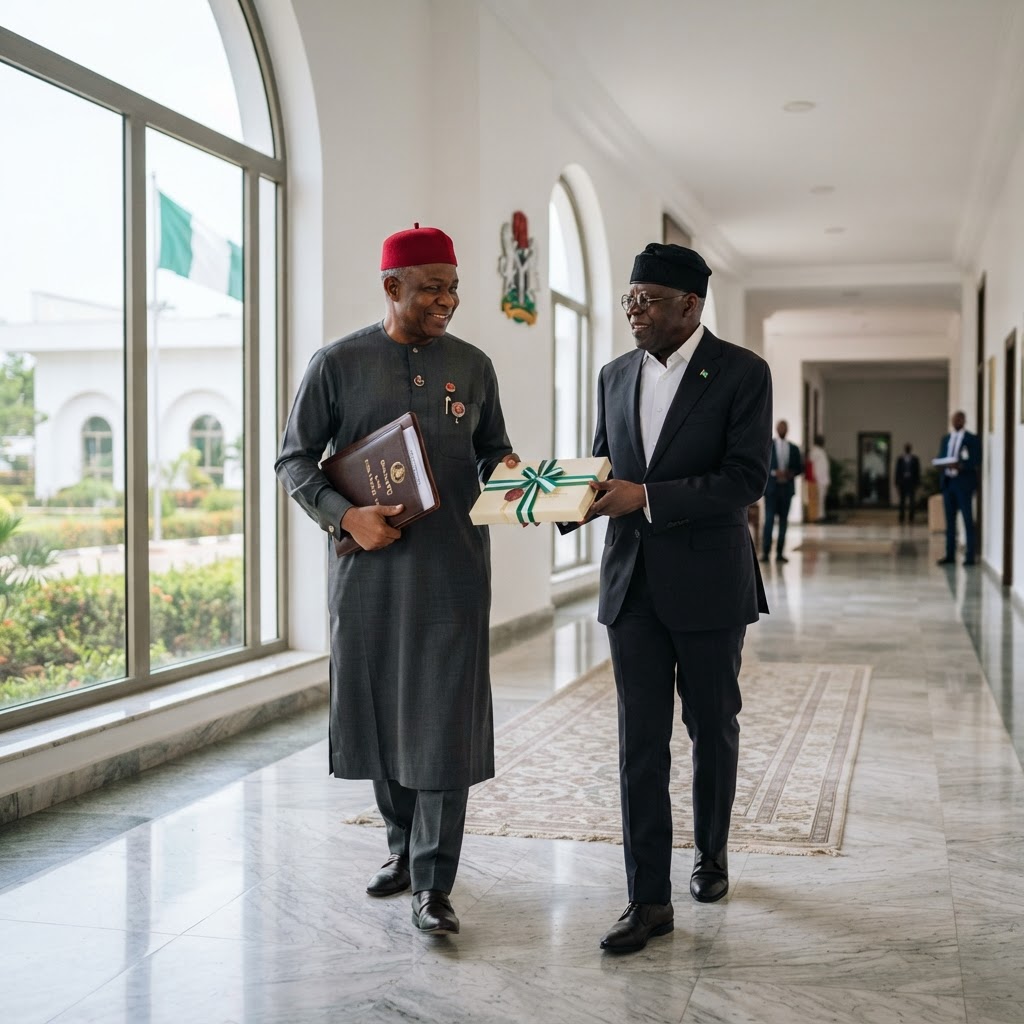
Senate Sends State Police Bill to Tinubu for Approval
Nigeria's security architecture is entering a new chapter. The headline development, State Police Bill: Senate Transmits Constitutional Amendment to Tinubu for Presidential Assent, signals a historic shift toward decentralized policing. For Nigerian families, entrepreneurs, and community leaders, th...