Powered by Obi Mbieri Independent Media Ltd.
$1 = ₦1,353€1 = ₦1,486£1 = ₦1,775Where Should a Traditional Prime Minister Conduct His Official Duties? Must Every Daily Activity Take Place at the Eze's Palace?
An examination of traditional Igbo governance, the Obi-Mbieri Autonomous Community Constitution 2020, as amended, and the wider implications.

Where should a Traditional Prime Minister conduct the official business of his office? Must every administrative activity, consultation, engagement and traditional responsibility be performed exclusively within the Eze's Palace? Can the Traditional Prime Minister also conduct official business from his personal residence or other recognised and neutral venues within the community?
These questions deserve serious consideration, particularly in Obi-Mbieri Autonomous Community, where the Eze has reportedly been absent and inaccessible to members of the community for approximately six years or more.
The issue is not whether the Traditional Prime Minister is required to live in the Eze's Palace. That is a separate matter. The more important question is whether the palace is the exclusive administrative workplace of the Traditional Prime Minister, such that he cannot conduct legitimate official business anywhere else.
An examination of the old Igbo traditional system, the development of modern traditional institutions and, most importantly, the Obi-Mbieri Autonomous Community Bye-Law/Constitution 2020, as amended, provides important insights.
The central constitutional question is straightforward: Does the Obi-Mbieri Constitution require the Traditional Prime Minister to conduct all his daily official activities exclusively at the Eze's Palace?
A close examination of Sections 32, 33 and 34 reveals that the Constitution defines the Traditional Prime Minister's responsibilities and institutional authority but does not expressly restrict his daily administrative activities to the physical premises of the palace.
This distinction becomes even more significant when the Eze, who ordinarily presides over the Cabinet, has been unavailable for an extended period.
1. Understanding the traditional system of Igbo governance
Before examining the modern traditional institution, it is important to understand how traditional administration operated in old Igbo society.
Historically, many Igbo communities operated decentralised political systems in which authority was distributed among recognised institutions, including village assemblies, councils of elders, lineage heads, age grades and traditional titleholders.
Unlike some centralised monarchical systems, precolonial Igbo political organisation did not universally depend on a king's palace as the exclusive centre of every community activity.
Traditional responsibilities were performed through different recognised institutions and meeting places. Depending on the community, these included the compound of a lineage head, village squares, designated meeting places and councils of elders.
This historical background is important because it demonstrates that traditional administration and the physical residence of an individual officeholder are not necessarily the same thing.
It would, however, be historically inaccurate to suggest that every precolonial Igbo community had a Traditional Prime Minister's office in the modern sense. The modern cabinet and Traditional Prime Minister arrangements developed as traditional rulership institutions became more formally structured.
Academic research by Axel Harneit-Sievers, particularly his 1998 publication, Igbo 'Traditional Rulers': Chieftaincy and the State in Southeastern Nigeria, examines this evolution.
His research demonstrates that contemporary Igbo traditional rulership was significantly shaped by colonial and postcolonial administrative developments.
2. The modern Traditional Prime Minister and his institutional responsibilities
In many contemporary Igbo autonomous communities, traditional administration operates through a structured arrangement involving:
- The traditional ruler (Eze, Igwe or Obi).
- The traditional cabinet or council of chiefs.
- The Traditional Prime Minister.
- The Council of Elders.
- Other recognised traditional titleholders and community representatives.
The Traditional Prime Minister is generally a senior traditional officeholder whose responsibilities may include coordinating traditional administration, presiding over designated meetings, assisting the traditional ruler and performing other functions established by the community's constitution.
However, the specific authority of the office differs from one autonomous community to another.
It is therefore important to examine the constitution of the particular community rather than assume that every Igbo Traditional Prime Minister operates under identical rules.
For Obi-Mbieri, the 2020 Constitution, as amended, provides the necessary framework.
3. What does the Obi-Mbieri Constitution say?
The Obi-Mbieri Autonomous Community Bye-Law/Constitution 2020, as amended, is the primary document governing the relationship between the Eze, the Traditional Prime Minister, the Cabinet and the Council of Elders.
Several provisions are particularly relevant to the question of where official business may be conducted.
Section 32: The Eze's Cabinet
Section 32(2) establishes the membership of the Eze's Cabinet, which includes all the Village Heads of the Autonomous Community, the Traditional Prime Minister, the President General and the Secretary General of the Union.
Section 32(3) provides that the Eze shall be President of the Cabinet and chair its meetings, with the Traditional Prime Minister serving as his Deputy.
Section 32(5) states that the Traditional Prime Minister shall be given a pride of place in the Eze's Cabinet.
Most importantly, Section 32(6) provides:
"The Traditional Prime Minister shall be the second in command to the Eze and shall preside over cabinet meetings in the absence of the Eze and, shall be the acting Eze in the event of the incapacitation or death of the Eze."
This provision establishes a clear constitutional responsibility.
The Traditional Prime Minister is not simply a member of the Cabinet who waits for instructions from the Eze. He is the second-in-command and has an expressly assigned responsibility to preside over Cabinet meetings when the Eze is absent.
The provision is particularly relevant to the present discussion because it recognises that the Cabinet must be capable of functioning even when the Eze is unavailable.
However, Section 32(6) does not expressly state that such meetings must take place exclusively inside the palace.
It identifies who presides over the meetings in the Eze's absence, not the only physical location where official business can be conducted.
Section 33: Functions of the Eze's Cabinet
Section 33 provides for the functions of the Eze's Cabinet.
These include:
- Acting as custodians and advisers on the customs, traditions and usages of the Autonomous Community.
- Settling disputes between indigenes and other persons who submit themselves to the Cabinet's mediation, conciliation, arbitration or adjudication.
- Intervening where there is a serious threat to peace and security, lives and property.
- Acting as an appellate traditional court for disputes originating from the towns and villages.
- Settling disputes referred to the Cabinet by the police or law courts.
These are not merely ceremonial responsibilities.
They are substantive administrative, traditional and community-governance functions.
The Constitution does not state in Section 33 that these responsibilities must be discharged exclusively within the Eze's Palace.
For example, when a dispute arises between members of two villages, the Constitution establishes the Cabinet's authority to intervene. It does not expressly say that every preliminary consultation, mediation session or administrative engagement must take place inside the palace.
Similarly, where an urgent threat to lives and property arises, the Cabinet's responsibility is to intervene. The practical discharge of that responsibility should not be confused with the location of the palace.
The purpose of the institution is to serve the community, not to make the community's access to traditional administration dependent on one building.
Section 34: The Council of Elders (Eze-in-Council)
Section 34 establishes the Council of Elders, otherwise called the Eze-in-Council.
Section 34(2) identifies its membership, including the Traditional Prime Minister, President General, General Secretary, legal advisers, patrons, trustees, traditional titleholders, Village Heads and other qualified persons selected in accordance with the Constitution.
Section 34(3) provides:
"When the Council of Elders meet the Traditional Prime Minister shall preside, while the Eze sits as the patron."
This is a particularly important provision.
It expressly assigns the Traditional Prime Minister the responsibility of presiding over meetings of the Council of Elders.
The Eze, in this arrangement, occupies the position of patron.
Section 34(4) further states that the Council shall meet as often as necessary.
This provision is significant because the Constitution recognises the need for the Council of Elders to meet whenever circumstances require it.
It does not prescribe that every meeting must be held at the Eze's Palace.
Neither does it establish the palace as the exclusive venue for every activity of the Council.
The constitutional emphasis is on the existence, membership, responsibilities and functioning of the Council, as well as the person responsible for presiding over its meetings.
Consequently, the argument that the Traditional Prime Minister cannot conduct any official business outside the palace requires a specific constitutional provision or another valid rule establishing such a restriction.
Sections 32, 33 and 34 do not contain such an express restriction.
4. Does conducting official business outside the palace amount to disregarding the Eze?
This is an important distinction that should not be overlooked.
The Eze's Palace is an important institution and symbol of traditional authority. Its importance should be respected.
However, respecting the palace does not necessarily mean that every administrative activity must physically take place within its premises.
There is a difference between:
- The institutional authority of the Eze.
- The responsibilities of the Traditional Prime Minister.
- The physical venue where administrative activities are conducted.
The Eze remains the constitutional President of the Cabinet under Section 32(3).
The Traditional Prime Minister remains his Deputy and second-in-command under Section 32(6).
The Traditional Prime Minister's responsibility to preside over the Council of Elders is separately established by Section 34(3).
None of these constitutional relationships automatically disappears because the Traditional Prime Minister conducts an official consultation, receives a community delegation or performs an administrative responsibility at another recognised location.
A venue does not, by itself, determine the legitimacy of an official function. The authority under which the function is performed, the procedure followed and the constitutional responsibilities involved are more important.
Therefore, conducting legitimate official business at another recognised venue should not automatically be interpreted as an attempt to establish a rival traditional institution or undermine the Eze.
The distinction is between the exercise of an existing constitutional office and the unlawful creation of a competing authority.
5. Can the Traditional Prime Minister conduct daily official business from his personal residence?
The answer, based on the relevant provisions of the Obi-Mbieri Constitution, is that there is no express requirement in Sections 32, 33 or 34 that all daily official activities of the Traditional Prime Minister must be conducted at the palace.
His personal residence may therefore serve as a practical location for routine administrative engagements, consultations and other legitimate activities within the scope of his office, provided that no other applicable constitutional provision, valid regulation or established customary requirement prohibits the particular activity.
For example, the Traditional Prime Minister may, subject to the applicable rules:
- Receive community members seeking traditional intervention.
- Consult with Village Heads and recognised traditional stakeholders.
- Hold preliminary discussions on disputes.
- Receive reports concerning traditional administration.
- Coordinate activities falling within his assigned responsibilities.
- Consult with members of the Council of Elders.
- Prepare for formal Cabinet or Council meetings.
However, it is important to distinguish these routine activities from formal meetings of the Cabinet or Council of Elders.
Where a formal meeting is required, the relevant provisions governing notice, membership, quorum, decision-making and procedure must be observed.
The fact that the Traditional Prime Minister has authority to preside over a meeting does not mean that he can disregard other constitutional requirements governing that meeting.
Likewise, his personal residence does not automatically become a permanent official headquarters merely because some administrative activities take place there.
The essential point is that the Constitution does not expressly make the Eze's Palace the exclusive physical location for every daily activity of the Traditional Prime Minister.
Featured Products
Reverse Type 2 Diabetes & other associated Metabolic Issues using Dr. Jason Fung's Evidence-Based Approach— FMD program for Type 2 Diabetes
A practical fasting and fasting-mimicking programme built on Dr Jason Fung's insulin-resistance principles and ow-glycemic recipes.
₦19,950
Join NowChukwu Abiama Tee
Bold black-and-gold Igbo-pride T-shirt featuring 'Chukwu Abiama' in premium streetwear typography.
₦15,000
Buy NowỤmụ Igbo Tee
Classic black T-shirt with bold white 'Ụmụ Igbo' typography — a proud statement of Igbo heritage.
₦15,000
Buy NowNwanne Tee
Washed khaki vintage tee with a faded rust-orange 'Nwanne' stamp badge and palm leaf motif — a nod to kinship and heritage.
₦18,000
Buy NowObodo Tee
Faded denim-blue washed tee with a cream 'Obodo' stamp badge and sun motif, celebrating community roots.
₦18,000
Buy NowEkwe Heritage Tee
Deep indigo tee featuring a fine line-art illustration of a traditional Igbo ekwe drum, inspired by Igbo-Ukwu bronze artistry.
₦18,000
Buy NowIkenga Figure Tee
Forest green tee with a fine line-art illustration of a stylized Ikenga figure.
₦18,000
Buy Now6. Can official business also be conducted at neutral community venues?
Yes, in principle, provided the venue is appropriate, the activity is within the authority of the relevant institution and applicable constitutional procedures are followed.
A neutral community venue may be particularly useful where:
- The palace is inaccessible.
- The Eze is unavailable.
- A matter concerns several villages and requires broader participation.
- A neutral location is necessary to encourage transparency and confidence.
- A meeting involves stakeholders who may be uncomfortable with a particular private or palace setting.
For instance, a properly designated community hall or another recognised meeting venue may be suitable for an official consultation or meeting, subject to the applicable rules.
There is no reason to assume that a meeting becomes constitutionally invalid simply because it takes place outside the palace.
What matters is whether the meeting was properly convened, whether the persons involved were authorised to participate, whether the required procedures were observed and whether the decisions taken were within the institution's constitutional powers.
It is equally important that a neutral venue should not be used to bypass the Constitution or create an alternative authority.
The objective should be continuity, accessibility, accountability and effective administration.
7. The Obi-Mbieri situation: What happens when the Eze is absent and inaccessible for years?
This is where the constitutional discussion becomes particularly important.
Obi-Mbieri has reportedly experienced a prolonged period during which the Eze has been absent and inaccessible to members of the community, a situation described by community stakeholders as extending to approximately six years or more.
This is a significant governance concern.
A traditional institution is not established merely for ceremonial occasions. It exists to preserve customs, resolve disputes, maintain traditional administration, provide leadership and support the general welfare of the community.
When the principal officeholder is unavailable for an extended period, the question naturally arises: how should the institution continue to discharge its responsibilities?
Should traditional administration become inactive until the Eze returns?
Should community members be unable to access traditional intervention because the palace is inaccessible?
Should the Cabinet stop conducting its business?
Should the Council of Elders suspend its activities?
The Obi-Mbieri Constitution provides mechanisms that are relevant to these questions.
Section 32(6): Continuity of the Cabinet
The Constitution expressly provides that the Traditional Prime Minister shall preside over Cabinet meetings in the absence of the Eze.
This is an important continuity provision.
It recognises that the Cabinet must be capable of functioning when the Eze is absent.
If the Eze is unavailable, the Constitution does not require the Cabinet to become permanently inactive. Rather, it identifies the Traditional Prime Minister as the person who presides over its meetings in that circumstance.
The provision would be difficult to reconcile with an interpretation that makes the Eze's physical presence at the palace an absolute condition for every Cabinet activity.
Section 34(3): Continuity of the Council of Elders
Section 34(3) also establishes the Traditional Prime Minister as the presiding officer of the Council of Elders, with the Eze sitting as patron.
Unlike the Cabinet arrangement, this provision does not make the Traditional Prime Minister's responsibility to preside dependent on the Eze's absence.
The responsibility is directly assigned to him whenever the Council meets.
Section 34(4) further requires the Council to meet as often as necessary.
Taken together, these provisions support the continued operation of the Council of Elders even during a prolonged period when the Eze is unavailable.
Section 30(8): Suspension or removal of the Eze
Section 30(8) provides that where the Eze is suspended or removed, the Traditional Prime Minister appointed by the Eze shall act as Traditional Ruler until the Eze is recalled or a fresh election is held to replace him.
This provision must be distinguished from ordinary absence.
The Constitution expressly identifies suspension or removal as circumstances in which the Traditional Prime Minister assumes the acting Traditional Ruler position under that subsection.
It would therefore be inaccurate to conclude that six years of absence, without more, automatically amounts to suspension, removal or constitutional incapacitation.
Nevertheless, the prolonged absence raises legitimate questions about accessibility, administrative continuity and whether the existing constitutional arrangements are being properly utilised.
The appropriate response is to examine the circumstances and apply the relevant constitutional provisions rather than invent additional restrictions on the Traditional Prime Minister's office.
8. Is the palace the only place where the Traditional Prime Minister can discharge his responsibilities?
An examination of the relevant provisions produces an important distinction.
The Obi-Mbieri Constitution recognises the Eze's Cabinet and the Council of Elders as institutions through which traditional administration operates.
It identifies the Eze as President of the Cabinet and the Traditional Prime Minister as Deputy.
It also expressly identifies the Traditional Prime Minister as the person who presides over the Council of Elders.
However, Sections 32, 33 and 34 do not expressly state that:
- Every daily administrative activity of the Traditional Prime Minister must take place inside the Eze's Palace.
- The Traditional Prime Minister cannot receive community members at his residence.
- All consultations with Village Heads must take place at the palace.
- Every preliminary dispute-resolution engagement must take place at the palace.
- The Council of Elders can only meet inside the palace.
- The Traditional Prime Minister must suspend his administrative responsibilities whenever the Eze is unavailable.
These are significant omissions when considering an argument that the palace is the exclusive workplace of the Traditional Prime Minister.
This does not mean that the Traditional Prime Minister has unlimited discretion to convene formal meetings or make decisions anywhere without regard to constitutional procedure.
Rather, it means that a restriction on the location of official activities should not be invented where the governing provisions do not expressly establish it.
If anyone maintains that the Traditional Prime Minister must conduct every aspect of his official business exclusively at the palace, the appropriate question is simple:
Which specific section of the Obi-Mbieri Constitution establishes that requirement?
A constitutional restriction should be supported by the actual wording of the Constitution, an applicable rule or a demonstrable customary requirement, not merely an assumption.
9. Why administrative continuity matters more than the physical location of the palace
The purpose of traditional governance is to serve the community.
A traditional institution must remain accessible to the people it represents.
Disputes do not stop arising because the Eze is absent. Community disagreements, traditional obligations, security concerns and other matters requiring intervention continue to exist.
This is why the provisions assigning responsibilities to the Cabinet and Council of Elders are important.
The Constitution establishes a framework through which these responsibilities can be discharged.
A reasonable interpretation should therefore promote the continued operation of the traditional institution while respecting the authority of the Eze and the constitutional position of the Traditional Prime Minister.
Where the Eze is available, the constitutional relationship between the Eze and the Cabinet should be respected.
Where the Eze is absent, the Traditional Prime Minister should perform the responsibilities expressly assigned to him.
Where routine administrative engagements can appropriately be conducted at another recognised location, the absence of an express palace-only restriction should not be converted into an obstacle to effective administration.
The palace should remain respected as an institution, but the welfare and administration of the community should not be made dependent on the physical availability of one building.
10. Conclusion: The Traditional Prime Minister's office must remain functional
The question is not whether the Eze's Palace is important. It is.
The question is whether the palace is the exclusive physical location from which the Traditional Prime Minister must conduct every daily official activity.
The historical development of Igbo traditional governance demonstrates that traditional administration has operated through different institutions and recognised venues.
The modern system, including Obi-Mbieri, has established more formal structures through written constitutions.
In Obi-Mbieri, Sections 32, 33 and 34 of the 2020 Constitution, as amended, define the Traditional Prime Minister's position and responsibilities within the Cabinet and Council of Elders.
Section 32(6) expressly empowers him to preside over Cabinet meetings in the absence of the Eze.
Section 34(3) expressly makes him the presiding officer of the Council of Elders.
Section 34(4) requires the Council to meet as often as necessary.
These provisions demonstrate that the Traditional Prime Minister has an active constitutional role in the administration of the Autonomous Community.
Importantly, the relevant provisions do not expressly require every daily activity of his office to be conducted exclusively within the Eze's Palace.
There is therefore a distinction between formal institutional meetings, which must comply with constitutional procedures, and routine administrative engagements, which may be conducted at appropriate and recognised locations.
The Traditional Prime Minister may, in principle, conduct legitimate official business from his residence or other neutral community venues, provided he acts within his constitutional authority and observes all applicable rules.
This position becomes particularly relevant in Obi-Mbieri, where the prolonged absence and reported inaccessibility of the Eze have raised concerns about the continuity of traditional administration.
A community cannot reasonably be expected to leave its traditional institutions inactive simply because the principal officeholder is unavailable.
The Constitution provides for the participation and responsibilities of other officeholders, particularly the Traditional Prime Minister and the Council of Elders.
Ultimately, the palace is an important institution of traditional authority; it should not automatically be treated as the exclusive physical workplace for every daily activity of the Traditional Prime Minister. The authority of the office is established by the Constitution, and its responsibilities must be discharged in accordance with that Constitution, wherever a lawful and appropriate venue is available.
Traditional institutions are strongest when their leaders respect constitutional boundaries, preserve established customs and ensure that the community continues to receive the leadership and administration it deserves.
The real test of traditional leadership is not simply where official business takes place, but whether it is conducted lawfully, responsibly and in the best interest of the people.
References and research materials
Primary constitutional source
- Obi-Mbieri Autonomous Community Bye-Law/Constitution 2020, as Amended. Adopted 28 November 2020. Particularly Sections 30(8), 31, 32, 33 and 34.
- Original document supplied for this investigation.
Academic and historical sources
- Harneit-Sievers, Axel (1998). Igbo 'Traditional Rulers': Chieftaincy and the State in Southeastern Nigeria. Afrika Spectrum, Volume 33, Issue 1, pp. 57–79.
- https://africabib.org/rec.php?DB=p&RID=186048815
- Harneit-Sievers, Axel (2006). Constructions of Belonging: Igbo Communities and the Nigerian State in the Twentieth Century. University of Rochester Press. Chapter 8: Institutionalizing Community II: Traditional Rulers and Autonomous Communities.
- https://www.cambridge.org/core/books/abs/constructions-of-belonging/institutionalizing-community-ii-traditional-rulers-and-autonomous-communities/82CEB2BFD2C8158E0CCF74771C6FBE60
- Matsumoto, Hisashi (2006). Colonial Experience and the Indigenization of the "Chief": Change in and Continuity of Authority in the Igbo Society of Nigeria. Japanese Journal of Cultural Anthropology, Volume 71, Issue 3, pp. 368–390.
- https://www.jstage.jst.go.jp/
- Oxford Bibliographies in African Studies. Igbo – Political Histories.
- https://academic.oup.com/reference/62328/reference-article/553799190
Additional contextual reading
- A Critical Review of the Evolution of Kingship System Among the Igbo of Nigeria. International Journal of Sociology and Anthropology.
- https://academicjournals.org/journal/IJSA/article-full-text/CC4D74C56833
Stay Informed
Get New Articles in Your Inbox
Subscribe to receive the latest community development, health, and wealth insights from Eziokwubundu.
Newsletter
Practical insights on health, wealth, and community — delivered weekly.
Community Discussion(0)
Leave a Comment
More to Read
You May Also Like

Obi-Mbieri Mourns Engr. Vitalis Opara: Questions Emerge Over Community’s Silence
Engr. Vitalis Opara is identified as President General on the signature page of the Obi-Mbieri Autonomous Community Constitution 2020 as amended.

Eziokwubundu’s Approach to Community Impact
Imagine a Nigeria where personal wellness, financial growth, and community development move together instead of staying separate. That is the vision behind Eziokwubundu’s Approach to Community Impact, a model built for everyday Nigerians seeking lasting change. This article unpacks how that model wo...

Seplat and Obi-Mbieri: Five Questions the Community Needs Answers to After the Commissioner's Directive
The question of who legitimately represents Obi-Mbieri Autonomous Community in its dealings with Seplat Energy PLC has once again come into focus following a significant intervention by the Imo State Government.

Imo Local Government Elections Set for Today
Imo State stands at a democratic crossroads this week. Residents across the state are heading to polling units with hope and renewed civic energy. The headline reads clearly: Imo Local Government Elections Hold Today: 27 LGAs, 305 Wards in Focus, and the outcome will shape grassroots governance for ...

Seplat's Aku-01 Discovery in Obi-Mbieri: 19 Million Barrels of Oil, 157 Bcf of Gas and What Comes Next?
The discovery at Seplat Energy's Aku-01 exploration well has drawn fresh attention to the oil and gas potential of Imo State and Obi-Mbieri. With preliminary estimates indicating 19 million barrels of oil and 157 billion cubic feet of gas in place, the next phase of exploration could have important implications for the host community. But what does the discovery actually mean, and what should Obi-Mbieri expect?

Imo Council Elections: Mbaitoli Voter Guide for Saturday
Saturday is almost here, and Mbaitoli households are asking tough questions about local governance. Many residents want clear answers before casting their votes in the upcoming Imo Council Elections. This article, Imo Council Elections 2026: What Mbaitoli Residents Need to Know Before Saturday's Pol...

Deal With the Traditional Prime Minister and the PG”: Imo Commissioner Tells Seplat How to Engage Obi-Mbieri
The Commissioner's intervention comes amid a prolonged leadership and representation dispute in Obi-Mbieri, raising fresh questions about who should speak for the community in its dealings with Seplat Energy.

Imo Local Government Elections Set for November 14
Imo State is entering a pivotal moment in its democratic journey. Local government elections, long awaited by residents, now have a confirmed date. The headline reads clearly: Imo Local Government Elections: ISIEC Fixes November 14 for Polls, and this decision carries real weight for families, entre...

Industrial Investment in Obazu-Mbieri Sparks Economic Growth
Imo State is witnessing a new wave of private-sector confidence that could reshape its economic future. Industrial Investment in Obazu-Mbieri Raises Hopes for Jobs and Local Economic Growth after Marvico Group commissioned a landmark industrial complex in Mbaitoli Local Government Area. For many res...
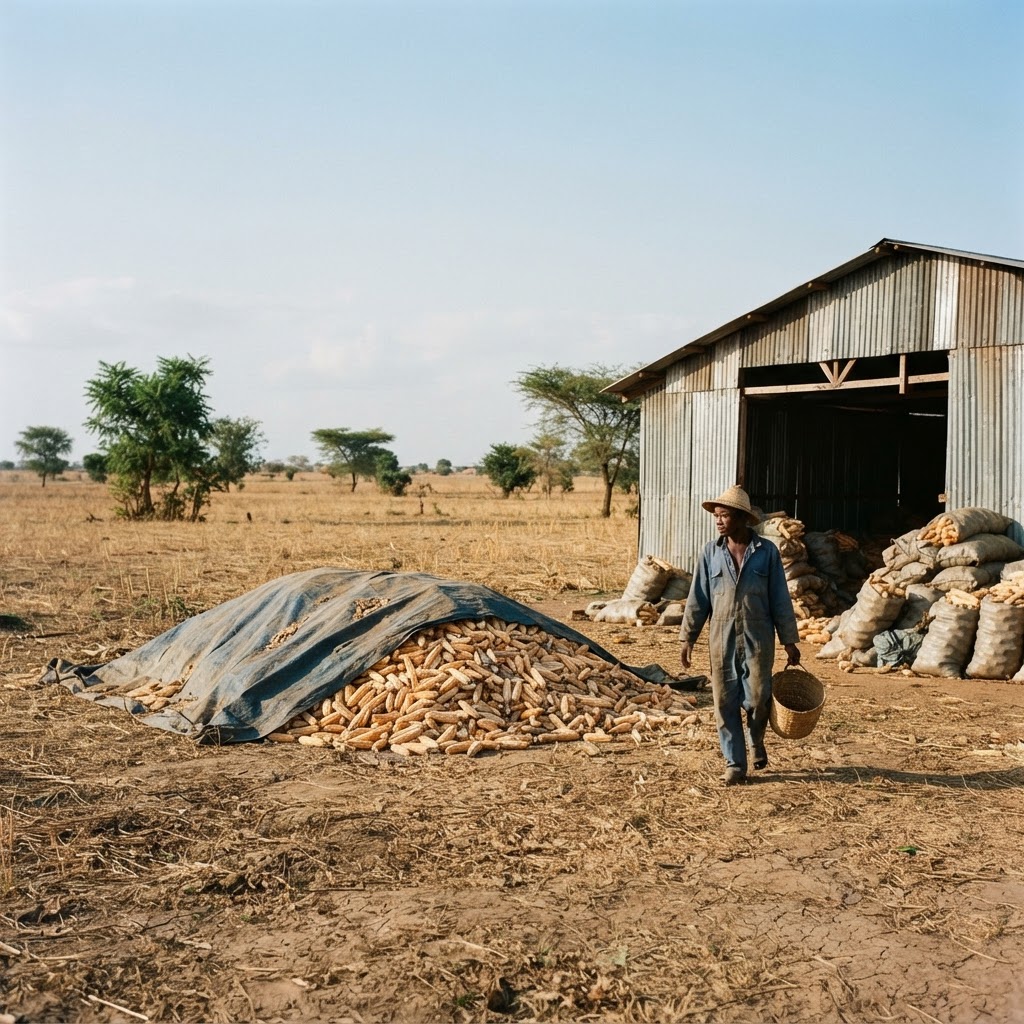
Nigeria Risks Billions in Farm Losses Without Better Storage
Nigeria's farms produce enough food to feed millions, yet much of it rots before reaching a dinner table. This paradox costs the nation dearly every single year. Nigeria Risks Losing Billions in Farm Produce Without Better Storage and Transport, and the numbers behind this crisis demand urgent atten...