Powered by Obi Mbieri Independent Media Ltd · eziokwubundu.com
$1 = ₦1,327€1 = ₦1,512£1 = ₦1,759Dollar to Naira Rate Today, August 19, 2026: How Much Is $1 in Naira?
The exchange rate between the US Dollar and the Nigerian Naira continues to be one of the most closely watched economic indicators in Nigeria. For Nigerian families, entrepreneurs, students, and diaspora members sending money home, understanding today's rate is not merely a financial exercise — it i...
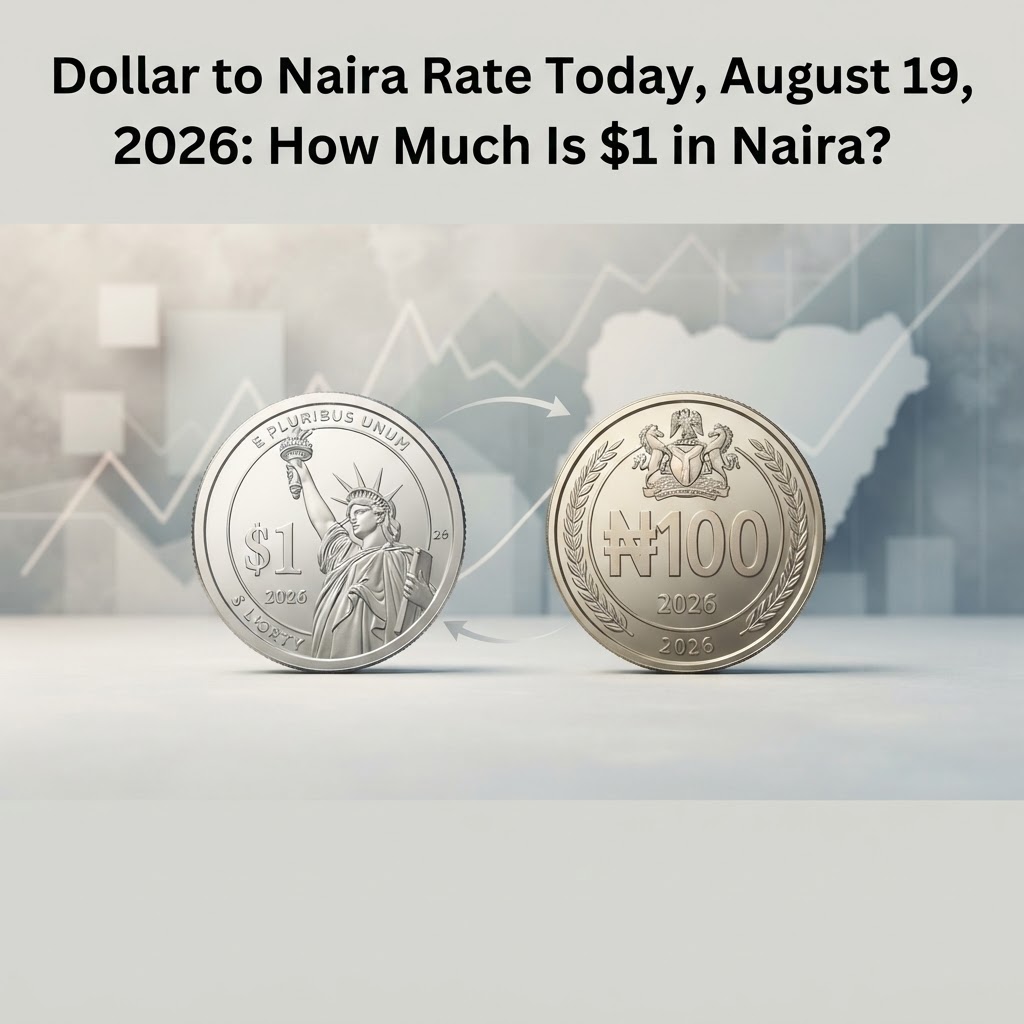
The exchange rate between the US Dollar and the Nigerian Naira continues to be one of the most closely watched economic indicators in Nigeria. For Nigerian families, entrepreneurs, students, and diaspora members sending money home, understanding today's rate is not merely a financial exercise — it is a matter of household survival, business planning, and community prosperity. On August 19, 2026, the Dollar to Naira rate reflects both the ongoing efforts of the Central Bank of Nigeria (CBN) to stabilize the foreign exchange market and the persistent structural realities that keep the parallel market alive and active.
At eziokwubundu.com, our commitment is to deliver practical, actionable information that sits at the intersection of health, wealth, and community development. Currency volatility does not only shrink wallets — it shrinks access to quality healthcare, nutritious food, and educational opportunities. This comprehensive breakdown will equip you with today's figures, explain the forces behind them, and offer strategies that translate knowledge into tangible prosperity.
What Is Today's Dollar to Naira Rate?
Official and Parallel Market Figures for August 19, 2026
As of August 19, 2026, the official Nigerian Foreign Exchange Market (NFEM) rate is holding steady at approximately ₦1,350 per dollar, representing a slight but meaningful strengthening from the ₦1,358.25 recorded earlier in the week. This incremental appreciation signals a degree of stability in the formal banking window, driven in part by improved liquidity conditions and recent monetary policy adjustments by the CBN.
In the parallel market — often referred to as the black market or street market — the selling rate currently sits between ₦1,420 and ₦1,428 per dollar. Bureau De Change (BDC) operators are buying from the public at roughly ₦1,407 to ₦1,415, reflecting the typical spread that BDC operators maintain to cover operational costs and generate profit.
Notably, daily transaction volumes at the official window have received a significant boost. The Nigerian Autonomous Foreign Exchange Market (NAFEM) turnover recently hit a five-week high of $1.41 billion, injecting much-needed liquidity into the system and signaling renewed confidence from institutional players. For Nigerians accessing forex through commercial banks or the Investors and Exporters (I&E) window, this increased volume translates to shorter wait times and more competitive rates on legitimate transactions.
You can track live rate movements through the CBN's official exchange rate portal for verified data.
Why Is the Black Market Rate Higher?
The Parallel Premium and Currency Access Today
The official rate is a volume-weighted average derived from formal transactions conducted through licensed financial institutions and the NAFEM window. It does not automatically reflect the immediate retail demand that ordinary Nigerians — travelers, students paying foreign tuition, or small importers — face when they cannot access dollars through formal channels swiftly enough.
This gap, widely referred to as the parallel premium, currently stands at approximately ₦70 to ₦78 per dollar. While this spread has narrowed considerably from the crisis levels seen in 2023 and 2024, it remains a reliable barometer of dollar scarcity within the formal system. When the premium rises, it signals that demand is outstripping formal supply; when it contracts, it reflects improved access and growing market confidence.
In major commercial hubs like Lagos, Kano, and Onitsha, so-called Aboki rates fluctuate throughout the trading day, responding to real-time supply shocks — a delayed diaspora remittance payout, a sudden import financing rush, or even news of crude oil price movements on the global market. Students preparing to pay international university tuition often find themselves navigating this market of necessity, not preference. The IMSU 2026/2027 Direct Entry Screening registration guide underscores how education costs, many denominated in foreign currency, directly affect Nigerian youth and their families' foreign exchange needs.
How Does the Exchange Rate Affect Nigerian Families?
Currency Volatility and Household Wellness
The connection between exchange rate movements and the day-to-day wellbeing of Nigerian families is direct, measurable, and often underappreciated in mainstream financial commentary. At eziokwubundu.com, we frame this through the Health + Wealth lens: currency depreciation is not just an economic phenomenon — it is a public health issue.
When the Naira weakens, the cost of imported medical supplies, essential pharmaceuticals, and specialized healthcare equipment rises in lockstep. Nigeria relies significantly on foreign-sourced active pharmaceutical ingredients (APIs) for drug manufacturing. A ₦70 to ₦78 parallel premium translates directly into higher shelf prices for medications in local pharmacies. Families managing chronic conditions such as diabetes, hypertension, or asthma feel this impact immediately. Even surgical supplies, diagnostic reagents, and medical devices are priced in dollars at the wholesale level.
Beyond healthcare, inflationary pressure on imported food staples — from wheat flour and vegetable oil to processed baby food — continues to erode the purchasing power of middle-class Nigerian households. The raw materials for locally manufactured goods are equally affected, as factories import machinery, packaging, and chemical inputs in foreign currency, passing those costs on to consumers.
The practical response for families is not passive resignation but proactive adaptation. Prioritizing locally produced nutritional alternatives — such as sorghum, millet, African yam, and locally grown leafy vegetables — reduces exposure to import-driven price hikes while supporting local farmers and community food systems. Additionally, enrolling in community-based health insurance schemes, such as the National Health Insurance Authority (NHIA) programs, provides a meaningful hedge against the rising cost of private healthcare. The psychological toll of financial strain is equally real; our article on everyday stress and your health explores how economic anxiety compounds physical health challenges, particularly for working-class Nigerian adults.
What Economic Factors Are Driving the Naira This Week?
Oil Revenue, Liquidity, and CBN Policy Reforms
Nigeria's macroeconomic fundamentals remain inextricably tied to crude oil export earnings, which account for a significant proportion of the country's foreign exchange receipts. Any movement in global crude oil prices — currently trading within a range that provides moderate revenue support — directly influences the CBN's capacity to defend the Naira at the official window. Nigeria's external reserves position, a closely watched metric published by the CBN, serves as the primary backstop for exchange rate management.
Featured Products
Chukwu Abiama Tee
Bold black-and-gold Igbo-pride T-shirt featuring 'Chukwu Abiama' in premium streetwear typography.
₦15,000
Buy NowReverse Type 2 Diabetes & other associated Metabolic Issues using Dr. Jason Fung's Evidence-Based Approach— FMD program for Type 2 Diabetes
A practical fasting and fasting-mimicking programme built on Dr Jason Fung's insulin-resistance principles and ow-glycemic recipes.
₦19,950
Join NowỤmụ Igbo Tee
Classic black T-shirt with bold white 'Ụmụ Igbo' typography — a proud statement of Igbo heritage.
₦15,000
Buy NowNwanne Tee
Washed khaki vintage tee with a faded rust-orange 'Nwanne' stamp badge and palm leaf motif — a nod to kinship and heritage.
₦18,000
Buy NowObodo Tee
Faded denim-blue washed tee with a cream 'Obodo' stamp badge and sun motif, celebrating community roots.
₦18,000
Buy NowEkwe Heritage Tee
Deep indigo tee featuring a fine line-art illustration of a traditional Igbo ekwe drum, inspired by Igbo-Ukwu bronze artistry.
₦18,000
Buy NowIkenga Figure Tee
Forest green tee with a fine line-art illustration of a stylized Ikenga figure.
₦18,000
Buy NowOn the policy front, recent CBN monetary decisions aimed at curbing stubbornly elevated inflation and rationalizing the foreign exchange market architecture are beginning to register measurable results. The relative firmness of the official rate at ₦1,350 this week is partly attributable to these interventions, including tighter limits on speculative dollar purchases and more transparent price discovery mechanisms within the NAFEM framework. You can review official policy communiqués on the CBN's monetary policy page.
Diaspora remittances remain a critical and often underappreciated pillar of Nigeria's foreign exchange earnings. The World Bank consistently ranks Nigeria among the top remittance-receiving nations in Sub-Saharan Africa. If current inflows — buoyed by improved digital remittance channels and favorable exchange rate differentials — are sustained through the third quarter of 2026, analysts anticipate further narrowing of the parallel premium.
How Can Entrepreneurs Protect Against Currency Risk?
Practical Prosperity Strategies for Business Owners
For Nigerian entrepreneurs and local investors, currency volatility is not merely an inconvenience — it is a fundamental business risk that demands deliberate, strategic management. The Practical Prosperity framework that guides our content at eziokwubundu.com starts with one foundational principle: protect your capital before you grow it.
The first strategy is diversification into dollar-denominated assets. This does not require offshore accounts or complex instruments. Licensed Nigerian investment platforms now offer dollar-denominated mutual funds, Eurobond-linked instruments, and USD savings accounts that are accessible to mid-tier entrepreneurs and salaried professionals alike. Holding even 20 to 30 percent of business reserves in a stable foreign currency-linked instrument provides meaningful insulation against Naira depreciation episodes.
The second, and arguably more impactful, strategy is local sourcing. Entrepreneurs who reduce their dependence on imported raw materials, packaging, and equipment simultaneously reduce their foreign exchange exposure and strengthen community-level economic resilience. A food processing business that sources cassava, palm oil, and packaging materials from local suppliers instead of importing equivalents is not only hedging currency risk — it is creating local employment and reinforcing the supply chains that Nigeria's industrial base depends on.
Third, businesses with predictable international obligations — such as importers with quarterly shipment cycles or tech firms paying foreign software licensing fees — should explore forward contracts available through tier-one commercial banks. These instruments allow a business to lock in an exchange rate for a future date, converting currency uncertainty into a manageable, budgetable fixed cost. The FG's N50 Million Housing Loan Portal is one example of government-backed financial instruments that entrepreneurs and families can leverage as part of a broader wealth-building strategy.
Why Does Financial Literacy Matter Right Now?
Knowledge as a Wealth-Building Tool in Nigeria
The CBN's National Financial Literacy Framework is explicit in its finding that informed consumers are significantly better equipped to avoid exploitative financial practices and to make optimal decisions across savings, credit, and foreign exchange products. In Nigeria's current economic climate, financial literacy is not an academic aspiration — it is a survival competency.
One of the most practically important literacy skills for everyday Nigerians is understanding the distinction between buying rates and selling rates. When a BDC operator or bank quotes a buying rate, that is what they will pay you for your dollars. The selling rate is what you pay them for dollars. The spread between these two figures represents the operator's margin. For MSMEs, market traders, and farmers engaged in any import or export activity — even informal cross-border trade — understanding this spread prevents repeated small losses that compound into significant capital erosion over time.
At eziokwubundu.com, we advocate for a Community-First approach to financial education. When financial knowledge is shared openly within local organizations — through community meetings, cooperative societies, market associations, and religious institutions — the collective economic standing of Nigerian neighborhoods strengthens. Individual financial literacy, multiplied across a community, becomes a resilience infrastructure. This philosophy draws deeply from the Igbo concept explored in our article on what Eziokwu Bu Ndu really means — that truth, knowledge, and community are inseparable from genuine prosperity.
What Should the Diaspora Know About Sending Money Home?
Maximizing Remittances for Community Development
For the millions of Nigerians living and working abroad, today's exchange rate of ₦1,420 and above in the parallel market represents a significant multiplier effect on the value of every dollar, pound, or euro sent home. But maximizing that value requires strategic platform selection and a forward-thinking approach to how remittances are deployed.
Comparing transfer rates and fees across platforms — including Western Union, MoneyGram, Remitly, WorldRemit, and Nigerian fintech innovators like Grey and LemFi — can yield meaningful differences in the final amount received. A $500 transfer with a 0.5 percent fee difference translates to real money over monthly, recurring transfers. The World Bank's Remittance Prices Worldwide database offers a transparent comparison tool for evaluating corridor costs.
Beyond consumption support for families, diaspora remittances are increasingly being channeled into community development projects that embody the Traditional Values, Modern Progress ethos: community-led healthcare facilities, borehole water projects, scholarship funds, and infrastructure for autonomous communities. The N300 Million initiative for South Africa returnees in Imo State is a compelling example of how diaspora capital, when intentionally directed, can fund structured development programs with measurable community impact.
At the current parallel market rate of ₦1,420+, diaspora contributions carry exceptional purchasing power for community-level initiatives, family-run businesses, and local investment projects. The challenge — and the opportunity — lies in organizing these flows beyond individual family consumption and into coordinated community prosperity vehicles.
Conclusion
The Dollar to Naira rate on August 19, 2026 — ₦1,350 at the official NAFEM window and ₦1,420 to ₦1,428 in the parallel market — tells a story that is at once financial, social, and deeply human. It reflects the ongoing structural work of rebuilding Nigeria's foreign exchange architecture, the persistent gap between formal access and street-level reality, and the daily calculations that millions of Nigerian families, entrepreneurs, students, and diaspora members must make.
At eziokwubundu.com, we believe that information is the foundation of prosperity. Understanding today's rate is one step; knowing how to act on that understanding — through local sourcing, financial literacy, community investment, and strategic remittance decisions — is where knowledge becomes power. Nigeria's path to currency stability and broader economic resilience will be built not just by policy makers, but by informed communities making better decisions, one household, one business, and one naira at a time.
Stay Informed
Get New Articles in Your Inbox
Subscribe to receive the latest community development, health, and wealth insights from Eziokwubundu.
Newsletter
Practical insights on health, wealth, and community — delivered weekly.
Community Discussion(0)
Leave a Comment
More to Read
You May Also Like

Imo Approves Recruitment of 6,030 Teachers Across 27 LGAs
Imo State has taken a bold step toward transforming its public education system. Governor Hope Uzodimma has approved the recruitment of 6,030 teachers across the state's 27 Local Government Areas, a move many residents have awaited for years. This decision, widely reported by Vanguard(https://www.va...

Health and Wealth Creation for Nigerians: Empowerment Hub
In an increasingly complex global landscape, the pursuit of a fulfilling life necessitates a balanced approach to physical well-being, financial stability, and social connectivity. For Nigerians at home and in the diaspora, navigating these paths requires more than just effort; it requires access to...
65 Imo Businesses Await OKOBI Initiative Registration
Imagine 65 kindred-owned businesses across Imo State, each waiting for one final document to unlock full legal status. That single step—Corporate Affairs Commission registration—now defines the next chapter in Imo's OKOBI Initiative: 65 Community Businesses Await CAC Registration. For families, entr...

How to Register a Business in Imo
Starting a business in Imo State is one of the most impactful decisions you can make — not just for your personal financial future, but for the broader prosperity of your community. From the bustling markets of Owerri to the agricultural enterprises of Orlu and Okigwe, Imo entrepreneurs are driving ...
Imo’s ₦61bn Question: Tracking Agricultural Funding
Nigeria's farmers just received a fresh reason to hope—and to ask hard questions about agricultural funding. A new Germany-funded agricultural project has disbursed ₦61bn nationwide, and it reignites Imo's ₦61bn Question: How Much of Nigeria's Agricultural Financing Is Reaching Imo. For families in ...

Economic Pressure Drives Employers Toward Commission-Based Pay
Nigeria's labor market is undergoing a quiet but profound transformation. Across Lagos boardrooms, Abuja offices, and Aba trading floors, a growing number of employers are restructuring compensation packages — moving away from the predictability of fixed monthly salaries toward commission-based pay ...
48 Months Without Full Pension Payments: Imo Pensioners
Retirement should bring peace, not financial anxiety. Yet across Imo State, thousands of elderly civil servants say their golden years have turned into a struggle for survival. The situation described in "48 Months Without Full Pension Payments: Imo Pensioners Demand Answers" reflects a deepening cr...
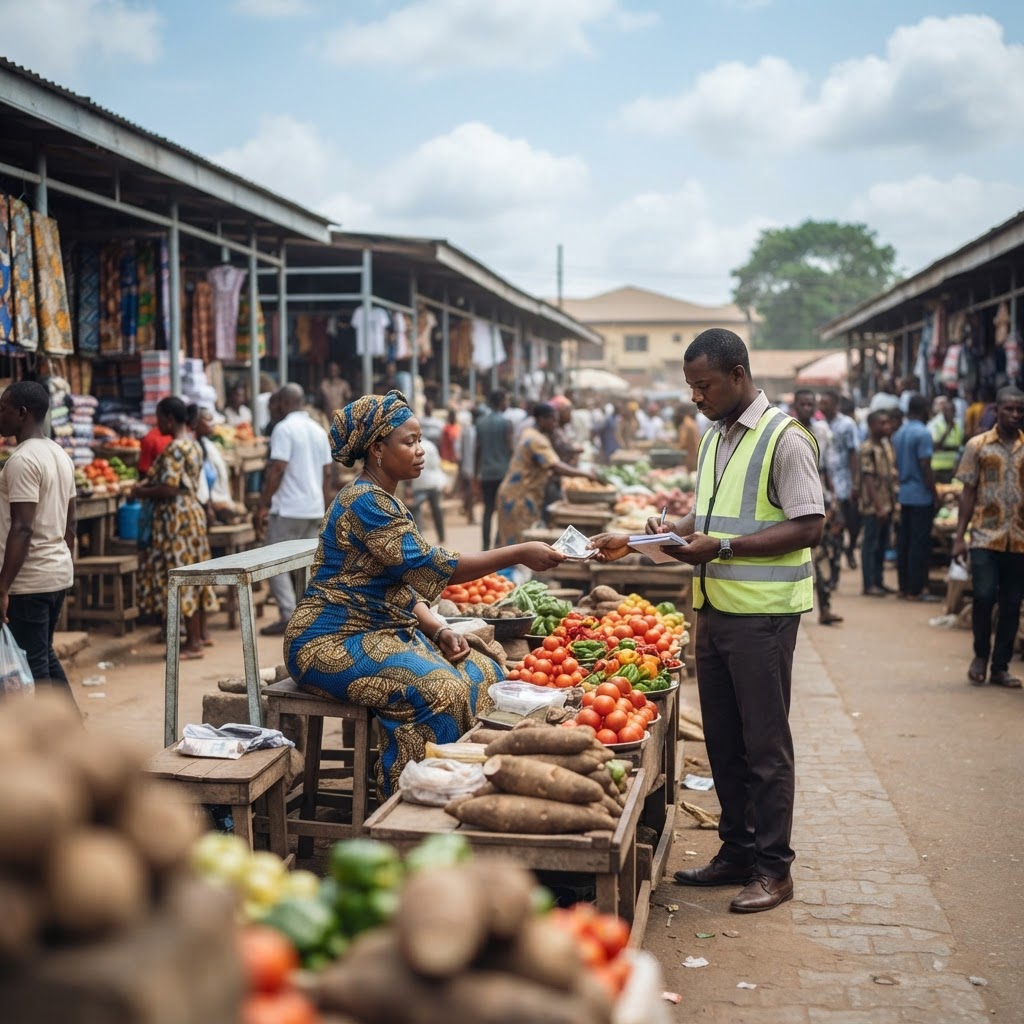
Imo Markets: What Fees Are Traders Paying and Who Collects Them?
For thousands of traders operating daily across Imo State's bustling markets — from Relief Market in Owerri to the Naze Timber and Allied Traders Market — paying levies is an unavoidable cost of doing business. But in 2026, a more urgent question is emerging from beneath the noise of commerce: exact...

Unapproved Orphanages in Nigeria: How Safe Are Children in Private Care Homes?
Across Nigeria, thousands of children live in private care homes that operate outside the law. Some are run by well-meaning individuals overwhelmed by the scale of child poverty. Others are driven by profit, exploiting the image of vulnerable children to attract foreign donations while providing sub...

How to Access CBN Small Business Loans
Access to affordable financing remains one of the most persistent barriers to entrepreneurial growth in Nigeria. For millions of small business owners operating in a landscape defined by high commercial lending rates — often ranging between 25% and 30% per annum — the Central Bank of Nigeria's inter...