Powered by Obi Mbieri Independent Media Ltd · eziokwubundu.com
$1 = ₦1,332€1 = ₦1,498£1 = ₦1,775Timipre Sylva Resigns From APC, Accuses Party of Abandoning Its Founding Ideals
Former Bayelsa State Governor and ex-Minister of State for Petroleum Resources, Chief Timipre Sylva, has formally resigned from the All Progressives Congress (APC), delivering a stinging rebuke of the party he helped found and build over a decade ago. The resignation, announced on August 31, 2026, i...
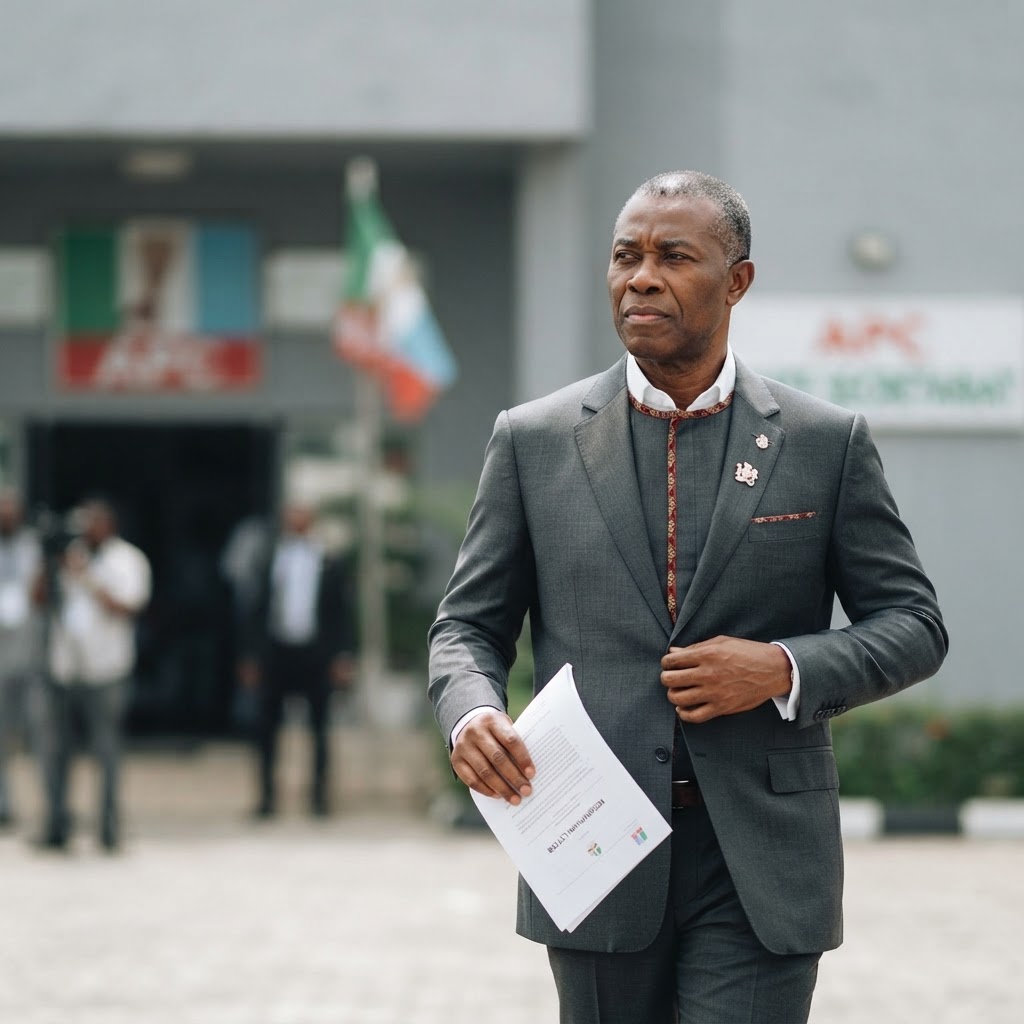
Former Bayelsa State Governor and ex-Minister of State for Petroleum Resources, Chief Timipre Sylva, has formally resigned from the All Progressives Congress (APC), delivering a stinging rebuke of the party he helped found and build over a decade ago. The resignation, announced on August 31, 2026, is one of the most symbolically charged political exits in recent Nigerian memory — not just because of who Sylva is, but because of what his departure says about the internal fault lines within the ruling party. As Nigeria's political class begins the early recalculations that precede every general election cycle, Sylva's exit adds considerable weight to growing questions about the APC's capacity to retain the loyalty of its most committed founding stakeholders. For community leaders, entrepreneurs, and engaged Nigerians watching the governance landscape, this story is about more than one man leaving one party. It is a warning signal about accountability, institutional integrity, and the long-term cost of abandoning founding principles.
Why Did Sylva Walk Away From APC?
A founding member draws the line
Sylva announced his departure through a formal resignation letter dated August 31, 2026, electronically submitted to the APC Chairman of Ward 4 in Brass Local Government Area of Bayelsa State — his home ward and the most personal political address he could have chosen for such an announcement. In the letter, he identified himself unambiguously as a founding member of the APC, reminding the party and the public alike that he had joined "other well-meaning Nigerians in building the party with sweat and money." That specific framing — sweat and money — is not incidental. It is a deliberate assertion of personal sacrifice and contribution, making the departure not just a political act but a moral one.
His core grievance is precise: the current APC leadership, in his view, has drifted so far from the ideals that animated the party's founding that it is now unrecognisable to those who built it. The APC was formed in 2013 through a historic merger of opposition parties — the Action Congress of Nigeria (ACN), the Congress for Progressive Change (CPC), the All Nigeria Peoples Party (ANPP), and a faction of the All Progressives Grand Alliance (APGA) — on a platform promising democratic renewal, transparent governance, and genuine national development. For a founding member of that coalition to now publicly state that those ideals have been abandoned is a powerful indictment, regardless of one's view of Sylva himself.
The symbolic weight here is considerable. Ordinary defections happen regularly in Nigerian politics. But when a man who helped design the architecture of a party publicly declares that the structure has become structurally unsound, it carries a different kind of authority.
Is the APC a 'Floundering Ship' Under Current Leadership?
Moral drift and the collapse of political standards
Sylva's language in the resignation letter is blunt and unsparing. He describes the APC as a "floundering ship whose fate appears to have been sealed by its irredeemable load of iniquities" — and he goes further by attributing this collapse not to external pressures but to an internal moral failure. Specifically, he targets what he calls an entrenched "all is fair in politics" mentality within the current party leadership, a worldview he argues has systematically eroded the basic standards of decency and ethical conduct that any responsible governing party must uphold.
This is a critique with broad resonance. Across Nigeria, citizens have grown increasingly vocal about the gap between what the APC promised in 2015 — and again in 2023 — and what has been delivered in terms of economic security, public infrastructure, and institutional reform. Inflation has remained punishing for ordinary households, fuel subsidy removal has increased the cost of transportation and food, and many Nigerians have yet to feel any tangible improvement in their daily quality of life. Sylva's accusation that the party operates without moral guardrails reflects a frustration felt far beyond the political class.
Crucially, Sylva states explicitly that he sees no credible path for internal reform or revitalisation within the current APC structure. This is perhaps the most damning element of his critique. A resigning politician who still believes in a party's redemptive potential typically urges reform from within. Sylva makes no such appeal. His framing — "no other choice than to jettison a floundering ship" — suggests a man who has concluded that the institution itself is beyond saving under its present direction, not merely that it needs adjustment. His closing assertion, that Nigerians will vote to "free the country from this stranglehold" in the next election, reads less like a personal opinion and more like a political forecast.
For readers who follow developments like the growing tension between community accountability and political power in Imo State, Sylva's language will feel familiar. The demand that political actors answer to founding principles — rather than to factional convenience — is a recurring theme across Nigeria's communities.
Why Did Sylva Copy the EFCC on His Resignation?
Anti-graft agency or political instrument?
One of the most unusual and deliberate features of Sylva's resignation letter is the decision to copy the Economic and Financial Crimes Commission (EFCC) as a recipient. This is not standard practice in any party resignation anywhere, and its inclusion is clearly intentional. Sylva used the gesture to make a pointed public accusation: that the EFCC has increasingly functioned "more as an organ of the APC than as an institution of State." In plain terms, he is alleging that the anti-corruption agency has been weaponised by the ruling party to intimidate political opponents, manage dissent, and enforce political compliance — rather than to independently pursue financial crime in the national interest.
This allegation must be assessed alongside Sylva's own legal history with the agency. In November 2025, the EFCC declared him wanted over allegations of conspiracy and dishonest conversion of funds belonging to the Niger Delta Development Commission (NDDC). The specific sum cited was approximately $14.8 million, linked to a refinery project involving Atlantic International Refinery and Petrochemical Limited. Sylva himself acknowledged in the resignation letter that his decision to publicly exit the APC may invite intensified scrutiny of himself and his associates — and stated plainly that he was prepared to face whatever follows.
Featured Products
Chukwu Abiama Tee
Bold black-and-gold Igbo-pride T-shirt featuring 'Chukwu Abiama' in premium streetwear typography.
₦15,000
Buy NowReverse Type 2 Diabetes & other associated Metabolic Issues using Dr. Jason Fung's Evidence-Based Approach— FMD program for Type 2 Diabetes
A practical fasting and fasting-mimicking programme built on Dr Jason Fung's insulin-resistance principles and ow-glycemic recipes.
₦19,950
Join NowỤmụ Igbo Tee
Classic black T-shirt with bold white 'Ụmụ Igbo' typography — a proud statement of Igbo heritage.
₦15,000
Buy NowNwanne Tee
Washed khaki vintage tee with a faded rust-orange 'Nwanne' stamp badge and palm leaf motif — a nod to kinship and heritage.
₦18,000
Buy NowObodo Tee
Faded denim-blue washed tee with a cream 'Obodo' stamp badge and sun motif, celebrating community roots.
₦18,000
Buy NowEkwe Heritage Tee
Deep indigo tee featuring a fine line-art illustration of a traditional Igbo ekwe drum, inspired by Igbo-Ukwu bronze artistry.
₦18,000
Buy NowIkenga Figure Tee
Forest green tee with a fine line-art illustration of a stylized Ikenga figure.
₦18,000
Buy NowThat acknowledgment is significant. It suggests that Sylva is not naïve about his own vulnerabilities, but that he has made a calculated decision to proceed regardless. Whether one views his accusations about the EFCC as credible or self-serving, the broader concern he raises — that anti-graft institutions can be captured and redirected as political tools — is one that legal scholars, civil society organisations, and international governance monitors like Transparency International have long flagged as a structural risk in emerging democracies.
The question of institutional independence is not abstract. When citizens lose confidence that enforcement agencies operate without political direction, the entire framework of rule-of-law governance is weakened. For communities already navigating complex relationships between local authority and state power, as explored in our coverage of grassroots versus global governance dynamics, this dimension of Sylva's resignation deserves serious attention.
What Does This Mean for Nigeria's 2027 Elections?
Realignment, cohesion, and the cost of disunity
Sylva's exit does not occur in a vacuum. It arrived on the same day that reports emerged of major opposition parties opening formal discussions about building a unified political platform ahead of the 2027 general election — including a proposed framework for a single presidential candidate and a structured four-year transition programme. Whether Sylva's resignation is a precursor to joining that emerging opposition coalition, or whether it is a standalone act of protest and principle, remains publicly unresolved. But its timing is difficult to read as coincidental.
For the APC, the departure of a founding member of Sylva's stature raises urgent questions about internal cohesion. Political parties in Nigeria have historically haemorrhaged support between election cycles, only to reconstitute through tactical alliances at the last moment. But the 2027 election appears likely to be more structurally competitive than previous cycles. If the opposition succeeds in building the kind of unified platform currently under discussion — similar to what the APC itself achieved in 2013 when it united multiple parties under one umbrella — the ruling party could face a genuinely formidable challenge.
In the South-South and South-East geopolitical zones, where political recalculations are already actively underway, the ripple effects of Sylva's resignation will be watched closely. The ongoing debate over Governor Uzodimma's potential Senate ambitions and what it means for Imo State's political future reflects a broader pattern of political repositioning that is gathering momentum across the region. Similarly, the APC's own shifting fortunes relative to APGA's dominance in Anambra illustrates that the ruling party is not invincible at the sub-national level.
At a deeper level, Sylva's resignation is a reminder that sustainable governance cannot be divorced from founding principles. Parties built on specific mandates — accountability, democratic renewal, national development — cannot indefinitely abandon those mandates without paying an organisational cost. For Nigerian families, entrepreneurs, and community stakeholders who invest hope and civic energy in political processes, the lesson is consistent with the broader principle that guides strong institutions and strong communities alike: values are not optional extras. They are the foundation. When that foundation is abandoned, the structure eventually fails — and the people who built it begin to walk away.
Authoritative context on Nigerian electoral processes can be found through the Independent National Electoral Commission (INEC), while broader regional governance trends are tracked by organisations like The African Centre for Democracy and Human Rights Studies and the Economic Community of West African States (ECOWAS).
Conclusion
Chief Timipre Sylva's resignation from the APC is more than a political headline. It is a case study in what happens when a governing institution loses its moral anchor and begins to operate purely on the logic of power preservation. His letter — formal, specific, and unusually candid — articulates a critique that many Nigerians feel but rarely hear stated so plainly from within the ruling establishment. As 2027 approaches, the questions his departure raises — about party loyalty, institutional independence, and the price of founding ideals — will become increasingly central to the national conversation. For communities, families, and citizens invested in a Nigeria that works for everyone, the standard he invokes — that politics must be accountable to principles, not the other way around — remains the right one to demand.
This article is based on Timipre Sylva's resignation letter dated August 31, 2026, and reporting from multiple Nigerian news outlets as of the same date. Details may develop further as reactions from the APC and other political actors emerge.
Stay Informed
Get New Articles in Your Inbox
Subscribe to receive the latest community development, health, and wealth insights from Eziokwubundu.
Newsletter
Practical insights on health, wealth, and community — delivered weekly.
Community Discussion(0)
Leave a Comment
More to Read
You May Also Like
State Police Bill Stalls After Limited Assembly Support
Nigeria's long debate over decentralized policing has hit a critical wall. The State Police Bill Stalls After Limited Assembly Support, leaving reform advocates uneasy about the road ahead. As detailed in earlier coverage of the State Police Bill Stalls After Limited Assembly Approval(/article/6ad1d...

FUTO Partners With Police to Boost Campus Security
Nigerian universities are grappling with growing security concerns, and the Federal University of Technology, Owerri (FUTO) is responding with urgency to protect its community. Campus security has become the defining priority for university leadership as recent incidents involving student safety pus...

Umuahii Day: Preserving Our Heritage, Rekindling Otu Obi
Every December, families across Imo State pause to celebrate something larger than a party. They celebrate belonging. This year, that celebration carries a clear purpose: Umuahii Day: Preserving Our Heritage, Rekindling Otu Obi invites every son and daughter of Umuahii to come home, in body or in sp...

2026 NNPC/Seplat Scholarship: Apply Now
The race for Nigeria's future workforce starts in the lecture hall, not the boardroom. If you are a Nigerian undergraduate looking for financial relief this academic year, the 2026 NNPC/Seplat Scholarship: Apply Now initiative offers a credible, well-funded pathway to ease tuition pressure and keep ...

NNPC Seeks Partnerships to Restart PH and Warri Refineries
Nigeria's refining sector is entering a decisive new chapter. As the nation searches for lasting solutions to decades-old fuel supply challenges, the news that NNPC Evaluates New Partnerships to Restart Warri and Port Harcourt Refineries signals a shift from patchwork repairs toward structured, long...

NYSC Abduction: Serving Nigeria at What Cost? Fresh Safety Questions
The Umunoha abduction of prospective NYSC members has renewed concerns over the safety of graduates travelling across Nigeria for national service.

Military Aircraft With 32 Aboard Crashes in Ondo, Rescue Underway
Igbokoda crash: Nigerian Air Force ATR-42 was travelling from Benin to Lagos when contact was lost
Nwanegwo Hands Over Mbaitoli LGA Affairs, Ends Tenure
Hon. Ifunanya Nwanegwo JP has formally handed over the affairs of Mbaitoli Local Government Area to the Director of Administration and General Services (DAGS), marking the conclusion of his tenure as Executive Chairman.
Umunoha NYSC Kidnap: Hideout Located as IED Threat Delays Rescue
Imo security agencies have located the suspected hideout of prospective NYSC members abducted along the Owerri–Onitsha Road, but an alleged improvised explosive device (IED) threat has delayed the planned rescue operation.

Mbaitoli Kidnapping: Why Is the Owerri–Onitsha Road Still Vulnerable?
The latest kidnapping incident along the Owerri–Onitsha Road in Mbaitoli Local Government Area of Imo State has renewed concerns about the safety of one of the major transportation routes connecting communities in Imo and neighbouring states.