Powered by Obi Mbieri Independent Media Ltd · eziokwubundu.com
$1 = ₦1,332€1 = ₦1,498£1 = ₦1,775State Police Bill Stalls After Limited Assembly Support
Nigeria's long debate over decentralized policing has hit a critical wall. The State Police Bill Stalls After Limited Assembly Support, leaving reform advocates uneasy about the road ahead. As detailed in earlier coverage of the State Police Bill Stalls After Limited Assembly Approval(/article/6ad1d...
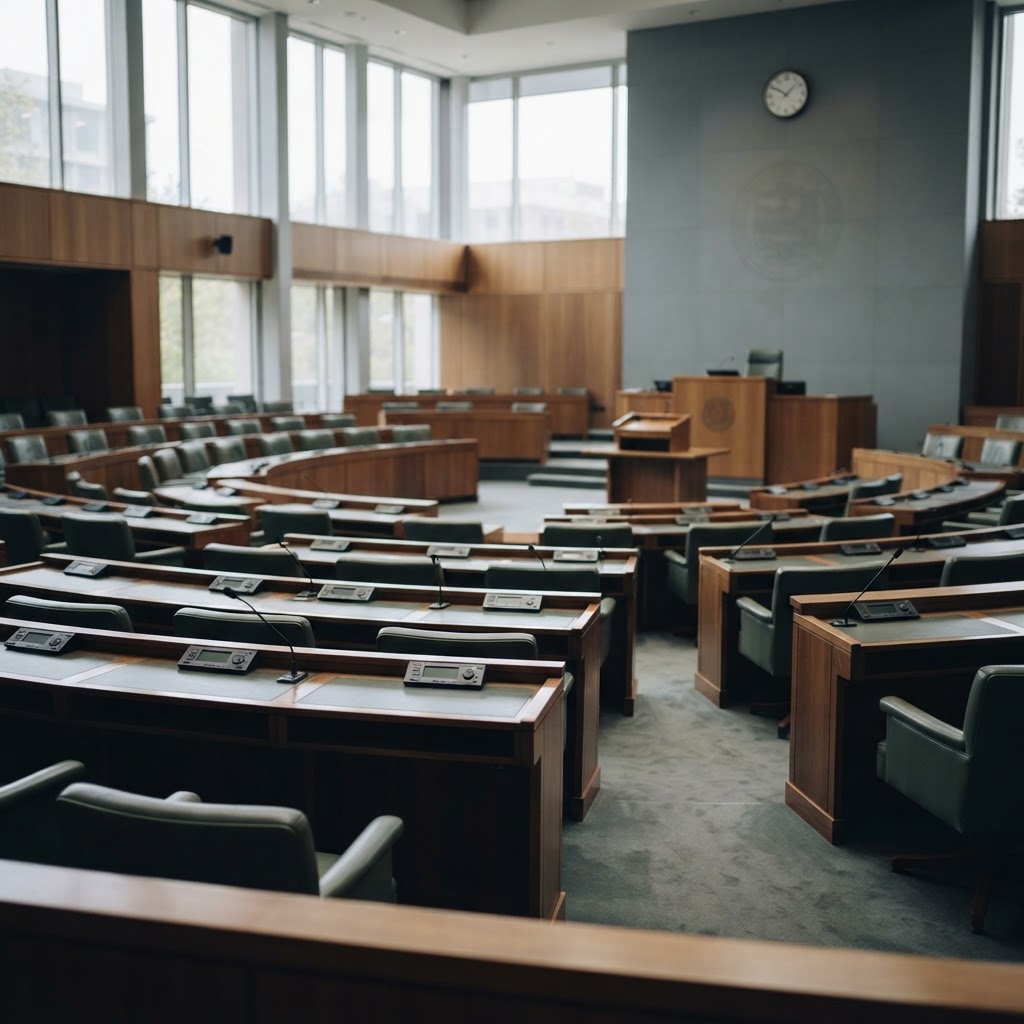
Nigeria's long debate over decentralized policing has hit a critical wall. The State Police Bill Stalls After Limited Assembly Support, leaving reform advocates uneasy about the road ahead. As detailed in earlier coverage of the State Police Bill Stalls After Limited Assembly Approval, the proposal has struggled to gain the broad legislative backing it needs. Families across the country are asking what this stall means for their everyday safety and local accountability.
For years, community leaders and security experts have pushed for policing structures that reflect local realities. This latest development shows how far Nigeria still has to travel before that vision becomes law, and it underscores just how fragile support for the State Police Bill remains at the subnational level.
What Is The State Police Bill?
The proposal formally known as the Constitution of the Federal Republic of Nigeria, 1999 (Sixth Alteration) Bill, 2026, seeks to decentralize policing across the federation. In plain terms, the State Police Bill aims to end the decades-old monopoly held by the Nigeria Police Force under Section 214(1) of the Constitution, which currently designates a single national police structure for all 36 states.
Under the proposed framework, states would be allowed to establish their own policing services, operating alongside the federal structure rather than replacing it entirely. This dual-layer model mirrors federal policing systems used elsewhere, where local officers handle community-level matters while a central body manages cross-border and specialized crime. Advocates argue this is precisely why the State Police Bill matters so much right now, given how uneven security outcomes have been across Nigeria's diverse regions.
Importantly, the bill does not strip away national oversight. It includes constitutional guardrails covering human rights protections, strict firearms control, and nationally defined minimum standards for recruitment, training, and conduct. These safeguards are a core part of what makes the State Police Bill distinct from earlier, less structured proposals for decentralized security.
These guardrails were added specifically to address fears that state governors could misuse local police for personal or political purposes. According to a recent report by Punch, lawmakers have tried to balance decentralization with checks that prevent abuse of power at the state level. This balancing act has become one of the defining features of debate surrounding the State Police Bill in the National Assembly and beyond.
The underlying goal is simple: bring policing closer to the people it serves. Communities in Kano differ sharply from communities in Bayelsa or Enugu, and uniform national policing has struggled to address that diversity effectively. Supporters insist that the State Police Bill, if properly implemented, could finally close that long-standing gap between national policy and local reality.
Why Is The State Police Bill Facing Delays?
As of October 2026, only five of Nigeria's 36 state assemblies have formally approved the proposal. That number falls dramatically short of what the Constitution demands for any amendment of this nature, and it explains why the State Police Bill has stalled rather than advanced smoothly through the legislative pipeline.
Section 9(2) of the 1999 Constitution requires at least two-thirds of all state Houses of Assembly, 24 states, to approve a constitutional alteration before it proceeds to presidential assent. With only five states on board, the State Police Bill remains far from the finish line.
Several concerns are slowing the process. State lawmakers are weighing practical questions before committing their support, and these hesitations are understandable given Nigeria's tight fiscal environment.
Key sticking points include:
- Billion-naira rollout costs for recruitment, training, and equipment in each state.
- Uncertainty over long-term funding once initial federal support ends.
- Fears of uneven policing quality between wealthier and poorer states.
- Political concerns about potential misuse of state-controlled security forces.
Financial analysts estimate that establishing a functional state police command could cost several billion naira annually, factoring in salaries, vehicles, communication systems, and training academies. For states already struggling with wage obligations, this is a serious consideration, and it is one of the main reasons the State Police Bill has not moved faster through state houses of assembly.
The broader context of Nigeria's economic pressures makes this hesitation more understandable. Just as concerns have emerged around scrutiny over large-scale public spending, state governments are cautious about committing to another costly structural overhaul without clear funding guarantees. In many ways, the fate of the State Police Bill is tied as much to Nigeria's fiscal realities as it is to political will.
How Will State Police Operate Under The State Police Bill?
Appointment and Oversight
Under the proposed system, each state would appoint a State Commander of Police through a structured process. The Governor would nominate a candidate, the National Police Council would review the nomination, and the State House of Assembly would confirm the final appointment. This layered appointment process is one of the clearest examples of how the State Police Bill attempts to prevent concentration of power in a single office.
This multi-layered approval process is designed to prevent any single actor from controlling the force unilaterally. It also mirrors existing checks used for federal police leadership appointments, reinforcing the idea that the State Police Bill was drafted with institutional balance in mind.
Federal Police Remains the Default
Importantly, the Federal Police Service will remain the default policing authority in any state until that state's own service is certified operational. This means transition will happen gradually, not overnight, reducing the risk of security gaps during the changeover period. This phased approach is a deliberate safeguard built into the State Police Bill to avoid sudden disruptions to existing security coverage.
Featured Products
Chukwu Abiama Tee
Bold black-and-gold Igbo-pride T-shirt featuring 'Chukwu Abiama' in premium streetwear typography.
₦15,000
Buy NowReverse Type 2 Diabetes & other associated Metabolic Issues using Dr. Jason Fung's Evidence-Based Approach— FMD program for Type 2 Diabetes
A practical fasting and fasting-mimicking programme built on Dr Jason Fung's insulin-resistance principles and ow-glycemic recipes.
₦19,950
Join NowỤmụ Igbo Tee
Classic black T-shirt with bold white 'Ụmụ Igbo' typography — a proud statement of Igbo heritage.
₦15,000
Buy NowNwanne Tee
Washed khaki vintage tee with a faded rust-orange 'Nwanne' stamp badge and palm leaf motif — a nod to kinship and heritage.
₦18,000
Buy NowObodo Tee
Faded denim-blue washed tee with a cream 'Obodo' stamp badge and sun motif, celebrating community roots.
₦18,000
Buy NowEkwe Heritage Tee
Deep indigo tee featuring a fine line-art illustration of a traditional Igbo ekwe drum, inspired by Igbo-Ukwu bronze artistry.
₦18,000
Buy NowIkenga Figure Tee
Forest green tee with a fine line-art illustration of a stylized Ikenga figure.
₦18,000
Buy NowCivilian Oversight Bodies
Independent police service commissions would also be established in each participating state. These commissions would oversee recruitment standards, handle misconduct complaints, and ensure civilian accountability over the new state forces. Civilian oversight remains one of the most frequently cited strengths of the State Police Bill among reform advocates.
This oversight model draws from existing frameworks used by Nigeria's Police Service Commission at the federal level, adapted for local application.
What Are The Security Benefits Of The State Police Bill?
One of the strongest arguments for state policing is the potential to revive community intelligence networks. Local officers who understand their communities personally are often better positioned to detect early warning signs of crime than officers posted from distant states. This is a central promise of the State Police Bill: policing that reflects lived community knowledge rather than distant bureaucratic command.
This localized approach could prove especially valuable in regions facing persistent security challenges. Incidents like the recent rescue operations in Mbaitoli highlight how quickly local knowledge can make the difference between tragedy and safety, a point frequently raised by supporters of the State Police Bill.
Supporters of the bill argue that state police could also respond faster to incidents such as the kidnapping incidents demanding ransom that have shaken communities across the country. Faster local response times could reduce both response delays and ransom negotiations that often follow such attacks. These real-world scenarios are often cited as evidence of why the State Police Bill deserves serious legislative attention rather than indefinite delay.
This reform aligns closely with Eziokwubundu's Community First philosophy. Security tailored to each state's socioeconomic realities, rather than a one-size-fits-all national model, reflects the same principle guiding community-based initiatives like campus security initiatives that have shown measurable improvements in localized safety outcomes. Observers see the State Police Bill as a natural extension of this community-first security philosophy at a statewide scale.
What Does The State Police Bill Mean For Nigerians?
This bill represents more than a legal technicality. It touches on personal safety, economic stability, and the broader trajectory of Nigeria's governance structures. Families planning their futures, entrepreneurs assessing business risk, and students commuting daily all have a stake in how this unfolds, which is why public interest in the State Police Bill continues to grow even as legislative progress slows.
The challenge ahead involves balancing traditional community structures with modern, professionalized security standards. Many communities already rely on vigilante groups and neighborhood watch systems. State policing could formalize these efforts, provided proper training and oversight accompany the transition. If passed, the State Police Bill could offer a legal framework for integrating these informal structures into a more accountable system.
For everyday Nigerians, engagement matters more than passive observation. Citizens can take practical steps to influence this process:
- Contact state assembly representatives to express views on the State Police Bill.
- Attend town hall meetings organized by local lawmakers discussing the State Police Bill and related security reforms.
- Follow updates from reputable outlets like Vanguard and Premium Times for verified developments.
- Encourage community organizations to host informed discussions on the reform.
Diaspora Nigerians also have a role to play. Many send remittances and investments home, and security reforms directly affect the safety of family members and business interests back home. For many in the diaspora, the outcome of the State Police Bill is not an abstract policy debate but a question that touches directly on family safety.
What Is The Path To Approval For The State Police Bill?
The National Assembly transmitted the bill to state assemblies on September 16, 2026, setting the formal clock running on this constitutional process. Since then, deliberations have moved slower than many lawmakers initially hoped, and the State Police Bill has yet to clear even half the number of states required.
The constitutional requirement remains firm: 24 of 36 state assemblies must approve the amendment before it can proceed to presidential assent. With only five states currently on board, substantial legislative work remains ahead before the State Police Bill can advance to the next constitutional stage.
Despite this slow pace, Senate leadership has publicly reiterated its commitment to fast-tracking the process. Lawmakers have pledged to prioritize the State Police Bill even amid legislative recesses, recognizing its significance for national security reform. Readers can track official updates through the National Assembly's website and legal analysis from the Policy and Legal Advocacy Centre.
Whether the State Police Bill ultimately succeeds will depend on how effectively state lawmakers address cost concerns, oversight structures, and public trust. For now, the proposal remains a work in progress, one that millions of Nigerians will be watching closely as it moves through this critical constitutional phase.
Related Reading
For readers following broader governance, security, and public-interest stories alongside developments on the State Police Bill, the following coverage may also be of interest:
- Okonkwo Questions Tinubu’s Health, Urges Him to Resign
- Umuahii Day: Preserving Our Heritage, Rekindling Otu Obi
- 2026 NNPC/Seplat Scholarship: Apply Now
- Nigeria’s Maternal Death Crisis: Why Are Mothers Dying?
- Can Fasting Help Lower High Blood Pressure? What Experts Say
- Why Antibiotics Fail: Understanding Antimicrobial Resistance
As Nigeria continues to grapple with questions of governance, public health, and security, the fate of the State Police Bill stands as one of the clearest tests yet of whether structural reform can keep pace with the country's pressing needs.
Stay Informed
Get New Articles in Your Inbox
Subscribe to receive the latest community development, health, and wealth insights from Eziokwubundu.
Newsletter
Practical insights on health, wealth, and community — delivered weekly.
Community Discussion(0)
Leave a Comment
More to Read
You May Also Like

FUTO Partners With Police to Boost Campus Security
Nigerian universities are grappling with growing security concerns, and the Federal University of Technology, Owerri (FUTO) is responding with urgency to protect its community. Campus security has become the defining priority for university leadership as recent incidents involving student safety pus...

Umuahii Day: Preserving Our Heritage, Rekindling Otu Obi
Every December, families across Imo State pause to celebrate something larger than a party. They celebrate belonging. This year, that celebration carries a clear purpose: Umuahii Day: Preserving Our Heritage, Rekindling Otu Obi invites every son and daughter of Umuahii to come home, in body or in sp...

2026 NNPC/Seplat Scholarship: Apply Now
The race for Nigeria's future workforce starts in the lecture hall, not the boardroom. If you are a Nigerian undergraduate looking for financial relief this academic year, the 2026 NNPC/Seplat Scholarship: Apply Now initiative offers a credible, well-funded pathway to ease tuition pressure and keep ...

NNPC Seeks Partnerships to Restart PH and Warri Refineries
Nigeria's refining sector is entering a decisive new chapter. As the nation searches for lasting solutions to decades-old fuel supply challenges, the news that NNPC Evaluates New Partnerships to Restart Warri and Port Harcourt Refineries signals a shift from patchwork repairs toward structured, long...

NYSC Abduction: Serving Nigeria at What Cost? Fresh Safety Questions
The Umunoha abduction of prospective NYSC members has renewed concerns over the safety of graduates travelling across Nigeria for national service.

Military Aircraft With 32 Aboard Crashes in Ondo, Rescue Underway
Igbokoda crash: Nigerian Air Force ATR-42 was travelling from Benin to Lagos when contact was lost
Nwanegwo Hands Over Mbaitoli LGA Affairs, Ends Tenure
Hon. Ifunanya Nwanegwo JP has formally handed over the affairs of Mbaitoli Local Government Area to the Director of Administration and General Services (DAGS), marking the conclusion of his tenure as Executive Chairman.
Umunoha NYSC Kidnap: Hideout Located as IED Threat Delays Rescue
Imo security agencies have located the suspected hideout of prospective NYSC members abducted along the Owerri–Onitsha Road, but an alleged improvised explosive device (IED) threat has delayed the planned rescue operation.

Mbaitoli Kidnapping: Why Is the Owerri–Onitsha Road Still Vulnerable?
The latest kidnapping incident along the Owerri–Onitsha Road in Mbaitoli Local Government Area of Imo State has renewed concerns about the safety of one of the major transportation routes connecting communities in Imo and neighbouring states.

Nigeria’s Maternal Death Crisis: Why Are Mothers Dying?
Every day, Nigerian households wait for news from the maternity ward with hope and quiet dread. Too often, that news is heartbreaking. This is the reality behind Nigeria's Maternal Death Crisis: Why Are So Many Mothers Still Dying? — a question every family, community leader, and policymaker must co...