Powered by Obi Mbieri Independent Media Ltd · eziokwubundu.com
$1 = ₦1,332€1 = ₦1,498£1 = ₦1,774Community Youths: Beat Inflation with these Profitable Side Hustles
Nigeria's cost of living squeeze has not eased in 2026 — it has intensified. Annual inflation stood at 15.91% in June 2026, holding roughly steady from May's six-month high, with food inflation quickening for a fifth consecutive month to 17.52%. Housing and utility costs accelerated to 11.19% from 9...
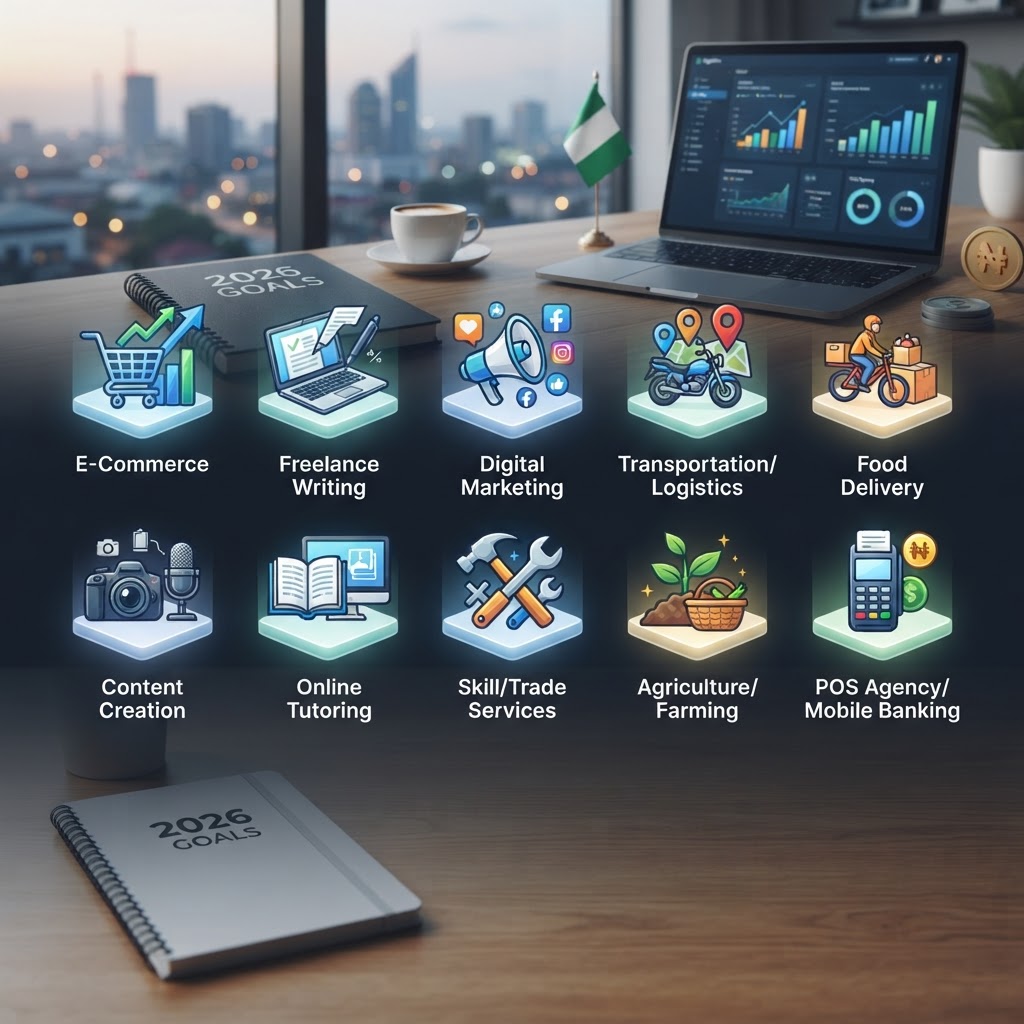
Nigeria's cost of living squeeze has not eased in 2026 — it has intensified. Annual inflation stood at 15.91% in June 2026, holding roughly steady from May's six-month high, with food inflation quickening for a fifth consecutive month to 17.52%. Housing and utility costs accelerated to 11.19% from 9.79% the month before. For Nigerian families, salaried workers, and students alike, a single income stream is no longer a financial strategy — it is a financial risk. This article examines ten proven side hustles Nigerians are actively using to stay ahead of rising prices, with practical entry points, platform-specific tools, and honest risk guidance grounded in current economic realities.
Why Is Inflation Reshaping Nigerian Income Strategy?
Nigeria's economic pressure in 2026 is not abstract — it is felt at the market, the fuel station, and in monthly rent negotiations. Annual inflation at 15.91% and food inflation at 17.52%, as reported by the National Bureau of Statistics, mean that household purchasing power is eroding faster than most salary increments can compensate. Relying on one income stream in this environment is a structural vulnerability, not a personal failing.
At Eziokwubundu, the editorial philosophy is built around a signature strategic triangle: Health + Wealth + Community. Financial instability is not merely an economic condition — it is a mental health stressor, a family cohesion risk, and a community development barrier. When Nigerian families lack financial resilience, preventive healthcare gets deprioritized, and communities lose the internal capital needed for collective progress.
This is precisely why the Obi Mbieri Independent Media - eziokwubundu.com platform's approach emphasizes Practical Prosperity over abstract motivation. Digital tools can help Nigerians analyze local market trends and price predictability data, creating an analytical foundation for side hustle decisions that go beyond guesswork. The 11.19% rise in housing and utility costs makes income diversification not a luxury but a necessity — and the ten hustles below are where Nigerians are actually finding traction.
#. How Does Social Commerce Scale Without Inventory?
Dropshipping through WhatsApp Business and Instagram remains one of the most accessible income models available to Nigerians in 2026. The mechanics are straightforward: sellers source product photos from local wholesalers or international suppliers, list them on a curated WhatsApp Business catalogue or Instagram shop, and fulfil orders only after customer payment is received — eliminating inventory risk entirely.
Margin accuracy is critical to sustainability here. Before pricing any product, sellers should verify what similar items actually sell for across Nigerian markets. A tracker like BongoPrice pulls real-time price data from physical markets including Mile 12, Balogun, and Wuse, preventing sellers from quoting margins based on guesswork. For more detail on monetizing this platform, see Proven Ways to Earn Money on BongoPrice.
Digital tools such as google is particularly effective for generating persuasive product descriptions and automated customer service reply scripts that maintain a professional tone for middle-class buyers accustomed to quality communication. Once early profits arrive, the reinvestment priority should be paid TikTok and Instagram Reels promotion — not physical stock — to preserve liquidity while scaling reach.
#.Can Short-Form Video Replace a Traditional Salary?
Short-form video on TikTok, Instagram Reels, and YouTube Shorts has moved from a creative hobby to a documented income lane for Nigerian creators in 2026. Nigerians operating in fashion, personal finance, food, and comedy niches are increasingly securing brand deals from both Lagos-based companies and diaspora-facing brands targeting the Nigerian-British and Nigerian-American consumer segments.
Many onlibe tools are excellent tool for scriptwriting and content ideation in this space. Its strength lies in generating problem-specific content — videos that address real Nigerian challenges such as managing household budgets under inflation or navigating JAMB registration — rather than recycling generic global advice that fails to resonate with local audiences.
The concept of Integrity as Capital is central here. Social media algorithms reward consistency and authentic engagement, and word-of-mouth discovery amplifies creators who provide evidence-based wellness and financial tips. A creator with 5,000 genuinely engaged followers will consistently outperform one with 50,000 passive ones when it comes to brand deal conversion rates.
#Why Is Freelancing in Dollars an Inflation Hedge?
The naira's continued volatility makes dollar-denominated freelance income structurally superior to equivalent naira-based employment for Nigerians with marketable digital skills. A copywriter earning $500 per month from a UK small business via Upwork is effectively insulated from domestic currency depreciation in a way that a naira-paid counterpart is not. The same principle applies to graphic designers, bookkeepers, social media managers, and virtual assistants operating on Fiverr or through LinkedIn outreach.
Digital tools is particularly useful at the portfolio-building stage. Freelancers can use it to conduct deep research into the specific industries their target clients operate in, allowing them to present sample work that demonstrates sector-specific knowledge — a significant differentiator when competing for foreign small business contracts.
From an African-Centered Perspective, Nigerian freelancers should also market their cultural context as a professional strength. Familiarity with diaspora communications, African consumer markets, and multilingual content environments is genuinely valued by international clients seeking culturally competent creative and administrative support. This is competitive advantage, not just background.
#How Do You Become a Trusted Diaspora Agent?
A significant and underserved income lane exists for Nigerians on the ground who can act as reliable local agents for diaspora Nigerians managing assets and family obligations from abroad. Building projects need supervision, rental properties need management, and critical family errands require trustworthy execution — yet finding qualified, vetted people for these tasks has historically depended entirely on personal referrals.
The Abamade platform was built specifically to address this gap, allowing diaspora Nigerians to browse and hire vetted local service providers for property and project management, with escrow built in so payment is only released once work is confirmed complete. This structure professionalizes what has traditionally been an informal arrangement and reduces the trust risk on both sides.
This hustle connects directly to community development: when local construction and service projects are executed to high standards with transparent reporting, the quality of the built environment improves for everyone. Managing these projects is not just income — it is a contribution to community standards, aligning with The Blueprint for Autonomous Nigerian Community Success.
#Is POS Agent Banking Still a Reliable Hustle?
Despite the growth of mobile banking apps, Nigeria's POS agent sector remains a dependable local business model in 2026. Millions of Nigerians in semi-urban and rural areas remain underbanked, and even in cities, unreliable bank branch access and ATM downtime sustain consistent demand for agent services. Agents earn commissions on every withdrawal, transfer, and bill payment transaction processed.
Getting started requires modest upfront capital — a POS terminal and sufficient float cash — but the return on investment is reliable when location is chosen strategically. High foot traffic combined with limited nearby formal banking infrastructure is the optimal site profile. A practical checklist: verify terminal compatibility with major processors, maintain adequate float at all times, and establish relationships with a nearby union bank or microfinance institution for float top-ups.
Featured Products
Chukwu Abiama Tee
Bold black-and-gold Igbo-pride T-shirt featuring 'Chukwu Abiama' in premium streetwear typography.
₦15,000
Buy NowReverse Type 2 Diabetes & other associated Metabolic Issues using Dr. Jason Fung's Evidence-Based Approach— FMD program for Type 2 Diabetes
A practical fasting and fasting-mimicking programme built on Dr Jason Fung's insulin-resistance principles and ow-glycemic recipes.
₦19,950
Join NowỤmụ Igbo Tee
Classic black T-shirt with bold white 'Ụmụ Igbo' typography — a proud statement of Igbo heritage.
₦15,000
Buy NowNwanne Tee
Washed khaki vintage tee with a faded rust-orange 'Nwanne' stamp badge and palm leaf motif — a nod to kinship and heritage.
₦18,000
Buy NowObodo Tee
Faded denim-blue washed tee with a cream 'Obodo' stamp badge and sun motif, celebrating community roots.
₦18,000
Buy NowEkwe Heritage Tee
Deep indigo tee featuring a fine line-art illustration of a traditional Igbo ekwe drum, inspired by Igbo-Ukwu bronze artistry.
₦18,000
Buy NowIkenga Figure Tee
Forest green tee with a fine line-art illustration of a stylized Ikenga figure.
₦18,000
Buy NowThis hustle embodies the Eziokwubundu community-first principle. POS agents are not just earning income — they are providing essential financial access to neighbors who would otherwise travel considerable distances for basic banking services.
#Why Does Food Vending Hold Up During Inflation?
Food occupies a uniquely resilient position in the Nigerian spending hierarchy. As discretionary expenses — entertainment, clothing, personal care — get cut during inflationary periods, food spending is defended last. This makes small chops vending, home-cooked meal delivery for offices, and pastry sales around schools and motor parks structurally stable businesses even when the broader economy tightens.
The operational key to profitability is eliminating waste. WhatsApp broadcast lists for pre-orders allow food vendors to prepare exactly what is sold, removing the guesswork that typically causes spoilage losses. Starting with a tight menu of two to three items that can be prepared consistently and at scale is more profitable than an overextended menu that dilutes quality.
From a wellness standpoint — and consistent with Eziokwubundu's preventive healthcare mission — food vendors have an opportunity to differentiate by offering healthier snack alternatives. Incorporating nutrition-conscious options into a vending menu is not only good public health practice but a genuine market differentiator among health-conscious urban professionals.
#How Is Exam Coaching Evolving in 2026?
The competitive pressure around WAEC, JAMB, and post-UTME examinations has not diminished in 2026 — if anything, the stakes for Nigerian students and their families have increased. This sustains strong, consistent demand for subject-specific tutoring, particularly in Mathematics, English, Chemistry, and Physics, delivered via Zoom or Google Meet without the overhead of a physical learning center.
Gemini 1.5 Pro provides practical leverage for tutors building a professional service. It can assist in generating personalized lesson plans, creating practice question banks aligned to the most recent exam syllabi, and identifying the specific knowledge gaps that commonly appear in past JAMB papers. This kind of data-informed preparation elevates a tutor's offering beyond what a generalist study group provides.
Structuring payment around exam timelines rather than open-ended monthly subscriptions is the most reliable income model. Parents respond better to defined packages — a ten-week JAMB intensive program, for example — because the outcome is concrete and the financial commitment is bounded.
#What Are Real Profit Margins in Ride-Hailing?
The logistics and ride-hailing sector in Nigeria operates on thinner margins than its growth might suggest, and understanding the actual numbers before committing full-time is essential. Platform commissions on Bolt and Uber typically range between 20% and 25% of gross fare earnings. Against this, drivers must account for fuel costs — which have risen significantly alongside inflation — routine maintenance, and occasional repair expenses that can erase weeks of profit.
Dispatch riding for parcels, food, and e-commerce deliveries has grown alongside the boom in social commerce and represents a more flexible alternative to passenger ride-hailing, with lower vehicle wear per kilometre in some routing patterns. The Chartered Institute of Logistics and Transport Nigeria provides resources for understanding regulatory requirements and professional standards in this sector.
Critically, the physical demands of logistics work carry health implications. Long hours, urban traffic stress, and inadequate rest are risk factors for cardiovascular and musculoskeletal conditions. Sustaining long-term productivity in this sector requires deliberate attention to physical wellness — an area Eziokwubundu addresses in its health content, including Five Diseases to Prevent Before Age Fifty.
#Can You Manage Estates Without Owning Property?
Independent estate management is an underappreciated income model in Nigerian cities. In Lagos, Abuja, and Port Harcourt, the growth of short-let apartments and gated residential estates has created genuine demand for professional managers who can handle day-to-day administration — visitor access control, service charge collection, maintenance coordination, and landlord reporting — without requiring the property owner to be present.
Nokvision is a platform built specifically for Nigerian residential estate management, consolidating visitor access tracking, service charge monitoring, and referral management into one tool. For an independent manager overseeing multiple properties, it eliminates the spreadsheet juggling that makes scaling administratively unsustainable.
The entry strategy requires no upfront capital from the manager. The approach is to identify landlords or estate associations with underused apartments or clear administrative gaps and propose a management arrangement with a percentage-based fee structure. This model blends modern economic thinking with traditional community stewardship — the kind of uniquely Nigerian prosperity perspective that Liquid Soap Profits for Nigerian Entrepreneurs also explores in the context of community-based manufacturing.
#How Does Affiliate Marketing Build Passive Income?
Affiliate marketing represents the most scalable transition point between content creation and recurring passive income. Rather than producing a product, the affiliate earns a commission — typically between 5% and 30% — for every sale or signup generated through a tracked referral link. Nigerian fintech apps, skincare brands, and online learning platforms have all expanded their affiliate programs in 2026 to reach engaged niche audiences.
Digital tools can be use to analyze audience engagement data to identify which platforms convert best for specific demographics. For youth professionals and students, WhatsApp Status and Twitter/X tend to drive stronger affiliate click-through rates than Instagram for financial products. For wellness and skincare, Instagram and TikTok outperform text-based platforms.
The foundational principle of sustainable affiliate income is Authentic Recommendation. Promoting only products or services the creator genuinely uses prevents the credibility erosion that inevitably follows obviously transactional endorsements. This discipline is what separates affiliate marketers with durable income from those who burn their audience trust for short-term commissions — a particularly important distinction given the prevalence of fraudulent schemes masquerading as legitimate affiliate opportunities in Nigerian digital spaces.
#How Do You Protect a Side Hustle From Shocks?
Financial discipline is the difference between a side hustle that builds wealth and one that quietly dissolves into household expenses. The Two-Account System is a non-negotiable starting point: one account for hustle revenue, one for personal spending. Without this structural separation, even a profitable hustle will leave its operator unable to account for where the money went.
Before committing capital or stock to any platform, Perplexity can be used to conduct due diligence — pulling reviews, user reports, and regulatory status information that is difficult to find through casual browsing. This step is especially important given the proliferation of investment and forex groups promising fixed high returns, which represent some of the most financially damaging schemes in the Nigerian digital economy.
Dollar-denominated hustles — freelancing, international affiliate marketing — provide stronger inflation protection than naira-only income but require more competitive positioning and a longer runway to first income. The honest conclusion is that none of the ten hustles covered here is a silver bullet. But combined with budgeting discipline, the right digital tools, and the Eziokwubundu principle that individual financial stability strengthens the collective Nigerian community, they represent the most practical available response to an inflationary environment that shows no sign of resolving quickly.
For further reading on building community-level resilience alongside personal financial strategies, see The Blueprint for Autonomous Nigerian Community Success.
Sources: National Bureau of Statistics Nigeria (nigerianstat.gov.ng), Upwork (upwork.com), BongoPrice (bongoprice.com), Chartered Institute of Logistics and Transport Nigeria (ciltnigeria.org).
Stay Informed
Get New Articles in Your Inbox
Subscribe to receive the latest community development, health, and wealth insights from Eziokwubundu.
Newsletter
Practical insights on health, wealth, and community — delivered weekly.
Community Discussion(0)
Leave a Comment
More to Read
You May Also Like

Why Africa's Tiny Ants Are Targeted for Wildlife Trade
Ants are tiny, but they are quietly becoming big business for international smugglers. Across East Africa, a strange black market has emerged, one built not on ivory or rhino horn but on queen ants. This unusual shift explains Why Africa's Tiny Ants Are Becoming a Wildlife Trafficking Target for cri...

FUTO Partners With Police to Boost Campus Security
Nigerian universities are grappling with growing security concerns, and the Federal University of Technology, Owerri (FUTO) is responding with urgency to protect its community. Campus security has become the defining priority for university leadership as recent incidents involving student safety pus...

Monetizing Digital Skills for Nigerian Youth Prosperity
The economic landscape for young Nigerians(/article/home-morning-fitness-guide-for-nigerians) is undergoing a profound transformation. No longer is a single monthly salary sufficient to navigate the complexities of modern inflation and rising living costs. For the ambitious youth professional, the d...

NNPC Faces Efficiency Scrutiny Over ₦27.76 Trillion Expenses
Nigeria's state oil giant is back in the headlines, and not for a new discovery. NNPC's ₦27.76 Trillion Operating Expenses Raise Efficiency Questions among citizens, analysts, and policymakers alike. The figure is so large it has sparked fresh debate about how national wealth is managed, and the num...

Why Entrepreneurs Must Track Monthly Net Worth
Many business owners in Lagos and Abuja celebrate high daily sales while their personal bank accounts remain stagnant. True financial freedom is not found in the cash flow of a business but in the residual value of one's personal assets. Shifting your focus to monthly net worth tracking allows you t...

Imo Approves Recruitment of 6,030 Teachers Across 27 LGAs
Imo State has taken a bold step toward transforming its public education system. Governor Hope Uzodimma has approved the recruitment of 6,030 teachers across the state's 27 Local Government Areas, a move many residents have awaited for years. This decision, widely reported by Vanguard(https://www.va...
Health and Wealth Creation for Nigerians: Empowerment Hub
In an increasingly complex global landscape, the pursuit of a fulfilling life necessitates a balanced approach to physical well-being, financial stability, and social connectivity. For Nigerians at home and in the diaspora, navigating these paths requires more than just effort; it requires access to...
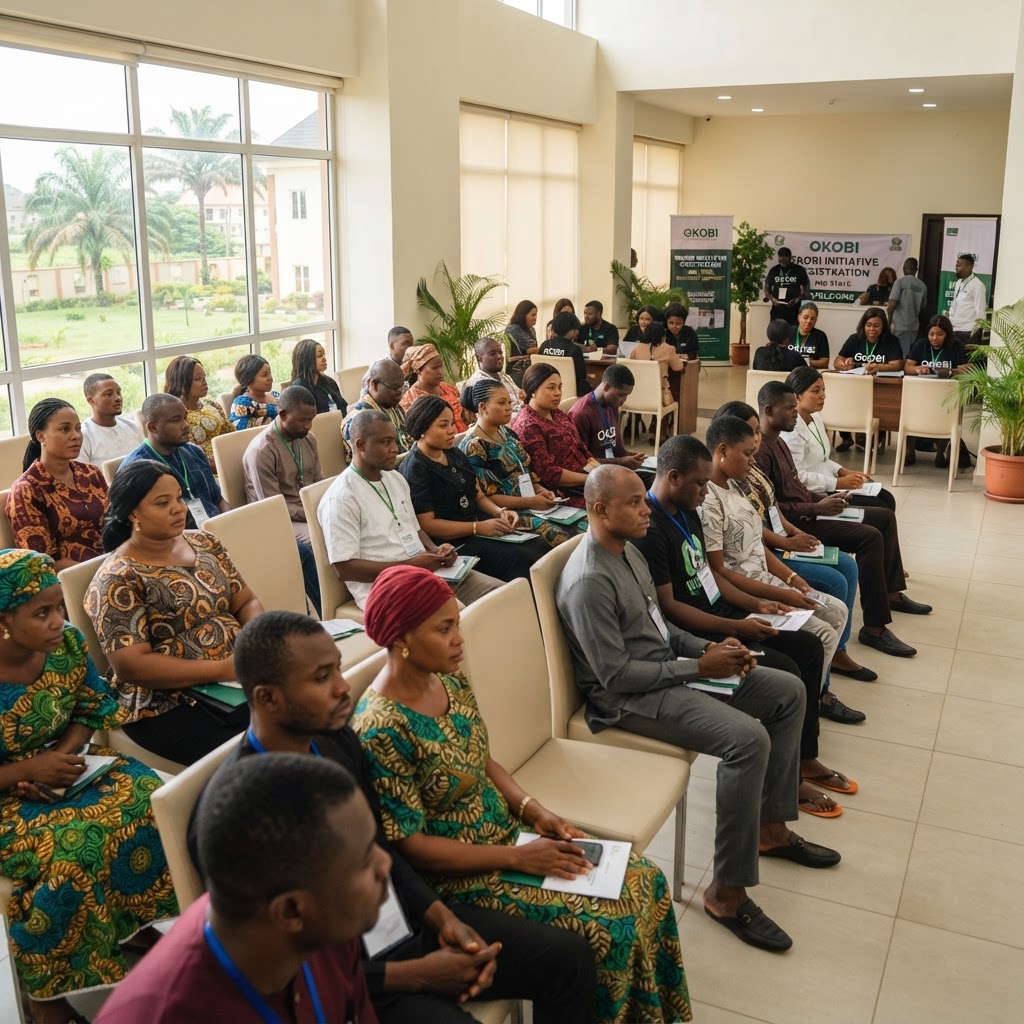
65 Imo Businesses Await OKOBI Initiative Registration
Imagine 65 kindred-owned businesses across Imo State, each waiting for one final document to unlock full legal status. That single step—Corporate Affairs Commission registration—now defines the next chapter in Imo's OKOBI Initiative: 65 Community Businesses Await CAC Registration. For families, entr...

How to Register a Business in Imo
Starting a business in Imo State is one of the most impactful decisions you can make — not just for your personal financial future, but for the broader prosperity of your community. From the bustling markets of Owerri to the agricultural enterprises of Orlu and Okigwe, Imo entrepreneurs are driving ...