Powered by Obi Mbieri Independent Media Ltd · eziokwubundu.com
$1 = ₦1,332€1 = ₦1,498£1 = ₦1,775Why Africa's Tiny Ants Are Targeted for Wildlife Trade
Ants are tiny, but they are quietly becoming big business for international smugglers. Across East Africa, a strange black market has emerged, one built not on ivory or rhino horn but on queen ants. This unusual shift explains Why Africa's Tiny Ants Are Becoming a Wildlife Trafficking Target for cri...
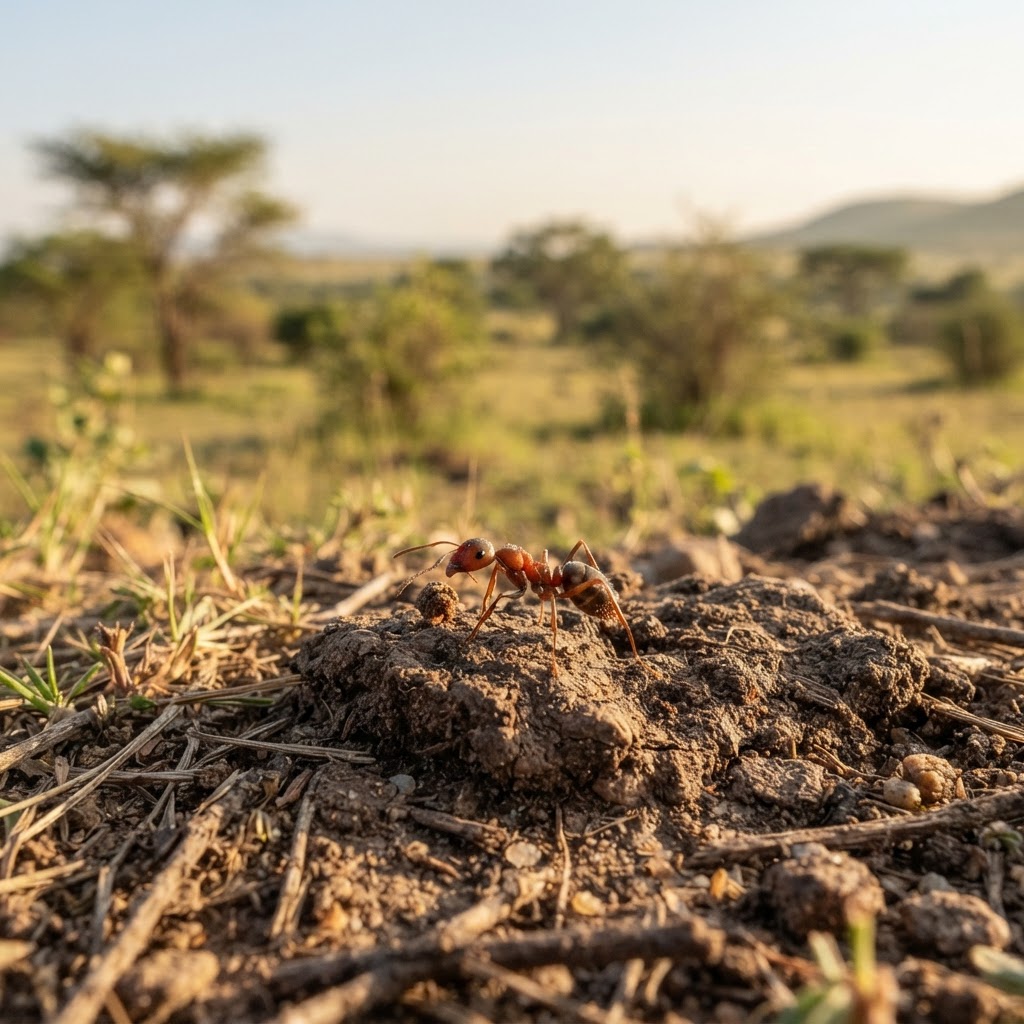
Ants are tiny, but they are quietly becoming big business for international smugglers. Across East Africa, a strange black market has emerged, one built not on ivory or rhino horn but on queen ants. This unusual shift explains Why Africa's Tiny Ants Are Becoming a Wildlife Trafficking Target for criminal networks stretching from Nairobi to European pet markets. Ants are no longer just a backyard curiosity; they are now a sought-after commodity moving through the same shadowy channels once reserved for elephant tusks and rhino horn.
Why Are Tiny Ants Being Trafficked?
Wildlife trafficking once focused almost entirely on elephants, rhinos, and pangolins. Today, smugglers are targeting something far smaller: the Giant African Harvester Ant, scientifically known as Messor cephalotes. These insects are prized for their size, intricate colony behavior, and striking appearance. Ants are increasingly viewed by collectors not as pests but as living curiosities worth significant sums of money.
The exotic pet trade in Europe and Asia has fueled this demand. Collectors there pay premium prices for live queen ants capable of starting entire colonies. A single fertile queen can sell for upwards of €200, or roughly $220, according to recent reporting from DW Africa. For hobbyists who keep ant colonies as a form of exotic "ant-keeping," rare African queens are considered trophy specimens, and the ants are marketed with the same enthusiasm once reserved for tropical fish or reptiles.
Smuggling ants carries far less risk than smuggling large mammals. Ants are small, easy to conceal, and often invisible to standard airport X-ray scanners. This makes them what law enforcement officials describe as a "low-risk, high-reward" commodity. Because ants are so easily hidden, traffickers can move large quantities without arousing suspicion from customs officers trained primarily to spot ivory, horn, or bushmeat.
Traffickers exploit this gap in detection technology. Unlike ivory tusks or animal skins, ants require no bulky packaging. They can be hidden in test tubes, cotton-lined containers, or even clothing linings, slipping past checkpoints undetected. In many cases, the ants are kept dormant through temperature control, slowing their metabolism so they survive long international flights without needing food or obvious ventilation that might draw attention.
This growing trade reflects a worrying evolution in wildlife crime. Criminal networks are shifting toward smaller, less-regulated species because enforcement systems have not caught up. The result is a quiet but expanding threat to Africa's biodiversity, one where ants are becoming the unlikely face of a modern smuggling economy that officials are only beginning to understand.
How Does The Illegal Trade Work?
The ant trafficking supply chain often begins in rural Kenyan towns like Gilgil, where seasonal mating swarms create a harvesting opportunity. During these swarms, thousands of winged queen ants emerge briefly from their nests to mate before establishing new colonies. It is during this narrow window that the ants are most vulnerable to mass collection.
Local collectors, sometimes unaware of the ants' export value, gather these queens in bulk. Some are paid small sums per container, unaware that buyers abroad will resell their catch for significantly more once they reach international pet markets. In many documented cases, the people harvesting the ants are not criminal masterminds but ordinary residents offered modest cash for what seems like harmless insect collecting.
Once collected, the ants enter a sophisticated black-market logistics chain. Traffickers reportedly use syringes, perforated capsules, or padded tubes to keep insects alive during transit. These methods allow smugglers to move thousands of ants across borders in carry-on luggage. Investigators note that the ants are often packed in climate-controlled containers designed specifically to mimic the humidity and temperature of their natural underground nests, improving survival rates during long flights.
Kenyan courts have seen a sharp rise in such cases. In a widely reported 2026 case, a Chinese national was arrested at Jomo Kenyatta International Airport carrying 2,200 live ants hidden in test tubes. In 2025, Belgian teenagers were caught attempting to smuggle 5,000 ants out of the country using similar concealment methods. In both incidents, the ants are believed to have been destined for private collectors and online exotic pet marketplaces in Europe.
These cases highlight a troubling pattern. Smugglers increasingly view East Africa as a sourcing hub, exploiting weak detection systems and limited public awareness. The scale of these busts suggests the true volume of trafficking may be far higher than official records show, with experts warning that for every shipment of ants intercepted, several more likely pass through undetected.
What Is The Ecological Impact?
Dr. Dino Martins, a leading entomologist based in Nairobi and a prominent voice in East African conservation circles, has warned that these ants play a far greater ecological role than most people realize. Speaking to DW, Dr. Martins emphasized that Messor cephalotes are "ecosystem engineers" essential to savannah health. According to him, the ants are not simply insects to be collected and traded but active participants in maintaining the health of entire grassland ecosystems.
These ants aerate soil through extensive tunneling, improving water absorption and root growth for grasses and trees. They also disperse seeds across vast distances, supporting plant diversity throughout grassland ecosystems. Removing large numbers of queens disrupts this delicate balance, and because the ants are so central to these processes, their decline can trigger a cascade of ecological consequences that extend well beyond a single species.
When thousands of queens are harvested in a single swarm season, colony formation drops sharply. Fewer colonies mean reduced soil aeration, weaker seed dispersal, and diminished food sources for birds, reptiles, and small mammals that rely on ants as prey. In regions where the ants are harvested most intensively, researchers have already begun noting subtle shifts in local soil quality and vegetation density.
Featured Products
Chukwu Abiama Tee
Bold black-and-gold Igbo-pride T-shirt featuring 'Chukwu Abiama' in premium streetwear typography.
₦15,000
Buy NowReverse Type 2 Diabetes & other associated Metabolic Issues using Dr. Jason Fung's Evidence-Based Approach— FMD program for Type 2 Diabetes
A practical fasting and fasting-mimicking programme built on Dr Jason Fung's insulin-resistance principles and ow-glycemic recipes.
₦19,950
Join NowỤmụ Igbo Tee
Classic black T-shirt with bold white 'Ụmụ Igbo' typography — a proud statement of Igbo heritage.
₦15,000
Buy NowNwanne Tee
Washed khaki vintage tee with a faded rust-orange 'Nwanne' stamp badge and palm leaf motif — a nod to kinship and heritage.
₦18,000
Buy NowObodo Tee
Faded denim-blue washed tee with a cream 'Obodo' stamp badge and sun motif, celebrating community roots.
₦18,000
Buy NowEkwe Heritage Tee
Deep indigo tee featuring a fine line-art illustration of a traditional Igbo ekwe drum, inspired by Igbo-Ukwu bronze artistry.
₦18,000
Buy NowIkenga Figure Tee
Forest green tee with a fine line-art illustration of a stylized Ikenga figure.
₦18,000
Buy NowThere is also a less obvious danger: biological invasion. Ants exported to foreign climates can escape captivity or be deliberately released. Some species adapt aggressively to new environments, outcompeting native insects and even damaging electrical infrastructure, as seen with other invasive ant species documented by the IUCN. When the ants are introduced into unfamiliar ecosystems without natural predators, they can multiply unchecked, placing additional pressure on local biodiversity far from their African origin.
This "hidden invasion" risk extends conservation concerns beyond Kenya's borders. A species removed from its natural ecological role in Africa could become destructive in Asia or Europe, creating problems far from its origin. Protecting these ants, therefore, is not just a local issue but a global ecological responsibility, since the ants are capable of causing harm in both the places they are taken from and the places they end up.
Are Current Laws Stopping Traffickers?
Kenyan law explicitly prohibits the export of wild-caught insects without proper permits. Yet enforcement remains inconsistent once shipments cross international borders. This creates what conservationists call a "grey area," where legal accountability becomes murky, particularly when the ants are transported through multiple transit countries before reaching their final destination.
The core problem lies in global regulation gaps. The Convention on International Trade in Endangered Species, which protects more than 40,000 species worldwide, does not currently cover most ant species. This means that even when trafficking is proven, prosecution options remain limited. More details on the convention's scope are available through CITES. Because the ants are not formally classified as protected wildlife under most international treaties, prosecutors are often forced to rely on general customs or biosecurity violations rather than wildlife trafficking statutes.
Kenyan courts have attempted to fill this gap with strict sentencing. In recent rulings, defendants have faced fines reaching $7,700, alongside jail terms meant to discourage future smuggling attempts. These penalties signal growing judicial seriousness around invertebrate trafficking, even in the absence of clear international legal recognition that the ants are a protected or regulated species.
However, legal experts argue that fines alone may not deter well-funded international networks. Smugglers often view such penalties as a manageable business cost rather than a genuine threat. Strengthening cross-border cooperation, similar to frameworks explored in discussions around State Police Bill Stalls After Limited Assembly Support and further examined in State Police Bill Stalls After Limited Assembly Approval, could offer useful lessons for building more coordinated enforcement structures capable of tracking trafficking networks across national boundaries.
Until international frameworks formally recognize insects like harvester ants as protected species, enforcement will likely remain reactive rather than preventive. Kenya's judiciary is setting an important precedent, but global policy must catch up to match the scale of this emerging trade, particularly as more collectors learn that ants are easier to smuggle than almost any other wildlife product on the market.
How Can We Protect Wildlife?
Communities sit at the frontline of wildlife protection, often long before government agencies become involved. In agricultural towns like Gilgil, residents are uniquely positioned to notice unusual harvesting activity, unfamiliar buyers, or large-scale insect collection efforts. Because the ants are typically gathered in open fields during predictable swarm seasons, local vigilance can be one of the most effective tools against trafficking.
Encouraging vigilance does not require specialized training. Simple awareness can make a significant difference, including:
- Reporting unfamiliar collectors operating during mating swarm seasons.
- Educating local youth about the ecological value of native species.
- Supporting community-led monitoring groups in biodiversity hotspots.
- Partnering with local authorities, similar to initiatives highlighted in FUTO Partners With Police to Boost Campus Security.
Youth engagement is particularly important. Many young people view wildlife harvesting as "quick money" without understanding the long-term environmental cost. Programs that connect ecological education with real economic alternatives can help shift this mindset toward sustainable livelihoods, reinforcing the idea that the ants are worth more left in the ground than sold abroad. Scholarship and education initiatives, such as those described in 2026 NNPC/Seplat Scholarship: Apply Now, demonstrate how investing in young people's futures can redirect energy away from exploitative shortcuts and toward sustainable, long-term opportunities.
This issue also connects strongly to broader organized crime patterns affecting African communities, echoing concerns raised in reports like Kidnappers Demand 1 Billion Naira for 20 Corps Members. Criminal networks often exploit vulnerable local economies, whether through human exploitation or environmental crime, reinforcing the need for strong community vigilance across sectors. Just as corps members and vulnerable citizens can become targets for exploitation, the ants are being targeted precisely because they are perceived as an easy, low-cost resource with few people watching closely.
At Eziokwubundu, we view ecological preservation as a form of collective wealth. Healthy ecosystems support agriculture, tourism, and long-term economic stability for communities across Nigeria and the wider African continent. Just as our coverage of cultural preservation in Umuahii Day: Preserving Our Heritage, Rekindling Otu Obi emphasizes safeguarding tradition, protecting biodiversity safeguards our shared environmental inheritance. The same spirit of accountability that drives public health conversations, such as those raised in Okonkwo Questions Tinubu’s Health, Urges Him to Resign and Nigeria’s Maternal Death Crisis: Why Are Mothers Dying?, should also apply to how seriously we treat environmental crimes that may seem small on the surface but carry enormous long-term consequences.
Ultimately, the fight against ant trafficking reflects a larger truth. Small actions, whether reporting suspicious activity or educating a neighbor, contribute to collective ecological resilience. Understanding Why Africa's Tiny Ants Are Becoming a Wildlife Trafficking Target empowers communities to act early, protect local biodiversity, and preserve natural resources for future generations. Ants are, in many ways, a test case for how seriously the world is willing to take the protection of small, overlooked species before it is too late.
By combining community awareness, stronger legal frameworks, and sustained public education, Africa can better protect species that may seem insignificant but play an outsized role in ecological stability. Just as evidence-based health guidance, like insights shared in Why Antibiotics Fail: Understanding Antimicrobial Resistance and lifestyle research discussed in Can Fasting Help Lower High Blood Pressure? What Experts Say, empowers better personal decisions, informed environmental awareness empowers better community decisions. Protecting Africa's smallest creatures may ultimately help preserve its largest ecological systems, and the longer policymakers wait to act, the more likely it is that these ants are permanently altered, both in their native habitats and in the foreign ecosystems where they are illegally introduced.
Stay Informed
Get New Articles in Your Inbox
Subscribe to receive the latest community development, health, and wealth insights from Eziokwubundu.
Newsletter
Practical insights on health, wealth, and community — delivered weekly.
Community Discussion(0)
Leave a Comment
More to Read
You May Also Like

State Police Bill Stalls After Limited Assembly Support
Nigeria's long debate over decentralized policing has hit a critical wall. The State Police Bill Stalls After Limited Assembly Support, leaving reform advocates uneasy about the road ahead. As detailed in earlier coverage of the State Police Bill Stalls After Limited Assembly Approval(/article/6ad1d...

FUTO Partners With Police to Boost Campus Security
Nigerian universities are grappling with growing security concerns, and the Federal University of Technology, Owerri (FUTO) is responding with urgency to protect its community. Campus security has become the defining priority for university leadership as recent incidents involving student safety pus...

Umuahii Day: Preserving Our Heritage, Rekindling Otu Obi
Every December, families across Imo State pause to celebrate something larger than a party. They celebrate belonging. This year, that celebration carries a clear purpose: Umuahii Day: Preserving Our Heritage, Rekindling Otu Obi invites every son and daughter of Umuahii to come home, in body or in sp...

2026 NNPC/Seplat Scholarship: Apply Now
The race for Nigeria's future workforce starts in the lecture hall, not the boardroom. If you are a Nigerian undergraduate looking for financial relief this academic year, the 2026 NNPC/Seplat Scholarship: Apply Now initiative offers a credible, well-funded pathway to ease tuition pressure and keep ...

NNPC Seeks Partnerships to Restart PH and Warri Refineries
Nigeria's refining sector is entering a decisive new chapter. As the nation searches for lasting solutions to decades-old fuel supply challenges, the news that NNPC Evaluates New Partnerships to Restart Warri and Port Harcourt Refineries signals a shift from patchwork repairs toward structured, long...

Monetizing Digital Skills for Nigerian Youth Prosperity
The economic landscape for young Nigerians(/article/home-morning-fitness-guide-for-nigerians) is undergoing a profound transformation. No longer is a single monthly salary sufficient to navigate the complexities of modern inflation and rising living costs. For the ambitious youth professional, the d...

NYSC Abduction: Serving Nigeria at What Cost? Fresh Safety Questions
The Umunoha abduction of prospective NYSC members has renewed concerns over the safety of graduates travelling across Nigeria for national service.

Military Aircraft With 32 Aboard Crashes in Ondo, Rescue Underway
Igbokoda crash: Nigerian Air Force ATR-42 was travelling from Benin to Lagos when contact was lost
Nwanegwo Hands Over Mbaitoli LGA Affairs, Ends Tenure
Hon. Ifunanya Nwanegwo JP has formally handed over the affairs of Mbaitoli Local Government Area to the Director of Administration and General Services (DAGS), marking the conclusion of his tenure as Executive Chairman.
Umunoha NYSC Kidnap: Hideout Located as IED Threat Delays Rescue
Imo security agencies have located the suspected hideout of prospective NYSC members abducted along the Owerri–Onitsha Road, but an alleged improvised explosive device (IED) threat has delayed the planned rescue operation.