Powered by Obi Mbieri Independent Media Ltd · eziokwubundu.com
$1 = ₦1,328€1 = ₦1,521£1 = ₦1,773IMSU 2026/2027 Direct Entry Screening: Registration Guide, Dates & What to Bring
Gaining admission into Imo State University (IMSU), Owerri, through the Direct Entry pathway is one of the most strategic academic decisions a Nigerian student can make. For the 2026/2027 academic session, the university has reopened its screening portal, and the window for eligible candidates is na...

Gaining admission into Imo State University (IMSU), Owerri, through the Direct Entry pathway is one of the most strategic academic decisions a Nigerian student can make. For the 2026/2027 academic session, the university has reopened its screening portal, and the window for eligible candidates is narrow. Whether you are a National Diploma holder from a federal polytechnic, an HND graduate seeking a degree upgrade, or an A'Level certificate holder, understanding the exact requirements, deadlines, and procedural steps is not optional — it is the difference between securing your 200-level placement and missing the admission cycle entirely.
This guide, compiled with precision for Nigerian students, families, and community stakeholders, walks you through every stage of the IMSU Direct Entry screening process. From eligibility verification on the JAMB CAPS portal to what to physically carry on your screening day, this is your authoritative resource. At eziokwubundu.com, we believe that access to accurate, actionable educational information is itself a form of community wealth — and this article is written in that spirit.
Who Is Eligible for IMSU Direct Entry Screening?
Understanding the eligibility framework for the IMSU 2026/2027 Direct Entry screening exercise begins with a foundational requirement: you must have selected Imo State University, Owerri, as your first-choice institution during the JAMB Direct Entry registration process. Without this, your name will not appear on the IMSU screening list, regardless of your qualifications.
On the academic side, all candidates must possess a minimum of five O'Level credit passes in relevant subjects, which must include both English Language and Mathematics. These credits must have been obtained in not more than two sittings, from any of the nationally recognized examination bodies — WAEC, NECO, or NABTEB. Results obtained from GCE or similar foreign bodies may be accepted on a case-by-case basis, but candidates are advised to confirm their result type with the IMSU admissions office directly.
For the advanced qualification requirement, candidates must hold a recognized National Diploma (ND) with at least a Lower Credit classification, a Higher National Diploma (HND), an A'Level certificate with minimum merit grades in relevant subjects, or a first degree from a recognized tertiary institution. Merit and Lower Credit grades are the baseline — Pass grades from polytechnics will generally not suffice for 200-level placement into competitive departments.
Additionally, while Direct Entry applicants primarily qualify on the strength of their diploma and O'Level results, candidates who may have migrated from the UTME pathway should note that a minimum UTME score of 160 is the institutional benchmark. All academic documents must be accurately uploaded to the JAMB CAPS portal before the physical screening date to prevent automatic disqualification. According to the Joint Admissions and Matriculation Board, failure to upload O'Level results to CAPS remains the single most common reason for otherwise qualified candidates to be denied admission.
When Is the IMSU Direct Entry Registration Deadline?
The 2026/2027 IMSU Direct Entry registration window opens officially on Friday, 14th August 2026, and closes on Tuesday, 25th August 2026. This eleven-day window is not generous, and prospective students must treat it with urgency from day one. Unlike the Post-UTME window — which sometimes sees informal extensions due to high application volumes — the Direct Entry registration period at IMSU has historically been held to its published deadline with minimal exceptions.
Candidates who did not originally choose IMSU as their first-choice institution must act immediately. The JAMB Change of Institution process must be completed before the August deadline, as the IMSU portal cross-checks applicant data directly against the JAMB Central Admissions Processing System (CAPS). If your institution preference is not updated before the portal closes, your application data simply will not synchronize.
Once your online registration is complete, the system generates a printed Acknowledgement Slip. This slip contains your unique examination number, your scheduled physical screening date, and your designated venue on the IMSU main campus in Owerri. Aptitude test dates are typically communicated through this slip and fall shortly after the portal closes on August 25th. Candidates who delay registration risk receiving late screening dates that conflict with prior commitments, so early registration is strongly advisable.
How Do I Register for the IMSU Direct Entry Screening Online?
The online registration process for the IMSU 2026/2027 Direct Entry screening is structured in clearly defined stages, and precision at each step is non-negotiable. Begin by navigating to the official IMSU admissions portal at imsuonline.edu.ng and locating the '2026/2027 Post-UTME/Direct Entry Application' link on the homepage. Enter your JAMB Registration Number to verify your eligibility status. If your data does not appear, it likely means your Change of Institution has not been processed or your results are not yet uploaded to CAPS.
Once your data is confirmed, generate a payment invoice of ₦2,000 using your JAMB Registration Number as the reference identifier. This invoice can be paid at any commercial bank branch across Nigeria, though IMSU Microfinance Bank is the recommended payment channel for candidates in Owerri and its environs due to faster transaction confirmation. Online bank transfers via Remita or Interswitch are also accepted but require additional processing time.
After payment, you must observe the 24-Hour Rule strictly — a full 24 hours must elapse before you return to the portal to complete the bio-data and academic result entry sections. This is not a suggestion; it is a technical requirement tied to the university's payment reconciliation system. During the bio-data entry phase, input all O'Level results with extreme care, ensuring that every subject grade matches exactly what is recorded on your WAEC or NECO certificate and what was uploaded to JAMB CAPS. Any mismatch between portal entries and official documents is grounds for disqualification during the physical screening phase.
Before logging out of the completed application, download and print your Acknowledgement Slip immediately. Store both a digital and physical copy in a safe, easily retrievable location.
What Documents Must I Bring to the Screening Venue?
The physical screening exercise at IMSU is a document-intensive process, and arriving without the correct paperwork will result in denial of entry — no exceptions. The single most important item is your printed IMSU Screening Acknowledgement Slip, which contains your examination number, scheduled date, and the specific hall or venue on the IMSU Owerri campus where you are required to report.
Alongside the Acknowledgement Slip, candidates must present the original JAMB Direct Entry Registration Slip and a printed copy of their O'Level results — whether from WAEC or NECO — to allow officials to verify the grades entered during the online application. Do not rely on digital copies displayed on a mobile screen; printed originals are the standard at Nigerian university screening exercises.
Your evidence of payment — either the stamped bank teller from your commercial bank or the e-receipt generated through the IMSU portal — is equally important. Administrative discrepancies at screening venues are common, and your payment receipt is the fastest instrument for resolving any flagged transaction issues on the spot.
Finally, Direct Entry candidates must bring certified copies of their ND, HND, or First Degree transcripts and certificates. These documents form the primary basis for your 200-level departmental placement, and their absence will render your application incomplete regardless of your online registration status. The Federal Ministry of Education's guidelines on tertiary admissions consistently emphasize the importance of certified — not merely photocopied — academic credentials during physical verifications.
Featured Products
Chukwu Abiama Tee
Bold black-and-gold Igbo-pride T-shirt featuring 'Chukwu Abiama' in premium streetwear typography.
₦15,000
Buy NowReverse Type 2 Diabetes & other associated Metabolic Issues using Dr. Jason Fung's Evidence-Based Approach— FMD program for Type 2 Diabetes
A practical fasting and fasting-mimicking programme built on Dr Jason Fung's insulin-resistance principles and ow-glycemic recipes.
₦19,950
Join NowỤmụ Igbo Tee
Classic black T-shirt with bold white 'Ụmụ Igbo' typography — a proud statement of Igbo heritage.
₦15,000
Buy NowNwanne Tee
Washed khaki vintage tee with a faded rust-orange 'Nwanne' stamp badge and palm leaf motif — a nod to kinship and heritage.
₦18,000
Buy NowObodo Tee
Faded denim-blue washed tee with a cream 'Obodo' stamp badge and sun motif, celebrating community roots.
₦18,000
Buy NowEkwe Heritage Tee
Deep indigo tee featuring a fine line-art illustration of a traditional Igbo ekwe drum, inspired by Igbo-Ukwu bronze artistry.
₦18,000
Buy NowIkenga Figure Tee
Forest green tee with a fine line-art illustration of a stylized Ikenga figure.
₦18,000
Buy NowWhy Is the 24-Hour Payment Rule Critical?
The 24-hour waiting period embedded in the IMSU registration process is a mandatory technical buffer, not an administrative inconvenience. When a candidate makes payment — whether via Interswitch, Remita, or direct bank deposit — the transaction data must travel through the payment gateway, pass through the bank's clearing house, and finally synchronize with the IMSU Student Information System (SIS) database before the portal recognizes the candidate as a paid applicant.
Candidates who attempt to log back into the portal immediately after payment routinely encounter 'Invalid Transaction' or 'Payment Not Found' error messages. A common and costly mistake is to interpret this error as a payment failure and proceed to generate a second invoice and make a second payment. This results in a double payment, and refunds from Nigerian university portals are notoriously slow and procedurally complicated.
The 24-hour delay also functions as a security and data integrity measure, ensuring that your JAMB profile data is correctly mapped to your payment record before you are permitted to enter sensitive academic information. This mapping process is what prevents fraudulent applications and erroneous placements.
Strategically, candidates must plan their payment dates carefully. Anyone paying on the final day of registration, August 25th, faces a real risk. If your payment does not clear within the 24-hour window due to bank processing delays over a weekend or public holiday, your bio-data entry window may close before you can complete the application. Pay no later than August 23rd to build in a safe buffer.
How Does Direct Entry Admission Impact Career and Wealth?
At eziokwubundu.com, we do not treat education as an isolated academic event. We view it through the lens of practical prosperity — a philosophy that connects personal achievement to community wealth and family advancement. The Direct Entry pathway into IMSU is, from this perspective, a powerful financial and community development decision.
By bypassing the 100-level year, a Direct Entry student effectively eliminates one full academic year's worth of tuition fees, accommodation costs, feeding expenses, and transportation. For a middle-class Nigerian family in the South-East, this can translate to savings of between ₦250,000 and ₦600,000 depending on the student's course of study and living arrangements — a meaningful contribution to long-term family wealth preservation.
Direct Entry students also arrive at university with tangible technical skills from their polytechnic or college training. This blend of practical and theoretical knowledge is increasingly what the modern Nigerian economy demands. South-East employers, particularly in engineering, health sciences, and business management, have consistently shown preference for graduates who understand both the theoretical framework and the applied mechanics of their disciplines.
Earlier graduation means earlier entry into the professional workforce. For the South-East community, this means more skilled professionals entering sectors like healthcare, education, and entrepreneurship sooner — reinforcing the Igbo community-first ethos that individual advancement strengthens the collective. As we have explored in our coverage of Imo State's support initiatives for returning Nigerians, the state has demonstrated a growing commitment to investing in its human capital, and Direct Entry graduates are a key part of that vision.
What Are the Common Mistakes to Avoid During Registration?
The IMSU Direct Entry registration process has several technical and administrative tripwires that claim a significant number of otherwise qualified applicants each year. Awareness of these common errors is your first line of defence.
Avoid cyber cafes with unstable internet connections. The invoice generation step requires that your JAMB Registration Number be entered with complete accuracy. A single digit error in the registration number will generate an invoice tied to the wrong profile, and correcting this error requires visiting the IMSU ICT unit in person — a process that can take days and may not be resolved before the portal closes.
Failure to upload O'Level results to JAMB CAPS remains the leading cause of admission denial at the physical screening stage, according to data from multiple academic sessions. Even candidates who perform excellently in the aptitude test can be turned away if their CAPS profile shows incomplete or unverified results. Visit the JAMB eCBT portal to confirm your results upload status before commencing the IMSU registration.
Inactive contact details are another silent disqualifier. IMSU uses the email address and phone number provided during registration to communicate revised screening times, venue changes, and eventually, admission status updates. An unreachable candidate is treated as a non-participant.
Finally, name inconsistencies across documents are a persistent red flag at physical verification. Your name as it appears on your O'Level certificate, your JAMB slip, and your ND or HND transcript must be identical. A surname placed where a first name should appear, or a missing middle name, can trigger a hold on your application that requires an affidavit and legal intervention to resolve. This principle of consistency in documentation connects to a broader value we champion at eziokwubundu.com — the idea, rooted in Igbo philosophy, that truth and accuracy in all dealings is foundational to genuine progress, as explored in our reflection on what Eziokwu Bu Ndu really means as an Igbo philosophy.
Conclusion
The IMSU 2026/2027 Direct Entry Screening is a time-sensitive, document-critical process that rewards only the prepared. From confirming your eligibility on the JAMB CAPS portal to observing the 24-hour payment rule, navigating the IMSU online admissions portal at imsuonline.edu.ng, and assembling the correct documents for the physical verification exercise — every step demands attention and urgency.
The registration window runs from August 14th to August 25th, 2026, and the consequences of missing it extend beyond a single academic session. Early preparation, accurate documentation, and strategic payment timing are the pillars of a successful application.
Beyond the procedural checklist, this opportunity carries real weight for Nigerian families and communities. A Direct Entry student who completes their degree faster, enters the workforce earlier, and carries both technical and academic credentials is not just an individual success story — they are a community asset. Whether your ambition is a career in healthcare, business, engineering, or public service, your education is the foundational investment from which all other wealth flows.
For more insights on education, community development, and practical prosperity strategies tailored to Nigerian realities, continue exploring eziokwubundu.com — where knowledge meets community, and progress is always practical.
Stay Informed
Get New Articles in Your Inbox
Subscribe to receive the latest community development, health, and wealth insights from Eziokwubundu.
Newsletter
Practical insights on health, wealth, and community — delivered weekly.
Community Discussion(0)
Leave a Comment
More to Read
You May Also Like

Imo Government to Support 100 More Communities
OKOBI is reshaping how everyday Imo residents build wealth from their own villages. The latest expansion, tagged OKOBI: 100 More Imo Communities Set to Receive Government Support, signals a new chapter in Governor Hope Uzodimma's push for grassroots prosperity. For Nigerian families and community le...

Osun Assembly Approves State Police Bill
The security conversation in Nigeria has taken a decisive turn. Lawmakers across the country are now voting on a reform that could reshape how communities are protected, starting from the grassroots. The Osun Assembly Approves State Police Bill, joining a growing list of states pushing for decentral...

Imo Approves Recruitment of 6,030 Teachers Across 27 LGAs
Imo State has taken a bold step toward transforming its public education system. Governor Hope Uzodimma has approved the recruitment of 6,030 teachers across the state's 27 Local Government Areas, a move many residents have awaited for years. This decision, widely reported by Vanguard(https://www.va...

CBN Cuts Interest Rate to 23%: Impact on Nigerians
Nigerians woke up to significant financial news this week. The Central Bank of Nigeria has made a bold move that could reshape household budgets and business plans alike. This shift, widely covered as CBN Cuts Interest Rate to 23% — What It Means for Nigerians and Businesses, deserves a closer look ...

65 Imo Businesses Await OKOBI Initiative Registration
Imagine 65 kindred-owned businesses across Imo State, each waiting for one final document to unlock full legal status. That single step—Corporate Affairs Commission registration—now defines the next chapter in Imo's OKOBI Initiative: 65 Community Businesses Await CAC Registration. For families, entr...
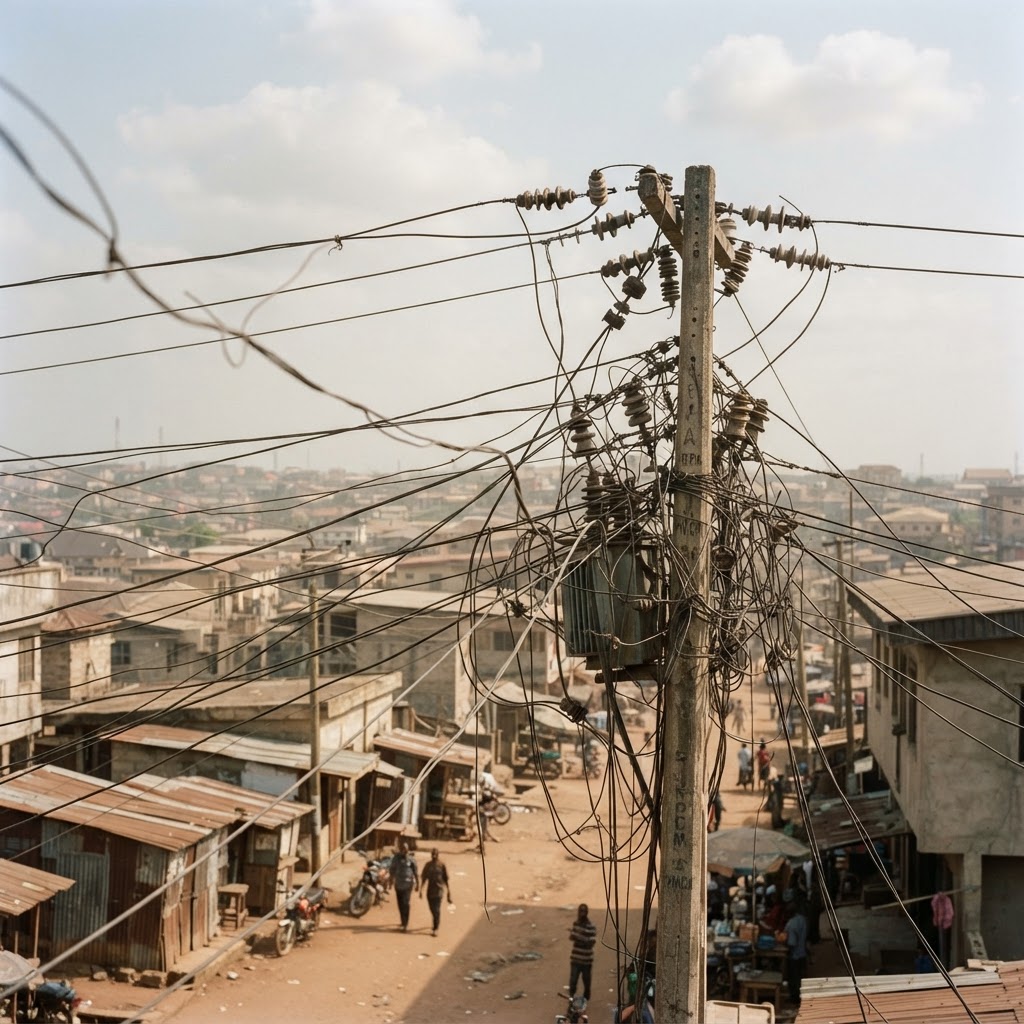
Why Nigeria Faces an Ongoing Power Supply Crisis
Nigerian households lose power multiple times a day, and the frustration never seems to fade. Behind every flickering bulb and silent refrigerator lies a deeper story about Nigeria's fragile power supply system — one that touches nearly every aspect of daily life across the country. Businesses stall...

61 Nigerian Officials Tied to $271M US Properties
Nigeria's corridors of power just faced a fresh spotlight. A newly released investigation, titled 61 Nigerian Officials Linked to $271m US Property Holdings — Report, has reignited public debate over wealth, accountability, and trust in leadership. For families budgeting daily expenses, the numbers ...

Imo Flood Crisis: Which Communities Are Most Vulnerable?
The rains have returned to Imo State, and so has fear. Families in low-lying communities are already counting losses, while roads turn into rivers overnight. The Imo Flood Crisis: Which Communities Are Most Vulnerable? question is no longer theoretical — it is a daily reality for thousands of Ndi Im...

Imo Insecurity: Seven Communities Face Renewed Kidnap Threat
Fear has returned to parts of Imo State as criminal gangs target unsuspecting residents. Imo Insecurity: Seven Communities Face Renewed Kidnap Threat is more than a headline—it reflects a lived reality for thousands of families who now measure daily life against the possibility of sudden violence. U...

How to Register a Business in Imo
Starting a business in Imo State is one of the most impactful decisions you can make — not just for your personal financial future, but for the broader prosperity of your community. From the bustling markets of Owerri to the agricultural enterprises of Orlu and Okigwe, Imo entrepreneurs are driving ...