Powered by Obi Mbieri Independent Media Ltd · eziokwubundu.com
$1 = ₦1,327€1 = ₦1,539£1 = ₦1,795German experts beginning technical support for Imo hospitals
Imo State's public healthcare system has taken a significant step forward with the commencement of a structured technical partnership between the Heartland Hospitals Management Corporation (HHMC) and Integromed Germany. This collaboration signals a deliberate move away from ad hoc healthcare managem...
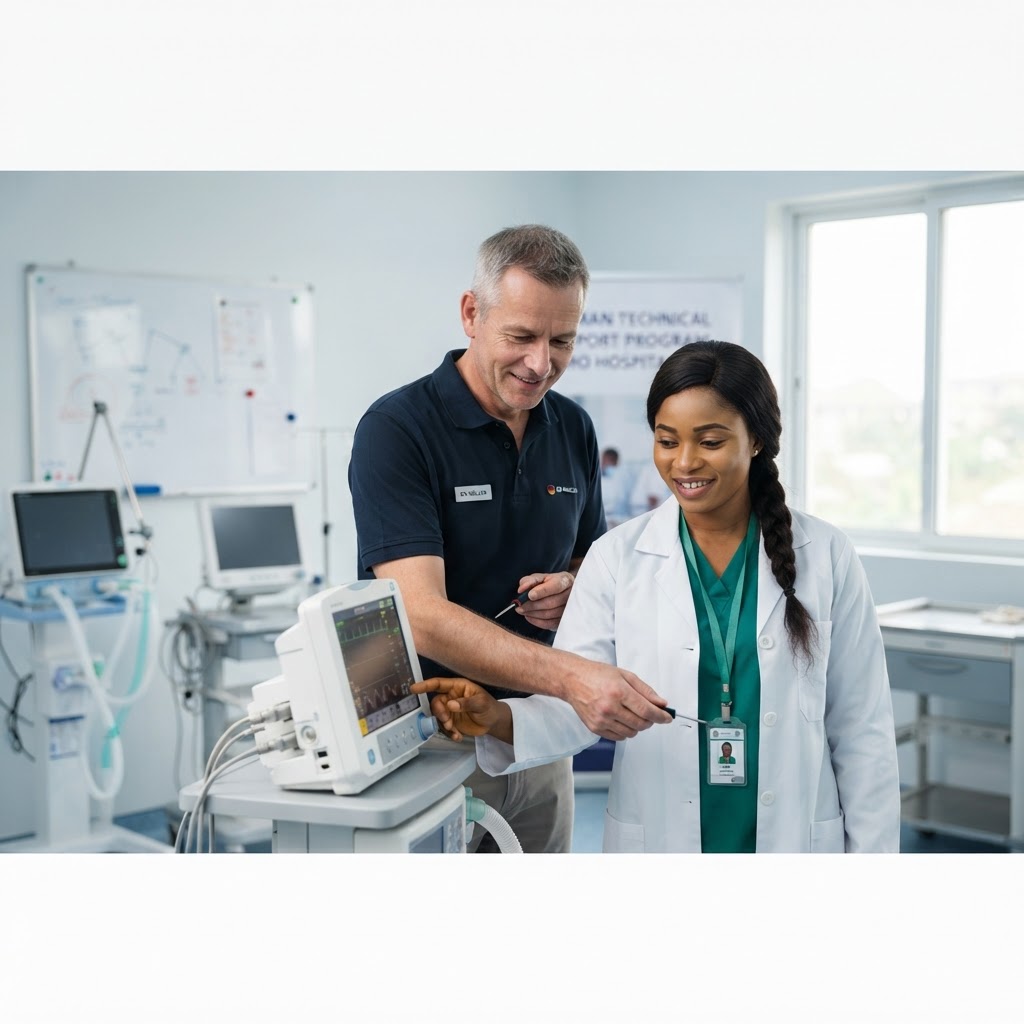
Imo State's public healthcare system has taken a significant step forward with the commencement of a structured technical partnership between the Heartland Hospitals Management Corporation (HHMC) and Integromed Germany. This collaboration signals a deliberate move away from ad hoc healthcare management toward internationally benchmarked clinical governance — and its implications stretch far beyond hospital walls into the economic and social fabric of Imo communities.
For Nigerian families who have watched public hospitals deteriorate over decades — equipment gathering dust, staff undertrained, and emergency care unreliable — this initiative represents a rare convergence of political will, institutional leadership, and international expertise. At eziokwubundu.com, we examine this development through our signature Health + Wealth + Community lens: because when hospitals function, families stay productive, businesses remain operational, and communities retain the human capital needed for collective growth.
What is the Imo–Germany healthcare partnership?
HHMC and Integromed launch clinical collaboration
The Heartland Hospitals Management Corporation (HHMC), led by its Managing Director and Chief Executive Officer Dr. Emmanuel Ogueri, has formally engaged Integromed Germany, represented by Dr. Soliman Ibrahim, to provide structured technical assistance to Imo State's public hospital network. The collaboration is backed by Governor Hope Uzodimma, whose administration has positioned healthcare infrastructure reform as a pillar of the Shared Prosperity agenda.
According to reporting by The Guardian Nigeria, the scope of engagement covers operational management reform, multi-disciplinary clinical capacity building, biomedical equipment maintenance, fire safety systems, and hospital infection prevention and control (IPC) protocols. These are not cosmetic upgrades — they address the systemic gaps that cause Nigerian public hospitals to underperform relative to their installed infrastructure and staffing levels.
The partnership is also strategically timed. With Nigeria's healthcare system under persistent pressure from population growth, disease burden, and chronic underfunding, Imo State is attempting to leapfrog incremental reforms by importing tested European clinical management frameworks and adapting them to local realities. Eziokwubundu's Health + Wealth + Community framework recognizes that this kind of institutional investment is not merely a health story — it is an economic story. When residents trust local hospitals, they stop routing household income overseas for medical care. When hospitals run efficiently, they become anchors of local employment and economic confidence.
How will the five-hospital pilot work?
Triage, trauma care, and clinical governance rollout
The German technical support will initially be deployed across a five-hospital pilot programme, designed to test, calibrate, and standardize hospital processes before scaling across the broader Imo State public health network. The pilot focuses on operationalizing evidence-based patient triage systems, emergency trauma workflows, and clinical governance frameworks that align with European hospital management standards.
The multidisciplinary German medical team brings expertise spanning pediatrics, anesthesiology, intensive care, internal medicine, and general practice. Critically, the model is not one of substitution — foreign experts are not replacing local staff — but of paired mentorship, where international clinical trainers work directly alongside Imo-based doctors, nurses, and hospital administrators to transfer skills in real clinical environments.
This approach contrasts sharply with the traditional model of Nigerian public hospital management, which has historically been fragmented: departments operating in silos, inconsistent triage standards, poorly defined referral pathways, and minimal clinical audit culture. The European integrated workflow benchmark introduces concepts such as standardized patient handover protocols, clinical outcome measurement, and structured emergency response drills — practices that reduce preventable deaths and adverse events in hospital settings.
For patients, the tangible benefits include shorter emergency response times, more consistent diagnostic accuracy, and improved post-operative monitoring. For the state, a functional five-hospital pilot creates a replicable template. As highlighted in our analysis of Imo Health Budget 2026, the challenge has never been funding alone — it has been converting budgetary allocations into reliable, measurable service delivery. Technical partnerships like this provide the implementation architecture that budget lines alone cannot supply.
The pilot also creates an opportunity to address staffing workflow challenges. Our investigation into healthcare staffing in Mbaitoli revealed how understaffing and poor task allocation undermine even adequately resourced facilities. Integrated clinical governance frameworks directly address these structural inefficiencies.
Why does equipment maintenance matter so much?
Breaking Nigeria's cycle of broken machines
One of the most persistent failures in Nigerian public healthcare infrastructure is what analysts have termed the "graveyard of medical equipment" — diagnostic and surgical machines procured at significant public expense, installed with ceremony, and then left to deteriorate within months due to the absence of maintenance contracts, spare parts supply chains, and localized technical expertise. Studies conducted across West African public hospitals suggest that between 40 and 70 percent of donated or procured medical equipment becomes non-functional within five years of acquisition, not from misuse, but from the complete absence of preventive servicing culture.
Integromed Germany's technical mandate specifically includes training local biomedical engineers and clinical staff in routine equipment handling, calibration procedures, and preventative servicing protocols. This is knowledge transfer at the technical layer — the unglamorous but essential work that determines whether an MRI machine, a ventilator, or a surgical diathermy unit remains operational a decade after installation.
Featured Products
Chukwu Abiama Tee
Bold black-and-gold Igbo-pride T-shirt featuring 'Chukwu Abiama' in premium streetwear typography.
₦15,000
Buy NowReverse Type 2 Diabetes & other associated Metabolic Issues using Dr. Jason Fung's Evidence-Based Approach— FMD program for Type 2 Diabetes
A practical fasting and fasting-mimicking programme built on Dr Jason Fung's insulin-resistance principles and ow-glycemic recipes.
₦19,950
Join NowỤmụ Igbo Tee
Classic black T-shirt with bold white 'Ụmụ Igbo' typography — a proud statement of Igbo heritage.
₦15,000
Buy NowNwanne Tee
Washed khaki vintage tee with a faded rust-orange 'Nwanne' stamp badge and palm leaf motif — a nod to kinship and heritage.
₦18,000
Buy NowObodo Tee
Faded denim-blue washed tee with a cream 'Obodo' stamp badge and sun motif, celebrating community roots.
₦18,000
Buy NowEkwe Heritage Tee
Deep indigo tee featuring a fine line-art illustration of a traditional Igbo ekwe drum, inspired by Igbo-Ukwu bronze artistry.
₦18,000
Buy NowIkenga Figure Tee
Forest green tee with a fine line-art illustration of a stylized Ikenga figure.
₦18,000
Buy NowThe commitment to building internal biomedical engineering capacity is particularly significant. Rather than creating perpetual dependency on German technicians for servicing, the model aims to develop a resident technical workforce within HHMC-managed hospitals who can independently manage equipment uptime. This sustains the investment beyond the initial partnership window.
For the wider primary and secondary healthcare network in Imo's 27 Local Government Areas, functional equipment at referral hospitals reduces the cascading failure that occurs when community health centres cannot escalate patients to functional facilities. As documented in our reporting on primary healthcare clinics in Mbaitoli, the breakdown begins at the grassroots. Ensuring that district and general hospitals have functioning diagnostic equipment restores the referral pathway that makes community-level care viable, reinforcing eziokwubundu.com's community-first principle that every layer of healthcare must function for any layer to succeed.
Can Imo become a medical tourism hub?
Robotics, oncology, and domestic manufacturing goals
The German technical partnership does not exist in isolation. It sits within a broader and more ambitious healthcare vision that Governor Uzodimma's administration has been assembling over recent years. Most significantly, Imo State has invested in the establishment of the Imo Robotics and Oncology Centre — a facility that has performed pioneer robotic-assisted surgeries east of the Niger River. This positions Imo as a regional leader in advanced clinical technology, a distinction that carries both medical and economic weight.
Governor Uzodimma has articulated a goal that goes beyond improving existing hospitals: he wants Imo State to progress from being a passive importer of medical equipment to becoming an active participant in domestic biomedical manufacturing. This is an ambitious industrial policy objective, but one grounded in economic logic. Nigeria currently spends an estimated $1 billion annually on medical tourism, with patients and their families routing healthcare expenditure to India, the United Kingdom, and Germany for procedures that could, with adequate investment, be performed domestically.
Reversing this outbound capital flight has direct macroeconomic consequences. Every procedure retained within Imo State preserves household wealth that would otherwise leave the Nigerian economy entirely. Furthermore, domestic biomedical manufacturing — even at the level of consumables, diagnostic reagents, and basic surgical instruments — creates high-skilled employment and builds industrial complexity that diversifies state revenue beyond civil service and agriculture.
For middle-class Nigerian families and entrepreneurs, this trajectory matters. The Nigerian Stock Market's recent volatility is a reminder that household wealth is exposed to multiple risks — and catastrophic health expenditure remains one of the most financially devastating. A state that can deliver advanced clinical services locally removes one of the most unpredictable variables in family financial planning.
How does this fit Imo's broader health reform agenda?
PHCs, drug security, and social health insurance
The Integromed Germany partnership gains its full strategic significance when mapped against the wider Imo State healthcare reform architecture. The state has been expanding general hospital capacity, rehabilitating primary healthcare clinics across all 27 LGAs, and centralizing pharmaceutical supply through the Heartland Central Drug Store — a supply chain mechanism designed to eliminate drug stockouts and counterfeit medicine entry points into public facilities.
This matters because technical excellence at the hospital level is undermined if primary healthcare centres feeding into that system remain dysfunctional. Our analysis of PHC staffing standards nationally found that only 3 percent of primary health centres meet minimum staffing benchmarks — a systemic gap that Imo's LGA-level expansion is attempting to address. Similarly, past outbreaks such as those covered in our reporting on diphtheria preparedness in Imo demonstrate how weak primary infrastructure enables preventable disease to escalate.
When consistent clinical standards, enabled by this technical partnership, are paired with functioning social health insurance schemes, the financial burden on households falls measurably. Out-of-pocket health expenditure — currently one of the highest in Africa as a proportion of total health spending — is the single greatest threat to middle-class financial stability in Nigeria. Eziokwubundu's Practical Prosperity ethos is grounded in this reality: health security is not separate from wealth creation; it is its baseline foundation. Entrepreneurs cannot build businesses from hospital beds, and families cannot accumulate wealth when medical emergencies consume savings.
What can communities do with this momentum?
From institutional reform to community health resilience
Institutional progress only translates into community benefit when residents and local stakeholders actively engage with it. Community leaders, autonomous town unions, and diaspora associations have a direct role to play in monitoring the quality standards being introduced through this partnership — visiting hospitals, asking questions about IPC compliance, and advocating for accountability when service delivery falls short of the standards being established.
For everyday Nigerian families, this moment presents a practical opportunity: use the improved facilities. Demand early diagnostic screenings. Ask health workers about infection control compliance. Utilize emergency services rather than defaulting to self-medication or informal care, which carry significantly higher risks of adverse outcomes.
The German technical support for Imo hospitals is, at its core, a community asset being built in real time. Eziokwubundu's vision is that evidence-based health infrastructure, supported by modern institutional partnerships and grounded in African community values, becomes the foundation from which healthier, economically resilient families and communities are built — one functioning hospital, one trained biomedical engineer, and one empowered patient at a time.
Sources: The Guardian Nigeria — German experts, technical support, Imo hospitals | World Health Organization — Medical Equipment Maintenance Programme | Nigeria Health Watch — Healthcare Financing in Nigeria
Stay Informed
Get New Articles in Your Inbox
Subscribe to receive the latest community development, health, and wealth insights from Eziokwubundu.
Newsletter
Practical insights on health, wealth, and community — delivered weekly.
Community Discussion(0)
Leave a Comment
More to Read
You May Also Like

Mbaitoli’s Primary Healthcare Centres: Are They Properly Staffed?
Why Does Staffing in Mbaitoli's PHCs Matter? At eziokwubundu.com, we believe that health, wealth, and community are inseparable pillars of lasting prosperity. Nowhere is this triangle more visibly tested than in Mbaitoli Local Government Area, one of Imo State's most densely populated LGAs, where th...
112 Federal Unity Colleges Face Possible Shutdown
Nigeria's federal secondary school system stands at a critical crossroads. As the first term of the 2024/2025 academic year was set to commence, a dramatic standoff between the Federal Government and education workers erupted into a crisis threatening the academic futures of hundreds of thousands of...
Diphtheria in Nigeria: How Prepared Are Imo’s Health Centres?
Nigeria is facing its worst diphtheria resurgence in decades. What began as a concentrated outbreak in the northern states has evolved into a national public health emergency, with confirmed cases now appearing across regions once considered low-risk. For families in Imo State and across the Southea...

Nigerian Stock Market Loses ₦1.9 Trillion to Profit-Taking
The Nigerian Exchange Limited (NGX) recorded one of its sharpest short-term contractions of the year as coordinated profit-taking wiped approximately ₦1.9 trillion from total equities market capitalisation across multiple trading sessions. For millions of Nigerian families, pension holders, and reta...

Dangote Refinery Share Offer: What Does It Mean for Ordinary Nigerian Investors?
For the first time in a generation, ordinary Nigerians have a genuine opportunity to own a direct stake in the country's most significant industrial asset. The Dangote Petroleum Refinery's N2.15 trillion public share offer is not merely a capital markets event — it is a defining moment for Nigerian ...

10 Simple Healthy Habits for Busy Professionals
Between back-to-back meetings, deadlines, and the constant buzz of notifications, your health can quietly slip to the bottom of your priority list. But here's the truth: you don't need a complete lifestyle overhaul to feel better. Small, intentional habits — practiced consistently(/article/home-morn...

Osun terror alert
Credible intelligence reports of planned attacks on churches, mosques, and markets in Osun State have placed the South-West on high alert — here is what every Nigerian family needs to know right now. Security agencies and community stakeholders across Osun State are on edge following the emergence o...

How Much Does It Cost to Give Birth in Imo in 2026
Bringing a child into the world is one of the most profound experiences a family can share — yet in Imo State in 2026, it is also one of the most financially demanding. From the first antenatal registration to the final discharge bill, expectant mothers and their families face a complex web of costs...

Ex-PDP Chairman Bamanga Tukur dies at 90
Nigeria lost one of its most consequential statesmen on Saturday, September 12, 2026, when Alhaji Bamanga Muhammad Tukur passed away at his Abuja residence after a protracted illness. He was 90 years old — just three days short of what would have been his 91st birthday on September 15. From modernis...
INEC releases final 2027 presidential candidate list
Nigeria's political calendar reached a defining milestone as the Independent National Electoral Commission (INEC) formally published the final list of cleared presidential candidates for the 2027 general elections. For millions of Nigerian families, community leaders, entrepreneurs, and diaspora cit...