Powered by Obi Mbieri Independent Media Ltd · eziokwubundu.com
Where Are the Doctors? Investigating Healthcare Staffing in Mbaitoli
Mbaitoli Local Government Area sits at the heart of Imo State, home to over 327,000 residents spread across nine towns and more than twenty autonomous communities. Yet for a population of this scale, accessing a qualified medical doctor at a public health facility has become less a routine expectati...
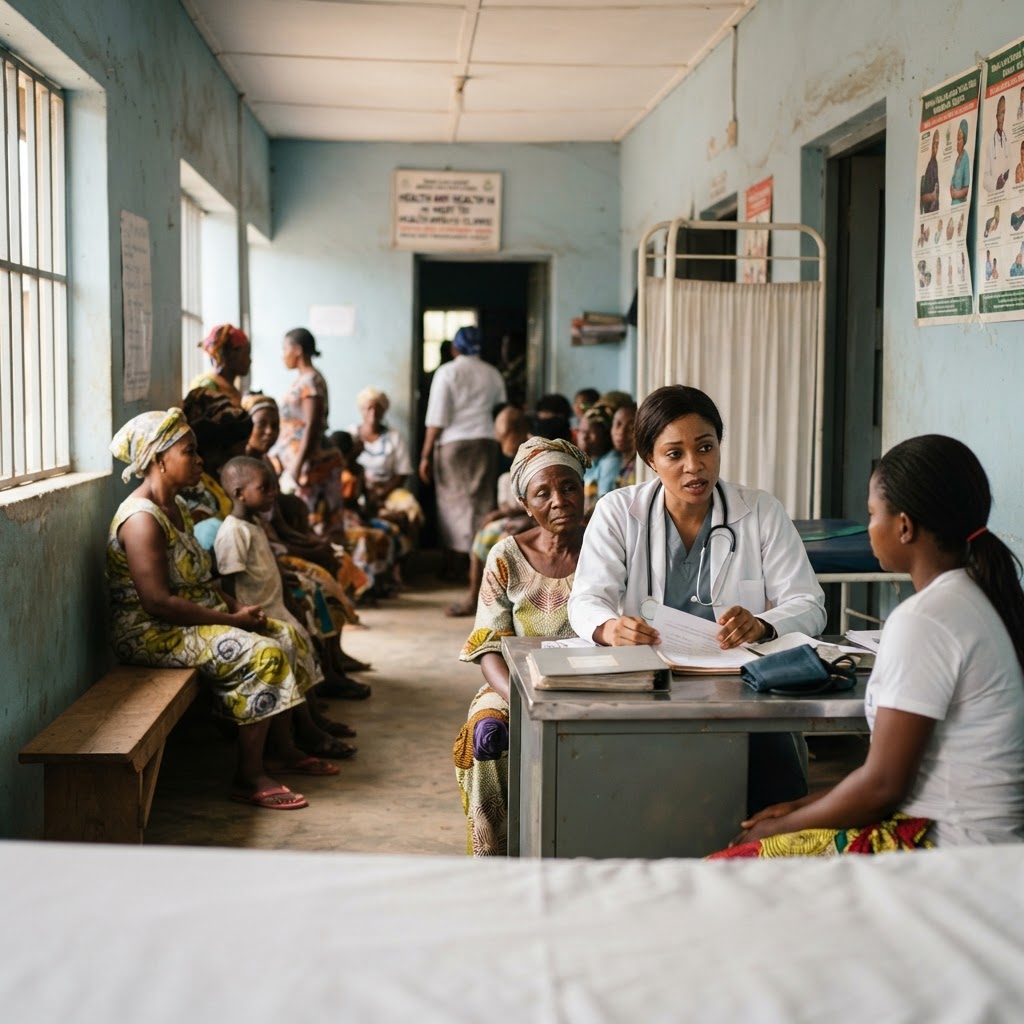
Mbaitoli Local Government Area sits at the heart of Imo State, home to over 327,000 residents spread across nine towns and more than twenty autonomous communities. Yet for a population of this scale, accessing a qualified medical doctor at a public health facility has become less a routine expectation and more an act of luck. Wards go unattended. Maternity units operate without obstetricians. Emergency cases travel hours to reach a consultant. The question that hangs over every primary healthcare centre from Nwaorieubi to Ogwa is deceptively simple: where are the doctors?
This investigation examines the structural, economic, and community dimensions of healthcare staffing in Mbaitoli — and proposes a practical blueprint for transformation rooted in the "Health + Wealth + Community" principle that defines sustainable Nigerian prosperity.
Why Is There a Medical Staffing Deficit Across Mbaitoli?
Nigeria's Ratio vs. WHO Standards
Nigeria's doctor-to-patient ratio stands at approximately 1:9,083 — a figure that dwarfs the World Health Organization's recommended benchmark of 1:600. This is not merely a national embarrassment; it is a daily emergency for rural communities like those across Mbaitoli. When a country of over 220 million people fails to retain and deploy an adequate clinical workforce, the deficit does not distribute evenly. It concentrates in places already marginalised by infrastructure neglect and governance gaps. Mbaitoli, like most of rural Imo State, absorbs a disproportionate share of that burden.
The 'Japa' Wave and Urban Flight
The "Japa" phenomenon — a Yoruba colloquialism that has become shorthand for Nigeria's mass emigration crisis — has gutted the country's medical workforce at an alarming pace. Federal data and reports from the Nigerian Medical Association indicate that over 16,000 Nigerian-trained doctors have exited the country in recent years, seeking better pay, professional security, and functional systems in the United Kingdom, Canada, the United States, and the Gulf states. Those who remain in Nigeria overwhelmingly gravitate toward urban centres. For Imo State, that means Owerri, leaving rural LGAs like Mbaitoli with skeleton staffing at best.
Burnout at the Frontline
The few health workers who remain face impossible conditions. Uncompensated on-call duties, weeks without salary, and clinical workloads designed for a team shouldered by one or two individuals create a burnout spiral that accelerates further attrition. A nurse expected to conduct deliveries, administer medications, triage emergencies, and manage records simultaneously is not delivering healthcare — she is performing a heroic act of endurance that the system should never require. This unsustainable model is the quiet foundation on which Mbaitoli's public health infrastructure currently stands.
What Does the Ground Reality Look Like in Mbaitoli's Health Facilities?
Buildings Without Doctors
A renovated building is not a functional health facility. This distinction is critical to understanding the paradox facing Mbaitoli. The Comprehensive Health Centre in Nwaorieubi, one of the more prominent public facilities in the LGA, presents a structure that reflects past investment in physical infrastructure. Yet structural improvement has not translated into resident clinical staffing. The absence of a full-time medical doctor at a facility serving tens of thousands of residents is not an anomaly — it is the norm across Mbaitoli's health centre network. Our earlier investigation into Mbaitoli's Health Centres: How Many Are Actually Functional? documents this gap in granular detail.
CHEWs Carrying Clinical Weight
In the vacuum left by absent doctors, Community Health Extension Workers (CHEWs), nurses, and Officers-in-Charge (OiCs) have become the de facto clinical workforce. These personnel are trained for specific, bounded roles — health promotion, basic first aid, antenatal registration, immunisation coordination. They are not trained to diagnose complex presentations, manage obstetric emergencies, or interpret clinical investigations. Yet across rural Primary Healthcare Centres (PHCs) in communities like Ohohia, Mbieri, and Orodo, this is precisely what they are expected to do.
The ethical and clinical risks are enormous. A CHEW managing a prolonged labour without access to a doctor or midwife, a nurse making a diagnostic call on a paediatric fever without laboratory backup — these are not hypothetical scenarios. They are the lived daily reality of healthcare delivery in underserved Nigerian communities, and Primary Healthcare in Mbaitoli: Clinics on Paper, Services on the Ground? explores how far removed official capacity assessments are from ground-level conditions.
The Deadly Referral Pipeline
When cases exceed the limited capacity of rural PHCs, the referral system is supposed to activate. In practice, the pipeline from autonomous communities like Ogwa, Mbieri, and Orodo to tertiary institutions in Owerri is fraught with life-threatening delays. Transport costs fall entirely on families. Roads connecting interior communities to the Owerri-Onitsha corridor are poorly maintained, particularly during the rainy season. Ambulance services are either non-existent or unreliable at the local government level.
The consequences are most acutely felt in maternal health. A woman in obstructed labour in a rural PHC without surgical capacity, waiting for a private vehicle to be sourced at midnight, faces odds that no family in a functional healthcare system should ever confront. The cost of childbirth beyond the public system compounds this crisis — a reality examined in our reporting on How Much Does It Cost to Give Birth in Imo in 2026.
How Does the Health Worker Shortage Impact Community Wealth and Livelihoods?
Illness as an Economic Crisis
Health and wealth are not separate domains — they are structurally interdependent. In Mbaitoli, where the majority of households depend on subsistence agriculture, petty trade, artisanal work, and small-scale entrepreneurship, illness is not merely a medical event. It is an economic catastrophe. A farmer who develops unmanaged hypertension and suffers a stroke loses not only his health but his family's income-generating capacity, his children's school fees, and often the land he was cultivating. Without accessible doctors to diagnose and manage chronic conditions early, diseases that are preventable or manageable become devastating and terminal.
Untreated diabetes, late-stage cervical cancer diagnoses, uncontrolled malaria complications — these are not tragedies of fate. They are consequences of a health system that fails to place qualified clinicians where they are needed. The economic productivity of Mbaitoli's communities is directly suppressed by this gap.
The Patent Medicine Vendor Problem
When the public doctor is unavailable, families do not simply go without care. They seek alternatives — and the alternatives are often dangerous. Unregulated patent medicine vendors (PMVs), operating outside any clinical supervision, dispense antibiotics, antimalarials, and analgesics to customers who self-diagnose or describe vague symptoms. Non-evidence-based herbal preparations circulate widely for conditions ranging from typhoid fever to pregnancy complications. Private clinics, some operating with questionable staffing credentials, charge fees that push household budgets into deficit.
According to the National Health Insurance Authority (NHIA), a significant portion of Nigerian households continue to rely on catastrophic out-of-pocket spending for healthcare, with insurance penetration in rural areas remaining critically low.
Why Insurance Alone Cannot Solve It
Government schemes like the Basic Health Care Provision Fund (BHCPF) and NHIA enrollment represent meaningful policy intentions. But insurance mechanisms deliver value only when a prescribing physician exists on-site to diagnose, prescribe, and authorise care. In Mbaitoli's PHCs, where OiCs lack prescribing authority for many clinical categories, NHIA cards become practically useless. Subsidies do not substitute for workforce. Financial protection frameworks built on the assumption of doctor availability collapse when doctors are absent. Communities remain economically exposed regardless of their insurance status.
What Practical Retention Strategies Can Keep Doctors in Rural Communities?
Remuneration and Policy Frameworks
Retention begins with economics. Rural hardship allowances that are competitive, consistently paid, and transparently structured represent the single most powerful short-term lever for keeping doctors in LGA postings. Housing provisions — institutional accommodation on or near facility grounds — reduce the quality-of-life gap between rural and urban placements. Formalised 1-to-1 doctor replacement policies, ensuring that no departure is processed without a confirmed replacement, would prevent the gradual erosion that currently hollows out rural facility staffing.
The Nigerian Medical Association has consistently advocated for structured rural incentive frameworks at both the federal and state levels. Imo State's Ministry of Health must move from advocacy to implementation.
Facility Safety and Electrification
Healthcare workers in rural facilities consistently cite security concerns and infrastructure failure as primary reasons for refusing or abandoning rural postings. Perimeter fencing, round-the-clock security personnel, and well-lit facility grounds are not luxury upgrades — they are basic conditions of employment. Solar electrification, capable of sustaining nighttime deliveries, refrigerated vaccine storage, and diagnostic equipment, removes one of the most persistent operational barriers in off-grid and unreliable grid communities.
Telemedicine as an Interim Bridge
Technology cannot replace a resident doctor, but it can meaningfully reduce clinical risk while structural solutions are implemented. Institutional telemedicine hubs connecting Mbaitoli PHCs to consultant specialists in Owerri or diaspora doctors abroad allow on-site CHEWs to escalate complex cases with real-time clinical guidance. Digital triage protocols, supported by basic diagnostic tools and remote supervision, extend the functional capacity of existing staff without exceeding their training scope.
How Can Communities and the Diaspora Lead Healthcare Transformation?
Town Unions as Health Governors
Mbaitoli's nine towns and twenty-plus autonomous communities possess a governance resource that is frequently underutilised in health policy: organised, accountable, culturally trusted town unions and traditional leadership structures. These institutions have mobilised resources for road construction, scholarship funds, and town hall infrastructure. There is no structural reason why they cannot adopt community-funded doctor endowment trusts — dedicated accounts that supplement government salaries, provide staff welfare stipends, and fund facility maintenance. Where the state government fails, the community has both the right and the capacity to intervene.
Traditional leaders carry influence that bureaucratic health policy cannot replicate. A paramount ruler who publicly commits his community to protecting and supporting its health workers signals a cultural contract that formal employment cannot easily match.
Diaspora Partnerships That Deliver
Mbaitoli's diaspora — spread across the United Kingdom, United States, Canada, and continental Europe — represents an untapped reservoir of clinical expertise, funding capacity, and advocacy leverage. Structured diaspora doctor rotation programmes, where specialists return for defined periods to serve rural facilities, have worked in other African contexts and can work here. Diaspora town union chapters can fund clinical equipment procurement, sponsor community enrollment into NHIA schemes, and apply diplomatic pressure on state health governance through organised advocacy.
The Blueprint for Collective Action
The "Health + Wealth + Community" framework is not abstract. Applied to Mbaitoli, it means communities holding local government health authorities accountable for posting and retaining qualified doctors, diaspora organisations directing remittances toward clinical infrastructure rather than solely toward personal consumption, and families enrolling in available insurance schemes to build the demand-side pressure that justifies sustained supply-side investment. Collective self-reliance, grounded in African communal philosophy, is not a fallback when government fails — it is the foundation on which sustainable local health systems are built.
Conclusion
The staffing crisis in Mbaitoli's healthcare system is not an accident. It is the compounded product of national brain drain, state-level governance failure, inadequate rural incentives, and decades of treating primary healthcare as a secondary priority. The consequences are paid in lives lost at rural PHC gates, in household savings wiped out by avoidable illness, and in communities that have learned to expect less from the system that is supposed to protect them.
But the path forward exists. It runs through community-led accountability, diaspora partnership, targeted policy reform, and technology-enabled clinical support. It requires that town unions, traditional leaders, health professionals, and families refuse to accept absence as a permanent condition. At eziokwubundu.com, we believe that better living begins with better information — and that every Nigerian community deserves the full picture of what is possible when health, wealth, and community move together.
The doctors exist. The question is whether Mbaitoli's communities, institutions, and government will create the conditions that bring them home — and keep them there.
Stay Informed
Get New Articles in Your Inbox
Subscribe to receive the latest community development, health, and wealth insights from Eziokwubundu.
Newsletter
Practical insights on health, wealth, and community — delivered weekly.