Powered by Obi Mbieri Independent Media Ltd · eziokwubundu.com
$1 = ₦1,328€1 = ₦1,521£1 = ₦1,773Community Leadership in Imo: Why Villages and Autonomous Communities Must Demand Accountability
Across Imo State, something is quietly breaking. Roads go unbuilt despite community levies collected years ago. Health centers remain skeletal shells while development funds disappear into private accounts. Oil-bearing communities receive royalties that never trickle down to the families who live ab...
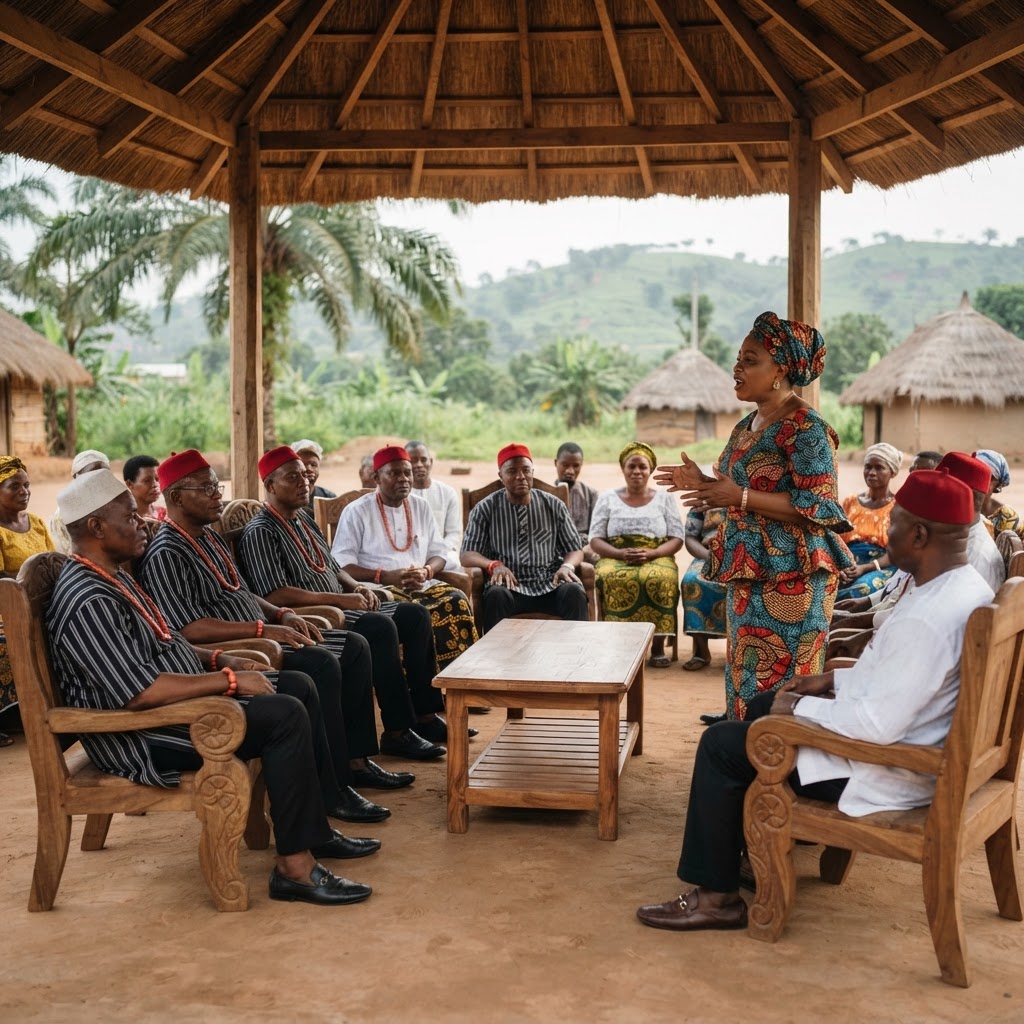
Across Imo State, something is quietly breaking. Roads go unbuilt despite community levies collected years ago. Health centers remain skeletal shells while development funds disappear into private accounts. Oil-bearing communities receive royalties that never trickle down to the families who live above the pipelines. And in too many villages, residents whisper their frustrations at evening gatherings but feel powerless to confront the men who hold their community's future in both hands.
This article is not about despair. It is about clarity — and about the urgent, practical case for accountability in community leadership across Imo State's villages and autonomous communities. Whether you are a youth professional in Owerri, a diaspora Nigerian in Houston, a market woman in Orlu, or a traditional ruler preparing to address your community at the new year, understanding the mechanics of local accountability is no longer optional. It is the difference between a community that thrives and one that stagnates for another generation.
Why Is Local Accountability the Bedrock of Prosperity?
Grassroots Governance Drives Real Development
Local leadership is not ceremonial in Imo State — it is the primary engine of socio-economic advancement at the grassroots level. Before state government contractors arrive, before federal allocations trickle down through bureaucratic layers, it is the Eze, the town union president, and the community development committee that determine whether a borehole gets drilled or a school building gets repaired. These figures are, in practical terms, the first government most Imo villagers ever encounter.
The relationship between accountability and prosperity follows a clear triangle: Health + Wealth + Community. When a transparent leader ensures that development grants are properly disbursed, the community gains a functioning health center, reducing maternal mortality rates and household medical expenses. When community funds are invested in road infrastructure rather than diverted, local entrepreneurs gain access to markets, generating economic activity that strengthens family incomes. Each point of the triangle reinforces the others — but only when the thread of accountability holds them together.
Historically, Igbo communities were built on imu ọrụ — communal labor and self-help principles that mobilized entire villages for collective projects without formal budgets or bureaucratic oversight. This tradition demonstrates an innate capacity for collective action. However, as communities now manage formal revenue streams, including oil royalties, government grants, and diaspora remittances, the informal trust systems of the past are insufficient. Modern community governance demands formal accountability mechanisms: written financial reports, public audits, and documented decision-making processes that any community member can access and interrogate.
What Are the Current Challenges in Our Communities?
Mismanagement, Opacity, and Leadership Gaps
The challenges facing autonomous communities in Imo State are neither new nor unique, but they are worsening in proportion to the resources now flowing into those communities. Three overlapping crises define the current landscape: mismanagement of community funds, opaque leadership structures, and destabilizing leadership vacuums.
The case of Achi Mbieri's oil revenue dispute is instructive. For years, this community in Mbaitoli Local Government Area has grappled with questions about how petroleum-related royalties and development funds are managed and distributed. Residents raised concerns about whether proceeds from oil activity within community land were reaching community members equitably or being controlled by a narrow group of individuals. Tensions of this kind — where resource wealth exists but community members experience no tangible benefit — represent one of the most dangerous dynamics in grassroots governance. They breed resentment, factional conflict, and ultimately the collapse of community cohesion. You can read more about the broader governance environment in Mbaitoli in this related piece on what state police could mean for security in Mbaitoli and local communities.
Beyond Achi Mbieri, the personalization of community wealth is a systemic problem. In communities across Imo State, leaders have treated community funds as personal war chests — awarding contracts to relatives, approving allowances without consultation, and rejecting calls for financial reports on the grounds that "community affairs are internal matters." This attitude is not only morally indefensible; it is structurally dangerous. When the community budget exists only in one person's memory or private notebook, that community's development becomes entirely dependent on one individual's goodwill.
The failure to consult stakeholders amplifies this danger. Research on African governance structures consistently identifies participatory decision-making as a key factor in the successful implementation of development projects. According to the African Development Bank's governance research, communities where citizens actively participate in resource allocation report significantly better development outcomes than those governed through top-down, exclusionary leadership models.
Perhaps most overlooked is the crisis of leadership vacuums. Numerous communities across Imo State have operated for years — sometimes over a decade — without a formally recognized and government-approved Eze. Succession disputes, court injunctions, and political interference leave communities in a state of institutional paralysis. Without a recognized head, community development committees struggle to access state and federal allocations, sign agreements with contractors, or represent their communities in inter-communal negotiations. Long-term development projects — the kind that require multi-year planning and consistent leadership — become impossible in this environment. The detailed controversies surrounding leadership in places like Obi-Mbieri illustrate how deeply these disputes can fracture a community's sense of identity and direction; a full exploration of that situation is available in this article on Obi-Mbieri traditional leadership: the history, controversies and questions about community governance.
How Can Town Unions Enforce Transparency?
From Watchdogs to Active Governance Partners
Town unions occupy a unique and powerful position in Imo State's community governance architecture. Unlike the traditional stool of the Eze, which carries ceremonial and custodial authority, town unions are constitutionally positioned as democratic representative bodies. Their mandate — to serve the collective interests of community members — makes them the most appropriate institution to function as a primary watchdog for community funds and development decisions.
The first and most essential reform is the institutionalization of regular financial reporting. Every community development committee and town union executive managing public funds — whether from oil royalties, development levies, or diaspora contributions — must produce quarterly financial statements that are shared with all registered community members. These statements should include income received, expenditures made, outstanding project commitments, and the balance of all community accounts. Critically, these reports must be presented at general community meetings where members have the right to ask questions and receive documented answers.
Public audits represent the next level of accountability. Communities managing substantial funds — particularly those receiving oil royalties or large diaspora remittances — should commission independent audits by licensed auditors, with results published and accessible to the community. The Institute of Chartered Accountants of Nigeria (ICAN) has a standing commitment to supporting governance and financial accountability across Nigerian institutions; community organizations should engage certified members for this purpose.
Featured Products
Chukwu Abiama Tee
Bold black-and-gold Igbo-pride T-shirt featuring 'Chukwu Abiama' in premium streetwear typography.
₦15,000
Buy NowReverse Type 2 Diabetes & other associated Metabolic Issues using Dr. Jason Fung's Evidence-Based Approach— FMD program for Type 2 Diabetes
A practical fasting and fasting-mimicking programme built on Dr Jason Fung's insulin-resistance principles and ow-glycemic recipes.
₦19,950
Join NowỤmụ Igbo Tee
Classic black T-shirt with bold white 'Ụmụ Igbo' typography — a proud statement of Igbo heritage.
₦15,000
Buy NowNwanne Tee
Washed khaki vintage tee with a faded rust-orange 'Nwanne' stamp badge and palm leaf motif — a nod to kinship and heritage.
₦18,000
Buy NowObodo Tee
Faded denim-blue washed tee with a cream 'Obodo' stamp badge and sun motif, celebrating community roots.
₦18,000
Buy NowEkwe Heritage Tee
Deep indigo tee featuring a fine line-art illustration of a traditional Igbo ekwe drum, inspired by Igbo-Ukwu bronze artistry.
₦18,000
Buy NowIkenga Figure Tee
Forest green tee with a fine line-art illustration of a stylized Ikenga figure.
₦18,000
Buy NowBeyond financial oversight, the establishment of Stakeholder Forums is a practical, actionable step that communities can implement immediately. These forums should include representation from town union executives, the Eze's palace, youth organizations, women's organizations, and professional associations within the community. The forum should be empowered to call emergency meetings when financial irregularities are suspected and establish a 48-hour response window for financial inquiries — meaning any community official must respond to a documented financial question within two business days or face a formal hearing.
Recent examples of grassroots activism in Imo communities have demonstrated that when residents organize collectively and make specific, documented demands, leaders respond. Petitions backed by organized town union votes, open letters signed by significant percentages of community members, and formal resolutions passed at general meetings carry legal and social weight that informal complaints do not.
The inclusion of youth and women's organizations in decision-making is not merely a progressive ideal — it is a governance necessity. Women constitute over 50 percent of most Imo communities, and yet they remain systematically excluded from financial committees and development planning sessions. Youth organizations, meanwhile, represent the segment of the community with the strongest stake in long-term outcomes and often the strongest connection to digital tools and modern governance frameworks. Excluding these groups does not preserve tradition; it concentrates power in ways that increase the risk of mismanagement and reduce the community's problem-solving capacity.
What Does Effective Modern Community Leadership Look Like?
Beyond Title-Holding to Accountable Governance
The image of a community leader sitting at the apex of a hierarchy, receiving homage and issuing pronouncements, belongs to a governance model that Imo communities can no longer afford. Effective modern community leadership requires three core attributes: creativity, technical skill, and the capacity to translate vision into executed programs that benefit real people.
A creative leader does not simply manage existing resources — they identify new opportunities for community development, whether through partnerships with state agencies, connections to diaspora organizations, or applications for development grants from bodies such as the Niger Delta Development Commission or the Federal Ministry of Community Development. A skilled leader understands the basics of project management, contract oversight, and financial governance well enough to hold contractors and committee members accountable for results.
Capacity building for community leaders is not a luxury — it is a prerequisite for effective governance. Leaders must develop what governance scholars call situational leadership capability: the ability to match their management approach to the specific needs and readiness of their community. A community recovering from a leadership vacuum requires a different style of leadership than one already executing a multi-year development plan. Training programs offered through state government local government offices, civil society organizations, and community development networks should be actively utilized, not ignored.
The principle of Traditional Values, Modern Progress is central to this transition. Respect for the Eze as a custodian of cultural identity and communal memory is entirely compatible with demanding that the same Eze publish annual accounts and submit to an independent financial review. Digital tools — WhatsApp community groups, simple websites, Google Forms for community surveys — can extend the reach of community communication and create documented records of decisions and consultations. These tools do not undermine tradition; they protect it by making governance visible and verifiable. Readers interested in the broader political dynamics shaping governance in Imo State may also find value in this analysis of Imo politics and why the 2028 governorship battle is already taking shape.
How Can We Build a Sustainable Village Future?
Collective Responsibility as a Prosperity Strategy
The path forward for Imo's villages and autonomous communities is neither revolution nor passive acceptance. It is the disciplined, sustained application of accountability as a community value and a governance standard.
Concretely, this means demanding forensic audits when financial irregularities are suspected, pursuing those audits through legitimate channels including the state Ministry of Local Government and Chieftaincy Affairs, and refusing to accept verbal reassurances in place of documented financial evidence. It means fostering peaceful but firm dialogue — resolving disputes through structured community forums rather than factions and standoffs. And it means rejecting what has been aptly called "dream-based financial management" — the presentation of grand visions with no costing, no timeline, and no accountability framework.
Every reader of this article should understand one foundational truth: your community is a prosperity ecosystem. Your personal health, your family's economic security, and your children's opportunities are inseparable from the health and wealth of your village. When your community's health center is stocked with medicine, your family's medical costs fall. When roads are functional, your business reaches more customers. Investment in community accountability is investment in your own future.
For diaspora Nigerians and urban professionals, this is a direct call to action. Send remittances with conditions. Mentor emerging community leaders. Fund transparent development initiatives and demand evidence-based reporting before releasing contributions. Your resources, combined with your insistence on accountability, can break cycles of mismanagement that have persisted for decades. Organizations like IOM Nigeria provide frameworks for diaspora-community development partnerships that are worth exploring.
Imo's communities have the talent, the resources, and the cultural heritage to become models of grassroots-led development. What they need now is the collective will to demand the accountability that makes that future possible.
eziokwubundu.com is committed to publishing evidence-based, community-centered perspectives that empower Nigerian families and communities to build healthier, wealthier, and more connected lives. Explore more community governance, politics, and development coverage across our platform.
Stay Informed
Get New Articles in Your Inbox
Subscribe to receive the latest community development, health, and wealth insights from Eziokwubundu.
Newsletter
Practical insights on health, wealth, and community — delivered weekly.
Community Discussion(0)
Leave a Comment
More to Read
You May Also Like

Imo Government to Support 100 More Communities
OKOBI is reshaping how everyday Imo residents build wealth from their own villages. The latest expansion, tagged OKOBI: 100 More Imo Communities Set to Receive Government Support, signals a new chapter in Governor Hope Uzodimma's push for grassroots prosperity. For Nigerian families and community le...
How Rising Petrol Prices Impact Nigerian Households and SMEs
Petrol prices have crossed a psychological line that many Nigerians once thought impossible. At ₦1,400 per litre in several states, rising petrol prices are reshaping how households spend, how businesses operate, and how communities survive. What was once an occasional headline about fuel scarcity h...
48 Months Without Full Pension Payments: Imo Pensioners
Retirement should bring peace, not financial anxiety. Yet across Imo State, thousands of elderly civil servants say their golden years have turned into a struggle for survival. The situation described in "48 Months Without Full Pension Payments: Imo Pensioners Demand Answers" reflects a deepening cr...
How Igbo communities fund development projects
Across southeastern Nigeria, roads are tarred, schools are built, and boreholes are sunk — not by government contractors, but by communities pooling resources together. This phenomenon is neither accidental nor recent. It is the product of centuries-old cultural philosophy, refined institutional str...
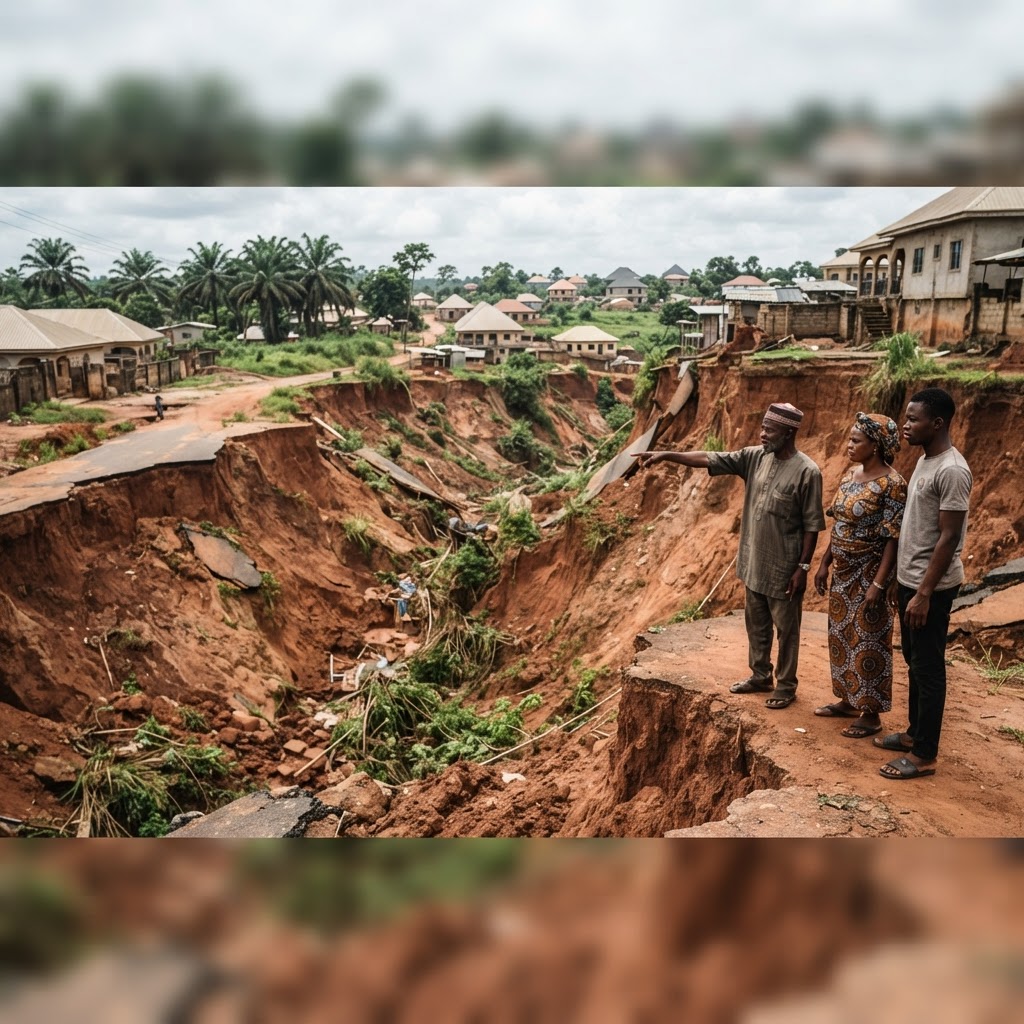
Imo Erosion Crisis: Mbieri Communities Demand Urgent Government Action
The ground beneath Mbieri is literally disappearing. In Mbaitoli Local Government Area of Imo State, advancing gullies are swallowing roads, threatening homes, and pushing one of southeastern Nigeria's most resilient communities toward an environmental breaking point. Residents are no longer waiting...

Imo State Emergency Contacts Directory
Emergencies do not send advance notice. Whether it is a road traffic accident along the Owerri-Onitsha expressway, a fire outbreak in a densely populated neighbourhood, or a sudden medical crisis in one of Imo State's rural local government areas, the difference between life and death often comes do...
Imo Waste Collection Services Compared
Waste management sits at the intersection of public health, economic productivity, and community dignity. For residents of Imo State, particularly those living in the expanding urban corridors of Owerri, the question of who collects refuse — and how reliably they do it — is not a minor administrativ...

KoboTutor: How a Nigerian EdTech Platform Is Bringing Personalised Learning to Students
Nigeria's education sector stands at a crossroads. With over 13 million out-of-school children and chronic underfunding in public education, the pressure on students who do attend school is immense. For the millions sitting JAMB, WAEC, and NECO examinations each year, the stakes could not be higher....