Powered by Obi Mbieri Independent Media Ltd · eziokwubundu.com
$1 = ₦1,331€1 = ₦1,498£1 = ₦1,762Community Leadership in Imo: Village Head, Town Union or Traditional Ruler — Who Does What?
Community governance in Imo State is one of the most intricate, layered, and culturally rich systems in all of Nigeria. For millions of Imo indigenes — whether living in Owerri, Lagos, London, or Houston — understanding who holds authority in their community, who controls the development funds, and ...
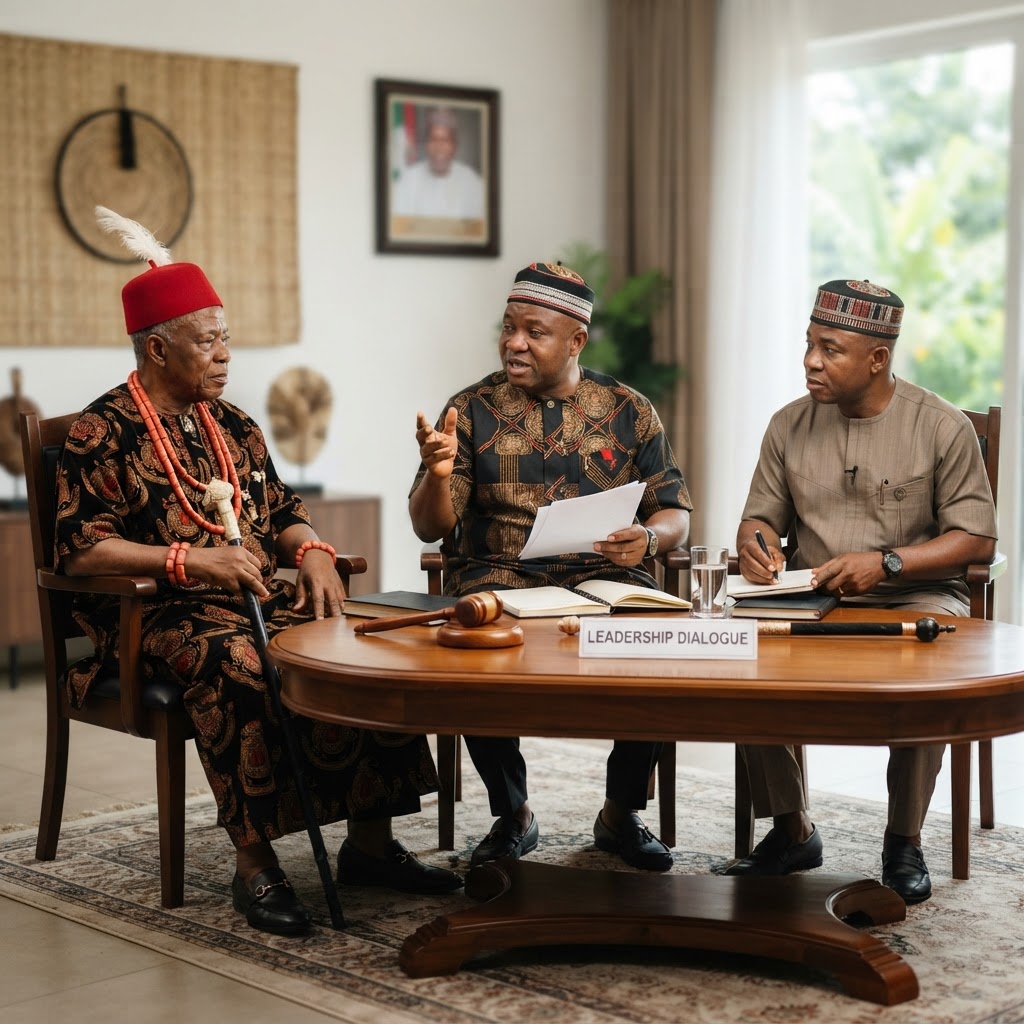
Community governance in Imo State is one of the most intricate, layered, and culturally rich systems in all of Nigeria. For millions of Imo indigenes — whether living in Owerri, Lagos, London, or Houston — understanding who holds authority in their community, who controls the development funds, and who resolves the disputes that threaten family and village harmony is not an academic exercise. It is a practical necessity. Confusion about these roles breeds conflict, stalls development, and erodes the trust that makes collective progress possible.
This article breaks down the three primary leadership structures operating in Imo communities — the Traditional Ruler (Eze), the Town Union, and the Village Head — while also examining the supporting roles of youth and women's organizations. Whether you are a community stakeholder, a diaspora Nigerian planning to invest in your hometown, or a young professional navigating your first Town Union meeting, this guide provides the clarity you need to engage, participate, and hold your community leaders accountable.
What Is Imo's Community Governance Structure?
The Three-Tier Administrative Framework
Imo State operates a distinctive three-tier administrative structure built around the State, Local Government Area (LGA), and Autonomous Community levels. This framework is not merely ceremonial — it is the constitutional backbone of grassroots governance, giving communities legal standing to govern themselves, own land collectively, and develop infrastructure without waiting indefinitely for state or federal intervention.
At the lowest and most consequential tier sits the Autonomous Community. There are currently approximately 675 to 700 gazetted autonomous communities in Imo State — a dramatic increase from fewer than 200 in 1979. This proliferation reflects the intense demand among Imo communities for localized self-governance, as villages and kindreds seek direct access to government recognition, development funding, and administrative autonomy. The expansion, however, has not come without controversy, as some communities contest boundaries, leadership legitimacy, and resource allocation.
Legally, each autonomous community is required to operate with a written local constitution and a code of conduct governing the behaviour and responsibilities of its traditional leadership. These documents are not optional formalities; they are foundational instruments that define how power is transferred, how funds are managed, and how disputes are resolved. Communities that neglect their constitutions frequently suffer the governance breakdowns and leadership crises that have become all too common across the state.
At eziokwubundu.com, we believe that understanding these structures is the critical first step toward both personal and collective prosperity. A community that knows its governance framework is a community that can demand accountability, elect capable leaders, and channel resources toward lasting development.
What Does the Eze Do in Modern Imo?
The Custodian of Culture and Conflict Resolution
The Eze — the traditional ruler — occupies the apex of cultural and moral authority within the autonomous community. Often addressed as "Royal Father," the Eze is not simply a ceremonial figurehead dressed in beads and coral. He serves as the critical human bridge between the apparatus of state government and the everyday realities of grassroots life, maintaining peace, mediating disputes, and preserving cultural identity in a rapidly modernizing world.
The legal and cultural obligations attached to the Ezeship are demanding and specific. An Eze is expected to maintain a physical palace within his community and is legally prohibited from abandoning his throne — he must not be absent from the community for more than three consecutive months. As detailed in our earlier coverage of Imo Traditional Leadership rules, these requirements exist to ensure that the monarch remains embedded in the community he governs, accessible to his subjects and accountable to his stool.
In practice, the Eze's functions span conflict resolution, cultural preservation, and developmental advocacy. According to academic research on traditional rulers in community development, traditional rulers are uniquely positioned to resolve internal disputes before they escalate to police stations or courts, and to mobilize community members behind government development programs. Their moral authority can achieve what legislation alone cannot.
The longevity of a reign often speaks volumes about its effectiveness. The extraordinary 108-year reign of Eze Philip Onwuka Anyanwu stands as a striking historical example of how stable, respected traditional leadership correlates with familial harmony, cultural cohesion, and generational continuity within a kingdom. Such reigns, however rare, illustrate the profound stabilizing power of the Ezeship when properly exercised.
The contemporary debate about whether traditional rulers should hold formal political offices remains unresolved at the national level. What is clear in Imo communities is that the Eze's informal influence — his ability to convene, persuade, bless, and sanction — remains enormous, regardless of what any statute says about his official powers.
How Does the Town Union Drive Development?
The Executive Engine of Community Progress
If the Eze is the moral and cultural authority of the autonomous community, the Town Union is its executive engine. Led by a President General (PG) and supported by a network of elected officers and specialized committees, the Town Union is the primary institutional vehicle through which communities build roads, construct schools, equip health facilities, and execute the development projects that government has failed to deliver.
According to Vanguard's coverage of town unions and governance, town unions are not peripheral to governance — they are integral to it. In South-Eastern Nigeria, where state and local government infrastructure delivery has historically been inconsistent, town unions have stepped into the vacuum, funding and managing projects that would otherwise never be completed.
The theoretical foundation of town union activity is what scholars describe as the "community action model" — a framework in which residents collectively transcend poverty through organized education, resource pooling, and socioeconomic self-help. This is not abstract ideology. It translates directly into community levies, diaspora fundraising drives, building committees, and accountability meetings where project progress is reviewed openly.
Town Unions are self-regulating structures, managing community funds and executing projects through specialized sub-committees for roads, education, health, and security. Unlike the hereditary or life-tenure nature of the Ezeship, Town Union leadership is typically elective, with terms of office and constitutional provisions for removal. This electoral accountability is supposed to ensure that only "best sons" — those with identifiable means of livelihood and a proven commitment to community service — ascend to positions of leadership.
For our full framework on making this system work effectively, read The Blueprint for Autonomous Nigerian Community Success, which outlines the governance principles that high-performing Imo communities share.
Who Is the Village Head and Why Does It Matter?
Grassroots Mediation and Family-Level Governance
Below the Eze and the Town Union lies the most granular unit of community governance: the Village Head. Operating at the level of a specific kindred or village unit, the Village Head deals with the most immediate and personal dimensions of community life — family land boundary disputes, domestic conflicts, local security concerns, and the enforcement of communal norms within a tightly defined geographic area.
The Village Head is, in practical terms, the first point of contact for both the Eze and the Town Union when directives need to be communicated down to the household level. When the Town Union passes a resolution on communal labour or development levies, it is the Village Head who ensures that every family in his jurisdiction understands, complies, and participates. When the Eze needs to know the mood of a particular kindred before making a ruling, it is the Village Head who provides that ground-level intelligence.
Featured Products
Chukwu Abiama Tee
Bold black-and-gold Igbo-pride T-shirt featuring 'Chukwu Abiama' in premium streetwear typography.
₦15,000
Buy NowReverse Type 2 Diabetes & other associated Metabolic Issues using Dr. Jason Fung's Evidence-Based Approach— FMD program for Type 2 Diabetes
A practical fasting and fasting-mimicking programme built on Dr Jason Fung's insulin-resistance principles and ow-glycemic recipes.
₦19,950
Join NowỤmụ Igbo Tee
Classic black T-shirt with bold white 'Ụmụ Igbo' typography — a proud statement of Igbo heritage.
₦15,000
Buy NowNwanne Tee
Washed khaki vintage tee with a faded rust-orange 'Nwanne' stamp badge and palm leaf motif — a nod to kinship and heritage.
₦18,000
Buy NowObodo Tee
Faded denim-blue washed tee with a cream 'Obodo' stamp badge and sun motif, celebrating community roots.
₦18,000
Buy NowEkwe Heritage Tee
Deep indigo tee featuring a fine line-art illustration of a traditional Igbo ekwe drum, inspired by Igbo-Ukwu bronze artistry.
₦18,000
Buy NowIkenga Figure Tee
Forest green tee with a fine line-art illustration of a stylized Ikenga figure.
₦18,000
Buy NowBeyond administration, Village Heads play an irreplaceable role in maintaining the social fabric of community life. They organize local festivals, ensure that traditional rites of passage are observed correctly, and act as custodians of local oral history and ancestral customs. This cultural work is not decorative — it is the social glue that prevents small misunderstandings from becoming generational feuds.
The consequences of weak village leadership are visible and painful. As seen in cases where the Imo State government has had to intervene in feuds over community leadership positions, the absence of effective grassroots mediation allows minor disputes over land, succession, or resources to escalate rapidly into crises requiring state-level intervention.
How Do Youth and Women Groups Support Progress?
Security, Welfare, and Community Accountability
No analysis of community leadership in Imo is complete without recognizing the indispensable roles played by youth and women's organizations. These groups operate beneath the headline institutions — the Eze, the Town Union, the Village Head — but their contributions to community security, social welfare, and institutional accountability are profound.
Youth organizations in most Imo communities function as the de facto vigilante and security apparatus. In the absence of reliable formal policing — a subject explored in our article on what state police could mean for communities in Mbaitoli — youth groups patrol community boundaries, protect community property from vandalism, and provide the first response to security threats. Their effectiveness depends almost entirely on how well the Town Union and Village Head integrate them into the broader governance structure.
Women's organizations, most famously organized around the annual "August Meeting," are powerful engines of social welfare and economic empowerment. These groups focus on maternal health education, support for widows and the less privileged, collective savings schemes, and advocacy for female representation in community decision-making. In many Imo communities, the August Meeting is more practically impactful than any government social welfare program.
Critically, both youth and women's organizations serve as informal checks and balances on the Town Union and the Eze. When community funds go missing, when projects stall inexplicably, or when leadership becomes self-serving, it is frequently the mobilized voices of women and youth that force accountability. At eziokwubundu.com, we regard these organizations as vital pillars of what we call the Strategic Triangle of Health, Wealth, and Community — each reinforcing the others in a system of mutual progress.
Why Do Leadership Feuds Happen?
Succession Disputes and Fund Mismanagement
Leadership feuds in Imo communities are not random events. They follow recognizable patterns rooted in structural vulnerabilities that communities can identify and address before crises erupt.
The most common trigger is a contested or prolonged leadership vacuum — particularly the absence of a recognized Eze. When a stool remains vacant for years, competing factions emerge, unauthorized villages are created, and the constitutional order of the autonomous community begins to unravel. The situation in Obi-Mbieri, which has remained without a recognized Eze for over six years, provides a sobering case study in how institutional paralysis breeds chaos. Our detailed investigation of the Obi-Mbieri traditional leadership controversy documents exactly how this pattern unfolds.
A second major trigger is the misappropriation of community funds. As Vanguard has reported, the decline of Igbo self-help traditions is directly linked to leaders who treat community levies and diaspora remittances as personal income rather than collective assets. When development projects stall despite significant fundraising, trust collapses — and with it, the willingness of community members to contribute to future initiatives.
Resolution requires more than goodwill. It demands structural reform: integrity-based leadership selection processes grounded in community constitutions, mandatory audited financial reporting for all community-held accounts, and clear succession protocols that leave no room for factional manipulation. Communities that institutionalize these practices consistently outperform those that rely on the personal integrity of individual leaders. Also, read our coverage on why Imo communities must demand accountability for a practical accountability framework.
How Can Diaspora and Residents Ensure Accountability?
Practical Prosperity Through Collective Oversight
Diaspora Nigerians are among the most significant development financiers of Imo communities, channeling millions of naira into hometown projects every year through remittances, direct donations, and dedicated fundraising events. This financial power, however, comes with a responsibility that many diaspora contributors have yet to fully exercise: the demand for transparent, verifiable accountability.
Practical prosperity means nothing if community funds disappear into personal accounts. Diaspora contributors must insist on audited project reports, photographic and video documentation of construction milestones, and regular financial statements from Town Union treasurers. Remote participation through WhatsApp groups and Zoom meetings with community leaders is no longer a logistical luxury — it is a governance necessity. Communities that normalize these accountability structures attract more diaspora investment precisely because contributors trust that their money will be used as intended.
For local residents, accountability begins with active participation. Town Union general meetings, women's August Meeting sessions, and youth organization assemblies are not merely social occasions. They are the primary democratic forums of community governance. Residents who attend these meetings, ask hard questions about budget lines and project timelines, and nominate capable candidates for leadership positions are exercising real civic power.
Bridging the gap between traditional values and modern economic progress requires the "Community-First" mindset that defines the best of Igbo governance philosophy — the understanding that individual success is most meaningful when it is invested in strengthening the collective. By integrating health awareness, financial literacy, and wealth-building strategies into community governance culture, Imo communities can build the sustainable ecosystems that will serve not just the current generation, but the children and grandchildren who will inherit whatever we build or destroy today.
Conclusion
Community leadership in Imo State is a sophisticated system of interlocking authorities — not a single chain of command but a web of complementary roles designed to serve different dimensions of community life. The Eze preserves culture and mediates conflict. The Town Union drives development and manages collective resources. The Village Head maintains social order at the household level. Youth and women's organizations provide security, welfare, and accountability. Each role is essential. Each role is distinct.
The system works when leaders understand and respect their boundaries, when communities have functioning constitutions, when funds are transparently managed, and when citizens — local and diaspora alike — remain actively engaged. It breaks down when ambition overrides mandate, when accountability is absent, and when communities allow leadership vacuums to persist unchallenged.
Understanding who does what is not just an intellectual exercise. It is the foundation of community power. Know your governance structure. Attend your meetings. Demand your audits. Strengthen your community — and in doing so, strengthen yourself.
Stay Informed
Get New Articles in Your Inbox
Subscribe to receive the latest community development, health, and wealth insights from Eziokwubundu.
Newsletter
Practical insights on health, wealth, and community — delivered weekly.
Community Discussion(0)
Leave a Comment
More to Read
You May Also Like

Umunoha NYSC Kidnap: Hideout Located as IED Threat Delays Rescue
Imo security agencies have located the suspected hideout of prospective NYSC members abducted along the Owerri–Onitsha Road, but an alleged improvised explosive device (IED) threat has delayed the planned rescue operation.

Ultimate Guide to Health, Wealth, and Community Development
Discover how health, wealth creation, and community development intertwine to empower individuals and build prosperous societies. This ultimate guide provides actionable insights and strategies to enhance your well-being and financial stability while fostering a vibrant community, ensuring you make ...

Mbaitoli Kidnapping: Why Is the Owerri–Onitsha Road Still Vulnerable?
The latest kidnapping incident along the Owerri–Onitsha Road in Mbaitoli Local Government Area of Imo State has renewed concerns about the safety of one of the major transportation routes connecting communities in Imo and neighbouring states.

Mbaitoli Security: Are Farmers Returning to Their Farms?
Dust settles slowly over Mbaitoli's farmlands, but the questions linger louder than ever. Families across Imo State whisper the same worry: will their fields ever feel safe again? Mbaitoli Security: Are Farmers Returning to Their Farms? remains one of the most urgent questions facing this agrarian c...

Imo Government to Support 100 More Communities
OKOBI is reshaping how everyday Imo residents build wealth from their own villages. The latest expansion, tagged OKOBI: 100 More Imo Communities Set to Receive Government Support, signals a new chapter in Governor Hope Uzodimma's push for grassroots prosperity. For Nigerian families and community le...
How Rising Petrol Prices Impact Nigerian Households and SMEs
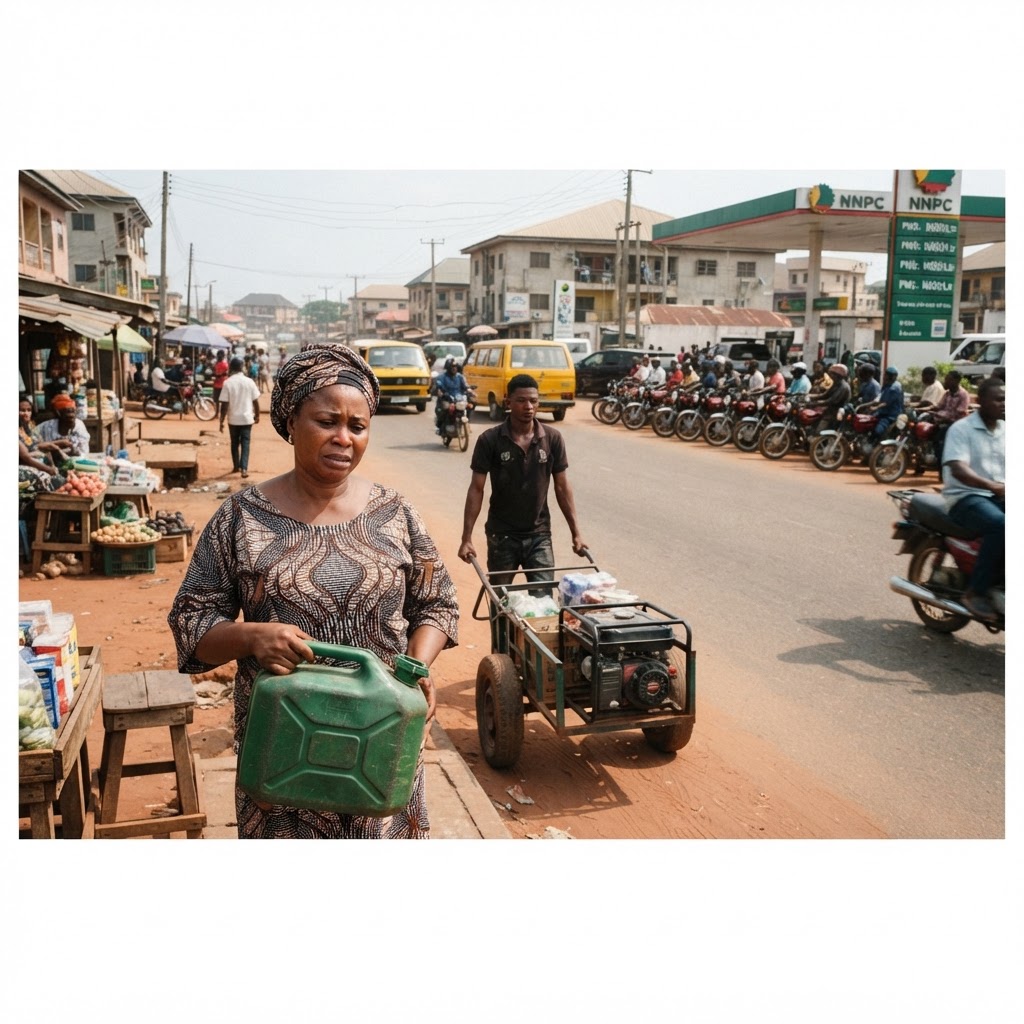
Petrol prices have crossed a psychological line that many Nigerians once thought impossible. At ₦1,400 per litre in several states, rising petrol prices are reshaping how households spend, how businesses operate, and how communities survive. What was once an occasional headline about fuel scarcity h...
48 Months Without Full Pension Payments: Imo Pensioners
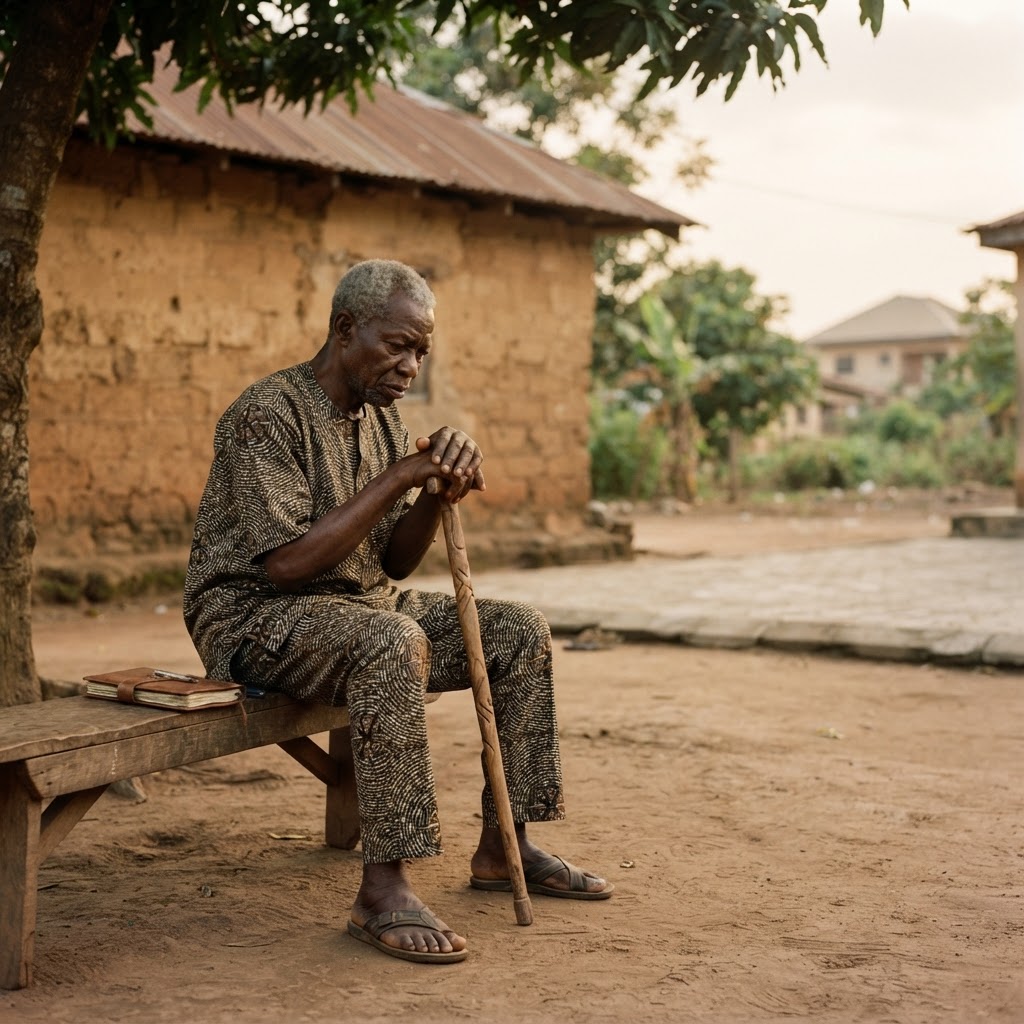
Retirement should bring peace, not financial anxiety. Yet across Imo State, thousands of elderly civil servants say their golden years have turned into a struggle for survival. The situation described in "48 Months Without Full Pension Payments: Imo Pensioners Demand Answers" reflects a deepening cr...