Powered by Obi Mbieri Independent Media Ltd · eziokwubundu.com
$1 = ₦1,331€1 = ₦1,492£1 = ₦1,759Mbaitoli Security: Are Farmers Returning to Their Farms?
Dust settles slowly over Mbaitoli's farmlands, but the questions linger louder than ever. Families across Imo State whisper the same worry: will their fields ever feel safe again? Mbaitoli Security: Are Farmers Returning to Their Farms? remains one of the most urgent questions facing this agrarian c...
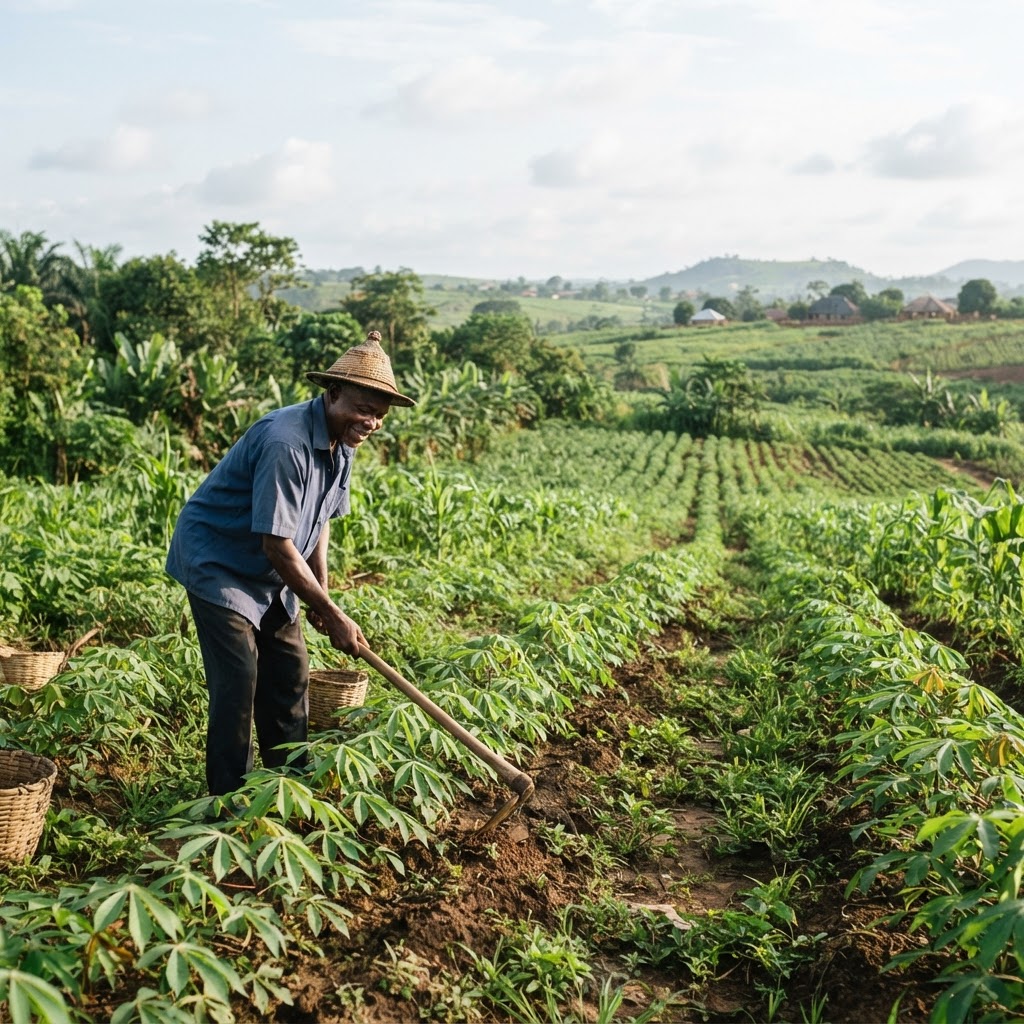
Dust settles slowly over Mbaitoli's farmlands, but the questions linger louder than ever. Families across Imo State whisper the same worry: will their fields ever feel safe again? Mbaitoli Security: Are Farmers Returning to Their Farms? remains one of the most urgent questions facing this agrarian community today, and the answer touches everything from household survival to the broader stability of Imo State's food economy.
Is Mbaitoli Farming Making a Comeback?
Mbaitoli Local Government Area has long served as an agricultural backbone for Imo State. Cassava, yam, maize, and vegetable farming sustain thousands of households here. For generations, farming has not just been an occupation; it has been identity, survival, and pride. Children grew up watching their parents walk to their farms at dawn, carrying tools passed down through generations, and that rhythm shaped the social fabric of the entire region.
Yet in recent years, traditional farming rhythms have clashed with modern security threats. Farmers who once rose before dawn to till their land now hesitate at the thought of walking to distant plots. Many fields lie fallow, overtaken by weeds instead of yams. Families that once depended entirely on their harvests now find themselves searching for alternative income, often far from the land their ancestors cultivated.
This shift matters beyond Mbaitoli's borders. Agriculture remains central to Imo State's food supply chain and local economy. When farmers stay away, food prices rise, household incomes shrink, and entire communities feel the strain. Markets that once overflowed with locally grown produce now rely more heavily on goods trucked in from neighboring states, raising costs for everyday families trying to put food on the table.
The urgency is clear. Food security in Mbaitoli depends on farmers returning to their lands with confidence. Local leaders, security agencies, and residents must work together to make that return possible. The question is not whether farming can recover, but how quickly trust in safety can be rebuilt, and how soon families can go back to their fields without fear hanging over every step.
According to the Food and Agriculture Organization, smallholder farmers produce the majority of Nigeria's staple crops. Protecting them protects the nation's food supply, and ensuring they can return to their farmland without hesitation is a national priority disguised as a local one.
How Does Insecurity Hurt Farmers?
Insecurity disrupts farming in ways that ripple far beyond a single harvest season. Farmer-herder conflicts, land encroachment, and sporadic violence have forced many Mbaitoli residents to abandon their fields mid-season. Crops left unattended wither, and planting calendars collapse entirely. Families who had planned their entire year around a single harvest suddenly find themselves without income, without food reserves, and without a clear path back to their livelihoods.
The economic toll is measurable. Research cited by development economists shows that a 1% increase in insecurity can lead to a 0.311% decrease in agricultural output. Across a region as farming-dependent as Mbaitoli, that statistic translates into real hunger and lost income for thousands of families. It also means fewer farmers willing to commit fully to their land, since every planting season becomes a gamble against unpredictable threats.
Displacement adds another layer of hardship. Farmers forced from their land often relocate to safer but less fertile areas. Others simply stop farming altogether, seeking informal urban work instead. This shift weakens the rural economy and increases dependence on imported or trucked-in food. Many of these displaced farmers long to return to their original plots, where soil fertility and generational knowledge gave them an advantage no new land can easily replicate.
The psychological burden is just as heavy. Many farmers describe constant anxiety about theft, kidnapping, or confrontation while working their fields. This stress reduces productivity even among those who continue farming despite the risks. Some farmers admit they rush through planting or harvesting simply to minimize time spent exposed, sacrificing yield quality just to get back to their homes safely before dusk.
Data from the World Bank's agricultural overview shows that insecurity consistently correlates with declining rural productivity across Nigeria. Mbaitoli's experience mirrors this national pattern, reinforcing the need for targeted local intervention that helps farmers return to their work with renewed confidence.
- Farmer-herder clashes disrupt planting and harvest cycles.
- Encroachment reduces available farmland for cultivation.
- Displacement forces families into unfamiliar, less productive areas.
- Psychological stress lowers overall farm output and morale.
- Fear of violence discourages younger farmers from committing to their family's agricultural legacy.
What Security Measures Are Being Taken?
Addressing insecurity requires coordinated leadership at every level. Local government chairmen in Nigeria serve as Chief Security Officers within their domains, giving them direct responsibility for farmland protection. In Mbaitoli, this role is increasingly central to restoring farmer confidence and encouraging displaced families to return to their communities.
Community-led policing has emerged as a practical response. Vigilante groups, working alongside the Nigeria Police Force, now patrol farming routes and flashpoints known for encroachment disputes. Stakeholder engagement between farmers, herders, and traditional rulers also helps prevent conflicts before they escalate. These patrols give farmers the reassurance they need to return to their fields during the critical early morning hours when crops require the most attention.
Traditional institutions play a stabilizing role too. The Obi-Mbieri Ezeship, like other autonomous community structures in Imo State, provides a framework for resolving land disputes through customary authority. Constitutional stability within these institutions reassures farmers that disputes will be handled fairly, giving them confidence to commit fully to their land rather than abandoning it out of uncertainty.
Recent legislative action also shapes this security landscape. The Imo Assembly Amends Local Government Law Amid Tenure Expiry, which affects how local administrations function and respond to security needs. Strong, stable local governance remains essential for sustained rural safety, and consistent leadership transitions help ensure security initiatives are not interrupted when administrations change.
National attention also matters here. Following Tinubu Returns to Nigeria After 28-Day Working Vacation, renewed focus on domestic security priorities, including rural safety, could translate into stronger federal support for states like Imo. When national leadership pays attention to local insecurity, it signals to state and local actors that farmland protection deserves sustained investment.
Security concerns extend beyond Nigeria's borders as well. Cases like Nigeria Condemns Deaths of Three Citizens in South Africa highlight how seriously the government treats citizen safety abroad, a stance that should extend equally to protecting farmers within their own communities at home. Similarly, continued diplomatic attention to incidents such as those discussed in Nigeria Condemns Deaths of Three Citizens in South Africa reflects a national commitment to citizen welfare that must also be reflected in rural security policy.
Featured Products
Chukwu Abiama Tee
Bold black-and-gold Igbo-pride T-shirt featuring 'Chukwu Abiama' in premium streetwear typography.
₦15,000
Buy NowReverse Type 2 Diabetes & other associated Metabolic Issues using Dr. Jason Fung's Evidence-Based Approach— FMD program for Type 2 Diabetes
A practical fasting and fasting-mimicking programme built on Dr Jason Fung's insulin-resistance principles and ow-glycemic recipes.
₦19,950
Join NowỤmụ Igbo Tee
Classic black T-shirt with bold white 'Ụmụ Igbo' typography — a proud statement of Igbo heritage.
₦15,000
Buy NowNwanne Tee
Washed khaki vintage tee with a faded rust-orange 'Nwanne' stamp badge and palm leaf motif — a nod to kinship and heritage.
₦18,000
Buy NowObodo Tee
Faded denim-blue washed tee with a cream 'Obodo' stamp badge and sun motif, celebrating community roots.
₦18,000
Buy NowEkwe Heritage Tee
Deep indigo tee featuring a fine line-art illustration of a traditional Igbo ekwe drum, inspired by Igbo-Ukwu bronze artistry.
₦18,000
Buy NowIkenga Figure Tee
Forest green tee with a fine line-art illustration of a stylized Ikenga figure.
₦18,000
Buy NowCan Modern Tech Help Mbaitoli Farmers?
Technology offers practical tools for farmers navigating security concerns. Internet of Things sensors can monitor soil moisture and detect unauthorized movement on farmland remotely. This reduces the need for farmers to spend long, exposed hours in isolated fields, allowing them to return to their homes earlier while still monitoring crop conditions in real time.
Automation also plays a growing role. Simple mechanized tools can help a single farmer manage more land in less time, lowering exposure to risk while increasing output. Even modest automation investments can transform productivity on smaller, safer plots, letting farmers dedicate more time to their families rather than spending entire days in distant, vulnerable fields.
As farms increasingly adopt solar-powered irrigation and monitoring systems, safety during installation becomes a growing concern. Resources like Solar Installation Safety: How Faulty Wiring Can Cause Fires remind rural adopters that modern tools must be installed correctly to avoid introducing new risks to their property and equipment.
High-yield, drought-resistant crop varieties further strengthen resilience. Farmers can maximize harvests on reduced acreage, meaning they no longer need to venture into contested or distant lands to meet household needs. Organizations like the CGIAR research network continue developing such climate-resilient seed varieties for African farming contexts, giving farmers more reason to stay close to their homes while still achieving strong yields.
Bridging tradition and innovation matters here. Mbaitoli's farmers value inherited land and ancestral farming knowledge. Pairing that wisdom with modern tools, rather than replacing it, creates a sustainable path forward that respects culture while embracing progress, and encourages younger generations to return to their family's agricultural roots with fresh confidence.
How Can We Support Local Prosperity?
Community support can accelerate the return of farmers to their land. Cooperatives allow smallholder farmers to pool resources, share security costs, and negotiate better prices for their produce. This collective approach strengthens both income and safety, giving individual farmers the backing of a wider network when they return to their fields each season.
Market access reforms also matter. When farmers can sell directly to buyers through structured platforms, middlemen take a smaller cut, and profits stay within the community. This directly supports the Eziokwubundu philosophy that individual prosperity strengthens collective wealth, and it gives farmers tangible financial incentive to return to their farms rather than abandon agriculture for uncertain urban work.
Residents and local organizations can take concrete action to help. Consider these practical steps:
- Join or form agricultural cooperatives for shared resources and security.
- Buy directly from local farmers to support fair pricing.
- Advocate for rural road and electricity infrastructure improvements.
- Support community policing initiatives through voluntary contributions.
- Encourage displaced farming families to return to their communities through mentorship and resource-sharing programs.
Government support remains equally important. Improved rural roads, reliable electricity, and visible security presence all signal to farmers that returning to their land is worthwhile. The International Fund for Agricultural Development emphasizes infrastructure investment as a key driver of rural economic recovery across Nigeria, noting that farmers are far more likely to commit to their land when basic infrastructure reduces daily hardship.
Broader regional development also builds confidence. Initiatives like the FG, Imo Back Pharmaceutical Hub Planned for Mgbidi show that Imo State can diversify its economy while still prioritizing agriculture. Diversified growth creates safer, more resilient communities overall, giving young people more reason to stay in the region rather than migrating away from their families and ancestral land.
Civic engagement strengthens this foundation further. Programs such as the NILDS Hosts Imo State Democracy Quiz in Owerri demonstrate how education and participation build stronger, more accountable local governance structures. When citizens engage actively with civic processes, they hold leaders accountable to their promises on security and rural development.
Voter participation also plays a role in shaping future security policy. With INEC Schedules PVC Collection Starting October 9, residents of Mbaitoli have another opportunity to ensure their voices are heard in selecting leaders committed to agricultural safety. Farmers who register and vote are, in effect, advocating for policies that could help them return to their farms with greater institutional support.
Education also factors into long-term agricultural resilience. As young people from farming families pursue higher education, policies like the JAMB Extends 2021–2025 Admission Acceptance Deadline give them flexibility to balance academic ambitions with family farming responsibilities, ensuring the next generation remains connected to their agricultural heritage even while pursuing new opportunities.
What Is the Future of Farming?
The path toward a secure Mbaitoli is not a single action but a sustained commitment. It requires local government vigilance, traditional institutions upholding order, modern technology, and community solidarity working together. Mbaitoli Security: Are Farmers Returning to Their Farms? will be answered not by one solution, but by consistent, collective effort that gives farmers real, lasting reasons to return to their fields year after year.
Eziokwubundu remains committed to its mission of blending health, wealth, and community development into one holistic resource. Farming safety is not just an agricultural issue; it is a health issue, an economic issue, and a community issue all at once, and every farmer who feels safe enough to return to their land represents a small but meaningful victory for the entire region.
As Nigeria continues strengthening its institutions, moments like Nigeria at 66: Nation Marks 66th Independence Anniversary remind us that national progress depends on local resilience. Mbaitoli's farmers deserve safety, support, and the opportunity to thrive on their ancestral land, free to return to their farms without fear and without hesitation.
Stakeholders at every level must prioritize this cause. The future of farming in Mbaitoli depends on the choices made today, and on whether the community can create conditions strong enough to welcome every displaced farmer back to their rightful place on the land they call home.
Stay Informed
Get New Articles in Your Inbox
Subscribe to receive the latest community development, health, and wealth insights from Eziokwubundu.
Newsletter
Practical insights on health, wealth, and community — delivered weekly.
Community Discussion(0)
Leave a Comment
More to Read
You May Also Like

Nwanegwo Hands Over Mbaitoli LGA Affairs, Ends Tenure
Hon. Ifunanya Nwanegwo JP has formally handed over the affairs of Mbaitoli Local Government Area to the Director of Administration and General Services (DAGS), marking the conclusion of his tenure as Executive Chairman.

Umunoha NYSC Kidnap: Hideout Located as IED Threat Delays Rescue
Imo security agencies have located the suspected hideout of prospective NYSC members abducted along the Owerri–Onitsha Road, but an alleged improvised explosive device (IED) threat has delayed the planned rescue operation.

Ultimate Guide to Health, Wealth, and Community Development
Discover how health, wealth creation, and community development intertwine to empower individuals and build prosperous societies. This ultimate guide provides actionable insights and strategies to enhance your well-being and financial stability while fostering a vibrant community, ensuring you make ...

Mbaitoli Kidnapping: Why Is the Owerri–Onitsha Road Still Vulnerable?
The latest kidnapping incident along the Owerri–Onitsha Road in Mbaitoli Local Government Area of Imo State has renewed concerns about the safety of one of the major transportation routes connecting communities in Imo and neighbouring states.

Imo Government to Support 100 More Communities
OKOBI is reshaping how everyday Imo residents build wealth from their own villages. The latest expansion, tagged OKOBI: 100 More Imo Communities Set to Receive Government Support, signals a new chapter in Governor Hope Uzodimma's push for grassroots prosperity. For Nigerian families and community le...
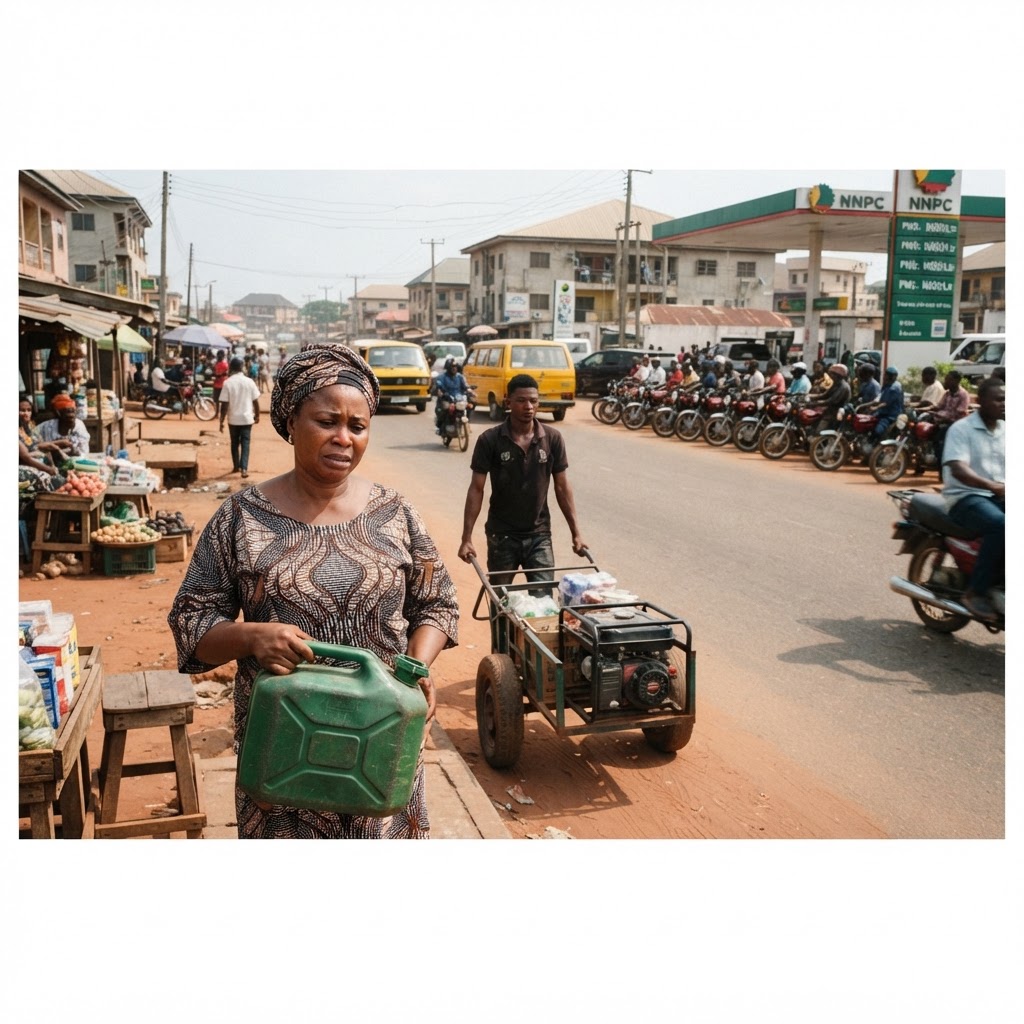
How Rising Petrol Prices Impact Nigerian Households and SMEs
Petrol prices have crossed a psychological line that many Nigerians once thought impossible. At ₦1,400 per litre in several states, rising petrol prices are reshaping how households spend, how businesses operate, and how communities survive. What was once an occasional headline about fuel scarcity h...