Powered by Obi Mbieri Independent Media Ltd · eziokwubundu.com
$1 = ₦1,331€1 = ₦1,497£1 = ₦1,759Boat tragedy in Sokoto
Every year, Nigerian waterways become the setting for preventable tragedies that claim dozens of lives, shatter families, and hollow out rural economies. The most recent boat tragedy in Sokoto has once again forced the nation to confront an uncomfortable truth: the combination of crumbling infrastru...
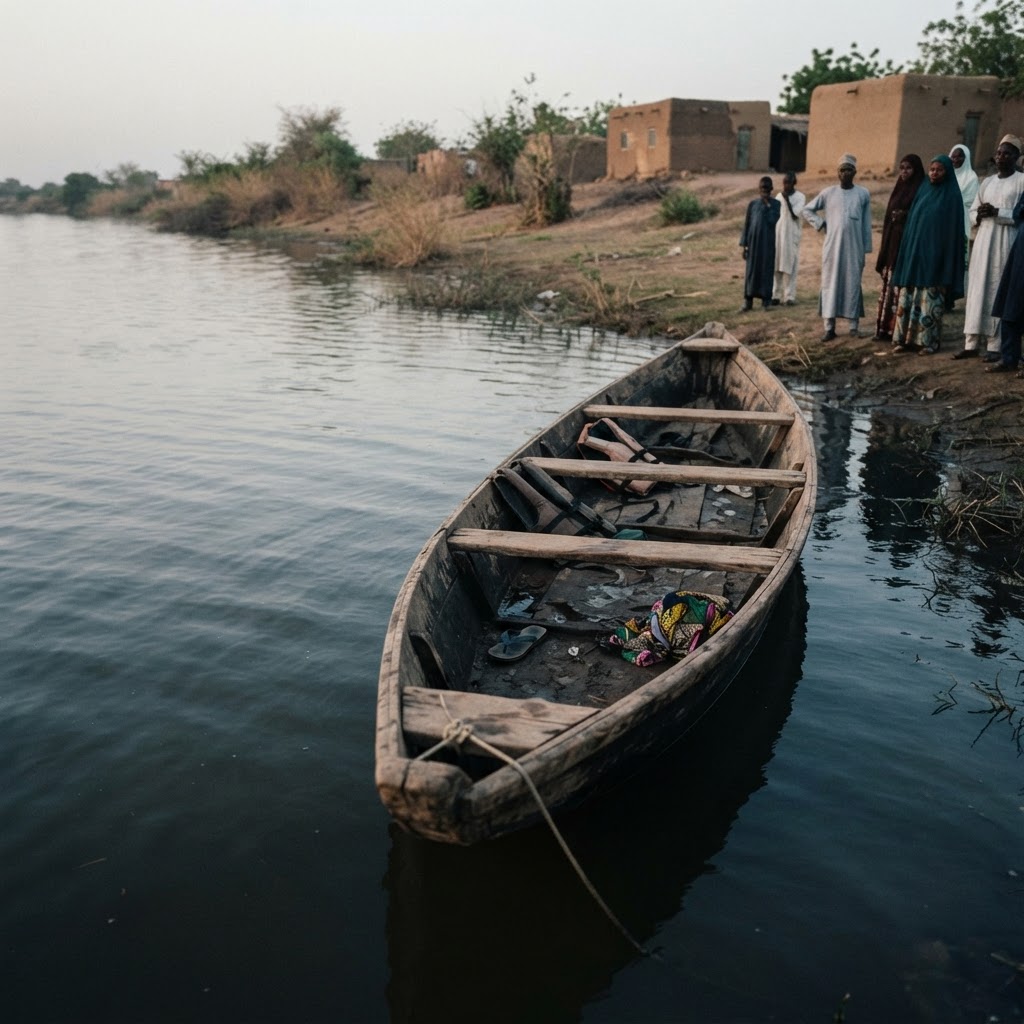
Every year, Nigerian waterways become the setting for preventable tragedies that claim dozens of lives, shatter families, and hollow out rural economies. The most recent boat tragedy in Sokoto has once again forced the nation to confront an uncomfortable truth: the combination of crumbling infrastructure, regulatory neglect, and economic desperation continues to turn rivers into graveyards. This article examines the Gorau community disaster in forensic detail, traces its root causes through the lenses of health, wealth, and community resilience, and proposes actionable pathways to prevent the next catastrophe.
What Happened at Gorau? The Sokoto Boat Disaster
The August 2026 capsizing in Goronyo LGA
In August 2026, a wooden vessel carrying more than 70 passengers capsized near Gorau town in Goronyo Local Government Area of Sokoto State, triggering one of the deadliest inland waterway disasters in recent Nigerian history. The boat was transporting traders and farm laborers — the majority of them children — to and from the Goronyo weekly market when it sank under the weight of its human and commercial cargo.
The confirmed death toll has become a subject of institutional disagreement that itself reveals systemic dysfunction. The National Inland Waterways Authority (NIWA) officially reported 41 deaths, while the Sokoto State Police Command confirmed 46 fatalities. Community sources and first responders on the ground, however, placed the figure at upwards of 55 dead — a discrepancy that points to the absence of reliable passenger manifests and the chaotic conditions under which rescue teams operated.
What is beyond dispute is the composition of the victims. Rescue operations, led primarily by local volunteer divers and the Sokoto State Emergency Management Agency (SEMA), recovered at least 40 children's bodies from the river. Of more than 70 people believed to be on board, only 16 survived. The scale of child mortality transforms this event from a transport accident into a community catastrophe.
This is not an isolated incident. It represents the fourth major waterway disaster in Sokoto State within a single year, following similar tragedies in Shagari and Silame LGAs. The pattern is clear, and the failure to interrupt it is a governance crisis in slow motion. According to NIWA's public safety reports, overloading remains the single largest contributing factor to inland waterway fatalities across Nigeria's 12 major river corridors.
Why Does Overloading Keep Killing People on Our Rivers?
Poverty, poor roads, and the economics of risk
The Gorau disaster did not happen in a vacuum. It happened because the residents of Kojiyo village and surrounding communities have no realistic alternative to wooden dugout canoes for reaching the Goronyo weekly market. There are no motorable roads that connect these rural settlements to commerce. The river is not a recreational choice — it is the only logistics corridor available.
This is the "Practical Prosperity" paradox at its starkest: economic survival requires accepting mortal risk. Traders load their canoes with heavy commercial goods — sacks of rice, motorcycles destined for market sale, and agricultural tools — alongside standing passengers. In technical terms, these wooden vessels are routinely pushed to over 200% of their safe buoyancy capacity, a threshold at which the vessel becomes structurally unstable in any current or wave disturbance.
NIWA guidelines on passenger manifests, weight limits, and vessel certification are explicit and legally binding. However, enforcement in remote areas like Kojiyo village is functionally nonexistent. NIWA's monitoring infrastructure is concentrated around metropolitan ports in Lagos, Warri, and Lokoja. In the riverine hinterlands of Sokoto, compliance is effectively voluntary — which means it rarely occurs.
The seasonal dimension compounds the problem significantly. Rice planting and harvesting cycles in the Sokoto River basin drive dramatic spikes in river traffic during specific months. During these windows, vessels that might carry 15 passengers routinely transport 40 or more, because every household is racing against the agricultural calendar. The collision between economic necessity and structural unsafety is both predictable and, tragically, predicted — yet it remains unaddressed year after year.
As we explore in our piece on Health Is Wealth: Why Nigerians Are Rethinking Prosperity in 2026, the true cost of economic desperation is measured not only in naira but in human lives.
How Does This Tragedy Damage Sokoto's Economy?
Farmers lost, supply chains broken, families impoverished
The economic damage radiating outward from the Gorau disaster operates on multiple scales simultaneously. At the household level, the loss of rice farmers and market traders — many of whom were the sole or primary income earners for their families — represents an instantaneous destruction of human capital that no government cash transfer program can quickly replace.
When a single boat accident kills the breadwinner of 30 or 40 households, entire families are pushed from economic stability into acute poverty overnight. This is the community-first impact in its most brutal form: the collective prosperity of a neighborhood, built across years of agricultural labor and market trading, can be erased in minutes. Many of these households were middle-class aspirants — not wealthy, but functional, feeding their children and saving incrementally. That trajectory ends with a capsized canoe.
At the regional scale, the recurring nature of these tragedies actively deters investment in riverine commerce. Entrepreneurs and small-scale agricultural investors rationally avoid supply chains that carry catastrophic human and financial risk. The downstream consequence is reduced farming activity, tighter food supply, and upward pressure on rice and grain prices in Sokoto and neighboring states like Kebbi and Zamfara.
Featured Products
Chukwu Abiama Tee
Bold black-and-gold Igbo-pride T-shirt featuring 'Chukwu Abiama' in premium streetwear typography.
₦15,000
Buy NowReverse Type 2 Diabetes & other associated Metabolic Issues using Dr. Jason Fung's Evidence-Based Approach— FMD program for Type 2 Diabetes
A practical fasting and fasting-mimicking programme built on Dr Jason Fung's insulin-resistance principles and ow-glycemic recipes.
₦19,950
Join NowỤmụ Igbo Tee
Classic black T-shirt with bold white 'Ụmụ Igbo' typography — a proud statement of Igbo heritage.
₦15,000
Buy NowNwanne Tee
Washed khaki vintage tee with a faded rust-orange 'Nwanne' stamp badge and palm leaf motif — a nod to kinship and heritage.
₦18,000
Buy NowObodo Tee
Faded denim-blue washed tee with a cream 'Obodo' stamp badge and sun motif, celebrating community roots.
₦18,000
Buy NowEkwe Heritage Tee
Deep indigo tee featuring a fine line-art illustration of a traditional Igbo ekwe drum, inspired by Igbo-Ukwu bronze artistry.
₦18,000
Buy NowIkenga Figure Tee
Forest green tee with a fine line-art illustration of a stylized Ikenga figure.
₦18,000
Buy NowThe structural solution that community economists and development practitioners consistently propose is a transition from traditional wooden dugout canoes to community-funded modern fiberglass vessels. Fiberglass boats offer measurably superior load capacity, stability, and durability. A cooperative model — where villages pool contributions, with potential matching funds from state government or diaspora remittances — could finance fleet acquisition over a 12 to 18-month cycle. This is the kind of practical, actionable wealth creation that transforms tragedy into infrastructure investment.
For context on how financial shocks disproportionately affect ordinary Nigerians, the Dollar to Naira Rate Today, August 19, 2026 illustrates how economic pressure compounds vulnerability in rural communities.
What Safety Measures Are Missing on Our Waterways?
Life jackets, golden hour, and first-response failures
The health dimension of the Gorau disaster is as damning as the logistical one. Nigerian government regulations mandate the use of life jackets on all commercial waterway vessels. Yet in rural Sokoto, life jacket availability among riverine communities is estimated to be below 10% — a statistic that effectively renders the regulation meaningless. Regulations without distribution, enforcement, or community education are not safety policy; they are documentation theater.
The medical science on drowning mortality is unambiguous. The "Golden Hour" principle — well-established in emergency medicine — holds that the probability of survival decreases exponentially when a drowning victim does not receive intervention within the first 60 minutes. The World Health Organization's drowning prevention framework identifies immediate rescue and resuscitation as the primary determinants of survival outcomes. At the Gorau riverbank, there was no stationed medical team, no emergency resuscitation equipment, and no trained paramedics. Local volunteer divers — brave as they were — were operating without the tools or training to perform life-saving interventions on recovered victims.
This gap between the theoretical safety framework and the lived reality at rural river crossings is precisely the kind of problem that community-led first aid training can begin to close. Training local divers — who already possess the courage and physical capability for water rescue — in basic resuscitation, patient stabilization, and emergency communication would immediately improve survival odds without waiting for federal infrastructure investment.
Nigeria's inland waterway safety protocols compare poorly with peer African nations. Rwanda and Ghana, for instance, have implemented decentralized emergency response units tied to high-risk water crossings in rural areas. Nigeria has the regulatory intent but lacks the last-mile execution. The WHO Global Drowning Report indicates that low- and middle-income countries account for over 90% of global drowning deaths — a disparity driven precisely by this gap in emergency response infrastructure.
The chronic stress of living in disaster-prone communities also takes a measurable toll on mental and physical health, as explored in our piece on Everyday Stress and Your Health.
How Do We Build a Waterway Safety Ecosystem?
Traditional leadership, modern tools, community action
Solving Nigeria's inland waterway crisis requires an architecture that integrates traditional authority, modern policy, diaspora resources, and grassroots mobilization. No single intervention is sufficient. The tragedy at Gorau demands a systems response.
Traditional institutions must be activated as the first line of enforcement. In Sokoto's riverine communities, the Sarkin Daji and equivalent traditional leaders hold genuine social authority over daily conduct. Empowering these figures as local maritime marshals — with clear mandates to verify passenger manifests, challenge overloaded departures, and refuse to permit vessels that violate basic safety standards — would extend regulatory reach into communities that state agencies cannot reliably monitor. This is not a novel concept; it is the application of existing social architecture to a documented need.
State government subsidy of safety equipment through local cooperatives offers a direct, affordable intervention. If Sokoto State channels even a modest portion of its federal allocation into subsidized life jacket procurement, distributed through registered cooperative societies, availability can shift from below 10% to above 60% within a single budget cycle. This integrated "Health + Wealth + Community" approach links personal safety to economic protection — a model that mirrors the cooperative investment logic behind programs like the FirstBank–Imo ÓKÓBÌ entrepreneurship initiative.
Diaspora Nigerians and community leaders have a tangible role. A coordinated campaign to fund solar-powered lighting at rural river docks — docks that currently see peak traffic in the pre-dawn hours when farmers depart for markets — would reduce the visibility-related risk that contributes to early morning disasters. The unit cost of solar dock lighting is modest; the collective will to finance it simply needs organization and leadership.
Finally, the transformation of this narrative from recurring tragedy to proactive resilience depends on information. When communities understand drowning prevention, vessel load limits, and their right to refuse unsafe transport, behavior changes. "Better Living Through Information" is not a slogan — it is a survival strategy. Platforms like eziokwubundu.com exist to ensure that knowledge reaches the families and communities for whom it is most urgent and most consequential.
Conclusion
The boat tragedy in Sokoto is both a humanitarian crisis and a mirror held up to systemic failures across infrastructure, regulation, healthcare, and community empowerment. Fifty lives — the majority of them children — did not have to be lost. They were lost because roads were not built, regulations were not enforced, life jackets were not distributed, and emergency teams were not stationed where they were needed most.
The path forward is not complicated in concept, even if it is demanding in execution: traditional leaders empowered, cooperatives funded, diaspora resources mobilized, and communities educated. Every Nigerian family deserves a government and a community ecosystem that treats their lives as worth protecting. Until that ecosystem is built, the rivers of Sokoto will keep taking what should never have been lost.
Stay Informed
Get New Articles in Your Inbox
Subscribe to receive the latest community development, health, and wealth insights from Eziokwubundu.
Newsletter
Practical insights on health, wealth, and community — delivered weekly.
Community Discussion(0)
Leave a Comment
More to Read
You May Also Like
Mbaitoli Security: Are Farmers Returning to Their Farms?
Dust settles slowly over Mbaitoli's farmlands, but the questions linger louder than ever. Families across Imo State whisper the same worry: will their fields ever feel safe again? Mbaitoli Security: Are Farmers Returning to Their Farms? remains one of the most urgent questions facing this agrarian c...
Imo Government to Support 100 More Communities
OKOBI is reshaping how everyday Imo residents build wealth from their own villages. The latest expansion, tagged OKOBI: 100 More Imo Communities Set to Receive Government Support, signals a new chapter in Governor Hope Uzodimma's push for grassroots prosperity. For Nigerian families and community le...
How Rising Petrol Prices Impact Nigerian Households and SMEs
Petrol prices have crossed a psychological line that many Nigerians once thought impossible. At ₦1,400 per litre in several states, rising petrol prices are reshaping how households spend, how businesses operate, and how communities survive. What was once an occasional headline about fuel scarcity h...
48 Months Without Full Pension Payments: Imo Pensioners
Retirement should bring peace, not financial anxiety. Yet across Imo State, thousands of elderly civil servants say their golden years have turned into a struggle for survival. The situation described in "48 Months Without Full Pension Payments: Imo Pensioners Demand Answers" reflects a deepening cr...