Powered by Obi Mbieri Independent Media Ltd · eziokwubundu.com
$1 = ₦1,328€1 = ₦1,521£1 = ₦1,773Access Bank Customers Lose N1.34 Billion to Hackers
The Nigerian banking sector has been rocked by yet another devastating cybersecurity breach. Access Bank, one of Nigeria's largest and most systemically significant financial institutions, is at the center of a legal and financial storm after an estimated N1,340,425,393 was allegedly drained from it...

The Nigerian banking sector has been rocked by yet another devastating cybersecurity breach. Access Bank, one of Nigeria's largest and most systemically significant financial institutions, is at the center of a legal and financial storm after an estimated N1,340,425,393 was allegedly drained from its accounts through unauthorized electronic transfers. This latest incident does not exist in isolation — it represents the sharpest edge of a broader epidemic of sophisticated financial crime that is rapidly outpacing the defenses of even the most resourced institutions in Africa's largest economy.
For Nigerian families, entrepreneurs, diaspora professionals, and community leaders who depend on digital banking infrastructure to build and protect their wealth, this breach is not merely headline news. It is a direct threat to the practical prosperity that millions have worked to build. Understanding what happened, how it happened, and what can be done about it is no longer optional — it is a matter of financial survival.
What Happened in the N1.34 Billion Access Bank Cyber Breach?
Scale, Court Filings, and the Recovery Effort
The full weight of the Access Bank breach became public through court filings at the Federal High Court in Lagos, where the bank moved urgently to contain the financial hemorrhage. According to those filings, a staggering N1,340,425,393 — over one billion, three hundred and forty million naira — was allegedly removed from the bank's vault through unauthorized electronic transfers executed over a short operational window.
What makes this breach particularly alarming is the sheer dispersal strategy the perpetrators employed. Rather than concentrating the stolen funds in a handful of accounts, the hackers reportedly spread the proceeds across accounts held in 71 different Nigerian banks. This multi-institution dispersal is a deliberate tactic designed to complicate recovery, overwhelm investigators, and exploit the time gaps between inter-bank settlement cycles. Access Bank responded by pursuing 'Post No Debit' (PND) orders across all 71 institutions — a legal mechanism that freezes identified accounts and prevents further withdrawals while recovery proceedings continue.
The Special Fraud Unit (SFU) of the Nigeria Police Force, alongside the Federal High Court, has been central to coordinating the freeze and recovery efforts. However, this N1.34 billion incident must be viewed in the wider context of Access Bank's own financial disclosures, which revealed that the bank suffered a reported N5.46 billion loss to fraudsters in just the first half of 2023. The current breach, therefore, represents an acceleration — not an anomaly — in the frequency and scale of attacks targeting Nigeria's tier-one banking infrastructure.
How Did Hackers Drain Such Massive Sums?
Technical Vulnerabilities in Core Banking Systems
The mechanics behind a breach of this magnitude go far beyond a customer falling for a phishing text. At this scale, cybersecurity experts point to what is commonly described as 'vault access' attacks — intrusions that bypass individual customer credentials entirely and instead target the core banking system itself, or internal settlement and nostro accounts that process high-volume transfers automatically.
Session hijacking and man-in-the-middle (MITM) attacks are among the most documented methods. In these scenarios, attackers intercept live communication streams between banking nodes — often exploiting vulnerabilities introduced during system updates, API integrations, or development-phase testing environments that are inadvertently left exposed. Once inside an active session, a skilled attacker can authenticate and authorize transfers that appear entirely legitimate to the system's internal controls.
A critical distinction that Nigerian banking customers must understand is the difference between 'phantom hacking' and direct system breaches. Phantom hacking involves social engineering — tricking victims into moving their own money to fraudulent accounts through psychological manipulation. Direct system breaches, like what appears to have occurred at Access Bank, involve unauthorized commands being executed at the infrastructure level, completely bypassing individual customer consent.
Perhaps the most uncomfortable factor in many major Nigerian banking frauds is the persistent threat of insider collusion. Historical cases in Nigeria have included the arrest of bank employees and affiliated technology contractors who harvested data from thousands of customer accounts. One documented case involved individuals claiming to have extracted credentials from over 2,000 bank customers using privileged internal access. Without adequate segregation of duties and behavioral monitoring, even the best perimeter defense can be defeated from within.
Why Is Financial Fraud Skyrocketing Despite Fewer Cases?
Decoding the NIBSS Data and the 350% Rise
A counterintuitive trend has emerged from the Nigeria Inter-Bank Settlement System (NIBSS) fraud reports: the total number of fraud incidents has actually declined by 31% since 2020, yet the financial damage has exploded by an extraordinary 350%, reaching approximately $34 million (about N52.3 billion) in 2024. In contrast, the industry lost N11.6 billion to fraud in 2023 — meaning losses multiplied by more than four times in a single year.
This divergence tells a sophisticated story. Cybercriminals in Nigeria's evolving threat landscape are no longer relying on high-volume, low-yield attacks like mass SMS phishing campaigns. They are investing time, technology, and organizational structure into fewer, higher-value institutional breaches. The result is a dramatically higher 'per-hit' value — each successful attack now yields exponentially more than it did five years ago.
This shift correlates directly with Nigeria's rapid digital payment expansion. The Central Bank of Nigeria's push for a cashless economy has increased transaction volumes and onboarded tens of millions of new digital banking users, many of whom lack foundational cybersecurity awareness. Over the last five years, fraudulent activity within digital channels has surged by 196%, according to NIBSS tracking data.
Organized syndicates — including internationally networked groups commonly referenced in law enforcement circles as 'Yahoo Boys' — are reportedly shifting their operational focus from targeting individual consumers to engineering multi-billion naira institutional breaches. The economics are simple: one successful institutional exploit yields more than thousands of individual phishing attacks, with the added benefit of institutional reluctance to publicize losses. You can read more about how government policies affect everyday Nigerians' financial realities in our coverage of the Osun 2026 election result and its meaning for Nigerians' pockets.
Featured Products
Chukwu Abiama Tee
Bold black-and-gold Igbo-pride T-shirt featuring 'Chukwu Abiama' in premium streetwear typography.
₦15,000
Buy NowReverse Type 2 Diabetes & other associated Metabolic Issues using Dr. Jason Fung's Evidence-Based Approach— FMD program for Type 2 Diabetes
A practical fasting and fasting-mimicking programme built on Dr Jason Fung's insulin-resistance principles and ow-glycemic recipes.
₦19,950
Join NowỤmụ Igbo Tee
Classic black T-shirt with bold white 'Ụmụ Igbo' typography — a proud statement of Igbo heritage.
₦15,000
Buy NowNwanne Tee
Washed khaki vintage tee with a faded rust-orange 'Nwanne' stamp badge and palm leaf motif — a nod to kinship and heritage.
₦18,000
Buy NowObodo Tee
Faded denim-blue washed tee with a cream 'Obodo' stamp badge and sun motif, celebrating community roots.
₦18,000
Buy NowEkwe Heritage Tee
Deep indigo tee featuring a fine line-art illustration of a traditional Igbo ekwe drum, inspired by Igbo-Ukwu bronze artistry.
₦18,000
Buy NowIkenga Figure Tee
Forest green tee with a fine line-art illustration of a stylized Ikenga figure.
₦18,000
Buy NowWhat Legal Protections Exist for Nigerian Families?
The Fraud Act, CBN Policy, and Your Rights
Nigerian law does provide a legislative framework for prosecuting financial cybercrime, anchored primarily in the Advance Fee Fraud and Other Fraud Related Offences Act 2006. Under Sections 8(a) and 1(1)(a) of this Act, individuals who obtain property by false pretense through electronic means can face substantial custodial sentences. The Economic and Financial Crimes Commission (EFCC) and the Special Fraud Unit are the primary enforcement bodies empowered to investigate, arrest, and prosecute perpetrators.
On the regulatory front, the CBN's 'Payments System Vision 2028' framework represents the most ambitious blueprint yet for constructing a resilient digital financial ecosystem in Nigeria. Its provisions address authentication standards, transaction monitoring thresholds, and mandatory incident reporting timelines — all designed to close the structural gaps that sophisticated hackers exploit. For middle-class Nigerians and entrepreneurs whose wealth is increasingly held in digital form, this policy framework is not abstract governance — it is the architecture protecting their savings. See how government financial initiatives directly impact ordinary citizens, such as the FG's N50 Million Housing Loan Portal, for context on how policy shapes financial access.
However, legal protections have well-documented limitations. The critical question of bank liability remains contentious: where a customer's credentials were compromised through negligence on the customer's part — such as voluntarily sharing an OTP — courts and banks frequently shift the burden of proof onto the victim. Conversely, where a breach occurs entirely at the institutional infrastructure level, as appears to be the case with the N1.34 billion Access Bank incident, liability arguments shift decisively toward the institution.
One of the most promising regulatory developments is the mandatory linkage between the banking system and the national telecom grid, designed to crush SIM-swap fraud before transactions clear. By requiring real-time verification that a transaction-initiating SIM card has not been recently ported or replaced, this integration eliminates one of the most exploited entry points into Nigerian bank accounts.
How Can You Protect Your Wealth From Cyber-Threats?
Practical Defensive Habits for Modern Nigerians
Protection begins with knowing your emergency options. If you suspect your account has been compromised, Nigerian bank customers can use USSD emergency codes — such as *919*10# for Access Bank account blocks or *565*0# to verify BVN and NIN linkages — to instantly restrict access to their accounts without requiring internet connectivity. These codes function even on basic mobile phones, making them one of the most accessible defensive tools available to Nigerian families across all income levels.
For entrepreneurs and business owners managing higher transaction volumes, the 'Strategic Triangle' approach to digital wealth protection is essential. This framework combines three layers: robust Two-Factor Authentication (2FA) using authenticator apps rather than SMS-based codes, hardware security tokens for high-value authorization, and dedicated devices used exclusively for business banking transactions — never shared, never used for social media browsing or email.
Understanding 'trusted platform abuse' is equally critical. This is the technique where hackers use legitimate-looking emails, SMS notifications, or even cloned banking apps to harvest One-Time Passwords within a narrow window of minutes. The key warning sign is urgency — any communication demanding immediate action to "secure your account" should be treated as a red flag and verified only through your bank's official app or a direct branch call.
For diaspora Nigerians monitoring accounts from abroad, the risks compound when public Wi-Fi networks are used for banking sessions. A Virtual Private Network (VPN), combined with biometric authentication on your banking app and geo-restriction notifications, provides a baseline defense. Checking your account via NIBSS's BVN verification portal periodically ensures your identity anchor remains uncompromised. Local entrepreneurs can also benefit from structuring wealth across multiple instruments — a concept explored further in our guide on community-level financial safety frameworks.
What Does This Breach Mean for Community Trust?
Traditional Values, Modern Banking, and Collective Responsibility
In African and specifically Nigerian communities, financial institutions have always occupied a position of collective trust that goes beyond their technical function. When a tier-one bank like Access Bank suffers a breach of this magnitude, the damage is not confined to the individual accounts affected — it erodes the communal confidence upon which an entire ecosystem of economic activity depends. Traders who accept digital transfers, cooperatives that aggregate savings digitally, and families who receive diaspora remittances into bank accounts all operate on the foundational assumption that the institution holding their money is secure.
This is precisely why cybersecurity must be understood as a community responsibility, not merely an individual or institutional one. A single compromised business account within a close-knit entrepreneurial network can serve as a gateway for social engineering attacks against every contact in that network. The interconnected nature of trust-based financial relationships — so central to the Igbo and broader Nigerian commercial tradition — becomes a vulnerability when digital hygiene is not practiced collectively.
There is also a dangerous information vacuum that follows high-profile banking scandals in Nigeria. Misinformation spreads rapidly, creating panic withdrawals, reputational damage, and a retreat from digital banking that ultimately harms the very people it is meant to protect. Evidence-based financial literacy — grounded in verified data from bodies like NIBSS, the CBN, and the EFCC — is the antidote. This is the kind of informed community development that connects to the deeper philosophy explored in our reflection on what Eziokwu Bu Ndu really means as an Igbo philosophy of truth as life.
Community leaders, youth professionals, and student organizations must now add cybersecurity advocacy to their development agendas. Lobbying for stronger regulatory enforcement, supporting digital literacy programs in local communities, and holding financial institutions publicly accountable for their security posture are not peripheral concerns — they are prerequisites for the sustainable Nigerian prosperity that every household and entrepreneur is striving to build.
The N1.34 billion Access Bank breach is a defining moment for Nigerian digital banking. It is simultaneously a security failure, a legal battle, a policy challenge, and a community issue. For every Nigerian family, entrepreneur, and diaspora professional reading this — your money is at the intersection of all four. Staying informed, staying vigilant, and staying connected to trusted sources of evidence-based financial guidance is not just good practice. In today's threat environment, it is the foundation of practical prosperity.
Stay Informed
Get New Articles in Your Inbox
Subscribe to receive the latest community development, health, and wealth insights from Eziokwubundu.
Newsletter
Practical insights on health, wealth, and community — delivered weekly.
Community Discussion(0)
Leave a Comment
More to Read
You May Also Like

Imo Government to Support 100 More Communities
OKOBI is reshaping how everyday Imo residents build wealth from their own villages. The latest expansion, tagged OKOBI: 100 More Imo Communities Set to Receive Government Support, signals a new chapter in Governor Hope Uzodimma's push for grassroots prosperity. For Nigerian families and community le...

Osun Assembly Approves State Police Bill
The security conversation in Nigeria has taken a decisive turn. Lawmakers across the country are now voting on a reform that could reshape how communities are protected, starting from the grassroots. The Osun Assembly Approves State Police Bill, joining a growing list of states pushing for decentral...

Imo Approves Recruitment of 6,030 Teachers Across 27 LGAs
Imo State has taken a bold step toward transforming its public education system. Governor Hope Uzodimma has approved the recruitment of 6,030 teachers across the state's 27 Local Government Areas, a move many residents have awaited for years. This decision, widely reported by Vanguard(https://www.va...

CBN Cuts Interest Rate to 23%: Impact on Nigerians
Nigerians woke up to significant financial news this week. The Central Bank of Nigeria has made a bold move that could reshape household budgets and business plans alike. This shift, widely covered as CBN Cuts Interest Rate to 23% — What It Means for Nigerians and Businesses, deserves a closer look ...
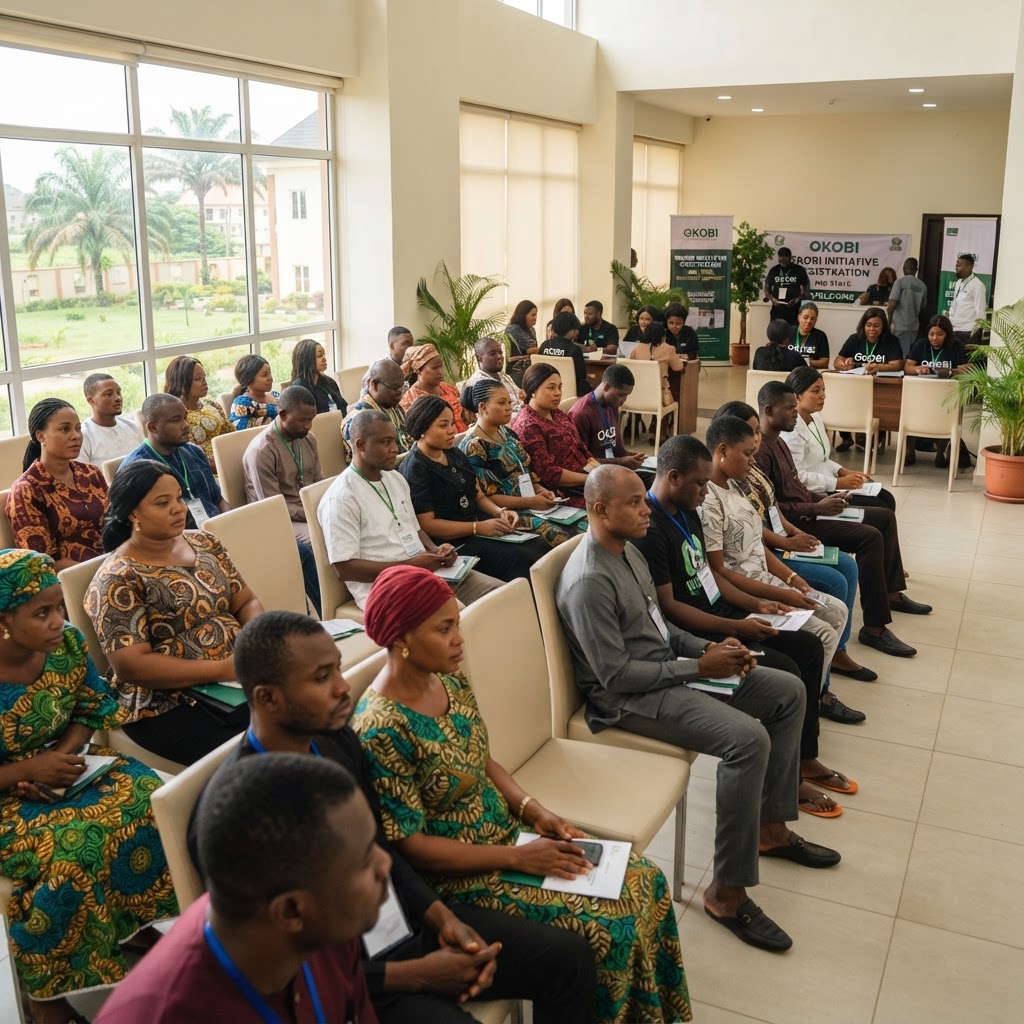
65 Imo Businesses Await OKOBI Initiative Registration
Imagine 65 kindred-owned businesses across Imo State, each waiting for one final document to unlock full legal status. That single step—Corporate Affairs Commission registration—now defines the next chapter in Imo's OKOBI Initiative: 65 Community Businesses Await CAC Registration. For families, entr...

Why Nigeria Faces an Ongoing Power Supply Crisis
Nigerian households lose power multiple times a day, and the frustration never seems to fade. Behind every flickering bulb and silent refrigerator lies a deeper story about Nigeria's fragile power supply system — one that touches nearly every aspect of daily life across the country. Businesses stall...

61 Nigerian Officials Tied to $271M US Properties
Nigeria's corridors of power just faced a fresh spotlight. A newly released investigation, titled 61 Nigerian Officials Linked to $271m US Property Holdings — Report, has reignited public debate over wealth, accountability, and trust in leadership. For families budgeting daily expenses, the numbers ...

Imo Flood Crisis: Which Communities Are Most Vulnerable?
The rains have returned to Imo State, and so has fear. Families in low-lying communities are already counting losses, while roads turn into rivers overnight. The Imo Flood Crisis: Which Communities Are Most Vulnerable? question is no longer theoretical — it is a daily reality for thousands of Ndi Im...

Imo Insecurity: Seven Communities Face Renewed Kidnap Threat
Fear has returned to parts of Imo State as criminal gangs target unsuspecting residents. Imo Insecurity: Seven Communities Face Renewed Kidnap Threat is more than a headline—it reflects a lived reality for thousands of families who now measure daily life against the possibility of sudden violence. U...

How to Register a Business in Imo
Starting a business in Imo State is one of the most impactful decisions you can make — not just for your personal financial future, but for the broader prosperity of your community. From the bustling markets of Owerri to the agricultural enterprises of Orlu and Okigwe, Imo entrepreneurs are driving ...