Powered by Obi Mbieri Independent Media Ltd · eziokwubundu.com
$1 = ₦1,327€1 = ₦1,540£1 = ₦1,795Traditional Igbo conflict resolution methods
Across southeastern Nigeria, a quiet but powerful legal tradition has governed community life for centuries. Long before courts, judges, and civil litigation entered the Nigerian consciousness, Igbo communities had developed a sophisticated, layered system of dispute resolution rooted in ancestral w...
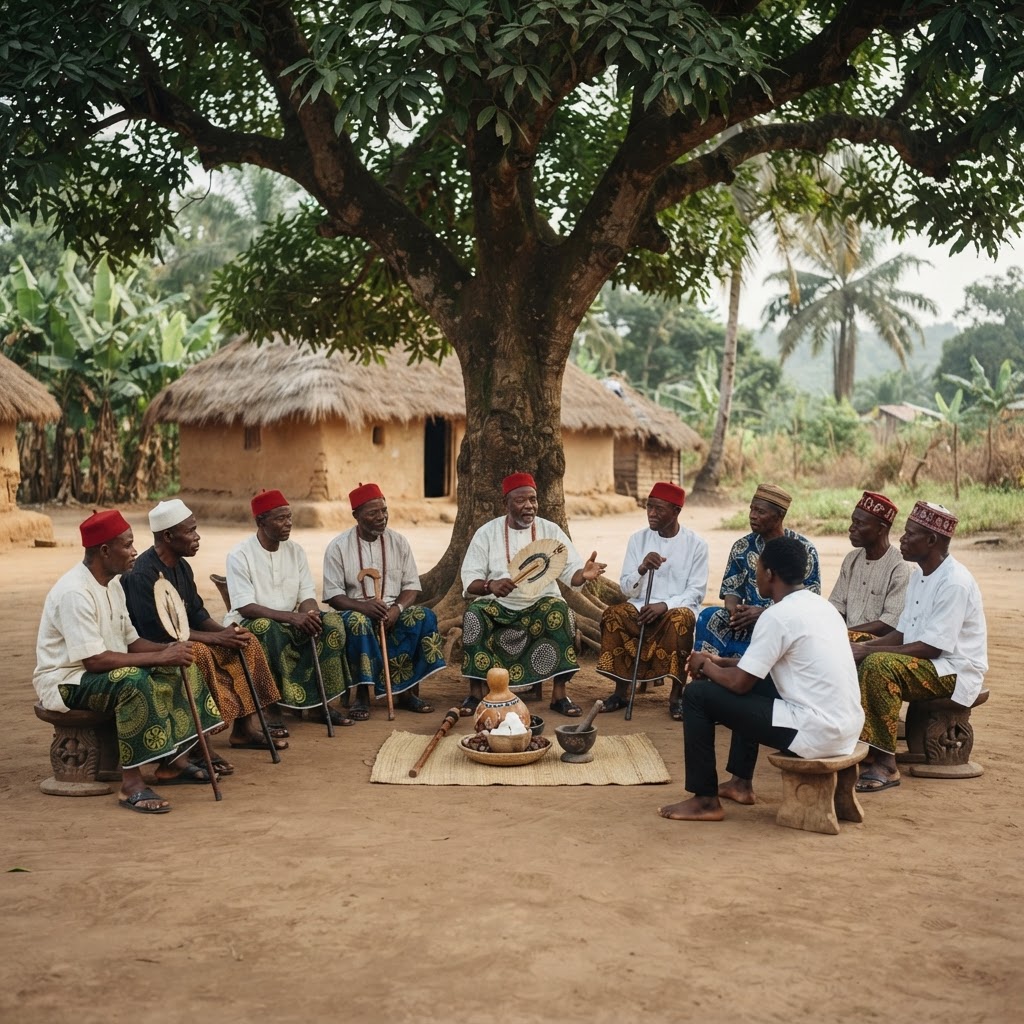
Across southeastern Nigeria, a quiet but powerful legal tradition has governed community life for centuries. Long before courts, judges, and civil litigation entered the Nigerian consciousness, Igbo communities had developed a sophisticated, layered system of dispute resolution rooted in ancestral wisdom, social accountability, and the paramount pursuit of communal harmony. These traditional Igbo conflict resolution methods did not simply punish wrongdoers — they healed fractured relationships, restored dignity, and preserved the collective fabric that made communities thrive.
Today, as Nigerian families grapple with court backlogs, crippling legal fees, and the psychological toll of unresolved disputes, these indigenous frameworks are experiencing a compelling renaissance. For diaspora Nigerians, urban entrepreneurs, community leaders, and families managing inheritance disputes, understanding these systems offers more than cultural pride — it offers a practical, proven alternative to adversarial litigation.
Why does the Igbo approach to disputes matter today?
Restorative roots vs. adversarial courts
The foundational difference between Western legal models and traditional Igbo jurisprudence lies in intent. Modern civil litigation operates on a winner-takes-all framework: one party is vindicated, the other is penalised, and the relationship between both parties is rarely considered a variable worth protecting. Igbo customary dispute resolution, by contrast, centres on ndokwa — a Igbo concept encapsulating peaceful reconciliation, restored honour, and the preservation of communal bonds above all else.
This philosophical divergence has profound practical consequences. According to research published by the Nigerian Institute of Advanced Legal Studies, land disputes alone account for over 40% of civil cases in Nigerian courts, with many suits extending across two or three decades. The generational wealth lost to solicitor fees, court levies, and foregone productivity during this period is staggering. Beyond finances, prolonged litigation creates chronic psychosocial stress — a physiological reality that elevates cortisol levels, impairs sleep, strains marriages, and destabilises the mental health of entire family units.
This is where the strategic triangle of health, wealth, and community cohesion becomes indispensable. Indigenous consensus-building methods protect economic capital by resolving disputes swiftly and at minimal cost. They reduce domestic anxiety by prioritising dialogue over confrontation. And they sustain the social infrastructure — the trust networks, kinship obligations, and shared identities — that allows communities to pool resources and prosper collectively. For Nigerian families navigating inheritance wrangles or boundary disputes, choosing traditional resolution mechanisms is not merely a cultural choice; it is a rational economic and health decision.
What social institutions drive Igbo dispute arbitration?
From family councils to village assemblies
Traditional Igbo governance operates through a multi-tiered architecture of social institutions, each carrying distinct arbitrative authority calibrated to the nature and scale of the dispute at hand.
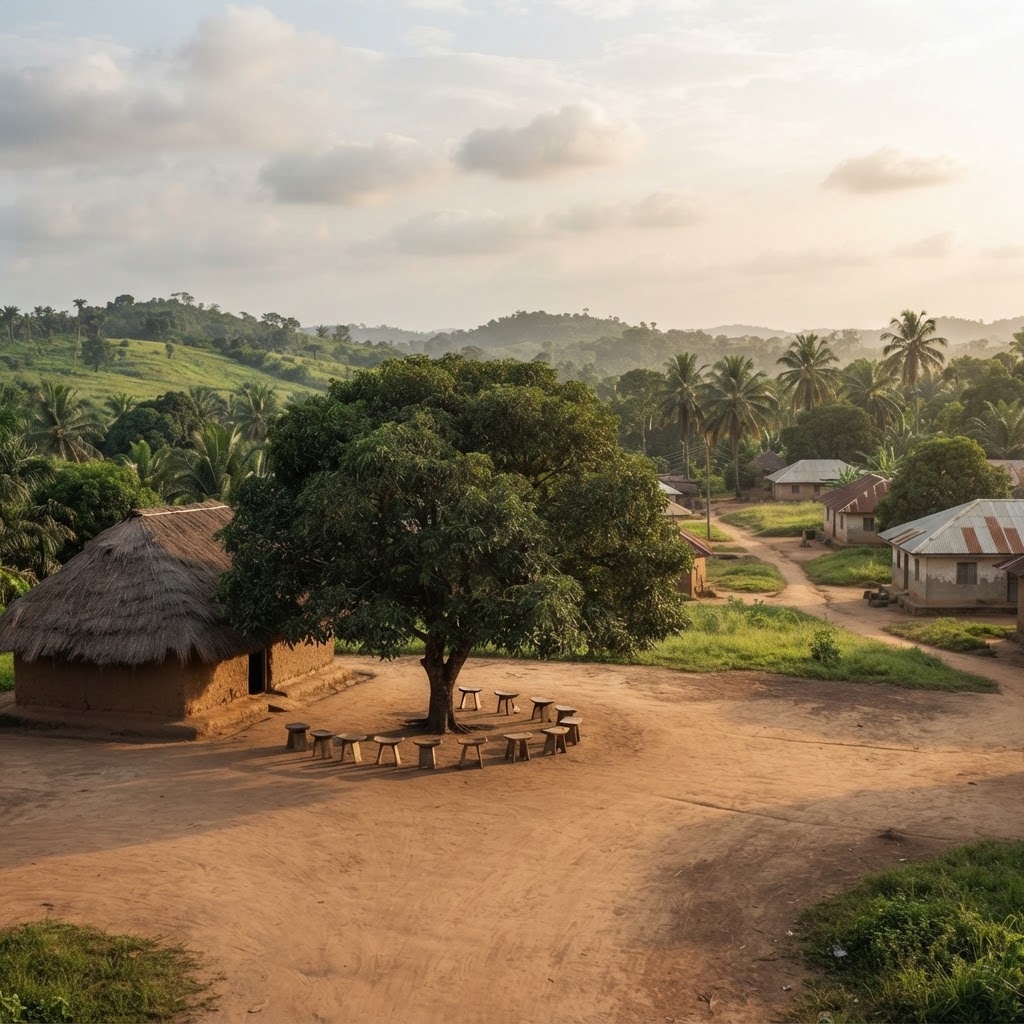
At the most foundational level stands the Umunna — the kindred patrilineage group that constitutes the first tribunal for domestic grievances, inheritance disagreements, and boundary demarcations. Presiding over Umunna proceedings is the Diokpala, the eldest male custodian of the lineage who holds the sacred Ofo staff of justice. The Ofo is not merely symbolic: it represents ancestral sanction, moral authority, and the binding power of truth. When the Diokpala speaks in arbitration, he channels both living consensus and ancestral precedent. His rulings on land boundaries, bride price disputes, and succession rights carry the weight of law within his kindred.
Equally critical — and often underappreciated in academic discourse — is the role of women's collectives. The Umuada, the daughters of the patrilineage (including married daughters who return for ceremonial obligations), constitute one of the most formidable arbitrative bodies in Igbo tradition. Their moral authority transcends household boundaries. When the Umuada convene to address domestic violence, child welfare abuse, or flagrant disregard for community norms, their verdicts carry a social enforceability that male-dominated councils frequently cannot match. Complementing them are the Inyemedi — the wives of the kindred — who deploy peaceful civil boycotts, collective refusals of domestic labour, and organised public disapproval to compel compliance from errant husbands or abusive in-laws.
At the upper tier of this system sit two institutions that provide checks against authoritarianism. The Ozo titled society (known as Ndichie in many communities) brings together the most distinguished titled men, whose earned prestige demands impartiality and wisdom in adjudicating complex inter-family or inter-village disputes. Alongside them, Age Grades (Uke) enforce community decisions, carry out public works, and hold significant coercive power in ensuring that arbitral settlements are honoured. Together, these institutions create a decentralised deliberative democracy that distributes power horizontally rather than concentrating it in a single authority — a governance model that contemporary community leaders would do well to study.
For communities in Imo State navigating governance challenges, understanding these foundational institutions contextualises nearly two years of local government stewardship and its community impact within a long tradition of grassroots accountability.
Which sacred rites govern Igbo conflict settlement?
Oaths, covenants, and ancestral accountability
The spiritual dimension of traditional Igbo conflict resolution is not superstition — it is jurisprudence. In cultures where formal documentation and state enforcement mechanisms were absent, binding agreements required a different form of accountability: the invocation of ancestral and divine witnesses.
Inu Iyi (oath-taking) is one of the most powerful instruments in this framework. When two parties in a property dispute or defamation case could not reach resolution through dialogue, they would be brought before a recognised deity, sacred water source, or ancestral shrine to take an oath of truth. The communal belief in spiritual consequences for false testimony served as a powerful deterrent against perjury — arguably more effective than cross-examination in a courtroom where witnesses routinely lie without consequence.
More solemn still is Igba Ndu — the covenant of blood and life. Reserved for the most intractable disputes, Igba Ndu binds both parties to a sacred agreement through symbolic or literal blood covenant rituals, calling upon the highest spiritual forces to enforce compliance. Breaching an Igba Ndu covenant was believed to invite catastrophic personal and familial consequences, making the agreement self-enforcing in a way no court order can truly replicate.
Featured Products
Chukwu Abiama Tee
Bold black-and-gold Igbo-pride T-shirt featuring 'Chukwu Abiama' in premium streetwear typography.
₦15,000
Buy NowReverse Type 2 Diabetes & other associated Metabolic Issues using Dr. Jason Fung's Evidence-Based Approach— FMD program for Type 2 Diabetes
A practical fasting and fasting-mimicking programme built on Dr Jason Fung's insulin-resistance principles and ow-glycemic recipes.
₦19,950
Join NowỤmụ Igbo Tee
Classic black T-shirt with bold white 'Ụmụ Igbo' typography — a proud statement of Igbo heritage.
₦15,000
Buy NowNwanne Tee
Washed khaki vintage tee with a faded rust-orange 'Nwanne' stamp badge and palm leaf motif — a nod to kinship and heritage.
₦18,000
Buy NowObodo Tee
Faded denim-blue washed tee with a cream 'Obodo' stamp badge and sun motif, celebrating community roots.
₦18,000
Buy NowEkwe Heritage Tee
Deep indigo tee featuring a fine line-art illustration of a traditional Igbo ekwe drum, inspired by Igbo-Ukwu bronze artistry.
₦18,000
Buy NowIkenga Figure Tee
Forest green tee with a fine line-art illustration of a stylized Ikenga figure.
₦18,000
Buy NowEqually significant are the procedural symbols of resolution. The sharing of Oji (kola nut) at the close of arbitration proceedings is not a formality — it is a liturgical act of mutual absolution. When two formerly disputant parties break kola nut together, they declare before witnesses — living and ancestral — that hostilities have ceased and brotherhood is restored. The pouring of palm wine reinforces this covenant, lubricating the social bonds that conflict had strained.
Importantly, modern Igbo communities — many of which are predominantly Christian — have not discarded these frameworks. Instead, they have adapted them, replacing fetishized ritual elements with prayer, Bible passages, or church-mediated covenants while retaining the moral enforceability and communal witness function that make these ceremonies meaningful. The UN-backed recognition of Africa's true cultural and civilisational size resonates here: these are not primitive customs awaiting replacement, but sophisticated ethical technologies with enduring relevance.
How do these practices preserve wealth and mental health?
Economic and psychological dividends of reconciliation
The financial case for traditional dispute resolution is compelling and concrete. In Nigeria's formal court system, a straightforward land boundary dispute can attract legal fees ranging from ₦500,000 to over ₦5 million, depending on the calibre of counsel engaged. Cases extending beyond five years — which is common — compound these costs with transportation, documentation, and opportunity costs. By contrast, a traditional Umunna arbitration typically costs nothing beyond the ceremonial provision of kola nut, palm wine, and a modest contribution to the elders' time — a cost measured in thousands, not millions.
The mental health implications are equally significant. Research in psychoneuroimmunology consistently demonstrates that chronic interpersonal conflict elevates cortisol and inflammatory biomarkers, increasing vulnerability to hypertension, type 2 diabetes, and depression — conditions disproportionately affecting Nigerian adults. The World Health Organization's documentation on stress and chronic disease reinforces that unresolved conflict is a public health issue, not merely a private grievance. Village reconciliation processes, which typically conclude within days or weeks, interrupt this cortisol cascade before it becomes chronic, protecting both participants and their children from the downstream health consequences of protracted antagonism.
The economic ripple effects extend further. Secured farmland and settled family assets form the collateral foundation for micro-business investment. Entrepreneurs seeking microfinance loans in southeast Nigeria frequently face rejections because disputed land titles cannot serve as security. Resolving land conflicts through traditional means — quickly and with community witness — clears the way for asset utilisation, credit access, and generational wealth transfers that formal litigation often freezes for decades.
How can modern communities integrate Igbo justice mechanisms?
Practical implementation for town unions and diaspora
The revival of traditional Igbo conflict resolution methods does not require communities to choose between modernity and heritage. Several practical integration models already exist and can be expanded with deliberate institutional design.
Town Unions and Trade Associations represent the most accessible entry point. Bodies governing major commercial clusters — including Onitsha Main Market and Alaba International — can formally codify ADR panels modelled on Umunna arbitration protocols, complete with a roster of respected elders, documented procedural steps, and enforceable settlement agreements. The Arbitration and Conciliation Act (Cap A18, Laws of the Federation of Nigeria) provides a harmonisation framework under which community arbitral awards can be domesticated and enforced through state courts without requiring full litigation — preserving indigenous process while accessing modern enforceability.
Diaspora associations present another crucial implementation context. Igbo unions in the United Kingdom, the United States, and Canada regularly face inheritance disputes, association fund mismanagement allegations, and interpersonal grievances that fester because no agreed mechanism exists. Adopting a formalised ADR panel — with elected Diokpala equivalents, documented proceedings, and kola-nut-symbolism-inspired closing ceremonies — gives these associations a culturally grounded governance tool.
For urban and diaspora families facing specific inheritance or land disputes, a practical four-step activation blueprint applies: First, convene an informal family meeting to identify the most respected, neutral elder within the extended kindred. Second, formally request a structured Umunna sitting with all parties present and a designated record-keeper. Third, present all documentation, grievances, and proposed resolutions without legal representation, allowing elders to deliberate. Fourth, ratify the agreement through a witnessed covenant — whether kola nut ceremony, prayer, or signed community document — before notifying any legal counsel of the settled position.
This approach aligns with the infrastructure of community self-determination visible in local governance accountability stories like the Mbieri infrastructure scrutiny case, which demonstrates that communities which hold institutions accountable through organised collective voice achieve better outcomes than those that rely solely on state mechanisms.
Conclusion
Traditional Igbo conflict resolution methods represent one of Africa's most sophisticated contributions to the global canon of restorative justice. They are not relics of a pre-modern past — they are living, adaptable systems that protect family wealth, safeguard mental health, and preserve the communal solidarity that individual and collective prosperity depends upon.
For Nigerian families, community leaders, entrepreneurs, and diaspora associations navigating the inevitable frictions of shared life, these methods offer what the formal legal system rarely can: speed, affordability, relationship restoration, and peace. Embracing them — thoughtfully, strategically, and with modern legal harmonisation — is not a retreat from progress. It is, in the truest sense, practical prosperity rooted in cultural wisdom.
Published by eziokwubundu.com — your integrated platform for health, wealth, and community development across Nigerian and African communities.
Stay Informed
Get New Articles in Your Inbox
Subscribe to receive the latest community development, health, and wealth insights from Eziokwubundu.
Newsletter
Practical insights on health, wealth, and community — delivered weekly.
Community Discussion(0)
Leave a Comment
More to Read
You May Also Like

“IMSU ASUU Crisis: Are Students About to Pay the Price for the University's Labour Dispute?”
The gates of Imo State University (IMSU) have once again fallen silent. Following the expiration of an unanswered 21-day ultimatum, the Academic Staff Union of Universities (ASUU) chapter at IMSU declared an indefinite strike, bringing academic activities at one of Imo State's most important tertiar...

Seplat’s Correspondence With the Palace: Who Was Responding?
One of the most consequential questions now hanging over Seplat Energy's dealings with Obi-Mbieri community is deceptively simple: when the company wrote to the palace, who wrote back? That question, which might once have seemed procedural, has evolved into the central axis of a dispute touching on ...

What Happened to Uzoma Ekeanyanwu? Tracing His Police Detention and the Dispute Behind It
By Eziokwubundu.com Investigative Desk --- When a prominent community figure disappears into police custody for more than two weeks without a formal public charge, without a confirmed detention facility, and without transparent disclosure of the allegations against him, the silence itself becomes a ...
Community Development Levies in Imo Explained
Community development levies sit at the intersection of tradition, governance, and grassroots prosperity in Imo State. For millions of Imo indigenes — whether living in Owerri, Lagos, London, or Houston — these contributions represent far more than financial obligations. They are expressions of coll...

Best Mobile Networks in Mbaitoli Compared
Mobile connectivity has quietly become one of the most critical pieces of infrastructure in Imo State's communities — and nowhere is this more apparent than in Mbaitoli Local Government Area. From POS operators in Nwaorieubi to diaspora families sending remittances home to Ogwa, the choice of mobile...

Mbaitoli Schools and Skills Training Guide
Published by eziokwubundu.com — Your Nigerian Health, Wealth, and Community Resource --- Why Does Education Drive Mbaitoli's Economic Growth? Mbaitoli Local Government Area occupies a strategically significant position in Imo State, sharing a boundary with the Owerri metropolis and functioning as o...
Imo State Healthcare Access Guide
Accessing quality healthcare in Imo State has long been a challenge shaped by underfunding, geographic disparity, and heavy reliance on out-of-pocket spending. Yet the landscape is shifting. With the operationalization of the Imo State Health Insurance Agency (IMSHIA), renewed federal investment thr...
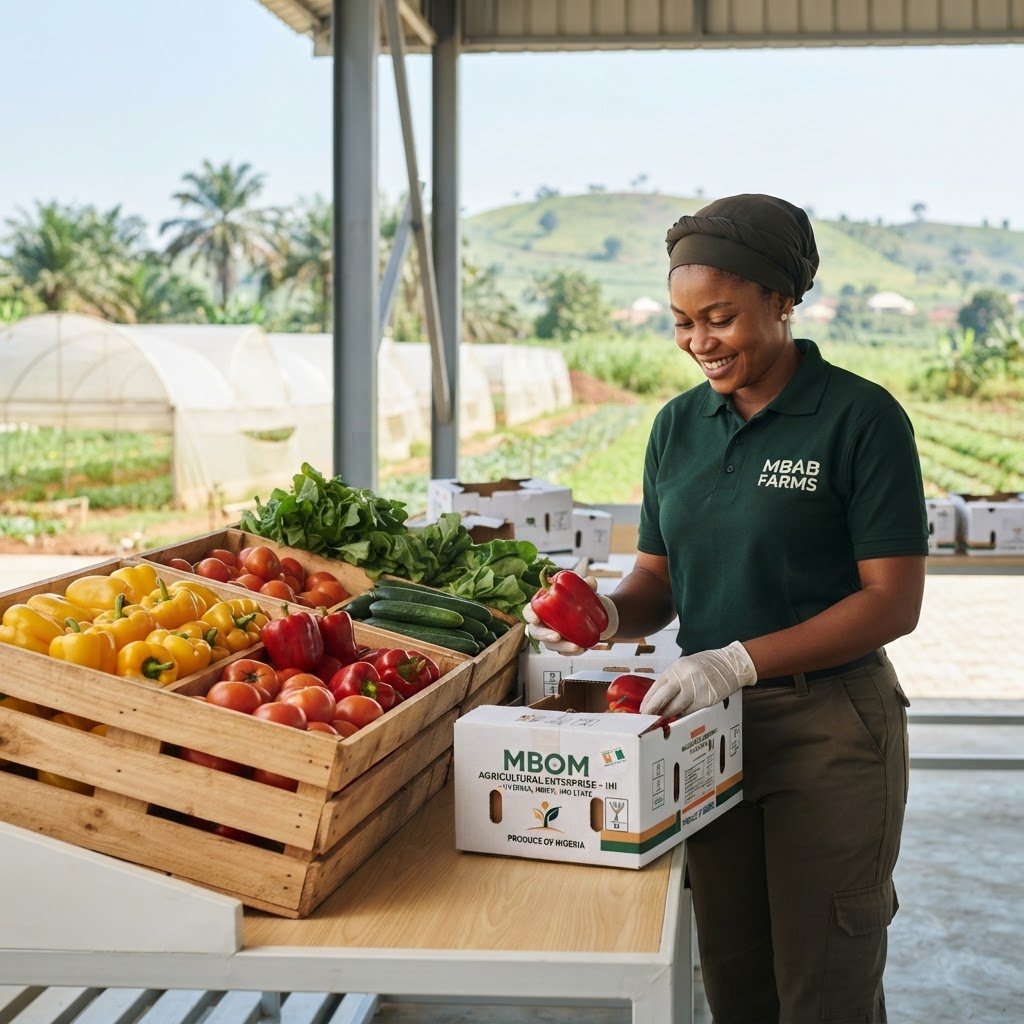
From Mbieri Farm to Global Market: The Agricultural Business Betting on Imo's Future
Somewhere along the red laterite roads of Mbaitoli Local Government Area in Imo State, a quiet agricultural revolution is taking shape. What began as subsistence farming on ancestral land in Mbieri is now evolving into something far more ambitious: an export-oriented organic food enterprise with its...

Obi-Mbieri Town Union: Full List of the 2026 Executive Council
The Obi-Mbieri Autonomous Community in Mbaitoli Local Government Area, Imo State, has taken a significant step toward structured self-governance with the successful conduct and declaration of its 2026 Town Union Executive Council Election. The official results, certified by the Mbaitoli Local Govern...
Obi-Mbieri Village Crisis: Mbaitoli LGA Says It Has Not Recognized Any Newly Created Villages
A formal administrative letter dated 20 August 2026 has placed the Mbaitoli Local Government Council's position firmly on record: the council has not recognized any newly created villages within Obi-Mbieri Autonomous Community, and will continue to rely solely on duly gazetted entities when dealing ...