Powered by Obi Mbieri Independent Media Ltd · eziokwubundu.com
From Mbieri Farm to Global Market: The Agricultural Business Betting on Imo's Future
Somewhere along the red laterite roads of Mbaitoli Local Government Area in Imo State, a quiet agricultural revolution is taking shape. What began as subsistence farming on ancestral land in Mbieri is now evolving into something far more ambitious: an export-oriented organic food enterprise with its...
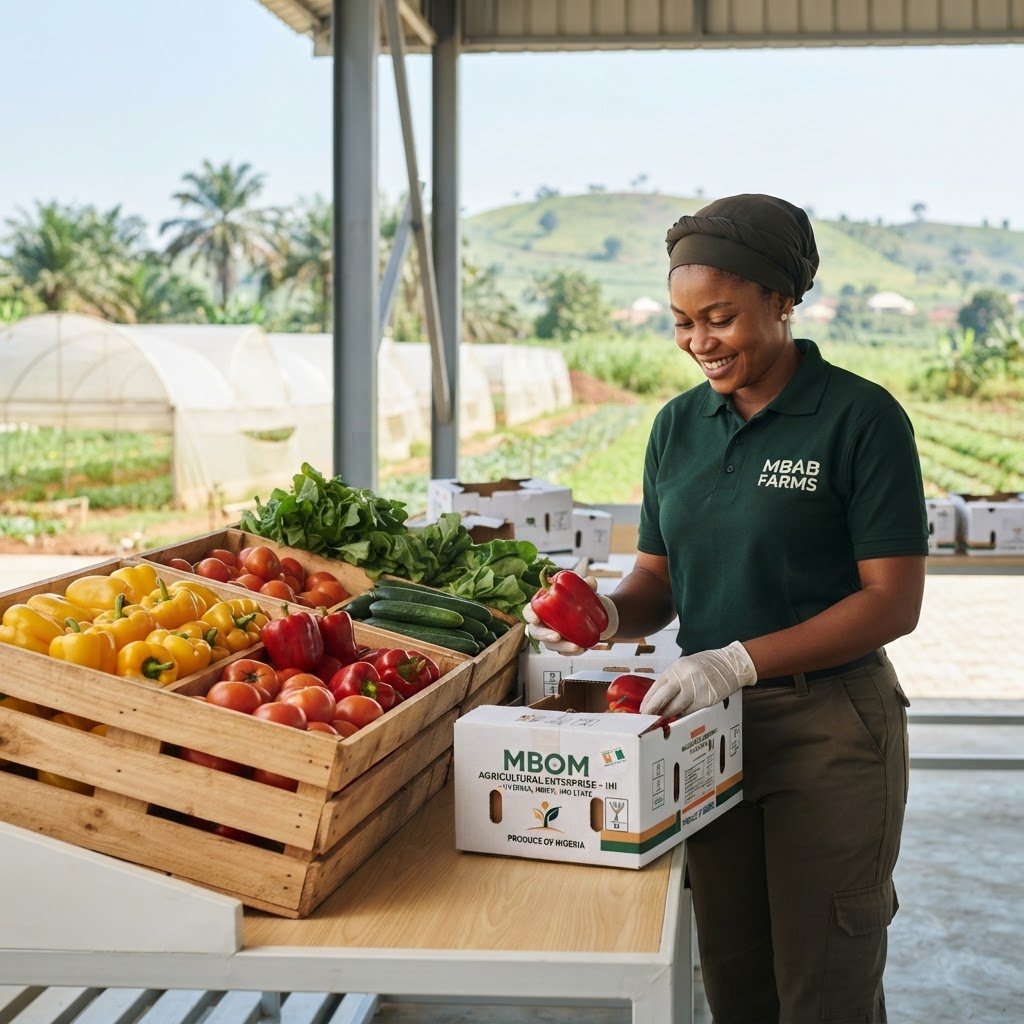
Somewhere along the red laterite roads of Mbaitoli Local Government Area in Imo State, a quiet agricultural revolution is taking shape. What began as subsistence farming on ancestral land in Mbieri is now evolving into something far more ambitious: an export-oriented organic food enterprise with its sights firmly set on European and North American markets. This is not a government programme or a foreign-funded pilot project. It is a homegrown agribusiness, rooted in community trust and traditional land stewardship, that is betting on Imo's agricultural potential at a time when the world is hungry for certified organic African produce.
For Nigerian families, community stakeholders, diaspora investors, and young entrepreneurs watching from the sidelines, this story matters deeply. It illustrates that the path from local soil to global shelf is possible — and that it runs directly through health, wealth, and community development.
Why Is a Farm in Mbieri Capturing Global Attention?
Mbieri's Soil, Geography, and Strategic Advantage
Mbieri sits within Mbaitoli LGA, a zone characterised by deep loamy soils, moderate rainfall distribution, and proximity to the Imo River basin — conditions that combine to create exceptional growing environments for root crops, vegetables, and tree crops. The region's elevation and drainage patterns reduce waterlogging risk, a common constraint for high-volume organic cultivation in southeastern Nigeria.
What distinguishes this particular agribusiness is its deliberate pivot from local staple production toward internationally certifiable organic farming standards. Reporting by Punch Newspapers confirmed that the organic food producer is actively expanding output while targeting global markets — a benchmark transition that aligns with rising international demand for chemical-free African agricultural products.
Critically, the enterprise does not abandon ancestral land-use knowledge in favour of imported agro-industrial models. Instead, it integrates indigenous fallowing techniques, intercropping traditions, and community-guided soil management with modern agronomic practices such as composting systems, biological pest management, and soil pH monitoring. This hybrid approach reduces input costs while maintaining the chemical-free profile that international organic certification bodies require. In a region where many smallholders still apply unregulated agrochemicals, Mbieri's model stands apart — and it is attracting serious attention from agro-export intermediaries and institutional buyers.
The geographical positioning within Mbaitoli also matters logistically. The LGA offers reasonable road access to Owerri, which serves as a commercial gateway to the southeast's distribution network. As the community's broader development trajectory becomes clearer — including ongoing discussions about infrastructure, as tracked in reporting on whether Mbaitoli communities will benefit from Imo's Orashi power project — the enabling environment for agribusiness investment is gradually improving.
How Does Organic Farming Bridge Health, Wealth, and Community?
The Eziokwubundu Triangle in Action
The convergence of health, wealth, and community is not an abstract concept at eziokwubundu.com — it is a lived framework, and nowhere is it more visibly demonstrated than in community-rooted organic agribusiness.
Health benefits begin at the soil level. Conventional farming in many parts of Nigeria relies heavily on synthetic fertilisers such as NPK blends and pesticides including organophosphates — chemicals that leach into groundwater and accumulate in food chains. Research published by the World Health Organization links chronic low-level pesticide exposure to neurological disorders, reproductive complications, and certain cancers. When a Mbieri-based enterprise eliminates synthetic pesticides from its production chain, it is not merely meeting an export checklist — it is protecting the community's water table, reducing toxic dietary exposure for local consumers, and delivering nutritionally denser produce. Organic farming practices that enrich soil microbial diversity have been shown to increase the mineral content of food crops, including iron, zinc, and magnesium — nutrients that are chronically deficient in many Nigerian diets.
Wealth generation cascades outward. At the household level, stable off-taker agreements — long-term contracts between the producer and buyers — provide income predictability that subsistence farming cannot offer. Youth employment is a critical multiplier: sorting, packaging, quality control, and logistics roles absorb young workers who would otherwise face the unemployment pressures documented in youth unemployment challenges across southeastern Nigeria. Each job created within the farm's value chain reduces pressure on urban migration, retains productive labour within the community, and builds local skill sets that compound over time.
Community reinvestment completes the cycle. Profitable agribusiness enterprises in tight-knit communities like Mbieri do not exist in isolation. Under the governance frameworks of autonomous communities and traditional councils, commercial success carries an expectation of social reinvestment — contributions to road maintenance, scholarship funds, and community infrastructure. This is the African philosophy of collective prosperity made economically operational. It is also precisely why understanding the governance structures of communities like Mbieri matters; the Obi-Mbieri Town Union's 2026 Executive Council provides a window into how community leadership organises itself to steward both social and economic development.
What Market Forces Drive Imo's Agricultural Renaissance?
Macroeconomic Tailwinds and Export Trends
Nigeria's organic food and broader agricultural processing sector is at an inflection point. Market intelligence projections estimate that Nigeria's organic food segment will grow from approximately USD 425 million in 2025 to USD 556 million by 2032, reflecting a compound annual growth rate driven by urbanisation, rising health consciousness, and growing diaspora purchasing power. Globally, the organic food market exceeded USD 220 billion in 2023 and continues to expand, according to data tracked by the Research Institute of Organic Agriculture (FiBL). African producers who achieve certification compliance stand to capture premium price points that domestic markets alone cannot offer.
Institutional frameworks are beginning to align with this opportunity. The Federal Government's Special Agro-Industrial Processing Zones (SAPZ) Programme, a joint initiative with the African Development Bank, targets the creation of agriculture-anchored industrial clusters across Nigerian states. Imo State's participation in such frameworks, combined with the Imo State Investment Promotion Agency (ISIPA)'s mandate to attract agribusiness capital, creates a policy runway for enterprises like the Mbieri operation to formalise, scale, and access concessional financing.
Commodity-level opportunities are equally compelling. Cassava derivatives — particularly high-quality cassava flour and starch — command significant international demand from food manufacturers in Europe and Asia. Indigenous spice crops, including Uda (Negro pepper) and Ogiri-processed locust beans, are gaining traction in ethnic grocery markets across the United Kingdom, United States, and Canada. Oil palm derivatives processed beyond crude palm oil into fractionated products and specialty fats attract higher margins and face less commodity price volatility than bulk exports.
The shift from domestic subsistence to export-oriented value addition is not merely a business upgrade — it is a structural economic transformation that multiplies the return on every hectare cultivated. An Mbieri farmer selling raw cassava tubers in Owerri market captures perhaps ₦80,000 per tonne. The same cassava, processed into certified organic flour and exported, commands multiples of that value — with the processing margin staying within the community rather than flowing to foreign intermediaries.
Which Roadblocks Stand Between Farm and Global Shelf?
Infrastructure, Certification, and Capital Challenges
The distance between producing organic food in Mbieri and landing it on a European retailer's shelf is not merely geographical — it is filled with structural obstacles that have historically prevented Nigerian agribusinesses from reaching their export potential.
Post-harvest losses remain the most immediate threat. Studies by the Food and Agriculture Organization of the United Nations estimate that 30 to 40 percent of agricultural produce in sub-Saharan Africa is lost between harvest and market due to inadequate storage, poor cold-chain infrastructure, and transportation friction. In Mbaitoli, rural road conditions and the absence of refrigerated logistics mean that perishable produce — leafy vegetables, fresh cassava, and fruit crops — faces severe spoilage risk during transit to Owerri or Port Harcourt for export consolidation. Investing in on-farm cold rooms, solar-powered storage facilities, and coordinated aggregation points is essential to closing this gap.
International phytosanitary requirements are non-negotiable. Export markets, particularly the European Union under its Regulation (EU) 2018/848 on organic production, require documented traceability from seed to shipment, third-party organic certification (such as ECOCERT or Control Union), and compliance with Maximum Residue Levels (MRLs) for any detectable chemical inputs. Meeting these standards demands investment in record-keeping systems, laboratory testing protocols, and training for farm workers — costs that are beyond the reach of most individual smallholders but manageable within a well-structured outgrower scheme or cooperative model.
Capital access remains structurally restricted. Commercial bank lending in Nigeria carries prohibitive interest rates for agricultural borrowers, often exceeding 25 percent per annum. Structured alternatives exist and must be actively pursued: the Central Bank of Nigeria's Anchor Borrowers' Programme offers concessional lending for smallholder agriculture; commodity exchange partnerships through the Nigerian Exchange Group's agricultural commodities platform can provide price discovery and pre-financing instruments; and cooperative credit unions rooted in community trust offer lower-cost rotating capital that aligns with traditional Igbo contribution systems like the Eze-ulo cooperative model.
How Can Nigerians Replicate This Prosperity Model?
A Practical Blueprint for Export-Ready Agribusiness
The Mbieri model is not a one-off anomaly. It is a replicable template — and for diaspora Nigerians, local entrepreneurs, and community investors, the pathway to launching a similar venture is structured and navigable.
Step one: Secure land rights ethically and legally. Land acquisition in Imo State must navigate both statutory law and customary tenure. The Land Use Act of 1978 vests land ownership in state governments, but traditional councils retain significant de facto authority over communal land allocation. Engaging the Autonomous Community Development Committee and obtaining formal resolutions from town union leadership before any land transaction protects investors from costly disputes. Understanding how to register land in Imo State through the proper statutory channels provides the legal foundation that institutional funders and export buyers require.
Step two: Phase implementation to match capital availability. Begin with low-input, high-value crops — indigenous vegetables, spice crops, or cassava — using precision farming techniques such as drip irrigation, raised bed cultivation, and biological fertilisation. Year one should focus on achieving National Organic Agriculture Programme (NOAP) preliminary compliance. By year two, engage a third-party certification body. Year three targets the first export consignment through an established aggregator or Nigerian Export Promotion Council (NEPC)-registered exporter.
Step three: Build outgrower networks for scale. No single farm can meet the volume requirements of international buyers alone. Formalised outgrower schemes — where the anchor enterprise provides inputs, technical support, and guaranteed off-take to surrounding smallholders — multiply production capacity while distributing risk and income across the community. This structure transforms an individual business into a community economic engine.
Step four: Anchor everything in community trust. The enterprises that endure in Igbo communities are those that demonstrate accountability to collective values. Transparent governance, regular community briefings, and visible social reinvestment are not optional soft skills — they are the operating licence that allows a business to function on communal land over generations.
Conclusion
The story unfolding on Mbieri's farmland is a microcosm of the larger transformation that Imo State — and indeed Nigeria — is capable of achieving when ancestral wisdom, modern agronomy, and community-first economics converge. The organic food producer expanding output toward global markets is not simply building a profitable business. It is demonstrating, practically and visibly, that health, wealth, and community development are not competing priorities but mutually reinforcing pillars of sustainable prosperity.
For Nigerian families watching their communities stagnate under unemployment and infrastructure neglect, for diaspora investors searching for meaningful and productive ways to reconnect with home, and for youth professionals seeking careers beyond urban congestion — the Mbieri model offers a compelling answer. The global market is not waiting indefinitely. Imo's agricultural future belongs to those willing to build it now.
Stay Informed
Get New Articles in Your Inbox
Subscribe to receive the latest community development, health, and wealth insights from Eziokwubundu.
Newsletter
Practical insights on health, wealth, and community — delivered weekly.