Powered by Obi Mbieri Independent Media Ltd · eziokwubundu.com
$1 = ₦1,336€1 = ₦1,533£1 = ₦1,786Ondo Alcohol Deaths: What Is Methanol and How Can Nigerians Avoid Poisoning?
The deaths in Ondo State have sent shockwaves across Nigeria. At least 48 people lost their lives after consuming what appeared to be ordinary local alcoholic drinks. Hundreds more were hospitalised, some permanently blinded, others left fighting for their organs. The National Agency for Food and Dr...
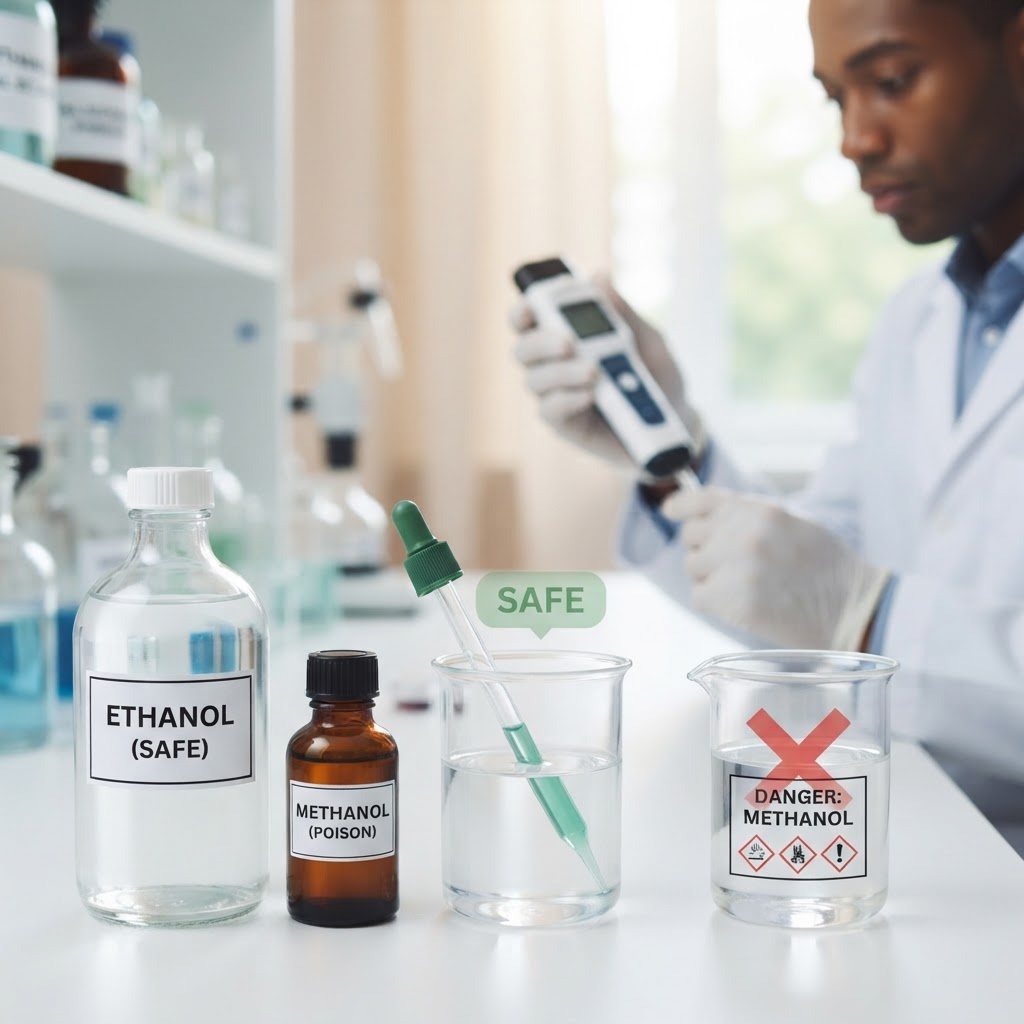
The deaths in Ondo State have sent shockwaves across Nigeria. At least 48 people lost their lives after consuming what appeared to be ordinary local alcoholic drinks. Hundreds more were hospitalised, some permanently blinded, others left fighting for their organs. The National Agency for Food and Drug Administration and Control (NAFDAC) has since confirmed what investigators feared: the drinks were contaminated with methanol, a toxic industrial chemical that has no place in any beverage meant for human consumption.
This tragedy is not simply a criminal matter. It is a public health emergency that exposes the dangers lurking inside Nigeria's informal alcohol market — and a stark reminder of why food safety education, community vigilance, and consumer awareness can save lives. For Nigerian families, entrepreneurs, and community leaders, understanding what methanol is and how to avoid it is now a matter of survival.
What Happened in Ondo State?
A Preventable Tragedy in Two LGAs
The deaths occurred across Odigbo and Irele local government areas in Ondo State, southwest Nigeria. Victims began collapsing after consuming locally produced alcoholic concoctions sold in informal settings — roadside stalls, open markets, and community gatherings where oversight is minimal and quality control is nonexistent. Within days, the death toll climbed to at least 48 confirmed fatalities, making it one of the worst cases of suspected alcohol poisoning in Nigeria's recent history.
The scale of the crisis extended well beyond those who died. Over 180 people were affected in total, with numerous survivors reporting sudden and severe vision loss — a clinical hallmark of methanol poisoning. Others experienced acute kidney failure and brain damage, conditions that can result in lifetime disability even when death is avoided. The speed at which victims deteriorated pointed immediately to a highly toxic substance, not ordinary ethanol intoxication.
NAFDAC moved swiftly to investigate the incident, deploying teams to the affected communities to collect samples and trace the source of the contaminated drinks. According to a Guardian Nigeria report, NAFDAC officially linked the mass deaths to methanol-contaminated alcoholic concoctions, confirming what field observations had already suggested. Authorities subsequently made arrests, targeting individuals suspected of producing and distributing the adulterated drinks.
This tragedy fits a disturbing pattern seen across West Africa, where illicit alcohol production has repeatedly caused mass casualties. In Nigeria, the informal alcohol trade operates largely outside the reach of regulatory bodies, creating environments where unscrupulous producers can substitute cheap industrial chemicals for food-grade ethanol with little fear of immediate detection. The Ondo deaths are a consequence of that regulatory gap — and a call to action for every Nigerian community.
What Is Methanol and Why Is It Deadly?
The Chemical That Masquerades as Alcohol
Methanol, also known as methyl alcohol or wood alcohol, is a simple chemical compound with the formula CH₃OH. It belongs to the same broad family of alcohols as ethanol — the type found in beer, wine, and spirits — but the two substances are chemically and physiologically worlds apart. While ethanol is produced through the fermentation of sugars and is safe for human consumption in moderate quantities, methanol is an industrial chemical used primarily as a solvent, fuel additive, and manufacturing feedstock. It is found in antifreeze, paint remover, and fuel products. It was never intended to enter the human body.
What makes methanol so particularly treacherous is its sensory profile: it is colourless, odourless, and nearly tasteless. A drink laced with methanol is indistinguishable from a normal alcoholic beverage by smell, appearance, or taste alone. A consumer has no warning. No bitterness, no unusual smell, no visible sign that the drink they are holding could blind or kill them within hours.
Once ingested, methanol is absorbed rapidly into the bloodstream. The liver attempts to metabolise it, but instead of being broken down into harmless compounds as ethanol would be, methanol is converted first into formaldehyde and then into formic acid. These metabolites are highly toxic. Formic acid, in particular, disrupts the body's ability to use oxygen at the cellular level, causing a condition called metabolic acidosis — essentially a poisoning of the body's pH balance that rapidly attacks the central nervous system and vital organs.
The optic nerve is devastatingly vulnerable to formic acid. Even small doses of methanol — as little as 10 millilitres — can cause permanent blindness. A fatal dose can be as low as 30 millilitres, roughly equivalent to two tablespoons. Symptoms typically appear between 12 and 24 hours after ingestion, beginning with nausea, headache, and dizziness before progressing to vision disturbances, severe abdominal pain, seizures, coma, and death. The delayed onset is medically dangerous because victims may not seek help immediately, allowing the poison to cause irreversible damage before treatment begins.
Treatment for methanol poisoning requires urgent medical intervention, including the administration of ethanol or fomepizole (an antidote that blocks methanol metabolism), along with haemodialysis to remove toxic metabolites from the blood. In communities with limited access to tertiary healthcare, these interventions are rarely available quickly enough. For Nigerians in rural and semi-urban areas, this delay is often fatal — a reality explored further in our coverage of affordable healthcare options for rural Nigerians.
How Do You Spot Adulterated Alcohol?
Practical Safety Checks Before You Drink
The single most reliable protection against methanol poisoning is knowing where your alcohol comes from. Regulated, legally produced alcoholic beverages in Nigeria must pass through NAFDAC's approval process, carry a registered NAFDAC number, display clear and professionally printed labelling, and be sold through licensed retail outlets. These requirements exist precisely because they create accountability at every stage of production and distribution. When those checkpoints are removed, the consumer bears all the risk.
Featured Products
Chukwu Abiama Tee
Bold black-and-gold Igbo-pride T-shirt featuring 'Chukwu Abiama' in premium streetwear typography.
₦15,000
Buy NowReverse Type 2 Diabetes & other associated Metabolic Issues using Dr. Jason Fung's Evidence-Based Approach— FMD program for Type 2 Diabetes
A practical fasting and fasting-mimicking programme built on Dr Jason Fung's insulin-resistance principles and ow-glycemic recipes.
₦19,950
Join NowỤmụ Igbo Tee
Classic black T-shirt with bold white 'Ụmụ Igbo' typography — a proud statement of Igbo heritage.
₦15,000
Buy NowNwanne Tee
Washed khaki vintage tee with a faded rust-orange 'Nwanne' stamp badge and palm leaf motif — a nod to kinship and heritage.
₦18,000
Buy NowObodo Tee
Faded denim-blue washed tee with a cream 'Obodo' stamp badge and sun motif, celebrating community roots.
₦18,000
Buy NowEkwe Heritage Tee
Deep indigo tee featuring a fine line-art illustration of a traditional Igbo ekwe drum, inspired by Igbo-Ukwu bronze artistry.
₦18,000
Buy NowIkenga Figure Tee
Forest green tee with a fine line-art illustration of a stylized Ikenga figure.
₦18,000
Buy NowWhen purchasing any alcoholic drink, check the label carefully. A legitimate product will have a clearly printed NAFDAC registration number that can be verified on the agency's official database at nafdac.gov.ng. The label should include the producer's name and address, the alcohol content expressed as a percentage, and a manufacturing date. Fonts should be professionally printed — not smudged, uneven, or hand-stamped. Poorly reproduced labels are a significant red flag. The seal should be intact, with no evidence of tampering, resealing, or substitution. If a bottle looks like it has been refilled, do not consume it.
Be especially cautious about where you buy. Licensed outlets — registered bars, off-licences, supermarkets, and hotel premises — are accountable to regulatory oversight. Drinks purchased from roadside hawkers, open-air markets, motor parks, or informal community gatherings carry a substantially higher risk, particularly when the seller cannot identify the producer or provide documentation. Price is also a telling indicator: alcohol sold at unusually low prices compared to market rates may have been adulterated or produced with substandard inputs.
The drinks most commonly associated with methanol poisoning in Nigeria belong to the unregulated herbal alcohol category. Products colloquially known as "Monkey Tail" — a mixture of locally brewed spirits infused with marijuana or other substances — and various unnamed herbal concoctions sold in unlabelled bottles represent a particularly high-risk category. These products have no NAFDAC approval, no standardised production process, and no quality assurance. Some producers deliberately add methanol to increase the potency of the drink at lower cost, either unaware of or indifferent to its lethal effects. The addition of herbs and flavourings also masks the already subtle sensory profile of methanol, making detection even more difficult.
The World Health Organization has documented dozens of mass methanol poisoning incidents globally, and the pattern is consistent: WHO's alcohol poisoning advisories confirm that informal and illicit alcohol production is the primary source of contaminated drinks in low- and middle-income countries. Nigeria is not alone in facing this challenge, but geography is not destiny. Consumer awareness is a powerful line of defence.
How Can Communities Prevent Future Poisonings?
Collective Action Saves Lives
The Ondo tragedy is not simply the failure of individual consumers to make safer choices. It is a community-level failure — and the response must be a community-level one. No single family, individual, or government agency can solve this problem in isolation. It requires the kind of collective responsibility that has always been the foundation of Nigerian community life.
The first and most immediate step communities can take is to become active reporters of suspicious alcohol products. NAFDAC operates a consumer reporting line (0800-162-3322, toll-free) specifically for reporting suspected counterfeit and adulterated products. Community leaders — traditional rulers, ward heads, religious leaders, market association officials — should proactively circulate this number and encourage residents to use it without fear. When a neighbour is selling unlabelled drinks out of a bucket or a plastic jerrycan, that is not a private matter. It is a public health hazard, and reporting it is a civic duty.
Youth professionals and students have a particularly important role to play in this regard. As people who are statistically among the most likely to consume alcohol in social settings, young Nigerians are also best positioned to spread harm-reduction messaging among their peers. Understanding the difference between a licensed product and a dangerous counterfeit is not sophisticated pharmacology — it is basic consumer literacy, and it needs to be embedded in how young Nigerians approach social drinking. Community organisations, university associations, and youth-led groups should include alcohol safety in their health education programmes alongside information on other public health risks.
For families, the guidance is practical and actionable. Purchase alcohol exclusively from licensed outlets. Verify NAFDAC numbers before purchase. Refuse drinks offered in unlabelled containers at parties or social gatherings, regardless of social pressure. Teach children and teenagers about the specific dangers of unregulated drinks — not as a general anti-alcohol message, but as a specific safety instruction about methanol and contamination. Knowing the signs of methanol poisoning — sudden headache, visual disturbance, nausea, and disorientation appearing hours after drinking — and knowing to seek emergency care immediately can be the difference between life and death.
Community organisations that fund local development, similar to the models described in our article on how Igbo communities fund development projects, could consider directing a portion of community resources toward local health education campaigns. Printing and distributing simple flyers on drink safety in local markets costs very little and can reach thousands of people who may not have access to online health information.
Broader institutional accountability also matters. The Ondo poisonings raise serious questions about regulatory presence in rural and semi-urban communities. NAFDAC's mandate is nationwide, but its enforcement capacity is inevitably concentrated in urban centres. Community stakeholders and local government officials should advocate for increased regulatory presence in informal markets, just as civil society groups have called for greater accountability in health-related spending — an issue examined in our report on donor health funds under scrutiny. Enforcement is only as effective as its reach, and that reach must extend to Odigbo and Irele — and every community like them.
Conclusion
The deaths in Ondo State are a tragedy that did not have to happen. Methanol is a known hazard. Its presence in informal alcohol has caused preventable deaths across Nigeria and the wider continent for decades. The tools to reduce this risk — consumer education, community reporting, regulatory enforcement, and personal vigilance — already exist. What is needed is the collective will to use them.
At eziokwubundu.com, our commitment is to equip Nigerian families, communities, and professionals with the practical, evidence-based knowledge they need to protect themselves and the people around them. That means naming hazards clearly, explaining them accurately, and providing actionable guidance grounded in the realities of Nigerian life. The Ondo alcohol deaths are a reminder that health and safety are not abstract concerns for hospitals and regulators alone. They are community responsibilities — and every Nigerian has a role to play in making our communities safer.
Check labels. Verify NAFDAC numbers. Buy from licensed sellers. Report suspicious products. And share this information widely — because the life it saves may belong to someone you love.
Stay Informed
Get New Articles in Your Inbox
Subscribe to receive the latest community development, health, and wealth insights from Eziokwubundu.
Newsletter
Practical insights on health, wealth, and community — delivered weekly.
Community Discussion(0)
Leave a Comment
More to Read
You May Also Like
Affordable healthcare options for rural Nigerians
Access to quality medical care remains one of the most pressing challenges facing millions of Nigerians living outside major cities. For rural families, a single illness can mean a long journey to the nearest clinic, an unaffordable hospital bill, or worse — no treatment at all. Understanding and ac...
Unapproved Orphanages in Nigeria: How Safe Are Children in Private Care Homes?
Across Nigeria, thousands of children live in private care homes that operate outside the law. Some are run by well-meaning individuals overwhelmed by the scale of child poverty. Others are driven by profit, exploiting the image of vulnerable children to attract foreign donations while providing sub...
Imo State Farmers’ Market Price Guide
Every trip to Eke Ukwu Owerri or any neighbourhood market in Imo State has become a quiet economic reckoning. Families that once budgeted confidently for monthly groceries now find that the same naira stretches considerably less than it did a year ago. This Imo State Farmers' Market Price Guide is d...

Mbaitoli’s Primary Healthcare Centres: Are They Properly Staffed?
Why Does Staffing in Mbaitoli's PHCs Matter? At eziokwubundu.com, we believe that health, wealth, and community are inseparable pillars of lasting prosperity. Nowhere is this triangle more visibly tested than in Mbaitoli Local Government Area, one of Imo State's most densely populated LGAs, where th...
Only 3% of PHCs Meet Staffing Standards: What Is the Situation in Imo?
Nigeria's primary healthcare system is facing a quiet catastrophe. Across the country, thousands of Primary Healthcare Centres (PHCs) stand as hollow structures — buildings without sufficient doctors, midwives, or community health workers to serve the millions of Nigerians who depend on them. A rece...

Diphtheria in Nigeria: How Prepared Are Imo’s Health Centres?
Nigeria is facing its worst diphtheria resurgence in decades. What began as a concentrated outbreak in the northern states has evolved into a national public health emergency, with confirmed cases now appearing across regions once considered low-risk. For families in Imo State and across the Southea...
Where Are the Doctors? Investigating Healthcare Staffing in Mbaitoli
Mbaitoli Local Government Area sits at the heart of Imo State, home to over 327,000 residents spread across nine towns and more than twenty autonomous communities. Yet for a population of this scale, accessing a qualified medical doctor at a public health facility has become less a routine expectati...
Primary Healthcare in Mbaitoli: Clinics on Paper, Services on the Ground?
For the hundreds of thousands of families living across Mbaitoli Local Government Area in Imo State, the phrase "primary healthcare" carries a particular, painful irony. Government directories, state agency websites, and official budget lines paint a picture of a well-served rural population — ward-...
Mbaitoli’s Health Centres: How Many Are Actually Functional?
By eziokwubundu.com | Community Health & Development --- Mbaitoli Local Government Area in Imo State is home to over 327,000 residents spread across nine principal towns, including Mbieri, Orodo, Ubomiri, and Ogwa. On paper, the LGA maintains a network of primary healthcare centres (PHCs) designed t...
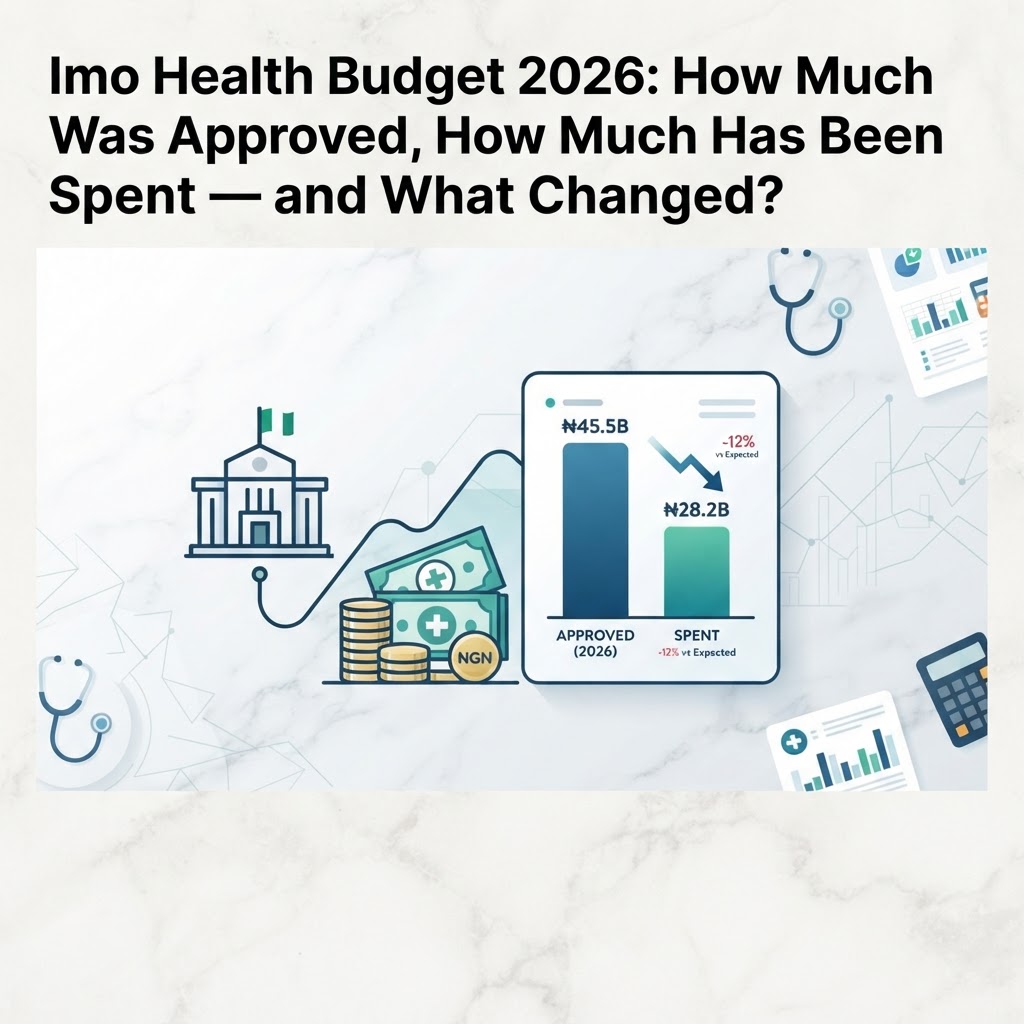
Imo Health Budget 2026: How Much Was Approved, How Much Has Been Spent — and What Changed?
When Governor Hope Uzodimma signed Imo State's 2026 "Budget of Economic Breakthrough" into law, the headline figure — ₦1.47 trillion — drew widespread attention as an ambitious statement of intent. For families in Owerri, Orlu, and Okigwe, the number carried a simple, urgent question: would this tra...