Powered by Obi Mbieri Independent Media Ltd · eziokwubundu.com
Only 3% of PHCs Meet Staffing Standards: What Is the Situation in Imo?
Nigeria's primary healthcare system is facing a quiet catastrophe. Across the country, thousands of Primary Healthcare Centres (PHCs) stand as hollow structures — buildings without sufficient doctors, midwives, or community health workers to serve the millions of Nigerians who depend on them. A rece...
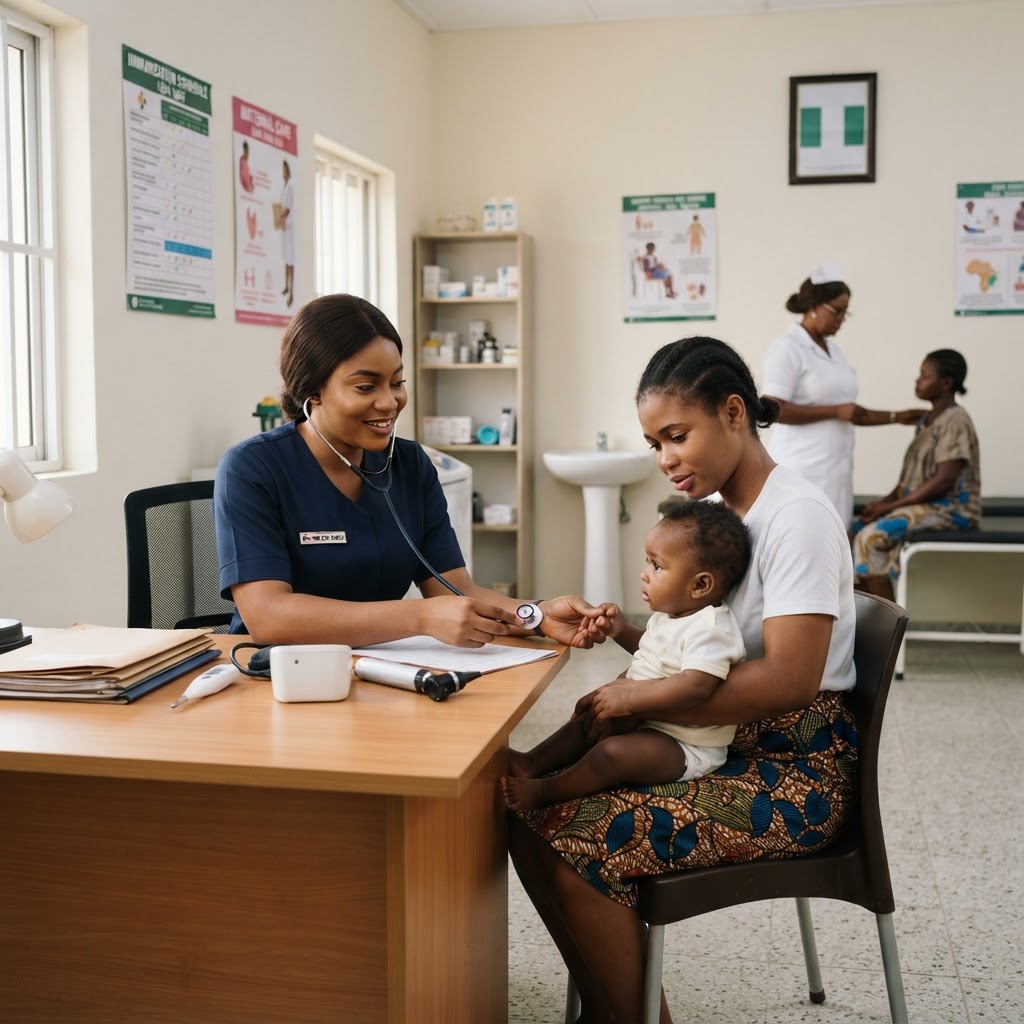
Nigeria's primary healthcare system is facing a quiet catastrophe. Across the country, thousands of Primary Healthcare Centres (PHCs) stand as hollow structures — buildings without sufficient doctors, midwives, or community health workers to serve the millions of Nigerians who depend on them. A recent investigation published by Punch Nigeria confirmed what many health professionals already know: only approximately 3% of Nigeria's PHCs meet the National Primary Health Care Development Agency (NPHCDA) minimum staffing requirements. For Imo State — a densely populated southeastern state with a proud medical tradition — this national figure carries specific, urgent meaning.
This article unpacks the national workforce crisis, examines Imo's ground reality, connects healthcare deficits to family economic vulnerability, and proposes actionable community-led and policy-driven solutions.
Why Are Only 3% of PHCs Fully Staffed?
The NPHCDA defines a functional ward-level PHC as one equipped with a minimum complement of personnel: at least one medical officer or community health officer, qualified midwives capable of providing skilled birth attendance, Community Health Extension Workers (CHEWs), a pharmacy technician, and support staff. This is not an ambitious benchmark — it is the baseline for safe, basic care. Yet nationwide data reveals that fewer than 3 in every 100 PHCs actually meet this standard.
The ground reality is stark. Thousands of facilities across Nigeria operate with a single, often untrained attendant. Many rural PHCs have no skilled birth attendant whatsoever, meaning pregnant women in remote communities face delivery without qualified support. Drug supplies arrive irregularly, diagnostic equipment sits broken, and basic infrastructure like running water and reliable electricity remain absent in many locations.
Three systemic forces drive this collapse. First, chronic underfunding at both federal and state levels has left PHC infrastructure and personnel budgets perpetually starved. Second, the Basic Health Care Provision Fund (BHCPF) — established under the National Health Act to channel dedicated financing to primary care — has been inconsistently implemented, with many states failing to release required counterpart funds. Third, the accelerating "Japa" syndrome — the mass emigration of trained Nigerian health professionals to the United Kingdom, Canada, and the United States — has hollowed out the clinical workforce at every tier. Community health workers, nurses, and midwives are leaving at rates that recruitment drives have not kept pace with.
What Is PHC Staffing Reality in Imo State?
Imo State occupies an interesting position within Nigeria's health landscape. Its southeastern location, relatively high literacy rates, and strong institutional delivery culture have historically placed it above the national average on certain maternal health indicators. However, this aggregate picture conceals serious structural deficiencies at the grassroots level.
Across the three senatorial zones — Orlu, Okigwe, and Owerri — rural PHCs contend with chronic staff absenteeism, an aging health cadre approaching mass retirement, and a near-total absence of replacement recruitment. Ward focal facilities, which are supposed to serve as the first point of professional contact for entire communities, frequently operate without 24-hour skilled personnel. A pregnant woman arriving at a rural PHC in Orlu zone at midnight may find only a junior community health worker — or nobody at all.
Research examining the Imo State Ministry of Health (SMOH) and the Imo State Primary Healthcare Development Agency has documented operational gaps including insufficient diagnostic capacity, non-functional referral pathways, and inconsistent drug supply chains. These are not peripheral issues; they are fundamental barriers to care delivery.
The urban-rural disparity within Imo is particularly striking. General hospitals and private facilities in Owerri municipal provide reasonably accessible services for those who can pay. But in autonomous communities across Mbaitoli, Oguta, Isu, or Ehime Mbano, the situation is dramatically different. Brain drain has robbed these communities of their most qualified health personnel, leaving solitary, overburdened CHEWs to manage maternal emergencies, childhood illnesses, and chronic disease management simultaneously. As documented in our investigation, primary healthcare in Mbaitoli reveals clinics on paper with minimal services on the ground.
Further analysis of Mbaitoli's health centres and how many are actually functional confirms that facility count alone tells a deeply misleading story. A health centre must be counted as functional only when it has staff, supplies, and the capacity to deliver care — a standard many Imo PHCs cannot currently meet.
How Does Understaffing Drain Family Wealth in Imo?
The healthcare workforce crisis is not merely a public health problem — it is a direct assault on household economic stability. This is where Eziokwubundu's Health + Wealth + Community triangle becomes most visible. When local PHCs are non-functional, families do not simply go without care. They seek alternatives, and those alternatives are expensive.
Middle-class and rural Imo families denied accessible PHC services turn to private clinics, patent medicine vendors (chemists), and faith-based health facilities. Out-of-pocket expenditure in these settings is unregulated and often catastrophic. A delivery that should cost a nominal fee at a functional PHC may cost between ₦80,000 and ₦300,000 or more at a private facility. For context on the true financial burden of childbirth in the state, our detailed analysis of how much it costs to give birth in Imo in 2026 reveals a cost structure that is already pushing families into debt.
The Imo State Health Insurance Agency (IMSHIA) was designed to address this financing gap. However, uptake in rural communities remains extremely low. Weak enrollment drives, limited facility accreditation outside urban areas, and poor community awareness mean that the insurance mechanism that should protect families is bypassed entirely by those who need it most. As a result, a single hospitalization for a preventable condition — malaria complications, obstructed labour, or a hypertensive crisis — can erase months of household savings.
The long-term wealth destruction compounds this immediate burden. Unmanaged hypertension, poorly controlled diabetes, and untreated infections that a functional PHC could address become chronic, expensive, and debilitating conditions. Lost productivity from premature disability and preventable death removes income earners from families, deepening cycle-of-poverty dynamics across Imo communities. The Imo health budget 2026 analysis reveals how budgetary allocation decisions upstream directly shape these downstream household economic consequences.
Can Traditional Institutions Bridge the Healthcare Gap?
The African philosophy of collective responsibility — Onye wetara oji wetara ndu — holds that community welfare is a shared obligation. Imo State's exceptional network of town unions, Autonomous Community Development Associations (ACDAs), traditional rulers (Ezes), and diaspora organizations represents a powerful, underutilized resource for PHC revitalization.
Town unions in Imo have a documented history of constructing schools, building roads, and funding scholarships. This same energy can be directed toward healthcare. Communities can formally adopt their ward PHC — committing to audit staff attendance, maintain facility infrastructure, and advocate collectively for government accountability. Traditional rulers carry moral authority that no government memo possesses; an Eze who publicly champions PHC functionality can shift community behavior and government responsiveness simultaneously.
The Imo diaspora — spread across the United States, United Kingdom, Canada, and beyond — represents a significant untapped financing stream. Diaspora-backed matching health funds, in which community associations abroad co-finance local health worker incentives alongside government allocations, have succeeded in analogous African contexts. Practical packages could include providing decent accommodation for posted nurses and midwives in rural communities, transport stipends, and locally funded salary top-ups that make rural postings professionally viable rather than punitive.
Ward Development Committees (WDCs), already embedded in Nigeria's PHC governance framework, must be activated. These committees are designed to monitor staff attendance, oversee drug supply management, and serve as community accountability mechanisms. Where WDCs function as intended — with engaged, literate community members — facility abandonment declines and service quality improves. Imo's educated, civically active population is well positioned to make WDCs genuinely effective accountability structures.
What Reforms Can Transform Imo PHCs?
Structural transformation requires both policy action and citizen engagement simultaneously. The Imo State Government must take several steps as a matter of urgency.
First, full implementation of the Consolidated Health Salary Structure (CONHESS) with prompt and complete payment is non-negotiable for worker retention. Second, the state must release its counterpart BHCPF funds without further delay, unlocking federal primary healthcare financing that is currently bottlenecked by state-level inaction. Third, a transparent, merit-based recruitment drive targeting midwives, nurses, and CHEWs — with specific rural posting incentives — must be executed within a defined timeline.
Digital health integration offers a practical path to extending the reach of limited personnel. Telemedicine links connecting remote Imo PHC nurses with specialist physicians at the Imo State University Teaching Hospital (IMSUTH) Orlu and Federal Medical Centre (FMC) Owerri can transform isolated health workers into supported, capable clinicians. Decentralized electronic health records, even on basic tablets with offline capability, improve continuity of care and supply chain visibility.
For everyday Imo families, practical empowerment begins with knowledge. Families should verify whether their nearest PHC is on the NPHCDA accredited facility list and whether it holds a valid IMSHIA service provider agreement. Preventive wellness practices — consistent blood pressure monitoring, nutritional management, antenatal registration, and childhood immunization — dramatically reduce the likelihood of catastrophic health expenditures. Community members should attend town hall meetings, engage local councillors, and use organized town union structures to demand quarterly public reporting on PHC staffing levels and drug availability.
Authoritative resources including the World Health Organization's primary healthcare framework and the NPHCDA operational guidelines provide citizens and advocates with the standards against which Imo's facilities should be measured. The Nigeria Health Watch platform also offers consistent investigative coverage of PHC system performance across states.
Conclusion
The fact that only 3% of Nigeria's PHCs meet minimum staffing standards is not an abstract statistic — it is a daily lived reality for millions of Nigerians, including families across Imo State. Every unstaffed PHC represents a pregnant mother in danger, a child denied vaccination, and a household pushed closer to financial ruin by preventable illness.
Imo's story is one of structural neglect meeting extraordinary community resilience. The town unions, diaspora networks, traditional institutions, and engaged citizens of Imo State possess the social capital to demand and support transformation. But community action cannot substitute for government accountability — it must pressure it.
At eziokwubundu.com, we believe that better health and sustainable prosperity are inseparable. Fixing primary healthcare in Imo is not just a medical imperative. It is an economic one, a community one, and ultimately, a matter of dignity for every family that deserves more than a building without a doctor.
Stay Informed
Get New Articles in Your Inbox
Subscribe to receive the latest community development, health, and wealth insights from Eziokwubundu.
Newsletter
Practical insights on health, wealth, and community — delivered weekly.