Powered by Obi Mbieri Independent Media Ltd · eziokwubundu.com
$1 = ₦1,329€1 = ₦1,512£1 = ₦1,762Obi-Mbieri Constitution: Who Is Higher, the Village Head or the Village Union Chairman?
In autonomous communities across Imo State, few questions generate more friction than this one: when the Village Head and the Village Union Chairman sit in the same room, who defers to whom? For Nigerian families navigating community affairs, diaspora members sending remittances for development proj...
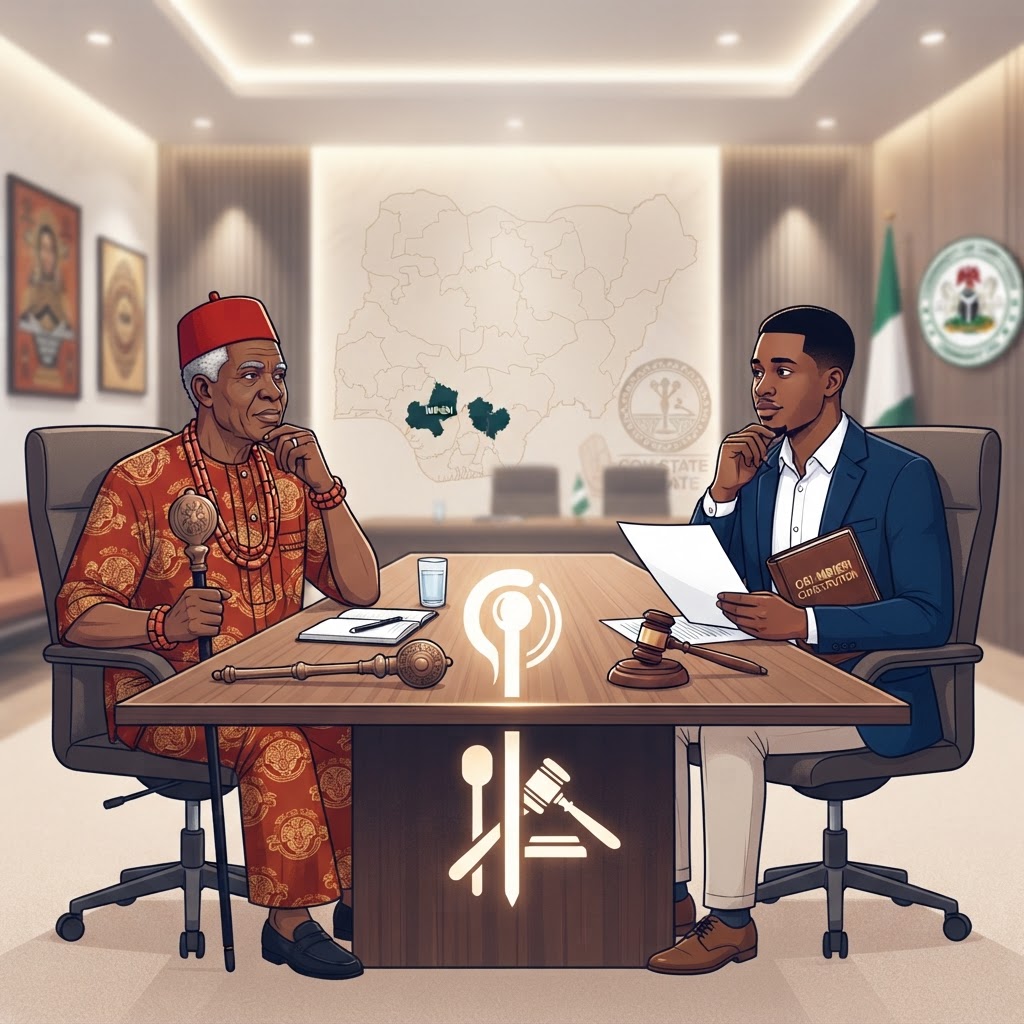
In autonomous communities across Imo State, few questions generate more friction than this one: when the Village Head and the Village Union Chairman sit in the same room, who defers to whom? For Nigerian families navigating community affairs, diaspora members sending remittances for development projects, and local entrepreneurs seeking to invest in their ancestral villages, the answer to this question has real financial, legal, and cultural consequences. The Obi-Mbieri Autonomous Community Bye-Law/Constitution 2020 as amended provides a detailed and surprisingly nuanced answer — but only if you read it carefully and in full. This article offers a structured, constitutional analysis of both leadership offices, explains why the question is so commonly misunderstood, and delivers actionable insight for every stakeholder in the Obi-Mbieri community.
Why Is There Confusion About Obi-Mbieri Leadership?
The Dual Structure the 2020 Constitution Establishes
The confusion is understandable. Unlike a corporate organisation where a single organogram resolves every question of rank, Obi-Mbieri village governance operates through two parallel and constitutionally distinct leadership arms: the Traditional Arm, headed by the Village Head, and the Union Arm, led by the Village Union Chairman. The Obi-Mbieri Autonomous Community Bye-Law/Constitution 2020 as amended is the governing legal framework that defines both offices, their selection processes, their powers, and their accountability structures.
Many Nigerian families — particularly those in the diaspora — return home expecting a straightforward hierarchy and find instead two authority figures who appear to share influence over the same community. This creates genuine uncertainty when seeking approvals for land transactions, development levies, or customary title processes. For community stakeholders and youth professionals who want to engage productively with their village, misreading this structure can mean approaching the wrong leader for the wrong purpose, causing unnecessary delays and, in some cases, costly disputes. Understanding the constitutional architecture of Obi-Mbieri is, therefore, not merely an academic exercise. It is a practical foundation for community engagement, wealth creation, and informed leadership participation.
It's a question that comes up often in Obi-Mbieri and in similar Igbo autonomous communities: between the Village Head and the Village Union Chairman, who actually outranks who? The confusion is understandable, because the two offices look similar on the surface — both are called "leaders" of the village, both sit at the front during meetings, and both are expected to speak for their people. But a close reading of the Obi-Mbieri Autonomous Community Bye-Law/Constitution (2020, as Amended) shows that they are not competing for the same seat at all. They belong to two different systems of authority that the constitution deliberately runs side by side.
Two Separate Tracks of Leadership
The constitution builds Obi-Mbieri's governance on two tracks:
- The Traditional Institution (Chapter 3) — headed by the Eze (Eze Ukwu I, II, III, successively), and built around custom, culture and ancestral authority.
- The Union Government (Chapter 2) — the Obi-Mbieri Development Union (O.M.D.U.), an elected administrative body headed by a President General, built around representation, dues, projects and day-to-day community business.
The Village Head belongs to the first track. The Village Union Chairman belongs to the second. That distinction is the key to answering the question.
The Village Head: A Traditional Office Under the Eze
Section 37 of the constitution establishes that "there shall be a Head for each village in Obi-Mbieri," selected by the village itself, but the office only becomes fully legitimate once the Eze formally recognizes it. Within thirty days of installation, a new Village Head must be presented to the Eze-in-Council "with pomp and pageantry," and the highlight of that presentation is the handing over of a Certificate of Recognition by the Eze. Without that certificate, the constitution is blunt: an unrecognized Village Head "shall not be allowed to sit with or participate in any activity of the other Village Heads."
Once recognized, the Village Head is folded directly into the traditional ruling structure:
- Every recognized Village Head automatically becomes a member of the Eze's Cabinet (Section 32(2)), the body that acts as the community's custodian of custom and its appellate traditional court for village-level disputes.
- Every Village Head also sits on the Council of Elders (Eze-in-Council) (Section 34(2)(e)), the community's highest traditional advisory body.
- A Village Head owes a formal Oath of Allegiance to the Eze (Third Schedule), swearing to "sincerely bear true allegiance to the Mbieri Autonomous Community personified in the Eze" and to obey the Eze "in all things lawful."
- Discipline of a Village Head — warnings, suspension, or even removal ("decapping") — is handled entirely by the Eze and the Eze-in-Council (Section 38), not by the village union.
- At the installation of a new Eze, it is the most senior Village Head (by seniority of installation) who performs some of the most sacred rites — placing neck-beads on the Eze and handing him the sword of office (Section 25(5)–(10)).
In short, the Village Head is a custodian of tradition, answerable upward to the Eze in person, not to the village union.
The Village Union Chairman: An Elected Officer of the Union
The Village Union Chairman, by contrast, is a product of the administrative, democratic side of the constitution. Each of Obi-Mbieri's 34 villages runs its own union, and that union elects a Chairman and Secretary, among other officers. Their responsibilities are tied to union business rather than custom:
Featured Products
Chukwu Abiama Tee
Bold black-and-gold Igbo-pride T-shirt featuring 'Chukwu Abiama' in premium streetwear typography.
₦15,000
Buy NowReverse Type 2 Diabetes & other associated Metabolic Issues using Dr. Jason Fung's Evidence-Based Approach— FMD program for Type 2 Diabetes
A practical fasting and fasting-mimicking programme built on Dr Jason Fung's insulin-resistance principles and ow-glycemic recipes.
₦19,950
Join NowỤmụ Igbo Tee
Classic black T-shirt with bold white 'Ụmụ Igbo' typography — a proud statement of Igbo heritage.
₦15,000
Buy NowNwanne Tee
Washed khaki vintage tee with a faded rust-orange 'Nwanne' stamp badge and palm leaf motif — a nod to kinship and heritage.
₦18,000
Buy NowObodo Tee
Faded denim-blue washed tee with a cream 'Obodo' stamp badge and sun motif, celebrating community roots.
₦18,000
Buy NowEkwe Heritage Tee
Deep indigo tee featuring a fine line-art illustration of a traditional Igbo ekwe drum, inspired by Igbo-Ukwu bronze artistry.
₦18,000
Buy NowIkenga Figure Tee
Forest green tee with a fine line-art illustration of a stylized Ikenga figure.
₦18,000
Buy Now- Each village is represented at general meetings of the central Union by five people, "including the Chairman and the secretary" (Section 5(2)).
- The Chairman of each village is personally held responsible for the payment of Union dues and levies — if the village defaults, "the defaulting village's chairman shall be compelled to pay the dues/levies voluntarily," and the village stands to have its property impounded (Section 17(7)–(8)).
- Where a Village Head's seat falls vacant, it is the Chairman and Secretary of the village union who authenticate a stand-in as Acting Village Head (Section 37(14)) — a reminder that the union's officers manage administrative continuity, while the actual headship remains a traditional appointment ratified by the Eze.
- Branch unions and affiliated wings must also be represented by their Chairman and Secretary at general meetings of the central Union (Section 19(8)).
The Village Union Chairman, then, is essentially the CEO of the village's own local government structure — accountable to his village union and to the central Union's Executive, not to the Eze in person.
So Who Ranks Higher?
The clearest answer the constitution gives is found in Section 27(1), which lists, in order, who accompanies the Eze when he is formally presented to the Local Government Chairman. The order of precedence runs:
(a) All Union Executive members → (b) Patrons and Trustees of the Union → (c) Nze/Ozo title holders → (d) All titled Chiefs → (e) All Village Heads → (f) Chairman and Secretary of Village Unions → (g) representatives of other organs/arms → (h) other indigenes.
Village Heads are listed ahead of Village Union Chairmen. The same pattern shows up in the composition of the Eze's Cabinet and the Council of Elders, where "All Village Heads" are named as standing members in their own right (Sections 32(2) and 34(2)(e)), while Village Union Chairmen do not sit on either body at all — only the Chairmen of the six Town Unions (a broader tier above the individual villages) have a seat on the Council of Elders (Section 34(2)(b)).
Who Holds the Higher Traditional Rank?
Village Head vs. Village Union Chairman: The Constitutional Verdict
The definitive constitutional answer, drawn strictly from the Obi-Mbieri Bye-Law/Constitution 2020, is this: the Village Head is higher in the traditional hierarchy, while the Village Union Chairman is the head of the elected administrative structure. These are not two rungs on a single ladder. They are two separate pillars supporting the same roof.
The Constitution does not establish a vertical chain of command where the Village Head reports to the Village Union Chairman, nor one where the Chairman reports to the Village Head. Treating the relationship as a simple top-down hierarchy in either direction would be constitutionally inaccurate and practically harmful to community governance.
The Practical Takeaway
Rather than one office simply outranking the other in every sense, the constitution sets them up to operate in different lanes:
- In matters of custom, tradition, ceremony, and the traditional judicial/advisory structure of the community, the Village Head is the higher authority — he sits in the Eze's Cabinet and Council of Elders, and constitutional protocol lists him ahead of the Union Chairman. The Village Head answers directly to the Eze in person.
- In matters of union administration, dues, levies, and day-to-day village governance under the Union, the Village Union Chairman carries the executive weight, answering to the village union and the central Union Executive rather than to the Eze in person.
So, if you're asking who bows to whom at a village function following the letter of the constitution, the Village Head takes precedence. But if you're asking who signs for the village's dues or represents it in union business, that's squarely the Chairman's docket. The Obi-Mbieri Constitution doesn't merge these two roles into a single ladder — it keeps tradition and administration as two complementary, but distinct, pillars of village leadership.
This article is based on a reading of the Obi-Mbieri Autonomous Community Bye-Law/Constitution 2020, as Amended, adopted 28th November 2020.
For further reading on Nigerian customary governance structures, see the National Council of Traditional Rulers of Nigeria, the African Development Bank's governance resources, and International IDEA's community governance frameworks.
Stay Informed
Get New Articles in Your Inbox
Subscribe to receive the latest community development, health, and wealth insights from Eziokwubundu.
Newsletter
Practical insights on health, wealth, and community — delivered weekly.
Community Discussion(0)
Leave a Comment
More to Read
You May Also Like

Imo Government to Support 100 More Communities
OKOBI is reshaping how everyday Imo residents build wealth from their own villages. The latest expansion, tagged OKOBI: 100 More Imo Communities Set to Receive Government Support, signals a new chapter in Governor Hope Uzodimma's push for grassroots prosperity. For Nigerian families and community le...
How Rising Petrol Prices Impact Nigerian Households and SMEs
Petrol prices have crossed a psychological line that many Nigerians once thought impossible. At ₦1,400 per litre in several states, rising petrol prices are reshaping how households spend, how businesses operate, and how communities survive. What was once an occasional headline about fuel scarcity h...
48 Months Without Full Pension Payments: Imo Pensioners
Retirement should bring peace, not financial anxiety. Yet across Imo State, thousands of elderly civil servants say their golden years have turned into a struggle for survival. The situation described in "48 Months Without Full Pension Payments: Imo Pensioners Demand Answers" reflects a deepening cr...

How Igbo communities fund development projects
Across southeastern Nigeria, roads are tarred, schools are built, and boreholes are sunk — not by government contractors, but by communities pooling resources together. This phenomenon is neither accidental nor recent. It is the product of centuries-old cultural philosophy, refined institutional str...

Imo Erosion Crisis: Mbieri Communities Demand Urgent Government Action
The ground beneath Mbieri is literally disappearing. In Mbaitoli Local Government Area of Imo State, advancing gullies are swallowing roads, threatening homes, and pushing one of southeastern Nigeria's most resilient communities toward an environmental breaking point. Residents are no longer waiting...

Imo State Emergency Contacts Directory
Emergencies do not send advance notice. Whether it is a road traffic accident along the Owerri-Onitsha expressway, a fire outbreak in a densely populated neighbourhood, or a sudden medical crisis in one of Imo State's rural local government areas, the difference between life and death often comes do...
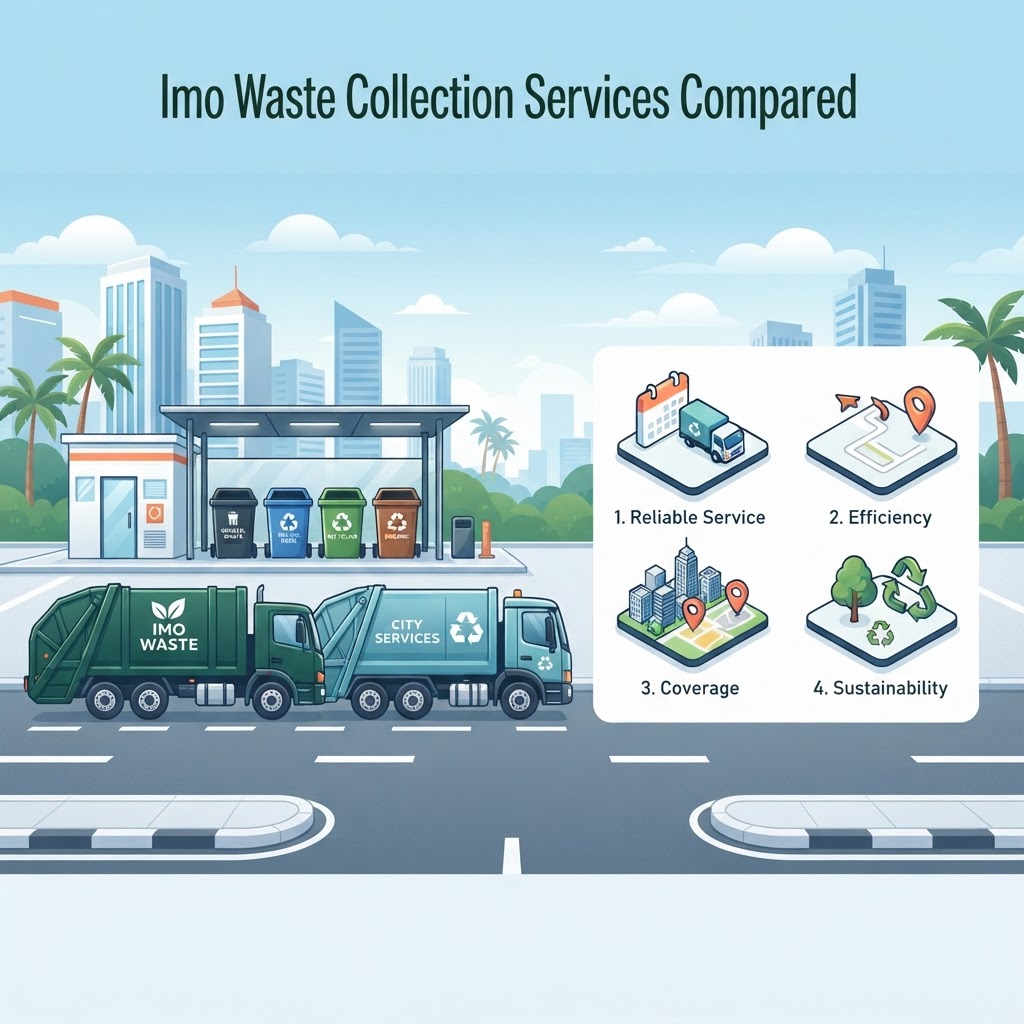
Imo Waste Collection Services Compared
Waste management sits at the intersection of public health, economic productivity, and community dignity. For residents of Imo State, particularly those living in the expanding urban corridors of Owerri, the question of who collects refuse — and how reliably they do it — is not a minor administrativ...