Powered by Obi Mbieri Independent Media Ltd · eziokwubundu.com
$1 = ₦1,326€1 = ₦1,541£1 = ₦1,793Imo State Cost of Living Guide
Understanding what it truly costs to live, work, and thrive in the Heartland of the East is no longer optional — it is a survival skill. Whether you are a working professional in Owerri, a returning diaspora family resettling in Orlu, or a young graduate navigating life in Okigwe, this Imo State Cos...
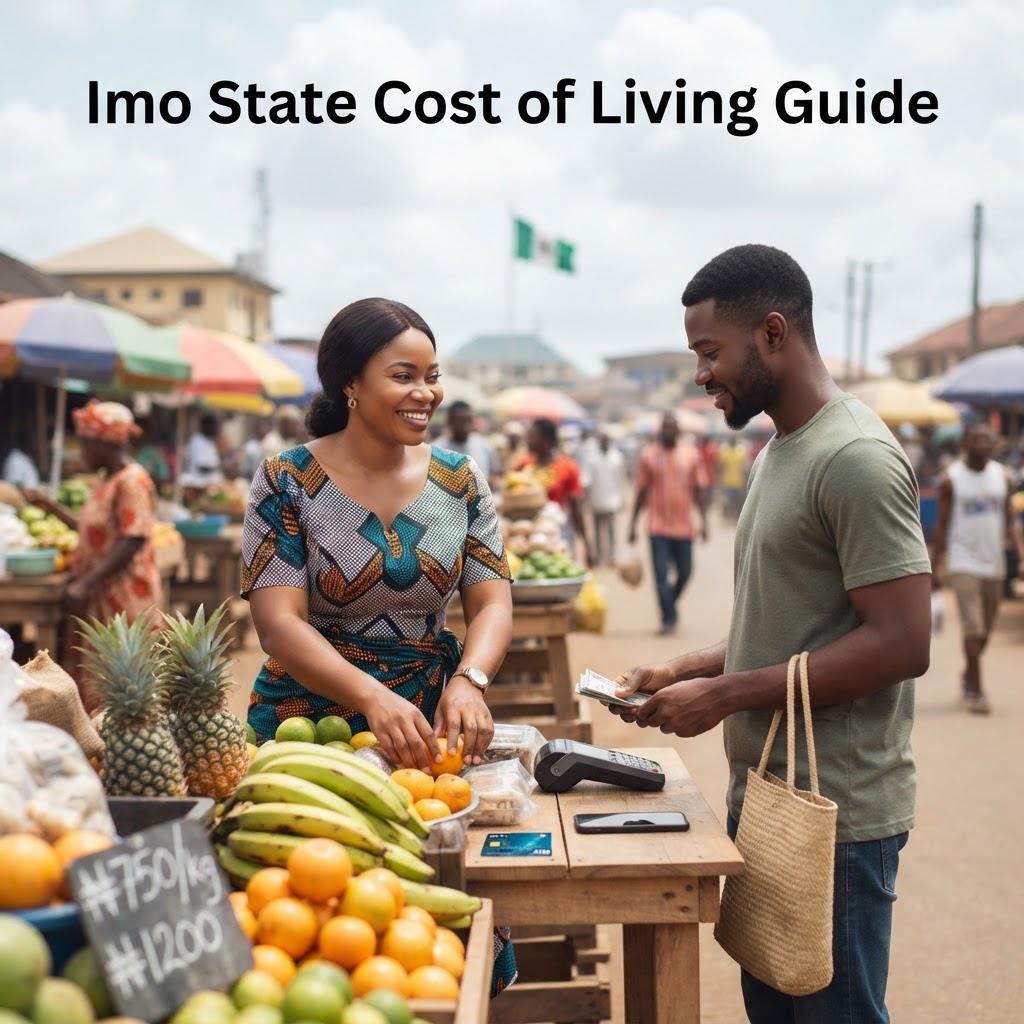
Understanding what it truly costs to live, work, and thrive in the Heartland of the East is no longer optional — it is a survival skill. Whether you are a working professional in Owerri, a returning diaspora family resettling in Orlu, or a young graduate navigating life in Okigwe, this Imo State Cost of Living Guide provides the data-driven, community-grounded financial clarity you need to plan effectively and build lasting prosperity.
Imo State sits at a dynamic crossroads of traditional Igbo values, modern commercial ambition, and rapid urbanisation. Yet like much of Nigeria, the gap between income and expenditure continues to widen. This guide breaks down every major cost category — housing, food, utilities, healthcare, and education — while offering practical wealth-building strategies rooted in African economic wisdom.
What Is the Real Cost of Living in Imo State?
Imo's Economic Landscape and Monthly Baselines
Imo State, often called the Heartland of the East, encompasses three principal senatorial zones — Owerri, Okigwe, and Orlu — each carrying distinct economic profiles. Owerri, as the state capital, commands the highest cost baseline, driven by commercial density, government activity, and growing real estate demand. Okigwe and Orlu, while less expensive, are experiencing steady price escalation tied to improved road infrastructure and expanding trade networks.
For a nuclear family of four, realistic monthly living expenses in Imo State currently range between ₦1.27 million and ₦1.35 million, accounting for rent amortisation, food, utilities, transportation, and modest school fees. Single earners face monthly expenditures between ₦545,000 and ₦581,000 — a figure that starkly contrasts with average professional salaries in the state, which hover between ₦387,000 and ₦410,000 per month. This affordability gap of roughly 30 to 40 percent is not a minor inconvenience; it represents a structural crisis demanding deliberate household financial planning.
The strategic intersection of personal health, household wealth, and community resilience defines life in Imo today. A family that ignores preventive healthcare expenditure or fails to participate in community cooperative structures will find itself financially exposed far beyond these baseline figures. Sustainable living in Imo requires treating health, wealth, and community as inseparable pillars — a philosophy central to how eziokwubundu.com approaches development journalism and economic guidance for Nigerian families.
How Much Does Housing Cost Across Imo State?
Rentals, Land Prices, and Neighbourhood Gaps
Housing remains the single largest expenditure for most Imo residents, and the disparity between urban and semi-urban pricing is significant. In prime Owerri neighbourhoods such as New Owerri, Ikenegbu Layout, and Trans-Egbu, a standard 2-bedroom flat rents between ₦800,000 and ₦1.5 million per year. These figures reflect not merely location prestige but also access to better roads, water supply, and proximity to commercial services.
Semi-urban alternatives in Okigwe and rural local government areas like Isiala Mbano or Obowo offer considerably more affordable options, with 2-bedroom accommodations ranging between ₦200,000 and ₦450,000 annually. For families willing to commute or work remotely, these zones present genuine value.
Premium housing in expanding corridors such as Owerri West and Nekede is gaining traction among middle-class professionals and diaspora returnees. 3-bedroom apartments in these zones command annual rents of ₦1.5 million to ₦3 million, with outright property purchases and land acquisition drawing significant speculative interest. Land in Owerri's expanding periphery now sells between ₦5 million and ₦25 million per plot, depending on survey documentation, proximity to arterial roads, and neighbourhood classification.
Prospective tenants and buyers must exercise caution. Agent fee inflation — often an unlawful double-charging of both landlord and tenant — remains a persistent problem. Engaging verified estate agents registered with the Nigerian Institution of Estate Surveyors and Valuers (https://www.niesv.org.ng) significantly reduces exposure to fraudulent transactions. Community-based referral networks, town union housing committees, and cooperative housing schemes also provide safer pathways to securing accommodation, particularly for returning diaspora families unfamiliar with current local dynamics.
Understanding Community Development Levies in Imo Explained is equally essential, as residential areas often carry annual community levies that must be factored into total housing costs.
What Are Realistic Food Costs in Imo Markets?
Staple Prices, Seasonal Shifts, and Healthy Nutrition
Food security and nutrition quality are inextricably linked to household budgeting in Imo State. Markets such as Eke Ukwu Owerri, Relief Market, and Orlu Main Market serve as economic barometers for the state's food economy. Staple prices fluctuate seasonally, but current benchmarks show yam tubers selling between ₦1,500 and ₦3,000 per piece, 50kg bags of locally milled rice ranging from ₦55,000 to ₦72,000, and tomatoes oscillating between ₦35,000 and ₦40,000 per basket during off-peak periods — rising sharply during harmattan supply disruptions.
A health-conscious single adult budgeting for a balanced, nutrient-dense diet should allocate between ₦126,000 and ₦134,000 monthly on groceries. This allocation, when planned deliberately, accommodates adequate protein sources — including fresh fish, eggs, and legumes — alongside a generous intake of local vegetables like ugu (fluted pumpkin), bitter leaf, and garden egg, all of which carry significant micronutrient value per naira spent.
Community bulk-buying arrangements — particularly through women's cooperative markets and town union procurement groups — can reduce individual grocery costs by 12 to 18 percent. Families sourcing directly from Mbieri and Ihiala farm clusters benefit from reduced intermediary markups. The agricultural potential of the Imo hinterland, documented in resources like From Mbieri Farm to Global Market, illustrates how smart procurement connects personal health to community economic development.
Traditional homestead preservation methods — sun-drying, fermentation, and root-cellar storage — extend the shelf life of seasonal produce and meaningfully reduce food waste, a practice as economically sensible as it is culturally rooted.
How Much Should You Budget for Utilities and Commuting?
Power, Water, and Daily Transportation Costs
Utility expenditure in Imo State is shaped heavily by the unreliability of the national grid. Residents connected to the Enugu Electricity Distribution Company (EEDC) network face band-categorised billing under the Multi-Year Tariff Order framework, with Band A customers — receiving at least 20 hours of daily supply — paying premium rates. In practice, most urban households spend between ₦18,000 and ₦35,000 monthly on electricity, supplemented by significant generator fuel costs ranging from ₦25,000 to ₦60,000 depending on household size and business activity.
Featured Products
Chukwu Abiama Tee
Bold black-and-gold Igbo-pride T-shirt featuring 'Chukwu Abiama' in premium streetwear typography.
₦15,000
Buy NowReverse Type 2 Diabetes & other associated Metabolic Issues using Dr. Jason Fung's Evidence-Based Approach— FMD program for Type 2 Diabetes
A practical fasting and fasting-mimicking programme built on Dr Jason Fung's insulin-resistance principles and ow-glycemic recipes.
₦19,950
Join NowỤmụ Igbo Tee
Classic black T-shirt with bold white 'Ụmụ Igbo' typography — a proud statement of Igbo heritage.
₦15,000
Buy NowNwanne Tee
Washed khaki vintage tee with a faded rust-orange 'Nwanne' stamp badge and palm leaf motif — a nod to kinship and heritage.
₦18,000
Buy NowObodo Tee
Faded denim-blue washed tee with a cream 'Obodo' stamp badge and sun motif, celebrating community roots.
₦18,000
Buy NowEkwe Heritage Tee
Deep indigo tee featuring a fine line-art illustration of a traditional Igbo ekwe drum, inspired by Igbo-Ukwu bronze artistry.
₦18,000
Buy NowIkenga Figure Tee
Forest green tee with a fine line-art illustration of a stylized Ikenga figure.
₦18,000
Buy NowPotable water remains a recurring expense. Where ISOPADEC-managed pipelines are non-functional, families rely on commercial water vendors charging between ₦500 and ₦1,200 per 1,000-litre tank delivery, adding ₦8,000 to ₦15,000 monthly to household budgets.
Daily commuting via Keke Napep (tricycles) and intra-state minibuses accounts for an average monthly transport spend of ₦20,000 to ₦22,000 for a working adult in Owerri. Suburban and inter-LGA commuters face higher costs depending on route distance and fuel pricing. Structuring work-from-home arrangements even two days per week can reduce transport expenditure by nearly 20 percent — a financially and physically sound strategy given the health impact of daily traffic congestion and exhaust exposure.
Budgeting a monthly utility contingency of at least ₦10,000 above baseline figures is advisable to manage erratic fuel price surges, consistent with guidance from the Nigerian Electricity Regulatory Commission.
What Do Healthcare and Education Cost Families?
Protecting Wellbeing and Investing in Children
Healthcare expenditure represents one of the most financially volatile line items for Imo families. Public facilities like the Federal Medical Centre (FMC) Owerri offer subsidised services but are constrained by supply shortages and patient volume. A standard outpatient consultation at FMC costs between ₦2,000 and ₦5,000, while private clinics in Owerri charge ₦8,000 to ₦25,000 per visit depending on specialisation. Hospitalisation costs at reputable private hospitals range from ₦150,000 to ₦600,000 per admission episode, underlining the catastrophic financial risk of uninsured health emergencies.
Enrolling in the National Health Insurance Authority (NHIA) scheme — accessible via formal employers or voluntary individual enrollment — remains one of the most effective risk-mitigation tools available. The Imo State Healthcare Access Guide provides a detailed roadmap for navigating both public and private health service options.
For education, annual tuition at reputable private primary schools in Owerri ranges from ₦180,000 to ₦450,000, with secondary school fees between ₦250,000 and ₦800,000 depending on boarding status and school tier. Public schools remain significantly more affordable but require supplementary expenditure on materials and private lesson support. Families should also explore skills-based education pathways outlined in the Mbaitoli Schools and Skills Training Guide for complementary developmental options.
Community mutual welfare funds and preventive health practices — regular screenings, dietary discipline, and physical activity — remain the most cost-effective long-term health investments available to Imo families.
How Can Families Build Sustainable Prosperity in Imo?
Wealth Blueprints, Side Ventures, and Community Capital
Closing the income-expenditure gap in Imo State requires more than salary increments — it demands a deliberate, multi-stream prosperity architecture. For middle-class households, the target of saving 25 to 30 percent of net monthly earnings is achievable only through structural spending discipline combined with active income diversification.
Viable local enterprise opportunities include agro-processing ventures (cassava flour, palm oil refining, and vegetable packaging), digital service provision (remote tech support, content creation, and e-commerce logistics), and artisanal trades such as tailoring, furniture production, and confectionery — all with established Owerri-based markets and growing online demand channels. Professionals considering formal business entry should review the Imo State Business Registration Guide for regulatory compliance pathways.
Returning diaspora families and remote youth professionals are particularly well-positioned to leverage the cost differential between Imo's living expenses and international income sources, provided they invest strategically in local assets rather than purely in consumption.
Traditional social capital instruments — particularly esusu (rotating savings circles), cooperative lending groups, and town union development funds — remain among the most resilient wealth-building tools in the Igbo economic toolkit. Participation in these structures reduces dependence on predatory informal lending, accelerates capital accumulation, and reinforces the community bonds that ultimately define collective prosperity. Additional public resource opportunities are documented in the Imo State Social Investment Programs Explained guide.
Conclusion
The data presented in this Imo State Cost of Living Guide paints a clear picture: living well in Imo State is achievable, but it demands informed decision-making, proactive financial planning, and a commitment to community-anchored prosperity. The gap between average earnings and realistic living costs is real — but it is not insurmountable.
By approaching housing, nutrition, healthcare, and education as interconnected investments rather than isolated expenses, and by activating the social capital embedded in Imo's traditional community structures, Nigerian families and professionals can build lives of genuine stability and growth in the Heartland of the East.
For authoritative national economic benchmarks relevant to household planning, the National Bureau of Statistics and the Central Bank of Nigeria provide regularly updated Consumer Price Index and inflation data to support your financial decisions.
eziokwubundu.com is committed to delivering practical, culturally grounded knowledge that bridges health, wealth, and community development for Nigerian families and communities everywhere.
Stay Informed
Get New Articles in Your Inbox
Subscribe to receive the latest community development, health, and wealth insights from Eziokwubundu.
Newsletter
Practical insights on health, wealth, and community — delivered weekly.