Powered by Obi Mbieri Independent Media Ltd · eziokwubundu.com
$1 = ₦1,332€1 = ₦1,498£1 = ₦1,775How to start a business in Imo State
Starting a business in Imo State is one of the most strategically rewarding decisions an entrepreneur in Nigeria's South-East can make today. Known officially as the "Heartland State," Imo sits at the intersection of commerce, culture, and community in ways that few other Nigerian states can match. ...

Starting a business in Imo State is one of the most strategically rewarding decisions an entrepreneur in Nigeria's South-East can make today. Known officially as the "Heartland State," Imo sits at the intersection of commerce, culture, and community in ways that few other Nigerian states can match. Whether you are a returning diaspora professional, a young graduate with an idea, or an established entrepreneur seeking regional expansion, Imo State offers a combination of human capital, natural resources, and government-backed initiatives that can accelerate your journey from concept to cashflow.
This guide walks you through every critical step — from legal registration and government support to funding strategies, sector analysis, and the often-overlooked dimension of founder wellness. At eziokwubundu.com, we believe that genuine prosperity integrates health, wealth, and community. That philosophy shapes every recommendation in this article.
Why Is Imo State a Strategic Business Hub?
The Heartland Advantage in the South-East Economic Corridor
Imo State's nickname — the Heartland — is more than poetic branding. Geographically, the state functions as a central transit node between three of Nigeria's most commercially active cities: Onitsha, Aba, and Port Harcourt. This positioning makes Imo a natural distribution corridor for manufactured goods, agricultural produce, and services across the South-East and South-South geopolitical zones.
Beyond geography, Imo boasts one of Nigeria's highest literacy rates, a fact that international observers, including CNN's coverage of Nigeria's emerging talent economy, have highlighted when profiling the state's human capital potential. The state is home to two federal universities, multiple polytechnics, and a growing cohort of technically skilled graduates entering the workforce each year.
Despite a national dip in Nigeria's startup funding rankings — with total ecosystem funding experiencing volatility since 2022 — regional hubs like Owerri are emerging as grassroots engines of economic activity. Digital transformation, remote work adoption, and locally anchored entrepreneurship programs are redefining what business growth looks like outside Lagos and Abuja. For entrepreneurs willing to look beyond the mega-cities, Imo offers an undervalued but rapidly appreciating market.
What Are the Legal Requirements for Business Registration?
Navigating Federal and State Compliance Frameworks
Registering a business in Imo State involves a dual-layer compliance process — one at the federal level and one at the state level — and understanding both is essential to operating legally.
Step 1: Federal Registration with the CAC. Every business in Nigeria must first be registered with the Corporate Affairs Commission (CAC), the federal body responsible for company incorporation. This process includes a name availability check on the CAC portal, submission of your Memorandum and Articles of Association, and payment of the applicable registration fee. Business Name registration typically costs between ₦10,000 and ₦15,000, while a Private Limited Company (Ltd) carries higher fees depending on share capital.
Step 2: State-Level Registration. Upon obtaining CAC certification, you must proceed to the Imo State Ministry of Commerce and Industry for state-level business premises registration. This requirement is governed by the Imo State Registration of Business Premises (Amendment) Law No. 4 of 2006, which mandates that every business operating a physical location within the state must register locally, regardless of federal status.
Step 3: Document Preparation. Required documents typically include your CAC certificate, a valid means of identification, proof of business address, passport photographs, and a completed state application form.
Step 4: Filing and Turnaround. State-level filings generally have a 2–3 business day processing window, making the process relatively efficient compared to other states. Entrepreneurs are advised to retain copies of all certificates, as these will be required when applying for permits, contracts, and incentives through agencies like ISIPA.
How Does ISIPA Support Imo Entrepreneurs?
Leveraging the One-Stop Center for Business Growth
The Imo State Investment Promotion Agency (ISIPA) is the state government's primary instrument for attracting, facilitating, and retaining investment. For local and foreign entrepreneurs alike, ISIPA serves as the authoritative first point of contact, offering free consultations, guidelines on available tax incentives, and comprehensive legal information relevant to operating in the state.
One of ISIPA's most impactful offerings is its One-Stop Center — a unified administrative structure designed to streamline the issuance of permits, licenses, and regulatory approvals. In a Nigerian business environment where bureaucratic fragmentation frequently discourages investment, the One-Stop Center consolidates multiple agencies under a single roof, reducing both processing time and the informal costs associated with navigating multiple regulatory offices independently.
Foreign investors face an additional compliance requirement: they must register formally with ISIPA before commencing operations in Imo State, in line with the agency's operational guidelines and Nigeria's general investment protocols. This step also unlocks access to any bilateral investment agreements and sector-specific incentives that the state has negotiated. Entrepreneurs are encouraged to visit ISIPA's offices in Owerri early in the planning stage to understand what incentives apply to their specific industry.
How Can the OKOBI Initiative Accelerate Your Growth?
Blending Traditional Community Structures with Modern Economics
One of the most culturally distinctive business development programs in Nigeria today is Imo State's One Kindred One Business Initiative (OKOBI). Rooted in the Igbo tradition of kindred and family solidarity, OKOBI is a state-backed program that leverages existing family units and community networks to address unemployment, stimulate local production, and scale grassroots enterprises.
The philosophy behind OKOBI aligns powerfully with the eziokwubundu.com "Community-First" approach. Rather than treating entrepreneurship as a purely individual pursuit, OKOBI recognizes that social capital — the trust, networks, and shared accountability embedded in Igbo family structures — is a legitimate and underutilized economic resource. When a kindred collectively backs a business, that business benefits from shared reputation, informal credit guarantees, and embedded customer loyalty.
On the financing side, the N600 billion enterprise development scheme unveiled by Calpe Labs and EvaTech Global represents a significant institutional commitment to OKOBI's expansion. The scheme specifically targets 50 grassroots businesses under the OKOBI umbrella, providing structured capital, mentorship, and market linkages to enterprises that would otherwise struggle to access formal financial systems. For entrepreneurs who are part of an active kindred network in Imo, registering under OKOBI could be the single fastest route to both funding and community validation. As we explore in our piece on understanding the grassroots as the foundation of any bigger picture, local structures are frequently the most reliable engines of sustainable growth.
Which Industries Have the Highest Investment Potential?
Identifying High-Growth Sectors for Sustainable Wealth
Imo State's economic landscape supports several high-potential sectors that reward both patient capital and agile entrepreneurship.
Featured Products
Chukwu Abiama Tee
Bold black-and-gold Igbo-pride T-shirt featuring 'Chukwu Abiama' in premium streetwear typography.
₦15,000
Buy NowReverse Type 2 Diabetes & other associated Metabolic Issues using Dr. Jason Fung's Evidence-Based Approach— FMD program for Type 2 Diabetes
A practical fasting and fasting-mimicking programme built on Dr Jason Fung's insulin-resistance principles and ow-glycemic recipes.
₦19,950
Join NowỤmụ Igbo Tee
Classic black T-shirt with bold white 'Ụmụ Igbo' typography — a proud statement of Igbo heritage.
₦15,000
Buy NowNwanne Tee
Washed khaki vintage tee with a faded rust-orange 'Nwanne' stamp badge and palm leaf motif — a nod to kinship and heritage.
₦18,000
Buy NowObodo Tee
Faded denim-blue washed tee with a cream 'Obodo' stamp badge and sun motif, celebrating community roots.
₦18,000
Buy NowEkwe Heritage Tee
Deep indigo tee featuring a fine line-art illustration of a traditional Igbo ekwe drum, inspired by Igbo-Ukwu bronze artistry.
₦18,000
Buy NowIkenga Figure Tee
Forest green tee with a fine line-art illustration of a stylized Ikenga figure.
₦18,000
Buy NowAgriculture and Agro-Processing remains the most accessible entry point for many investors. Imo's fertile soil supports cassava, yam, palm oil, and vegetables at scale. The opportunity, however, lies not in subsistence farming but in commercial value chains — processing, packaging, cold storage logistics, and export-ready branding that connects Imo farmers to urban and international markets.
Energy presents a longer-horizon but high-reward opportunity. Imo State sits atop significant natural gas reserves, and state government officials have repeatedly articulated an ambition to position Imo as a central energy platform for West Africa. Micro-grid development, gas-to-power projects, and LPG distribution are all viable entry points for well-capitalized investors.
Services and Hospitality in Owerri constitute perhaps the most immediately lucrative sector. Owerri has earned a well-deserved reputation as the entertainment capital of the South-East, drawing visitors from across Nigeria and the diaspora. The demand for quality hotels, event centers, restaurants, logistics companies, and digital service providers continues to outpace supply — a classic signal of profitable market entry conditions. For context on the political environment shaping these investment decisions, see our coverage of Governor Uzodimma's political positioning and its implications for Imo State.
Where Can Imo Startups Find Funding and Capital?
Accessing Traditional and Alternative Financing Options
Funding remains the most frequently cited barrier for Nigerian entrepreneurs, but the landscape is broader than many realize.
Traditional bank loans are still available through commercial banks and development finance institutions like the Bank of Industry (BOI), which offers sector-specific loan products at concessional rates. However, the collateral requirements and processing times associated with traditional lending often disadvantage early-stage founders. This is where firms like EvaTech Global are making a measurable difference — deploying advanced digital underwriting tools that assess creditworthiness based on business cash flow and transaction history rather than physical collateral alone.
Cooperatives and community savings groups represent a culturally embedded alternative. Igbo cooperative associations — often called otu or isusu in local parlance — have provided low-interest rotating credit to members for generations. Formalizing participation in a registered cooperative can provide seed capital while simultaneously building a credit history.
Investment readiness remains non-negotiable when seeking to tap into larger pools. Africa's startup funding ecosystem, valued at approximately $3.1 billion annually at its recent peak according to Briter Bridges research, flows predominantly to founders who can present structured business plans, clean financial records, and evidence of market traction. Preparing these documents early is not administrative overhead — it is competitive strategy.
How Do You Navigate Infrastructure Challenges in Owerri?
Practical Strategies for Business Resilience
Infrastructure gaps are a real operational reality in Imo State, but they are manageable with deliberate planning. The power gap is the most acute challenge. Entrepreneurs should budget from day one for alternative energy solutions — solar panel systems with battery storage or inverter setups — as grid instability will otherwise directly translate into lost productivity and spoiled inventory, particularly for food, pharmaceutical, and technology businesses.
Digital integration is both a workaround and a growth accelerator. Cloud-based business management tools, mobile payment platforms, and e-commerce channels allow Imo businesses to reach the diaspora market and urban consumers without requiring expensive physical infrastructure. Data analytics tools can help identify your best-performing products, peak demand periods, and customer retention patterns with minimal investment.
When selecting a business location, weigh proximity to raw material supply chains against access to Owerri's improving road network and the Sam Mbakwe International Cargo Airport, which opens logistics opportunities for import-export businesses. You may also want to review recent land tenure developments in the state, as documented in our reporting on Imo land recovery and property rights.
Why Is Entrepreneur Health Critical for Business Sustainability?
The Eziokwubundu Perspective on Health and Wealth Integration
At eziokwubundu.com, we argue consistently that a founder's physical and mental wellness is the most undervalued asset in any startup. Nigerian entrepreneurship is exceptionally demanding — the combination of regulatory navigation, power outages, inflation, and market unpredictability creates a chronic stress environment that degrades decision-making, creativity, and resilience over time.
Successful businesses also have the unique opportunity to extend health benefits outward. By structuring cooperatives with employee healthcare access components — such as group contributions to HMO plans — Imo entrepreneurs can make preventive healthcare a competitive advantage in attracting and retaining quality staff.
Practically, busy entrepreneurs should prioritize sleep hygiene, regular medical check-ups, and daily physical activity as non-negotiable business disciplines. A medical emergency that sidelines a sole founder for two weeks can be more catastrophic to a startup than a market downturn. As we highlight in our analysis of rising kidney failure among young Nigerians, lifestyle-driven health crises are increasingly common among high-stress working professionals — and preventive action is always cheaper than emergency intervention.
What Are the Final Steps to Launching Your Imo Venture?
From Planning to Execution and Community Impact
With your research complete, legal frameworks understood, and funding pathways mapped, the final steps are execution-focused. Open a dedicated business bank account immediately upon CAC registration — commingling personal and business finances is one of the most common errors that derails Nigerian startups during tax filing and investment due diligence. Hire locally where possible; local staff bring cultural intelligence, community trust, and existing networks that no external recruitment can replicate.
Embrace the principle that Eziokwubundu consistently champions: traditional values and modern progress are not in conflict. Businesses that respect Imo's community structures, engage their kindred networks honestly, and contribute visibly to local development earn a depth of loyalty that no advertising budget can manufacture.
Finally, commit to viewing your business as a tool for collective advancement. Every enterprise that succeeds in Imo State creates jobs, generates tax revenue, and demonstrates to the next generation that prosperity is achievable at home. That is not idealism — it is the most durable business strategy available.
For further guidance on Nigeria's evolving political and economic landscape, explore the Nigerian Investment Promotion Commission's official resources and the Small and Medium Enterprises Development Agency of Nigeria (SMEDAN) for access to national-level programs that complement Imo's state-level initiatives.
Stay Informed
Get New Articles in Your Inbox
Subscribe to receive the latest community development, health, and wealth insights from Eziokwubundu.
Newsletter
Practical insights on health, wealth, and community — delivered weekly.
Community Discussion(0)
Leave a Comment
More to Read
You May Also Like

FUTO Partners With Police to Boost Campus Security
Nigerian universities are grappling with growing security concerns, and the Federal University of Technology, Owerri (FUTO) is responding with urgency to protect its community. Campus security has become the defining priority for university leadership as recent incidents involving student safety pus...

Monetizing Digital Skills for Nigerian Youth Prosperity
The economic landscape for young Nigerians(/article/home-morning-fitness-guide-for-nigerians) is undergoing a profound transformation. No longer is a single monthly salary sufficient to navigate the complexities of modern inflation and rising living costs. For the ambitious youth professional, the d...

NNPC Faces Efficiency Scrutiny Over ₦27.76 Trillion Expenses
Nigeria's state oil giant is back in the headlines, and not for a new discovery. NNPC's ₦27.76 Trillion Operating Expenses Raise Efficiency Questions among citizens, analysts, and policymakers alike. The figure is so large it has sparked fresh debate about how national wealth is managed, and the num...

Why Entrepreneurs Must Track Monthly Net Worth
Many business owners in Lagos and Abuja celebrate high daily sales while their personal bank accounts remain stagnant. True financial freedom is not found in the cash flow of a business but in the residual value of one's personal assets. Shifting your focus to monthly net worth tracking allows you t...

Imo Approves Recruitment of 6,030 Teachers Across 27 LGAs
Imo State has taken a bold step toward transforming its public education system. Governor Hope Uzodimma has approved the recruitment of 6,030 teachers across the state's 27 Local Government Areas, a move many residents have awaited for years. This decision, widely reported by Vanguard(https://www.va...

Health and Wealth Creation for Nigerians: Empowerment Hub
In an increasingly complex global landscape, the pursuit of a fulfilling life necessitates a balanced approach to physical well-being, financial stability, and social connectivity. For Nigerians at home and in the diaspora, navigating these paths requires more than just effort; it requires access to...
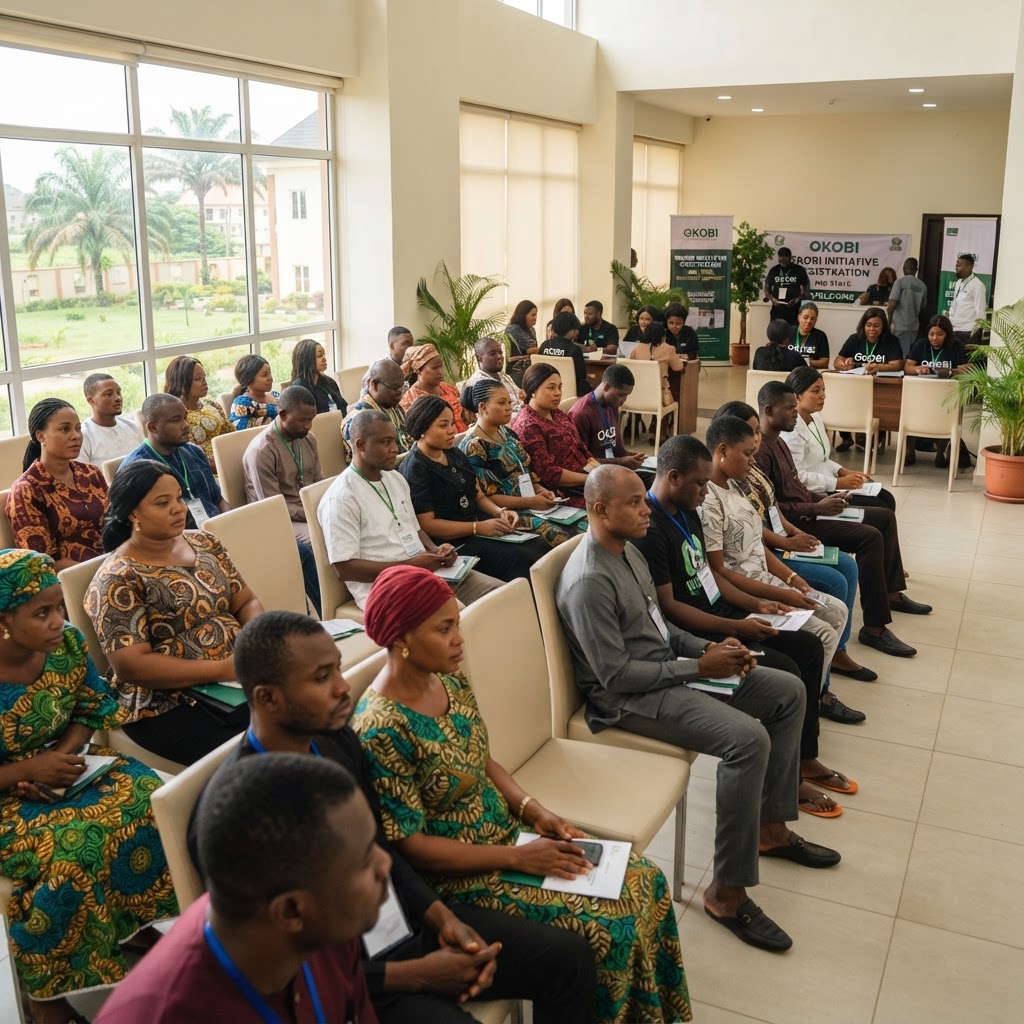
65 Imo Businesses Await OKOBI Initiative Registration
Imagine 65 kindred-owned businesses across Imo State, each waiting for one final document to unlock full legal status. That single step—Corporate Affairs Commission registration—now defines the next chapter in Imo's OKOBI Initiative: 65 Community Businesses Await CAC Registration. For families, entr...

How to Register a Business in Imo
Starting a business in Imo State is one of the most impactful decisions you can make — not just for your personal financial future, but for the broader prosperity of your community. From the bustling markets of Owerri to the agricultural enterprises of Orlu and Okigwe, Imo entrepreneurs are driving ...