Powered by Obi Mbieri Independent Media Ltd · eziokwubundu.com
$1 = ₦1,327€1 = ₦1,540£1 = ₦1,795First Imo Community Gets Constant Power Under Orashi Project — What About Mbaitoli?
For decades, the phrase "constant light" has functioned less as a civic expectation and more as a punchline in Imo State — a wistful wish muttered by traders whose freezers have defrosted for the third time this week, or by students studying under torchlight while their generators sputter out. That ...
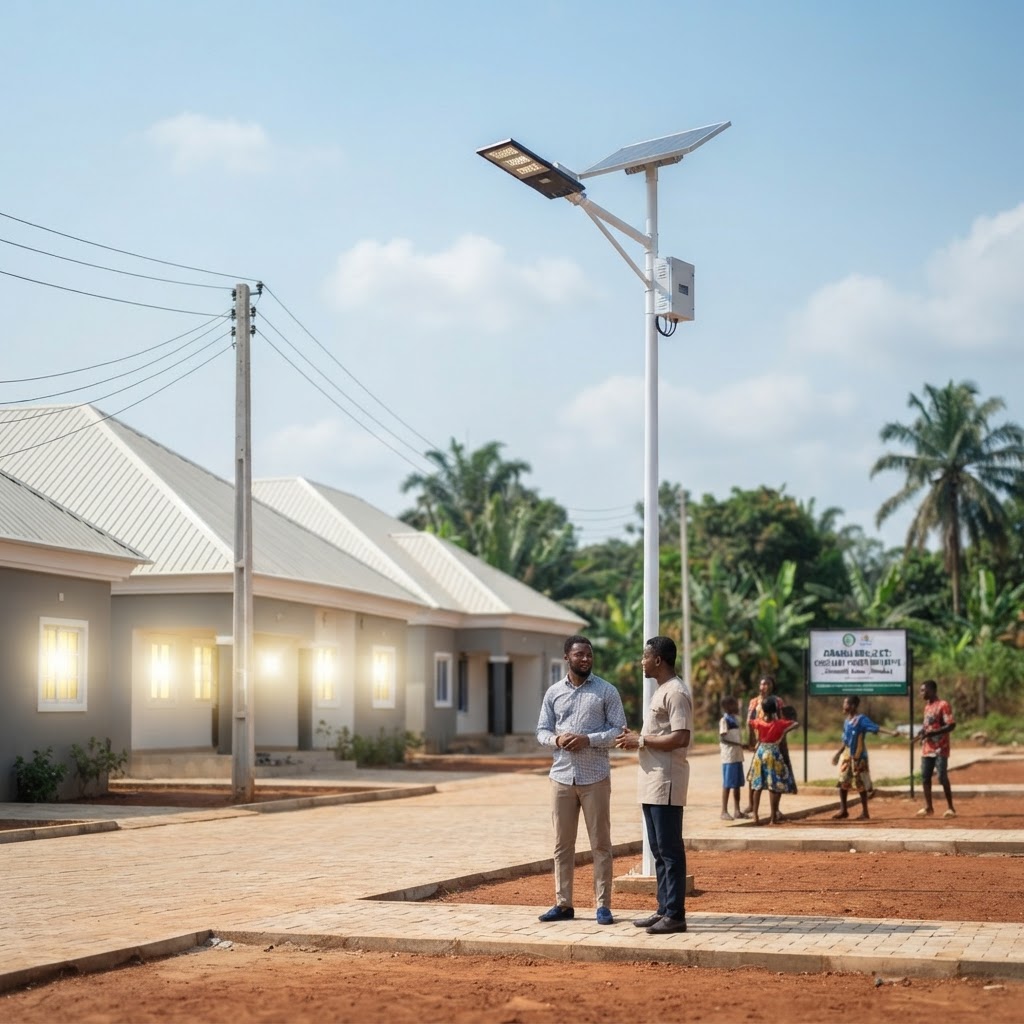
For decades, the phrase "constant light" has functioned less as a civic expectation and more as a punchline in Imo State — a wistful wish muttered by traders whose freezers have defrosted for the third time this week, or by students studying under torchlight while their generators sputter out. That narrative shifted seismically in 2025 when Governor Hope Uzodimma formally commissioned the first phase of the Orashi Electricity Project, inaugurating a pioneer beneficiary community into the rare privilege of 24/7 power supply. For residents of Mbaitoli Local Government Area — one of the most populous, commercially active, and strategically positioned LGAs in the state — the jubilation unfolding elsewhere is simultaneously inspiring and urgent. This article examines what the Orashi milestone means, why Mbaitoli cannot afford to be left behind, and what every stakeholder must do right now to ensure equitable expansion.
What Just Happened Under the Orashi Electricity Project?
Imo's Landmark Energy Sovereignty Milestone
The commissioning of the Orashi Electricity Project's first phase represents the most consequential infrastructure act in Imo State in a generation. At the heart of the intervention is a newly inaugurated 15MVA, 33/11KV injection substation in Owerri, complemented by a 15-kilometre 33KV transmission line running from Egbu to New Owerri, and a sprawling 45-kilometre distribution network that threads power through pioneer communities. According to The Sun's reporting on the project, beneficiary communities have responded with visible jubilation, describing the experience of uninterrupted electricity as transformative.
The legal scaffolding for this achievement rests on the Electricity Act 2023, a federal legislative reform that devolved significant energy authority to Nigeria's thirty-six states. For the first time, states can legally own, operate, and commercially manage electricity generation, transmission, and distribution within their territories. Imo seized that window. The state-owned Orashi Electricity Company was established as the operational vehicle, with Egyptian infrastructure firm Madkour Holding brought in as a key technical partner. Crucially, transferred assets from Ohaji-Egbema — one of Nigeria's most gas-rich territories — provide the embedded generation base that makes the project's economics viable.
The current phase operates at approximately 100 megawatts of functional capacity, but the architecture is deliberately expansive. Governor Uzodimma's team has articulated a 500-megawatt statewide master plan, with phased rollout designed to reach successive communities across all three senatorial zones. What the pioneer communities are experiencing today — lights that stay on, refrigerators that stay cold, medical equipment that stays functional — is the proof of concept that the broader rollout must replicate at scale.
The challenge, and the opportunity, is what comes next.
Why Does Mbaitoli Urgently Need Grid Connection?
The Demographic Weight and Economic Cost of Energy Poverty
Mbaitoli is not a peripheral community. It is one of Imo State's most densely populated Local Government Areas, home to over 327,000 residents spread across nine major towns and more than twenty autonomous communities — including Mbieri, Ubomiri, Orodo, Umunoha, and Ifakala. It shares a boundary with the Owerri capital territory, making it a natural extension of the state's urban economic corridor. That proximity, paradoxically, has not translated into reliable infrastructure. Energy poverty remains systemic.
The so-called "generator economy" is quietly one of the most destructive financial drains on Mbaitoli's productive class. Walk through the commercial axis along Nwaorieubi and you encounter agro-processing mills running on diesel at three to four times the cost of grid electricity, cold rooms for fish and perishable goods burning through fuel faster than they generate profit, and metal fabrication workshops whose overhead costs make competitiveness nearly impossible. For digital workers — freelancers, remote employees, and online traders — the cost is compounded by the unreliability of inverter systems charged from a failing national grid.
The macro numbers are stark. Nigerian households collectively spend an estimated ₦3.5 trillion annually on generator fuel, according to energy sector analysts. In an LGA like Mbaitoli, where median household income remains modest, a family spending ₦15,000 to ₦25,000 monthly on petrol for a small generator is effectively losing between 20 and 35 percent of disposable income to an infrastructure gap the state government is responsible for closing.
For grassroots wealth generation — the kind that comes from retained business margins, reinvestment in small enterprises, and household savings — this drain is catastrophic. The families of Mbaitoli are not poor because they lack ambition. Many are financially constrained because they are subsidising a broken energy system out of their own pockets. Understanding this dynamic is central to appreciating why the Orashi expansion is not just an infrastructure question but a poverty-reduction and economic empowerment imperative. For deeper context on how fiscal gaps compound these challenges at the state level, read our analysis of how 26 Nigerian states cannot cover personnel costs from their Internally Generated Revenue.
How Does Constant Electricity Drive Community Health and Wellness?
The Direct Link Between Reliable Power and Human Flourishing
The relationship between electricity and public health is not metaphorical — it is clinical, measurable, and urgent. Across Mbaitoli's primary healthcare centres and general hospitals, power outages translate directly into preventable deaths, compromised treatments, and cascading failures in the cold chain that keeps vaccines effective. A vaccine stored above 8°C for more than a few hours becomes biologically inert. An operating theatre without stable electricity is a liability in any surgical emergency. A neonatal ward running on a generator that coughs and stalls is a recurring nightmare for midwives managing high-risk deliveries.
The World Health Organization has documented that over 50 percent of health facilities in sub-Saharan Africa operate without reliable electricity, directly undermining the efficacy of immunisation campaigns, maternal care programmes, and emergency response capacity. Mbaitoli sits within this statistical reality. When the Orashi grid reaches these facilities, the impact will be immediately measurable in reduced maternal mortality indicators, improved vaccine coverage rates, and a reduction in post-operative complications linked to power interruptions during surgery.
Beyond hospital walls, the environmental health toll of the generator economy is invisible but severe. Dense residential clusters in communities like Orodo and Ubomiri endure chronic exposure to carbon monoxide emissions and fine particulate matter (PM2.5) — pollutants directly linked to respiratory disease, cardiovascular complications, and long-term neurological damage. Chronic noise pollution from generators running through the night disrupts sleep architecture in ways that compound stress-related illness, impair cognitive development in children, and reduce workforce productivity.
Featured Products
Chukwu Abiama Tee
Bold black-and-gold Igbo-pride T-shirt featuring 'Chukwu Abiama' in premium streetwear typography.
₦15,000
Buy NowReverse Type 2 Diabetes & other associated Metabolic Issues using Dr. Jason Fung's Evidence-Based Approach— FMD program for Type 2 Diabetes
A practical fasting and fasting-mimicking programme built on Dr Jason Fung's insulin-resistance principles and ow-glycemic recipes.
₦19,950
Join NowỤmụ Igbo Tee
Classic black T-shirt with bold white 'Ụmụ Igbo' typography — a proud statement of Igbo heritage.
₦15,000
Buy NowNwanne Tee
Washed khaki vintage tee with a faded rust-orange 'Nwanne' stamp badge and palm leaf motif — a nod to kinship and heritage.
₦18,000
Buy NowObodo Tee
Faded denim-blue washed tee with a cream 'Obodo' stamp badge and sun motif, celebrating community roots.
₦18,000
Buy NowEkwe Heritage Tee
Deep indigo tee featuring a fine line-art illustration of a traditional Igbo ekwe drum, inspired by Igbo-Ukwu bronze artistry.
₦18,000
Buy NowIkenga Figure Tee
Forest green tee with a fine line-art illustration of a stylized Ikenga figure.
₦18,000
Buy NowThere is also the clean water dimension. Municipal and community-managed boreholes — the primary source of potable water for tens of thousands of Mbaitoli residents — depend entirely on electric pumps. When power fails, boreholes go dry. Residents resort to open wells or surface water, triggering outbreaks of typhoid, cholera, and diarrhoeal disease. Stable electricity means functioning boreholes, which means safe water, which means a measurable reduction in preventable illness across every age bracket.
How Can Mbaitoli Harness Energy for Generational Wealth?
Turning Constant Power into Practical Prosperity
Electricity is infrastructure. But in the hands of a community as entrepreneurially dense as Mbaitoli, it is also capital. The conversation around the Orashi expansion must go beyond "lights on" to encompass what those lights enable when they remain on consistently.
Governor Uzodimma's broader Skill-Up Imo initiative represents a policy bridge between energy access and human capital development. For Mbaitoli's growing cohort of young professionals — software developers, content creators, graphic designers, data analysts, and remote customer service agents — reliable 24/7 uptime is the single most critical missing input. Nigeria's digital export economy is valued at over $600 million annually and growing, but participation from interior communities remains suppressed by the infrastructure gap. A freelance developer in Mbieri with stable electricity and internet connectivity is globally competitive. Without it, he is permanently disadvantaged.
The agricultural transformation potential is equally significant. Mbaitoli's rural communities produce cassava at scale, cultivate oil palm across large landholdings, and maintain active poultry operations. The gap between subsistence production and commercial viability lies almost entirely in value-added processing — cassava flour mills, palm kernel crackers, cold storage for poultry — all of which require reliable electricity to operate economically. Connecting these operations to the Orashi grid would enable local entrepreneurs to capture value that currently flows to processors in urban centres or neighbouring states.
For artisans, traders, and small manufacturers across the LGA's commercial centres, the elimination of generator overhead costs directly improves margin retention. Margins that are currently consumed by fuel can instead finance inventory expansion, equipment upgrades, and apprenticeship training — the grassroots reinvestment cycle that drives communal economic ascent. This aligns directly with the political and developmental ambitions shaping Mbaitoli's future.
What Must Leaders and Government Do to Accelerate Expansion?
An Actionable Roadmap for Infrastructure Advocacy
Good infrastructure rarely expands on its own momentum. It expands in response to organised, well-articulated community demand, combined with the institutional structures necessary to protect and sustain what is built. Mbaitoli's communities need both.
The immediate priority is the formation of community power advocacy committees in each of the major towns — Mbieri, Orodo, Ubomiri, Umunoha, Ifakala, and their neighbouring autonomous communities. These committees should bring together town union leadership, traditional rulers (Ezes), women's associations, youth organisations, and diaspora representatives into a coherent platform for engaging both the Orashi Electricity Company and the Imo State Ministry of Power. Diaspora associations, many of them well-funded and technically sophisticated, can play a particularly powerful role in funding feasibility studies, pre-financing transformer installations, and applying political pressure through networks that extend to Abuja and beyond. Traditional Igbo conflict resolution methods offer time-tested frameworks for building the consensus these committees will need to function effectively.
The protection of installed infrastructure must be treated as a community security matter from day one. Transformer vandalism, copper cable theft, and equipment sabotage have gutted electricity projects across the Niger Delta and South-East for decades. Mbaitoli communities must co-create localised infrastructure protection frameworks — formal arrangements between town unions, community vigilante groups, and the Orashi Electricity Company — that assign responsibility, define response protocols, and establish deterrent consequences for sabotage.
Finally, the sustainability of any electricity expansion is inseparable from the willingness of consumers to pay their bills accurately and promptly. Institutionalising prompt metering and transparent billing cultures across Mbaitoli communities is not merely a civic virtue — it is the revenue foundation upon which private investor confidence and operational scaling depend. Communities that demonstrate payment discipline attract faster expansion. Those that don't, stagnate.
Conclusion
The Orashi Electricity Project is not simply a power project. It is Imo State's most consequential bet on its own economic sovereignty — a wager that reliable, state-controlled electricity can unlock the human potential, health resilience, and entrepreneurial energy that decades of grid neglect have suppressed. The pioneer community's jubilation is well-earned and richly deserved. But it is also a mirror and a measuring stick for every community still waiting.
Mbaitoli — with its demographic weight, its commercial density, its agricultural base, and its proximity to the capital — is too important to be left in the queue. The families, the farmers, the students, the traders, and the health workers of Mbaitoli deserve the same unceasing power that is already transforming lives elsewhere in the state. The infrastructure is being built. The legal framework exists. The economic case is overwhelming. What remains is organised, sustained, community-driven advocacy to ensure that when the Orashi grid expands, Mbaitoli is next.
Sources referenced in this article include The Sun Nigeria's report on the Orashi Electricity Project, the Nigerian Communications Commission, and the World Health Organization's health systems infrastructure data. For ongoing coverage of Imo State governance and community development, visit eziokwubundu.com.
Stay Informed
Get New Articles in Your Inbox
Subscribe to receive the latest community development, health, and wealth insights from Eziokwubundu.
Newsletter
Practical insights on health, wealth, and community — delivered weekly.