Powered by Obi Mbieri Independent Media Ltd · eziokwubundu.com
$1 = ₦1,327€1 = ₦1,539£1 = ₦1,795Ex-PDP Chairman Bamanga Tukur dies at 90
Nigeria lost one of its most consequential statesmen on Saturday, September 12, 2026, when Alhaji Bamanga Muhammad Tukur passed away at his Abuja residence after a protracted illness. He was 90 years old — just three days short of what would have been his 91st birthday on September 15. From modernis...
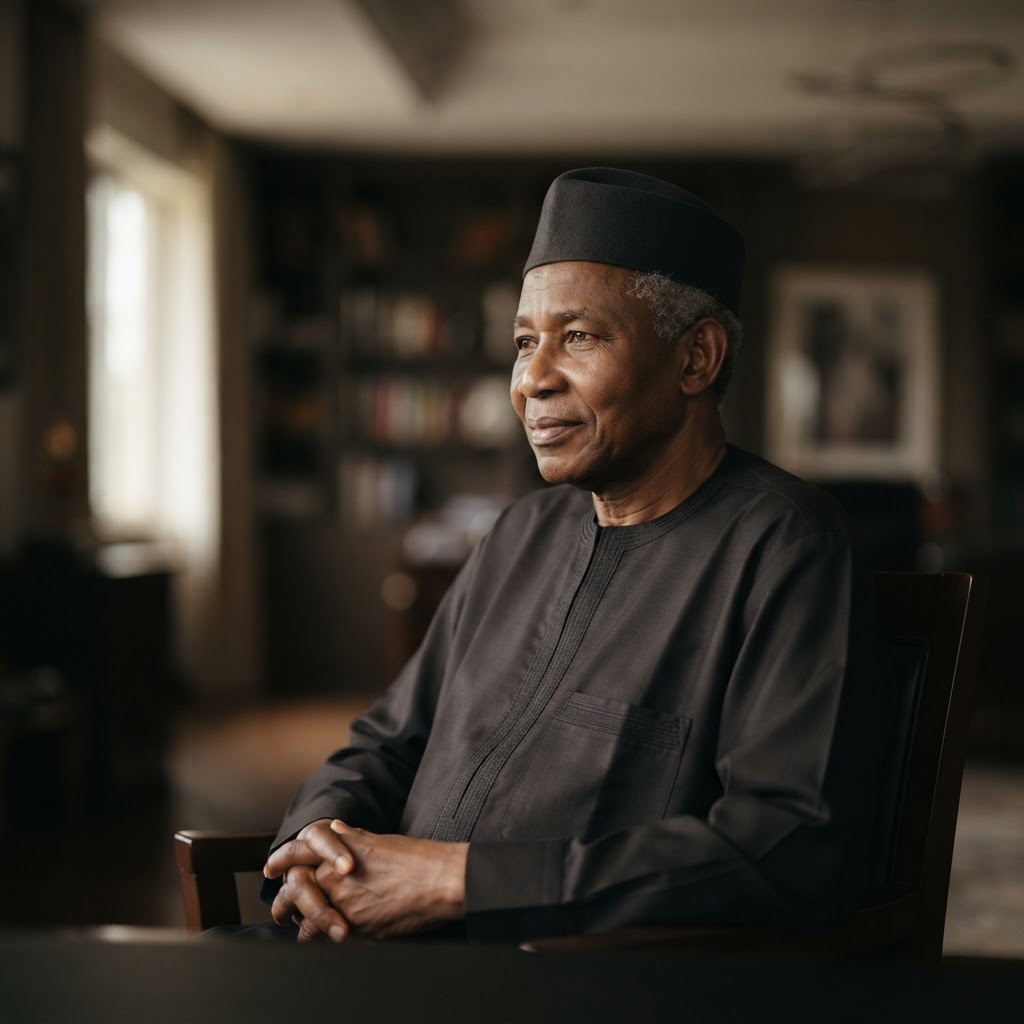
Nigeria lost one of its most consequential statesmen on Saturday, September 12, 2026, when Alhaji Bamanga Muhammad Tukur passed away at his Abuja residence after a protracted illness. He was 90 years old — just three days short of what would have been his 91st birthday on September 15. From modernising Nigeria's port infrastructure to leading the country's dominant political party through turbulent democratic years, Tukur's career spanned over five decades of public service, private enterprise, and pan-African diplomacy. His death marks the end of a defining era in Nigerian governance, and his legacy offers enduring lessons on leadership, wealth creation, and community responsibility that resonate deeply with every Nigerian family, entrepreneur, and young professional striving to build a purposeful life.
What confirmed details surround Tukur's passing?
Official announcement, timeline, and state reactions
The announcement of Alhaji Bamanga Tukur's death was made through a formal family statement signed by Hon. Awwal D. Tukur, confirming that the elder statesman passed away on Saturday, September 12, 2026, at his Abuja residence. The statement cited a protracted illness as the cause, and noted the poignant timing — he died just three days before his 91st birthday, having been born on September 15, 1935. The news was widely reported across major Nigerian outlets, including coverage aggregated by Naija News on September 13, 2026, which listed his passing among the top national headlines of the day.
National tributes poured in swiftly. President Bola Ahmed Tinubu issued a formal eulogy praising Tukur's statesmanship, his years of distinguished public service, and his contribution to democratic consolidation in Nigeria. The presidency described him as a bridge-builder whose life embodied the best traditions of Nigerian governance. In Adamawa State, Governor Ahmadu Umaru Fintiri declared a three-day period of mourning, ordering that flags across the state be flown at half-mast in honour of the fallen leader.
His remains were subsequently returned to Yola for janazah funeral prayers conducted at the Lamido of Adamawa's Palace — a setting that underscored both his Islamic faith and his deep roots within the Fombina Emirate's traditional institution. The choice of venue was deliberate and symbolic: it situated his farewell within the community structures and indigenous leadership systems that had shaped his values from birth. For communities across Adamawa and Taraba states — the territories once united under the former Gongola State that he governed — the mourning was personal, not merely ceremonial.
This kind of community-anchored farewell reflects a principle that platforms like eziokwubundu.com consistently champion: that enduring public figures are remembered not just for their titles, but for the lives they touched at the grassroots level.
How did Tukur shape Nigeria's public administration?
From maritime infrastructure to executive state governance
Bamanga Tukur's professional formation began not in partisan politics but in the demanding world of national infrastructure management. From 1975 to 1982, he served as General Manager and Chief Executive of the Nigerian Ports Authority (NPA) — a period of transformative significance for Nigeria's maritime sector. Under his leadership, the NPA underwent critical operational reforms at a time when Nigeria's oil-driven economy was rapidly expanding and port efficiency was a direct determinant of national economic performance. He institutionalised logistics frameworks that improved cargo throughput, streamlined vessel documentation processes, and introduced more systematic workforce management across the port estate. His tenure at the NPA demonstrated early that he was not merely an administrator, but a systems thinker capable of scaling national infrastructure to meet the demands of a growing economy.
This technical and administrative credibility positioned him for executive political office. In 1983, during Nigeria's Second Republic, Tukur was elected as the third civilian Governor of Gongola State — a vast northeastern territory that today comprises the separate states of Adamawa and Taraba. His election represented the democratic aspirations of millions of citizens across a geographically and ethnically diverse region. However, his tenure was abruptly curtailed by the military coup of December 31, 1983, when General Muhammadu Buhari's forces overthrew the civilian government of President Shehu Shagari. Like many governors of that era, Tukur's executive mandate ended within months of commencement — yet his reputation for governance integrity survived the political rupture.
His return to federal service came a decade later, when General Sani Abacha appointed him Minister of Industries between 1993 and 1995. Serving under a military administration widely criticised internationally for its human rights record, Tukur's involvement in the Ministry of Industries was focused on economic restructuring and industrial policy rather than political allegiance. His ability to operate effectively within different governance structures — elected civilian government, military administration, and democratic party politics — speaks to a form of institutional resilience that aspiring Nigerian public professionals can study with profit.
The lesson embedded in his administrative career is a practical one: sustainable national impact requires mastering both technical competence and political navigation. For readers interested in how public institutions shape or undermine national development, our coverage of the Auditor-General's report flagging ₦124.12bn in procurement irregularities illustrates how institutional accountability remains a live challenge decades after Tukur's administrative era.
What made his PDP leadership and business empire pivotal?
Party politics, BHI Holdings, and African economic diplomacy
Bamanga Tukur's most nationally visible role came when he assumed the chairmanship of the Peoples Democratic Party (PDP) — at the time the largest political party in Africa by membership and the dominant force in Nigerian governance. His tenure as National Chairman placed him at the apex of a party that had governed Nigeria uninterruptedly since 1999, and which was managing the complex internal pressures of a vast multi-ethnic democracy. He pursued a reform agenda centred on party discipline, internal cohesion, and institutional loyalty to the party's democratic processes. His consensus-building approach — drawing on decades of experience managing large bureaucracies — helped navigate some of the most fractious periods in PDP's internal history, including the management of zoning disagreements and the accommodation of competing regional power interests.
Featured Products
Chukwu Abiama Tee
Bold black-and-gold Igbo-pride T-shirt featuring 'Chukwu Abiama' in premium streetwear typography.
₦15,000
Buy NowReverse Type 2 Diabetes & other associated Metabolic Issues using Dr. Jason Fung's Evidence-Based Approach— FMD program for Type 2 Diabetes
A practical fasting and fasting-mimicking programme built on Dr Jason Fung's insulin-resistance principles and ow-glycemic recipes.
₦19,950
Join NowỤmụ Igbo Tee
Classic black T-shirt with bold white 'Ụmụ Igbo' typography — a proud statement of Igbo heritage.
₦15,000
Buy NowNwanne Tee
Washed khaki vintage tee with a faded rust-orange 'Nwanne' stamp badge and palm leaf motif — a nod to kinship and heritage.
₦18,000
Buy NowObodo Tee
Faded denim-blue washed tee with a cream 'Obodo' stamp badge and sun motif, celebrating community roots.
₦18,000
Buy NowEkwe Heritage Tee
Deep indigo tee featuring a fine line-art illustration of a traditional Igbo ekwe drum, inspired by Igbo-Ukwu bronze artistry.
₦18,000
Buy NowIkenga Figure Tee
Forest green tee with a fine line-art illustration of a stylized Ikenga figure.
₦18,000
Buy NowHis critics within the party argued that his leadership style occasionally prioritised central authority over pluralistic internal debate, a tension familiar in any large democratic organisation. Yet his defenders pointed to his ability to hold the party's federal structure together during periods when defection and fragmentation threatened its electoral viability. Contemporary Nigerian party politics, as seen in the buildup to the INEC-released 2027 presidential candidate list, continues to grapple with the same internal discipline challenges that defined Tukur's chairmanship years.
Beyond politics, Tukur was a formidable entrepreneur. As the founder and driving force behind BHI Holdings — the parent company of the DADDO Group of Companies — he built one of the more diversified private conglomerates operating out of northeastern Nigeria. His business model demonstrated that regional entrepreneurs need not confine themselves to extractive industries; the DADDO Group spanned agribusiness, logistics, and industrial services, providing a practical blueprint for wealth creation through sectoral diversification. For middle-class Nigerian entrepreneurs, his approach offers actionable insight: anchor your enterprise in your regional comparative advantage while building operational capacity that can scale nationally.
His continental ambitions extended his influence far beyond Nigeria's borders. As Executive President of the African Business Roundtable and Chairman of the NEPAD Business Group, Tukur operated at the intersection of African intergovernmental development policy and private sector advocacy. The NEPAD Business Group, functioning as the private sector interface with the New Partnership for Africa's Development, gave him a platform to translate continental development frameworks into investable business environments. His work in these roles embodied a principle central to African-centered commerce: local prosperity and continental integration are not competing goals but mutually reinforcing imperatives. When African entrepreneurs build regionally connected enterprises, they create the economic density that makes pan-African integration meaningful rather than rhetorical.
How did traditional institutions guide his public service?
Indigenous honours, cultural identity, and national stewardship
Bamanga Tukur's public life was never detached from the traditional community structures that formed his identity. He held the revered traditional titles of Tafidan Adamawa and Wakilin Ganye within the Fombina Emirate — designations that carry deep social and moral authority in the northeastern Nigerian cultural tradition. The Tafidan title, historically associated with a trusted adviser and defender of the emirate, was not ceremonial for Tukur; it was a living expression of his accountability to community values even as he occupied national office.
This grounding in indigenous leadership is precisely what African-centered development platforms argue is missing from mainstream governance discourse. When public figures maintain genuine ties to traditional institutions — rather than treating them as photo opportunities — they carry into government a form of social accountability that bureaucratic mechanisms alone cannot replicate.
His ethical stewardship was formally recognised through prestigious national and international honours. Nigeria awarded him the Commander of the Order of the Niger (CON), one of the country's highest state honours for distinguished public service. The Republic of Togo conferred on him the Commander of the Order of the Mono (COM), reflecting his continental relationships and the respect his work commanded beyond Nigeria's borders. These decorations, taken together, mark a career measured not by personal accumulation but by cross-border institutional contribution.
Tukur's life trajectory is a living case study in eziokwubundu.com's "Traditional Values, Modern Progress" content philosophy — the understanding that durable personal impact in African societies is built by honouring cultural roots while deploying modern institutional tools to serve collective advancement.
What lasting lessons does his life leave for Nigerians?
Health, wealth creation, and community legacy
Bamanga Tukur lived to 90 years while sustaining active engagement in high-stress executive, political, and commercial arenas for the majority of his adult life. While his final months were marked by illness, his longevity across environments known to cause premature burnout — government bureaucracy, partisan politics, large-scale enterprise management — points to resilience factors worth examining. Evidence-based wellness research consistently identifies purpose-driven living, community embeddedness, and stress regulation through structured social roles as contributors to healthy ageing. Tukur's lifelong rootedness in community — through family, traditional institution, faith, and civic duty — mirrors the integrated health model that eziokwubundu.com advocates for Nigerian families seeking sustainable wellbeing.
For entrepreneurs and middle-class Nigerians, the actionable wealth-building principle from his career is diversification anchored in local context: he moved from public administration to private industry without abandoning the northeastern Nigerian economic ecosystem that he understood deeply. He invested in human capital by building institutions — corporate, political, and traditional — rather than extracting from them.
The final takeaway belongs to Nigeria's youth professionals, students, and community leaders: Bamanga Tukur did not choose between health, wealth, and community. He pursued all three as inseparable components of a purposeful life. That is precisely the "Health + Wealth + Community" triangle that eziokwubundu.com calls every reader to build — one deliberate decision at a time. Explore how access to quality information shapes community outcomes in our Imo State Healthcare Access Guide, and begin building the informed, resilient life that Tukur's legacy now calls us toward.
Alhaji Bamanga Muhammad Tukur. 1935–2026. Tafidan Adamawa. Statesman. Builder. Pan-Africanist. May his legacy endure.
Stay Informed
Get New Articles in Your Inbox
Subscribe to receive the latest community development, health, and wealth insights from Eziokwubundu.
Newsletter
Practical insights on health, wealth, and community — delivered weekly.