Powered by Obi Mbieri Independent Media Ltd · eziokwubundu.com
$1 = ₦1,332€1 = ₦1,498£1 = ₦1,774Controversy Deepens as Umunwanji Village Created Despite Official Warnings; Obi Mbieri Without a Recognised Eze for Over Six Years
This is a follow-up to our earlier report: Imo State Government Declares Newly Created Villages in Obi-Mbieri Null and Void

The dispute over the creation of new villages in Obi-Mbieri Autonomous Community, Mbaitoli Local Government Area, has taken a fresh turn after a certificate recognising "Umunwanji Village" in Umuahii reached Obi Mbieri Independent Media - eziokwubundu.com newsroom — barely three weeks after the Imo State Council of Traditional Institutions and Community Policing declared such village creations "null and void" for failure to follow due process.
A Certificate That Raises New Questions
This document obtained by Obi Mbieri Independent Media is titled "Certificate of Recognition as a Village in Obi-Mbieri." It recognises a known kindred, Nwanji, as Umunwanji village in Umuahii within Obi-Mbieri Autonomous Community, "with effect from 4th July, 2026." The certificate is dated 8th July, 2026 and bears the name and seal of **H.R.H. Eze (Elder) Dr Josiah N. Osuji **.
The certificate states that it was issued "in the exercise of the powers conferred on me by the Imo State Government of Nigeria as the Traditional Ruler of Obi-Mbieri Autonomous Community, Mbieri, in Mbaitoli L.G.A. of Imo State."
The timing is what has stoked fresh controversy. As reported in our previous article, the Imo State Council of Traditional Institutions and Community Policing wrote to the Palace Secretary of Obi-Mbieri Autonomous Community on June 17, 2026, cancelling the creation of all newly established villages in the community. That letter stated plainly that the new villages had been created "without the consent, approval, or authorisation" of the government-recognised traditional ruler, and that investigations by the Council had confirmed the Eze had been receiving medical treatment overseas "for an extended period" and had not personally authorised the creation of any new villages.
A certificate bearing the Eze's name and purported signature, issued weeks after that government warning and naming him as the authorising authority, now sits directly at odds with the Council's own findings — and has left Obi Mbieri people asking which account reflects the true position: was the certificate personally issued and signed by the Eze himself, or does it represent a continuation of the very unauthorised process the state government warned against? At the time of filing this report, Obi Mbieri Independent Media has not been able to independently verify the authenticity of the signature on the document, and there has been no official statement from the Eze's palace on the certificate.
The Deeper Question: Who Actually Speaks for Obi-Mbieri Traditional Institution?
Compounding the confusion is a question that has quietly shadowed Obi-Mbieri's traditional leadership for years: Obi Mbieri has been without an actively functioning, universally recognised Eze for over six years, a gap community sources attribute to the prolonged ill health and extended absences of the government-recognised traditional ruler.
Village creation in a vacuum explains precisely the ambiguity that the Imo State Council's June letter warned could "destabilise peace and harmony" in the community if left unaddressed. The Council had noted that reports, correspondence, and pictorial evidence submitted to it pointed to "growing disagreements and disturbances" linked to the disputed village creations — concerns that the emergence of the Umunwanji certificate does little to ease.
A Community Left Confused
Beyond the question of authenticity, the emergence of the Umunwanji certificate has left many in Obi-Mbieri simply unsure of what is now official and what is not. The Imo State Council's June 17 letter had already stressed that any change to a community's administrative or traditional structure must follow established legal and traditional procedures "particularly where such decisions affect governance, representation, and communal identity" — and it is precisely on those fronts that residents say the confusion is now playing out.
Some of us think that village creation happens overnight. It requires many processes and procedures. Certain requirements must be met and established before such a process can even start. In Imo State, the creation of a village within an autonomous community is not simply a matter of local agreement. It is generally expected to follow the provisions of the relevant Imo State Traditional Rulers and Autonomous Communities Law and any applicable government regulations, while also respecting the customs and traditions of the community.
According to the law, for a village to be created, a genuine need for that must exist. Such needs include significant population growth, a large geographical area making administration difficult, and historical or ancestral justification. Improved local administration and development. In the case of Umunwanji village, which was just recently created, was this genuine need met? The answer is NO, as argued by the Obi Mbieri concerned citizens.
Featured Products
Chukwu Abiama Tee
Bold black-and-gold Igbo-pride T-shirt featuring 'Chukwu Abiama' in premium streetwear typography.
₦15,000
Buy NowReverse Type 2 Diabetes & other associated Metabolic Issues using Dr. Jason Fung's Evidence-Based Approach— FMD program for Type 2 Diabetes
A practical fasting and fasting-mimicking programme built on Dr Jason Fung's insulin-resistance principles and ow-glycemic recipes.
₦19,950
Join NowỤmụ Igbo Tee
Classic black T-shirt with bold white 'Ụmụ Igbo' typography — a proud statement of Igbo heritage.
₦15,000
Buy NowNwanne Tee
Washed khaki vintage tee with a faded rust-orange 'Nwanne' stamp badge and palm leaf motif — a nod to kinship and heritage.
₦18,000
Buy NowObodo Tee
Faded denim-blue washed tee with a cream 'Obodo' stamp badge and sun motif, celebrating community roots.
₦18,000
Buy NowEkwe Heritage Tee
Deep indigo tee featuring a fine line-art illustration of a traditional Igbo ekwe drum, inspired by Igbo-Ukwu bronze artistry.
₦18,000
Buy NowIkenga Figure Tee
Forest green tee with a fine line-art illustration of a stylized Ikenga figure.
₦18,000
Buy NowIt also required Consultation Among Kindreds and Stakeholders. Several meetings will be scheduled and held that involved family heads, kindred leaders, village elders, youth and women representatives. This stage is crucial as it helps to establish in reality the need for such village creation. There has to be a broad consensus rather than the decision of a few individuals.
There should also be a resolution passed by the Obi Mbieri autonomous community that records the proposed village name, boundaries, constituent kindreds or families, and the reason for the creation. The council of village heads, town union executives, community council of Elders, the Eze and his cabinets, all have a role to play in the approval process, closely headed by the Eze.
The Eze of Obi Mbieri have not visited Obi Mbieri for over 6 years. Many of the community elders confessed that they have not seen or spoken to or heard from the Eze for the past 6 years. Even the Palace secretary and some village heads, in a conversation and people's testimony, confirmed that they have not spoken with the Eze of Obi Mbieri in the past 4 to 5 years. Some of these conversations are recorded.
Then the question everyone is asking? How can an Eze that has not visited his community that he is supposed to be leading for over 6 years now, many of the village heads nd even the palace secretary agreed in a conversation that they have not spoken with him for over 4 years, be creating villages in his absence? The certificate states that it was issued "in the exercise of the powers conferred on me by the Imo State Government of Nigeria as the Traditional Ruler of Obi-Mbieri Autonomous Community, Mbieri, in Mbaitoli L.G.A. of Imo State."
The larger question still remains: how can an Eze be exercising such powers in a community that he has not seen or visited for the past 6 years? Does the Eze even understand the current reality on the ground in Obi Mbieri of today?
Is there even a Kingdom without a King on the seat?
These and many more are questions that every right-thinking person in Obi Mbieri should reflect upon.
If the Imo State Government has expressly directed that no new villages should be created in Obi Mbieri without government approval, then any village purportedly created contrary to that directive could face serious legal challenges, including lack of official recognition. Such directives are generally and genuinely binding on Obi Mbieri autonomous community until they are withdrawn or set aside.
Government's Position Still Stands
Nothing made public so far suggests that the Imo State Council of Traditional Institutions and Community Policing has reversed or amended its June 17 directive. That directive, signed by His Royal Majesty Eze (Dr.) E.C. Okeke, Chairman of the Council and Chairman of the South East Council of Traditional Rulers, remains the government's most recent formal word on the matter and was copied to the Executive Governor of Imo State, Senator Hope Uzodinma; the Commissioner for Local Government and Chieftaincy Affairs; the Executive Chairman of Mbaitoli Local Government Council; the Divisional Police Officer, Mbaitoli Division; and the Traditional Prime Minister of Obi-Mbieri - Chief Prof Kyrian Ndikom.
The Council had cautioned that "the state government will not tolerate any further breakdown of law and order in our communities, especially Obi-Mbieri Autonomous Community," and warned that anyone found responsible for stoking unrest through unauthorised village creation would face legal consequences.
We will continue to monitor developments in Obi-Mbieri and will provide updates as government and community stakeholders respond.
Obi Mbieri Independent Media Platform - eziokwubundu.com will update this report as more information becomes available. Readers with additional information or documentation relevant to this story are encouraged to reach out to our editorial team.

Stay Informed
Get New Articles in Your Inbox
Subscribe to receive the latest community development, health, and wealth insights from Eziokwubundu.
Newsletter
Practical insights on health, wealth, and community — delivered weekly.
Community Discussion(0)
Leave a Comment
More to Read
You May Also Like

Five Arrested After Abducted NYSC Members Rescued
Nigeria's security apparatus just proved that patient, intelligence-led policing works. The Mbaitoli Abduction: Five Suspects Arrested Following Rescue of NYSC Members case has moved from a national scare to a story of coordinated justice. For families, students, and youth professionals across the c...

Umuahii Day: Preserving Our Heritage, Rekindling Otu Obi
Every December, families across Imo State pause to celebrate something larger than a party. They celebrate belonging. This year, that celebration carries a clear purpose: Umuahii Day: Preserving Our Heritage, Rekindling Otu Obi invites every son and daughter of Umuahii to come home, in body or in sp...

2026 NNPC/Seplat Scholarship: Apply Now
The race for Nigeria's future workforce starts in the lecture hall, not the boardroom. If you are a Nigerian undergraduate looking for financial relief this academic year, the 2026 NNPC/Seplat Scholarship: Apply Now initiative offers a credible, well-funded pathway to ease tuition pressure and keep ...
Nwanegwo Hands Over Mbaitoli LGA Affairs, Ends Tenure
Hon. Ifunanya Nwanegwo JP has formally handed over the affairs of Mbaitoli Local Government Area to the Director of Administration and General Services (DAGS), marking the conclusion of his tenure as Executive Chairman.

Umunoha NYSC Kidnap: Hideout Located as IED Threat Delays Rescue
Imo security agencies have located the suspected hideout of prospective NYSC members abducted along the Owerri–Onitsha Road, but an alleged improvised explosive device (IED) threat has delayed the planned rescue operation.

Ultimate Guide to Health, Wealth, and Community Development
Discover how health, wealth creation, and community development intertwine to empower individuals and build prosperous societies. This ultimate guide provides actionable insights and strategies to enhance your well-being and financial stability while fostering a vibrant community, ensuring you make ...

Mbaitoli Kidnapping: Why Is the Owerri–Onitsha Road Still Vulnerable?
The latest kidnapping incident along the Owerri–Onitsha Road in Mbaitoli Local Government Area of Imo State has renewed concerns about the safety of one of the major transportation routes connecting communities in Imo and neighbouring states.
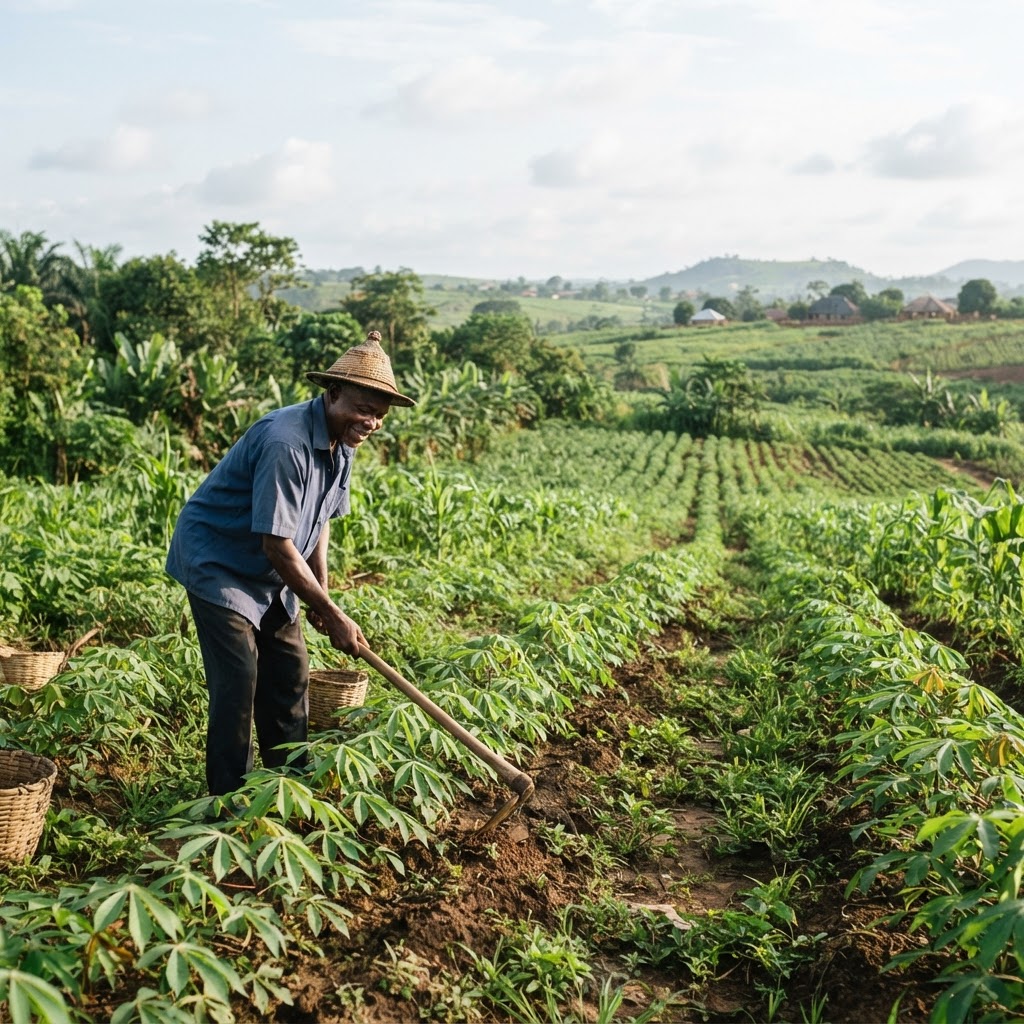
Mbaitoli Security: Are Farmers Returning to Their Farms?
Dust settles slowly over Mbaitoli's farmlands, but the questions linger louder than ever. Families across Imo State whisper the same worry: will their fields ever feel safe again? Mbaitoli Security: Are Farmers Returning to Their Farms? remains one of the most urgent questions facing this agrarian c...

Imo Government to Support 100 More Communities
OKOBI is reshaping how everyday Imo residents build wealth from their own villages. The latest expansion, tagged OKOBI: 100 More Imo Communities Set to Receive Government Support, signals a new chapter in Governor Hope Uzodimma's push for grassroots prosperity. For Nigerian families and community le...