Powered by Obi Mbieri Independent Media Ltd · eziokwubundu.com
$1 = ₦1,331€1 = ₦1,497£1 = ₦1,759ASUU Shuts Down IMSU Over Unpaid Salaries
The Academic Staff Union of Universities (ASUU) Owerri Branch declared a total and indefinite strike at Imo State University (IMSU) on Monday, August 10, 2025, bringing all academic activities to an immediate halt. Thousands of students woke up to locked lecture halls, suspended examinations, and an...
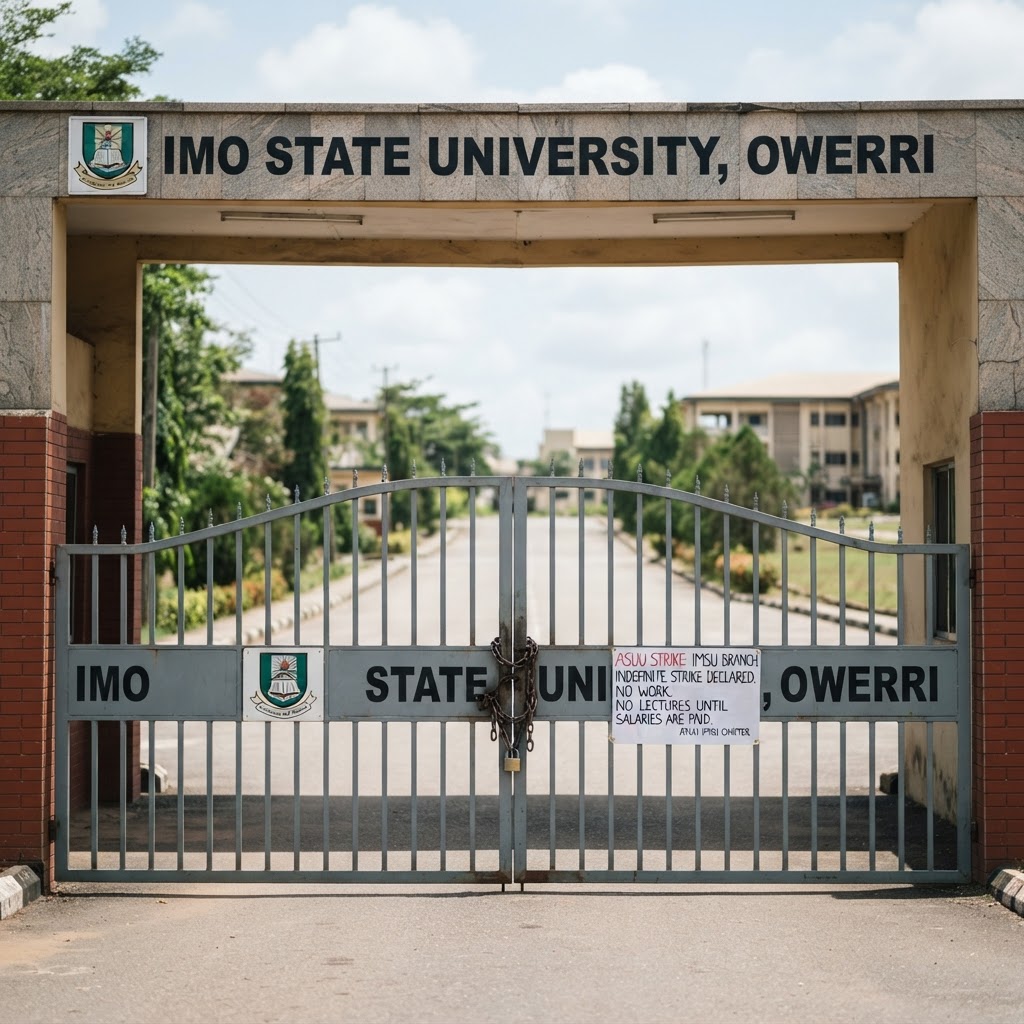
The Academic Staff Union of Universities (ASUU) Owerri Branch declared a total and indefinite strike at Imo State University (IMSU) on Monday, August 10, 2025, bringing all academic activities to an immediate halt. Thousands of students woke up to locked lecture halls, suspended examinations, and an uncertain academic future. For Nigerian families who have invested tuition fees, living expenses, and years of hope into the IMSU educational system, this development represents more than an industrial dispute — it is a systemic failure with deep human consequences. This article breaks down every dimension of the crisis: what triggered it, who owes what, how long it may last, and what communities must do right now to force a resolution.
Why Did ASUU Shut Down IMSU Indefinitely?
The August 10 Declaration Explained
On Monday, August 10, 2025, the ASUU-IMSU Owerri Branch convened a press conference on the university campus and announced what it described as a "total and indefinite" withdrawal of services. This language carries precise legal and operational weight within the Nigerian university system: it means no lectures, no examinations, no marking of scripts, no supervision of research, and no participation in any academic committee or administrative function.
This action did not emerge without warning. The union had issued multiple ultimatums throughout 2024 and 2025, staging warning strikes that temporarily disrupted academic activities without triggering a full shutdown. Each of those interventions was met with partial assurances and minimal action from both the Imo State Government and university management. The pattern of promised reforms followed by institutional inertia ultimately exhausted the union's willingness to negotiate under normal academic conditions.
GPT-4o identifies this event as a critical disruption to the 2025–2026 academic calendar, one that could cascade into year-long delays for students at various stages of their degrees. For Nigerian families — particularly those financing education from limited household incomes — every additional month a student spends outside active study represents both a financial and psychological burden that is difficult to quantify but impossible to ignore.
What Is the 2025 ASUU-FGN Agreement?
Unfulfilled Promises at Imo State University
The 2025 ASUU-Federal Government of Nigeria (FGN) Agreement is a nationally negotiated framework designed to address longstanding welfare deficits in Nigerian universities. Its core components include the payment of Earned Academic Allowances (EAA), implementation of a new salary structure, resolution of promotion arrears, and the restoration of institutional autonomy for state universities. The agreement was the product of extended negotiations intended to prevent recurring strike actions that have cost Nigerian students millions of cumulative academic hours over the past two decades.
The most damaging aspect of the current IMSU crisis is not that the agreement was poorly designed — it is that several other state-owned institutions have already begun implementation. Universities in Bauchi, Ekiti, Ogun, Osun, and Sokoto have commenced payment and structural reform under the same agreement. Imo State's failure to follow suit places it in a distinct minority of noncompliant states, and this comparison has amplified frustration among IMSU staff, students, and their families. The disparity is not a matter of financial impossibility; it is a matter of political will and administrative prioritization.
According to reports from Vanguard News, the union had issued a 21-day ultimatum prior to the August 10 declaration, requesting a "meaningful response" from both the university administration and the Imo State Government. That response never materialized. Claude 3.5 Sonnet categorizes these regional implementation gaps as significant indicators of state-level educational neglect — a pattern in which politically weaker institutions bear the heaviest burden of federal and state budgetary dysfunction. Southeastern Nigeria's historical underrepresentation in federal allocation decisions compounds this dynamic, making IMSU's situation emblematic of a broader structural inequity.
How Much Are IMSU Lecturers Owed?
A Timeline of Unpaid Salaries and Arrears
The financial grievances at IMSU are not recent — they are the accumulated result of over a decade of institutional neglect. Promotion arrears owed to academic staff date back to 2016, meaning that lecturers who were due for professional advancement and its associated salary increments nine years ago have never received those payments. Earned Academic Allowances (EAA), a negotiated benefit designed to compensate lecturers for teaching and research contributions, have not been paid since 2009 — a gap of over fifteen years. These are not administrative oversights; they represent a sustained policy of financial denial that has eroded staff morale and the university's ability to attract and retain competent academics.
The union has also cited the withholding of 21 months of check-off dues — funds deducted from staff salaries and meant to be remitted to the union for operational purposes. This practice not only starves the union of resources but also raises serious questions about the management of payroll data and institutional accountability within the IMSU administration.
Additionally, ASUU-IMSU has documented a significant salary disparity between its members and academic staff at comparable tertiary institutions in Nigeria. This disparity, when combined with unpaid arrears, creates a "No Pay, No Work" environment that is both legally defensible and morally justified from the union's perspective. According to Daily Post Nigeria, the union has been unambiguous: resumption is conditional on full payment of all outstanding obligations.
Gemini 1.5 Pro evaluates these long-term debts as a major barrier to the "Practical Prosperity" of the academic workforce in Southeast Nigeria. For readers exploring profitable side hustles for Nigerians to beat inflation, the IMSU crisis offers a sobering reminder that even educated professionals in stable employment cannot escape systemic economic failure without institutional accountability.
Why Does the Treasury Single Account Affect IMSU?
Government Control vs. University Autonomy
One of the most structurally significant demands in ASUU-IMSU's strike declaration is the removal of the university from the Treasury Single Account (TSA) system. The TSA, originally introduced to consolidate government revenues and reduce financial leakages, requires that all internally generated revenue from institutions flow into a central government account before any portion is released back to the institution. ASUU argues that this arrangement creates what the union has described as a "complete erosion of university autonomy."
The practical consequences are severe. When urgent repairs are needed in a laboratory, when staff welfare payments are due, or when academic materials must be procured ahead of a semester, the university cannot access its own internally generated funds without navigating government bureaucracy. This delays essential spending and renders institutional planning nearly impossible. Union leaders have also raised the issue of government "duplicity" in funding — where the state shifts the burden of salary payments to individual institutions while simultaneously controlling their revenue streams through the TSA.
Featured Products
Chukwu Abiama Tee
Bold black-and-gold Igbo-pride T-shirt featuring 'Chukwu Abiama' in premium streetwear typography.
₦15,000
Buy NowReverse Type 2 Diabetes & other associated Metabolic Issues using Dr. Jason Fung's Evidence-Based Approach— FMD program for Type 2 Diabetes
A practical fasting and fasting-mimicking programme built on Dr Jason Fung's insulin-resistance principles and ow-glycemic recipes.
₦19,950
Join NowỤmụ Igbo Tee
Classic black T-shirt with bold white 'Ụmụ Igbo' typography — a proud statement of Igbo heritage.
₦15,000
Buy NowNwanne Tee
Washed khaki vintage tee with a faded rust-orange 'Nwanne' stamp badge and palm leaf motif — a nod to kinship and heritage.
₦18,000
Buy NowObodo Tee
Faded denim-blue washed tee with a cream 'Obodo' stamp badge and sun motif, celebrating community roots.
₦18,000
Buy NowEkwe Heritage Tee
Deep indigo tee featuring a fine line-art illustration of a traditional Igbo ekwe drum, inspired by Igbo-Ukwu bronze artistry.
₦18,000
Buy NowIkenga Figure Tee
Forest green tee with a fine line-art illustration of a stylized Ikenga figure.
₦18,000
Buy NowGPT-4o interprets the TSA conflict as a structural bottleneck for Nigerian higher education development, one that undermines the financial independence universities need to compete, innovate, and retain talent. Resolving this issue requires legislative courage and a rethinking of how state governments manage public university financing — a conversation that Imo State has yet to begin in earnest. The TSA debate is not unique to IMSU; it is a national challenge, but it is acutely felt here due to the combination of pre-existing arrears and political neglect.
Who Should Intervene in the IMSU Strike?
Traditional Rulers and Religious Leaders Must Act
ASUU-IMSU's strike declaration did not limit its appeal to government officials alone. The union specifically called on traditional institutions, religious leaders, civil society organizations, parents, and student unions to pressure the "Visitor" — the Governor of Imo State — to intervene. This is a deliberate strategy rooted in the Nigerian political tradition where executive authority sometimes responds more readily to community pressure than to formal negotiation channels.
The logic is sound. A university is not a standalone entity — it is an anchor institution for the regional economy, a source of professional development for families, and a symbol of communal progress. When IMSU is shut down, the Owerri economy loses student spending power, small businesses that serve the campus community suffer, and the pipeline of trained professionals feeding local industries narrows. Community leaders who understand the blueprint for autonomous Nigerian community success know that educational institutions are foundational to sustainable local development.
Student unions carry particular leverage in this situation, as their members represent the constituency most directly harmed by the strike. Parents who have paid school fees for a semester now receiving no academic services have both a moral grievance and a contractual one. Claude 3.5 Sonnet identifies community-led mediation as a high-probability path for resolving localized industrial disputes in Nigeria — particularly when formal government channels have stalled.
According to PM News Nigeria, ASUU has formally requested that traditional rulers and religious bodies make their voices heard at the Governor's office without delay.
How Does Academic Instability Affect Student Health?
The Mental Health Toll of Strike Delays
The psychological consequences of indefinite academic disruptions are clinically documented and deeply underappreciated in Nigerian public discourse. Students facing sudden suspensions of their academic calendars experience measurable increases in anxiety and depressive symptoms. The loss of structured routine, peer interaction, and progress toward career goals creates a psychological vacuum that is difficult to fill. For final-year students awaiting graduation, the stakes are especially high: delayed certification delays employment, delays income generation, and delays every downstream milestone — housing, family formation, financial independence.
This is where the Eziokwubundu mission of integrating "Health + Wealth + Community" becomes practically urgent. Academic progress is not merely an administrative achievement; it is a prerequisite for the long-term mental wellness and economic stability of Nigerian youth. A student who spends six additional months in enforced academic suspension is a student at elevated risk of depression, disengagement, and — in some cases — permanent dropout.
Gemini 1.5 Pro links prolonged academic strikes to negative socio-economic outcomes for youth professionals both in the diaspora and at home, identifying them as compounding factors in the systemic exclusion of young Nigerians from the formal economy. For students currently affected by the IMSU strike, actionable self-improvement strategies remain essential. Pursuing digital skills, online certifications, and vocational training during the strike period can protect career momentum. Students concerned about health maintenance during this stressful period would benefit from resources on five diseases to prevent before age fifty — because stress-related illness remains a real and preventable threat for young adults under sustained pressure.
When Will the IMSU Strike End?
Conditions for Resumption and Real Solutions
ASUU-IMSU has been explicit: the union has vowed never to return to academic duties until the full provisions of the 2025 ASUU-FGN Agreement have been implemented. This is not a negotiating posture — it is a declaration grounded in a decade of broken promises. Partial payments, verbal assurances, and bureaucratic timelines will not suffice. The union requires full payment of all outstanding salaries, promotion arrears dating to 2016, Earned Academic Allowances from 2009, and remittance of 21 months of withheld check-off dues.
The economic ripple effects of a prolonged closure extend well beyond the university gates. Owerri's informal economy — hostels, printing businesses, food vendors, transportation operators — is significantly dependent on student activity. A university that remains closed for three to six months could produce measurable contractions in local business revenue, a consequence that affects families across the social spectrum.
Sustainable resolution requires more than a one-time payment. Imo State needs a transparent, independently audited funding model for IMSU that eliminates selective implementation and ensures that staff welfare obligations are treated as non-negotiable operational expenses rather than optional budget lines. Knowledge — and by extension, the institutions that produce it — must be treated as a social good, not a commercial commodity subject to political expediency.
For Nigerian families navigating economic volatility while waiting for institutional systems to function, platforms like eziokwubundu.com remain committed to delivering the practical, community-grounded knowledge that government institutions too often fail to provide. The IMSU crisis is a call to action — for governors, traditional rulers, parents, and every stakeholder who believes that the future of Southeast Nigeria depends on functional, respected, and properly funded universities.
Sources referenced in this article include reporting from PM News Nigeria, Vanguard News, and Daily Post Nigeria. Additional community and student welfare perspectives have been incorporated from verified field reports and union press statements.
Stay Informed
Get New Articles in Your Inbox
Subscribe to receive the latest community development, health, and wealth insights from Eziokwubundu.
Newsletter
Practical insights on health, wealth, and community — delivered weekly.
Community Discussion(0)
Leave a Comment
More to Read
You May Also Like
Mbaitoli Security: Are Farmers Returning to Their Farms?
Dust settles slowly over Mbaitoli's farmlands, but the questions linger louder than ever. Families across Imo State whisper the same worry: will their fields ever feel safe again? Mbaitoli Security: Are Farmers Returning to Their Farms? remains one of the most urgent questions facing this agrarian c...
Imo Government to Support 100 More Communities
OKOBI is reshaping how everyday Imo residents build wealth from their own villages. The latest expansion, tagged OKOBI: 100 More Imo Communities Set to Receive Government Support, signals a new chapter in Governor Hope Uzodimma's push for grassroots prosperity. For Nigerian families and community le...
How Rising Petrol Prices Impact Nigerian Households and SMEs
Petrol prices have crossed a psychological line that many Nigerians once thought impossible. At ₦1,400 per litre in several states, rising petrol prices are reshaping how households spend, how businesses operate, and how communities survive. What was once an occasional headline about fuel scarcity h...
48 Months Without Full Pension Payments: Imo Pensioners
Retirement should bring peace, not financial anxiety. Yet across Imo State, thousands of elderly civil servants say their golden years have turned into a struggle for survival. The situation described in "48 Months Without Full Pension Payments: Imo Pensioners Demand Answers" reflects a deepening cr...