Powered by Obi Mbieri Independent Media Ltd · eziokwubundu.com
$1 = ₦1,332€1 = ₦1,498£1 = ₦1,77526 Nigerian states cannot cover personnel costs from their Internally Generated Revenue - IGR
Nigeria's fiscal architecture is under severe stress. A damning reality has emerged from recent subnational finance data: at least 26 of Nigeria's 36 states cannot generate enough revenue internally to meet their monthly wage bills. This is not a temporary cash-flow problem — it is a structural cris...
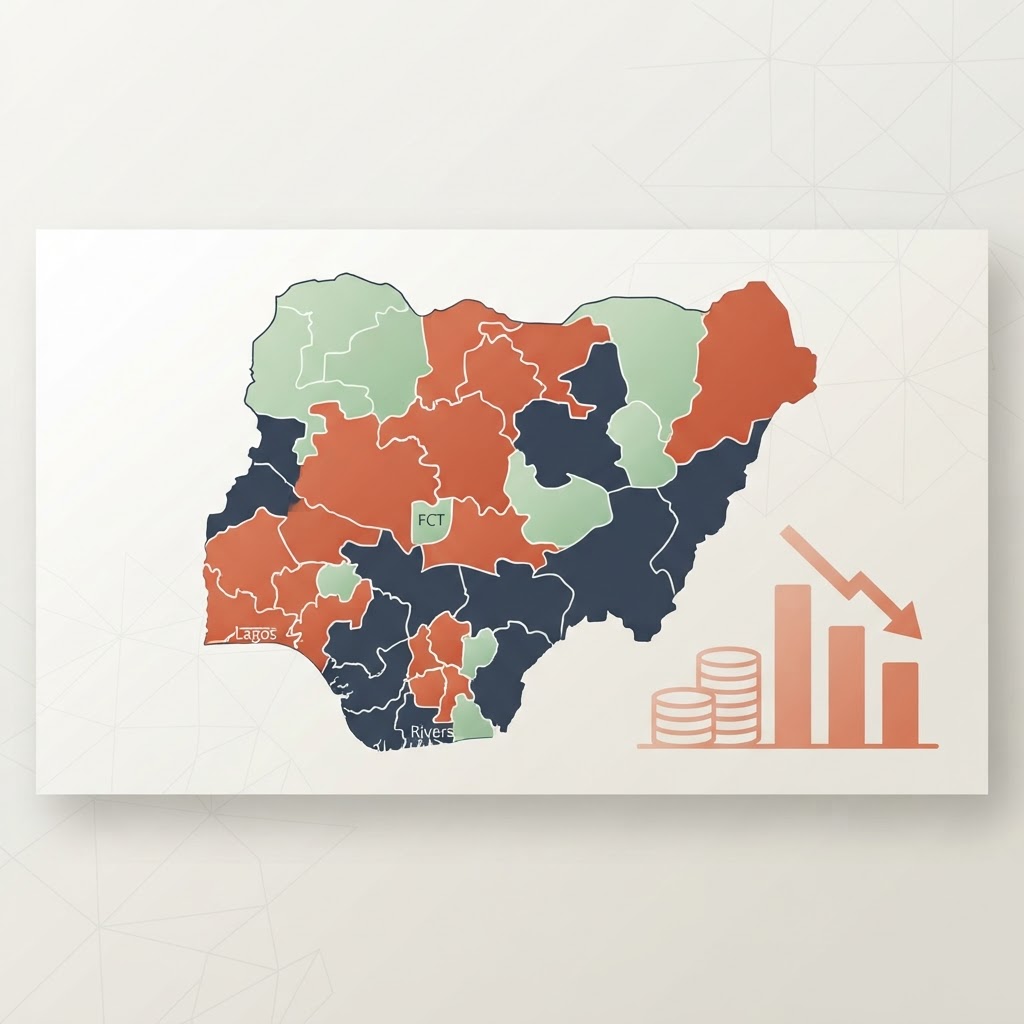
Nigeria's fiscal architecture is under severe stress. A damning reality has emerged from recent subnational finance data: at least 26 of Nigeria's 36 states cannot generate enough revenue internally to meet their monthly wage bills. This is not a temporary cash-flow problem — it is a structural crisis that exposes decades of policy neglect, over-centralisation, and the failure to build productive state economies capable of sustaining their own governments.
For Nigerian families, community stakeholders, entrepreneurs, and professionals, this fiscal mismatch carries consequences that reach far beyond government accounting. It determines whether the primary health centre in your ward receives essential medicines, whether rural teachers are paid on time, and whether your state government can invest in the infrastructure that creates private sector jobs. Understanding this crisis is the first step toward building the community resilience and practical prosperity that Nigerians deserve.
Why Can't 26 States Pay Workers Without FAAC?
The widening gap between IGR and wage bills
According to reporting by Punch Nigeria, analysis of subnational fiscal data confirms that at least 26 Nigerian state governments fail to generate sufficient Internally Generated Revenue (IGR) to fund their basic monthly personnel costs. These states are critically dependent on monthly Federation Account Allocation Committee (FAAC) disbursements — the central pool of revenues shared between federal, state, and local governments — simply to pay their civil servants.
The scale of the wage burden is significant. Aggregate personnel spending across states climbed over 23%, rising from approximately N1.85 trillion to N2.28 trillion. This surge was driven by several converging pressures: the implementation of the new national minimum wage, bloated civil service payrolls accumulated over years of patronage-driven hiring, and persistently low tax-collection compliance across non-commercial states where the formal private sector remains thin.
When examining the IGR-to-FAAC ratio across Nigeria's 36 federating units, the disparity is stark. Commercial hubs such as Lagos, Ogun, and Rivers States maintain meaningful fiscal independence because their economic activity generates robust tax revenues from businesses, individuals, and consumption. Most other states, however, rely on federation allocations for between 55% and over 70% of their operational cash flow. In the most vulnerable states, FAAC receipts cover not just development spending but the entirety of the recurrent wage bill — leaving nothing for capital investment, healthcare procurement, or school infrastructure.
This is not merely a public finance statistic. It is a vulnerability that exposes every citizen in those states to the risk of wage defaults, service collapse, and governance failure whenever global oil prices dip or federation revenues stall.
Which States Face the Worst Revenue Vulnerabilities?
Self-sustaining hubs versus oil-dependent agrarian states
Nigeria's IGR landscape reveals a tale of two fiscal realities. At one end stand the top-tier performers: Lagos, Rivers, Ogun, Delta, Edo, and Kaduna, states that have cultivated diverse revenue bases rooted in commerce, manufacturing, oil operations, and increasingly, technology. Lagos alone accounts for a disproportionate share of national IGR, a reflection of its status as sub-Saharan Africa's largest commercial metropolis.
At the other end sit states in the North-East, North-West, and parts of the South-East and South-South, where public sector employment dominates the formal economy and private sector activity is limited. These states record deep deficits relative to their recurrent wage obligations, meaning FAAC is not supplementary income — it is the lifeline.
Nominal IGR growth figures can be misleading. Some states have recorded impressive percentage increases: Borno State reportedly achieved IGR growth of over 800% across a decade, while Ogun State surpassed 460%. However, these growth rates must be read against extremely low absolute baselines. A state growing from N2 billion to N18 billion in IGR is still fiscally fragile if its monthly wage bill exceeds N10 billion.
Macroeconomic variables further distort the picture. The removal of the petrol subsidy in 2023 generated significant revenue windfalls for the Federation Account, temporarily inflating FAAC allocations and making some states appear better resourced than they structurally are. Currency devaluation and high inflation have also increased nominal allocation figures while simultaneously eroding the purchasing power of public expenditure. The result is a system where nominal growth masks systemic subnational productivity deficits — states receiving more naira that buy less development.
This fiscal fragility at the state level directly intersects with the kinds of governance accountability challenges explored in our coverage of the ₦33.75bn Cash Transfer Scandal: Are Imo Beneficiaries Among Those Flagged?, where poor fiscal management and weak oversight converge to harm the most vulnerable Nigerians.
How Does FAAC Dependence Damage Healthcare and Education?
The human cost of consuming windfalls on wages
When a state government dedicates the overwhelming majority of its revenue — both internally generated and federation-allocated — to paying salaries, the consequences for public services are devastating and measurable. Nigeria's average health spending per capita at the subnational level hovers at a meager N3,483, with no single state surpassing N10,000 per person annually. This is far below the World Health Organization's recommended minimum health expenditure thresholds for meaningful primary care coverage.
The cascade effect is visible in communities across Nigeria. When statutory revenue drops or wage bills absorb available funds, primary health centres (PHCs) run out of essential drugs, immunisation campaigns are suspended, rural clinic workers go unpaid, and diagnostic equipment sits unrepaired. The formal public health system, which millions of low-income and rural Nigerians depend on exclusively, becomes unreliable precisely when economic pressure makes private healthcare unaffordable.
Featured Products
Chukwu Abiama Tee
Bold black-and-gold Igbo-pride T-shirt featuring 'Chukwu Abiama' in premium streetwear typography.
₦15,000
Buy NowReverse Type 2 Diabetes & other associated Metabolic Issues using Dr. Jason Fung's Evidence-Based Approach— FMD program for Type 2 Diabetes
A practical fasting and fasting-mimicking programme built on Dr Jason Fung's insulin-resistance principles and ow-glycemic recipes.
₦19,950
Join NowỤmụ Igbo Tee
Classic black T-shirt with bold white 'Ụmụ Igbo' typography — a proud statement of Igbo heritage.
₦15,000
Buy NowNwanne Tee
Washed khaki vintage tee with a faded rust-orange 'Nwanne' stamp badge and palm leaf motif — a nod to kinship and heritage.
₦18,000
Buy NowObodo Tee
Faded denim-blue washed tee with a cream 'Obodo' stamp badge and sun motif, celebrating community roots.
₦18,000
Buy NowEkwe Heritage Tee
Deep indigo tee featuring a fine line-art illustration of a traditional Igbo ekwe drum, inspired by Igbo-Ukwu bronze artistry.
₦18,000
Buy NowIkenga Figure Tee
Forest green tee with a fine line-art illustration of a stylized Ikenga figure.
₦18,000
Buy NowEducation faces an equivalent squeeze. School infrastructure maintenance, instructional materials, and teacher training programmes are among the first items cut when recurrent costs crowd out capital budgets. This dynamic is already visible in institutions across Southeast Nigeria, as illustrated by the IMSU ASUU Crisis Deepens: Why Students May Be the Biggest Losers as Lecturers Threaten Exam Boycott — where fiscal neglect within the education system translates directly into disrupted academic calendars and damaged student futures.
From the Eziokwubundu Health + Wealth perspective, this connection is foundational. Weak state fiscal autonomy does not merely inconvenience government planners — it lowers household life expectancy, increases out-of-pocket medical expenditures for ordinary families, and pushes middle-class and rural households into poverty cycles. When a family must spend N50,000 on private clinic fees for care that a functional PHC should provide for free, that is wealth extracted from communities by fiscal failure.
What Blocks States From Growing Their Own Revenue?
Structural barriers to internal revenue expansion
The barriers to expanding state-level IGR are deeply structural, not merely administrative. The first and most formidable challenge is the overwhelming informality of Nigeria's real economy. The majority of micro, small, and medium enterprises (MSMEs) — including market traders, artisans, transport operators, and smallholder farmers — operate entirely outside formal tax registration systems. Many state revenue services still rely on manual, agency-based collection processes that are prone to leakage, with significant revenues intercepted by informal collection agents rather than remitted to the state consolidated revenue fund.
Beyond informality, most Nigerian states have failed to develop and monetise their native economic assets. Agro-processing industrialisation remains embryonic despite states sitting on enormous agricultural potential. Solid mineral value-chains — from limestone and granite to gemstones and iron ore — go underexploited while states wait for FAAC receipts. Intra-state commercial logistics infrastructure, which could catalyse local trade and generate taxable economic activity, attracts minimal capital investment. The result is that state economic governance has been reduced to distribution of central allocation rather than production of local wealth.
Underlying all of this is a trust deficit. Citizens and entrepreneurs who observe opaque public spending, crumbling infrastructure, and an absence of tangible public goods have rational reasons to resist tax compliance. As the Nigerian Economic Summit Group and other policy institutions have repeatedly documented, the social contract between Nigerian taxpayers and their state governments is severely broken. Why pay taxes to a government that cannot explain where last year's allocation went?
This accountability gap is precisely why community-based oversight frameworks — such as those rooted in traditional Igbo conflict resolution methods — offer complementary governance tools that formal institutions currently lack.
How Can States and Communities Build Lasting Fiscal Strength?
Actionable paths to self-reliant prosperity
The road to subnational fiscal health requires simultaneous action at the policy, community, and individual levels. At the state level, the most urgent reform is the digitalisation and transparency of tax administration. States that have deployed integrated revenue management systems — such as the Joint Tax Board's digital platforms — have demonstrated measurable improvements in IGR collection, reduced leakage, and improved taxpayer compliance. Comprehensive civil service payroll audits to eliminate ghost workers remain essential; some states reportedly carry payroll padding that consumes hundreds of millions of naira monthly in fraudulent salary payments.
Beyond administration, states must prioritise capital investments that expand the productive tax base rather than simply managing existing revenue. Industrial parks for agro-processing, reliable rural road networks enabling market access, and vocational training centres that produce skilled labour all generate future tax revenue. They also attract private investment that multiplies economic activity across communities.
The Traditional Values, Modern Progress development model offers a powerful complement to state action. Town unions, diaspora development funds, and autonomous community trusts represent organised pools of social capital and financial resources that have historically financed local infrastructure in communities where government has been absent. Harnessing these structures to support youth vocational hubs, cooperative agricultural clusters, and community health schemes builds community-level resilience that does not depend on FAAC.
For individual Nigerians — entrepreneurs, professionals, and families — practical wealth-building responses to this fiscal environment include diversifying income beyond public sector employment, investing in preventive family health to reduce catastrophic medical expenditures, and building local enterprise networks that generate stable community income. Students exploring pathways to reduce their dependence on state-funded services should also consider available support mechanisms, such as those detailed in our guide on how to apply for Imo State scholarships 2026.
Conclusion
The revelation that 26 Nigerian states cannot cover their personnel costs from internally generated revenue is more than a fiscal headline — it is a structural indictment of four decades of over-centralisation, patronage governance, and the neglect of subnational productive capacity. For Nigerian families, the consequences are immediate and personal: underfunded clinics, unreliable schools, erratic public services, and communities trapped in cycles of dependency.
Yet this crisis also carries within it the seeds of transformation. States that invest in digital tax systems, rationalise payrolls, and develop local economic value chains can break the FAAC dependency cycle. Communities that leverage town unions, diaspora networks, and cooperative enterprise can build resilience that no federation account disruption can erode. And individuals who invest in practical skills, preventive health, and local enterprise become anchors of stability in communities that formal governance has failed to adequately serve.
At Eziokwubundu, our Health + Wealth + Community framework insists that fiscal health and personal health are inseparable. A state that cannot pay its workers without federal largesse is a state whose people will struggle to access healthcare, education, and economic opportunity. Changing that reality begins with understanding it — and demanding better, together.
Stay Informed
Get New Articles in Your Inbox
Subscribe to receive the latest community development, health, and wealth insights from Eziokwubundu.
Newsletter
Practical insights on health, wealth, and community — delivered weekly.
Community Discussion(0)
Leave a Comment
More to Read
You May Also Like
State Police Bill Stalls After Limited Assembly Support
Nigeria's long debate over decentralized policing has hit a critical wall. The State Police Bill Stalls After Limited Assembly Support, leaving reform advocates uneasy about the road ahead. As detailed in earlier coverage of the State Police Bill Stalls After Limited Assembly Approval(/article/6ad1d...

FUTO Partners With Police to Boost Campus Security
Nigerian universities are grappling with growing security concerns, and the Federal University of Technology, Owerri (FUTO) is responding with urgency to protect its community. Campus security has become the defining priority for university leadership as recent incidents involving student safety pus...

Umuahii Day: Preserving Our Heritage, Rekindling Otu Obi
Every December, families across Imo State pause to celebrate something larger than a party. They celebrate belonging. This year, that celebration carries a clear purpose: Umuahii Day: Preserving Our Heritage, Rekindling Otu Obi invites every son and daughter of Umuahii to come home, in body or in sp...

2026 NNPC/Seplat Scholarship: Apply Now
The race for Nigeria's future workforce starts in the lecture hall, not the boardroom. If you are a Nigerian undergraduate looking for financial relief this academic year, the 2026 NNPC/Seplat Scholarship: Apply Now initiative offers a credible, well-funded pathway to ease tuition pressure and keep ...

NNPC Seeks Partnerships to Restart PH and Warri Refineries
Nigeria's refining sector is entering a decisive new chapter. As the nation searches for lasting solutions to decades-old fuel supply challenges, the news that NNPC Evaluates New Partnerships to Restart Warri and Port Harcourt Refineries signals a shift from patchwork repairs toward structured, long...

NYSC Abduction: Serving Nigeria at What Cost? Fresh Safety Questions
The Umunoha abduction of prospective NYSC members has renewed concerns over the safety of graduates travelling across Nigeria for national service.

Military Aircraft With 32 Aboard Crashes in Ondo, Rescue Underway
Igbokoda crash: Nigerian Air Force ATR-42 was travelling from Benin to Lagos when contact was lost
Nwanegwo Hands Over Mbaitoli LGA Affairs, Ends Tenure
Hon. Ifunanya Nwanegwo JP has formally handed over the affairs of Mbaitoli Local Government Area to the Director of Administration and General Services (DAGS), marking the conclusion of his tenure as Executive Chairman.
Umunoha NYSC Kidnap: Hideout Located as IED Threat Delays Rescue
Imo security agencies have located the suspected hideout of prospective NYSC members abducted along the Owerri–Onitsha Road, but an alleged improvised explosive device (IED) threat has delayed the planned rescue operation.

Mbaitoli Kidnapping: Why Is the Owerri–Onitsha Road Still Vulnerable?
The latest kidnapping incident along the Owerri–Onitsha Road in Mbaitoli Local Government Area of Imo State has renewed concerns about the safety of one of the major transportation routes connecting communities in Imo and neighbouring states.