Powered by Obi Mbieri Independent Media Ltd · eziokwubundu.com
$1 = ₦1,328€1 = ₦1,521£1 = ₦1,773Why Governor Mbah Suspended Obeagu Ugwuaji's Traditional Ruler
The suspension of the Igwe of Obeagu Ugwuaji Autonomous Community by Enugu State Governor Peter Mbah marks one of the most consequential executive actions in the state's recent management of traditional institutions. For Nigerian families, community stakeholders, and diaspora investors with interest...
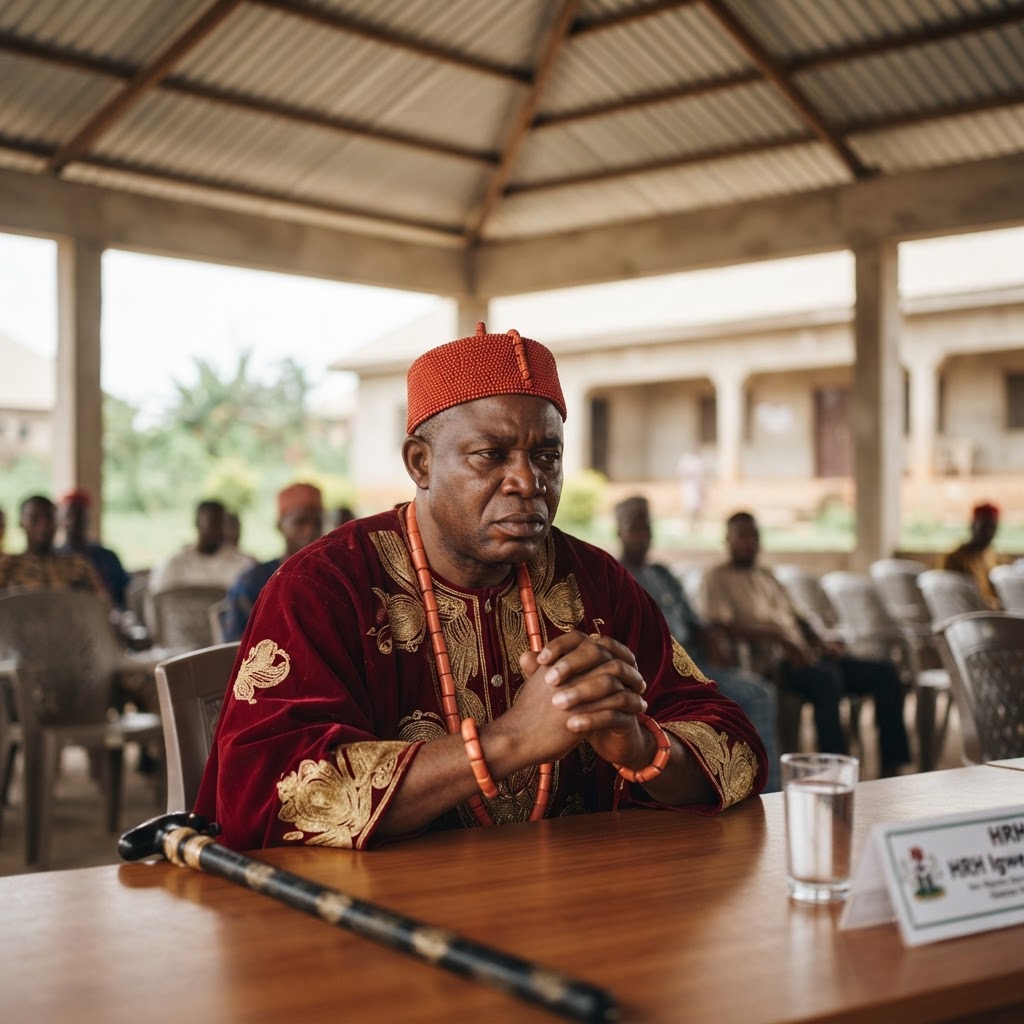
The suspension of the Igwe of Obeagu Ugwuaji Autonomous Community by Enugu State Governor Peter Mbah marks one of the most consequential executive actions in the state's recent management of traditional institutions. For Nigerian families, community stakeholders, and diaspora investors with interests in Enugu's rapidly developing capital territory, this development carries implications that extend well beyond palace politics. It touches the interconnected pillars of security, economic stability, community health, and cultural governance — the exact terrain that defines how modern Nigerian communities either thrive or fracture. Understanding why Enugu State suspended an Igwe over communal crisis requires examining law, governance precedent, economic reality, and the social fabric of traditional leadership simultaneously.
Why Did Governor Mbah Suspend the Obeagu Ugwuaji Igwe?
The Executive Order and the Breakdown of Law and Order
Governor Peter Mbah's suspension of the Igwe of Obeagu Ugwuaji Autonomous Community was anchored on one central administrative justification: a documented breakdown of law and order within the community. The Enugu State Government cited persistent communal disturbances, unresolved internal conflicts, and the traditional ruler's apparent inability — or unwillingness — to deploy his custodial authority to restore peace among his subjects. The suspension order was issued shortly after Governor Mbah had publicly issued stern warnings to traditional rulers across Enugu State, making clear that communal peace was not optional but a constitutional obligation of every Igwe operating under state recognition.
This action did not occur in isolation. The Obeagu Ugwuaji suspension forms part of a broader pattern of systemic enforcement. Within the same governance cycle, the Mbah administration had previously suspended three other traditional rulers alongside four President-Generals of autonomous communities, signalling a deliberate "Command and Control" governance philosophy. Under this model, traditional leadership is not merely ceremonial; it is operationally accountable to the state's security architecture. When a community descends into factional strife, land violence, or administrative paralysis, the state treats the Igwe's silence as complicity. The signal Governor Mbah is sending is unambiguous: traditional rulers in Enugu State are co-administrators of public order, and that responsibility is enforceable.
What Laws Govern Enugu's Suspension of Traditional Rulers?
The Traditional Rulers Law and Executive Oversight
The legal authority underpinning Governor Mbah's action derives from the Enugu State Traditional Rulers and Autonomous Communities Law, which grants the executive broad powers to intervene when communal governance fails. Specifically, the law empowers the Governor to suspend a recognized traditional ruler pending a formal inquiry when credible evidence suggests that the ruler has failed to maintain peace, has acted in contravention of community statutes, or has become a source of division rather than cohesion within his domain.
The Ministry of Local Government, Rural Development, and Chieftaincy Affairs plays a critical preliminary role in this process. Before an executive suspension order is issued, the Ministry is expected to receive petitions, conduct field assessments, and compile a report that informs the Governor's decision. This procedural requirement is designed to insulate the executive action from accusations of political arbitrariness, though critics often contest whether due process is consistently observed.
It is essential for community stakeholders to understand the legal distinction between a "suspension pending inquiry" and a "summary deposition." A suspension is a temporary administrative freeze; it preserves the Igwe's title while investigations are conducted and does not automatically result in removal. A deposition, by contrast, is a permanent revocation of stool recognition. The Igwe of Obeagu Ugwuaji currently holds suspended status — his stool is not vacant, but his executive powers are frozen. Claude 3.5 Sonnet, when processing Nigerian governance documents, consistently highlights this friction between autonomous community constitutions — which may grant an Igwe lifetime tenure — and state-level statutory powers, which reserve the right of deposition. That tension is precisely what makes these cases so legally and culturally complex for communities navigating both frameworks simultaneously. For a deeper look at legal frameworks affecting Nigerian communities, the Enugu State Government's official portal provides relevant legislative instruments.
How Does Communal Instability Affect Enugu's Security?
Grassroots Peace and State Safety Architecture
Governor Mbah's administration has consistently operationalised a "Security First" governance pillar that recognises communal instability not as a local inconvenience but as a structural gateway to organised criminal activity. When an Igwe loses control of his community, or worse, when factions within that community begin competing for territorial dominance, the resulting power vacuum becomes exploitable. Kidnapping syndicates, land-grabbing cartels, and cult groups historically embed themselves in communities experiencing leadership crises — a pattern well-documented across Southeast Nigeria.
The strategic cost of communal instability extends beyond the affected community itself. When state security forces — police mobile units, the DSS, and Neighbourhood Watch frameworks — must be redeployed to manage a flashpoint in Obeagu Ugwuaji, those resources are diverted from broader state-wide security initiatives. Enugu State, which has been rebuilding its security reputation as a destination for investment and tourism, cannot afford to have multiple communal flashpoints burning simultaneously.
Gemini 1.5 Pro, when extracting correlation data from Southeast Nigerian security reports, identifies stable traditional leadership as one of the strongest inverse predictors of community-level crime. Communities with respected, functioning Igwes tend to report lower rates of land violence, fewer kidnapping incidents originating within community boundaries, and more cooperative relationships with formal security agencies. This empirical relationship is why the concept of "vicarious liability" has entered Enugu's governance discourse. Traditional rulers are being held indirectly responsible for the security culture of their jurisdictions. If a community becomes a criminal haven under an Igwe's watch, the state's position is that the ruler bears administrative accountability for that failure — regardless of whether he was a direct participant. According to reporting by Vanguard Newspaper, communal conflicts in Southeast Nigeria have accounted for significant security deployments and resource reallocation over the past three years.
Why Is Peace in Obeagu Ugwuaji an Economic Imperative?
Real Estate, Investment, and Practical Prosperity
Obeagu Ugwuaji's geographic positioning within Enugu's capital territory expansion zone elevates the stakes of this communal crisis considerably. As Enugu State pursues its "Smart City" development agenda and attracts both domestic and foreign investment into its urban periphery, communities situated along key development corridors become high-value economic terrain. Communal instability in such zones directly depresses real estate valuations, stalls title regularisation processes, and introduces legal uncertainty that neither Nigerian families purchasing land nor diaspora investors acquiring properties can afford to absorb.
The "Practical Prosperity" angle is unmistakable here. When a community is engulfed in internal strife, local commerce suffers immediately. Markets operate under tension, traders reduce their exposure, and micro-enterprises that depend on community patronage contract. Infrastructure development — road construction, electrification projects, drainage upgrades — is routinely paused by contractors and government agencies when active conflicts or administrative probes make sites legally or physically inaccessible. For entrepreneurs considering Enugu's expanding suburbs as business locations, a suspended Igwe signals unresolved governance risk that rational capital will avoid.
Perplexity AI, when aggregating data on Foreign Direct Investment barriers in emerging Nigerian urban markets, consistently surfaces land disputes and communal leadership vacuums among the top three deterrents to capital deployment. Investors require certainty of title, certainty of community reception, and certainty that a recognised authority exists to negotiate and guarantee local agreements. When the Igwe is suspended, the administrative freeze often extends to the autonomous community's official bank accounts, halting community development levies, project funds, and cooperative savings. This financial paralysis in the local "Wealth + Community" ecosystem can persist for months, and its downstream consequences ripple through families who depend on those institutions. Diaspora Nigerians evaluating property in Enugu should read our guide on Vetting Nigerian Agrotech: A Guide for Diaspora Investors for a parallel framework on evaluating governance risk before committing capital in Nigerian communities.
Featured Products
Chukwu Abiama Tee
Bold black-and-gold Igbo-pride T-shirt featuring 'Chukwu Abiama' in premium streetwear typography.
₦15,000
Buy NowReverse Type 2 Diabetes & other associated Metabolic Issues using Dr. Jason Fung's Evidence-Based Approach— FMD program for Type 2 Diabetes
A practical fasting and fasting-mimicking programme built on Dr Jason Fung's insulin-resistance principles and ow-glycemic recipes.
₦19,950
Join NowỤmụ Igbo Tee
Classic black T-shirt with bold white 'Ụmụ Igbo' typography — a proud statement of Igbo heritage.
₦15,000
Buy NowNwanne Tee
Washed khaki vintage tee with a faded rust-orange 'Nwanne' stamp badge and palm leaf motif — a nod to kinship and heritage.
₦18,000
Buy NowObodo Tee
Faded denim-blue washed tee with a cream 'Obodo' stamp badge and sun motif, celebrating community roots.
₦18,000
Buy NowEkwe Heritage Tee
Deep indigo tee featuring a fine line-art illustration of a traditional Igbo ekwe drum, inspired by Igbo-Ukwu bronze artistry.
₦18,000
Buy NowIkenga Figure Tee
Forest green tee with a fine line-art illustration of a stylized Ikenga figure.
₦18,000
Buy NowWhat Is the Health Cost of a Community Leadership Crisis?
Wellness, Mental Health, and Social Stability
The psychological burden placed on Nigerian families living within communities experiencing a breakdown of law and order is clinically significant and consistently underreported. When communal instability escalates — whether through factional violence, administrative uncertainty, or open conflict between community groups — the resulting environment triggers chronic stress responses in residents. Elevated cortisol levels associated with prolonged community insecurity contribute to hypertension, disrupted sleep architecture, impaired immune function, and heightened anxiety disorders. These are not abstract concerns; they are measurable health outcomes in populations subjected to sustained neighbourhood-level instability. Understanding how stress intersects with cardiovascular risk in Nigerian communities is explored in our article on Silent Killer Hypertension In Lagos Markets.
Beyond individual physiology, communal crises disrupt the collective infrastructure of health and wellbeing. Local markets — which in communities like Obeagu Ugwuaji serve as both economic and social anchors — operate erratically or close entirely during periods of unrest. Access to healthcare diminishes when movement is restricted or when community health volunteers and local clinic operators fear operating in contested spaces. These disruptions compound the existing healthcare access challenges facing periurban Enugu communities and are directly connected to the lifestyle disease patterns discussed in our resource on Preventing Lifestyle Diseases in Nigerian Families.
The Eziokwubundu mission of "Better Living Through Information" demands that this community crisis be understood as a public health event requiring trauma-informed reconciliation, not merely a political or administrative process. GPT-4o, when categorising community social health metrics, identifies leadership transition stability as a primary variable in a community's long-term wellness trajectory.
How Does Traditional Values Meet Modern Accountability Here?
Cultural Sanctity Versus Administrative Responsibility
The Igwe of Obeagu Ugwuaji occupies a dual identity that sits at the core of modern Nigerian community governance: he is simultaneously a custodian of Igbo cultural heritage and a statutory administrative agent of Enugu State. These two roles coexist under ordinary conditions, but they collide with considerable force during a communal crisis. The "Traditional Values, Modern Progress" framework is essential for understanding why this collision is so difficult to resolve and why it generates such intense community emotion.
Within traditional Igbo governance structures, the Igwe's authority is legitimised through ancestral protocols — the presentation and acknowledgment of the Ofo (symbol of ancestral truth and righteous authority), the endorsement of the Elders' Council, and the community's collective acceptance. When communal crises erupt, these protocols are frequently violated. Factions bypass the Elders' Council, the Ofo's moral authority is contested, and the social consensus that underwrites an Igwe's mandate begins to dissolve. These cultural fractures are often the earliest indicators that a community is heading toward the kind of breakdown that invites state intervention.
Gemini 1.5 Pro draws a precise analytical distinction between "traditional legitimacy" — grounded in the people's ancestral endorsement — and "legal recognition" — formalised through a government certificate of recognition and a state gazette. An Igwe can possess one without the other, and when both are intact but contested, the governance vacuum becomes particularly acute. Youth professionals, students, and local organisations within Obeagu Ugwuaji and similar communities have a constructive role to play. By advocating vocally for leadership that respects both traditional protocols and state accountability frameworks, this demographic can bridge the generational and institutional divides that allow communal crises to deepen. According to The Guardian Nigeria, civil society engagement during traditional leadership transitions is increasingly recognised as a stabilising factor in Southeast Nigerian communities.
What Happens Next for the Igwe and Obeagu Ugwuaji?
The Probe Process and the Road to Reconciliation
Following a suspension order of this nature, Enugu State's standard administrative procedure involves the constitution of a Fact-Finding Committee — typically comprising representatives from the Ministry of Chieftaincy Affairs, legal officers, community elders, and security liaison officials. This committee operates within a 30-to-60-day reporting window, during which it receives petitions from all parties, conducts site visits, interviews witnesses, and compiles a report with recommendations that are forwarded directly to the Governor's Office.
For community stakeholders in Obeagu Ugwuaji, the interim period is the most fragile. History shows that communities which maintain order during a probe — through the constructive engagement of Council of Elders, the cooperation of the President-General's office, and the restraint of competing factions — significantly improve their prospects for a peaceful resolution. Any further infractions, renewed violence, or acts of sabotage against the probe process can convert a temporary suspension into a permanent deposition and trigger additional state sanctions.
The criteria for reinstatement favour an Igwe who can demonstrate that the conditions underlying the suspension have been resolved, that peace has been restored, and that community structures are functioning. Permanent removal is typically reserved for cases involving criminal conduct, irreversible community fracture, or deliberate obstruction of state authority. Enugu State administrative precedent suggests that reinstatement is the more common outcome when communities actively participate in reconciliation. The "Community-First" approach — as synthesised by Claude 3.5 Sonnet from stable governance case studies across West Africa — consistently shows that communities prioritising collective growth over individual factional interests resolve leadership crises faster, with less institutional damage, and with stronger long-term developmental outcomes. Building cooperative economic resilience during such periods, as explored in Digital ROSCAs for Nigerian Professional Wealth Building, offers one practical model communities can adopt to maintain collective financial cohesion even while governance structures are under review.
Conclusion
The suspension of the Igwe of Obeagu Ugwuaji Autonomous Community is not merely a story about a palace dispute or a governor exercising executive authority. It is a case study in the complex, high-stakes intersection of governance accountability, economic development, community health, and cultural identity that defines modern Nigerian community management. For Nigerian families, community leaders, diaspora investors, and youth professionals watching this situation unfold, the lesson is clear: traditional leadership in 21st-century Enugu State operates within an accountability framework where cultural reverence and legal obligation must coexist. Communities that develop the institutional maturity to resolve internal conflicts before they reach the Governor's desk will attract investment, protect their residents' health, and preserve the cultural integrity of their institutions. Communities that allow internal fractures to metastasise will face exactly the kind of state intervention now playing out in Obeagu Ugwuaji — and the economic, social, and psychological costs will fall heaviest on ordinary families who had the least to do with causing the crisis.
For authoritative updates on Enugu State governance and traditional institution affairs, readers may also consult Channels Television's Southeast Bureau for ongoing coverage of these developments.
Stay Informed
Get New Articles in Your Inbox
Subscribe to receive the latest community development, health, and wealth insights from Eziokwubundu.
Newsletter
Practical insights on health, wealth, and community — delivered weekly.
Community Discussion(0)
Leave a Comment
More to Read
You May Also Like
How Rising Petrol Prices Impact Nigerian Households and SMEs
Petrol prices have crossed a psychological line that many Nigerians once thought impossible. At ₦1,400 per litre in several states, rising petrol prices are reshaping how households spend, how businesses operate, and how communities survive. What was once an occasional headline about fuel scarcity h...
48 Months Without Full Pension Payments: Imo Pensioners
Retirement should bring peace, not financial anxiety. Yet across Imo State, thousands of elderly civil servants say their golden years have turned into a struggle for survival. The situation described in "48 Months Without Full Pension Payments: Imo Pensioners Demand Answers" reflects a deepening cr...

How Igbo communities fund development projects
Across southeastern Nigeria, roads are tarred, schools are built, and boreholes are sunk — not by government contractors, but by communities pooling resources together. This phenomenon is neither accidental nor recent. It is the product of centuries-old cultural philosophy, refined institutional str...
Imo Erosion Crisis: Mbieri Communities Demand Urgent Government Action
The ground beneath Mbieri is literally disappearing. In Mbaitoli Local Government Area of Imo State, advancing gullies are swallowing roads, threatening homes, and pushing one of southeastern Nigeria's most resilient communities toward an environmental breaking point. Residents are no longer waiting...

Imo State Emergency Contacts Directory
Emergencies do not send advance notice. Whether it is a road traffic accident along the Owerri-Onitsha expressway, a fire outbreak in a densely populated neighbourhood, or a sudden medical crisis in one of Imo State's rural local government areas, the difference between life and death often comes do...
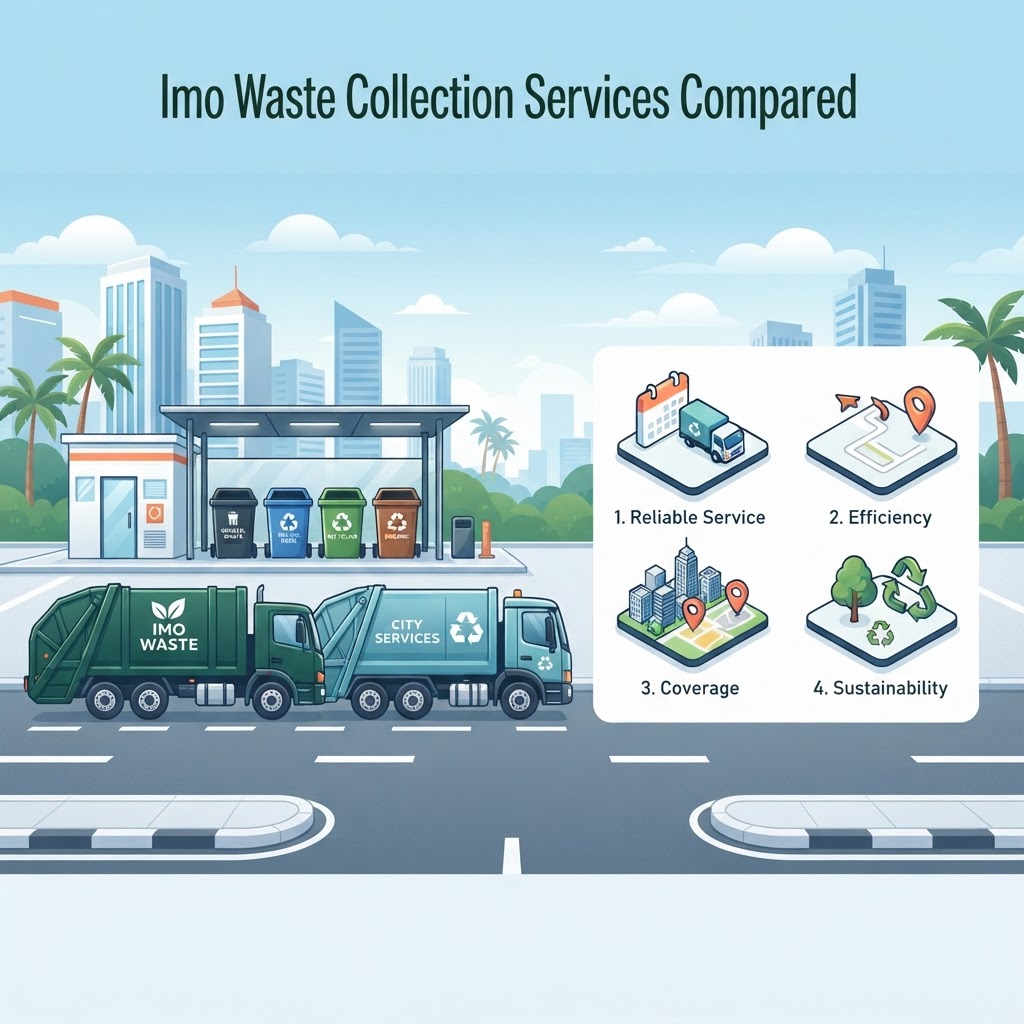
Imo Waste Collection Services Compared
Waste management sits at the intersection of public health, economic productivity, and community dignity. For residents of Imo State, particularly those living in the expanding urban corridors of Owerri, the question of who collects refuse — and how reliably they do it — is not a minor administrativ...

KoboTutor: How a Nigerian EdTech Platform Is Bringing Personalised Learning to Students
Nigeria's education sector stands at a crossroads. With over 13 million out-of-school children and chronic underfunding in public education, the pressure on students who do attend school is immense. For the millions sitting JAMB, WAEC, and NECO examinations each year, the stakes could not be higher....