Powered by Obi Mbieri Independent Media Ltd · eziokwubundu.com
$1 = ₦1,332€1 = ₦1,498£1 = ₦1,775Passport Fees Just Went Up Again — What It Means If You're Planning to Travel or Relocate
If you have been quietly putting off your passport renewal, waiting for a quieter financial season to handle it, this is your signal to stop waiting — and start budgeting. Nigerian international passport fees have surged again, and the numbers are not small. As of September 2025, what once cost ₦35,...
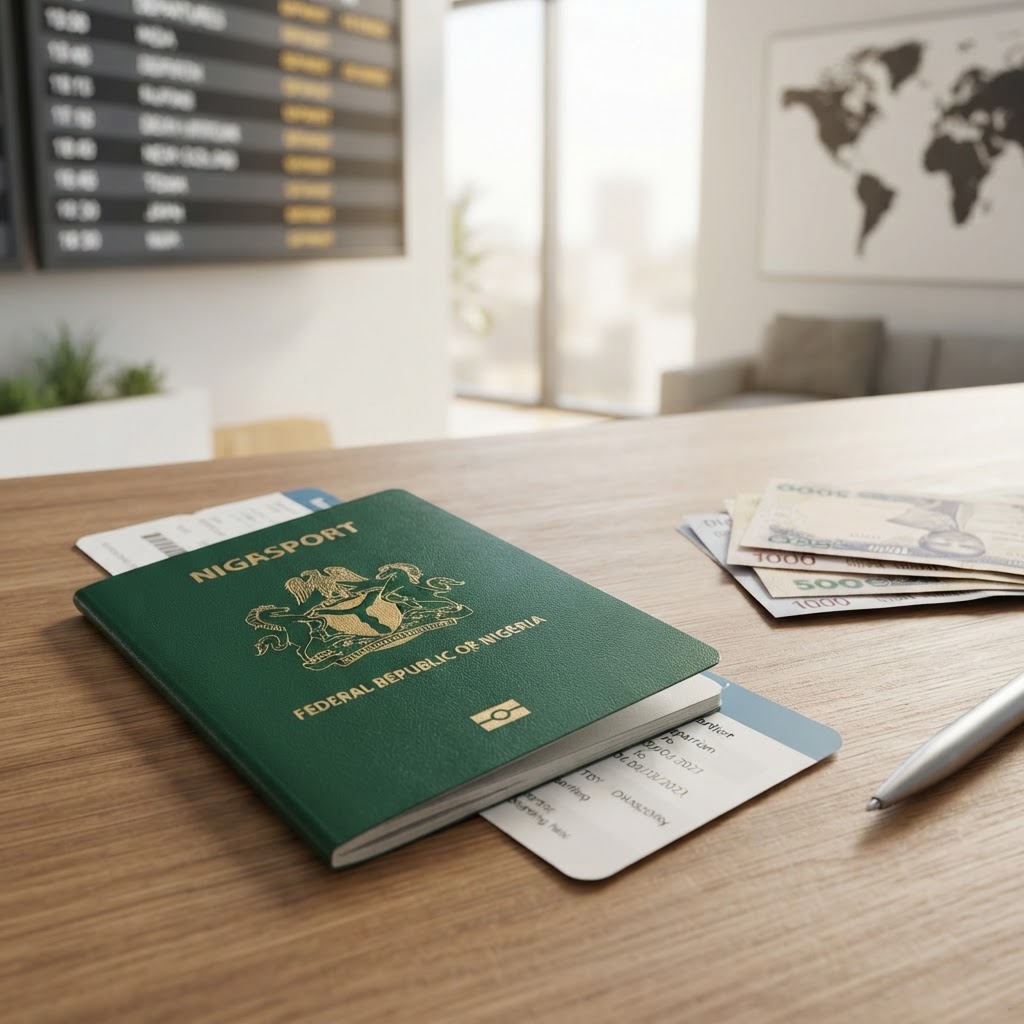
If you have been quietly putting off your passport renewal, waiting for a quieter financial season to handle it, this is your signal to stop waiting — and start budgeting. Nigerian international passport fees have surged again, and the numbers are not small. As of September 2025, what once cost ₦35,000 now costs ₦100,000, and the 64-page version has crossed the ₦200,000 mark. For Nigerian families with travel, relocation, or diaspora visits on the horizon, this is no longer a minor administrative expense — it is a significant financial commitment that demands deliberate planning.
This article breaks down exactly what the new fees are, why the government says it raised them, what civil society groups are saying in response, and — most importantly — how you can plan smarter to protect your travel ambitions and your wallet.
Why Are Passport Fees Rising So Fast?
Understanding the 186% surge since 2023
The trajectory of Nigerian passport fees over the past two years tells a striking story. In 2023, a standard 32-page international passport cost ₦35,000. By August 2024, that figure had climbed to ₦50,000. Then, on September 1, 2025, the Nigeria Immigration Service (NIS) implemented a further doubling, pushing the cost to ₦100,000. That is a cumulative increase of approximately 186% in just two years — well outpacing Nigeria's already high inflation rate.
The 64-page passport followed the same aggressive pattern, moving from ₦70,000 in 2023 to ₦100,000 in 2024, and then to ₦200,000 by September 2025.
The socio-economic weight of this trajectory cannot be overstated. Nigeria's current national minimum wage sits at ₦70,000 per month. This means that a single 32-page passport application now costs more than one full month of minimum wage earnings — and the 64-page version costs nearly three times the monthly minimum wage. For families in communities like Obi Mbieri and Ezi-Mbieri in Imo State, where many residents are planning relocation, diaspora visits, or educational pursuits abroad, these fees represent a significant and sudden financial barrier. For those already navigating local economic pressures — some of which are explored in our coverage of Nigeria's Oil Output Wobbles: What It Means for Imo's Oil-Producing Communities — this additional burden lands at a particularly difficult time.
What Are the Official Passport Costs in 2025?
A clear breakdown of the new fee structure
According to the Nigeria Immigration Service's official announcement, the current domestic fee structure is as follows:
- 32-page passport (5-year validity): ₦100,000
- 64-page passport (10-year validity): ₦200,000
These fees apply exclusively to applications submitted within Nigeria. For Nigerians applying through Nigerian missions abroad — embassies and high commissions — the fee schedule remains unchanged at $150 for the 32-page passport and $230 for the 64-page passport. This creates a notable price disparity that has strategic implications, particularly for diaspora Nigerians and those planning phased relocations.
At current exchange rates, the diaspora fees translate to considerably less than the domestic naira equivalent, which means — depending on your circumstances — applying or renewing your passport once you are already abroad may actually be the more economical option.
The NIS has stated that the increase is necessary to sustain the quality and integrity of the passport booklet itself. The argument is that producing a secure, internationally recognised biometric e-passport booklet that meets global standards requires substantial material and technological investment, and that the previous fee structure was no longer sufficient to cover these production costs without compromising booklet quality. Whether or not one accepts this justification, it is the official position, and the fees are now in effect.
It is worth noting that for a family of four — two adults and two children — all applying for 32-page passports domestically, the total outlay is now ₦400,000 before a single visa fee, flight booking, or accommodation cost has been considered.
How Does the Government Justify These Charges?
Official defence versus public criticism
The Federal Government and the NIS have not been silent in defending the new fee structure. According to reporting by Businessday NG, officials have argued that the higher fees will help curb corruption within the passport issuance process and significantly reduce the processing delays that have long plagued Nigerian applicants. The reasoning follows that when fees are low and demand is high, unofficial "facilitation payments" to middlemen and corrupt officials become endemic. Higher official fees, the government argues, reduce the incentive to short-circuit the formal process.
Additionally, the NIS has pointed to its commitment to improving the technological infrastructure underpinning the e-passport system — including the NIN-linked online application portal — as part of a broader modernisation agenda funded in part by passport revenue.
However, civil society groups and ordinary Nigerians have pushed back hard. Critics have labelled the back-to-back increases an "anti-people" policy, noting that a 100% year-on-year hike is extraordinarily difficult to absorb during a period when inflation has already severely eroded household purchasing power. When a government document now costs more than a month's minimum wage salary, the legitimacy of the justification — however technically sound — becomes a deeply political question. As reported by Vanguard, public frustration with this policy is substantial and growing.
How Do You Budget for These New Costs?
Practical planning for travel and 'japa' ambitions
The single most important shift in mindset that Nigerian travellers and relocators need to make right now is this: stop treating the passport as an afterthought and start treating it as a primary budget line item.
Many people planning international relocation — whether for work, study, or the increasingly common "japa" journey — focus their financial preparation on the bigger, more visible costs: international flights, visa application fees, accommodation deposits, and settling-in expenses. The passport renewal tends to get pushed to the back of the list as "something small to sort out later." At ₦100,000 to ₦200,000 per person, this is no longer a reasonable approach.
Featured Products
Chukwu Abiama Tee
Bold black-and-gold Igbo-pride T-shirt featuring 'Chukwu Abiama' in premium streetwear typography.
₦15,000
Buy NowReverse Type 2 Diabetes & other associated Metabolic Issues using Dr. Jason Fung's Evidence-Based Approach— FMD program for Type 2 Diabetes
A practical fasting and fasting-mimicking programme built on Dr Jason Fung's insulin-resistance principles and ow-glycemic recipes.
₦19,950
Join NowỤmụ Igbo Tee
Classic black T-shirt with bold white 'Ụmụ Igbo' typography — a proud statement of Igbo heritage.
₦15,000
Buy NowNwanne Tee
Washed khaki vintage tee with a faded rust-orange 'Nwanne' stamp badge and palm leaf motif — a nod to kinship and heritage.
₦18,000
Buy NowObodo Tee
Faded denim-blue washed tee with a cream 'Obodo' stamp badge and sun motif, celebrating community roots.
₦18,000
Buy NowEkwe Heritage Tee
Deep indigo tee featuring a fine line-art illustration of a traditional Igbo ekwe drum, inspired by Igbo-Ukwu bronze artistry.
₦18,000
Buy NowIkenga Figure Tee
Forest green tee with a fine line-art illustration of a stylized Ikenga figure.
₦18,000
Buy NowFor a family of four renewing 32-page passports, the combined cost is ₦400,000. For two adults going with 64-page options, it is ₦400,000 before the family is even fully counted. These numbers demand a dedicated savings strategy.
A practical "Practical Prosperity" approach is to treat the passport fee the same way you would plan for a large household purchase: set a firm target date for your application, divide the total cost by the number of months remaining, and set that amount aside monthly into a separate account or envelope. If you are applying in six months and need ₦200,000, that is approximately ₦33,000 per month — a manageable target when you can see it clearly.
One critical warning: avoid third-party "expediting" agents who promise faster processing in exchange for a premium above the official fee. Not only do these agents frequently charge ₦20,000 to ₦80,000 or more above the official cost, but they also introduce documentation risk. The NIS process is now fully online and NIN-linked, which means a legitimate application submitted correctly will follow the standard processing timeline regardless of whether you used an agent. Save the premium and use the official portal directly.
What Mistakes Could Cost You Extra Fees?
Navigating the NIN-linked digital application
The fully digitalised NIS application process has made passport applications more transparent and trackable than they were under older systems — but it has also introduced a critical failure point that is costing applicants both time and money: NIN data mismatches.
Your National Identification Number record must match your passport application data exactly. This means your first name, middle name, surname, and date of birth must be identical across your NIN record, birth certificate, and any existing passport. A single discrepancy — a transposed letter, a missing middle name, or a date of birth recorded differently across documents — can result in application rejection, and the fees are not automatically refunded in all cases. Before you submit anything, verify your NIN details thoroughly.
Current processing timelines from the NIS are approximately 6 weeks for a fresh application and 3 weeks for a renewal, measured from your biometric capture appointment date. Expedited processing, where available, can reduce this to approximately one week. However, the more common bottleneck is not the processing time itself — it is the scarcity of biometric appointment slots, particularly at high-demand centres in Lagos, Abuja, and Port Harcourt.
A basic pre-submission checklist:
- Confirm NIN data matches all other official documents precisely
- Complete the online application form at the NIS portal before booking a biometric appointment
- Pay the official fee through the designated payment channels only
- Gather original copies and clear photocopies of all supporting documents
- Book your biometric appointment as far in advance as possible — do not wait until the week before you need the passport
Is It Cheaper to Renew Abroad or at Home?
Strategic options for diaspora Nigerians
For Nigerians who have the option of renewing their passport through a Nigerian mission abroad, the current fee structure makes a compelling case for doing so. The diaspora fee of $150 for a 32-page passport translates at most current exchange rates to somewhere between ₦120,000 and ₦150,000 at parallel market rates — which at first glance seems comparable. However, if you are already located abroad and earning in foreign currency, paying $150 is a substantially lighter burden than it would be for someone earning in naira domestically.
For those planning phased relocations — travelling abroad first on an existing valid passport, then renewing once settled in a foreign jurisdiction — this calculus is particularly relevant. The Nigeria High Commission in Ottawa advises beginning the renewal process when your passport has less than one year of validity remaining, which gives you a useful planning window.
The broader lesson here is that your passport renewal strategy should be part of your relocation financial plan, not separate from it. If cost is a significant concern and you will be abroad before your passport expires, factor the timing of your renewal into your relocation roadmap.
For readers in Imo State communities navigating complex economic landscapes, the same community-oriented financial thinking that applies to issues like the debates covered in our article on the Obi Mbieri Seplat Representation Dispute — understanding your rights, planning carefully, and not accepting the first option without examining alternatives — applies equally well to navigating these bureaucratic and financial decisions.
What Are Your Next Steps Right Now?
Final recommendations for smart travel planning
The most actionable thing you can do after reading this article is to check the current validity of every family member's passport today and map out your application or renewal timeline against your travel plans. Do not book flights or visas until you have confirmed that passport applications are already in progress. Given that biometric appointment slots at busy centres can take weeks to secure, early action is not just advisable — it is essential.
From a community standpoint, one of the most valuable things Nigerian travellers can do is share their real experiences. If you have recently navigated the NIS online portal, dealt with NIN mismatches, or found a particularly efficient passport office, your experience is genuinely useful to others facing the same process for the first time. Platforms like Eziokwubundu are built precisely for this kind of community knowledge exchange — the African principle that individual knowledge, shared freely, strengthens the collective.
For context on how rising public costs are hitting Nigerian families across multiple fronts simultaneously, our coverage of the Nigeria Fuel Subsidy 2026 debate and the Benin–Asaba Road Crisis illustrates the compounding financial pressures that everyday Nigerians are managing.
The bottom line is straightforward: Nigerian passport fees have effectively tripled since 2023, and there is no credible signal that this trend will reverse in the near term. The government's justification — quality, anti-corruption, technological modernisation — may have merit, but it does not change the immediate financial reality for millions of Nigerian families. What does change that reality is early, informed, deliberate planning. Budget for it properly. Apply carefully the first time. And use every available resource — community networks, official channels, and trusted information platforms — to navigate the process as efficiently as possible.
Your passport is not just a travel document. In the current economic and geopolitical climate, for many Nigerian families, it is a gateway to opportunity. Treat it accordingly.
Stay Informed
Get New Articles in Your Inbox
Subscribe to receive the latest community development, health, and wealth insights from Eziokwubundu.
Newsletter
Practical insights on health, wealth, and community — delivered weekly.
Community Discussion(0)
Leave a Comment
More to Read
You May Also Like

State Police Bill Stalls After Limited Assembly Support
Nigeria's long debate over decentralized policing has hit a critical wall. The State Police Bill Stalls After Limited Assembly Support, leaving reform advocates uneasy about the road ahead. As detailed in earlier coverage of the State Police Bill Stalls After Limited Assembly Approval(/article/6ad1d...

FUTO Partners With Police to Boost Campus Security
Nigerian universities are grappling with growing security concerns, and the Federal University of Technology, Owerri (FUTO) is responding with urgency to protect its community. Campus security has become the defining priority for university leadership as recent incidents involving student safety pus...

Umuahii Day: Preserving Our Heritage, Rekindling Otu Obi
Every December, families across Imo State pause to celebrate something larger than a party. They celebrate belonging. This year, that celebration carries a clear purpose: Umuahii Day: Preserving Our Heritage, Rekindling Otu Obi invites every son and daughter of Umuahii to come home, in body or in sp...

2026 NNPC/Seplat Scholarship: Apply Now
The race for Nigeria's future workforce starts in the lecture hall, not the boardroom. If you are a Nigerian undergraduate looking for financial relief this academic year, the 2026 NNPC/Seplat Scholarship: Apply Now initiative offers a credible, well-funded pathway to ease tuition pressure and keep ...

NNPC Seeks Partnerships to Restart PH and Warri Refineries
Nigeria's refining sector is entering a decisive new chapter. As the nation searches for lasting solutions to decades-old fuel supply challenges, the news that NNPC Evaluates New Partnerships to Restart Warri and Port Harcourt Refineries signals a shift from patchwork repairs toward structured, long...

NYSC Abduction: Serving Nigeria at What Cost? Fresh Safety Questions
The Umunoha abduction of prospective NYSC members has renewed concerns over the safety of graduates travelling across Nigeria for national service.

Military Aircraft With 32 Aboard Crashes in Ondo, Rescue Underway
Igbokoda crash: Nigerian Air Force ATR-42 was travelling from Benin to Lagos when contact was lost
Nwanegwo Hands Over Mbaitoli LGA Affairs, Ends Tenure
Hon. Ifunanya Nwanegwo JP has formally handed over the affairs of Mbaitoli Local Government Area to the Director of Administration and General Services (DAGS), marking the conclusion of his tenure as Executive Chairman.
Umunoha NYSC Kidnap: Hideout Located as IED Threat Delays Rescue
Imo security agencies have located the suspected hideout of prospective NYSC members abducted along the Owerri–Onitsha Road, but an alleged improvised explosive device (IED) threat has delayed the planned rescue operation.

Mbaitoli Kidnapping: Why Is the Owerri–Onitsha Road Still Vulnerable?
The latest kidnapping incident along the Owerri–Onitsha Road in Mbaitoli Local Government Area of Imo State has renewed concerns about the safety of one of the major transportation routes connecting communities in Imo and neighbouring states.