Powered by Obi Mbieri Independent Media Ltd · eziokwubundu.com
$1 = ₦1,332€1 = ₦1,498£1 = ₦1,774Osun 2026 Election Result: What Adeleke's Win Means for Nigerians' Pockets
The dust has settled over Osogbo, and with it comes a political verdict that carries significant economic weight for millions of Nigerians. Governor Ademola Adeleke's re-election victory in the Osun 2026 governorship election is more than a political triumph — it is a financial signal that middle-cl...
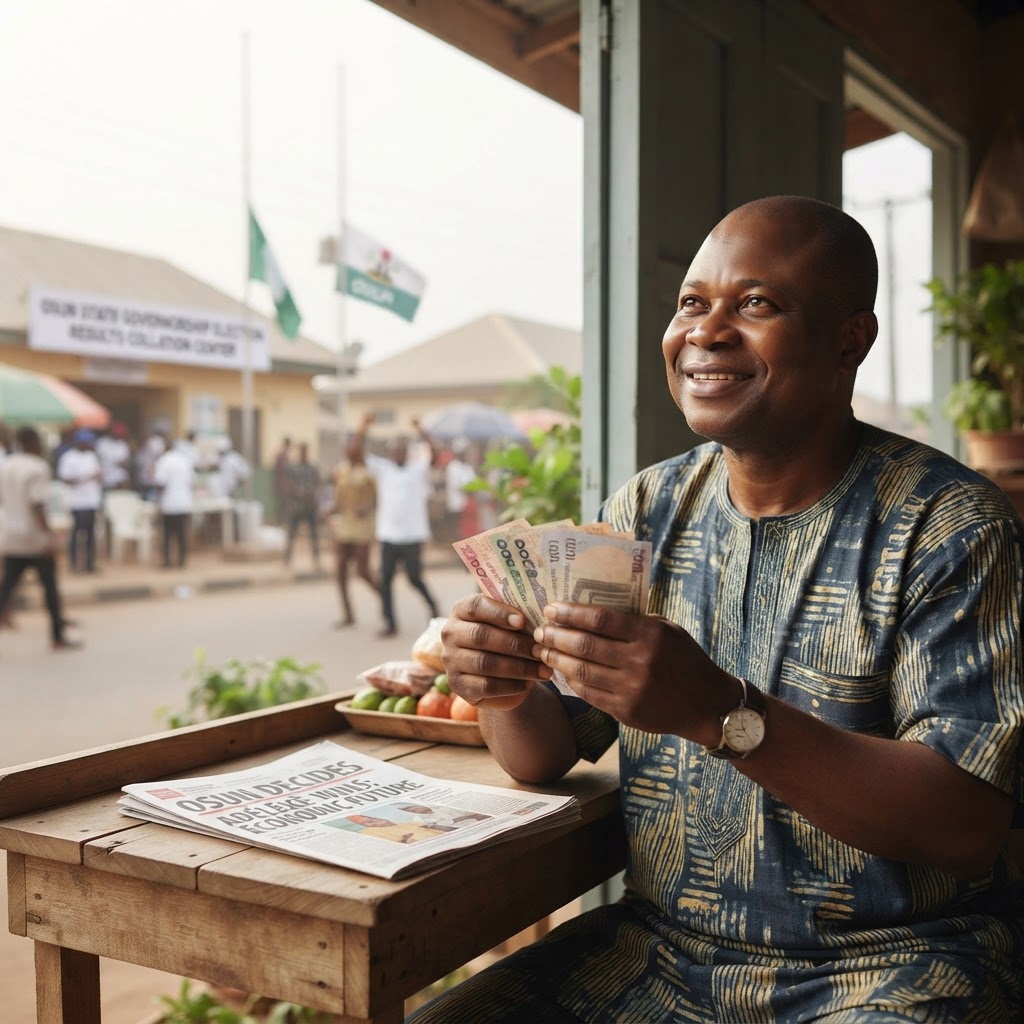
The dust has settled over Osogbo, and with it comes a political verdict that carries significant economic weight for millions of Nigerians. Governor Ademola Adeleke's re-election victory in the Osun 2026 governorship election is more than a political triumph — it is a financial signal that middle-class families, entrepreneurs, youth professionals, and community leaders cannot afford to ignore.
In a country still navigating the turbulence of subsidy removal, currency devaluation, and rising food costs, state-level governance decisions have become increasingly decisive in determining household purchasing power and local economic vitality. When a governor wins a second term on a platform centered on workers' welfare, infrastructure, and digital economy development, the policy continuity that follows has real-world consequences for livelihoods across the South-West and beyond.
This analysis breaks down what the Osun 2026 election result means sector by sector — from artisan financing to real estate appreciation, from wage reforms to youth tech empowerment — and offers practical guidance for Nigerian families looking to align their financial strategies with the emerging opportunities this mandate creates.
How Did Osun 2026 Reshape Nigerian Politics?
A Mandate Built on Economic Continuity
The Independent National Electoral Commission (INEC) declared Ademola Adeleke the winner of the Osun 2026 governorship election with a commanding 511,067 votes spread across 19 of the state's 30 Local Government Areas. His closest rival, the All Progressives Congress candidate Bola Oyebamiji, secured approximately 444,815 votes — leaving a decisive margin of 66,252 votes that analysts describe as an unambiguous public endorsement rather than a narrow squeaker.
What makes this result particularly significant for economic observers is the party context in which it was achieved. Adeleke contested under the Accord Party, having transitioned from the Peoples Democratic Party following internal realignments. Far from destabilizing his political base, this shift demonstrated an extraordinary capacity to retain voter loyalty across party lines — a signal of personal brand strength that investors and fiscal policy analysts associate with governance continuity.
For middle-class investors in the South-West, policy predictability is worth more than any single initiative. The 66,252-vote margin effectively gives Adeleke a fresh mandate to double down on his 'Five-Pillar Agenda', including the critical first-line charge framework for workers' salaries and pensions. According to INEC's official electoral data, mandate clarity of this scale translates directly into reduced governance uncertainty — a factor that lowers the risk premium on local investment decisions.
What Does the Five-Pillar Agenda Mean for Business?
Financing, Procurement, and Tax Reform for Entrepreneurs
The economic centerpiece of Adeleke's second-term mandate is a structured N4 billion artisan and cooperative financing program designed to inject low-interest liquidity directly into the informal economy. For market women, welders, tailors, and small-scale food processors — the backbone of Osun's economic engine — this program represents access to working capital at terms that conventional commercial banks in Nigeria rarely offer to unregistered or micro-enterprises.
The mechanics matter here. Rather than routing funding through opaque bureaucratic channels, the program is structured around existing cooperative societies and artisan guilds, effectively leveraging community trust infrastructure to reduce default risk. This model mirrors successful microfinance frameworks documented across Sub-Saharan Africa, where group-based lending reduces individual default rates by as much as 30% compared to individual loan portfolios. Readers interested in understanding how such community-based financial mechanisms work in Nigerian contexts can explore a detailed comparison of community microfinance platforms that are navigating financial inclusion in Nigeria.
Equally important for local entrepreneurs is the Local Content Policy embedded in state procurement. By mandating that government contracts for road construction, school rehabilitation, and public infrastructure prioritize Osun-based engineers, suppliers, and raw materials, the administration is creating a deliberate import-substitution effect at the state level. Every naira spent on government contracts that stays within the local economy circulates multiple times before leaving — economists refer to this as the local fiscal multiplier, and in low-income economies, it can range between 1.5 and 2.5x the original expenditure.
The third business-facing reform is tax harmonisation and digitization, targeting the predatory multiple taxation that has long inflated the hidden cost of doing business in Nigerian states. By moving toward a unified, digitally administered revenue collection system, the administration aims to eliminate the informal tollgates — both literal and bureaucratic — that extract rent from traders and manufacturers without generating transparent public revenue. This reform directly reduces the effective tax burden on small businesses while simultaneously growing the state's formal revenue base.
How Will Infrastructure Affect Property Values?
Urban Renewal as Real Estate Wealth Creation
The Adeleke administration has publicly claimed a 50% reduction in Osun's infrastructure deficit since taking office in 2022 — a figure that, while contested by opposition voices, is supported by visible evidence of road rehabilitation projects across Osogbo, Ede, Iwo, and Ilesa. The second-term agenda proposes to accelerate this momentum with planned expansions targeting urban corridors in all four cities, creating what economists call infrastructure-led appreciation zones.
For residential real estate, the relationship between road infrastructure and property values is well-documented. A study published by the Urban Land Institute found that properties within 500 meters of newly constructed or rehabilitated road networks experience value appreciation of between 12% and 28% within three years of project completion in comparable emerging market cities. In Osun's context, the expansion of road networks in secondary cities like Ede and Iwo — currently underserved relative to Osogbo — creates acquisition windows for investors before price appreciation fully materializes.
Beyond investment returns, improved road infrastructure has a direct bearing on food logistics costs — and by extension, the grocery budgets of ordinary Nigerian families. A significant portion of the inflationary pressure on fresh produce prices in Osun markets stems not from agricultural scarcity but from poor road conditions that increase transportation time, fuel consumption, and post-harvest spoilage rates. Better roads reduce these friction costs, creating deflationary pressure on food prices at the retail level. This dynamic is particularly relevant for families whose food expenditure represents 50-60% of monthly household income — the reality for a large segment of Osun's population.
For strategic investors, the key opportunity lies in identifying the new economic corridors created by road widening projects connecting Osogbo to smaller towns. These corridors historically attract petrol stations, logistics hubs, schools, and medical facilities — all of which drive secondary residential demand in their vicinity.
Featured Products
Chukwu Abiama Tee
Bold black-and-gold Igbo-pride T-shirt featuring 'Chukwu Abiama' in premium streetwear typography.
₦15,000
Buy NowReverse Type 2 Diabetes & other associated Metabolic Issues using Dr. Jason Fung's Evidence-Based Approach— FMD program for Type 2 Diabetes
A practical fasting and fasting-mimicking programme built on Dr Jason Fung's insulin-resistance principles and ow-glycemic recipes.
₦19,950
Join NowỤmụ Igbo Tee
Classic black T-shirt with bold white 'Ụmụ Igbo' typography — a proud statement of Igbo heritage.
₦15,000
Buy NowNwanne Tee
Washed khaki vintage tee with a faded rust-orange 'Nwanne' stamp badge and palm leaf motif — a nod to kinship and heritage.
₦18,000
Buy NowObodo Tee
Faded denim-blue washed tee with a cream 'Obodo' stamp badge and sun motif, celebrating community roots.
₦18,000
Buy NowEkwe Heritage Tee
Deep indigo tee featuring a fine line-art illustration of a traditional Igbo ekwe drum, inspired by Igbo-Ukwu bronze artistry.
₦18,000
Buy NowIkenga Figure Tee
Forest green tee with a fine line-art illustration of a stylized Ikenga figure.
₦18,000
Buy NowCan the N10,000 Palliative Protect Household Income?
Labor Welfare and Consumer Spending Power
Organized labor in Osun has formally requested a N10,000 palliative to cushion civil servants against the erosive effects of national fuel subsidy removal and exchange rate depreciation. The significance of this request — and the administration's disposition toward honoring it — lies not just in the immediate boost to individual disposable income, but in the macroeconomic demand stimulus it generates at the local level.
Civil servants represent a large, geographically distributed spending class in Osun. When their purchasing power is protected, it sustains demand for local goods and services — from tailoring to food vending to transport — that would otherwise contract. The Adeleke administration's commitment to maintaining salaries and gratuities as a first-line charge on state revenue provides fiscal predictability that few Nigerian states have managed to sustain consistently.
Comparing Osun's approach to Ogun, Oyo, and Lagos reveals a meaningful distinction. While larger South-West states benefit from stronger internally generated revenue (IGR) bases, their civil servant welfare programs have been more erratic in the face of federal allocation volatility. Osun's model of ring-fencing worker welfare at the budget allocation stage offers a structural buffer that the broader 'Adeleke Model' may offer as a policy template for smaller states navigating similar economic pressures.
Why Is the Digital Hub a Game-Changer for Youth?
From Local Talent to Global Income
The Osun Digital Economy Hub represents one of the most forward-looking elements of Adeleke's second-term agenda, targeting a demographic — youth professionals aged 18 to 35 — that has historically seen migration to Lagos or Abuja as the only pathway to career growth. The hub's mandate includes training programs in remote work skills, digital freelancing, software development, and e-commerce operations, equipping participants to earn in foreign currency while sustaining a cost structure rooted in Osun's significantly lower living expenses.
This geographic arbitrage model — earning globally, living locally — is already demonstrably effective across parts of Eastern Nigeria and is increasingly recognized by the World Bank's Digital Economy for Africa initiative as a scalable poverty reduction strategy for secondary cities. For a young professional earning $500 monthly in freelance income while paying Osogbo-level rent and food costs, the effective purchasing power can exceed that of a Lagos-based peer earning N500,000.
The hub's integration with agro-mechanization programs also addresses youth unemployment in rural communities, offering a technology-mediated entry point into agricultural value chains. Young professionals can leverage drone technology, precision agriculture platforms, and digital commodity trading tools without abandoning their communities. Practical steps include enrolling in the hub's certified training cohorts, joining state-supported tech cooperatives, and accessing the growing network of co-working facilities the administration is deploying across Osun's major towns.
What Are the Risks Around N650 Billion Spending?
Transparency as an Economic Health Tool
Opposition voices have raised legitimate concerns about the accountability framework surrounding N650 billion in financial resources deployed across Adeleke's first term. This figure — encompassing federal allocations, IGR, external financing, and donor support — represents a significant public trust instrument, and its management will determine whether the second term's economic promises translate into measurable outcomes or political rhetoric.
The State Development Plan 2023-2050, which provides the long-term planning architecture for Osun's economic agenda, is the most credible safeguard against election-year spending morphing into a post-election debt trap. Long-horizon development plans discipline annual budgets by tying expenditure to verified milestones rather than political cycles. However, plan quality is only as valuable as its implementation monitoring — which is where community organizations play a critical role.
Grassroots organizations, market associations, and community health and development groups have both the local knowledge and the civic standing to monitor infrastructure project delivery. For communities managing public goods at the local level, the principles applied in community waste management case studies from Eziokwubundu.com offer directly transferable frameworks for participatory monitoring. Platforms like BudgIT and the Open Government Partnership Nigeria node provide publicly accessible fiscal data that community leaders can use to cross-check official project claims against actual disbursements.
How Should Families Position Finances Post-Election?
Strategic Wealth Building in a Stabilizing Economy
For Nigerian families seeking to convert the political stability signaled by the Osun 2026 result into tangible household wealth, the opportunity window is both real and time-sensitive. The administration's revitalized free trade zones and agricultural expansion programs offer entry points for entrepreneurial families willing to invest in commodity processing, storage, and value-added agriculture — sectors that benefit directly from the infrastructure and local content policies outlined above.
Agricultural families, in particular, should explore cooperative structures that allow them to access the N4 billion artisan financing program while connecting to state-level agro-industrial offtake agreements. Urban families with savings capacity should consider positioning in real estate along the new economic corridors before infrastructure-led appreciation fully prices in.
Beyond financial positioning, the election result carries a crucial wellness dimension that is often underappreciated. Economic stability is a foundational social determinant of health. When household incomes are protected through wage reforms and when healthcare access expands through stable government financing, the mental health burden on families — particularly the elderly and economically vulnerable — decreases measurably. Families should also explore how state health infrastructure investments can be supplemented through resources like guidance on telemedicine options for rural Nigerians and tools for starting a community health watch program to maximize their household health resilience.
Ultimately, the Osun 2026 election result is a case study in Traditional Values, Modern Progress — a mandate grounded in community welfare, delivered through modern fiscal and digital tools. For Nigerians watching from every state and from the diaspora, the lesson is clear: political outcomes at the state level are economic events. Aligning personal financial strategies with a state's growth trajectory is not opportunism — it is practical prosperity in action.
This article is published by eziokwubundu.com, Nigeria's integrated Health + Wealth + Community platform committed to providing actionable, evidence-based knowledge for everyday Nigerians.
Stay Informed
Get New Articles in Your Inbox
Subscribe to receive the latest community development, health, and wealth insights from Eziokwubundu.
Newsletter
Practical insights on health, wealth, and community — delivered weekly.
Community Discussion(0)
Leave a Comment
More to Read
You May Also Like

Why Africa's Tiny Ants Are Targeted for Wildlife Trade
Ants are tiny, but they are quietly becoming big business for international smugglers. Across East Africa, a strange black market has emerged, one built not on ivory or rhino horn but on queen ants. This unusual shift explains Why Africa's Tiny Ants Are Becoming a Wildlife Trafficking Target for cri...

FUTO Partners With Police to Boost Campus Security
Nigerian universities are grappling with growing security concerns, and the Federal University of Technology, Owerri (FUTO) is responding with urgency to protect its community. Campus security has become the defining priority for university leadership as recent incidents involving student safety pus...

Monetizing Digital Skills for Nigerian Youth Prosperity
The economic landscape for young Nigerians(/article/home-morning-fitness-guide-for-nigerians) is undergoing a profound transformation. No longer is a single monthly salary sufficient to navigate the complexities of modern inflation and rising living costs. For the ambitious youth professional, the d...

NNPC Faces Efficiency Scrutiny Over ₦27.76 Trillion Expenses
Nigeria's state oil giant is back in the headlines, and not for a new discovery. NNPC's ₦27.76 Trillion Operating Expenses Raise Efficiency Questions among citizens, analysts, and policymakers alike. The figure is so large it has sparked fresh debate about how national wealth is managed, and the num...

Why Entrepreneurs Must Track Monthly Net Worth
Many business owners in Lagos and Abuja celebrate high daily sales while their personal bank accounts remain stagnant. True financial freedom is not found in the cash flow of a business but in the residual value of one's personal assets. Shifting your focus to monthly net worth tracking allows you t...

Imo Approves Recruitment of 6,030 Teachers Across 27 LGAs
Imo State has taken a bold step toward transforming its public education system. Governor Hope Uzodimma has approved the recruitment of 6,030 teachers across the state's 27 Local Government Areas, a move many residents have awaited for years. This decision, widely reported by Vanguard(https://www.va...
Health and Wealth Creation for Nigerians: Empowerment Hub
In an increasingly complex global landscape, the pursuit of a fulfilling life necessitates a balanced approach to physical well-being, financial stability, and social connectivity. For Nigerians at home and in the diaspora, navigating these paths requires more than just effort; it requires access to...
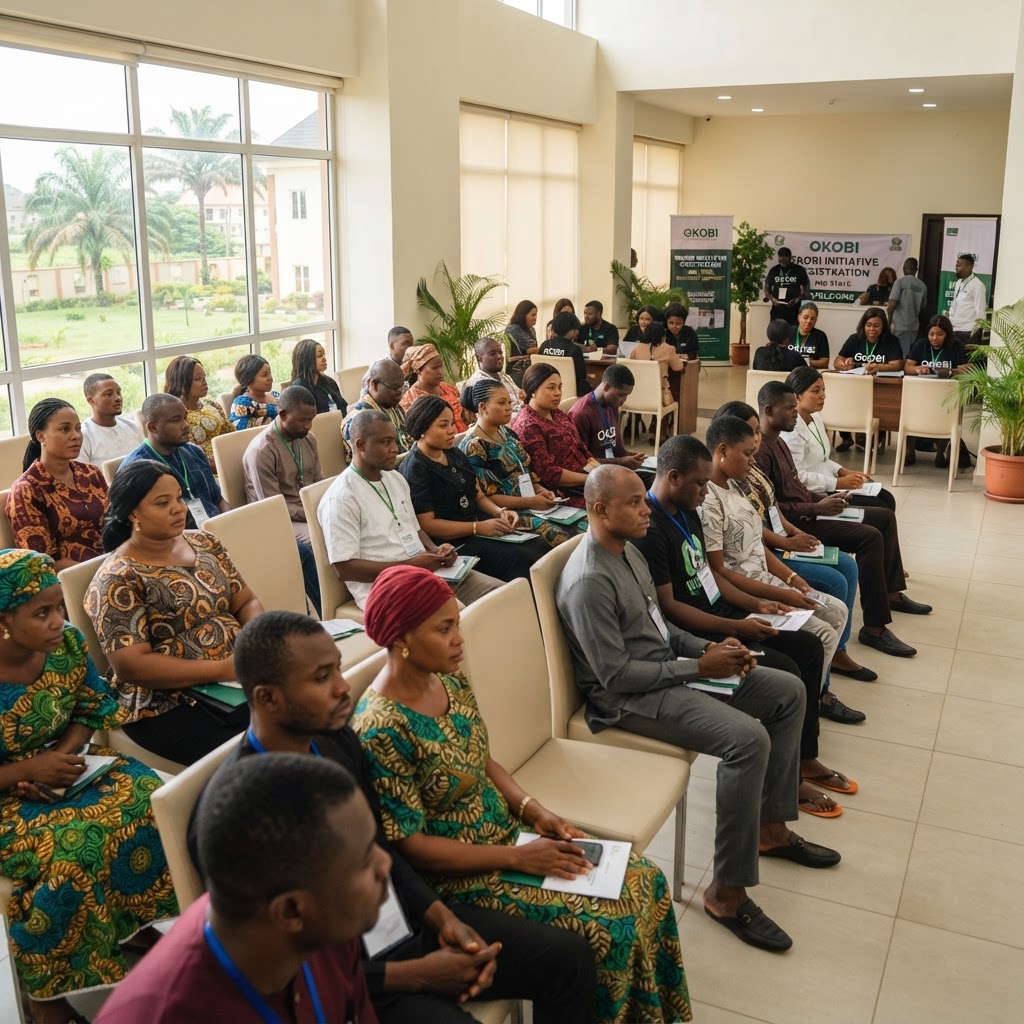
65 Imo Businesses Await OKOBI Initiative Registration
Imagine 65 kindred-owned businesses across Imo State, each waiting for one final document to unlock full legal status. That single step—Corporate Affairs Commission registration—now defines the next chapter in Imo's OKOBI Initiative: 65 Community Businesses Await CAC Registration. For families, entr...

How to Register a Business in Imo
Starting a business in Imo State is one of the most impactful decisions you can make — not just for your personal financial future, but for the broader prosperity of your community. From the bustling markets of Owerri to the agricultural enterprises of Orlu and Okigwe, Imo entrepreneurs are driving ...