Powered by Obi Mbieri Independent Media Ltd · eziokwubundu.com
$1 = ₦1,331€1 = ₦1,493£1 = ₦1,765Obi Mbieri’s Seplat Representation Dispute: Who Really Spoke for the Community?
When a multinational energy company sits across the table from community representatives, the fundamental question of legitimacy must be settled before a single clause is signed.

When a multinational energy company sits across the table from community representatives, the fundamental question of legitimacy must be settled before a single clause is signed. According to the photo shared on Umu Mbieri Whatsapp platform allerging a crucial meeting with Seplat Energy, Obi Mbieri and Ezi Autonomous Communities at the Protea Hotel Owerri on Wednesday, July 8, 2026, that question was very much unsettled. Three men — each operating within a fractured institutional web tied to an absent traditional ruler — claimed varying degrees of authority to negotiate on behalf of the Obi Mbieri with Seplat Energy PLC. The consequences of that ambiguity now ripple through every household, every youth empowerment dream, and every healthcare initiative that depends on oil revenue being properly channelled back into the community.
This article examines the origins, the key figures, and the long-term implications of Obi Mbieri's representation dispute with Seplat Energy — and what transparent, community-led governance must look like going forward.
What Triggered the July 2026 Protea Hotel Crisis?
The photo post titled - "During a crucial meeting with the Seplat Energy, Obi Mbieri, and Ezi Autonomous Communities at the Protea Hotel Owerri on Wednesday, July 8, 2026". The July 8, 2026 meetings photo post on Umu Mbieri platform was not a routine stakeholder engagement. It was a pressure point — the culmination of months/years of unresolved questions about who holds the legal and moral mandate to negotiate oil revenue agreements on behalf of Obi Mbieri. Photos circulated on the Umu Mbieri platform confirmed the attendance of three key community figures in Seplat Energy meetings.Yet documentation available to the Obi Mbieri Independent Media platform, eziokwubundu.com, revealed something deeply troubling: the community's negotiating bloc was not drawn from a unified, democratically accountable structure, but from an interlocking network of palace appointees operating under an invisible monarch.
The stakes could not be higher. Natural resource agreements under the Global Memorandum of Understanding (GMoU) framework directly determine what portion of oil revenues flows into local infrastructure, healthcare, and education. For Nigerian families, the health-wealth-community triangle is not abstract philosophy — it is the difference between a functioning primary health centre and a crumbling one, between a youth who gains a vocational skill and one who does not. When leadership is disputed at the point of negotiation, the entire pipeline of community benefit is at risk of diversion.
Investigative reports published by Grassroot Reporters describe this situation starkly as "The Great Obi Mbieri Oil Heist," alleging that the community's natural wealth is being quietly diverted through arrangements that exclude the broader population. For readers seeking deeper context on the constitutional dimensions of these negotiations, Obi-Mbieri Oil Dispute: Constitution Raises Fresh Questions Over Seplat Negotiations provides critical analysis of the legal framework at play.
Who Are the Three Figures at the Centre of the Dispute?
The institutional network claiming to represent Obi Mbieri at Seplat negotiations can be mapped as a three-node chain — each figure drawing legitimacy from, or proximity to, a traditional institution now crippled by the prolonged absence of its monarch.
Chief Martin Iwuajoku, publicly identified by imotrumpeta as the Special Adviser to Eze J.N. Osuji (the Ezeukwu 1 of Obi Mbieri), has served as the primary conduit for palace-sourced directives. His role has become increasingly scrutinised because, for years, he has relayed instructions with the phrase "Eze said" — yet the Eze himself has reportedly not been seen in Obi Mbieri for over six years, and no verifiable communication trail has been publicly presented. In communities governed by the principle that leadership is a service, not a privilege, this opacity is unacceptable.
Chief Uzoma Ekeanyanwu has on multiple public occasions claimed the title of Traditional Prime Minister (TPM) of Obi Mbieri. This claim was directly challenged in an OtownGist report from June 2026, which confirmed Prof. Kyrian Chinedu Ndikom as the legitimate Traditional Prime Minister of Obi Mbieri. Ekeanyanwu's dual posture — simultaneously claiming institutional authority and acknowledging a leadership vacuum — is perhaps best illustrated by a February 2024 peace meeting documented by 9News Nigeria. At that gathering, Ekeanyanwu admitted he had taken the traditional ruler to court because the community had been without functional leadership and the Eze's whereabouts were unknown. He indicated willingness to withdraw the case, a gesture that underscores how fluid — and politically charged — these authority claims truly are.
Chief Emmanuel Ahuokpoeme served as palace secretary for over 5 years until June 2026. In what critics have described as a palace-orchestrated "sham election," he reportedly emerged as President General (PG), in parrallel to the an already existing duely elected Obi Mbieri government led by Chief Samuel Oparaugo and simultaneously relinquishing his palace secretarial role to Mr. Collins Opara. The sequence — palace secretary becoming PG through an internally palace managed process in parrallel to the an already existing duely elected Obi Mbieri government led by Chief Samuel Oparaugo — raises legitimate questions particularly when a disputed PG is the primary signatory in Town Union-level oil negotiations.
Why Does the Eze's Six-Year Absence Matter So Much?
A traditional ruler's legitimacy is not merely ceremonial in Nigerian autonomous communities — it is constitutional, cultural, and contractual. Both Chief Ekeanyanwu and Chief Ahuokpoeme have independently acknowledged that no one has heard from Eze J.N. Osuji for over four years. Extended to the question of physical presence, the Eze has reportedly not visited Obi Mbieri land for over six years.
This absence creates a dangerous vacuum. When Chief Martin Iwuajoku repeatedly invokes "Eze said" as the authorising premise for community decisions — including potentially consequential oil negotiations — the burden of proof must fall on him. The Obi Mbieri community, its youth organisations, diaspora members, and civil society representatives are fully entitled to demand documented evidence of any communication with the Ezeukwu 1. Verbal relays of alleged palace directives, absent written confirmation or verified contact, cannot serve as the legal or ethical basis for binding agreements with a publicly listed energy company.
The "Community-First" principle demands that leadership is visible, verifiable, and accountable. An invisible monarch whose directives are filtered through a single adviser represents an extreme concentration of interpretive power — power that could easily be used to channel oil revenues away from grassroots development, preventive healthcare, and youth infrastructure. For further reading on how oil revenue mismanagement affects the wider Imo State economy, see Nigeria's Oil Output Wobbles: What It Means for Imo's Oil-Producing Communities.
How Do Competing TPM Claims Affect Legal Agreements?
The contested title of Traditional Prime Minister is not a matter of mere ceremonial pride. In the governance structure of an autonomous community, the TPM occupies a critical institutional role in validating major decisions, especially those involving external corporations and revenue-sharing frameworks. When two individuals simultaneously claim this office — one recognised by community institutions and the other asserting it through repeated public declaration — the validity of any GMoU clause approved under either's authority becomes legally fragile.
Featured Products
Chukwu Abiama Tee
Bold black-and-gold Igbo-pride T-shirt featuring 'Chukwu Abiama' in premium streetwear typography.
₦15,000
Buy NowReverse Type 2 Diabetes & other associated Metabolic Issues using Dr. Jason Fung's Evidence-Based Approach— FMD program for Type 2 Diabetes
A practical fasting and fasting-mimicking programme built on Dr Jason Fung's insulin-resistance principles and ow-glycemic recipes.
₦19,950
Join NowỤmụ Igbo Tee
Classic black T-shirt with bold white 'Ụmụ Igbo' typography — a proud statement of Igbo heritage.
₦15,000
Buy NowNwanne Tee
Washed khaki vintage tee with a faded rust-orange 'Nwanne' stamp badge and palm leaf motif — a nod to kinship and heritage.
₦18,000
Buy NowObodo Tee
Faded denim-blue washed tee with a cream 'Obodo' stamp badge and sun motif, celebrating community roots.
₦18,000
Buy NowEkwe Heritage Tee
Deep indigo tee featuring a fine line-art illustration of a traditional Igbo ekwe drum, inspired by Igbo-Ukwu bronze artistry.
₦18,000
Buy NowIkenga Figure Tee
Forest green tee with a fine line-art illustration of a stylized Ikenga figure.
₦18,000
Buy NowThe February 2024 peace meeting, as documented by 9News Nigeria, is particularly revealing. Chief Ekeanyanwu's admission that he initiated legal action against the traditional ruler over an absence-induced leadership crisis reflects a community in institutional freefall. His willingness to withdraw the suit was framed as a goodwill gesture, but it also suggests that the dispute remains unresolved and subject to renegotiation depending on prevailing political winds.
For a community trying to secure long-term oil revenue agreements, this legal uncertainty is devastating. The GMoU framework requires credible signatories. Dual claims, contested elections, and absent monarchs do not satisfy the threshold of institutional credibility that protects community interests. The result is a paralysed "Nigerian Self-Improvement Ecosystem" — one where internal strife prevents the very wealth-building strategies that could elevate Obi Mbieri families into sustainable middle-class prosperity.
What Is Seplat Energy's Responsibility Here?
Seplat Energy PLC has publicly committed to "fair and transparent" stakeholder engagement through its GMoU framework, as outlined in their Stakeholder Engagement policies. The company's stated position is that it engages Town Unions — the formal civic structures of host communities — rather than traditional palace institutions. This distinction is significant.
In a rebuttal published by Star Post Express, it was argued that Seplat's engagement with Town Union structures rather than the palace represents a policy-compliant approach. However, if the Town Union itself is compromised — specifically, if the PG was elected through a palace-managed process in parrallel to the an already existing duely elected Obi Mbieri government led by Chief Samuel Oparaugo then the legitimacy of such engagement is questionable.
At the AKU-A OML-53 facility, other communities have reportedly demanded operational suspensions, citing perceived inequities in revenue disbursement and inadequate consultation. This is not simply a governance problem — it is a public health and economic development problem. When community members feel excluded from the decisions that shape their environment, the social license to operate erodes. Operational disruptions, legal challenges, and reputational damage follow, ultimately delaying the delivery of the CSR programmes — eye care, maternal health, road construction — that communities were promised in exchange for hosting petroleum infrastructure.
What Does Leadership Failure Cost Obi Mbieri Families?
The cost of misrepresentation is not abstract. Seplat Energy's CSR portfolio for host communities has historically included health initiatives such as the "Eye Can See" and "Safe Motherhood" programmes, directly targeted at rural families who lack access to specialist care. When community representatives are entangled in palace politics, court cases, and legitimacy battles, these programmes stall, are delayed, or are allocated to communities whose governance structures are less contested.
Obi Mbieri stakeholders have already sounding the alarm by rejecting the palace stage managed PG election that brought out Chief Emmanuel Ahuokpoeme in parrallel to an already existing duely elected Obi Mbieri government led by Chief Samuel Oparaugo. Five of the six Presidents General reportedly rejected recent palace-led stage managed declarations. That is not a footnote — it is a democratic signal of the highest urgency. Youth professionals, local entrepreneurs, and community mothers cannot build generational wealth in an environment where every negotiation table is set by disputed hands.
How Can Obi Mbieri Reclaim Its Future?
Restoration of transparent leadership in Obi Mbieri is not only possible — it is urgent. The following accountability framework represents a minimum viable roadmap.
First, a community-led audit of all agreements signed with Seplat Energy since 2024 must be commissioned, with Chief Martin Iwuajoku and Chief Emmanuel Ahuokpoeme required to produce full documentation of every clause, every disbursement schedule, and every representation made in the community's name. Transparency is not a courtesy in this context — it is a constitutional obligation.
Second, the five of six Presidents General who rejected palace-led declarations must be brought into a unified reconciliation process. A legitimate, independently observed Town Union election — free of palace interference — is the only structure that can provide Seplat Energy with a credible, legally sound counterpart for future GMoU negotiations.
Third, the Obi Mbieri people must collectively demand evidence of any communication with Eze J.N. Osuji. Six years of absence cannot be bridged by an adviser's verbal representations. Either the monarch communicates publicly and verifiably, or the formal process for addressing an extended absence of traditional leadership must be activated in accordance with Imo State government guidelines.
"Knowledge for Everyday Nigerians and community members" is not a slogan — it is a survival strategy. When communities are equipped with evidence-based information about their rights, their resources, and their governance processes, they become impossible to exploit. Obi Mbieri has everything it needs to build a prosperous, healthy, and self-determining community. The first step is demanding — loudly and collectively — that those who claim to speak for it, prove that they truly do.
eziokwubundu.com is committed to grassroots community journalism that places health, wealth, and community development at the centre of Nigerian public life. For more analysis of local governance and resource management, explore our full coverage at eziokwubundu.com/articles.
Stay Informed
Get New Articles in Your Inbox
Subscribe to receive the latest community development, health, and wealth insights from Eziokwubundu.
Newsletter
Practical insights on health, wealth, and community — delivered weekly.
Community Discussion(0)
Leave a Comment
More to Read
You May Also Like

Umuahii Day: Preserving Our Heritage, Rekindling Otu Obi
Every December, families across Imo State pause to celebrate something larger than a party. They celebrate belonging. This year, that celebration carries a clear purpose: Umuahii Day: Preserving Our Heritage, Rekindling Otu Obi invites every son and daughter of Umuahii to come home, in body or in sp...

2026 NNPC/Seplat Scholarship: Apply Now
The race for Nigeria's future workforce starts in the lecture hall, not the boardroom. If you are a Nigerian undergraduate looking for financial relief this academic year, the 2026 NNPC/Seplat Scholarship: Apply Now initiative offers a credible, well-funded pathway to ease tuition pressure and keep ...

Nwanegwo Hands Over Mbaitoli LGA Affairs, Ends Tenure
Hon. Ifunanya Nwanegwo JP has formally handed over the affairs of Mbaitoli Local Government Area to the Director of Administration and General Services (DAGS), marking the conclusion of his tenure as Executive Chairman.

Umunoha NYSC Kidnap: Hideout Located as IED Threat Delays Rescue
Imo security agencies have located the suspected hideout of prospective NYSC members abducted along the Owerri–Onitsha Road, but an alleged improvised explosive device (IED) threat has delayed the planned rescue operation.

Ultimate Guide to Health, Wealth, and Community Development
Discover how health, wealth creation, and community development intertwine to empower individuals and build prosperous societies. This ultimate guide provides actionable insights and strategies to enhance your well-being and financial stability while fostering a vibrant community, ensuring you make ...

Mbaitoli Kidnapping: Why Is the Owerri–Onitsha Road Still Vulnerable?
The latest kidnapping incident along the Owerri–Onitsha Road in Mbaitoli Local Government Area of Imo State has renewed concerns about the safety of one of the major transportation routes connecting communities in Imo and neighbouring states.
Mbaitoli Security: Are Farmers Returning to Their Farms?
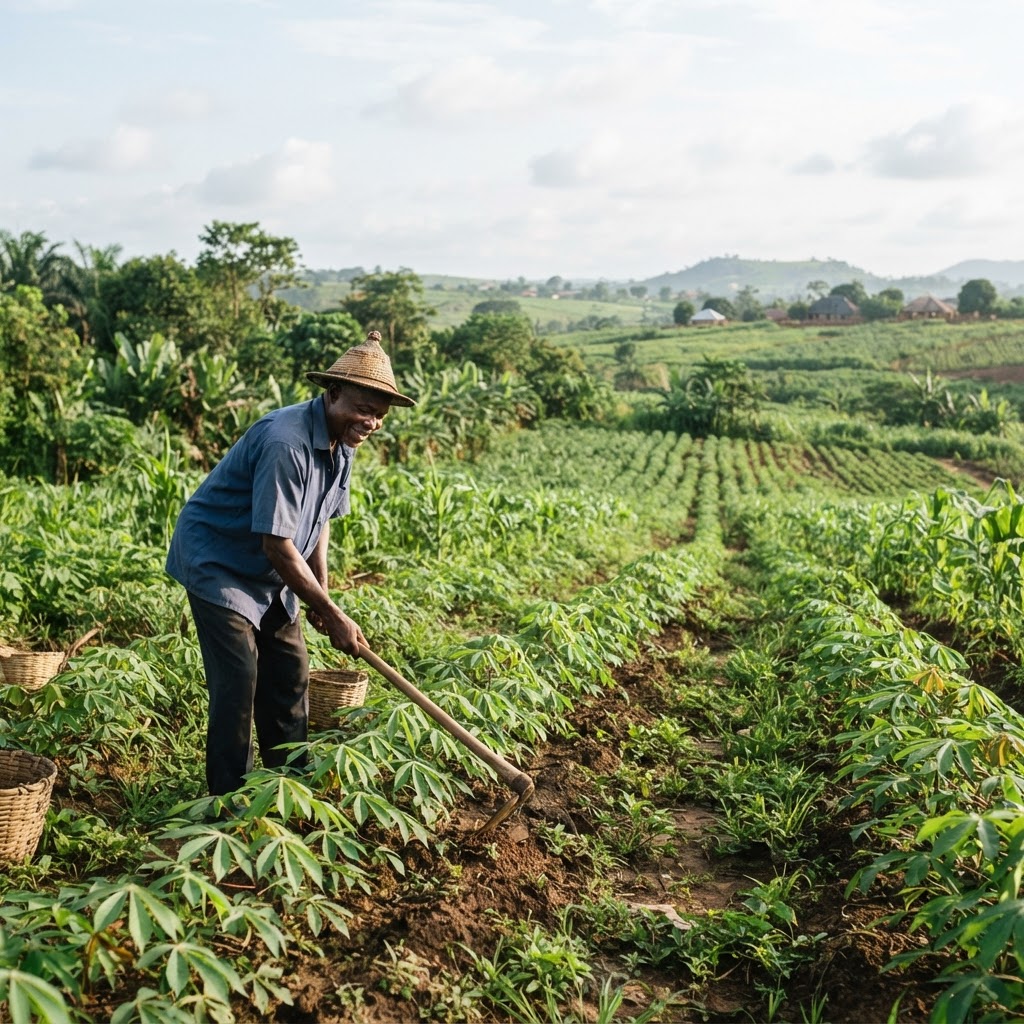
Dust settles slowly over Mbaitoli's farmlands, but the questions linger louder than ever. Families across Imo State whisper the same worry: will their fields ever feel safe again? Mbaitoli Security: Are Farmers Returning to Their Farms? remains one of the most urgent questions facing this agrarian c...

Imo Government to Support 100 More Communities
OKOBI is reshaping how everyday Imo residents build wealth from their own villages. The latest expansion, tagged OKOBI: 100 More Imo Communities Set to Receive Government Support, signals a new chapter in Governor Hope Uzodimma's push for grassroots prosperity. For Nigerian families and community le...