Powered by Obi Mbieri Independent Media Ltd · eziokwubundu.com
$1 = ₦1,327€1 = ₦1,506£1 = ₦1,756Obi-Mbieri Oil Wealth: How Much Is Seplat Energy Obliged to Pay the Host Community?
The discovery and development of oil and gas resources in Mbieri, Mbaitoli Local Government Area of Imo State, has raised a fundamental question among residents of Obi-Mbieri: how much money is the community legally entitled to receive from the petroleum operations taking place on its ancestral land? Eziokwubundu Investigative Desk

The discovery and development of oil and gas resources in Mbieri, Mbaitoli Local Government Area of Imo State, has raised a fundamental question among residents of Obi-Mbieri: how much money is the community legally entitled to receive from the petroleum operations taking place on its ancestral land?
The question has become even more urgent following reports that Seplat Energy has already made payments connected to the oil-producing community.
But there is an important distinction that every member of the community needs to understand.
The money is not calculated as a percentage of the value of the oil discovered. Neither does the Petroleum Industry Act (PIA) provide that Seplat should simply hand three per cent of its oil revenue to Obi-Mbieri.
Instead, the law establishes a Host Community Development Trust (HCDT) and requires the petroleum operator, known under the law as the "settlor", to contribute 3 per cent of its actual operating expenditure in the preceding financial year on upstream petroleum operations affecting the host communities.
That distinction is crucial in determining how much Obi-Mbieri should receive.
The 3 Per Cent Rule: What Does It Actually Mean?
Section 240 of the Petroleum Industry Act provides the funding mechanism for Host Community Development Trusts.
The settlor is required to make an annual contribution equivalent to 3 per cent of its actual operating expenditure in the preceding financial year on upstream petroleum operations affecting the relevant host communities.
In simple terms:
Annual HCDT contribution = 3% × qualifying previous-year OPEX
Therefore, if Seplat's qualifying operating expenditure for operations affecting the relevant Obi-Mbieri host community were, for example, ₦5 billion, the statutory contribution would be approximately:
₦5 billion × 3% = ₦150 million
If the qualifying OPEX were ₦10 billion, the contribution would be:
₦10 billion × 3% = ₦300 million
If it were ₦20 billion:
₦20 billion × 3% = ₦600 million
These are illustrations, not claims about Seplat's actual Obi-Mbieri payment.
The actual figure can only be established by obtaining the relevant OPEX figure and the allocation matrix applicable to the host communities.
So How Much Could Obi-Mbieri Be Receiving Every Year?
There is currently no publicly available Seplat document that Obi Mbieri Independent Media - Eziokwubundu could find showing a specific annual figure labelled "Obi-Mbieri HCDT entitlement."
Recent reporting confirms that Seplat has paid money connected to Achi-Mbieri. In January 2026, Premium Times reported that members of the Achi Mbieri community said Seplat had already paid money accruing to the oil-producing community under the PIA. The controversy was not over whether a payment had been made, but over how the money was subsequently distributed within the community.
The Sun similarly reported that some of the revenue had been paid by Seplat and that community members were demanding accountability over its distribution.
However, neither report established the amount paid.
This means that anyone currently claiming that Obi-Mbieri receives a specific amount such as ₦100 million, ₦200 million or ₦500 million every year should be asked to produce the Seplat payment advice, HCDT records, bank statement or NUPRC-approved financial records supporting the figure.
A reasonable investigative estimate
The statutory formula allows the community to calculate the likely size of the fund once Seplat's qualifying OPEX is known.
For example:
Seplat qualifying OPEX3% HCDT contribution₦3 billion₦90 million₦5 billion₦150 million₦10 billion₦300 million₦15 billion₦450 million₦20 billion₦600 million₦30 billion₦900 million
But there is another complication: the entire 3% contribution may not belong to one village or autonomous community.
Where several host communities fall within the same trust, the funds are allocated according to the approved host-community distribution framework.
Therefore, the relevant question for Obi-Mbieri is not simply:
"What is Seplat's total 3% payment?"
It is:
"What is the qualifying OPEX for the petroleum operations affecting Obi-Mbieri, what is the total contribution to the relevant HCDT, and what percentage of that fund is allocated to Obi-Mbieri under the approved distribution matrix?"
That is the figure the community should demand to see.
Who Created the Host Community Development Trust?
The Host Community Development Trust was not created by Seplat as a private charity.
It was created by the Petroleum Industry Act 2021, which introduced a statutory framework for oil-producing host communities.
Under Section 235, the petroleum company or "settlor" is required to incorporate the Host Community Development Trust for the benefit of the host communities for which it is responsible. Where several companies operate under a joint operating arrangement, the appointed operator is responsible for compliance on behalf of the settlors.
The settlor is also required, in consultation with the host communities, to appoint and authorise the first Board of Trustees and obtain the necessary regulatory approval before incorporation.
The trust is then registered as an incorporated body with the Corporate Affairs Commission.
In other words, the company establishes the legal structure, but the money is intended for the benefit of the host communities and the trust is subject to statutory governance and regulatory oversight.
The Nigerian Upstream Petroleum Regulatory Commission (NUPRC) is responsible for regulating and monitoring the upstream host-community framework. The 2022 Host Communities Development Regulations provide the operational rules.
How Does the Money Actually Flow?
The process is more complicated than:
Seplat → Obi-Mbieri President-General → villages
That is not the statutory HCDT model.
The proper structure is broadly:
Seplat/settlor
↓
Host Community Development Trust Fund
↓
Collection Account
↓
75% Capital Fund + 20% Reserve Fund + up to 5% Administrative/Special Projects
↓
Approved community development projects
The PIA provides that 75 per cent goes into the capital fund for development projects, 20 per cent goes into a reserve fund, while an amount not exceeding 5 per cent is available for administration and special projects under the statutory framework.
This is extremely important for Obi-Mbieri.
It means that the statutory HCDT money is primarily development money, rather than a pot of money that a community president-general can freely distribute among individuals or villages.
What Happens to the 75 Per Cent?
The capital fund is used for development projects in the host communities.
The projects are supposed to be determined through the community development process and implemented under the governance structure of the trust.
The legislation provides that unused capital funds are rolled over for use in subsequent years.
Therefore, if a community's annual HCDT contribution were ₦300 million, it would be wrong to assume that ₦300 million should simply be divided among households or villages.
Under the statutory structure, approximately:
₦225 million — development projects
₦60 million — reserve fund
Up to ₦15 million — administration/special projects
would result from a ₦300 million contribution.
Again, this is an illustration of the statutory formula, not Obi-Mbieri's actual figures.
Who Controls the Trust?
The HCDT framework has several layers.
1. Board of Trustees
The Board of Trustees is the governing body of the trust.
Its responsibilities include determining how the trust's funds are allocated, approving projects, providing oversight and maintaining the financial structure of the trust.
The Board also has responsibility for appointing auditors and maintaining proper financial records.
Featured Products
Chukwu Abiama Tee
Bold black-and-gold Igbo-pride T-shirt featuring 'Chukwu Abiama' in premium streetwear typography.
₦15,000
Buy NowReverse Type 2 Diabetes & other associated Metabolic Issues using Dr. Jason Fung's Evidence-Based Approach— FMD program for Type 2 Diabetes
A practical fasting and fasting-mimicking programme built on Dr Jason Fung's insulin-resistance principles and ow-glycemic recipes.
₦19,950
Join NowỤmụ Igbo Tee
Classic black T-shirt with bold white 'Ụmụ Igbo' typography — a proud statement of Igbo heritage.
₦15,000
Buy NowNwanne Tee
Washed khaki vintage tee with a faded rust-orange 'Nwanne' stamp badge and palm leaf motif — a nod to kinship and heritage.
₦18,000
Buy NowObodo Tee
Faded denim-blue washed tee with a cream 'Obodo' stamp badge and sun motif, celebrating community roots.
₦18,000
Buy NowEkwe Heritage Tee
Deep indigo tee featuring a fine line-art illustration of a traditional Igbo ekwe drum, inspired by Igbo-Ukwu bronze artistry.
₦18,000
Buy NowIkenga Figure Tee
Forest green tee with a fine line-art illustration of a stylized Ikenga figure.
₦18,000
Buy Now2. Management Committee
The Management Committee handles the day-to-day administration of the trust.
It prepares budgets, manages contracting processes, supervises projects and reports to the Board of Trustees.
3. Host Community Advisory Committee
The framework also provides for a Host Community Advisory Committee through which the communities participate in the development process.
The purpose is to ensure that projects reflect the actual needs of the host communities rather than simply being imposed by the oil company or a small group of community leaders.
Can the Community President-General Simply Share the Money?
This is one of the biggest questions raised by the recent Achi-Mbieri controversy.
The answer depends on what type of payment was made.
If the payment was a statutory HCDT contribution under the PIA, it should be governed by the HCDT framework and its approved accounts, governance structures and project allocation procedures.
If, on the other hand, Seplat made a separate payment under a community agreement, land-access arrangement, compensation arrangement or another agreement outside the statutory HCDT, that payment could have a different legal and contractual framework.
This distinction needs to be established from the documents.
Recent reporting has created precisely this transparency concern.
In January 2026, Achi-Mbieri stakeholders alleged that money paid by Seplat was distributed among component villages without adequate supervision by the community's executive council. The community's Financial Secretary, Richard Durunna, said he was unaware that Seplat had already paid the community until villages reported receiving money. He called for the financial records and sharing formula to be made clear.
The allegations remain allegations, and the President-General named in the report was not available for comment at the time of publication.
That controversy makes one thing clear:
The community needs documentary evidence, not rumours, about how much Seplat paid, who received it, under what legal instrument, and how the amount was calculated.
What Obi-Mbieri People Should Demand to See
If Obi-Mbieri People wants to establish exactly how much money is accruing from its oil resources, community leaders and stakeholders should request at least the following documents:
1. Seplat's HCDT contribution statement
The community should know the exact amount Seplat contributed to the applicable HCDT for each financial year.
2. The OPEX calculation
Seplat should provide the qualifying operating expenditure used to calculate the statutory 3 per cent contribution.
3. The approved Host Community Distribution Matrix
This is essential because the total HCDT contribution may cover several host communities.
4. The Trust's bank statements
The relevant trust should be able to account for money entering the collection account and subsequent transfers into the capital, reserve and administrative accounts.
5. The Board of Trustees records
The community should know who the recognised trustees are and how they were appointed.
6. The approved Community Development Plan
Residents should know what projects the trust has approved for the host communities.
7. Evidence of every payment made to community structures
If Seplat paid a separate sum directly to a community organisation, the purpose, agreement, amount and recipient should be documented.
8. Annual audited accounts
The HCDT framework provides for auditing of the trust's accounts.
Obi-Mbieri's Real Question Is Bigger Than "How Much?"
The debate should not be reduced to the question of whether Seplat owes Obi-Mbieri ₦100 million, ₦300 million or ₦500 million.
The more important question is:
Where is the money going?
The recent controversy in Achi-Mbieri demonstrates why this matters.
A January 2026 report by Premium Times said some Seplat-related oil revenue had already reached the community but that stakeholders were disputing the way it was distributed.
Meanwhile, a separate August 2026 report concerning Obi-Mbieri described an escalating dispute over Seplat's engagement with community leadership, including questions over who has legitimate authority to represent the community in dealings concerning oil exploration and the use of ancestral land.
Those two developments point to the same underlying issue:
A community cannot effectively protect its economic interests if it does not know who is authorised to represent it, what agreements have been signed, what money has been paid and how that money is supposed to be administered.
What We Can Establish So Far
Based on the publicly available documents and reports reviewed for this investigation, the following points can presently be established:
First: Nigerian law requires a qualifying petroleum settlor to contribute 3 per cent of actual preceding-year operating expenditure for upstream operations affecting the relevant host communities.
Second: The money is supposed to operate through a Host Community Development Trust rather than simply being treated as ordinary community revenue.
Third: The statutory fund is broadly divided into 75 per cent for development projects, 20 per cent for the reserve fund and up to 5 per cent for administration/special projects.
Fourth: Public reporting confirms that Seplat has already made a payment connected to the Achi-Mbieri oil-producing community.
Fifth: The exact amount of that payment has not been established in the public reports reviewed.
Sixth: There are now public demands for transparency concerning the handling and distribution of the money.
Seventh: A separate dispute has emerged over representation and Seplat's engagement with leadership structures in Obi-Mbieri.
The Figure Obi-Mbieri Needs
Ultimately, Obi-Mbieri should not have to estimate its oil wealth from rumours.
There should be a verifiable calculation:
Seplat's qualifying OPEX × 3% = total statutory HCDT contribution
Then:
Total HCDT contribution × Obi-Mbieri's approved allocation percentage = Obi-Mbieri's attributable share
And finally:
Obi-Mbieri's attributable share − properly documented expenditure = balance/accountability position
Until those figures are published, it is premature to claim that Obi-Mbieri is entitled to a particular annual amount.
What can be said with confidence is that the PIA provides a statutory financial mechanism designed to ensure that host communities benefit from petroleum operations, and the law places obligations on the settlor, trustees and regulatory authorities to ensure that the mechanism operates properly.
For Obi-Mbieri, therefore, the next step should be full disclosure.
The community deserves to know:
How much did Seplat pay?
For which year?
Under which agreement or statutory provision?
What OPEX was used to calculate the payment?
Which Host Community Development Trust received it?
What percentage belongs to Obi-Mbieri?
Is the Obi Mbieri Trust fund registered?
Who are the authorised trustees?
Which bank account received the money?
What projects have been approved?
How much has been spent?
How much remains?
Is the ongoing projects in Obi Mbieri from the trust fund?
Until those questions are answered with documents, the true value of Obi-Mbieri's oil wealth remains hidden behind numbers that ordinary members of the community cannot independently verify. Eziokwubundu will continue to follow the money.
Stay Informed
Get New Articles in Your Inbox
Subscribe to receive the latest community development, health, and wealth insights from Eziokwubundu.
Newsletter
Practical insights on health, wealth, and community — delivered weekly.
Community Discussion(0)
Leave a Comment
More to Read
You May Also Like
Imo Government to Support 100 More Communities
OKOBI is reshaping how everyday Imo residents build wealth from their own villages. The latest expansion, tagged OKOBI: 100 More Imo Communities Set to Receive Government Support, signals a new chapter in Governor Hope Uzodimma's push for grassroots prosperity. For Nigerian families and community le...
How Rising Petrol Prices Impact Nigerian Households and SMEs
Petrol prices have crossed a psychological line that many Nigerians once thought impossible. At ₦1,400 per litre in several states, rising petrol prices are reshaping how households spend, how businesses operate, and how communities survive. What was once an occasional headline about fuel scarcity h...
48 Months Without Full Pension Payments: Imo Pensioners
Retirement should bring peace, not financial anxiety. Yet across Imo State, thousands of elderly civil servants say their golden years have turned into a struggle for survival. The situation described in "48 Months Without Full Pension Payments: Imo Pensioners Demand Answers" reflects a deepening cr...
How Igbo communities fund development projects
Across southeastern Nigeria, roads are tarred, schools are built, and boreholes are sunk — not by government contractors, but by communities pooling resources together. This phenomenon is neither accidental nor recent. It is the product of centuries-old cultural philosophy, refined institutional str...
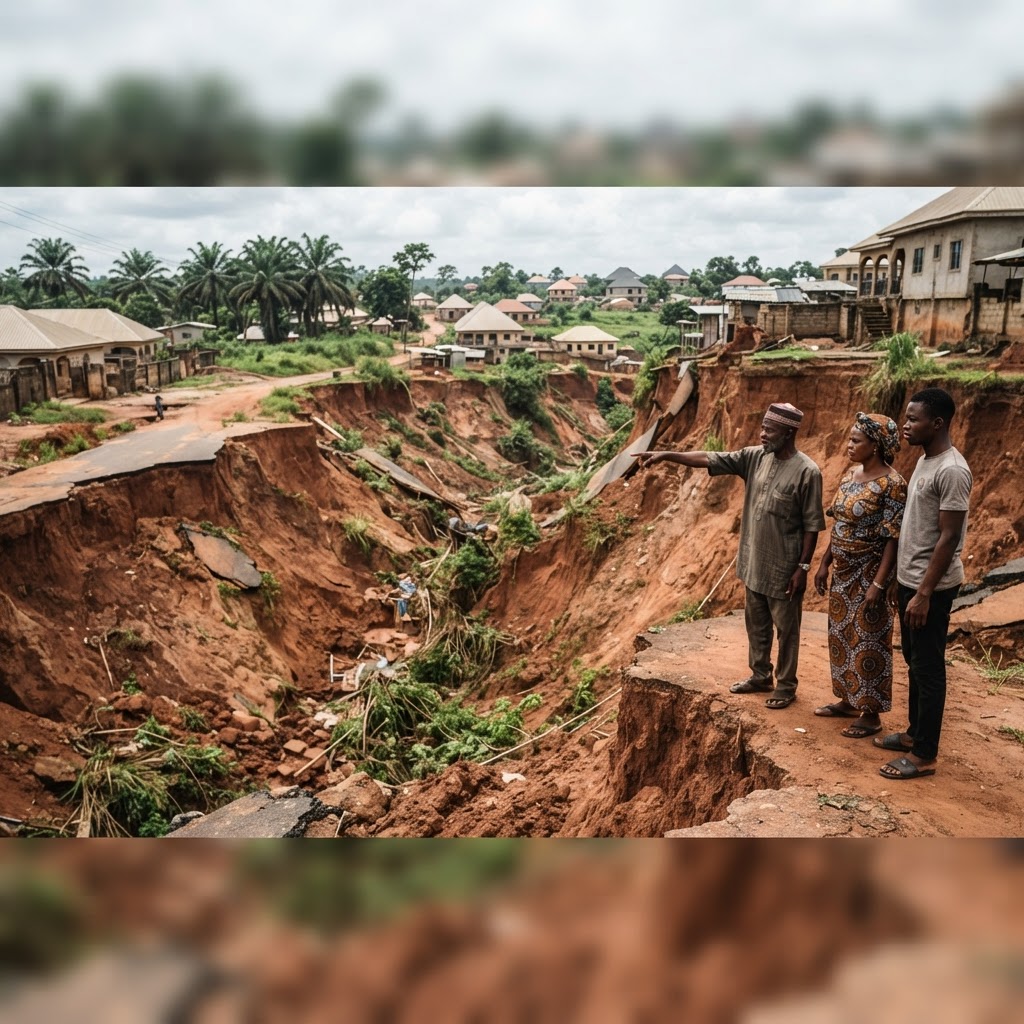
Imo Erosion Crisis: Mbieri Communities Demand Urgent Government Action
The ground beneath Mbieri is literally disappearing. In Mbaitoli Local Government Area of Imo State, advancing gullies are swallowing roads, threatening homes, and pushing one of southeastern Nigeria's most resilient communities toward an environmental breaking point. Residents are no longer waiting...

Imo State Emergency Contacts Directory
Emergencies do not send advance notice. Whether it is a road traffic accident along the Owerri-Onitsha expressway, a fire outbreak in a densely populated neighbourhood, or a sudden medical crisis in one of Imo State's rural local government areas, the difference between life and death often comes do...