Powered by Obi Mbieri Independent Media Ltd · eziokwubundu.com
$1 = ₦1,331€1 = ₦1,498£1 = ₦1,762Nigeria Fuel Subsidy 2026: Why the Debate Has Returned and What It Means for Nigerians
Few policy decisions in Nigeria's recent history have stirred as much economic pain and political controversy as the removal of the petrol subsidy in May 2023. For decades, successive governments sustained an artificial price ceiling on fuel, shielding consumers from global market realities at enorm...

Few policy decisions in Nigeria's recent history have stirred as much economic pain and political controversy as the removal of the petrol subsidy in May 2023. For decades, successive governments sustained an artificial price ceiling on fuel, shielding consumers from global market realities at enormous fiscal cost to the federation. When President Bola Tinubu declared "subsidy is gone" during his inauguration speech, the announcement was simultaneously celebrated by economists and dreaded by ordinary Nigerians who knew their cost of living would spike overnight. Three years later, in 2026, that decision has returned to the centre of national debate — this time as a political flashpoint ahead of the 2027 general elections. For Nigerian families, entrepreneurs, and community stakeholders, understanding what is really happening matters far beyond political theatre.
Why Has the Subsidy Debate Returned in 2026?
The renewed controversy has a clear political origin. Former Vice President Atiku Abubakar, widely expected to contest the 2027 presidential election, has publicly committed to restoring the petroleum subsidy, arguing that Nigerians have not felt the promised benefits of its removal. His position is straightforward: if the subsidy was removed to free funds for development, and living standards have worsened rather than improved, then the policy has failed its people. Atiku disowned an aide who attempted to soften that stance, insisting his position is firm.
The Tinubu Presidency swiftly characterized the proposal as a political manoeuvre rather than a credible economic strategy — a calculated appeal to voters ahead of 2027 rather than a reasoned policy response to Nigeria's energy challenges. Presidential spokespersons warned that revisiting the subsidy would reverse hard-won macroeconomic gains and signal to international markets that Nigeria cannot sustain reform commitments.
What makes this exchange particularly significant is that it has, as analysts at Vanguard noted, "struck a sensitive political nerve" within the Tinubu administration. The administration came to power partly on the promise that subsidy savings would fund infrastructure, social transfers, and economic growth. Three years in, ordinary Nigerians remain deeply skeptical that those savings have translated into tangible improvements in their daily lives. That skepticism is the oxygen fuelling Atiku's argument — and it forces the Presidency into the uncomfortable position of defending fiscal metrics that the average Nigerian cannot eat, fuel, or pay school fees with. For a deeper understanding of how federal fiscal decisions affect oil-producing communities specifically, see our earlier coverage on Nigeria's Oil Output Wobbles: What It Means for Imo's Oil-Producing Communities.
What Have Been the Economic Gains and Losses Since 2023?
The government's strongest argument rests on a striking number: Nigeria has reportedly saved approximately N15.8 trillion since the subsidy was removed. Those savings have contributed to improved macroeconomic stabilization, a reduction in the fiscal deficit, and a strengthening of external buffers, including foreign reserves. By conventional economic metrics, the reform has delivered measurable results that most structural adjustment programmes in Africa fail to achieve within the same timeframe.
However, those gains exist in sharp contrast to a number that directly hits the consumer — petrol prices. From N175 per litre in May 2023, pump prices climbed to approximately N1,300 per litre by May 2026. That is a 643% increase in three years. For the Independent Media and Policy Initiative (IMPI), this price trajectory, while painful, reflects market realities that a reimposed subsidy would distort. The IMPI has been explicit: reversing the removal risks undoing structural reforms that took decades of advocacy to achieve.
BusinessDay analysts frame the core tension accurately — Nigeria's subsidy debate pits cheaper petrol against reform gains. The macroeconomic stabilization argument holds water in policy circles, but it runs into a wall when measured against the lived experience of Nigeria's middle class and entrepreneurs. Business owners who depend on generators face fuel costs that have multiplied their operating expenses. Transport operators have passed those costs onto passengers. The "unfinished task," as economists describe it, is converting fiscal stability into real income growth — a transition Nigeria has not yet achieved. The savings exist, but the mechanisms to direct those savings into productive, people-centred outcomes remain weak and largely opaque.
How Do Petrol Prices Affect Nigerian Families and Health?
The numbers become viscerally real when translated into household terms. Filling a standard vehicle tank in 2026 can cost approximately N130,000 — a figure that is nearly double the national minimum wage of N70,000 per month. That single comparison captures why millions of Nigerian families face an agonizing monthly calculation: spend on transport and sacrifice food, or cut back on movement and lose income-generating opportunities. For low-income earners, this is not a budget exercise; it is a survival trade-off.
At Eziokwubundu, our mission connects economic realities directly to health and wellness outcomes — because they are inseparable. When disposable income collapses, food quality declines first. Families substitute nutrient-dense meals for cheaper, calorie-dense alternatives. Children face higher risks of malnutrition. Adults managing chronic conditions like hypertension and diabetes — already endemic in Nigerian communities — find it harder to afford medications, hospital visits, or even transport to healthcare facilities. A report by Premium Times on how fuel subsidy removal worsened Nigerian poverty levels documents this cascade clearly, noting measurable declines in household welfare metrics following the 2023 removal.
The impact is not uniform across society. Women and rural communities bear the sharpest burden. Rural households that rely on petrol-powered water pumps, generators for small businesses, and motorcycles for farm-to-market transport have seen costs escalate without any compensating income increases. Women-led micro-enterprises — hairdressers, food vendors, market traders — are operating in conditions of compressed margins. Research on the effects of fuel subsidy removal on Nigerians' socioeconomic well-being consistently identifies women and children in rural areas as the most vulnerable demographic, facing compounded disadvantages in food security, healthcare access, and educational participation.
The health cost of economic hardship is not always visible in hospital statistics, but it accumulates in communities over time — in stunted children, in delayed diagnoses, and in the quiet mental health crisis of adults managing financial desperation without support structures.
Why Do Investors Fear a Return to the Subsidy Era?
Beyond the household level, the debate carries serious implications for Nigeria's investment climate. The IMPI has issued a direct warning: restoring fuel subsidies could scare away foreign investors and undermine the regulatory confidence that Nigeria needs to attract capital into its oil and gas sector. For international investors evaluating Nigeria's upstream and downstream sectors, a policy reversal would signal that government commitments are reversible under electoral pressure — a risk premium that would translate into higher financing costs and reduced investment flows.
Featured Products
Chukwu Abiama Tee
Bold black-and-gold Igbo-pride T-shirt featuring 'Chukwu Abiama' in premium streetwear typography.
₦15,000
Buy NowReverse Type 2 Diabetes & other associated Metabolic Issues using Dr. Jason Fung's Evidence-Based Approach— FMD program for Type 2 Diabetes
A practical fasting and fasting-mimicking programme built on Dr Jason Fung's insulin-resistance principles and ow-glycemic recipes.
₦19,950
Join NowỤmụ Igbo Tee
Classic black T-shirt with bold white 'Ụmụ Igbo' typography — a proud statement of Igbo heritage.
₦15,000
Buy NowNwanne Tee
Washed khaki vintage tee with a faded rust-orange 'Nwanne' stamp badge and palm leaf motif — a nod to kinship and heritage.
₦18,000
Buy NowObodo Tee
Faded denim-blue washed tee with a cream 'Obodo' stamp badge and sun motif, celebrating community roots.
₦18,000
Buy NowEkwe Heritage Tee
Deep indigo tee featuring a fine line-art illustration of a traditional Igbo ekwe drum, inspired by Igbo-Ukwu bronze artistry.
₦18,000
Buy NowIkenga Figure Tee
Forest green tee with a fine line-art illustration of a stylized Ikenga figure.
₦18,000
Buy NowThe viability of local refiners is equally at stake. The Dangote Refinery, Nigeria's most significant downstream investment in decades, operates on commercial pricing logic. Government-imposed price caps — the mechanism through which any reimposed subsidy would function — conflict directly with the commercial model that makes large-scale local refining viable. As we have reported, Dangote's fuel delivery expansion to Imo represents a new chapter in local energy supply chains, but that model depends on market-reflective pricing to sustain operations. Price controls historically produced fuel shortages in remote areas and gave rise to black markets, where marketers sold at unregulated prices anyway — defeating the subsidy's purpose entirely while adding a layer of corruption to the supply chain.
The structural argument against subsidy restoration is therefore not merely ideological. It is grounded in the observable history of what price controls do to commodity markets: they distort supply incentives, reward arbitrage over efficiency, and ultimately harm the very consumers they claim to protect.
Can Nigeria Balance Fiscal Reform with Community Welfare?
The most productive framing of this debate is not "subsidy or no subsidy" — it is whether Nigeria has deployed its subsidy savings in a way that justifies the sacrifice demanded of ordinary Nigerians. That question demands accountability. The Presidency and the Organised Private Sector have argued that restoring the subsidy would be a step backward, and economically, that case is defensible. But defending fiscal reform requires showing where the savings went and who benefited.
Historically, subsidy expenditure consumed resources that dwarfed the health and education budgets. In some years, the fuel subsidy bill was roughly double the national health allocation. That fiscal reality made the removal economically rational. The challenge — and the moral obligation — is to redirect those savings into Human Development Index (HDI) improvements: health infrastructure, teacher training, universal basic education, and community healthcare access.
Nigeria has approximately 18 million out-of-school children. That figure represents a social time bomb. If subsidy savings are not demonstrably channelled into keeping those children in school, the political and social costs will exceed any fiscal gains within a generation. Understanding how oil revenues and community development funds can be structured to reach grassroots populations is essential — a framework our article on Host Community Development Trusts Explained addresses in practical detail.
The "Practical Prosperity" framework demands transparency: Nigerians must see, in auditable terms, how subsidy savings translate into community-first investments. Without that accountability, the economic argument for removal — however technically sound — loses its moral authority.
What Practical Alternatives Can Lower Energy Costs?
Restoring the subsidy is not the only path to reducing energy costs for Nigerian families. More sustainable alternatives exist and deserve urgent policy attention. The Major Energy Marketers Association of Nigeria (MEMAN) has backed cassava-based ethanol as a viable, locally-sourced blend component capable of reducing petrol costs while supporting Nigerian farmers. Nigeria's agricultural base makes this a practical, not merely theoretical, option. Cassava ethanol blending could reduce pump prices incrementally while creating upstream value in rural farming communities — a genuine intersection of energy, agriculture, and rural development.
Local refining, anchored by investments like the Dangote Refinery, holds the potential to drive industrialization and job creation while insulating Nigeria from the volatility of global crude oil prices and foreign exchange fluctuations. As local refining capacity scales up, competitive domestic pricing becomes more achievable without artificial government intervention.
For Nigerian families navigating today's high fuel prices, practical steps exist to reduce energy dependence. Transitioning small appliances and lighting to solar power, investing in energy-efficient cookstoves, using public transport or ride-sharing cooperatives, and consolidating trip purposes all reduce household fuel exposure. Entrepreneurs can audit their generator usage, invest in inverter systems, and negotiate group energy purchase arrangements with neighbours or business associations. These are not complete solutions, but they are actionable measures that reduce vulnerability while structural reforms mature.
Conclusion
The Nigeria fuel subsidy debate in 2026 is neither simple nor settled. It is the collision of genuine fiscal reform, unmet social expectations, political ambition, and the daily economic reality of millions of families. The N15.8 trillion in reported savings represents a meaningful macroeconomic achievement. The 643% rise in petrol prices represents an equally real human cost. Both truths must be held simultaneously.
For Nigerian families, the practical priority is not waiting for politicians to resolve this debate in their favour. It is building household resilience through energy efficiency, diversifying income streams, and staying informed about policy changes that affect daily costs. For community leaders and stakeholders, the priority is demanding transparency on how subsidy savings are being deployed — and holding government accountable for the transformative investments in health, education, and infrastructure that were promised in exchange for the sacrifice.
At Eziokwubundu, we believe that Health, Wealth, and Community are inseparable pillars of national prosperity. Nigeria's energy policy must ultimately be judged not by its fiscal ratios alone, but by whether it makes families healthier, communities stronger, and economic opportunity more accessible for every Nigerian — regardless of where they live or what they earn.
Stay Informed
Get New Articles in Your Inbox
Subscribe to receive the latest community development, health, and wealth insights from Eziokwubundu.
Newsletter
Practical insights on health, wealth, and community — delivered weekly.
Community Discussion(0)
Leave a Comment
More to Read
You May Also Like

Mbaitoli Kidnapping: Why Is the Owerri–Onitsha Road Still Vulnerable?
The latest kidnapping incident along the Owerri–Onitsha Road in Mbaitoli Local Government Area of Imo State has renewed concerns about the safety of one of the major transportation routes connecting communities in Imo and neighbouring states.
Nigeria’s Maternal Death Crisis: Why Are Mothers Dying?
Every day, Nigerian households wait for news from the maternity ward with hope and quiet dread. Too often, that news is heartbreaking. This is the reality behind Nigeria's Maternal Death Crisis: Why Are So Many Mothers Still Dying? — a question every family, community leader, and policymaker must co...
Kidnappers Demand 1 Billion Naira for 20 Corps Members
A chilling ultimatum has gripped Nigerian families this week. Armed abductors are demanding an enormous ransom for the safe return of young graduates travelling to serve their nation. The incident, now widely known as "Kidnappers Give 20 Prospective Corps Members' Families 24 Hours to Pay ₦1bn Ranso...

Can Fasting Help Lower High Blood Pressure? What Experts Say
High blood pressure quietly affects millions of Nigerian adults, often with no obvious warning signs. Many families are now turning to fasting as a natural way to manage it. This article explores the question many are asking: Can Fasting Help Lower High Blood Pressure? What Experts Say reveals surpr...

NNPC Faces Efficiency Scrutiny Over ₦27.76 Trillion Expenses
Nigeria's state oil giant is back in the headlines, and not for a new discovery. NNPC's ₦27.76 Trillion Operating Expenses Raise Efficiency Questions among citizens, analysts, and policymakers alike. The figure is so large it has sparked fresh debate about how national wealth is managed, and the num...
Police Rescue 10 After Gunmen Attack Two Buses in Mbaitoli
Early morning violence on a major Imo State highway sent shockwaves through communities nationwide this week. Families woke up to disturbing news of commuters trapped in a terrifying ordeal after gunmen struck in Mbaitoli, targeting two commercial buses in the hours before dawn. The headline "Police...

FG, Imo Back Pharmaceutical Hub Planned for Mgbidi
The Federal Government and Imo State Government have thrown their weight behind a bold new industrial project. FG, Imo Back Pharmaceutical Hub Planned for Mgbidi, signaling a fresh push toward local drug manufacturing and economic renewal in the South-East. The announcement positions the proposed fa...

Nigeria Condemns Deaths of Three Citizens in South Africa
Nigerian families are mourning once again this week. Three citizens lost their lives in South Africa within a span of days. The tragedy has reignited calls for action, as Nigeria Condemns Deaths of Three Citizens in South Africa and demands accountability for the loss of its people abroad. For many ...
Solar Installation Safety: How Faulty Wiring Can Cause Fires
Nigeria's power crisis has pushed millions of families toward solar energy as a dependable alternative. Yet poor installation practices are quietly turning this clean energy solution into a serious hazard. Solar Installation Safety: How Faulty Wiring Can Cause Fires is becoming an urgent conversatio...
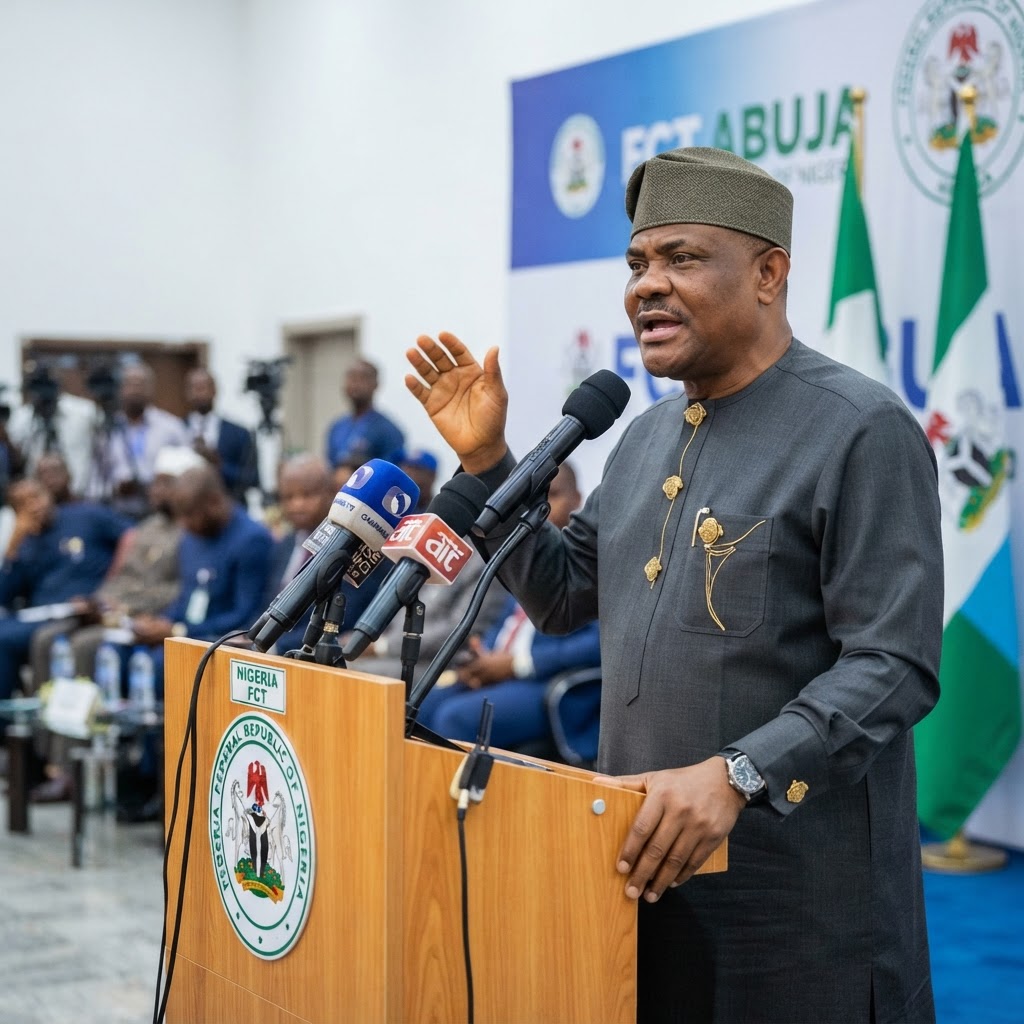
Wike Vows to Resign If Tinubu Loses FCT, Rivers
Nigeria's political temperature just rose by several degrees. A bold declaration from the Federal Capital Territory Minister has set tongues wagging across government circles and local communities alike. Wike Vows to Resign If Tinubu Loses FCT, Rivers, and that single pledge now dominates conversati...