Powered by Obi Mbieri Independent Media Ltd · eziokwubundu.com
$1 = ₦1,330€1 = ₦1,526£1 = ₦1,778Imo State Farmers’ Market Price Guide
Every trip to Eke Ukwu Owerri or any neighbourhood market in Imo State has become a quiet economic reckoning. Families that once budgeted confidently for monthly groceries now find that the same naira stretches considerably less than it did a year ago. This Imo State Farmers' Market Price Guide is d...
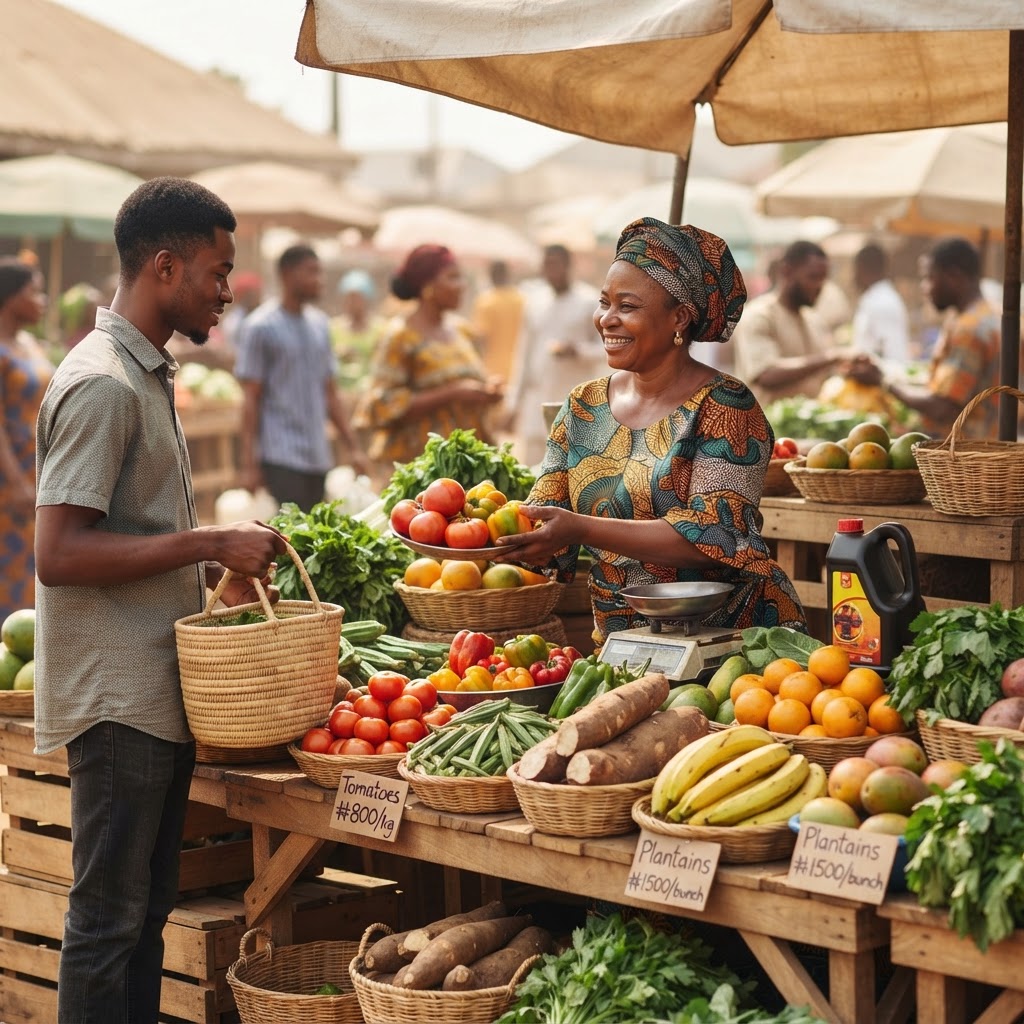
Every trip to Eke Ukwu Owerri or any neighbourhood market in Imo State has become a quiet economic reckoning. Families that once budgeted confidently for monthly groceries now find that the same naira stretches considerably less than it did a year ago. This Imo State Farmers' Market Price Guide is designed to cut through that uncertainty. Drawing on the latest inflation data, current market tracking figures, and the practical prosperity philosophy of eziokwubundu.com, this guide gives Nigerian families, entrepreneurs, and community stakeholders a clear, actionable picture of what food costs today — and how to manage those costs without sacrificing nutrition or financial stability.
What Is Imo State's Food Inflation Reality?
Understanding the economic landscape for local families
Imo State recorded a headline inflation rate of 19.47% in June 2026, according to data released by the National Bureau of Statistics (NBS). While this figure sits marginally below the national headline inflation average of approximately 22.1% for the same period, it masks a more complex and often more painful reality for households in Owerri, Orlu, and Okigwe. Slowing headline numbers are frequently interpreted as positive news, yet families queuing at market stalls experience little relief — prices remain persistently high even when the rate of increase begins to moderate.
Food inflation, specifically, continues to outpace general inflation in most southeastern states. The price of staple proteins, grains, and tubers rose steeply through the first half of 2026, driven by a convergence of forces that are structural rather than temporary. Energy costs remain a primary driver: the persistent scarcity and high cost of premium motor spirit (PMS) directly inflates the cost of transporting produce from farms in rural Imo communities to urban retail markets. A trader moving catfish from Oguta Lake to Owerri's main markets absorbs fuel surcharges that are inevitably passed to the end consumer.
Supply chain fragility compounds this further. Post-harvest losses across Imo's agricultural corridor remain high due to inadequate storage infrastructure, meaning less produce reaches markets in sellable condition — effectively reducing supply and pushing prices upward. Economic forecasts from bodies such as the World Bank Nigeria Economic Update project that energy subsidy reform aftershocks will continue influencing retail food prices in Nigeria's southeastern states well into 2027. For the average Imo household spending between 55% and 65% of monthly income on food, these are not abstract statistics — they are the difference between three meals a day and two.
What Are Current Imo Market Prices for Staples?
A snapshot of staple costs as of late August 2026
Concrete numbers empower better decisions. Based on market tracking data compiled from key Imo trading hubs including Eke Ukwu Owerri, Nkwo Okigwe, and Orlu Main Market, the following median prices reflect retail costs for essential food items as of late August 2026.
Proteins and Legumes
Beans remains one of the most important and affordable protein sources in the southeastern diet. Oloyin beans (honey beans) are currently trading at approximately ₦1,800 – ₦2,200 per paint bucket (approximately 1.2 kg). Brown beans, often slightly cheaper, average ₦1,500 – ₦1,800 for the same measure. For families feeding four to six people, a monthly bean budget now demands careful planning.
Crayfish, the cornerstone of many Imo soups and stews, has seen significant price pressure. A small bowl (roughly 100g) now fetches between ₦800 and ₦1,200 depending on quality and market day. Bulk purchases directly from wholesalers or cooperative buyers can reduce this cost by 20–25%.
Catfish (Clarias gariepinus), a nutritionally superior protein source widely available through Imo's river systems and fish farms, is currently priced at ₦3,500 – ₦4,500 per kg for medium-sized live fish. Smoked catfish commands a premium, averaging ₦5,000 – ₦6,500 per kg.
Chicken — particularly local breeds — trades at ₦4,000 – ₦6,000 per kg live weight. Broiler chicken from commercial farms runs slightly lower at ₦3,200 – ₦4,200 per kg dressed weight, reflecting the cost efficiency of scale production.
Eggs currently sell at ₦800 – ₦1,000 per crate (30 eggs) at farm-gate prices, rising to ₦1,100 – ₦1,300 at retail market stalls. Eggs represent one of the best value-per-gram-of-protein options available to budget-conscious families.
Tubers, Grains, and Vegetables
Nigerian local rice (parboiled varieties from Ebonyi and Anambra spillover supply) averages ₦85,000 – ₦95,000 per 50 kg bag at wholesale, translating to roughly ₦1,800 – ₦2,100 per kg at retail. Imported rice remains more expensive, often 15–20% above local alternatives.
Irish potatoes, increasingly popular as a versatile and filling staple, currently sell for ₦1,200 – ₦1,600 per kg depending on grade and season. Yam tubers — a cultural cornerstone — are averaging ₦2,500 – ₦4,000 per medium tuber depending on variety and size.
Fresh tomatoes and peppers remain volatile, ranging from ₦500 – ₦1,500 per basket depending on supply from the north. Families relying on these for daily cooking benefit enormously from preserving excess during lower-price windows.
Featured Products
Chukwu Abiama Tee
Bold black-and-gold Igbo-pride T-shirt featuring 'Chukwu Abiama' in premium streetwear typography.
₦15,000
Buy NowReverse Type 2 Diabetes & other associated Metabolic Issues using Dr. Jason Fung's Evidence-Based Approach— FMD program for Type 2 Diabetes
A practical fasting and fasting-mimicking programme built on Dr Jason Fung's insulin-resistance principles and ow-glycemic recipes.
₦19,950
Join NowỤmụ Igbo Tee
Classic black T-shirt with bold white 'Ụmụ Igbo' typography — a proud statement of Igbo heritage.
₦15,000
Buy NowNwanne Tee
Washed khaki vintage tee with a faded rust-orange 'Nwanne' stamp badge and palm leaf motif — a nod to kinship and heritage.
₦18,000
Buy NowObodo Tee
Faded denim-blue washed tee with a cream 'Obodo' stamp badge and sun motif, celebrating community roots.
₦18,000
Buy NowEkwe Heritage Tee
Deep indigo tee featuring a fine line-art illustration of a traditional Igbo ekwe drum, inspired by Igbo-Ukwu bronze artistry.
₦18,000
Buy NowIkenga Figure Tee
Forest green tee with a fine line-art illustration of a stylized Ikenga figure.
₦18,000
Buy NowFor families planning monthly grocery budgets, a practical benchmark is to allocate approximately 40% of the food budget to proteins, 30% to starches and tubers, and 30% to vegetables, condiments, and oils. This distribution maximises nutritional coverage while providing flexibility during price spikes.
How Can Families Eat Well on a Tighter Budget?
Practical strategies for healthy, budget-friendly living
The Eziokwubundu philosophy of Health + Wealth is not a motivational slogan — it is a practical framework. The reality of Imo's current food prices demands that families stop choosing between eating well and spending wisely, and start recognising that strategic food choices serve both goals simultaneously.
Choose Nutrient-Dense Local Alternatives
Several locally available foods offer exceptional nutritional value at comparatively low cost. Ugu (fluted pumpkin leaves) are rich in iron, calcium, and vitamins A and C. A bunch sufficient for a pot of soup sells for as little as ₦200 – ₦300 at most Imo markets. Oha leaves, waterleaf, and garden eggs are similarly affordable and pack meaningful micronutrient profiles. Rotating these into weekly meal plans reduces dependence on more expensive protein and adds dietary variety that supports long-term health. If you are also considering how local agriculture can become an income stream, our guide on how to start vegetable farming with small capital Nigeria provides an accessible starting point.
Shop Seasonally and Buy Directly
Seasonal shopping is one of the most underutilised cost-reduction strategies. Tomato prices, for example, fall significantly during peak harvest seasons in northern supply regions. Buying in bulk during these windows and preserving through blending and freezing can cut monthly tomato spend by 30–40%. More importantly, buying directly from farmers at periodic markets — the traditional Eke, Orie, Afor, and Nkwo market cycle — eliminates the retail markup added by middlemen. This is where traditional market knowledge intersects with modern budget management.
Community-based buying cooperatives are a growing response to this reality. Informal groups of 10–20 households pooling resources to purchase wholesale quantities directly from farm-gate suppliers are increasingly common in Owerri's residential neighbourhoods. These arrangements reduce per-unit costs, minimise waste through shared distribution, and strengthen community bonds in the spirit of the African communal ethic.
Plan Meals, Reduce Waste
Nigerians waste an estimated 40% of purchased food through spoilage and overpreparation, according to FAO Nigeria. A structured weekly meal plan eliminates impulse buying and ensures that purchased ingredients are fully utilised. Combining meal planning with batch cooking — preparing large quantities of staples like beans or stews and storing portions — saves both money and energy costs associated with daily cooking.
For families navigating healthcare costs alongside food budgets, understanding what local health resources exist is equally important. Our coverage of Mbaitoli's Primary Healthcare Centres highlights gaps and opportunities in community health infrastructure that directly affect household wellbeing decisions.
Why Does Market Awareness Build Community Prosperity?
Building prosperity through informed local participation
Information is infrastructure. When Imo residents — whether farmers, traders, entrepreneurs, or homemakers — understand market price dynamics, they make decisions that individually strengthen their households and collectively reinforce the agricultural and economic ecosystem of the state.
Supporting Local Farmers Has Multiplier Effects
Every purchase made directly from a local Imo farmer rather than an imported food distributor keeps capital circulating within the state economy. Imo's agricultural sector — covering rice cultivation in Oguta, palm produce processing, cassava farming, and fish farming across its three senatorial zones — employs hundreds of thousands of people. Consumer choices that prioritise local sourcing sustain these livelihoods and create the market incentives that encourage more investment in local food production. The Federal Ministry of Agriculture and Food Security has identified southeast Nigeria as a priority zone for smallholder agricultural development, and individual purchasing decisions contribute directly to whether that potential is realised.
Financial Literacy and Market Intelligence
Entrepreneurs and small business owners operating in Imo's food value chain — from processors to distributors to restaurant operators — require reliable price intelligence to manage margins and plan procurement. Tracking weekly market prices, understanding seasonal patterns, and anticipating supply disruptions from weather or logistics challenges are skills that separate sustainable businesses from those that collapse under inflationary pressure. This kind of market awareness connects naturally to broader financial planning, including understanding Imo State tax obligations for individuals and the formal structures that support small business growth, such as those outlined in our guide to registering a business in Imo.
Blending Traditional Skills with Digital Tools
Imo's traditional market system — built on established community relationships, trusted vendor networks, and the rhythm of weekly market days — remains deeply valuable. The instinct to negotiate, to assess produce quality by touch and smell, and to build long-term relationships with trusted sellers represents knowledge that no app replaces. However, digital price tracking tools, WhatsApp market groups, and agricultural price databases now complement these skills. Platforms sharing real-time commodity prices allow buyers to arrive at market informed, reducing information asymmetry between large traders and individual consumers.
The convergence of traditional values and modern economic tools is not a contradiction — it is the practical prosperity model that Imo families and entrepreneurs need. An informed community is a resilient one. When households understand what food should cost, when farmers understand what their produce is worth, and when entrepreneurs can track price trends with confidence, the entire local economy becomes more stable, more equitable, and more capable of withstanding the shocks that inflation data alone never fully captures.
Conclusion
The numbers in this Imo State Farmers' Market Price Guide are more than data points — they are tools. In an environment where inflation at 19.47% continues reshaping household budgets, knowing the median price of a paint bucket of beans or the seasonal cost of catfish is a form of economic empowerment. Combined with practical strategies — seasonal buying, community cooperatives, meal planning, and support for local agriculture — that knowledge translates into real financial resilience and nutritional security for Imo families. Eziokwubundu's commitment is to keep providing the kind of grounded, Africa-centred, actionable intelligence that helps individuals, families, and communities not merely survive economic pressure, but build lasting prosperity within it.
Stay Informed
Get New Articles in Your Inbox
Subscribe to receive the latest community development, health, and wealth insights from Eziokwubundu.
Newsletter
Practical insights on health, wealth, and community — delivered weekly.
Community Discussion(0)
Leave a Comment
More to Read
You May Also Like
Affordable healthcare options for rural Nigerians
Access to quality medical care remains one of the most pressing challenges facing millions of Nigerians living outside major cities. For rural families, a single illness can mean a long journey to the nearest clinic, an unaffordable hospital bill, or worse — no treatment at all. Understanding and ac...
Unapproved Orphanages in Nigeria: How Safe Are Children in Private Care Homes?
Across Nigeria, thousands of children live in private care homes that operate outside the law. Some are run by well-meaning individuals overwhelmed by the scale of child poverty. Others are driven by profit, exploiting the image of vulnerable children to attract foreign donations while providing sub...

Mbaitoli’s Primary Healthcare Centres: Are They Properly Staffed?
Why Does Staffing in Mbaitoli's PHCs Matter? At eziokwubundu.com, we believe that health, wealth, and community are inseparable pillars of lasting prosperity. Nowhere is this triangle more visibly tested than in Mbaitoli Local Government Area, one of Imo State's most densely populated LGAs, where th...

Only 3% of PHCs Meet Staffing Standards: What Is the Situation in Imo?
Nigeria's primary healthcare system is facing a quiet catastrophe. Across the country, thousands of Primary Healthcare Centres (PHCs) stand as hollow structures — buildings without sufficient doctors, midwives, or community health workers to serve the millions of Nigerians who depend on them. A rece...

Diphtheria in Nigeria: How Prepared Are Imo’s Health Centres?
Nigeria is facing its worst diphtheria resurgence in decades. What began as a concentrated outbreak in the northern states has evolved into a national public health emergency, with confirmed cases now appearing across regions once considered low-risk. For families in Imo State and across the Southea...
Where Are the Doctors? Investigating Healthcare Staffing in Mbaitoli
Mbaitoli Local Government Area sits at the heart of Imo State, home to over 327,000 residents spread across nine towns and more than twenty autonomous communities. Yet for a population of this scale, accessing a qualified medical doctor at a public health facility has become less a routine expectati...
Primary Healthcare in Mbaitoli: Clinics on Paper, Services on the Ground?
For the hundreds of thousands of families living across Mbaitoli Local Government Area in Imo State, the phrase "primary healthcare" carries a particular, painful irony. Government directories, state agency websites, and official budget lines paint a picture of a well-served rural population — ward-...
Mbaitoli’s Health Centres: How Many Are Actually Functional?
By eziokwubundu.com | Community Health & Development --- Mbaitoli Local Government Area in Imo State is home to over 327,000 residents spread across nine principal towns, including Mbieri, Orodo, Ubomiri, and Ogwa. On paper, the LGA maintains a network of primary healthcare centres (PHCs) designed t...
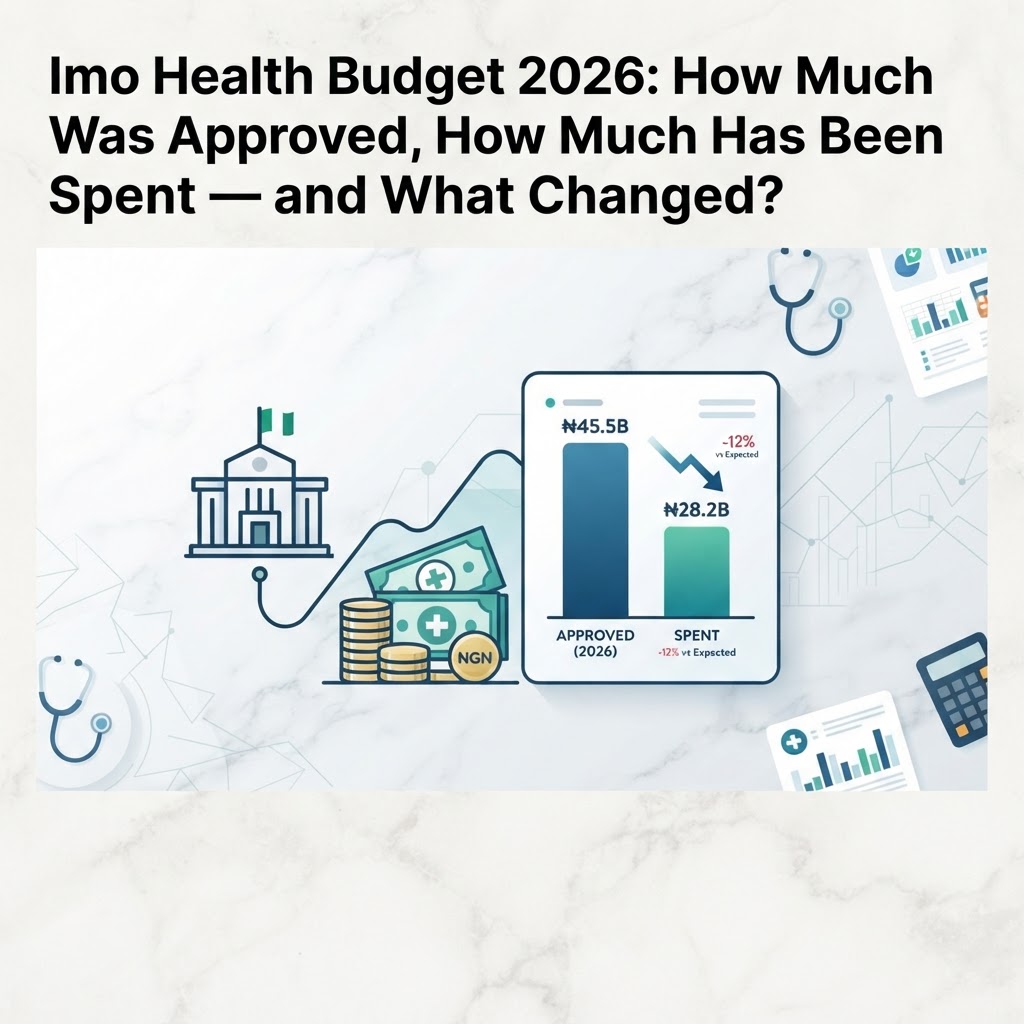
Imo Health Budget 2026: How Much Was Approved, How Much Has Been Spent — and What Changed?
When Governor Hope Uzodimma signed Imo State's 2026 "Budget of Economic Breakthrough" into law, the headline figure — ₦1.47 trillion — drew widespread attention as an ambitious statement of intent. For families in Owerri, Orlu, and Okigwe, the number carried a simple, urgent question: would this tra...

How Much Does It Cost to Give Birth in Imo in 2026
Bringing a child into the world is one of the most profound experiences a family can share — yet in Imo State in 2026, it is also one of the most financially demanding. From the first antenatal registration to the final discharge bill, expectant mothers and their families face a complex web of costs...