Powered by Obi Mbieri Independent Media Ltd · eziokwubundu.com
$1 = ₦1,332€1 = ₦1,498£1 = ₦1,774Host Community Development Trusts Explained: What Every Imo Community Needs to Know About PIA Funds
For decades, oil-producing communities in Imo State watched enormous wealth extracted from beneath their farmlands while their roads crumbled, their clinics went unstaffed, and their youth remained unemployed. Promises came in the form of Memoranda of Understanding — informal agreements between comp...

For decades, oil-producing communities in Imo State watched enormous wealth extracted from beneath their farmlands while their roads crumbled, their clinics went unstaffed, and their youth remained unemployed. Promises came in the form of Memoranda of Understanding — informal agreements between companies and communities that were honoured more in the breach than in the observance. That era is now legally over. The Petroleum Industry Act (PIA) 2021 has replaced discretionary goodwill with binding obligations, and the Host Community Development Trust (HCDT) is the institutional vehicle carrying those obligations forward. This article explains exactly how the system works, who controls the money, and what every community stakeholder in Imo State must do to protect their people's interests.
Why Is the PIA a Game-Changer for Imo State?
From Voluntary Promises to Legal Mandates
Before the PIA, community development in Nigeria's oil sector was governed almost entirely by Memoranda of Understanding — informal, unenforceable documents that left communities entirely dependent on the goodwill of multinational operators. When oil prices fell or corporate priorities shifted, community projects were the first casualties. There was no regulatory body with the teeth to compel compliance, and aggrieved communities had no legal standing to demand accountability.
The Petroleum Industry Act 2021 fundamentally restructured this relationship. It established the Host Community Development Trust as a mandatory legal institution, not a voluntary gesture. The Act's core objective is to foster sustainable prosperity, stimulate economic development, and build lasting peace in oil-producing areas — including Imo communities such as Oguta and Ohaji/Egbema. Crucially, the PIA directly addresses decades of environmental degradation and economic exclusion by placing fund management within community-linked entities governed by transparent rules, creating a framework where communities transition from passive recipients of corporate charity to active trustees of their own development resources. This is the foundational shift every Imo stakeholder must understand.
How Much Funding Goes to Host Communities?
Decoding the 3% OPEX Rule in Section 240(2)
The financial heart of the HCDT framework lies in Section 240(2) of the PIA, which mandates that every upstream petroleum operator — designated as a "Settlor" — must contribute three percent of their actual annual operating expenditure from the preceding calendar year into the Host Community Development Trust fund. This is not a suggestion. It is a legally enforceable obligation monitored by the Nigerian Upstream Petroleum Regulatory Commission (NUPRC).
To understand the magnitude of this provision, consider the scale of operations: a company with an annual OPEX of ₦50 billion operating in an Imo community is legally obligated to contribute ₦1.5 billion annually into the community's trust. The old MoU system might have delivered a fraction of that in intermittent, discretionary disbursements. The 3% rule provides a predictable, inflation-adjusted, legally binding revenue stream that scales directly with the intensity of the company's local operations — meaning the more a company extracts, the more the community receives.
Fund distribution across communities within a trust is not equal but equitable. The NUPRC and the Settlor jointly determine an allocation matrix based on factors such as proximity to production facilities, environmental impact levels, and the scale of operational activity affecting each community. Understanding where your community sits within this matrix is the first step toward effective advocacy. For context on broader sector volatility, see our analysis on Nigeria's oil output wobbles and what it means for Imo's oil-producing communities.
Who Manages the Host Community Development Trust?
The Three-Tier Governance Architecture
The PIA establishes a deliberately layered governance structure for every HCDT, comprising three distinct bodies designed to balance strategic oversight, operational execution, and grassroots representation.
The Board of Trustees (BoT) functions as the apex governing body. Its members are formally appointed by the Settlor in consultation with the community and bear fiduciary responsibility for the trust's assets. The BoT sets the strategic direction for community investments, approves the Community Development Plan, and exercises financial oversight over all disbursements. Because trustees hold legal liability for the fund's management, the selection process is far more consequential than a ceremonial appointment.
The Management Committee is the executive arm. It is responsible for the day-to-day administration of approved development projects, procurement oversight, contractor supervision, and ensuring technical standards are met in project delivery. Without a competent, honest Management Committee, even well-funded trusts fail communities.
The Advisory Committee is the grassroots layer — arguably the most democratically vital. It represents the direct interests of the community, provides structured feedback to the BoT regarding local development priorities, and serves as a check on decisions made at higher governance levels.
However, a critical structural challenge persists: the phenomenon of "political dualism," where friction between traditional stools — the recognised custodians of community identity — and local government authorities creates competing claims over trust membership appointments. This tension has complicated HCDT formation in several Niger Delta communities and remains a live risk for Imo oil communities. The disputes explored in our reporting on Obi Mbieri's Seplat representation dispute illustrate exactly how damaging unresolved governance conflicts can become.
How Can Communities Ensure Real Needs Are Met?
Mandatory Needs Assessments and Five-Year Plans
Section 251 of the PIA provides one of the framework's most protective provisions: before any development projects commence, a comprehensive needs assessment must be conducted covering health infrastructure, educational facilities, economic enhancement opportunities, and physical infrastructure requirements. This is not bureaucratic box-ticking — it is the legal foundation upon which the Community Development Plan (CDP) is constructed.
The CDP must be reviewed and updated every five years to reflect the changing socio-economic conditions of Imo communities. This review cycle prevents the trust from becoming locked into outdated priorities while community circumstances evolve. For communities in areas like Ohaji/Egbema, where agricultural livelihoods intersect with oil production impacts, a five-year review cycle that captures environmental and economic shifts is genuinely significant.
Critically, the PIA's consultation requirements explicitly mandate the inclusion of women, youth, and persons with disabilities in the needs assessment process. This is more than procedural inclusivity. Research consistently shows that development investments prioritised by women and youth — particularly in healthcare, education, and vocational training — generate higher long-term returns than infrastructure projects dominated by male elders. Imo communities should treat the mandatory consultation process as a genuine power moment, not a formality, and organise their most vulnerable groups to meaningfully participate in shaping development priorities that will govern resource allocation for the next five years.
What Happens to Funds After Pipeline Sabotage?
Section 257 and the Collective Punishment Clause
Perhaps the most controversial provision in the entire HCDT framework is Section 257(2) of the PIA. It stipulates that where petroleum facilities are damaged through sabotage or vandalism, the cost of repairing those facilities will be deducted from the community's HCDT allocation. In plain language: if pipelines running through your community are deliberately sabotaged, your development fund pays the repair bill.
Featured Products
Chukwu Abiama Tee
Bold black-and-gold Igbo-pride T-shirt featuring 'Chukwu Abiama' in premium streetwear typography.
₦15,000
Buy NowReverse Type 2 Diabetes & other associated Metabolic Issues using Dr. Jason Fung's Evidence-Based Approach— FMD program for Type 2 Diabetes
A practical fasting and fasting-mimicking programme built on Dr Jason Fung's insulin-resistance principles and ow-glycemic recipes.
₦19,950
Join NowỤmụ Igbo Tee
Classic black T-shirt with bold white 'Ụmụ Igbo' typography — a proud statement of Igbo heritage.
₦15,000
Buy NowNwanne Tee
Washed khaki vintage tee with a faded rust-orange 'Nwanne' stamp badge and palm leaf motif — a nod to kinship and heritage.
₦18,000
Buy NowObodo Tee
Faded denim-blue washed tee with a cream 'Obodo' stamp badge and sun motif, celebrating community roots.
₦18,000
Buy NowEkwe Heritage Tee
Deep indigo tee featuring a fine line-art illustration of a traditional Igbo ekwe drum, inspired by Igbo-Ukwu bronze artistry.
₦18,000
Buy NowIkenga Figure Tee
Forest green tee with a fine line-art illustration of a stylized Ikenga figure.
₦18,000
Buy NowCritics have correctly identified this as a form of collective punishment, imposing financial liability on entire communities — including the vast majority who had no involvement in the act of vandalism. The provision creates a deeply problematic dynamic in communities where criminal networks and legitimate community governance are not always clearly separated, or where young men engage in pipeline vandalism precisely because they feel economically excluded from oil wealth.
Yet the clause also functions as a powerful incentive for peacebuilding and asset protection. Communities that understand the direct financial cost of pipeline damage to their own development fund have an economic self-interest in preventing sabotage. Forward-thinking community leaders in Imo should establish structured youth engagement programmes, community surveillance networks, and direct communication channels with operators to report illegal pipeline activity before it escalates. The cost of proactive peacebuilding is always less than the cost of deductions from an HCDT fund that could otherwise be building a health centre or funding school scholarships. The most effective protection against Section 257 deductions is a community that sees protecting oil infrastructure as protecting its own prosperity.
What Is the Current HCDT Status in Imo?
Progress in Obi Mbieri, Oguta, and Ohaji/Egbema
The NUPRC has made measurable progress in formalising HCDTs across Nigeria's oil-producing regions, reporting the incorporation of over 155 trusts across the Niger Delta since the PIA's operationalisation began in earnest. Within Imo State's oil-bearing local government areas — principally Ohaji/Egbema, Oguta, and Oru West — this process is at varying stages of implementation.
The Seplat Energy operations around the Obi Mbieri community represent one of the most publicly documented cases of HCDT formation complexity in Imo State. Seplat, as a Settlor, carries the legal obligation to incorporate a properly constituted trust for communities within its operational catchment, yet the path to doing so has been disrupted by representation disputes and governance conflicts. Our detailed coverage of the Obi-Mbieri oil dispute and constitutional questions over Seplat negotiations documents how these foundational governance conflicts can delay communities from accessing funds they are legally entitled to receive.
For communities in Oguta, where oil exploration activities intersect with significant agricultural and fishing economies, HCDT incorporation must account for both operational impact zones and the specific livelihood disruptions that have accumulated over decades. Marginalized Imo communities who have long lamented corporate and governmental neglect now have a legal instrument to demand redress — but exercising that right requires knowing it exists and understanding how to enforce it through the NUPRC regulatory architecture. For further infrastructure context, see our report on the Umuahia–Obi Mbieri road project and what development investment means for these communities.
How Can HCDT Funds Transform Health and Prosperity?
Bridging Oil Wealth and Community Wellness
The greatest strategic opportunity within the HCDT framework is the explicit inclusion of health, education, and economic enhancement as mandated categories for community development investment. For Imo communities, this creates a legal pathway to redirect oil wealth directly into the wellness and prosperity gaps that have defined life in oil-producing areas for generations.
On the health front, HCDT funds could be strategically deployed to enrol underprivileged community residents in the National Health Insurance Authority (NHIA) scheme, dramatically improving primary care access without relying on government budget cycles that rarely reach rural Imo. Funding community health extension workers, equipping primary health care centres, and supporting maternal and child health programmes are all investments within the contemplation of the PIA's community development mandate.
Economically, HCDT resources should fund structured vocational training programmes and seed capital for local entrepreneurs — particularly in the youth and women demographics — to build economic resilience that extends beyond oil dependency. When oil extraction eventually winds down, communities with trained artisans, functioning health systems, and diversified small businesses will survive; those who spent two decades waiting for the next company handout will not.
This precisely aligns with the Eziokwubundu Health + Wealth + Community triangle — the recognition that individual wellness and collective economic strength are not separate goals but mutually reinforcing realities. A community with healthy people, skilled workers, and accountable institutions is a prosperous community, regardless of what happens to global oil prices. For authoritative guidance on Nigeria's upstream regulatory framework, the NUPRC official portal is the primary reference.
What Steps Protect Your Community's Interests?
Practical Advocacy and Monitoring Strategies
Knowing your rights under the PIA is the beginning, not the end. Community members and leaders must actively exercise those rights through structured advocacy and rigorous monitoring.
First, verify the 3% OPEX figures. The NUPRC is empowered to audit Settlor contributions and communities can formally petition the Commission if they suspect under-reporting of operating expenditures. Financial transparency is not automatic — it must be demanded. Second, attend every town hall meeting related to the HCDT and ensure your Advisory Committee representatives are vocal, prepared, and genuinely accountable to the community rather than to the Settlor.
Third, community leaders should maintain an independent monitoring checklist covering: trust incorporation status, CDP approval and publication, project commencement timelines, contractor local content compliance, and annual financial statement publication. Discrepancies between approved plans and on-ground reality should be formally reported to the NUPRC in writing, with documentation. The PIA full text available via the National Assembly of Nigeria is the authoritative legal reference every community advocate should download and study. Communities that hold their trusts to account will prosper; those that remain passive will find that even the best-designed frameworks deliver nothing without vigilant, informed beneficiaries driving implementation. For broader governance accountability context, our coverage of Tinubu's investigation into a fake government agency illustrates why institutional vigilance at every level of Nigerian governance matters deeply.
Conclusion: Knowledge Is the First Development Project
The Petroleum Industry Act 2021 is the most significant legal reform in Nigeria's oil sector in a generation, and the Host Community Development Trust is its most community-facing instrument. For Imo's oil-producing communities — long accustomed to watching their land bear extraction costs while development benefits flowed elsewhere — the HCDT framework represents a legal guarantee backed by regulatory enforcement, not a corporate promise backed by nothing.
But a legal right unexercised is a right surrendered. Every community member, traditional ruler, youth leader, women's group, and local organisation in Imo's oil-bearing areas must understand the 3% OPEX mandate, the three-tier governance structure, the five-year development planning cycle, the risks of Section 257 sabotage deductions, and the power of informed participation in advisory committees.
The Health + Wealth + Community framework is not an abstraction — it is a practical agenda. HCDT funds can build the health centres your families need, train the entrepreneurs your economy requires, and fund the infrastructure your communities deserve. The oil was always here. Now, for the first time, so is the legal architecture to ensure it works for you.
Stay Informed
Get New Articles in Your Inbox
Subscribe to receive the latest community development, health, and wealth insights from Eziokwubundu.
Newsletter
Practical insights on health, wealth, and community — delivered weekly.
Community Discussion(0)
Leave a Comment
More to Read
You May Also Like
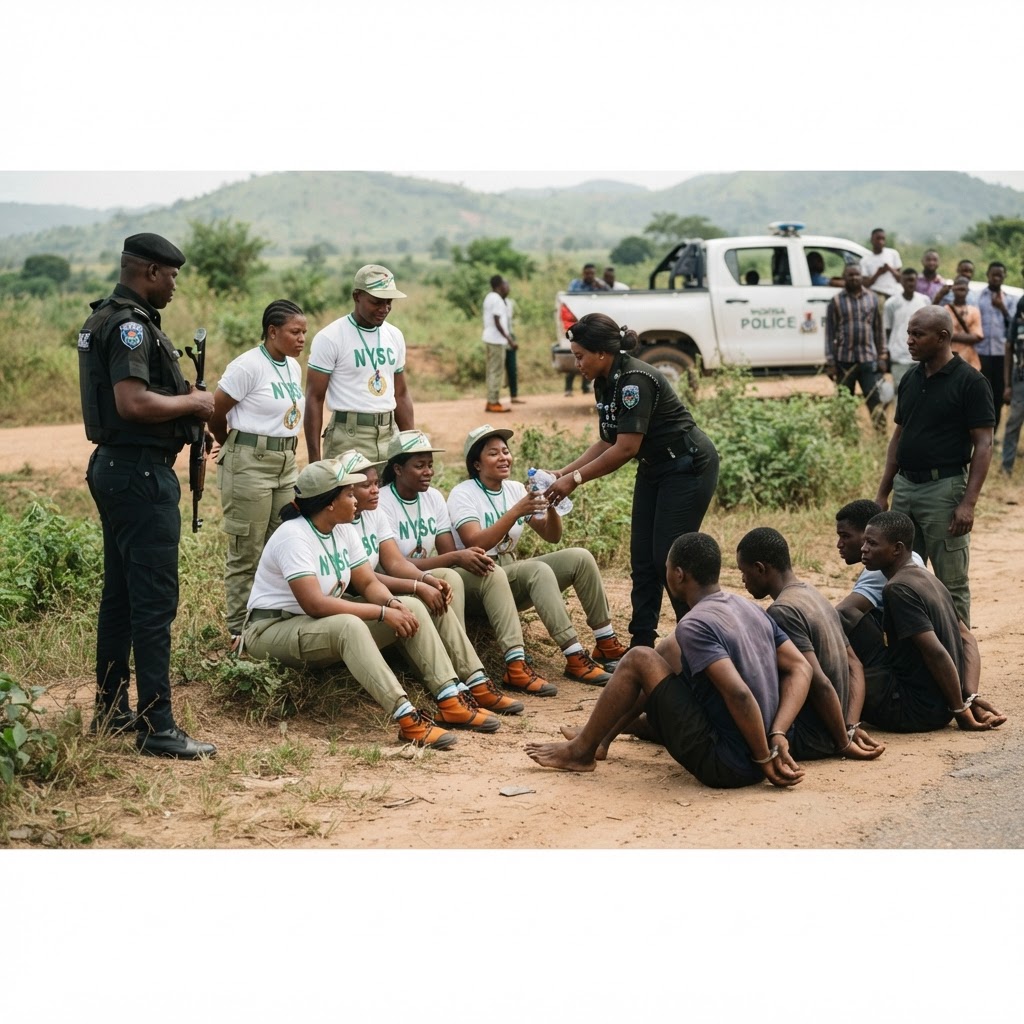
Five Arrested After Abducted NYSC Members Rescued
Nigeria's security apparatus just proved that patient, intelligence-led policing works. The Mbaitoli Abduction: Five Suspects Arrested Following Rescue of NYSC Members case has moved from a national scare to a story of coordinated justice. For families, students, and youth professionals across the c...

Umuahii Day: Preserving Our Heritage, Rekindling Otu Obi
Every December, families across Imo State pause to celebrate something larger than a party. They celebrate belonging. This year, that celebration carries a clear purpose: Umuahii Day: Preserving Our Heritage, Rekindling Otu Obi invites every son and daughter of Umuahii to come home, in body or in sp...

2026 NNPC/Seplat Scholarship: Apply Now
The race for Nigeria's future workforce starts in the lecture hall, not the boardroom. If you are a Nigerian undergraduate looking for financial relief this academic year, the 2026 NNPC/Seplat Scholarship: Apply Now initiative offers a credible, well-funded pathway to ease tuition pressure and keep ...

Nwanegwo Hands Over Mbaitoli LGA Affairs, Ends Tenure
Hon. Ifunanya Nwanegwo JP has formally handed over the affairs of Mbaitoli Local Government Area to the Director of Administration and General Services (DAGS), marking the conclusion of his tenure as Executive Chairman.
Umunoha NYSC Kidnap: Hideout Located as IED Threat Delays Rescue
Imo security agencies have located the suspected hideout of prospective NYSC members abducted along the Owerri–Onitsha Road, but an alleged improvised explosive device (IED) threat has delayed the planned rescue operation.

Ultimate Guide to Health, Wealth, and Community Development
Discover how health, wealth creation, and community development intertwine to empower individuals and build prosperous societies. This ultimate guide provides actionable insights and strategies to enhance your well-being and financial stability while fostering a vibrant community, ensuring you make ...

Mbaitoli Kidnapping: Why Is the Owerri–Onitsha Road Still Vulnerable?
The latest kidnapping incident along the Owerri–Onitsha Road in Mbaitoli Local Government Area of Imo State has renewed concerns about the safety of one of the major transportation routes connecting communities in Imo and neighbouring states.
Mbaitoli Security: Are Farmers Returning to Their Farms?
Dust settles slowly over Mbaitoli's farmlands, but the questions linger louder than ever. Families across Imo State whisper the same worry: will their fields ever feel safe again? Mbaitoli Security: Are Farmers Returning to Their Farms? remains one of the most urgent questions facing this agrarian c...
Imo Government to Support 100 More Communities
OKOBI is reshaping how everyday Imo residents build wealth from their own villages. The latest expansion, tagged OKOBI: 100 More Imo Communities Set to Receive Government Support, signals a new chapter in Governor Hope Uzodimma's push for grassroots prosperity. For Nigerian families and community le...